
A malfunction in the web guide system can result in material waste, production downtime, and potential damage to machinery. Therefore, effective fault detection and diagnosis in web guide systems are crucial for maintaining efficient and reliable operations.

What are Web Guide Systems?
The main function of a web guide system is to correct the lateral position of the web (the continuous material being processed) to keep it aligned along the desired path. These systems generally consist of sensors, actuators, controllers, and the web material itself. Sensors monitor the web’s position, actuators make necessary adjustments based on data from the sensors, and the controller, typically a sophisticated software algorithm, processes this data to direct the actuators and correct the web’s path.

Common Fault Detection Methods Used in Web Guide Systems
Threshold-Based Detection
Threshold-based detection is a straightforward and widely used method in web guide systems. This approach involves setting predefined limits (thresholds) for key parameters like web position, actuator movement, or sensor output.
Fixed Thresholds: The system triggers an alarm if sensor readings exceed a fixed upper or lower limit, such as when the web’s position deviates beyond a set range.
Adaptive Thresholds: More advanced systems use adaptive thresholds that adjust according to operating conditions or historical data, providing dynamic fault detection.
Advantages:
Simple to implement and understand.
Provides immediate feedback when a parameter goes out of range.
Disadvantages:
May not detect subtle or gradual faults.
Fixed thresholds may cause false alarms under varying conditions.
Model-Based Detection
This method involves creating a mathematical or physical model representing normal system behavior and comparing real-time data with the model’s predictions.
Mathematical Models: Predict normal system behavior, flagging deviations as potential faults.
Observer-Based Methods: Estimate internal states (like web tension or position) and compare them to measured values. Discrepancies may signal faults.
Advantages:
Can detect subtle changes in system behavior.
Provides comprehensive system performance insight.
Disadvantages:
Requires a detailed and accurate model, which may be complex to develop.
Statistical Process Control (SPC)
SPC uses statistical methods to monitor the system’s performance over time and detect shifts in process parameters indicating potential faults.
Control Charts: Track key variables over time to identify deviations from expected behavior.
Principal Component Analysis (PCA): Reduces data complexity while preserving critical information, identifying patterns and detecting anomalies.
Advantages:
Effective for detecting gradual changes or trends.
Provides a structured approach to improving process quality.
Disadvantages:
May require significant historical data to establish control limits.
Complex to interpret without statistical expertise.
Signal-Based Detection
Signal-based detection analyzes sensor or actuator signals to identify anomalies indicating faults.
Frequency Domain Analysis: Uses techniques like Fourier Transform to analyze frequency content in signals, with abnormal frequencies suggesting faults.
Time-Frequency Analysis: Employs methods like Wavelet Transform to detect transient faults visible only under certain conditions.
Advantages:
Detects faults manifesting as changes in signal characteristics.
Highly sensitive to even minor faults.
Disadvantages:
Requires advanced signal processing expertise.
May produce complex results difficult to interpret.
Machine Learning-Based Detection
Machine learning algorithms learn from historical data to identify patterns preceding faults.
Supervised Learning: Trains on labeled data to recognize patterns associated with specific faults.
Unsupervised Learning: Clusters data to detect unusual patterns, flagging deviations as potential faults
Advantages:
Handles complex, non-linear relationships between variables.
Capable of detecting unknown fault conditions.
Disadvantages:
Requires large amounts of labeled data (in supervised learning).
Can be computationally intensive and require specialized expertise.
Hybrid Detection Methods
Hybrid detection methods combine two or more techniques for improved accuracy. For example, a system may use threshold-based detection for basic monitoring and machine learning for advanced fault detection.
Advantages:
Combines the strengths of multiple methods.
Tailored to specific applications for more robust detection.
Disadvantages:
Complex to implement and maintain.
Requires higher computational resources.
Key Fault Diagnosis Techniques in Web Guide Systems
Fault diagnosis identifies the root cause of faults after detection. Accurate diagnosis minimizes downtime, prevents damage, and ensures consistent production quality.
Expert Systems
Expert systems use rules derived from experts to diagnose faults.
Rule-Based Diagnosis: Matches symptoms (e.g., sensor readings) with predefined rules to identify the fault.
Decision Trees: Guides the diagnosis process by making decisions based on system behavior, leading to a diagnosis.
Advantages:
Mimics human decision-making.
Can be customized for specific systems.
Disadvantages:
Requires time and knowledge to develop.
May miss novel faults.
Root Cause Analysis (RCA)
RCA systematically identifies the root cause rather than addressing symptoms.
Fault Tree Analysis (FTA): Traces faults back to their root cause.
Failure Mode and Effects Analysis (FMEA): Identifies potential failure modes and their effects on the system.
Advantages:
Provides comprehensive fault understanding.
Prevents recurrence by addressing root causes.
Disadvantages:
Time-consuming, especially in complex systems.
Requires detailed system knowledge.
Artificial Intelligence (AI) and Machine Learning
AI and machine learning can handle complex data and learn from historical patterns to diagnose faults.
Neural Networks: Trained on historical data, they recognize real-time fault patterns.
Fuzzy Logic Systems: Handle imprecise data, useful for diagnosing faults in uncertain conditions.
Advantages:
Handles complex relationships between variables.
Improves with more data.
Disadvantages:
Requires large datasets for training.
Can be difficult to understand.
Data-Driven Approaches
Data-driven approaches use historical and real-time data for fault diagnosis.
Principal Component Analysis (PCA): Identifies patterns and anomalies in data to diagnose faults.
Correlation Analysis: Identifies deviations in relationships between system variables.
Advantages:
Effective for systems with large amounts of data.
Uncovers hidden relationships between variables.
Disadvantages:
Requires substantial data for accuracy.
May require advanced statistical knowledge.
Hybrid Diagnostic Techniques
Hybrid diagnostic techniques combine methods like model-based approaches with AI for more accurate fault diagnosis.
Advantages:
Increases accuracy and reliability.
Tailored to specific applications.
Disadvantages:
More complex to implement.
Requires higher computational resources.
Get Web Guide Systems with Integrated Fault Detection and Diagnosis Features from Arise
Arise provides web guide systems with integrated fault detection and diagnosis features, designed to ensure precise alignment of materials like paper, film, and fabric during manufacturing. Their systems include advanced sensors, controllers, and actuators that automatically detect deviations and make real-time adjustments.

Arise web guide systems offer high accuracy and reliability even in challenging environments, utilizing infrared, ultrasonic, and CCD image sensors for precise detection. These technologies enhance operational efficiency, reduce material waste, and minimize downtime, making them a valuable addition to any production line.
Accurate web guiding is essential in various industries, but vibrations can significantly disrupt this process, leading to misalignment, quality defects, and material waste. This article explores the sources of vibration in web guide systems and outlines effective strategies to mitigate their impact.

Sources of Vibration
Mechanical imbalances: Unbalanced rollers or rotating components.
Environmental factors: Vibrations from adjacent machinery or structural vibrations.
Operational speed: High-speed operations can amplify vibrations.
Material properties: Variations in tension and stiffness of the web material.
Strategies for Mitigating Vibration
Mechanical Solutions:
Precision engineering: Balanced components, high-quality bearings, proper lubrication.
Damping mechanisms: Vibration isolators, shock absorbers.
Structural reinforcement: Stiffening frameworks, foundation modifications.
Operational Adjustments:
Speed regulation: Optimal speed settings, gradual acceleration/deceleration.
Tension control: Consistent web tension, automated tension adjusters.
Advanced Control Systems:
Feedback loops: Real-time monitoring, closed-loop control.
Active vibration control: Dynamic countermeasures, smart actuators.
Technological Innovations:
Machine learning and AI: Predictive maintenance, adaptive control systems.
High-precision sensors: Enhanced detection, integrated sensor networks.
Digital twin technology: Simulation and optimization, predictive analysis.
Implementation Plan:
Assessment: Identify vibration sources.
Design optimization: Incorporate precision engineering and damping mechanisms.
Control system integration: Implement advanced control systems.
Testing and calibration: Ensure effectiveness and fine-tuning.
Continuous monitoring: Track performance and make adjustments.
The Arise Web Guide System: A Solution
The Arise all-in-one web guide system offers a high-performance solution for accurate web guiding. Its key features include:
Superior accuracy: Precise web positioning.
Robust vibration mitigation: Effective vibration reduction.
Advanced technology integration: Machine learning, AI, and high-precision sensors.
Durability and reliability: Long-lasting and low-maintenance.
User-friendly interface: Easy operation and quick adjustments.
By implementing these strategies and considering the Arise web guide system, industries can effectively mitigate vibration and ensure precise web guiding.
Printing quality inspection is essential for maintaining the highest standards in print production, ensuring that printed materials meet the expectations for color accuracy, image quality, text clarity, and overall appearance. With technological advancements, the printing industry has access to sophisticated tools used for printing quality inspection with remarkable precision and efficiency.

What is Printing Quality Inspection?
Printing quality inspection involves evaluating and ensuring the consistency and quality of printed materials. It is vital in industries such as packaging, publishing, and manufacturing, where print quality directly affects brand reputation, customer satisfaction, and regulatory compliance. This process ensures that printed items such as labels, books, packaging, and promotional materials meet required specifications.
Key Technologies in Printing Quality Inspection
Optical Inspection Systems
Camera-Based Systems: These high-speed systems capture detailed images of printed products. Software analyzes the images to detect defects like misalignment, smudges, or color deviations. The system’s real-time integration allows for immediate detection and correction.
Line Scan Cameras: These cameras inspect continuous or large-format prints, like packaging or wallpaper, capturing images line by line for precise analysis.
Machine Vision Systems
Deep Learning Models: AI-driven deep learning models can identify a wide range of defects and improve accuracy over time. They can detect subtle issues that traditional systems may overlook.
Pattern Recognition: Machine vision systems are programmed to recognize specific patterns and detect anomalies, particularly useful in industries that demand precise image reproduction and color matching.
Spectral Imaging Systems
Hyperspectral Imaging: Captures a wide range of wavelengths, from ultraviolet to near-infrared, identifying subtle color and material inconsistencies.
Multispectral Imaging: Focuses on multiple wavelengths to analyze color and material data, useful in detecting material defects though less comprehensive than hyperspectral imaging.
3D Inspection Systems
Laser Profiling: These systems use lasers to scan surfaces and create 3D maps, detecting embossing errors and surface irregularities.
Structured Light Scanning: Projects light patterns onto the surface, analyzing deformations to build a 3D image for surface texture analysis.
Magnetic and Conductive Inspection
Magnetic Ink Character Recognition (MICR): Used in security printing, such as checks and banknotes, to verify the magnetic properties of printed inks for authenticity.
Conductive Ink Inspection: Ensures that printed circuits and electronic components have correct electrical properties, critical for printed electronics like RFID tags.
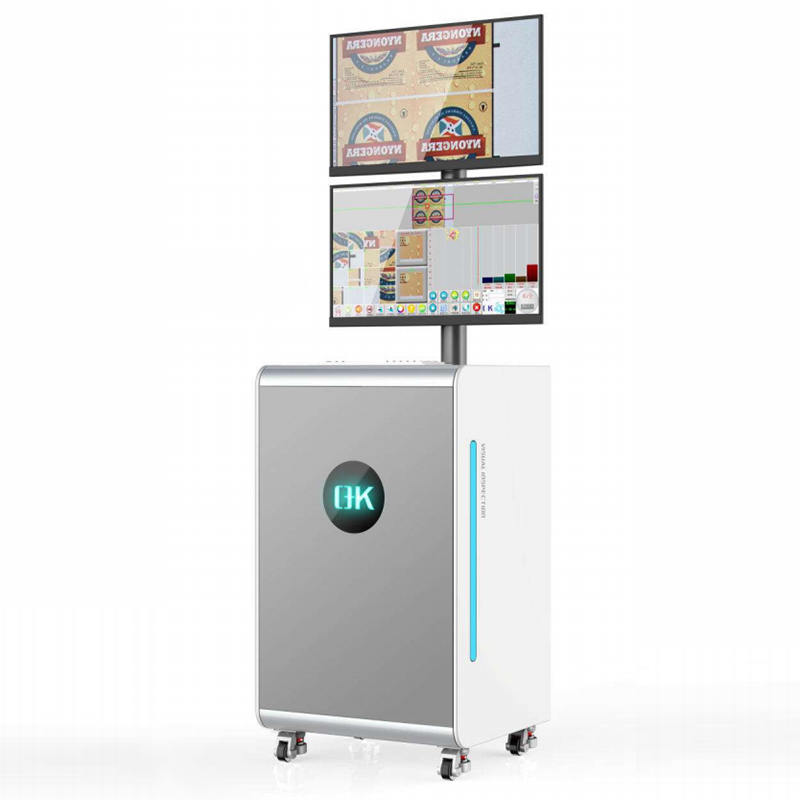
Why Choose Arise Web Video Inspection System for Printing Quality Inspection?
Arise is a high-tech company specializing in optical, electromechanical, electronic, and internet technologies, particularly in the development of web guide systems, tension control systems, and web inspection systems.
The Arise Web Video Inspection System uses innovative technology to transform rapidly moving images into still frames, which are magnified for detecting print defects. The system allows real-time observation and provides comprehensive quality assessments for immediate defect detection.
Key Benefits of Arise Web Video Inspection System
High-Resolution Imaging: Captures minute details to identify even the smallest defects in real-time.
Real-Time Monitoring: Enables continuous monitoring of the printing process, allowing immediate issue detection and correction, which minimizes waste and increases efficiency.
Automated Defect Detection: Advanced algorithms automatically identify defects like color variations, misregistration, and print artifacts, reducing the need for manual inspection.
Consistent Quality Control: Ensures uniform quality by applying objective and automated inspection criteria, minimizing the variability caused by human inspection.
Data Collection and Analysis: The system tracks defect types and frequencies, providing valuable data for improving the printing process and conducting root cause analysis.
Workflow Integration: The system seamlessly integrates into existing printing workflows, enhancing efficiency without disrupting production.
User-Friendly Interface: Simplifies operation, making the system accessible to operators with varying levels of technical expertise.
Cost-Effective: By automating inspection and reducing rework, the system offers significant cost savings.
Compliance and Standards: Helps meet industry standards and customer specifications, essential for maintaining reputation and customer trust.
Scalability: Adaptable to different production scales, from small print runs to large-volume operations.

Conclusion
The adoption of advanced technologies in printing quality inspection, such as the Arise Web Video Inspection System, enables businesses to achieve higher quality outputs while optimizing efficiency and reducing costs. With features like real-time monitoring, automated defect detection, and seamless integration, this system is an ideal solution for industries seeking superior printing quality and operational excellence.
In today's fast-paced printing industry, maintaining high standards of quality is paramount. Any deviation can lead to costly reprints, customer dissatisfaction, and damage to a brand's reputation. Integrating quality inspection systems seamlessly into printing workflows has become essential to ensure every product meets the highest standards. This article explores the importance of this integration, the technologies involved, the benefits it brings, and the challenges it faces.
The Importance of Quality Inspection
Quality inspection in printing ensures that each product meets predefined standards before reaching the customer. It involves checking for color consistency, print accuracy, material defects, and other critical factors. While traditional manual methods are still used, automated systems offer greater accuracy and efficiency.

Technologies Enabling Seamless Integration
Seamless integration relies on a combination of advanced technologies:
High-Resolution Cameras and Sensors: Capture detailed images and data for precise defect detection.
Machine Learning and Artificial Intelligence: Analyze data, identify patterns, and improve over time.
Real-Time Data Processing: Enable immediate defect detection and correction.
Interoperable Software Platforms: Facilitate communication between printing machinery and inspection systems.
Advanced Image Processing for Quality Inspection: Enhance accuracy in detecting and classifying print defects.
Connectivity and IoT: Enable remote monitoring, predictive maintenance, and data sharing.
Robotics and Automation: Streamline the inspection process, improving speed and reliability.
Cloud Computing and Big Data Analytics: Store and analyze vast amounts of inspection data.
Benefits of Integration
Enhanced Quality Control: Consistent and objective evaluations, high precision, and automated adjustments.
Increased Efficiency: Streamlined operations, reduced downtime, and automated adjustments.
Cost Savings: Reduced waste, lower labor costs, and minimized reprints.
Data-Driven Decision Making: Valuable insights, informed process enhancements, and resource allocation.
Compliance and Traceability: Regulatory compliance, traceability, and documented quality assurance.
Improved Customer Satisfaction: Higher quality products, consistent deliverables, and reduced defects.
Competitive Advantage: Market differentiation, enhanced reputation, and innovation leadership.
Challenges and Considerations
Initial Investment: Implementing advanced printing quality inspection systems can require a significant upfront investment.
Data Security: Protecting sensitive data generated by inspection systems is crucial.
Training and Skill Development: Operators may need training to effectively use and maintain these complex systems.
Integration Complexity: Integrating different systems and technologies can be challenging.
Conclusion
The seamless integration of quality inspection systems with printing workflows is essential for maintaining high standards, improving efficiency, and achieving a competitive advantage. By leveraging advanced technologies, companies can ensure that their products consistently meet customer expectations and regulatory requirements.
Operating web guide system equipment can pose significant hazards if not handled with care. To protect operators and maintain a safe working environment, it's imperative to prioritize safety measures. This article outlines key strategies for enhancing safety in web guide system operations.
1. Comprehensive Training and Education
Regular training: Ensure all operators receive thorough training on equipment operation, safety procedures, and emergency response.
Ongoing updates: Provide regular refresher courses to keep operators informed about new safety protocols and equipment advancements.
2. Rigorous Maintenance
Regular inspections: Conduct routine inspections to identify and address potential hazards, such as wear and tear or malfunctions.
Preventive maintenance: Adhere to a strict maintenance schedule to prevent unexpected web guiding equipment failures and ensure optimal performance.
3. Safety Features and Equipment
Emergency stop buttons: Make emergency stop buttons easily accessible and clearly marked.
Protective guards: Install protective guards around moving parts to prevent accidents.
Sensors and alarms: Utilize sensors and alarms to detect potential issues and provide timely alerts.
4. Safe Work Environment
Clear signage: Post clear and visible warning signs to indicate potential hazards.
Adequate lighting: Ensure proper lighting to prevent accidents caused by poor visibility.
Organized workspace: Maintain a clean and organized workspace to reduce the risk of slips, trips, and falls.
5. Personal Protective Equipment (PPE)
Appropriate gear: Provide and require operators to wear appropriate PPE, such as safety glasses, gloves, and protective clothing.
Regular inspection: Ensure PPE is in good condition and replace damaged items promptly.
6. Standard Operating Procedures (SOPs)
Clear guidelines: Develop and enforce SOPs for equipment operation, maintenance, and emergency procedures.
Risk assessment: Conduct regular risk assessments to identify and mitigate potential hazards.
7. Emergency Preparedness
Emergency plans: Create and practice emergency plans, including evacuation routes and first aid procedures.
Regular drills: Conduct regular emergency drills to ensure operators are prepared to respond effectively in case of an incident.
8. Continuous Monitoring and Feedback
Monitoring systems: Implement systems to monitor equipment performance and identify potential safety issues.
Feedback mechanisms: Encourage operators to report safety concerns and provide feedback for improvement.
9. Ergonomics
Ergonomic design: Design workstations and controls to minimize strain and discomfort.
Regular breaks: Encourage operators to take regular breaks to prevent fatigue and reduce the risk of injuries.
10. Compliance and Standards
Regulatory compliance: Ensure compliance with all relevant safety regulations and standards.
Internal audits: Conduct regular safety audits to identify and address compliance issues.

By implementing these strategies, organizations can create a safer working environment for operators and reduce the risk of accidents and injuries associated with web guide system equipment.