
A closed-loop tension control system is a sophisticated approach to maintaining consistent tension in various industrial processes, such as in printing, packaging, textile manufacturing, and converting operations. Tension control is crucial in these processes as fluctuations can lead to product defects, machine malfunctions, and waste, ultimately affecting productivity and quality. In a closed-loop system, feedback mechanisms continuously monitor and adjust tension in real-time, allowing for precise control and adaptability to changing conditions. This article explores the working principles, benefits, applications, and advancements in closed-loop tension control systems.

How a Closed-Loop Tension Control System Works
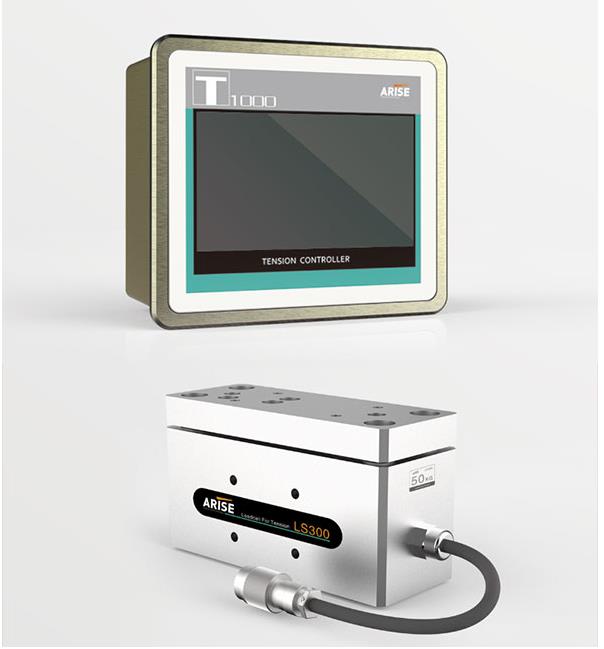
In a closed-loop tension control system, sensors measure the actual tension in the material, providing real-time data to a controller. The controller compares this data with a pre-set desired tension and makes automatic adjustments as needed to maintain consistent tension. This closed-loop feedback process allows the system to respond quickly to changes in material properties, machine speed, and external forces, keeping tension stable throughout the operation.
Key Components of a Closed-Loop Tension Control System
Sensors: Sensors, such as load cells, dancer arms, or ultrasonic sensors, monitor the material's tension or position. These tension sensors provide accurate feedback to the controller.
Controller: The tension controller is the system's brain, receiving data from the sensors and calculating any deviation from the target tension. Based on this calculation, it sends commands to adjust tension accordingly.
Actuators: Actuators, such as brakes, clutches, or servo motors, make physical adjustments to maintain the correct tension by either increasing or decreasing the tension force.
Feedback Mechanism: This mechanism enables continuous monitoring and adjustment, creating a closed-loop system where the tension is constantly fine-tuned.
Benefits of Closed-Loop Tension Control
The precision offered by closed-loop tension control is essential in industries where maintaining consistent tension is critical to product quality and process efficiency. Key benefits include:
Enhanced Product Quality: By maintaining stable tension, closed-loop systems prevent issues such as wrinkling, stretching, and tearing of materials, resulting in high-quality finished products.
Reduced Waste: Fluctuating tension can lead to material damage and waste. Closed-loop control minimizes these issues, reducing waste and lowering costs.
Increased Efficiency: The system’s ability to respond to changes in real time reduces downtime due to manual adjustments or corrective actions.
Extended Equipment Life: Maintaining steady tension reduces mechanical wear and tear on equipment, extending its lifespan and lowering maintenance costs.
Versatility Across Materials: Closed-loop systems can be configured for various materials, from paper and film to fabric and metal, making them adaptable to different industrial applications.
Applications of Closed-Loop Tension Control Systems
Closed-loop tension control systems have become essential in industries where precise control over tension is required. Here are a few major applications:
Printing and Converting Industries: Tension control is crucial in printing to avoid misalignment and color overlap. Converting operations, such as cutting and laminating, also benefit from consistent tension to ensure precision.
Textile Manufacturing: Textile production processes, including weaving, knitting, and dyeing, require consistent tension to prevent fabric distortion and achieve uniform patterns and colors.
Packaging Industry: In packaging, particularly in flexible packaging and labeling, maintaining tension prevents material deformation and ensures precise placement.
Metal and Foil Processing: Metal sheets and foils require controlled tension during rolling, cutting, and coating to ensure accuracy and prevent damage.
Battery and Electronics Manufacturing: As industries like battery manufacturing use delicate films and foils, closed-loop tension control systems are essential to prevent tearing and wrinkling during the coating, cutting, and assembly stages.
Advanced Features in Modern Closed-Loop Tension Control Systems
With advancements in automation and digital technology, closed-loop tension control systems have evolved, offering enhanced features for precision and adaptability:
Automated Calibration: Modern systems include automated calibration routines, reducing setup time and ensuring consistent tension settings between production runs.
Adaptive Control Algorithms: Advanced algorithms can adjust tension control settings dynamically in response to changes in speed, temperature, and material properties. This is especially beneficial in industries where materials with varying elasticity are processed.
Data Logging and Analytics: Integration with data logging systems allows for monitoring and recording tension control performance. Analytics can provide insights into system efficiency, identify patterns, and support predictive maintenance.
Remote Monitoring and Control: Many closed-loop systems now support remote monitoring and adjustments via a centralized system. Operators can track system performance, adjust parameters, and troubleshoot issues without needing to be physically present.
Integration with Industry 4.0: Closed-loop systems that are Industry 4.0-compatible can be connected to a larger network, allowing for predictive maintenance, real-time monitoring across multiple production lines, and integration with other smart systems.

Choosing the Right Closed-Loop Tension Control System
When selecting a closed-loop tension control system, it is essential to consider:
Material Properties: Different materials have unique characteristics, such as elasticity and thickness, requiring different tension control approaches.
Process Speed and Variability: High-speed processes require fast-responding control systems with robust sensors and actuators to avoid lag in tension adjustments.
Environmental Factors: Temperature, humidity, and other environmental conditions can affect tension. Systems designed to compensate for these variables can provide more consistent results.
Integration Needs: Ensuring that the tension control system is compatible with existing production lines and can integrate with broader automation systems is critical for seamless operation.
Support and Maintenance: A reliable system provider with a good support network is essential for training, maintenance, and troubleshooting.
In summary, a closed-loop tension control system is a vital asset in any industry that relies on precise material handling. By continuously monitoring and adjusting tension in real-time, these systems provide unmatched control, ensuring quality, efficiency, and reduced waste. With advances in adaptive algorithms, automated calibration, and remote monitoring, closed-loop tension control systems are becoming increasingly sophisticated, meeting the growing demands of modern industrial processes. Whether in printing, packaging, textiles, or electronics, these systems are critical to achieving high standards of precision and reliability in production.
Retrofitting web guiding systems offers an effective way to enhance machine performance, precision, and reliability without the need for a full replacement of equipment. Web guiding systems are essential for industries relying on precise material alignment, such as printing, packaging, textiles, and converting. This article explores the benefits, types of retrofitting, and specific solutions to consider when updating these systems.

Benefits of Retrofitting Web Guiding Systems
Upgrading existing web guiding system equipment through retrofitting can provide numerous advantages, including:
Improved Accuracy: Modern sensor technology can significantly enhance tracking accuracy.
Cost-Effectiveness: Retrofitting is often more affordable than purchasing a new system, enabling companies to maximize their ROI.
Reduced Downtime: By upgrading components rather than replacing an entire system, retrofitting can reduce the time needed to get the system operational.
Enhanced System Integration: Modern controllers and digital components allow for better integration with other equipment, leading to a more unified workflow.
Extended Equipment Life: Retrofitting increases the lifespan of older equipment by replacing worn-out or outdated parts.
Types of Retrofit Solutions for Web Guiding Systems
Retrofit solutions vary based on the type of system in use and the specific requirements of the application. Here are some commonly implemented retrofit options:
Sensor Upgrades: Replacing older, less efficient sensors with modern, high-resolution options (e.g., ultrasonic or infrared) allows for better alignment, especially with transparent or reflective materials.
Controller Upgrades: Digital web guide controllers enable better calibration, more accurate positioning, and easier interfacing with other equipment in the production line.
Actuator Replacement: Hydraulic or pneumatic actuators can be replaced with advanced servo-driven actuators, which offer greater precision and are easier to maintain.
Software Integration: Adding or upgrading software modules can allow real-time monitoring and control, with options to log data, track web alignment, and implement predictive maintenance.
Operator Interface Improvements: Newer touch-screen panels and user-friendly interfaces can enhance operator control, making adjustments and troubleshooting simpler.

Steps for Implementing Retrofit Solutions
To ensure a successful retrofit, consider the following steps:
Assessment of Current System: Conduct a thorough analysis to understand the limitations and inefficiencies of the existing system. Determine which components can be reused and which need replacement.
Compatibility Check: Ensure that new parts and software are compatible with existing machinery to prevent integration issues.
Select Retrofitting Components: Choose reliable, durable parts that align with the production requirements and budget constraints.
Installation and Calibration: Install and calibrate new components, ensuring they work seamlessly with the older system. Testing is essential to verify alignment accuracy and system response.
Training for Operators: Provide training on new features to maximize the benefits of the retrofit. This helps operators understand the updated interface, troubleshoot, and maintain optimal performance.
Key Retrofit Components and Technologies
Advanced Edge Sensors: Ultrasonic, infrared, and CCD sensors offer high precision and are ideal for various materials. They improve detection accuracy and adjust to changes in material thickness or transparency.
Servo-Motor Actuators: These actuators provide responsive control, ensuring smoother and faster alignment, which is crucial for high-speed applications.
Programmable Logic Controllers (PLCs): PLCs are widely used in retrofits due to their versatility, reliability, and ability to handle complex control functions, including real-time monitoring.
Digital Operator Panels: Modern panels with intuitive touch interfaces allow for easy parameter setting, making adjustments quick and minimizing downtime.
Integrated Monitoring Software: Adding web monitoring software facilitates real-time tracking, enabling early detection of alignment issues and reducing material waste.

Considerations for Choosing Retrofit Solutions
When selecting components and solutions for retrofitting web guiding systems, consider:
Production Speed and Volume: High-speed applications benefit from advanced actuators and high-precision sensors.
Material Type: Transparent, opaque, or reflective materials may require specific types of sensors for optimal detection accuracy.
Budget Constraints: Calculate the ROI for each component and prioritize upgrades that offer the most significant impact.
Future Expansion: Choose components that can adapt to future production needs, allowing for scalability and additional upgrades if necessary.
Ovarall, retrofitting web guiding systems is an effective way to enhance operational efficiency, reduce waste, and extend the lifespan of existing equipment. With improvements in sensor technology, actuator precision, and software integration, retrofitting offers a practical and cost-effective alternative to full system replacement. By carefully assessing current needs and selecting appropriate retrofit components, companies can achieve better alignment, increased productivity, and greater adaptability in their production processes.
Print quality inspection plays a crucial role in industries where accurate, high-quality prints are essential, such as in packaging, textiles, and electronics. Image processing techniques help automate the inspection process, ensuring that defects are quickly identified and corrected, which minimizes waste, increases consistency, and maintains brand reputation. Here, we explore key image processing techniques used for print quality inspection, highlighting their applications and benefits.

1. Pattern Recognition
Pattern recognition algorithms are designed to identify predefined shapes, logos, text, or symbols in a print sample. By comparing scanned images to a predefined reference pattern, these algorithms can detect any inconsistencies or deviations from the original design.
Applications: Ensuring brand logos and trademarks are consistently printed without deformation or errors.
Benefits: Reduces human error, ensuring brand elements appear consistently across products.
2. Optical Character Recognition (OCR)
OCR technology is used to detect and interpret printed text, enabling systems to compare it to the intended text. This is particularly important in industries where exact text reproduction is critical, such as pharmaceutical packaging and labels in consumer products.
Applications: Verification of printed text on packaging, labels, and product codes.
Benefits: Increases accuracy in text inspection, ensuring correct information is presented to consumers and regulatory requirements are met.
3. Color Analysis
Color consistency is essential in print quality, as variations can affect brand integrity and customer perception. Color analysis techniques involve scanning and comparing color tones within a print sample to a reference standard to detect any deviation in hue, saturation, or brightness.
Applications: Ensuring color accuracy in packaging, branding materials, and textile prints.
Benefits: Maintains color consistency across batches, enhancing brand presentation and quality assurance.
4. Edge Detection
Edge detection algorithms identify the boundaries of elements in an image, allowing the system to evaluate print alignment, sharpness, and integrity. By analyzing edges, this technique can detect blurriness or misalignments in prints, ensuring clean and sharp images.
Applications: Used in text and graphic alignment, especially where sharp outlines are crucial.
Benefits: Helps identify blurring, misalignment, and ensures clear print boundaries.
5. Blob Analysis
Blob analysis is used to detect irregularities in shapes or patterns, identifying areas that deviate from expected dimensions or shapes. This technique is helpful for identifying defects such as smudges, spots, or incomplete print areas.
Applications: Detection of spots, smudges, and misprints in labels, packaging, and graphical elements.
Benefits: Helps in early detection of irregularities, reducing defective output and minimizing waste.
6. Image Registration
Image registration involves aligning two or more images to a common coordinate system. This technique allows for comparison between a reference image and the sample under inspection, enabling the detection of even minor deviations.
Applications: Useful in overlay comparisons in multilayer prints or printed circuit boards (PCBs).
Benefits: Detects small deviations with high accuracy, ensuring uniformity in complex layered prints.
7. Fourier Transform Analysis
Fourier transform is used to analyze spatial frequency information in an image. It is particularly effective for identifying periodic defects, such as banding or streaking, which are common in printing processes.
Applications: Detection of banding, streaks, or other periodic defects in printing.
Benefits: Identifies subtle periodic patterns that may not be visible in the spatial domain, enhancing print quality inspection accuracy.
8. Defect Classification
Machine learning and artificial intelligence (AI) techniques are increasingly used to classify and predict defects of printed issues based on image data. Defect classification models are trained on large datasets to identify a wide range of print issues, from minor inconsistencies to significant defects.

Applications: Used across various industries for a comprehensive defect classification, from minor ink spots to significant misalignments.
Benefits: Increases inspection accuracy, reduces manual intervention, and enables rapid sorting and identification of defective prints.
9. Contrast Enhancement
Contrast enhancement techniques adjust the contrast of an image to make defects or irregularities more visible, helping inspection systems detect subtle differences in print quality. These techniques adjust image contrast automatically, emphasizing areas with potential defects.
Applications: Enhances inspection for subtle defects in text and graphic printing.
Benefits: Improves detection of faint print inconsistencies, increasing overall inspection accuracy.
10. Histogram Analysis
Histogram analysis involves examining the intensity distribution of pixels in an image, helping to evaluate overall brightness and contrast levels. This is especially useful in assessing uniformity in print areas, identifying areas that may be too dark or too light compared to the intended design.
Applications: Consistency checking for uniform backgrounds or solid color fields in packaging and print materials.
Benefits: Ensures consistent brightness and contrast, maintaining uniform print quality across batches.
To sum up, the integration of these image processing techniques into print quality inspection systems has revolutionized the printing industry, enhancing accuracy and efficiency. From pattern recognition and OCR to advanced AI-driven defect classification, each method offers unique advantages, reducing waste, and increasing consistency in print quality. As industries continue to innovate, these techniques will likely become more sophisticated, leading to even higher standards in print quality and customer satisfaction.
Advanced new materials, recognized for their unique properties—such as high strength-to-weight ratios, enhanced thermal stability, and exceptional flexibility—bring new challenges to manufacturing and processing. Among these challenges, tension control stands out as essential to ensure the quality, reliability, and performance of products derived from these materials.

Understanding Tension Control in Material Processing
Tension control is the regulation of the tensile force applied to materials during manufacturing processes like rolling, drawing, printing, and coating. Proper tension control is crucial for:
Preserving material integrity
Ensuring uniform thickness
Preventing defects, such as wrinkling, stretching, or breakage
Achieving the desired mechanical and physical properties in the final product
While tension control in traditional materials like steel or conventional polymers is relatively straightforward due to their predictable behavior under stress, advanced new materials—such as carbon-fiber composites, shape-memory alloys, and high-performance polymers—require novel approaches to handle their complex behaviors.
Challenges in Tension Control for Advanced New Materials
Material Heterogeneity and Anisotropy
Definition: Advanced materials, like carbon-fiber composites, are often heterogeneous (non-uniform) and anisotropic (properties vary by direction).
Challenge: Traditional systems are designed for isotropic materials, where properties are uniform in all directions. Anisotropy in advanced materials calls for customized tension control that accounts for varying strengths along different axes.
Sensitivity to Environmental Conditions
Definition: Many advanced materials are highly sensitive to factors like temperature, humidity, and chemical exposure.
Challenge: For instance, shape-memory alloys alter mechanical properties with temperature fluctuations. This sensitivity necessitates real-time tension adjustments, as environmental changes can significantly affect the material's behavior under stress.
Nonlinear Stress-Strain Behavior
Definition: Advanced materials often display nonlinear and time-dependent behaviors, such as viscoelasticity or plasticity, rather than the linear stress-strain behavior of traditional materials.
Challenge: This nonlinearity complicates tension control, requiring sophisticated models and systems to predict and manage the material’s response under varying stress conditions.
High Precision Requirements
Definition: Advanced materials are commonly used in applications that demand high precision, such as aerospace, medical devices, and electronics.
Challenge: Even slight deviations in tension can lead to defects like micro-cracks or delamination, which compromise product functionality and safety. Ensuring the necessary precision in tension control requires advanced systems capable of tight tolerances.
Complex Manufacturing Processes
Definition: Processing advanced materials often involves multi-stage techniques, such as layering, resin infusion, or high-temperature curing.
Challenge: Each manufacturing stage has unique tension control requirements. For example, during composite production, tension must be managed across fiber placement, resin application, and curing to prevent defects.
Dynamic Material Behavior
Definition: Some advanced materials exhibit dynamic behavior, where properties change during processing due to phase changes or chemical reactions.
Challenge: Managing tension for materials that undergo state changes requires real-time monitoring and adaptive control systems to respond to these transitions without causing damage.
These challenges underscore the need for advanced tension control systems tailored to the unique properties and processing requirements of new materials.

Solutions and Innovations in Tension Control for Advanced New Materials
Advanced Tension Control Systems
Solution: Leveraging real-time sensors, automated feedback loops, and machine learning, modern tension control systems precisely regulate tensile forces during processing.
Innovation: These systems dynamically adjust tension based on real-time data, adapting to changes in material properties, environmental conditions, and processing speeds for consistent quality.
Adaptive and Predictive Control
Solution: Adaptive control modifies operation in response to material behavior, while predictive control uses advanced modeling to anticipate changes.
Innovation: Predictive algorithms forecast material reactions to tension, enabling preemptive adjustments, especially beneficial for managing nonlinear, time-dependent behaviors seen in viscoelastic or shape-memory materials.
Integrated Process Control
Solution: Integrating tension control with other parameters, like temperature and speed, offers a holistic approach to material processing.
Innovation: In complex processes like composite manufacturing, synchronizing tension control with factors such as resin flow rates reduces risks of defects like delamination.
Material-Specific Control Strategies
Solution: Developing tailored strategies enhances processing outcomes for materials with unique characteristics.
Innovation: For anisotropic materials, control systems apply direction-specific tensions, preserving material properties. Custom algorithms can also account for stress-strain curves, providing precise control.

Real-Time Monitoring and Feedback
Solution: Real-time monitoring systems continuously measure material tension, offering immediate feedback for control adjustments.
Innovation: High-resolution sensors and data analytics allow instant corrections, maintaining the tight tolerances required for critical applications like aerospace or medical devices.
Smart Materials and Self-Regulating Systems
Solution: Developing smart materials that can self-regulate tension or provide stress feedback is an emerging area.
Innovation: Some materials incorporate embedded sensors or actuators to adjust tension automatically. For instance, composites with piezoelectric elements can modify tension in real-time, reducing dependency on external control systems.
Simulation and Digital Twins
Solution: Simulation tools and digital twins model and predict tension scenarios before production.
Innovation: Digital twins create virtual replicas of materials and processing environments, allowing risk-free testing and optimization of tension strategies for efficient, accurate production runs.
Overcoming the challenges of tension control in advanced materials relies on these innovative solutions. As industries adopt these materials, implementing advanced tension control systems will be essential for high-quality, efficient manufacturing.
In industries that process continuous materials like paper, film, textiles, or metal, precise alignment is crucial to achieving high-quality output. High-speed web guide systems are designed to manage this alignment with exceptional accuracy, particularly in fast-paced manufacturing environments. These systems play a critical role in sectors such as printing, packaging, and textiles, where even minor misalignment can lead to defects, waste, and inefficiency.

The Importance of Precision in Web Guide Systems
Precision in web guide systems ensures the consistent alignment of the "web" or material as it moves through different production stages, impacting the overall efficiency and quality of the output.
Quality Assurance: Proper alignment throughout production results in higher-quality products. Any misalignment can cause defects that undermine the product's integrity and performance.
Material Efficiency: Accurate web guidance minimizes material waste by preventing errors that might require scrapping sections of the web. In high-speed operations, even slight misalignments can lead to significant losses.
Operational Efficiency: High precision enables these systems to operate at faster speeds without sacrificing accuracy, boosting productivity while reducing downtime and maintenance.
Key Components of Precision Control in Web Guide Systems
Several key components work together in web guide system equipment to maintain precise control over web materials, directly affecting product quality, efficiency, and consistency.
Sensors: Sensors continuously monitor the web’s alignment, sending real-time data to the control system. The type of sensor used depends on the material and specific application requirements.
Ultrasonic Sensors: Ideal for detecting the position of opaque or transparent materials using sound waves.
Optical Sensors: Highly accurate for materials with defined edges or markings, using light to detect web alignment.
Infrared Edge Sensors: Effective for detecting edges of materials that might not be easily visible to other types of sensors.
Actuators: Actuators adjust the web’s position based on sensor data, making real-time corrections to maintain alignment.
Electromechanical Actuators: Known for precision and reliability, converting electrical signals into mechanical movement to adjust the web.
Pneumatic Actuators: Used where rapid movement is required, utilizing compressed air to control web position.
Control Systems: The control system acts as the "brain," processing sensor data and commanding actuators to adjust alignment.
PID Controllers: Continuously calculate the difference between the desired and actual positions, adjusting to minimize errors.
Adaptive Control Systems: Adjust parameters in real-time, making them ideal for high-speed operations where precision is crucial.
Guides: Mechanical guides direct the web along its path, maintaining alignment and adjusting to accommodate various material widths and positions.
Edge Guides: Track material edges to keep the web aligned.
Center Guides: Maintain the material’s central alignment, critical in processes requiring precision.
Tension Control Systems: These systems regulate the web's tension to prevent slack or excessive pull, which can cause misalignment.
Load Cells: Measure tension and provide feedback to adjust it accordingly.
Dancer Rolls: Absorb tension fluctuations, maintaining steady tension.
User Interface: Operators monitor and control the web guide system via advanced interfaces that offer real-time data visualization and system diagnostics.
Touchscreen Displays: Provide intuitive control and real-time system monitoring.
Remote Monitoring: Allows operators to oversee and control systems remotely.
Challenges in Precision Control for High-Speed Web Guide Systems
Maintaining precision in high-speed web guide systems presents several challenges:
Dynamic Tension Variability: High-speed operations can cause significant tension fluctuations, making it difficult to maintain consistent alignment. Precise tension control is challenging but essential to prevent material stretching, wrinkling, or misalignment.
High-Speed Response Time: Faster web speeds reduce the time available to detect misalignment and make corrections. Delays can result in cumulative errors and material defects.
Sensor Accuracy and Sensitivity: Sensors must detect even the smallest deviations at high speeds. Ensuring sensor accuracy in challenging environments (e.g., dust, vibrations, lighting) is critical.
Vibration and Mechanical Stability: High-speed movement introduces vibrations and mechanical instability, which can affect alignment. Systems must be designed to minimize vibrations while maintaining structural integrity.
Wear and Tear on Components: Operating at high speeds increases wear on components like rollers, motors, and actuators, leading to performance degradation over time. Regular maintenance is necessary but increases operational costs.
Temperature Control: High-speed operations generate heat, which can cause thermal expansion and misalignment. Efficient cooling systems or materials with low thermal expansion are required.
Real-Time Feedback and Control: Maintaining real-time feedback between sensors, control systems, and actuators is challenging but necessary for precise alignment.
Material Variability: Different materials respond differently to speed and tension, making it difficult to implement a one-size-fits-all solution for high-speed web guide systems.

Innovations in Precision Control for High-Speed Web Guide Systems
Advanced Optical and Laser Sensors: These sensors provide high-resolution, real-time feedback, enabling rapid adjustments to maintain alignment. Laser sensors, in particular, enhance accuracy at high speeds.
AI-Powered Control Algorithms: Artificial intelligence improves precision by analyzing data in real-time and predicting alignment issues. AI reduces manual intervention and optimizes control parameters, enhancing system stability.
High-Speed Actuation Systems: Faster, more responsive actuators make precise adjustments in real-time, minimizing errors and material waste in rapidly changing environments.
Real-Time Data Analytics and Monitoring: Advanced analytics tools monitor system performance, providing immediate insights and enabling quick adjustments to prevent misalignment.
IoT Integration for Enhanced Connectivity: IoT-enabled sensors and devices communicate seamlessly with control systems, improving synchronization, predictive maintenance, and overall system efficiency.
Adaptive Control Systems: These systems dynamically adjust to real-time conditions, maintaining optimal performance under varying conditions, ensuring precision even at high speeds.
Enhanced User Interfaces with Predictive Capabilities: Modern interfaces offer predictive alerts for potential issues, allowing operators to maintain precision in high-speed environments.
Energy-Efficient Technologies: Innovations in motor design and control algorithms enhance energy efficiency, reducing operational costs and supporting sustainable production.
Modular System Designs: Modular designs enable quick component upgrades or replacements, minimizing downtime and allowing the system to adapt to different production needs.
Conclusion
As manufacturing speeds increase, web guide systems will play an increasingly vital role in ensuring consistent, high-quality output. Ongoing technological advancements will continue to enhance the precision and efficiency of high-speed web guiding systems, driving innovation and excellence in production processes.