
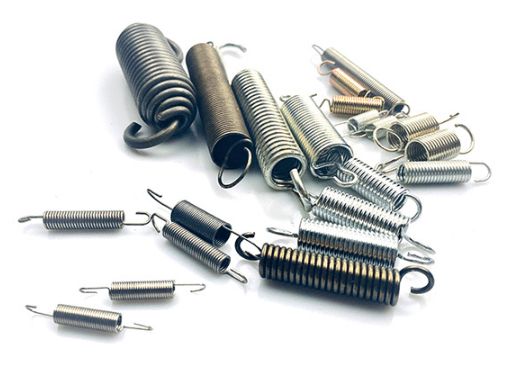
Tension springs are a type of helical spring designed to withstand axial tension. When these springs are at rest, their coils are typically tightly wound with no visible gaps. In this article, we will delve into the materials commonly used to manufacture tension springs, the essential parameters to consider before production, and the intricate production process of these invaluable components.
Materials Utilized in Tension Springs
Materials for tension springs fall into two primary categories: metallic and non-metallic.
Metallic Materials:
Spring Steel:
Carbon Spring Steel: Common grades include 65Mn, T8, T9, etc.
Alloy Spring Steel: Typical grades comprise 50Crv, 55CrSi, 60Si2Mn, etc.
Stainless Steel for Spring: Typical grades involve 304, 12Cr18Ni9, 07Cr17Ni7AI, etc.
Copper Alloys: These encompass silicon bronze, beryllium bronze, brass, among others.
Nickel and Nickel Alloys: Varieties include pure nickel, nickel-copper alloy, nickel-cobalt alloy, nickel-chromium alloy, etc.
Other Special Alloys: High-speed tool steel, alloys tailored for elastic components, memory alloys, and more.
Common Non-Metallic Materials:
Gas and Liquid:
Gas (e.g., gas spring)
Liquid (e.g., oil)
Gas-Liquid Mixtures
Rubber and Plastic Fiber Reinforcement Materials.

Key Parameters of Tension Springs
Before designing and manufacturing tension springs, it's essential to consider several critical parameters, including:
Hardness
Wire Diameter
Coil Pitch
Inner Diameter
Outer Diameter
Length
The Production Process of Tension Springs
The production process of tension springs involves a series of meticulous steps:
Winding Forming:
Cold Rolling Method: Used for springs with wire diameters (d) ≤ 8mm. Typically, quenching treatment is not performed after winding; only low-temperature tempering is required to eliminate internal stress.
Hot Rolling Method: Employed for springs with wire diameters (d) > 8mm. These springs rolled in a hot state, require quenching and tempering at medium temperature after rolling.
Heat Treatment:
Most elastic parts undergo heat treatment post-forming to establish and maintain elasticity, making it a crucial step in spring production.
End Surface Treatment:
The end surface of the spring, rolled after forging and flattening at both ends of the material, needs grinding to stabilize the support surface of the spring end ring. This ensures verticality and roughness requirements are met.
Surface Treatment:
Surface treatment options include plating (e.g., galvanized, cadmium-plated, copper-plated), bluing or blackening through oxidation treatment, phosphating (creating a water-insoluble phosphate film on the metal surface), and protective coatings such as paint, asphalt, or plastic.
Packaging and Storage:
Manufactured tension springs are meticulously packaged in specialized containers designed to protect them during transportation and storage.
Conclusion
The production of tension springs involves careful consideration of materials, parameters, and an intricate manufacturing process. KENENG, a trusted enterprise in spring production, offers a range of spring types, including compression springs, tension springs, mold springs, and special-shaped springs, all customized to meet customer specifications. With a rich history in the industry, KENENG is committed to delivering high-quality, cost-effective springs tailored to your unique needs. If you require springs, reach out to KENENG for top-notch service and quality products.
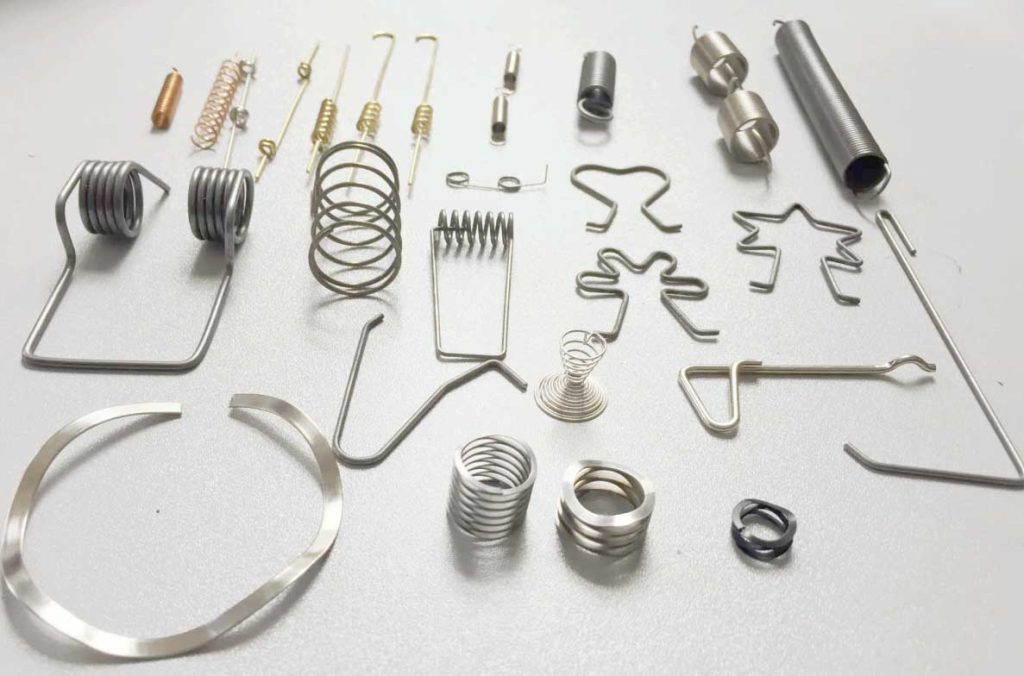
Springs are mechanical components that harness elasticity to perform various functions. They are widely employed in both the mechanical and electronics industries, offering a versatile means of converting mechanical energy into deformation energy and vice versa. Springs exhibit the remarkable property of elastic deformation when subjected to loads, reverting to their original state upon unloading. The stiffness of a spring, often referred to as its spring constant, is determined by the ratio of the load applied to the resulting deformation. Higher stiffness indicates a firmer spring.
Functions of Springs
Springs serve a multitude of functions in various applications:
Cushioning and Damping: Damping springs beneath vehicles and trains, as well as buffer springs in different types of buffers, absorb and dissipate energy to provide a smooth and controlled motion.
Mechanism Control: Springs like valve springs in internal combustion engines and clutch control springs play a pivotal role in regulating the movement of mechanical systems.
Energy Storage and Release: Devices such as clock springs and gun latch springs are designed to store energy and release it as needed.
Force Measurement: Springs are utilized in force measurement instruments like spring scales and dynamometers.
Manufacturing of Springs
The manufacturing process of springs involves several key steps:
Rolling: Large-scale production often employs universal automatic roll spring machines for rolling.
Hook Fabrication: For small-scale or custom production, springs can be made on general lathes or crafted by hand.
Fine Finishing: Precision finishing is essential to ensure the spring meets the required specifications.
Heat Treatment: The spring undergoes heat treatment, typically including quenching and medium-temperature tempering.
Performance Testing: Quality control involves rigorous testing of the spring's surface, ensuring it is free from defects such as scars and decarburization.
For springs with wire diameters less than or equal to 8mm, the cold coiling method is commonly used. When the diameter exceeds 8mm, the hot coiling method is adopted, with the coils heated to temperatures ranging from 800°C to 1000°C.

Causes of Spring Failure
Understanding the factors that can lead to spring failure is essential:
Plastic Deformation: When external loads exceed the material's yield strength, permanent plastic deformation can occur, preventing the spring from returning to its original shape and size.
Fatigue Fracture: Repeated alternating stress can lead to the development of surface defects and fatigue-induced cracks.
Rapid Brittle Fracture: Material or processing defects, heat treatment issues, or high-impact loads can result in sudden brittle fractures.
Corrosive Medium: Springs used in corrosive environments may experience stress corrosion cracking, while high-temperature applications can lead to creep and stress relaxation, causing permanent deformation.
Precautions for Springs
In practical applications, compression springs should maintain their working length even when subjected to forces beyond the material's elastic limit. To ensure this, the finished spring's length should equal the calculated length of the spring plus the initial compression volume. Additionally, during heat treatment, especially for springs requiring quenching and tempering, care should be taken to prevent spring shortening due to its weight.
Spring Deformation Applications: Spring Collets
One notable deformation application of springs is the spring collet, also known as a spring sleeve. Spring collets offer rapid and highly accurate positioning, facilitating the secure clamping of workpieces. Their advantages include:
Small Diameter Compatibility: Ideal for processing small-diameter workpieces.
Fast Loading and Unloading: Enables swift workpiece changes.
Short Replacement Times: Allows quick swapping of fixtures of varying sizes.
High Clamping Accuracy: Offers precision exceeding that of chucks.
Cost Efficiency: Reduces costs and enhances flexibility compared to chucks.
Enhanced Processing: Ideal for machine tools with internal interpolation spindle structures, providing greater processing space and rigidity.
Surface Protection: Safeguards workpiece surfaces and delivers superior cutting torque.
In conclusion, springs are indispensable components across various industries, performing an array of vital functions. Understanding their applications, manufacturing processes, and considerations ensures their effective utilization in mechanical and electronic systems. The spring collet, a deformation application, exemplifies how springs can offer high precision and versatility in specific applications.
Vehicle shock absorption systems typically consist of damping mechanisms, oil circuits, and pre-loading springs. When it comes to selecting shock absorber springs, there are three main types to consider: equidistant springs, double pitch springs, and progressive pitch springs. The pitch refers to the change in spring density. Which type is best suited for your vehicle? Let's explore the differences among three types of shock absorber springs.

The primary difference lies in how the three types of springs compress under different loading weights. Therefore, when designing suspension springs with different pitches, they will exhibit different effects..
Equidistant Springs:.
Equidistant springs maintain a constant k value, or spring rate, until they reach their compression limit. Therefore, the amount of compression is directly proportional to the weight of the load. Equidistant springs have a low production cost and provide a linear response. They offer a sense of security during heavy braking and are easy to adjust for pre-loading and damping. As a result, equidistant springs are commonly used in competition-oriented suspensions. However, for general road use, the k value is typically set to a lower level. This can lead to insufficient support during heavy braking. Conversely, if the k value is set too high for heavy loads, the ride quality on normal roads can become too rigid, making it challenging to absorb the impact of uneven surfaces..
Advantages:
Best linear reactivity and controllability.
Easy to adjust.
Low cost.
Disadvantages:.
Difficulty achieving a balance between intense and comfortable driving.
Double Pitch Springs:.
Double pitch springs have a slightly higher production cost compared to equidistant springs. However, they offer better comfort on general roads. These springs have two k values, allowing the part with the lower k value to compress first when encountering jumps or shocks on uneven roads. When emergency braking occurs, the part compressed to the higher k value maintains supportability. One drawback is the noticeable non-linear reaction when compression reaches a turning point.
Advantages:
Improved comfort
Better adjustability
Disadvantages:
Obvious non-linear reaction at the turning point during compression
Progressive Springs:
Progressive pitch springs have a higher production cost. Each coil has a different pitch, resulting in varying k values across the entire spring. This design combines the advantages of double pitch springs with smooth turning points. As the load increases, the spring gradually reduces compression, providing better buffering. Progressive springs offer the best damping reaction. However, selecting the correct overall k value change rate is crucial. Without proper selection, the complete working stroke cannot be utilized effectively. Additionally, adjusting pre-loading becomes more challenging with progressive springs, and setting rebound damping requires greater precision due to different k values at various suspension strokes.
Advantages:
Suitable for both sporty and leisure driving without k value turning points.
Disadvantages:
Difficult to set
Not linear enough
In summary, each type of shock absorber spring has its own advantages and disadvantages. Before making a choice, consider the specific requirements of your vehicle, such as the desired settings and pre-load adjustments. Correct pre-loading setting is essential as it forms the basis for the overall shock absorption setup. Once pre-loading is set correctly, subsequent damping adjustments become meaningful.
Springs are commonly found in everyday items such as washing machines, remote controls, fitness equipment, and bicycles. However, it's important to understand the characteristics and properties of the commonly used springs.
Characteristics of Compression Springs:
Compression springs are manufactured by winding separate helical turns, allowing each turn to have a gap or pitch. This design enables the spring to contract under force while maintaining tension towards both ends.
To avoid friction and fatigue damage, a gap must be reserved between the effective turns of the compression spring when subjected to maximum load.
The free length of the spring should include the actual length of the spring, the gap, and the amount of deformation.
Smoothing the surface of the compression spring increases the contact surface, aiming for around 60-80% contact.
Compression springs have various end treatments, including not being tight or smoothed, not being tight but smoothed, being tight but not smoothed, and being tight and smoothed.
Compression springs are widely used in electronics, motors, computers, automobiles, bicycles, and various industries. They are easy to design and manufacture.
Characteristics of Extension Springs:
Tension springs are wound into closely spaced helical coils or pitch coils. They stretch outward and maintain the force of shrinking toward the middle when subjected to external force.
Extension springs have different types of hooks, such as English hooks, German hooks, side ear hooks, and fishtail hooks.
Extension springs come in various shapes, including straight cylinders, hooks, and other variants, depending on the design.
Extension springs can be used as the reverse of compression springs and find wide applications. However, operational control is slightly more complex compared to compression springs.
Characteristics of Torsion Springs:
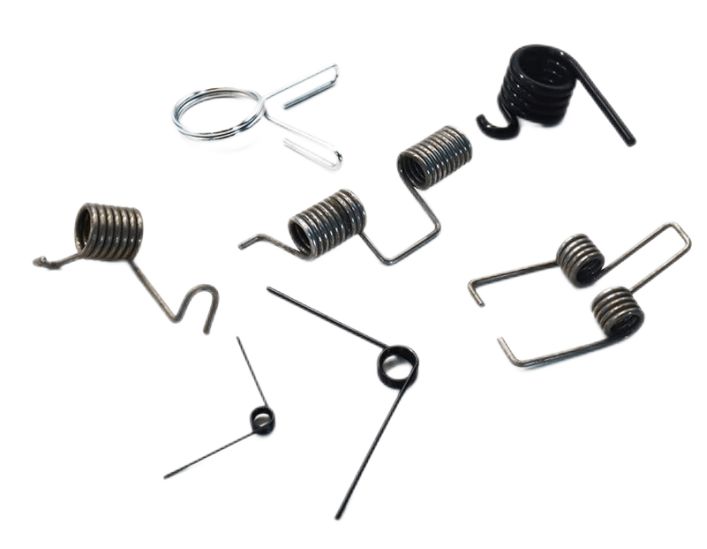
Torsion springs are divided into single torsion springs and double torsion springs. They are often inserted into pins or shafts and generate torsional force along the axis, causing the spring to coil or loosen when external force is applied.
Double torsion springs can be outer or inner double torsion with closed or separated circles. The ends of the spring can have hooked or straight torsion arms.
Torsion springs have complex design principles compared to other spring types, and various types of changes make the design more challenging.
Characteristics of Disc Springs:
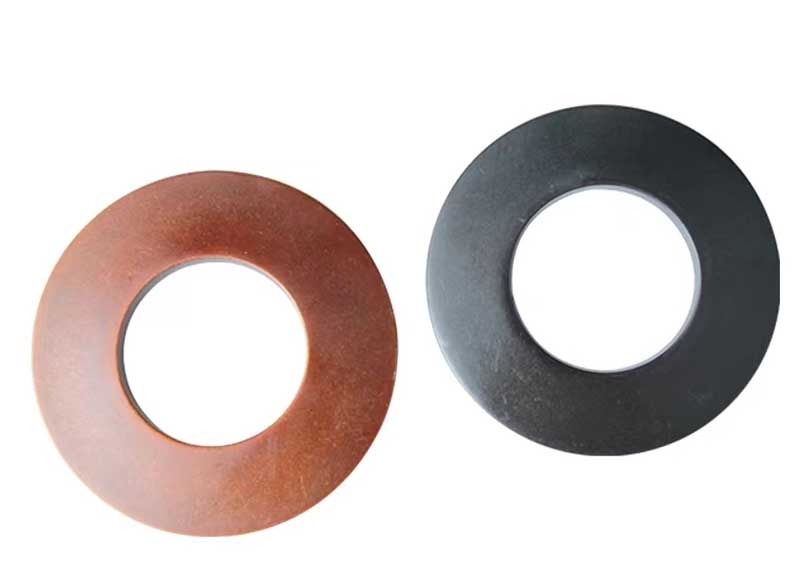
Disc springs, such as DIN2093, are characterized by their small size, high load capacity, convenient combination and use, and efficient load transmission.
Disc springs can be combined in single-piece involution, multi-piece superimposed combinations, or mixed combinations to achieve various curves.
Disc springs are widely used in industries such as defense, metallurgy, engineering, power, construction, and more. They excel in applications like molds, support hangers, clutches, brakes, buffer devices, bearing preload, safety overload devices, and industrial machinery.
Disc springs adhere to standards like DIN2093 and GB/T1972-2005.
Understanding the characteristics of different springs helps in choosing the right type for specific applications and ensures optimal performance in various industries.
There are different types of springs that frequently play an important function. As a result, each spring has equivalent tight standards in the manufacturing process and must pass a series of strict testing to verify that it meets the standard performance.
1. Spring fatigue performance and relaxation rate detection
These two factors, it may be argued, directly influence the spring's reliability and life, and are the key to the spring's quality. These two indicators can be acquired following specified cycle numbers of load-strain testing utilizing a spring fatigue testing machine.
Spring fatigue testing machine is used for testing.
2. Spring hardness test
Springs, particularly exceptionally big springs, are usually quenched. HRC44 to 52 is the typical hardness range for ordinary springs. And such an aircraft carrier-level spring will outperform HRC52 and possibly even HRC54.
The purpose of evaluating hardness is to evaluate the spring's failure performance.
Testing equipment: hardness tester.
3. Nondestructive testing of springs
Non-destructive testing includes visual inspection. Because of the various production procedures, it is possible that some flaws like as cracks, creases, delaminations, pits, pits, scratches, wire drawings, and other surface defects will occur during the spring's processing. These surface quality flaws are usually detectable through visual inspection or ultrasonic frequency.
Testing equipment: magnifying glass, microscope, ultrasonic detector.
4. Geometric size detection of springs
Size testing components primarily include the spring's material diameter, free length, free angle, spring diameter, total number of turns, length of torsion arm, bending angle of torsion arm, and so on. These are the fundamental spring testing items. discrepancies in size, especially with super-large springs, are likely to contribute to discrepancies in overall device performance.
Testing equipment: calipers, two-dimensional, three-dimensional, projector, etc.
5. Spring elasticity test
If the spring force value is clearly marked on the drawing, the matching spring force test must be performed. Typically, the elastic force tester can be used to detect the necessary elastic force; simply pay attention to the distance of pushing or stretching according to the drawing requirements and then check the relevant elastic force. This type of test is commonly used for slightly bigger springs, such as mechanical springs and engineering springs, whereas battery box springs or ultra-precise micro springs do not normally require it.
Testing equipment: elastic tester, tensile tester, etc.
6. Salt spray test of spring
The Salt spray test is also a popular test for spring items. Use varied hours of salt spray oil to prevent rust on the spring according to customer specifications, then take pictures and record the test results in 2/4/8 hours, and finally generate a test report.
If it fails the salt spray test, the spring must be treated with salt spray oil to meet the test criteria, preventing rust and deterioration during its service life and causing safety issues.
Testing equipment: salt spray tester.
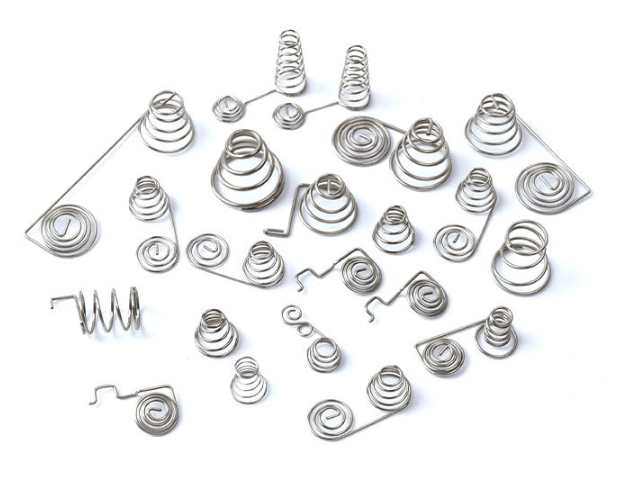
7. Impedance test
Impedance levels are commonly specified for battery box springs and springs with conductive applications. The requisite impedance test must then be performed in accordance with the specifications of the customer's designs. If the test fails, the impedance value
Testing equipment: resistance tester.
The things listed above are the most common spring detecting methods and associated equipment. You are welcome to submit supplements and ideas if there are any deficiencies!is normally adjustable by adjusting the material, inner and outer diameter, wire diameter, length, plating, and so on.