
Springs play a crucial role in various mechanical applications, utilizing the elasticity and structural properties of materials to achieve deformation and energy storage. This article explores the classification, parameters, and marking of springs, shedding light on their diverse applications in mechanical components.
Classification of Springs:
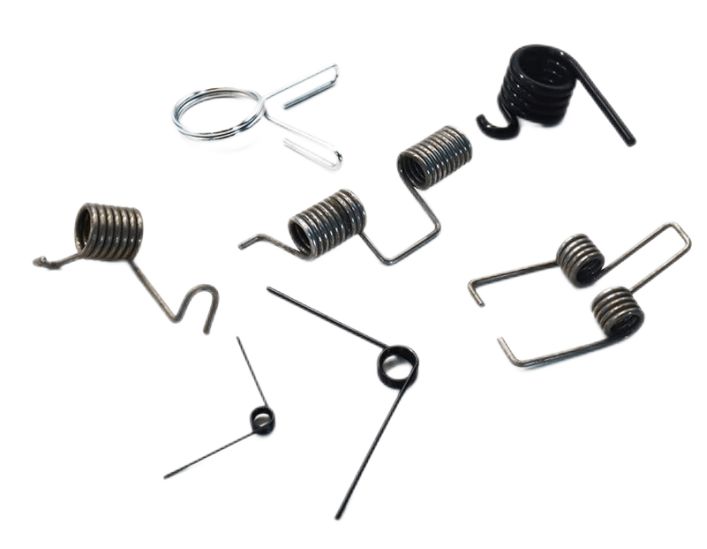
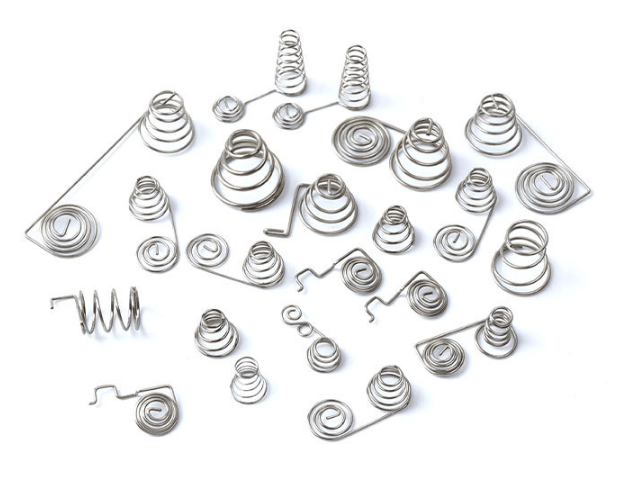
Springs come in various types, including coil spring, leaf spring, spiral spring, and disc spring. Among them, the cylindrical spiral spring stands out for its simple structure, convenient manufacturing process, and widespread applications. This type further divides into compression spring, extension spring, and torsion spring.
1.1 Compression Spring:
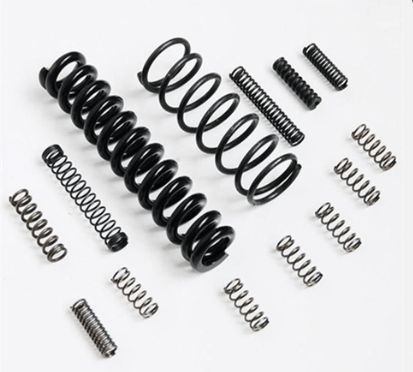
Characterized by large energy storage, low compression height, and stable stiffness, compression springs find applications in buffering, vibration reduction, energy storage, and controlling movement in mechanical equipment. They are commonly used in engine valve mechanisms, clutches, and automatic transmissions.
1.2 Extension Spring:
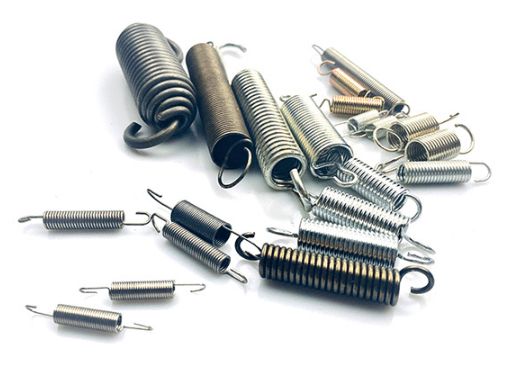
Similar to compression springs in performance and characteristics, extension springs are employed in situations requiring tensile load support, such as in overload safety devices of couplings.
1.3 Torsion Spring:
Primarily used for compression and energy storage, torsion springs serve as elastic links in transmission systems to withstand torsional loads. With linear characteristics, they are applied in dynamometers and forced air valve closing mechanisms.
Parameters of Springs:
Understanding the parameters of springs is essential for selecting the right type for specific applications.
2.1 Wire Diameter (d):
The diameter of the wire winding the spring.
2.2 Inner Diameter (D1), Outer Diameter (D2), and Pitch Diameter (D):
The inner diameter, outer diameter, and pitch diameter are crucial dimensions of the spring, where D is the average of D1 and D2.
2.3 Pitch of the Spring (t):
The axial distance between the section centerlines of two adjacent coils, excluding the support rings.
2.4 Number of Supporting Rings (nZ), Effective Number of Rings (n), and Total Number of Rings (n1):
To ensure uniform stress distribution, springs have supporting rings. The effective number of rings excludes support rings and is calculated as n = n1 - nZ.
2.5 Free Height (H0):
The height of the spring without any load.
2.6 Stretched Length of Spring Wire (L):
The length of the steel wire used for winding the spring.
Marking of Springs:
Properly marking springs is crucial for identification and application. The end coils can be either tightly ground (Type A) or tightly forged (Type B).
Example of Spring Marking:
YB 30x150x300 GB/T 2089-2003: Cylindrical spiral spring, wire diameter Φ30mm, pitch diameter Φ150mm, free height 300mm, manufacturing accuracy grade 3, material 60Si2MnA, surface painted, and can be left-handed or right-handed.
YA 1.2x8x40-2 GB/T 2089-2003: Cylindrical spiral spring, wire diameter Φ1.2mm, pitch diameter Φ8mm, free height 40mm, manufacturing accuracy class 2, material class B carbon spring steel wire, surface galvanized.
Summary:
This article provides an overview of spring classification, parameters, and marking. While standard springs are preferable for most design work, non-standard springs can be designed and customized under special circumstances to meet specific requirements. Understanding these aspects ensures the optimal selection and application of springs in various mechanical systems.
A compression spring serves as a mechanical element that resists external pressure, becoming shorter when subjected to a load, resisting that load, and then returning to its original length. This dynamic property allows compression springs to effectively store and release energy. These versatile springs find applications in a wide array of products, ranging from large-scale items like automobile engines and major appliances to precision instruments, medical equipment, mobile phones, and more. Selecting the right compression spring requires careful consideration of the industry and working conditions, as this directly influences the choice of spring material.
How to Choose a Compression Spring: 3 Tips
Consider the Number of Turns:
The total number of turns includes all coils from one top of the spring to the other, while effective turns refer to complete turns performing the spring's function.
Determining the number of turns is crucial for strength, with the effective turns expanding under pressure to resist it. Counting turns involves tracking complete rotations, where 360° is a full coil. This method applies to tension and torsion springs as well.
Examine the End Type:
Compression spring end types include standard and custom ends, impacting pitch, crush height, total turns, effective turns, free length, and support characteristics.
Standard ends can be open or closed, ground or not ground, affecting the spring rate.
The verticality of the end influences axial spring force transmission; closed ends offer better perpendicularity and stability.
Evaluate Material Selection:
Compression springs are made from various materials, including carbon spring steel, piano wire, stainless steel, and alloy spring steel.

Carbon spring steel, characterized by low plasticity and strong elasticity, is suitable for various grades like 65#, 70#, and 65Mn.
Stainless steel provides corrosion resistance, heat resistance, and good workability, with common grades such as 301, 302, and 304.
Alloy spring steel, featuring a high yield point, is suitable for heavy-duty applications with grades like 60Si2MnA and 50CrVA.
Popular Material: Piano Wire (High Carbon Spring Steel)
Piano wire is a favored material for high-strength applications like exercise equipment and home improvement items.
This high carbon spring steel is cost-effective, offers strong strength, and ensures a good service life.
Ideal for applications where the spring is not a visible part but needs to meet specific working life requirements, especially in dry environments.
In conclusion, understanding the intricacies of compression springs, including the number of turns, end types, and material choices, is vital for selecting the right spring for a particular application. Careful consideration of these factors ensures optimal performance and longevity of the compression spring in its intended use.
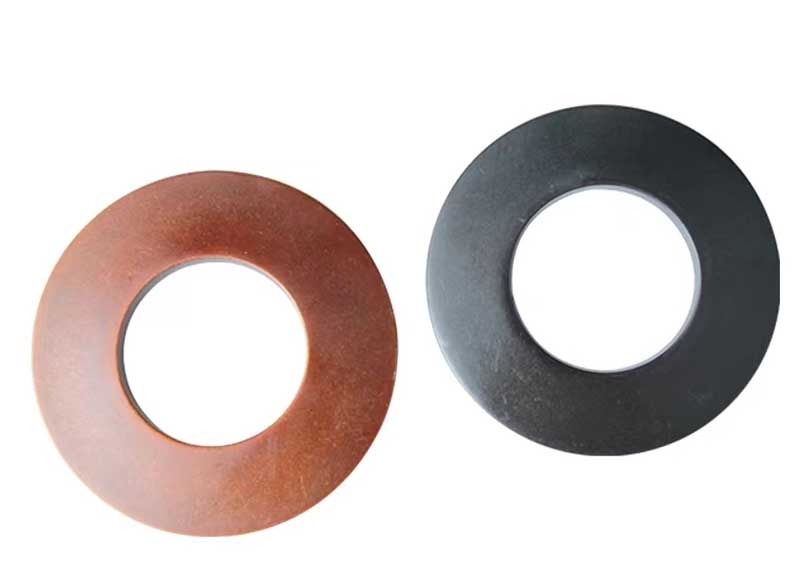
Disc springs, aptly named for their bowl or dish-like shape, are integral components in various maritime, industrial, and mechanical applications. Comprising four key parameters—outer diameter (D), inner diameter (d), thickness (t), and height (H)—these washer-type springs exhibit a truncated conical section and are crafted from metal sheets or forging blanks.

Principle of Disc Spring:
The fundamental principle behind disc springs involves their function as conical annular discs bearing axial loads. Typically, the disc thickness remains constant, with the load evenly distributed on the inner edge of the upper surface and the outer edge of the lower surface. Constructed from spring steel, disc springs excel in withstanding static, impact, or dynamic alternating loads, meeting stringent requirements for fatigue life.
Types of Disc Springs:
Anti-loose Disc Spring:
Application: Ideal for bolts subject to severe vibration but not under excessively large loads. Effectively prevents bolts from loosening and reversing, ensuring lasting and reliable sealing. Versatile for various bolt and equipment configurations.
High-Temperature Preloaded Disc Spring:
Application: Suited for bolt preloading in high-temperature environments, such as flanges, pipe flanges, valves, and heat exchangers. Especially valuable in applications with temperature differences exceeding 100°C.
High Torque Preloading Disc Spring:
Application: Applied in scenarios demanding substantial load and torque, such as pre-tightening valve and pipe flange bolts. Used in diverse engineering applications involving anchor bolts, fans, pumps, centrifuges, heat exchangers, reactors, agitators, generators, pipe supports, and hanger devices.
Buffer Tension Disc Spring:
Application: Widespread use in various industries, including brakes, safety overload devices, mechanical starters, industrial furnaces, clutches, molds, and more.
Advantages of Disc Springs Compared to Other Springs:
Space Efficiency:
Disc springs bear substantial loads in minimal space, making them efficient in applications with spatial constraints.
Variable Stiffness:
By altering the ratio of the inner cone's height to the disc thickness, disc springs exhibit variable stiffness characteristics, providing flexibility in spring curves.
Different Bearing Capacities:
Varying the number or combination of discs enables obtaining different bearing capacities, facilitating adaptability to a wide range of applications.
Long Service Life:
Correctly designed and manufactured disc springs boast a prolonged service life, contributing to their reliability in diverse settings.
How to Select Disc Springs:
When choosing disc springs for specific applications, several factors come into play:
Load Size and Characteristics:
Consider the magnitude and nature of the load, including static, impact, or dynamic loads.
Working Temperature:
Select disc springs suitable for the working temperature range, accounting for variations up to 600°C.
Equipment Working State:
Assess factors such as pre-tightening, stroke, vibration, pulse pressure frequency, and pre-tightening force.
Medium Corrosivity:
Evaluate the corrosivity of the working medium and the pH value, as these factors influence disc spring selection.
Pressure:
Different working pressures in pipes produce varying pulse pressures and thermal expansion and contraction, influencing disc spring selection.
Conclusion:
The versatility, efficiency, and durability of disc springs make them indispensable in a myriad of applications. Whether serving as strong cushioning devices or as components in safety valves and clutches, disc springs continue to play a vital role in diverse industries, offering small deformations, high loading capacities, and extended service lives. As their usage expands, understanding the selection criteria becomes crucial for optimizing their performance in various operational environments.
Belleville springs, often referred to as disc springs, owe their name to the French engineer Belleville, who invented this unique spring. These springs take on a conical disc shape and can be utilized individually, in series, or in parallel. Disc springs are defined by four key parameters: outer diameter, inner diameter, thickness, and height.
Key Features of Belleville Springs:
Energy Storage: When subjected to a load, Belleville springs deform and store potential energy.
Energy Release: These springs can release stored energy when slack or reduced loads are encountered.
Uniform Stress Distribution: Belleville springs offer even stress distribution from the inner to outer edges, enabling precise control with low stroke and high compensation force.
Shock Absorption: Known for their remarkable shock-absorbing capacity, Belleville springs can withstand substantial loads with minimal deformation, making them an excellent choice for applications with limited axial space.
Versatile Combinations: Belleville springs can be used in various combinations, including superposition, inversion, and compound arrangements. This flexibility allows for a wide range of spring characteristics to suit specific applications. Mixing springs with different thicknesses and quantities further enhances versatility.
Variable Stiffness: By adjusting the height-to-thickness ratio of the conical disc or by combining discs of varying thicknesses or quantities, Belleville springs can exhibit different stiffness characteristics. This enables customization of spring behavior, offering linear, increasing, decreasing, or combined responses.
Ease of Maintenance: When damage occurs to a Belleville spring, only the affected disc needs to be replaced, simplifying maintenance and repair.
Concentric Force Transmission: Due to their annular shape, Belleville springs transmit force concentrically, ensuring even force distribution.
Applications of Disc Springs:
Belleville springs find widespread application in various industries, including:
Metallurgy: They serve as strong buffers and shock absorbers in heavy machinery.
Engineering: Commonly used in precision applications where energy storage and release are crucial.
Electric Power: They play a role in power generation and distribution equipment.
Machine Tools: These springs are components in machinery that demand precision and control.
Construction: Used in construction equipment and machinery.
Safety Valves and Pressure Reducing Valves: Employed to provide essential spring force in these types of valves.
As a Chinese manufacturer specializing in Belleville springs, KENENG offers a diverse range of materials, sizes, surface treatments, and certifications. Custom springs can be produced based on customer-provided drawings, and their products have earned a strong reputation among both domestic and international collaborative enterprises. For custom spring needs, KENENG provides the expertise of professional spring design and manufacturing engineers. Don't hesitate to reach out for their services.
Surface treatment is a crucial aspect of spring manufacturing, aimed at preserving and protecting these vital components. Springs are often exposed to challenging environmental conditions, making it essential to employ protective layers. These protective layers of springs can be categorized into metal protective layers, chemical protective layers, and non-metallic protective layers, each chosen based on the specific needs of the application.
Metal Protective Layers for Springs
One common method of providing protection to springs is by applying a metal protective layer. Among the various techniques available, electroplating is a widely used method for obtaining a metal protective layer. Two of the most prevalent options in this category are galvanization and cadmium plating.
Non-Metallic Protection for Springs
Non-metallic protective layers are applied by dipping or spraying substances such as asphalt or paint onto the spring's surface. These layers serve as a barrier against environmental factors, safeguarding the spring from corrosion and other forms of degradation.
Chemical Protection of Springs
Chemical protection involves creating a dense protective film on the spring's surface through processes like oxidation treatment or phosphating. This film acts as a shield against corrosion and extends the spring's lifespan. Both oxidation treatment and phosphating are cost-effective methods, with oxidation treatment being the preferred choice among Spring manufacturers.
Oxidation Treatment of Springs
Oxidation treatment, also known as bluing or blackening, results in the formation of a protective magnetic iron oxide layer on the spring's surface. The color of this oxide film can vary, ranging from blue and black to dark brown. The specific hue depends on factors like the oxidation process, the spring's surface condition, and its chemical composition.
Methods of Oxidation Treatment
Oxidation treatment encompasses various methods, including alkaline oxidation, alkali-free oxidation, and electrolytic oxidation. In most cases, alkaline oxidation is the method of choice. However, it's important to exercise caution during oxidation treatment, as it can erode surface grain boundaries, potentially reducing fatigue strength.
The Process of Alkaline Oxidation
Alkaline oxidation involves immersing the spring in a sodium hydroxide solution at approximately 140°C for a specified duration. During this process, the oxidant and sodium hydroxide react with iron to produce Na2FeO2 and Na2Fe2O4, ultimately forming the protective magnetic iron oxide. The thickness of the oxide film typically ranges from 0.6 to 2 μm. Factors affecting corrosion resistance include oxide film compactness, thickness, oxidant concentration, sodium hydroxide concentration, and solution temperature.
Phosphating Treatment of Springs
Phosphating treatment entails immersing the spring in a phosphate solution containing manganese, iron, and zinc to create a water-insoluble phosphate film on the metal surface. The resulting film appears dark gray, gray, or dark gray, imparting a dull finish. Generally, the thickness of the phosphating film ranges from 5 to 20 μm.
Precautions for Phosphating Treatment
Several precautions should be taken during phosphating treatment:
Phosphating films possess microporous structures, making them ideal for paint and grease adhesion. Hence, phosphating is often combined with coating methods like painting.
Phosphating films can withstand high temperatures (400~500℃), making them suitable for springs operating in elevated temperature environments.
Springs should be sandblasted before phosphating. Immediate phosphating after sandblasting is recommended. If sandblasting equipment is unavailable, chemical degreasing and pickling can be used to remove oil.
Phosphating processes produce hydrogen, which can lead to hydrogen embrittlement in critical parts of the spring. Dehydrogenation treatment is essential after phosphating to mitigate this risk.