
Due to the nature of underground operations, it is exceedingly difficult for professors to explain and students to comprehend the required technology and method during the training process. As a result, Esimtech has created a downhole virtual simulation training system.
Workover Simulating Training System For Downhole Operation
Because the workover simulating training system models real-world field devices, the layout of the controlling panel, manner of operation, and technique of parameter display are substantially comparable to those found on the job site. Using synchronous 3D projection and lifelike environment sound, the systems generate visual effects that are highly similar to real-world places and create an immersive teaching experience.
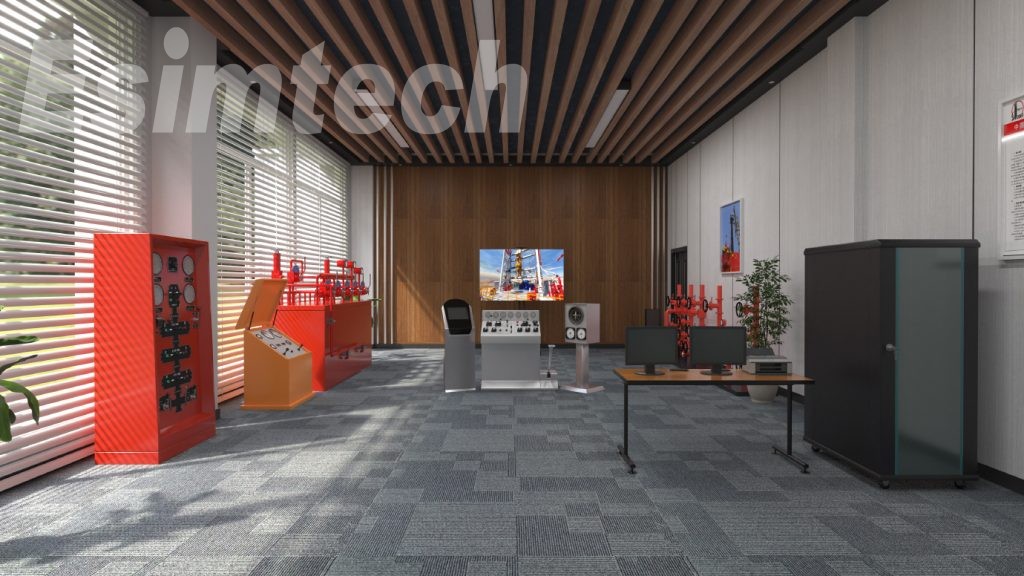
The system is built on powerful computer controlling, simulating, graphic, and network technology, which is combined with a tight simulation of the real drilling engineering process, offering 6 categories and 35 training activities in total, such as well killing and shutting in. Its primary application is to teach technical employees who work underground in oil fields.
A portable workover simulator combines petroleum engineering with computer technologies, such as virtualization and computer simulation.
Its main purpose is to train new personnel, drillers/assistants, drilling technicians, and driller supervisors. The instruction provided by this technique can assist students in mastering the foundations of closing in and well killing.
To accomplish the same effect as the actual drilling operation, the system employs a mathematical model to mimic numerous parameters such as pressure, torque, drilling rate, flow rate, and so on, as well as to reflect the relationships between these parameters. Real-time 3D animation immerses the trainees in an immersive atmosphere.
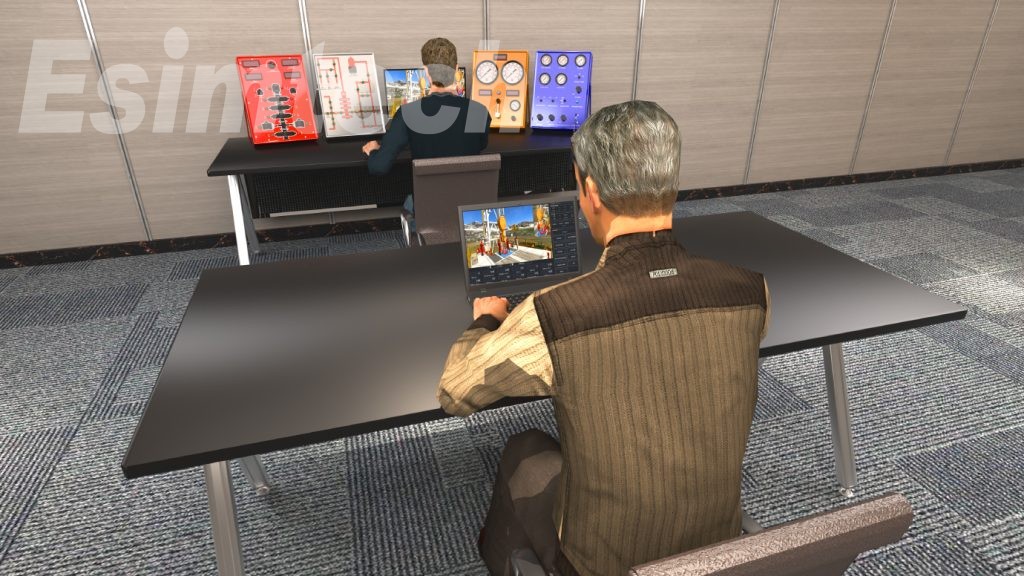
Training Items
(1) Primary worker activity
Pulling and running tubing
Cleaning the sand
Printing using lead
(2) Operation of intermediate workers
Eccentric roller reshaping
Release fishing with a spear
Fishing with a slider spear
determining the stumbling block
(3) The operation of senior workers
Perforation of TCP
(4)Scraping following perforation
Using a drilling platform
After kick, the rotary operation shuts down.
After a kick, running and pulling operations are shut down.
Shut-in after kick occurs when big diameter tools are tripped.
After a kick, there is a shut-in in the barren hole.
Shut-in after kick occurs in wireline perforation procedures.
Without drilling platform
After kick, the rotary operation shuts down.
After a kick, running and pulling operations are shut down.
(5) Display of animation
After disassembling the Christmas tree, install the standpipe BOP.
Scrubbing the well
Killing in recirculating wells
Low gauge pressure testing
Fracturing sand management
Screw drill TCP-DST combination test
The operation of toxic and hazardous gases was demonstrated.
Fracturing And Acidizing Simulation Training System For Downhole Operation
Fracturing and acidizing simulation training platform based solely on production-level devices. It also incorporates technologies such as Fieldbus communication, distributed control, and virtual reality. The system consists of three components: hardware, software, and a graphics system.
The hardware is comprised of a fracturing truck and a blending truck operation panel; the software is comprised of fracturing design and process technology; and the graphics system depicts the actual process in 3D models. An evaluation software that allows pupils to work individually while the system assigns a score automatically. Instructors can also see how pupils conduct themselves. This software assists in determining students' rates of advancement.
The fracturing and acidizing simulator is very intelligent, with robust software, consistent operation, and an easy-to-use and learn graphic interface. Students can obtain direct understanding of the genuine process and master the necessary abilities thanks to the system.

The Benefits of Simulation Training System For Downhole Operation
1.Consistent and extensive training content, adaptive project design
2.Real-time interactive 3D animation
3.Intelligent scoring and unbiased evaluation
4.Alarm and realistic environment sound
5.Excellent software functions, an easy-to-use interface, and ease of learning and use
6.Real-time voice prompts
7.Industrial-grade PLC control, with outstanding stability and dependability
8.Extremely rigorous mathematical simulation in response to real-world technical constraints
In drilling engineering, drilling machinery, well control equipment, solids control equipment, drill pipe, drill collar and bit, and other equipment are often utilized. Other workers, aside from production professionals, are not permitted to access and enter the oil drilling production site due to the high cost of drilling equipment and the hazardous atmosphere on the construction site.
To show the real oil drilling production site and train students with relevant knowledge and skills, a comprehensive 3D drilling and well control simulator was developed, which completely reproduces the scene and working atmosphere of oil drilling work and improves students' perceptual knowledge of the drilling work site.
Top Drive Simulator For Drilling And Well Control
The top drive simulation training system's objective is to train the top drive device's operation. It may provide training for all top drive operations as well as common accident response. It can be used to train drillers, driller assistants, technicians, and drilling team leaders, among others. By practicing with the top driver simulator, trainees can grasp the top drive operation approach as well as common accident handling skills.
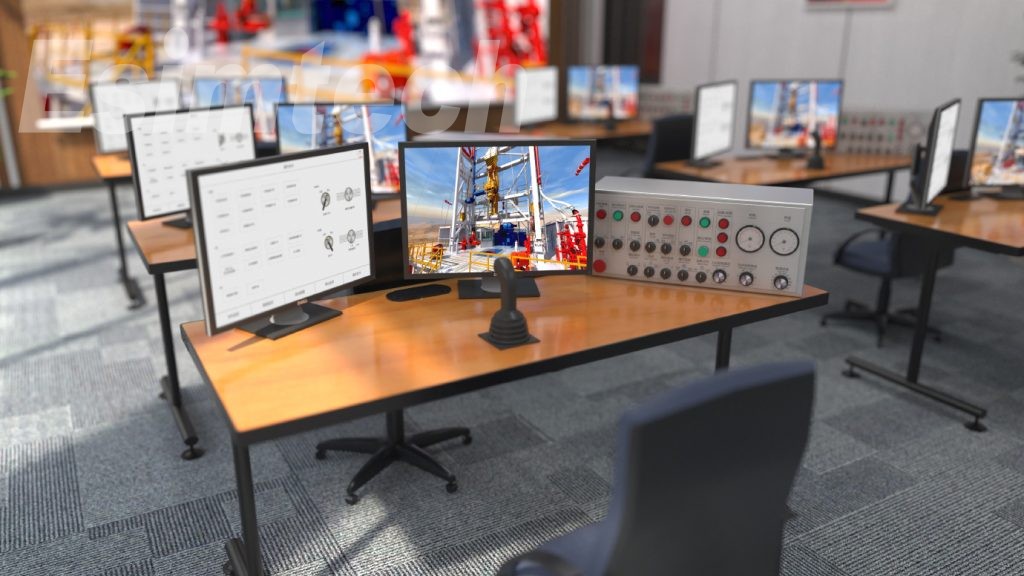
Features
Simulating the real system completely
3D animation display
Feature for preventing accidents
Step-by-Step Mode of Operation
Sound effect that is realistic
Automatic scoring system
Student data administration
Drilling Simulation Training System For Drilling And Well Control
The drilling simulation training system mimics real-world equipment on a real-world production site, including all hardware systems, panel layout, operating methods, and parameter displays.

Features
Nonsequence drilling operation mode.
Advanced and exact physical-mathematical mode.
Developing a training snapshot based on actual well conditions.
Adaptability and systematic training content.
Real-world device operation environment at full size.
Intelligent scoring, 3D fairness, and interactive animation are all available.
Interface that is simple to use.
Sound effects that are realistic and an alarm system.
High stability and dependability in controlling industrial PLCs.
Real-time voice prompting
Land Rig Installation Simulator For Drilling And Well Control
The simulator for land rig installation integrates petroleum engineering, computer technology, and virtual reality technologies. This system consists of five primary components: rig installation animation, instruction on raising and lowering derrick and pedestal, rig virtual assembly, rig simulation operation, and electronic graphics.
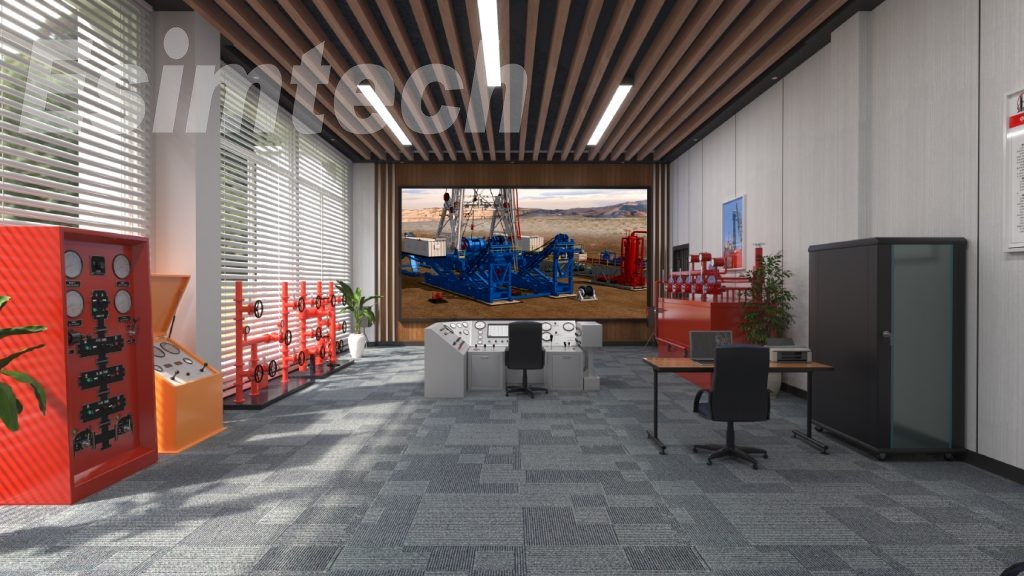
It teaches the procedure and essential points of installing a land rig, as well as the lifting and lowering of the rig derrick and pedestal, rig tripping in and out, drilling, top drive operation, rig construction, the inner structure of vital equipment, and so on.
Features
HD animation of the rig assembly method
Interaction with the rig model in real time, as well as 3D animation demonstration
Detailed electronic visuals illustrating the rig's construction
Simulating a real rig and carrying out the same tasks as real equipment
3D animation that mimics the visual surroundings of the real world
The well control simulation training system is a simple, user-friendly, effective, and efficient training system is a simple, user-friendly, effective, and efficient training system created for blowout prevention in the oil and gas industry.

Why Choose Well Control Simulation Training System
Blowout is the phenomena in which the pressure of formation fluid, such as oil, natural gas, or water, exceeds the pressure in the well during the drilling process, and the blowout is uncontrolled from the wellhead. A blowout is a dangerous drilling accident. Once it occurs, it frequently has catastrophic repercussions, necessitating strong preventive measures.
It is difficult to locate and recreate the overflow and blowout occurrence when conducting well control training for petroleum industry employees. To address this issue, Esimtech introduced an advanced well control simulation training system that uses 3D scene reconstruction technology to reproduce the overflow phenomenon at a low cost and with high realism, and there are corresponding virtual characters in the 3D scene to replace the students in operation.
What Is Well Control Simulation Training System
A well control simulation training system is a simulation training system designed for use in blowout prevention operations in the oil and gas drilling industry. The system is primarily utilized to assist trainees in learning and mastering operating procedures as well as well control theory understanding.
The system uses 3D visualization technology to recreate the well control operation site and can provide virtual reality training on operation rules. It uses mathematical models to simulate various operating circumstances, parameters, and relationships between parameters in the petroleum engineering process, such as pressure, torque, drilling rate, discharge rate, and so on. The students' perceptual knowledge will be strengthened by the addition of semi-physical equipment, the shape of which is highly consistent with that of the genuine equipment and whose internal circuit digitally communicates numerous signals. It encompasses the entire training process, including teaching, learning, training, and examination, so that each student can receive high-quality training results. At the same time, the system also developed a theoretical examination training system to assist students in theoretical study and assessment.
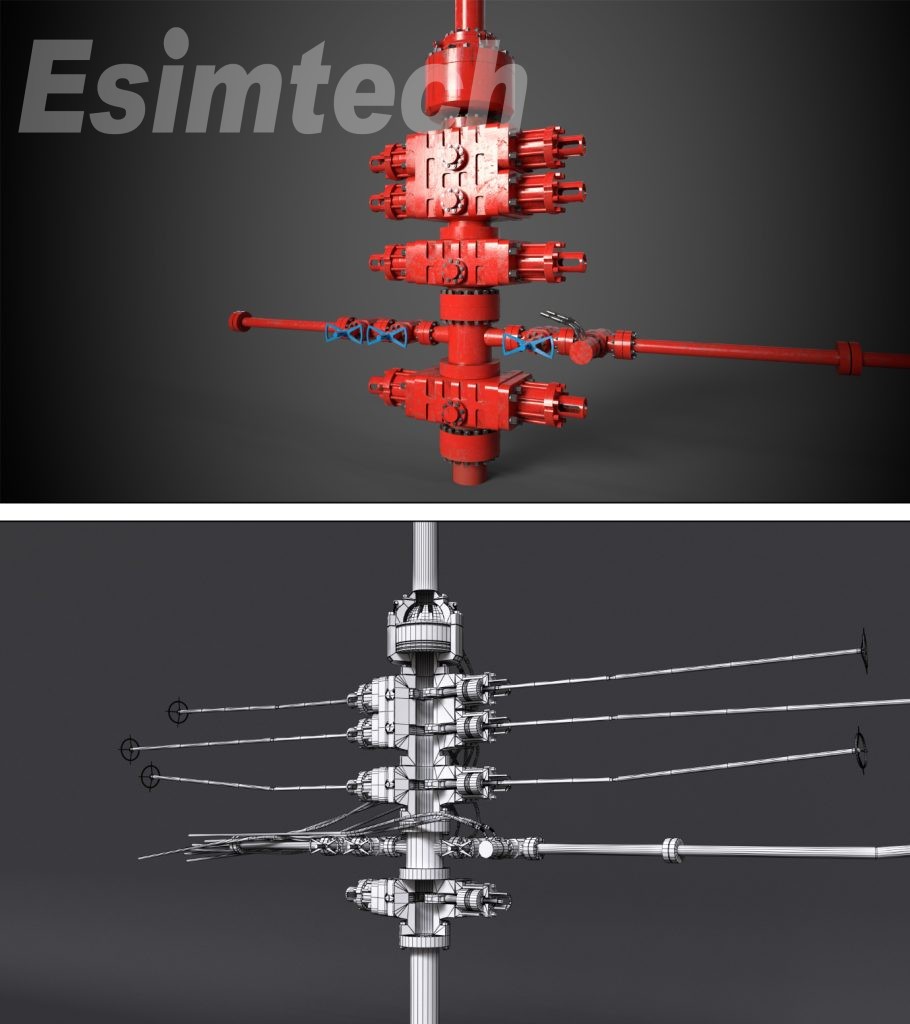
The Benefits Of Well Control Simulation Training System
The Well control simulation training system is the result of a collaboration between petroleum engineering, computer science, and virtual reality technologies. It can complete training programs for primary, intermediate, and senior workers in areas such as tubing tripping, sand flushing, lead mold printing, eccentric roller shaping, TCP perforation operation, pipe scraping after perforation, downhole control technology, and so on. Its primary purpose is to train new staff, downhole operators, and on-site supervisors. Trainees can master the most often used downhole operation construction technology and downhole operation well control technology by using this method.
3D interactive animation in action
The UI is user-friendly and straightforward to use.
Well control technology simulation that is reasonable
Voice prompts and realistic sound effects
Fair evaluation of all intellect scores
Stable and trustworthy industrial components
Real-time voice prompting
Project flexibility, methodical and extensive training content
Industrial PLC control with high stability
Through this training system, students can study the working principle and operation method of a downhole operation simulator, fracturing and acidizing process, and workover rig process, among other things.
Applications Of Well Control Simulation Training System
The Well Control Simulation Training System is a sophisticated training tool that simulates well control scenarios and equipment, allowing operators to practice their skills and procedures in a safe and regulated setting. The
Well Control Simulation Training System can be used for a variety of purposes, including:
Well Control Simulation Training System is a prominent tool in the drilling business for training operators on well control methods. It mimics drilling equipment and helps operators to practice responding to well control events like kicks and blowouts.
Well intervention: The Well Control Simulation Training System is used in the well intervention sector to train operators on well control methods such as wireline, coiled tubing, and snubbing operations. It simulates well intervention equipment and allows workers to practice controlling and monitoring the well while performing these procedures.
Rig personnel training: The Well Control Simulation Training System is used to train rig workers on well control techniques, including drillers, assistant drillers, and rig crews. It simulates the drilling rig and allows staff on the rig to practice responding to well control events.
In the event of a well control emergency, the Well Control Simulation Training System is utilized to teach emergency response teams on well control protocols. It mimics emergency response equipment and enables teams to practice responding to well-controlled events.
Regulatory compliance: The Well Control Simulation Training System is used to ensure that well control regulations and standards are followed. It enables drilling companies to verify that their workers are properly trained and equipped to respond to well control events.
System Requirements for Control Simulation Training
Specific Well Control Simulation Training System requirements can vary depending on the application and sector. However, the following are some general specifications for a typical Well Control Simulation Training System:
The simulation software is an important component of the Well Control Simulation Training System, and it must be able to precisely recreate the well control scenarios and equipment being simulated. The software should be adaptable to various settings and conditions, and it should be capable of providing feedback on operator performance.
Control panels: The control panels provide a realistic interface for operators to control the simulation. They should be user-friendly and simple to use, and they should be intended to mirror the real controls and buttons used in the well control equipment being replicated.
Computer systems: Computer systems control simulation software and data, and they must be able to run simulation software smoothly and without latency. They should also be able to store and analyze operator performance data.
Hardware: Well Control Simulation Training System may require extra hardware, such as sensors, actuators, and other equipment used in the well control equipment being simulated, depending on the application. This gear should be able to integrate with simulation software and provide operators with realistic feedback.
Training materials: To use the Well Control Simulation Training System effectively, operators must have access to training materials such as user manuals, videos, and other resources that explain how to operate the simulation software and control panels.
Emergency response equipment: Well Control Simulation Training System may require emergency response equipment, such as blowout preventers and other well control equipment, for emergency response training. This equipment should be able to integrate with simulation software and provide operators with realistic feedback.
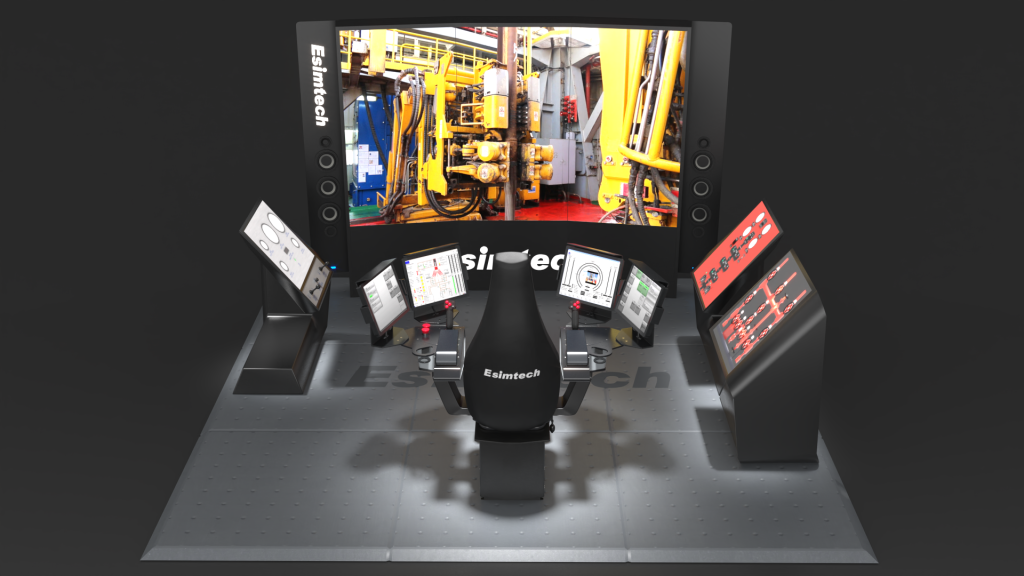
Why Well Control Simulation Training System Is Important
The well control simulation training system is a valuable tool for the oil and gas industry because it provides a safe and regulated environment for teaching and practicing well control techniques. Well control is a key part of drilling operations, and the implications of being unprepared for well control events can be disastrous, including loss of life, environmental harm, and large financial losses. Some of the reasons why Well Control Simulation Training System is vital are as follows:
Safety: The Well Control Simulation Training System offers operators with a safe and regulated environment in which to practice their well control operations. During drilling operations, this decreases the chance of accidents, injuries, and equipment damage.
The status of diverse oil wells and oilfields has become more complex as oil and gas development has progressed, and the hazards faced by the construction site have increased. The drilling and well control simulation system has been widely used for drilling technician experimentation, training, and evaluation. Traditional field training is constrained by the location and ocular aspect, and the training impact is suboptimal. VR virtual reality technology is an excellent tool for drilling well control training.
VR virtual reality technology works with 3D interactive equipment to simulate the well site environment, equipment and facilities, operators, and work processes, as well as the formation structure, borehole trajectory, drilling targets, and other objects that can be seen with the naked eye, and the display effect is accurate, intuitive, and diverse. Reduce the design cost and development cycle significantly.
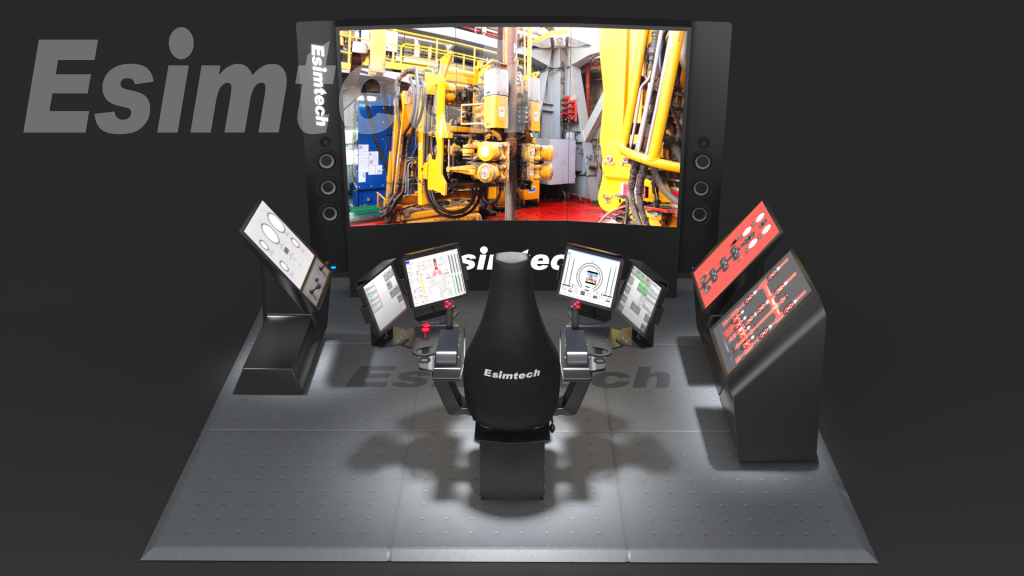
Why Should You Use a Drilling And Well Control Simulation System?
The drilling and well control simulation system completely covers the knowledge and theory of numerous disciplines, types of work, and equipment used in system engineering, and the teaching system is thorough. Students are not required to take precise measurements of the abandoned oil fields.
The virtual reality system communicates with external handheld devices to display the structure through dynamic viewing, moving, rotating, and scaling actions. The work cycle is primarily illustrated by video and audio.
In comparison to offline training, simulator training is not limited by space or time as it may be carried out by attending a virtual classroom online. It also sets clear and consistent training evaluation standards, which supports unified management. Furthermore, through virtual and realistic scene simulation, online training methods can realize some related dangerous procedures and some advanced training that are difficult to achieve in offline training.
The device also activates the downhole accident mode to imitate the actual process caused by incorrect operation. To expand their study of safety principles and emergency measures, trainees can receive timely error prompts and feedback on training results.
Furthermore, teachers can train numerous students at the same time, saving resources. After completing their study, students can conduct post-class consolidation reviews at any time.
Handling emergencies necessitates the seamless coordination of all links, in addition to training personal practical operation competence. The VR virtual reality remote information sharing system, developed in conjunction with the Internet, spans workshops and departments, allowing for multi-user engagement and collaboration, and significantly increases the effectiveness of department collaboration, workflow mode, and sharing mode. A relationship between the online simulator training system and the offline training system is not required.
Drilling and Well Control Simulation System Applications
Drilling and well control simulation applications include rig installation, well logging, oil and gas gathering and transportation, fracturing and acidizing, coiled tubing, oil and gas production, transportation, downhole operations, emergency exercise simulator, and other areas, with a wide range of 3D oil & gas animations, such as drilling and well control equipment disassembly and working principle animation.
Drilling and well control simulation systems make extensive use of 3D technologies.3D simulation, 3D interaction, and other technologies are utilized to provide realistic simulation and 3D interaction of drilling drill scenes, human situations, equipment and facilities, and environmental conditions.
These simulation training systems can automatically work with trainers to complete various exercise programs, have realistic settings, and provide an excellent user interaction experience thanks to virtual reality technology.
Workflow of Drilling and Well Control Simulation System
The drilling and well control simulation system is a useful tool for increasing the safety, efficiency, and effectiveness of drilling operations in the oil and gas industry. Drilling and Well Control Simulation System can help to decrease accidents and equipment damage, increase operator skills and competency, and promote continuous improvement in drilling operations by providing a safe and controlled environment for training and practice. A Drilling and Well Control Simulation System's work process includes numerous steps:
1.The initial phase is to design and configure the Drilling and Well Control Simulation System. This often entails selecting and setting the right simulators, control panels, and computer systems to model the desired drilling situations and circumstances.
2.Operator training: After the Drilling and Well Control Simulation System is installed, operators are trained to use the simulator and control panel. Drilling techniques, well control, and emergency response procedures are often covered in this training.
3.Simulation: After installing the Drilling and Well Control Simulation System and training operators, simulations can commence. Operators improve their skills and tactics by manipulating the simulator and responding to various scenarios and conditions during simulations.
4.Performance evaluation: The Drilling and Well Control Simulation System delivers real-time feedback on operator performance during simulations. This feedback can include information on drilling parameters, well control, and emergency response methods, which allows operators to discover areas for improvement.
5.Operators can perfect their skills and procedures through further training and practice based on the input supplied by the Drilling and Well Control Simulation System. This can aid in the advancement of continuous improvement and innovation in drilling operations.

Drilling and Well Control Simulation System Benefits
There are various benefits to employing a Drilling and Well Control Simulation System in the oil and gas business. Here are some of the primary benefits:Safety: The Drilling and Well Control Simulation System allows operators to practice their skills and procedures in a safe and regulated environment. This helps to limit the danger of accidents, injuries, and damage to drilling equipment during drilling operations.
Drilling and Well Control Simulation System simulates real-world drilling scenarios and conditions, allowing operators to train in an immersive and realistic environment. This improves their abilities and confidence, preparing them to conduct actual drilling operations.
Drilling and Well Control Simulation System is a less expensive alternative to traditional training methods including on-the-job training or pricey drilling schools. DWCSS can help to reduce operational expenses and boost profitability by minimizing the demand for costly equipment and resources.
Drilling and Well Control Simulation System can help to increase drilling operations' efficiency and productivity. Drilling and Well Control Simulation System can help to reduce the time and resources required to accomplish drilling projects by giving operators the opportunity to practice and perfect their abilities.
Drilling and Well Control Simulation System gives quick feedback on performance, allowing operators to identify areas for development and fine-tune their skills.
The Drilling and Well Control Simulation System of the Future
Drilling and Well Control Simulation Systems have a bright future, with the potential for considerable technological and application improvements. The following are some of the important areas in which DWCSS is likely to evolve in the future:Integration with cutting-edge technologies: The Drilling and Well Control Simulation System will most likely become increasingly integrated with other modern technologies such as artificial intelligence, machine learning, and big data analytics. This integration will make simulations and feedback processes more sophisticated and precise.
Drilling and Well Control Simulation Systems will be used more for remote and virtual training, allowing operators to practice their skills and procedures from anywhere in the world. This will assist to decrease the need for costly and time-consuming travel while also giving operators more flexibility.
Drilling and Well Control Simulation System is planned to become increasingly configurable, with the capacity to construct bespoke training programs adapted to the specific needs and requirements of individual operators and organizations.
Drilling and Well Control Simulation System is predicted to increasingly replicate environmental and safety hazards such as well blowouts, fires, and gas leaks. This will help to improve drilling safety and provide operators with the skills and knowledge required to respond effectively to emergency circumstances.
Real-time data analytics: The Drilling and Well Control Simulation System is intended to improve its real-time data analytics capabilities. This will help operators to make better informed judgments throughout drilling operations and respond to changing conditions more effectively.
Because of the unique characteristics of the oil drilling industry, the need for a drilling simulator is to save a significant amount of people and resources for drilling training. A petroleum drilling simulator is a type of virtual training equipment that simulates the driller's work in a drilling operation by utilizing modern electronic technology and communication principles.
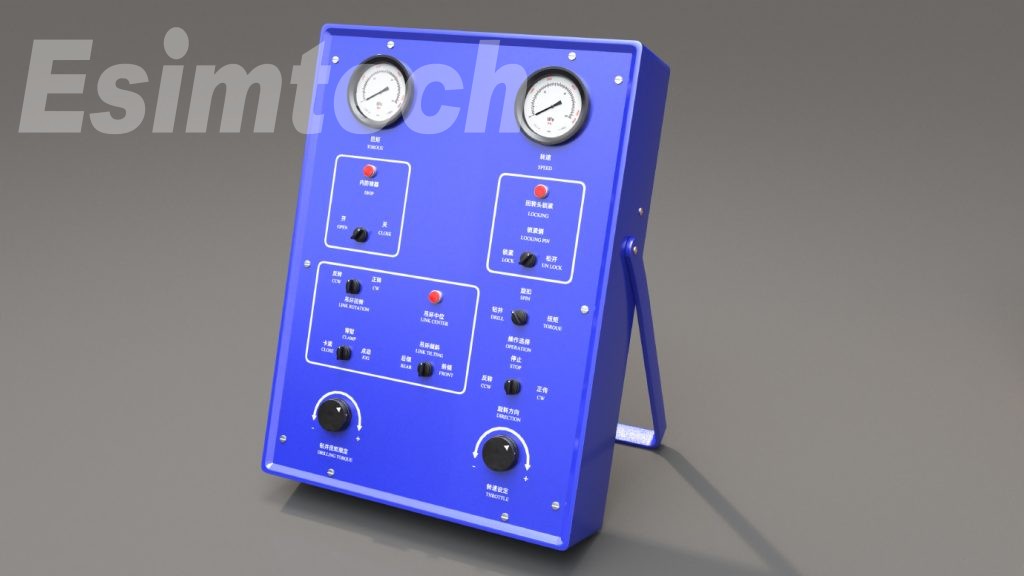
Esmitech has created a portable drilling simulator that sends operational instructions to the simulation console in order to obtain interactive control of the virtual 3D well pad.
The trainees can operate directly through the driller's console simulator to restore the well site operation process, as if sitting in the driller's control room, with a strong sense of presence and realism, thanks to the combination of simulator and 3D technology.
The Esmitech drilling simulator is portable, easy to transport, and can be used for mobile education. The simulator can create a network-based multi-user shared virtual environment in which users of various types of work training can control their own virtual characters and interact with the virtual characters controlled by others to achieve the goal of simulation training.
Features Of Esmitech Portable Driller Simulator
Control of physical operations
There is no sequenced driller operation mode.
True 3D picture interaction in real time
Sound effect of a realistic environment
Voice prompting in real time
Advanced and precise physical and mathematical models, in accordance with real-world process requirements
Cooperative operation in various sorts of work teams
The training material is methodical and comprehensive, and the project structure is adaptable.
User-friendly UI that is simple to learn
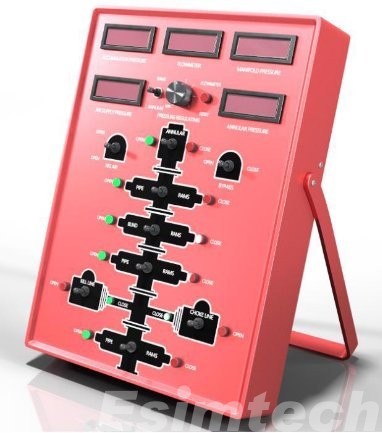
Functions Of Esmitech Portable Driller Simulator
Drilling modes, such as rotary table drilling simulator and top drive simulator, can be selected.
The parameters for beginning the drill can be changed to influence the drill's operation dynamics.
Capable of displaying the well-site image.
Conduct training on a variety of drilling operations, such as tripping out and joining single pipes.
Drilling simulation should be done interactively. The system receives the operation command from the operation console, evaluates its action attribute, and provides feedback.
Esmitech Portable Driller Simulator Operation Projects
The training program essentially covers all drilling procedures, including rotary table drilling and top drive drilling. Patrol inspection, drilling operation, and accident handling are all part of the rotary table and top drive drilling operation modules, respectively.
(1) Rotating drilling operation patrol inspection
The drilling project
1. drilling and joining a single pipe
2. stumbling and falling in the hole
3. casing operation
(2) The accident handling operation can be carried out by the teacher randomly introducing equipment and downhole defects during the well control simulator operation, so that the trainees can learn the judgment and fault handling procedures.
Applications Of Esmitech Portable Drilling Simulator
It can handle downhole accidents like stuck tripping, stuck tripping, high-pressure formation drilling, low-pressure formation drilling, adhesive sticking, sand setting sticking, mud bag sticking, drill pipe suction, well kick caused by high-pressure permeability layer, multiple well kick, lost circulation, underground blowout, out-of-control blowout, out-of-control blowout, and fire.
The Esmitech Portable Drilling Simulator is a versatile tool that can be utilized in a variety of drilling-related tasks. The simulator is commonly used for the following purposes:
Training: The simulator is a fantastic training tool for all levels of drilling operators. It provides a safe and regulated environment for practicing skills and techniques such as drilling, tripping, and well management.
Assessment: The simulator can be used to evaluate drilling operators' abilities and competency. It gives instructors real-time feedback on their students' performance, allowing them to discover areas for development and provide specific comments and coaching.
Research and development: The simulator can be used for drilling-related research and development. It can be used to evaluate the effectiveness of different drilling procedures, as well as detect potential risks and hazards related with drilling operations.
Training for emergency response: The simulator can be used to mimic emergency events such as well blowouts or equipment breakdowns. Drilling operators can practice emergency response methods in a safe and controlled environment.
Reasons Why Buy Drilling Simulator From Esmitech
Pre-job planning: Before implementing drilling plans and procedures in the field, the simulator can be used to develop and test them. This can assist in identifying potential problems or concerns and refining the plan prior to the start of real drilling operations.
The Esmitech portable drilling simulator is a highly advanced and realistic simulator built for drilling operator training and improvement. It has a number of features and benefits that make it an appealing option for individuals looking to improve their drilling skills. Among these traits and benefits are:Portability: The Esmitech Portable Drilling Simulator is small and portable, making it perfect for usage in distant areas or where room is limited.
Realistic simulation: The simulator simulates several drilling scenarios and conditions to deliver a highly realistic drilling experience. This enables workers to hone their abilities in a safe and regulated environment without risk of damaging equipment or causing mishaps.
Customizable scenarios: The simulator enables for the construction of customizable scenarios that can be tailored to the operator's or organization's individual needs and training goals.
Cost-effective: The simulator is a less expensive alternative to typical training methods including on-the-job training or costly drilling courses.
Continuous improvement: Because the simulator gives quick feedback on performance, operators can discover areas for improvement and fine-tune their skills.