
In the dynamic and intricate world of oil and gas exploration, communicating complex processes is often a challenge. The industry involves a myriad of intricate procedures, from drilling to refining, and conveying these processes to stakeholders, investors, or the general public can be a daunting task. This is where the power of oil and gas animation comes into play.
Oil and gas animation serves as a transformative tool in simplifying complex concepts and making them accessible to a broader audience. Whether it’s illustrating the intricate dance of drill bits through layers of the Earth or depicting the refining of crude oil into valuable end-products, animation has proven to be an invaluable medium for conveying these processes with clarity and precision.

The Power of Oil and Gas Animation
Unlike static images or dry text, Oil and Gas animation possesses a unique ability to transcend the limitations of reality. It can shrink us down to the microscopic level, revealing the fascinating dance of oil and gas molecules within a reservoir. Or, it can whisk us away on a whirlwind tour, encompassing vast landscapes and showcasing the intricate network of pipelines that deliver these resources across continents. Time becomes malleable, allowing us to witness geological processes unfolding over millions of years within seconds, providing a clear understanding of complex formations like shale plays or the dynamic process of fracking.
But the power of animation goes beyond mere visualization. It can:
Break Down Barriers of Comprehension
Complex scientific concepts, often laden with jargon, can be distilled into visually compelling narratives that resonate with audiences of all backgrounds. Animation can translate technical details into digestible chunks, fostering understanding and engagement.
Spark Curiosity and Ignite Imagination
By bringing inanimate objects to life – from towering drilling rigs to intricate subsea pipelines – animation captures attention and fuels curiosity. This fosters a desire to learn more about the intricacies of the industry and the hidden forces at play.
Raise Awareness of Challenges and Opportunities
Animation can effectively depict the environmental and social challenges associated with the oil and gas industry, showcasing the impact of spills, emissions, and habitat destruction. This can spark important conversations about sustainability and responsible resource extraction. It can also highlight the industry’s efforts towards innovation and cleaner technologies, fostering a sense of optimism and hope for the future.
Bridge the Gap Between Experts and the Public
By making complex topics visually engaging and accessible, animation can bridge the gap between industry experts and the general public. This fosters informed dialogue, promotes better decision-making, and contributes to a more sustainable future for the industry as a whole.
The oil and gas industry is not just about pipelines and rigs; it’s a dynamic world of intricate processes, cutting-edge technologies, and ongoing challenges. Animation, with its unique ability to visualize the invisible, can demystify this world, spark critical conversations, and inspire a deeper understanding of the resource that fuels our modern lives.

Breakdown of Oil and Gas Animation Process
In the dynamic realm of the oil and gas industry, effective communication of intricate processes is paramount. Bridging the gap between complexity and accessibility, oil and gas animation emerges as a critical tool in conveying these intricate details to diverse audiences. Here’s an in-depth look at the systematic breakdown of the oil and gas animation process.
Research and Conceptualization
In the initial phase, animators collaborate closely with subject matter experts to gain a profound understanding of the specific oil and gas processes and technologies in focus. This collaboration not only ensures the animation’s accuracy but also aligns it with industry standards, laying the foundation for a comprehensive visual narrative.
Scripting
With a wealth of information at their disposal, animators craft a script that serves as the backbone of the animation. This script meticulously outlines the narrative, key messages, and the sequential flow of events. Striking a delicate balance between technical precision and accessibility, the scripting process ensures the animation effectively communicates its intended message.
Storyboarding
Visual planning takes center stage in the storyboarding phase. Animators translate the script into a series of still images, providing a visual roadmap for the animation. Crucially, this step allows for early stakeholder feedback, ensuring the animation resonates with both technical experts and a broader audience.
Animation Production
The core of the animation process involves bringing visual elements to life. Beginning with the creation of 2D or 3D models, animators meticulously texture and light these models for enhanced realism. The animation itself comprises dynamic movements illustrating complex processes, accompanied by visual effects that emphasize critical details. This intricate dance of art and science captures the essence of the oil and gas industry in a visually compelling manner.
Review and Feedback
Stakeholder reviews are pivotal for refining the animation. Feedback from subject matter experts, project stakeholders, and potential end-users guides iterative improvements, ensuring the animation meets industry standards and effectively communicates the intended message.
Finalization
In the finalization phase, animators polish the animation to perfection. Fine-tuning visual elements, optimizing details, and conducting rigorous quality assurance checks ensure the animation is not only visually striking but also technically sound and free from discrepancies.
This comprehensive breakdown underscores the strategic blend of technical expertise and creative finesse, positioning oil and gas animation as an indispensable conduit for communicating the intricate processes of this dynamic industry.
Examples of Esimtech Oil and Gas Animation
Leading innovators like Esimtech are harnessing the power of oil and gas animation to make a real difference. Here are a few examples of their impactful projects:
Oil Drilling and Well Control Animation
The animation of drilling and well control devices displays the internal framework, operational principles, assembly, and disassembly procedures of drilling and well control devices. This allows students to acquaint themselves with the components and principles of these devices, gain proficiency in examining and commissioning the primary working systems, and develop the ability to analyze and assess the operational conditions of the devices, enabling them to promptly identify and address issues.

Animation of Diesel Engine Assembly and Disassembly
By utilizing an exploded view, the animation showcases the internal structure and key elements of the diesel engine and its components. The assembly, disassembly, examination, maintenance, and operational principles of diesel engines are presented through animated visuals, accompanied by subtitles and dubbing. This animation serves to acquaint students with the operational principles of diesel engines, enabling them to proficiently understand and conduct examinations and commissioning of a diesel engine’s primary working system.
Animation of Downhole Tools Assembly and Disassembly and Working Principle
The internal structure and components of downhole tools are revealed through an exploded view, semi-section, and translucent shell. The assembly, disassembly, and working principles of the tools are illustrated through animated visuals, complemented by subtitles and dubbing. This animation aims to empower students with a comprehensive understanding of the function, working principles, operation, and maintenance of downhole tools.
Land Rig Installation Animation
The land rig installation animation comprehensively depicts the entire process, starting from the baseline drawing to the installation of each of the 198 components, culminating in the raising of the derrick. This animation serves as an authentic representation of the actual installation procedure. By watching the animation, users gain a clear and comprehensive understanding of the entire land rig installation and elevation process.
Conclusion
In conclusion, oil and gas animation is no longer a futuristic concept; it’s a transformative tool shaping the present and future of this critical industry. By bridging the gap between technical details and public understanding, it fosters informed dialogue, responsible practices, and sustainable progress. As we delve deeper into the Earth’s hidden resources, let us harness the power of animation to illuminate the path forward, for the benefit of both industry and society as a whole.
Directional drilling has revolutionized the oil and gas industry by enabling access to reserves beneath challenging geological formations. This advanced drilling technique allows operators to navigate wells in a controlled manner, tapping into reservoirs previously considered inaccessible. Success in directional drilling requires specialized training to equip professionals with the necessary skills and knowledge. This article delves into the importance of directional drilling training, outlines the key components involved in mastering this complex technique, and explores the simulation technology used in the training process.

The Importance of Directional Drilling Training
Technical Expertise
Directional drilling demands a deep understanding of various technologies, equipment, and methodologies. Training programs provide participants with a solid foundation in drilling engineering, geology, and surveying. This knowledge is essential for making informed decisions during the drilling process.
Risk Mitigation
Directional drilling often occurs in hazardous environments, presenting significant risks and uncertainties. Training programs emphasize safety protocols, risk assessment, and hazard management, ensuring drillers can identify and address potential issues to prevent accidents and environmental damage.
Equipment Familiarity
Directional drilling requires specialized equipment, such as downhole tools, mud motors, and rotary steerable systems. Training programs familiarize participants with the operation, maintenance, and troubleshooting of these tools, enhancing drilling efficiency.
Key Components of Directional Drilling Training
Theory and Fundamentals
Training begins with an in-depth overview of drilling principles, including wellbore geometry, surveying techniques, and the use of mathematical models in planning and executing directional wells.
Surveying and Geosteering
Understanding subsurface geology is crucial for successful directional drilling. Training covers surveying methods, geostatistics, and geosteering technologies, enabling drillers to navigate the wellbore in real time and ensure precise positioning.
Drilling Software Proficiency
Directional drilling relies heavily on advanced oil and gas software for planning and monitoring. Training includes hands-on experience with industry-standard software, allowing participants to create well plans, analyze data, and optimize drilling parameters.
Problem-Solving Skills
Professionals must be adept at troubleshooting unexpected issues. Training programs emphasize problem-solving skills, preparing drillers to make quick decisions in dynamic drilling environments.
How Simulation Technology Enhances Directional Drilling Training
Simulation technology plays a crucial role in enhancing the effectiveness of directional drilling training by providing a realistic and immersive learning environment. As the oil and gas industry increasingly adopts cutting-edge technologies, simulation tools have become invaluable in training programs.
Virtual Reality (VR) and Augmented Reality (AR)
Immersive Learning Environments: VR and AR create immersive 3D environments that mimic real-world drilling scenarios. Trainees can use VR headsets or AR devices to experience a simulated drilling rig, downhole conditions, and the surrounding environment.
Hands-On Experience: These technologies allow trainees to interact with virtual equipment and tools, enhancing their understanding of the drilling process. They can practice tasks such as well planning, tool handling, and emergency response in a risk-free virtual space.
Drilling Simulators
Realistic Rig Operation: Drilling simulators replicate the operation of a drilling rig, providing trainees with a realistic experience of drilling procedures. Simulators include controls, displays, and feedback systems similar to those on a real rig, allowing trainees to practice their skills in a safe environment.
Dynamic Scenarios: Simulators can recreate various drilling conditions, including different geological formations, equipment malfunctions, and environmental challenges. This allows trainees to practice problem-solving skills and learn how to respond to changing circumstances.

Software-Based Simulations
Planning and Analysis: Directional drilling requires extensive planning and analysis. Software-based simulations using industry-standard tools enable trainees to create well plans, analyze geological data, and optimize drilling parameters, preparing them for real-world challenges.
Data Interpretation: Trainees can practice interpreting survey data, geosteer wells, and make decisions based on real-time information. Simulations provide a platform for refining data interpretation skills, crucial for precise wellbore navigation.
Downhole Tool Simulations
Tool Handling and Operation: Simulations for downhole tools, such as mud motors and rotary steerable systems, allow trainees to practice their operation and understand their impact on directional drilling. This includes troubleshooting common problems and optimizing tool performance.
Maintenance Training: Simulations offer a safe environment for learning about downhole tool maintenance and repair, enhancing trainees' familiarity with equipment and ensuring they can address issues efficiently.
Field Exercises and Team Collaboration
Team-Based Simulations: Directional drilling often requires collaboration among team members. Simulation technology enables trainees to engage in collaborative exercises, working together to solve problems, make decisions, and communicate effectively, fostering teamwork skills.
Field Training Simulations: Simulations can replicate field conditions, allowing trainees to practice directional drilling in diverse environments. These simulations may include challenging terrains, unexpected geological features, and adverse weather conditions.
Conclusion
Directional drilling training is vital for developing skilled professionals in the oil and gas industry. As the demand for energy resources grows, the ability to efficiently extract hydrocarbons from complex reservoirs becomes increasingly important. Incorporating simulation technology into training programs not only enhances the learning experience but also provides trainees with a safe and controlled environment to develop and refine their skills.
The oil and gas industry is among the most complex and high-risk sectors globally. Operations on oil rigs demand a skilled and well-trained workforce to ensure safety, efficiency, and productivity. Traditional training methods often fall short in replicating the real-life challenges and scenarios encountered on oil rigs. In recent years, the industry has turned to cutting-edge simulation techniques to provide a more immersive and effective training experience. This article explores how oil rig training has been transformed through the implementation of these advanced simulation techniques.

The Need for Advanced Oil Rig Training Methods
Oil rig operations require a specialized skill set, combining technical expertise, problem-solving abilities, and a thorough grasp of safety protocols. While traditional training methods have their merits, they often fail to replicate the real challenges of an oil rig. Simulation techniques address these limitations by offering a realistic and immersive training environment.
Simulations bridge the gap between theory and practice, allowing workers to engage actively with scenarios like equipment malfunctions and emergency situations. This hands-on experience hones problem-solving skills and decision-making processes in a risk-free setting. Moreover, simulations promote a holistic approach by emphasizing team collaboration, communication, and adherence to safety protocols.
The immersive nature of simulations extends beyond individual skill development, providing a deep understanding of equipment functionality. Trainees interact with virtual representations, ensuring not only technical proficiency but also effective equipment management in diverse operational scenarios.
In summary, the integration of simulation techniques in oil rig training acknowledges the need for a dynamic, experiential approach. By replicating real-world challenges, simulations equip workers with the skills and adaptability essential for efficiently navigating the complexities of oil rig operations while prioritizing safety.
Key Components of Oil Rig Training Simulation
Simulation technology has emerged as a game-changer in the field of oil rig training. Advanced oil and gas simulators can recreate the entire operation environment, including drilling operations, equipment handling, emergency scenarios, and even adverse weather conditions. These simulators leverage virtual reality (VR), augmented reality (AR), and computer-based models to immerse trainees in a lifelike and interactive learning experience.
1. Drilling Operations Simulation
Advanced Virtual Drilling Scenarios
Simulators offer a comprehensive approach to drilling operations by replicating the intricate processes involved in oil extraction. Trainees engage in virtual drilling scenarios that cover the entire spectrum, from planning and positioning the rig to executing the extraction process. These scenarios simulate various geological formations, drilling conditions, and wellbore complexities, providing a nuanced and realistic learning experience.
Pressure Management and Parameter Monitoring
Simulation technology allows trainees to immerse themselves in the complexities of pressure management and drilling parameter monitoring. They gain hands-on experience in adjusting drilling parameters in response to subsurface challenges, learning how to optimize operations while avoiding potential risks such as wellbore instability. This interactive learning environment fosters a deep understanding of the dynamic interplay of variables during drilling.
Risk-Free Skill Refinement
Trainees can practice and refine their skills in a controlled environment, which is particularly valuable for tasks involving precision and timing. From the precise handling of drilling equipment to making split-second decisions in response to unexpected challenges, simulators provide a risk-free space for trainees to enhance their proficiency and confidence.
2. Emergency Response Training
Dynamic Emergency Scenarios
Simulations excel in mimicking diverse emergency situations, ensuring that trainees are well-prepared for the unexpected challenges of an oil rig. These scenarios can include blowouts, fires, equipment failures, and other critical incidents. The dynamic nature of simulations allows for the introduction of unexpected variables, preparing trainees to adapt their response strategies in real-time.
Crisis Management and Decision-Making
Emergency response training simulation goes beyond procedural knowledge, focusing on enhancing crisis management skills and decision-making under pressure. Trainees experience the stress and urgency associated with emergencies, learning to prioritize tasks, communicate effectively, and make quick yet informed decisions. This aspect of simulation training contributes significantly to a workforce that is resilient and well-equipped to handle unforeseen circumstances.
Coordinated Response Practices
Simulations facilitate team-based emergency response exercises, promoting coordinated efforts among team members. Trainees learn to work together seamlessly, allocating responsibilities, communicating clearly, and executing emergency protocols. This collaborative training ensures that the workforce is not only individually skilled but also capable of acting as a cohesive unit during critical situations.
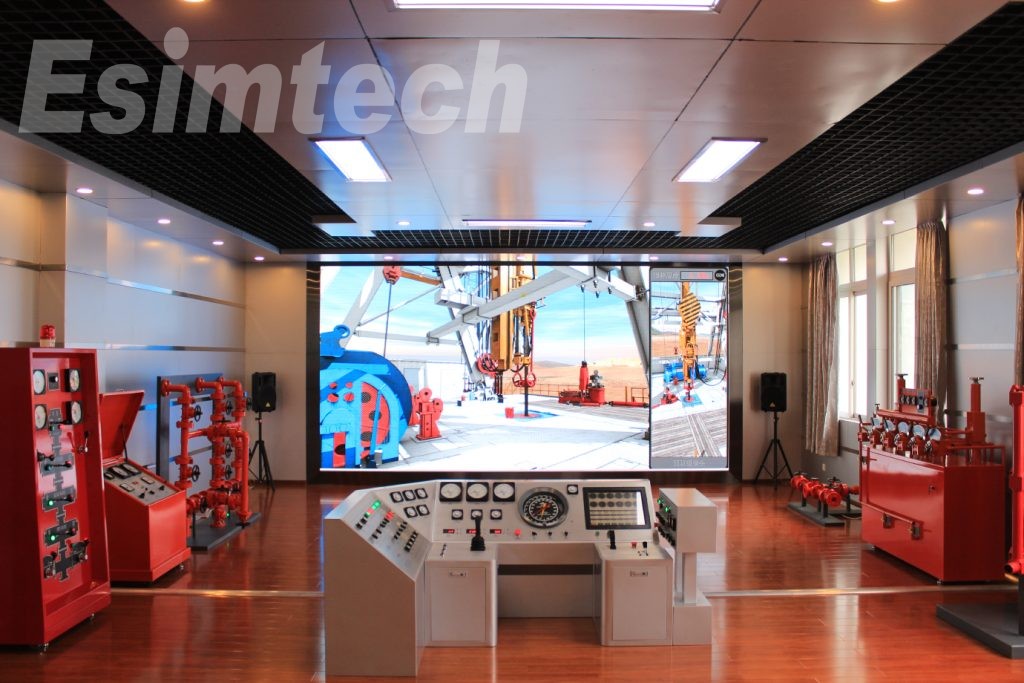
3. Equipment Handling and Maintenance
Virtual Equipment Familiarization
Simulators provide a virtual space for trainees to familiarize themselves with the operation and maintenance of complex machinery found on oil rigs. This includes everything from crane operations to the intricate details of drilling tools. Virtual equipment models accurately replicate the features and functionalities of real-world counterparts, enabling trainees to interact with and understand the nuances of each piece of equipment.
Efficient Troubleshooting Practices
Simulation training includes scenarios where trainees encounter simulated equipment malfunctions or failures. This challenges them to troubleshoot issues efficiently, identify root causes, and apply corrective measures. The iterative nature of simulation allows for repeated practice, ensuring that workers are not only proficient in equipment operation but also adept at addressing unexpected challenges.
Preventive Maintenance Strategies
Beyond operational aspects, simulators emphasize the importance of preventive maintenance. Trainees engage in virtual exercises that simulate routine inspections, maintenance tasks, and calibration procedures. This proactive approach ensures that workers are well-versed in maintaining equipment integrity, contributing to the overall reliability and longevity of critical machinery.
4. Team Coordination and Communication
Collaborative Problem-Solving Exercises
Simulation training fosters team coordination by immersing trainees in collaborative problem-solving exercises. These scenarios mimic the challenges encountered during oil rig operations, requiring effective communication and teamwork. Trainees learn to share information, delegate tasks, and collectively address complex challenges, reinforcing a sense of unity within the workforce.
Adaptive Communication Dynamics
Simulations can introduce varying communication dynamics to mirror the diversity of real-world scenarios. Trainees experience different communication styles, practice adapting to various team structures, and learn to navigate challenges that may arise from communication gaps. This adaptive training approach prepares the workforce for the dynamic nature of oil rig operations.
Leadership Development Opportunities
Through simulated team scenarios, potential leaders can emerge, and leadership skills can be honed. Trainees take on roles that require decision-making, coordination, and delegation, providing valuable insights into their leadership capabilities. Simulation training contributes to the development of a leadership pipeline within the workforce, ensuring a pool of skilled individuals capable of guiding teams effectively.

Select Your Trusted Oil Rig Training Provider: Esimtech
With the numerous benefits of simulation-based drilling training becoming increasingly evident, choosing the right training provider is crucial. Among the leading companies in this field stands Esimtech, a globally recognized provider of advanced drilling simulation and training solutions.
Esimtech boasts extensive experience in developing and delivering cutting-edge drilling simulators and training programs. Their team of industry professionals and technical experts ensures that their simulations are:
Realistic and immersive: Esimtech’s simulators replicate actual drilling rigs in stunning detail, using high-fidelity visuals, sound effects, and even motion platforms to create a truly immersive training experience.
Scenario-based and challenging: The company offers a wide range of pre-designed and customizable scenarios that cater to various skill levels and training objectives. These scenarios cover normal operations, emergency situations, and complex well control challenges, providing trainees with the necessary experience to handle any situation on the rig.
Technology-driven: Esimtech leverages cutting-edge technologies like VR and AI to enhance the realism and effectiveness of their simulations. VR allows trainees to virtually step onto the rig and interact with the environment, while AI can adapt scenarios based on trainee actions and decisions, providing a more personalized and challenging training experience.
Simulation techniques have revolutionized oil rig training, providing a dynamic, experiential learning environment that prepares workers to efficiently and safely navigate the complexities of oil rig operations. With providers like Esimtech leading the way, the future of oil rig training is set to be more immersive, effective, and adaptive than ever before.
The management of oil and gas spans a wide range of activities, from exploration and extraction to transportation and distribution. This article delves into the complexities of oil and gas management, analyzing its key components, challenges, the evolving landscape of this critical sector, and the revolutionary role of simulation technology.

Key Aspects of Oil and Gas Management
Exploration and Production
The initial phase of oil and gas management is exploration and production (E&P). This involves identifying potential hydrocarbon reserves, drilling wells, and extracting crude oil and natural gas. Geologists, engineers, and other experts are crucial in pinpointing viable drilling sites. Advanced technologies, such as seismic surveys and innovative drilling techniques, have significantly enhanced E&P, allowing for more precise identification of hydrocarbon reservoirs.
Challenges in Exploration and Production
Environmental Concerns: Balancing energy needs with environmental conservation is a major challenge. The industry must minimize the ecological impact of drilling and extraction processes.
Technological Advancements: Staying abreast of rapidly evolving drilling and exploration technologies is essential for maintaining competitiveness.
Geopolitical Issues: Oil and gas reserves often lie in politically sensitive regions, leading to geopolitical challenges and potential supply disruptions.
Refining and Processing
Once crude oil and natural gas are extracted, they must be refined and processed for various applications. Refineries play a pivotal role in converting crude oil into valuable products like gasoline, diesel, and petrochemicals. This phase requires advanced equipment and skilled personnel to ensure efficiency and product quality.
Challenges in Refining and Processing
Environmental Regulations: As environmental regulations become more stringent, cleaner and more efficient refining processes are necessary.
Energy Efficiency: Refineries must improve energy efficiency to reduce carbon emissions and operational costs.
Supply Chain Management: Effective supply chain management is crucial to ensure a steady flow of crude oil and products to meet market demand.
Transportation and Distribution
Transporting and distributing oil and gas products from refineries to end users involves pipelines, ships, trucks, and railroads. Efficient logistics and infrastructure are vital to ensuring a consistent and secure supply of energy resources.
Challenges in Transportation and Distribution
Infrastructure Investment: Maintaining and expanding transportation infrastructure requires significant investment.
Safety and Security: Ensuring the safe transport of hazardous materials is a top priority.
Market Fluctuations: Volatile oil and gas prices can impact transportation and distribution decisions.
Environmental and Regulatory Compliance
Compliance with environmental and regulatory standards is crucial in the oil and gas sector, which faces increasing scrutiny and pressure to reduce its environmental impact. Adhering to environmental regulations is essential for maintaining a social license to operate and avoiding legal and reputational risks.
Challenges in Environmental and Regulatory Compliance
Shifting Regulations: Regulatory requirements are continually evolving, necessitating adaptive and proactive compliance strategies.
Public Perception: Maintaining a positive public image is challenging due to environmental concerns associated with the industry.
Health and Safety: Ensuring the health and safety of workers and communities remains a top priority and ongoing challenge.
Technology and Innovation
Technology and innovation are driving forces in the oil and gas industry. Advances in drilling techniques, automation, data analytics, and renewable energy are transforming the sector. Embracing and adapting to these technological advancements is crucial for competitiveness and sustainability.
Challenges in Technology and Innovation
Talent Acquisition: Attracting and retaining skilled personnel to drive innovation is a continuous challenge.
Energy Transition: As the world moves towards cleaner energy sources, the oil and gas industry must diversify and adapt to meet changing energy demands.
The Revolutionary Role of Simulation Technology
Simulation technology is revolutionizing the oil and gas industry by enabling companies to simulate and analyze various aspects of their operations, from exploration and production to refining and distribution.
Exploration and Reservoir Simulation
Reservoir modeling is a critical application of simulation technology in the oil and gas sector. Geologists and engineers use this technology to create computer models of subsurface reservoirs, providing a detailed understanding of their characteristics. Simulations allow experts to predict reservoir performance under different conditions, optimizing drilling and production strategies.
Benefits of Reservoir Simulation
Improved Reservoir Management: Enhanced reservoir characterization leads to better production techniques and higher recovery rates.
Risk Mitigation: By modeling various production scenarios, companies can anticipate potential issues and manage risks.
Cost Reduction: Simulation technology helps reduce drilling and exploration costs by providing insights for more efficient well placement and operations.
Drilling and Well Control Simulation
Simulation technology also benefits drilling and well control. Drilling simulators offer operators a realistic training environment to practice various drilling scenarios and well control procedures safely and effectively. These simulations enhance the skills and preparedness of drilling personnel.
Benefits of Drilling Simulation
Enhanced Training: Drilling simulators provide a safe and cost-effective way to train operators, improving their ability to manage drilling operations.
Error Prevention: Practicing well control responses in simulations reduces the risk of human error during actual drilling.
Realistic Scenarios: Operators can face a range of drilling challenges, from equipment failures to unexpected wellbore conditions, in a controlled environment.
Refinery and Process Optimization
Refineries and processing plants use simulation technology for process optimization. By creating digital replicas of refinery operations, companies can identify inefficiencies, reduce energy consumption, and improve product quality. Simulations enable engineers to experiment with different process variables and make informed decisions to enhance plant operations.
Benefits of Refinery Simulation
Efficiency Gains: Simulations help streamline operations, reduce energy consumption, and increase overall process efficiency.
Product Quality: Fine-tuning refining processes through simulation results in higher-quality products with reduced waste and emissions.
Cost Savings: Process optimization through simulation leads to significant cost savings in energy, maintenance, and raw materials.
Pipeline and Distribution Management
In pipeline and distribution management, simulation systems analyze variables such as flow rates, pressure, and temperature to ensure the safe and efficient transport of hydrocarbons from refineries to end users.
Benefits of Pipeline Simulation
Safety Assurance: Simulations help identify potential issues, ensuring safe and reliable transportation of hazardous materials.
Resource Optimization: Optimizing pipeline operations through simulation minimizes energy consumption and maintenance costs.
Compliance Support: oil and gas transportation simulation aids in meeting regulatory requirements for pipeline operations and environmental protection.

Conclusion
Oil and gas management is a complex and multifaceted field vital to our daily lives and the global economy. Effective management in this industry involves addressing a wide range of challenges, from environmental concerns to geopolitical issues. As the world evolves, oil and gas management must adapt and innovate to ensure a sustainable and reliable energy future. Simulation technology is a crucial tool for achieving long-term viability and dependability in the industry. By leveraging simulation, companies can navigate the intricate landscape of this essential sector with confidence and precision.
Directional drilling techniques have long been utilized in the oil and gas sector to tap into valuable hydrocarbon deposits beneath the Earth’s surface. This technology has significantly evolved, enabling operators to reach areas once deemed inaccessible with conventional drilling methods. This article delves into the realm of oil and gas directional drilling, examining its applications, techniques, advantages, and the crucial role of simulation technology in these operations.

Understanding Oil and Gas Directional Drilling
Directional drilling, also known as directional boring or slant drilling, is a specialized technique in the oil and gas industry used to access reservoirs that are not directly beneath the drilling site. This method involves drilling a wellbore at an angle rather than a vertical trajectory to reach hydrocarbon deposits in challenging locations, such as offshore reserves, beneath urban areas, or environmentally sensitive zones.
In offshore drilling, directional drilling is essential for accessing underwater oil and gas sources. It allows operators to deploy wellheads on floating platforms, reaching subterranean reservoirs without requiring seabed structures.
Key Techniques and Tools of Oil and Gas Directional Drilling
To effectively navigate through subterranean formations and reach the desired reservoirs, directional drilling employs various techniques and instruments:
Rotary Steerable Systems (RSS):
RSS technology revolutionizes directional drilling by allowing precise control of the wellbore trajectory in real-time, leading to more accurate drilling.
Unlike traditional mud motor systems, RSS tools can change steering direction without exiting the hole, enhancing drilling efficiency.
Measurement While Drilling (MWD):
MWD tools, attached to the drill bit, provide real-time measurements of drilling parameters such as direction, inclination, azimuth, temperature, and pressure.
This data is transmitted to the surface, enabling drillers to adjust the well trajectory and drilling parameters immediately.
Logging While Drilling (LWD):
LWD equipment collects formation evaluation data while drilling, offering information on geological formations such as resistivity, gamma-ray, density, and porosity.
This data is crucial for geosteering and optimizing well placement in the target reservoir.
Whipstocks:
Mechanical devices used to change the wellbore direction, typically installed above the drill bit, creating a window in the casing to allow the drill bit to deviate and begin drilling in a new direction.
Deflecting Tools:
Instruments like bent subs or deflecting motors are used to create a consistent change in the wellbore trajectory, especially useful in constructing the well’s curve section.
Directional Drill Bits:
Designed to drill at an angle while maintaining control over the wellbore direction, available in various types such as PDC (Polycrystalline Diamond Compact) and roller cone bits.
Stabilizers and Downhole Assemblies:
Tools like stabilizers and hole openers are used to maintain wellbore stability and direction, controlling vibrations and ensuring the desired trajectory is maintained.
Casing While Drilling (CWD):
This method involves drilling with casing in place, simplifying well construction and providing additional stability for directional drilling.
Steerable Mud Motors:
Downhole tools that use drilling mud to generate rotary motion transmitted to the drill bit, designed to change drilling direction as needed.
Hydraulic and Pneumatic Jars:
Used to deliver impact forces downhole, helping to free a stuck drill string or resolve downhole tool issues, essential for maintaining drilling progress.
Pilot Hole and Multiple Laterals:
Involves drilling a pilot hole in the desired direction and then deviating from that hole to create multiple laterals, enhancing reservoir access.
Real-Time Data Management Systems:
Advanced systems that collect and process data from MWD, LWD, and other sensors in real-time, assisting drillers in making informed decisions, managing wellbore stability, and optimizing drilling parameters.
Key Aspects of Simulation Technology in Oil and Gas Directional Drilling
Simulation technologies allow drilling engineers and operators to plan, optimize, and model drilling operations with high precision before deploying costly equipment and manpower in the field.
Drilling Software:
Advanced software packages simulate and model the entire drilling process, helping engineers design well trajectories, select appropriate drilling tools, and optimize drilling parameters.
Geosteering Simulators:
Crucial for directional drilling, geosteering simulators use real-time data from MWD and LWD tools to adjust the wellbore path and ensure accurate drilling within the target reservoir.
3D Visualization:
Technologies that create visual representations of the wellbore and surrounding geological formations, aiding in understanding subsurface characteristics and planning the well trajectory to avoid hazards and reach the target reservoir.
Training Simulators:
Used to educate drilling staff on the equipment and processes involved in directional drilling, providing a safe environment to practice skills and gain a comprehensive understanding of the drilling process.
Risk Assessment and Mitigation:
Simulation technology examines potential risks associated with directional drilling operations, enabling engineers to establish contingency plans and manage hazards such as wellbore instability, geological uncertainties, and equipment failures before drilling begins.
Cost Analysis:
Simulation technology provides insights into the economic aspects of drilling operations, allowing engineers to simulate various drilling strategies, tool choices, and well trajectories to determine the most cost-effective approach.
Real-Time Monitoring and Decision Support:
Simulation systems assist in real-time monitoring and decision-making during drilling operations, integrating real-time data from the wellbore with the drilling plan to enable on-the-fly adjustments and optimize drilling parameters.
Hydraulic Modeling:
Tools that help design and optimize drilling fluid systems, modeling the flow of drilling fluids downhole to ensure pressure, viscosity, and other parameters are within safe and effective limits.
Equipment Sizing and Selection:
Simulation technology aids in selecting appropriate drilling tools and equipment by inputting wellbore specifications and geological data to determine optimal tool sizes and types for the drilling operation.

Environmental Impact Assessment:
Simulations assess the environmental impact of drilling operations, predicting potential effects and preparing mitigation measures by modeling the well trajectory and operations.
Conclusion
Directional drilling has transformed the oil and gas industry, enabling operators to access hydrocarbon deposits previously considered unreachable. Simulation technology plays a vital role in these operations, offering numerous benefits that enhance efficiency and precision while reducing environmental impact and ensuring optimal hydrocarbon resource recovery.