
With its global significance and intricate operations, the oil and gas industry faces a plethora of risks that can affect everything from production and exploration to market volatility and geopolitical events. A solid risk management framework is required to successfully navigate these challenges. In this article, we delve into the world of oil and gas risk management, investigating the industry’s key challenges, the strategies used to mitigate potential risks in the petroleum industry, and how simulation technology is used in oil and gas risk management.
Understanding Oil and Gas Risk Management
Key Risks Faced by the Oil and Gas Industry
1. Price Volatility
The inherent volatility of commodity prices is perhaps the most significant risk in the oil and gas industry. Oil price fluctuations can have a significant impact on revenues, profitability, and investment decisions. Risk management strategies often involve the use of financial instruments, such as hedging contracts, to mitigate the effects of price volatility and provide a level of predictability in cash flows.
2. Geopolitical Uncertainty
Because the oil and gas industry operates on a global scale, it is vulnerable to geopolitical tensions and uncertainties. Political unrest, sanctions, and regional conflicts can disrupt supply chains, halt exploration, and create unexpected operational challenges. In this context, rigorous geopolitical risk analysis and strategic diversification of assets and operations are critical components of risk management.
3. Regulatory Compliance
The oil and gas industry’s evolving and stringent regulatory frameworks necessitate a proactive approach to compliance. Noncompliance can result in significant financial penalties, operational disruptions, and reputational damage to the industry. Staying up to date on regulatory changes, implementing effective compliance programs, and conducting regular audits to ensure standard adherence are all examples of strong risk management practices.
4. Operational Risks
The complex nature of oil and gas operations introduces a range of risks, including equipment failures, accidents, and natural disasters. Comprehensive risk management strategies involve preventive measures, such as regular maintenance and safety protocols, as well as contingency plans to respond swiftly and effectively in the event of an operational incident.
Effective Risk Mitigation Strategies in the Oil and Gas Industry
1. Diversification of Assets
To mitigate risks associated with geopolitical instability and market volatility, companies often diversify their portfolios. This may involve having operations in multiple regions, exploring various types of oil and gas resources, and engaging in both upstream and downstream activities. Diversification helps create a buffer against the impact of localized disruptions.
2. Financial Hedging
Financial instruments, such as futures and options contracts, play a crucial role in hedging against price fluctuations. By locking in prices for future production or purchases, companies can mitigate the impact of volatile commodity markets and ensure a more predictable revenue stream.
3. Strategic Alliances and Partnerships
Risk-sharing mechanisms can be provided by collaborative efforts and strategic alliances with other industry players. Companies can improve their resilience in the face of challenges by sharing resources, knowledge, and expertise, particularly in exploration and development projects.
4. Technology and Data Analytics
Companies can improve their risk assessment capabilities by embracing advanced technologies such as data analytics, artificial intelligence, and machine learning. Predictive analytics can help identify potential problems before they become major problems, allowing for proactive risk management and preventive measures.
5. Scenario Planning and Contingency Preparedness
Companies can develop robust contingency plans through rigorous scenario planning that takes into account a wide range of potential risks and outcomes. These plans detail responses to various scenarios, ensuring a quick and effective response in the event of unexpected challenges.
Simulation Technology Used in the Oil and Gas Risk Management
By providing a dynamic and interactive platform for modeling, assessing, and mitigating potential risks across various aspects of the industry, simulation technology plays a critical role in oil and gas risk management.
1. Reservoir and Production Simulation
Objective: Assessing risks associated with reservoir behavior and production dynamics.
How it’s used: Simulation models aid in the prediction of reservoir performance, the evaluation of various production strategies, and the assessment of the impact of uncertainties such as reservoir heterogeneity or fluid composition. Operators can identify potential risks to production rates and optimize reservoir management strategies by simulating various scenarios.
2. Drilling and Wellbore Simulation
Objective: Identifying and mitigating risks related to drilling operations.
How it’s used: Drilling simulators enable operators to practice drilling tasks such as complex wellbore trajectories and potential hazards. The use of simulation technology allows for the evaluation of risks associated with various drilling parameters, well designs, and geological conditions. This aids in the optimization of drilling plans and the enhancement of safety protocols.

3. Emergency Response Planning
Objective: Improving preparedness and response strategies for emergency scenarios.
How it’s used: Emergency training simulation systems are employed to model emergency scenarios, such as well blowouts, fires, or gas leaks. This allows for realistic training of response teams in a virtual environment, helping them understand the dynamics of emergency situations and practice effective decision-making. It also aids in refining emergency response plans to address potential risks.

4. Supply Chain and Logistics Simulation
Objective: Assessing and managing risks in the oil and gas supply chain.
How it’s used: Oil and gas transportation simulation tools model the entire supply chain, including inventory management and distribution. By simulating different scenarios, such as supply disruptions, logistical challenges, or changes in market demand, companies can identify vulnerabilities and develop risk mitigation strategies to ensure a resilient and efficient supply chain.
5. Market and Price Risk Simulation
Objective: Evaluating risks associated with market volatility and commodity price fluctuations.
How it’s used: To simulate various market scenarios, simulation models integrate market data, geopolitical factors, and demand trends. This aids in determining how price fluctuations affect revenue, profit margins, and investment decisions. Companies can develop strategies to mitigate price-related risks by understanding market dynamics.
6. Regulatory Compliance Simulation
Objective: Ensuring compliance with evolving and stringent regulatory frameworks.
How it’s used: Simulation is employed to model the impact of regulatory changes on operations and assess compliance risks. By simulating different compliance scenarios, companies can proactively adapt their processes to meet regulatory requirements. This reduces the risk of non-compliance, potential legal issues, and associated financial penalties.
7. Asset Integrity and Reliability Simulation
Objective: Managing risks associated with equipment integrity and reliability.
How it’s used: Simulation technologies model the performance and degradation of equipment over time. By simulating various maintenance strategies, companies can assess the risks associated with equipment failures, plan for preventive maintenance, and optimize asset performance. This contributes to minimizing operational disruptions and associated risks.
Conclusion
Oil and gas risk management is a dynamic and essential component of the industry’s operational strategy. Companies can navigate the complexities of the industry with greater resilience and agility by understanding the multifaceted nature of risks and implementing comprehensive risk management frameworks. Oil and gas simulation technology provides a comprehensive and proactive approach to identifying, assessing, and mitigating risks. Industry professionals can make more informed decisions, improve safety measures, and improve overall operational resilience in the face of an ever-changing and challenging environment by simulating various scenarios.
Conventional rotary drilling is the most common drilling method used in the oil and gas industry. It involves rotating a drill bit at the end of a drill string to penetrate the earth. The drill string consists of a series of hollow pipes connected together. Drilling fluid is pumped down the drill string and out of the drill bit to cool and lubricate the bit, remove cuttings, and maintain hydrostatic pressure.
The drill bit is rotated by a top drive, a powerful electric motor mounted at the top of the drill rig. The top drive transmits torque through the drill string to the drill bit. As the drill bit rotates, it cuts into the earth, creating a wellbore.

Advantages and Disadvantages of Conventional Rotary Drilling
Advantages:
Versatile and Reliable:
Can be used to drill various wells, including oil and gas, water, geothermal, environmental, and construction wells.
Suitable for drilling in a range of formations, from soft to hard.
Relatively Simple and Inexpensive:
The drilling method is well-understood and the required equipment and expertise are widely available.
Generally, a cost-effective method compared to other advanced drilling techniques.
Disadvantages:
Can Be Slow and Expensive for Deep Wells:
The continuous rotation of the drill bit and the need for a large amount of drilling fluid can make the process slow and costly, especially for deep wells.
Not Well-Suited for Complex Formations:
Struggles with complex or challenging formations, such as those with high levels of H2S or narrow pressure margins. Specialized drilling methods are often required in these cases.
Alternatives to Conventional Rotary Drilling
In recent years, several alternatives to conventional rotary drilling have been developed to enhance efficiency and effectiveness, particularly in complex or challenging formations:
Directional Drilling:
Allows for drilling wells that deviate from the vertical plane, targeting reservoirs at angles or buried deep below the surface. Enables drilling multiple wells from a single pad.
Horizontal Drilling:
A type of directional drilling used to drill wells parallel to the surface, particularly useful for unconventional reservoirs like shale and tight oil formations.
Managed Pressure Drilling (MPD):
Allows precise control of wellbore pressure, useful for wells with narrow pressure margins or high levels of H2S.
Underbalanced Drilling (UFD):
Involves drilling with lower wellbore pressure than the surrounding formation pressure, beneficial for high reservoir pressure or low permeability wells.
Coiled Tubing Drilling (CTD):
Uses coiled tubing drilling instead of drill pipe, ideal for shallow wells or those with complex trajectories.

Percussion Drilling:
Uses a hammer to drive the drill bit into the ground, effective for hard formations or formations with a lot of debris.
Laser Drilling:
Uses a laser to cut through the formation, suitable for very hard formations or those sensitive to heat.
Application of Oil and Gas Drilling Simulation
Oil and gas drilling simulation is a powerful tool that improves the safety, efficiency, and cost-effectiveness of drilling operations. It can be used to:

Plan and Design Wells:
Model the drilling process and predict the performance of different methods and equipment to design optimized wells.
Train Drill Crews:
Train crews on operating various drilling equipment and responding to different scenarios, enhancing safety and efficiency.
Monitor and Troubleshoot Operations:
Real-time monitoring to identify potential problems before they occur, preventing accidents and reducing costs.
Optimize Drilling Parameters:
Optimize parameters such as weight on bit, rotary speed, and mud flow rate to improve performance and reduce costs.
Conclusion
Conventional rotary drilling remains the most common method in the oil and gas industry, but it has limitations. Alternatives like directional drilling, horizontal drilling, managed pressure drilling, and underbalanced drilling offer improved efficiency, increased production rates, and reduced risk.
Oil and gas drilling simulation is a crucial tool for enhancing the safety, efficiency, and cost-effectiveness of drilling operations through planning, training, monitoring, and optimization.
The future of oil and gas drilling will likely see a continued shift towards more advanced and efficient methods, with alternatives to conventional rotary drilling and simulation technologies playing a major role.
Technology is playing an increasingly pivotal role in improving drilling safety. Innovations are being developed to identify and mitigate hazards, enhance training and communication, and boost emergency response. This article delves into the various ways technology is being utilized to enhance drilling safety.
Key Technologies Improving Drilling Safety
Wellbore Control
Wellbore control involves preventing the uncontrolled flow of oil and gas from a wellbore, which can be dangerous and environmentally damaging.
Automated Well Control Systems
Automated well control systems monitor wellbore conditions and take corrective action if problems arise. For instance, an automated system can close the blowout preventer (BOP) if it detects a sudden increase in well pressure.
Real-time Monitoring Systems
Real-time monitoring systems collect data from various sensors on the drilling rig and transmit it to a central control center. This data helps monitor wellbore conditions and identify potential problems early.
H2S Safety
Hydrogen sulfide (H2S) is a toxic gas present in some oil and gas wells, posing serious health risks.
Real-time H2S Monitoring Systems
These systems continuously monitor the air for H2S. If detected, they alert workers and activate ventilation systems to remove the gas.
Personal Protective Equipment (PPE)
PPE for H2S exposure includes respirators, gas detectors, and escape hoods, providing critical protection for workers.
Blowout Prevention
A blowout is an uncontrolled release of oil and gas from a wellbore, which can be hazardous and cause environmental damage.
Blowout Preventers (BOPs)
BOPs are valve systems used to close off the wellbore in the event of a blowout, preventing uncontrolled releases.

Real-time Monitoring Systems
These systems help monitor wellbore conditions, allowing drillers to take preventive actions before a blowout occurs.
Fire and Explosion Prevention
Drilling operations involve flammable materials, creating risks of fires and explosions.
Fire Detection and Suppression Systems
These systems detect fires early and extinguish them before significant damage occurs.
Real-time Monitoring Systems
They monitor drilling operations for hazards like gas leaks and electrical issues, enabling corrective actions before fires or explosions happen.
Emergency Exercise Simulation Technology
Emergency exercise simulators are crucial tools for improving drilling safety. They create realistic simulations of drilling accidents, such as well control emergencies, H2S exposure, blowouts, and fires, allowing drillers to practice responses in a safe environment.

Well Control Emergencies
Simulators train drillers to operate well control equipment and respond to emergencies, ensuring they are prepared for real incidents.
H2S Exposure
Simulators train drillers on using PPE and responding to H2S exposure, reducing the risk of poisoning.
Blowouts
Training on simulators helps reduce the risk of injuries and fatalities by preparing drillers for blowout scenarios.
Fires and Explosions
Simulators provide training on responding to fires and explosions, helping reduce the risk of injuries, fatalities, and property damage.
Conclusion
The role of technology in improving drilling safety within the oil and gas industry is transformative. From automated well control systems to real-time monitoring and innovative H2S safety measures, these advancements enhance operational efficiency and significantly contribute to worker well-being and environmental protection. As the industry continues to embrace and evolve with these technologies, the commitment to ongoing innovation, training, and simulation techniques will ensure a safer and more sustainable future for drilling operations.
Managing oil and gas involves a vast range of activities, from exploration and extraction to transportation and distribution. In this article, we will delve into the complexities of oil and gas management, analyzing its essential components, challenges, the evolving landscape of this critical sector, and how simulation is revolutionizing oil and gas management.

Key Aspects of Oil and Gas Management
Exploration and Production
The first phase of oil and gas management is exploration and production (E&P). These processes involve locating potential hydrocarbon reserves, drilling wells, and extracting crude oil and natural gas. Geologists, engineers, and other professionals play a crucial role in identifying viable drilling locations. Advanced technologies, such as seismic surveys and sophisticated drilling techniques, have revolutionized E&P, enabling more precise identification of hydrocarbon reservoirs.
Challenges in Exploration and Production
Environmental Concerns: Balancing the demand for energy resources with environmental conservation is a significant challenge. The industry must minimize the environmental impact of drilling and extraction processes.
Technological Advancements: Keeping up with rapidly evolving drilling and exploration technologies is crucial for the industry’s competitiveness.
Geopolitical Issues: Oil and gas reserves are often located in politically sensitive regions, which can lead to geopolitical challenges and supply disruptions.
Refining and Processing
After crude oil and natural gas are recovered, they must be refined and processed to be used in various applications. Refineries play a critical role in this phase by converting crude oil into valuable products like gasoline, diesel, and petrochemicals. To maintain efficiency and product quality, the refining process requires innovative equipment and skilled workers.
Challenges in Refining and Processing
Environmental Regulations: Cleaner and more efficient refining procedures are necessary as environmental regulations become increasingly stringent.
Energy Efficiency: Refineries must enhance their energy efficiency to minimize carbon emissions and operational costs.
Supply Chain Management: Managing the supply chain is vital to ensure a steady flow of crude oil and products to meet market demand.
Transportation and Distribution
Transportation and distribution of oil and gas products involve moving them from refineries to end users, typically via pipelines, ships, trucks, and railroads. Effective logistics and infrastructure are essential for ensuring a steady and secure supply of energy resources.
Challenges in Transportation and Distribution
Infrastructure Investment: Maintaining and expanding transportation infrastructure requires significant investment and is a constant challenge.
Safety and Security: Ensuring the safe transport of hazardous materials is a top priority for the industry.
Market Fluctuations: Oil and gas prices can fluctuate significantly, affecting transportation and distribution decisions.
Environmental and Regulatory Compliance
Compliance with environmental and regulatory requirements is a critical aspect of oil and gas management. The sector faces increasing scrutiny and pressure to reduce its environmental impact. Compliance with environmental regulations is essential for maintaining a social license to operate and avoiding potential legal and reputational risks.
Challenges in Environmental and Regulatory Compliance
Shifting Regulations: Regulatory requirements are constantly evolving, necessitating adaptability and proactive compliance strategies.
Public Perception: Maintaining a positive public image is challenging in an industry often viewed with skepticism due to environmental concerns.
Health and Safety: Ensuring the health and safety of workers and communities is a top priority and a constant challenge in the oil and gas sector.
Technology and Innovation
Technology and innovation are driving forces in the oil and gas industry. Advances in drilling techniques, automation, data analytics, and renewable energy are transforming the industry. To remain competitive and sustainable, oil and gas management must embrace and adapt to technological advances.
Challenges in Technology and Innovation
Talent Acquisition: Attracting and retaining skilled personnel to drive innovation is a continuous challenge.
Energy Transition: As the world shifts towards cleaner energy sources, oil and gas management faces the challenge of diversifying and adapting to meet changing energy demands.
How Simulation Technology is Revolutionizing Oil and Gas Management
Simulation technology is helping the oil and gas industry simulate and analyze various aspects of their operations, from exploration and production to refining and distribution.
Exploration and Reservoir Simulation
Reservoir modeling is a critical application of simulation technology in the oil and gas sector. Geologists and engineers use this technology to create computer models of subsurface reservoirs, providing a detailed understanding of the reservoir’s characteristics. Simulations allow experts to predict reservoir performance under different conditions, optimizing drilling and production strategies.
Benefits of Reservoir Simulation
Improved Reservoir Management: Simulations enhance reservoir characterization, leading to better production techniques and higher recovery rates.
Risk Mitigation: Companies can anticipate potential issues and manage risks by modeling various production scenarios.
Cost Reduction: Simulation technology helps reduce drilling and exploration costs by providing insights for more efficient well placement and operation.
Drilling and Well Control Simulation
Drilling and well control also benefit from simulation technology. Drilling simulators offer operators a realistic training environment to practice various drilling scenarios and well control procedures safely. These simulations help improve the skills and preparedness of drilling personnel.
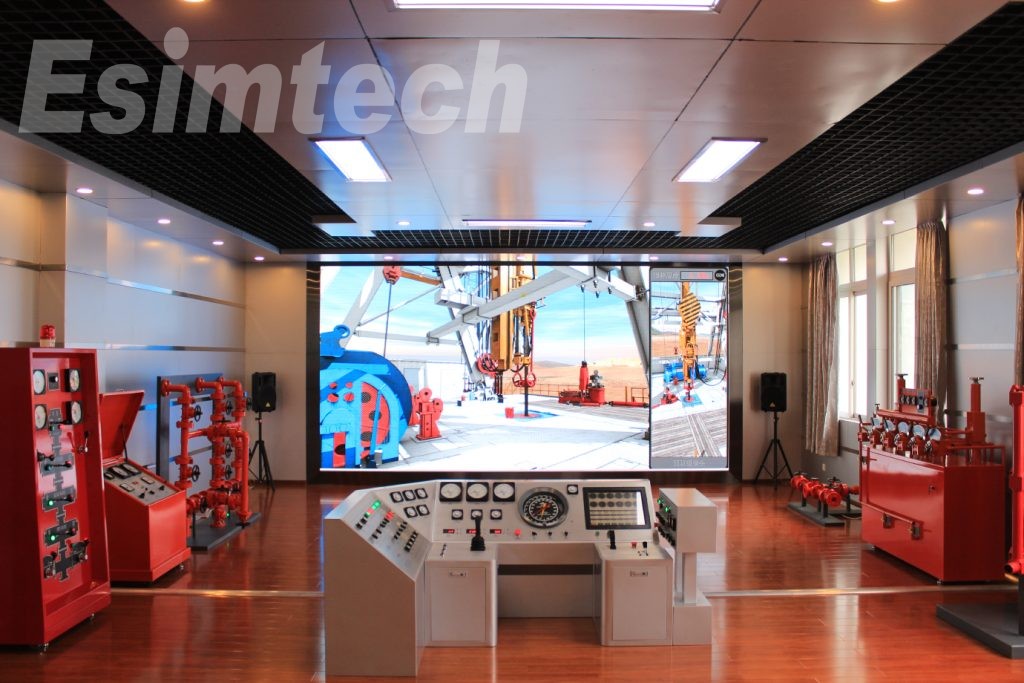
Benefits of Drilling Simulation
Enhanced Training: Drilling simulation systems provide a safe and cost-effective way to train operators and improve their ability to manage drilling operations.
Error Prevention: Simulations enable the practice of well control responses, reducing the likelihood of human error during actual drilling operations.
Realistic Scenarios: Operators can encounter a wide range of drilling challenges, from equipment failures to unexpected wellbore conditions, in a controlled environment.
Refinery and Process Optimization
Refineries and processing plants use simulation technology for process optimization. By creating digital replicas of refinery operations, companies can identify inefficiencies, reduce energy consumption, and improve product quality. These simulations enable engineers to experiment with different process variables and make informed decisions to enhance plant operations.
Benefits of Refinery Simulation
Efficiency Gains: Simulations help identify opportunities to streamline operations, reduce energy consumption, and increase overall process efficiency.
Product Quality: Companies can produce higher-quality products while reducing waste and emissions by fine-tuning refining processes.
Cost Savings: Optimizing processes through simulation can lead to significant cost savings in energy, maintenance, and raw materials.
Pipeline and Distribution Management
In pipeline and distribution management, oil and gas gathering and transportation simulation systems are used. Pipeline simulation software allows companies to analyze variables like flow rates, pressure, and temperature to ensure the safe and efficient transport of hydrocarbons from refineries to end users.

Benefits of Pipeline Simulation
Safety Assurance: Pipeline simulations help identify potential issues and ensure safe and reliable transportation of hazardous materials.
Resource Optimization: Companies can minimize energy consumption and maintenance costs by optimizing pipeline operations.
Compliance Support: Simulation technology assists in meeting regulatory requirements for pipeline operations and environmental protection.
Conclusion
Oil and gas management is a complex and multifaceted field vital to our daily lives and the global economy. Effective management in this industry requires addressing a wide range of issues, from environmental concerns to geopolitical challenges. As the world continues to evolve, oil and gas management must adapt and innovate to ensure a sustainable and reliable energy future. Simulation technology is a crucial tool for ensuring the industry’s long-term viability and dependability, enabling companies to navigate the complex landscape of this vital sector with confidence and precision.
Horizontal oil drilling, a groundbreaking innovation in the oil and gas industry, has transformed how hydrocarbon resources are accessed and produced. Vertical drilling was once the standard, but horizontal drilling has opened up new opportunities by allowing operators to access previously unreachable reserves. In this article, we will explore the process, advantages, challenges, environmental considerations, and the vital role of simulation technology associated with horizontal oil drilling.

Process of Horizontal Oil Drilling
Horizontal drilling, also known as directional drilling, is the process of drilling a wellbore at an angle to access oil or gas reservoirs beneath the Earth's surface. Unlike traditional vertical drilling, horizontal drilling involves both vertical and horizontal drilling. The procedure can be summed up as follows:
Vertical Drilling: A wellbore is initially drilled vertically from the surface to a certain depth.
Build Section: At a specific depth, the drilling direction is changed, and the wellbore is curved to create a "build section".
Horizontal Drilling: After the curve, the wellbore continues horizontally through the oil or gas reservoir.
Well Completion: Once the desired length of the horizontal section is achieved, the well is completed with casing and cement to allow for production.
Advantages of Horizontal Oil Drilling
Increased Reservoir Access: Horizontal drilling enables operators to access reservoirs that would otherwise be unreachable via typical vertical drilling, increasing the amount of oil and gas that can be recovered.
Enhanced Recovery Rates: A well’s horizontal portion provides more contact with the reservoir, resulting in higher recovery rates.
Reduced Environmental Impact: Operators can reduce surface footprint and environmental damage by accessing reservoirs from a single drilling location.
Improved Well Economics: Higher recovery rates and lower drilling costs make horizontal drilling commercially appealing.
Enhanced Well Control: Controlling the trajectory of a well allows operators to avoid geological complications and potential drilling issues.

Challenges and Environmental Considerations Faced by Horizontal Oil Drilling
While horizontal drilling offers numerous advantages, it also presents unique challenges and considerations.
Challenges:
Technical Complexity: Horizontal drilling is more technically difficult than vertical drilling, necessitating sophisticated equipment and skill.
Increased Costs: Horizontal drilling technology and expertise can result in higher initial expenses.
Regulatory Compliance: Operators must adhere to strict regulations to ensure safe and environmentally responsible drilling.
Wellbore Integrity: Maintaining wellbore integrity is critical to prevent accidents and ensure the well’s long-term productivity.
Environmental Considerations:
Reduced Surface Impact: Horizontal drilling minimizes surface disruption, which is especially beneficial in ecologically sensitive areas.
Risk of Contamination: The potential for groundwater contamination from drilling fluids and hydrocarbon migration must be carefully managed.
Spill Prevention: Comprehensive spill prevention and response plans are essential to address potential environmental risks.
Habitat Protection: Operators must consider the impact on local wildlife habitats and ecosystems.
Regulatory Compliance: Strict adherence to environmental regulations and best practices is essential to mitigate environmental impact.
Important Role of Simulation Technology in Horizontal Oil Drilling
The use of simulation in the design and execution of horizontal drilling projects is critical. It provides engineers and drillers with the knowledge and tools needed to make informed decisions and optimize the drilling process.
Geosteering:
Geologists and geosteerers use simulation software to construct 3D models of the subsurface, allowing them to see rock formations and potential obstructions. By continuously updating the model in real-time using data from downhole sensors, geosteerers can precisely guide the drill bit within the reservoir.
Drilling Trajectory Planning:
Drilling and well simulation systems aid in designing the optimal well path by considering geological data, wellbore stability, and reservoir parameters. This enables engineers to plot the most efficient path, minimizing the chances of getting stuck or veering off course.
Wellbore Stability Analysis:
Oil simulation software predicts the mechanical behavior of the wellbore and drill string. It evaluates the stresses and pressures acting on the wellbore walls and forecasts the likelihood of issues such as wellbore collapse or fluid ingress. This data informs the selection of drilling parameters and the design of the drilling assembly.
Real-time Monitoring and Adjustments:
During the drilling process, data from downhole sensors and measurements are fed into the simulation software. This real-time feedback allows drillers to make immediate adjustments to the drilling parameters, ensuring the drill bit remains within the target zone.
Benefits of Simulation in Horizontal Drilling:
Precision and Accuracy: Simulation provides a high level of precision in wellbore placement, helping minimize deviation from the target zone and ensuring the well intercepts the most productive areas of the reservoir.
Enhanced Efficiency: By optimizing wellbore trajectories and parameters, drilling and well control simulation reduces drilling time and operational costs, and minimizes the risk of complications that can lead to costly delays.
Risk Mitigation: Simulation helps identify potential drilling challenges in advance, allowing for proactive risk management and wellbore stability assurance.
Improved Recovery Rates: Accurate well placement in the reservoir maximizes hydrocarbon recovery, leading to higher production rates and increased profitability.
Safety and Environmental Protection: Simulation helps prevent issues like wellbore instability, fluid influx, or well collisions, which can pose safety risks and environmental concerns.
Conclusion
Horizontal oil drilling has revolutionized the oil and gas industry by allowing access to previously undiscovered sources and increasing recovery rates. Oil and gas simulation ensures that horizontal drilling operations are optimized for maximum hydrocarbon recovery by accurately simulating well trajectories, analyzing wellbore stability, and providing real-time guidance. As technology and industry practices continue to evolve, horizontal drilling will play a critical role in ensuring a sustainable and efficient future for the oil and gas sector, meeting the world’s energy demands while safeguarding the environment.