
In the volatile and complex world of the oil and gas industry, drilling operations must be both efficient and safe. As technology advances, the demand for skilled professionals who can navigate the intricacies of drilling processes has grown significantly. A comprehensive drilling course is essential for equipping individuals with the knowledge and skills required to excel in this challenging field.

Understanding the Basics of a Drilling Course
A drilling course typically covers a broad range of topics, starting with the fundamentals of drilling operations. Participants learn about geological formations, wellbore design, and the various types of drilling rigs. This foundational knowledge serves as the basis for more advanced concepts and practical applications.
Key Components of a Drilling Course
1. Safety First
Safety is paramount in any drilling course. The oil and gas industry is inherently hazardous, and drilling activities pose risks to both personnel and the environment. A thorough drilling course emphasizes safety protocols, emergency procedures, and risk mitigation strategies. Participants learn the importance of adhering to industry regulations and standards to maintain a safe working environment.
2. Technology Integration
As the industry embraces technological advancements, a drilling course ensures participants are familiar with the latest tools and equipment used in drilling operations. From automated drilling systems to real-time monitoring technologies, participants learn how to leverage cutting-edge tools to enhance efficiency, reduce costs, and minimize environmental impact.
3. Problem Solving and Decision-Making
Drilling operations often encounter unexpected challenges that require quick thinking and problem-solving skills. A drilling course hones participants’ abilities to analyze complex situations, make informed decisions, and implement effective solutions. This training is invaluable for preparing professionals for the fast-paced and ever-evolving nature of the industry.
4. Environmental Considerations
Environmental stewardship is increasingly important in the oil and gas industry. A drilling course includes modules on minimizing environmental impact, sustainable practices, and regulatory compliance. Participants learn best practices in waste management, water usage, and natural resource extraction.
5. Hands-on Experience
While theoretical knowledge is crucial, practical experience is equally important in the drilling industry. Many drilling courses incorporate hands-on training exercises, simulation programs, and fieldwork to provide participants with real-world experience. This practical component allows individuals to apply theoretical concepts in a controlled environment, preparing them for field challenges.
6. Career Advancement
Completing a drilling course not only enhances a person’s knowledge and skills but also opens up new career opportunities. Employers in the oil and gas industry often value candidates with specialized training, making drilling courses a valuable asset for career progression.
Key Aspects of Simulation Technology Used in a Drilling Course
Modern drilling courses increasingly incorporate simulation technology, providing participants with a realistic and immersive learning experience that bridges the gap between theory and practical application. Simulation technology is crucial for training future professionals in the oil and gas industry by replicating complex drilling scenarios in a controlled environment.
1. Virtual Drilling Environments
Software-Based Simulations: Drilling courses often utilize sophisticated software to simulate the entire drilling process in a virtual setting. Participants can practice decision-making, problem-solving, and operational procedures without the inherent risks of real-world drilling operations.
Realistic Wellbore Models: Simulation technology creates wellbore models with realistic geological formations, downhole conditions, and other variables. This allows participants to interact with and respond to challenges they might encounter during actual drilling.
2. Drilling Rig Simulators
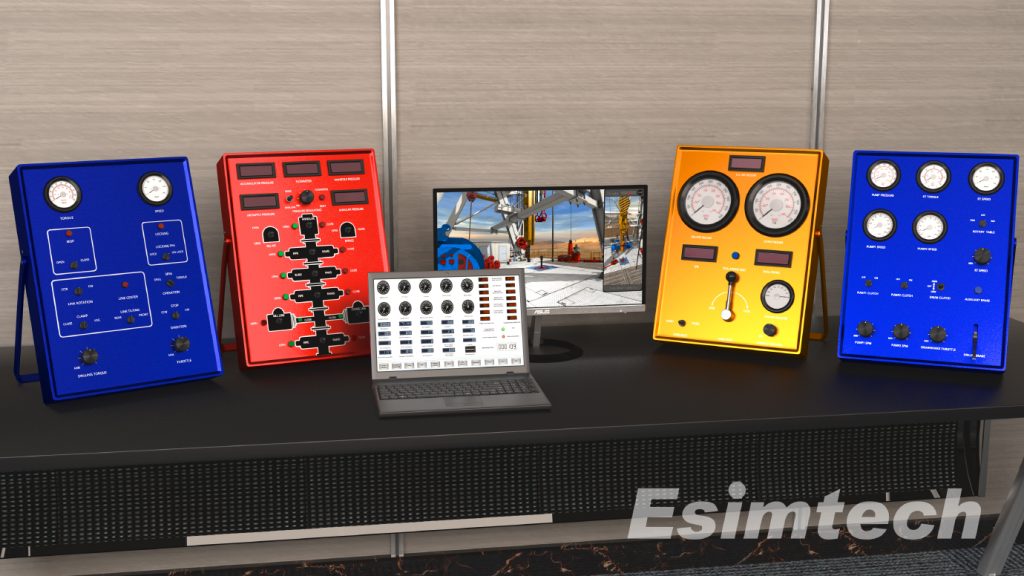
Hardware Integration: Some courses incorporate physical drilling rig simulators that mimic the look, feel, and functionality of real drilling equipment. These simulators include control panels, joysticks, and other interfaces that participants use to operate the virtual drilling rig.
Real-Time Feedback: Participants receive real-time feedback on their actions, allowing them to understand the immediate consequences of their decisions. This feedback loop is crucial for developing hands-on skills and reinforcing best practices.

3. Emergency Response Training
Scenario-Based Simulations: Simulation technology creates emergency scenarios, such as blowouts or equipment failures, where participants must apply their knowledge and skills to manage and mitigate the situation. This type of training enhances participants’ ability to respond effectively to unexpected challenges in high-stakes environments.
Evacuation Drills: Virtual emergency simulations can also be used to conduct evacuation drills, helping participants practice emergency evacuation procedures in a safe and controlled setting.
4. Team Collaboration
Multi-User Simulations: Some drilling courses leverage simulation technology to facilitate collaborative learning experiences. Participants engage in multi-user simulations, working together to solve problems and make decisions as a team, mirroring the collaborative nature of real drilling operations.
5. Data Analysis and Visualization
Post-Scenario Debriefing: After completing a simulation, participants review and analyze their performance through post-scenario debriefing sessions. This includes examining data, identifying areas for improvement, and understanding the consequences of their decisions on the drilling process.
Visualization Tools: Advanced data visualization tools help participants understand complex drilling data, trends, and patterns, enhancing their ability to interpret real-time data during actual drilling operations.
6. Adaptive Learning
Personalized Training Modules: Simulation technology allows for adaptive learning experiences, where participants focus on specific aspects of drilling operations that align with their learning needs. This personalized approach enhances the efficiency of the training process.
Conclusion
A drilling course is essential for anyone looking to launch a successful career in the oil and gas industry. These courses are critical for developing skilled and responsible professionals who can contribute to the industry's long-term growth.
Incorporating simulation technology into drilling courses not only enhances the educational experience but also helps develop highly skilled and well-prepared professionals. The hands-on, risk-free nature of simulations is a valuable complement to traditional classroom instruction, ensuring participants are well-equipped to handle the complexities of real-world drilling scenarios.
Offshore oil exploration has been a cornerstone of the global energy industry for decades, providing a significant portion of the world's fossil fuel supply. However, the environmental implications of this practice have ignited intense debate as society seeks cleaner energy alternatives. This article delves into the importance of offshore oil exploration, the substantial challenges it presents, and potential strategies for balancing energy needs with environmental protection.

The Role of Offshore Oil
Offshore oil exploration involves the search and extraction of oil reserves beneath the ocean floor. This industry plays a critical role in the global energy landscape due to several factors:
Abundant Reserves: Offshore deposits represent a substantial portion of the world's oil reserves, often located in regions with limited onshore resources.
Economic Impact: Offshore oil exploration generates significant revenue, employment, and technological advancements for both developed and developing nations.
Energy Security: Reducing reliance on foreign oil imports enhances a country's energy security.
The Challenges of Offshore Drilling
Offshore oil exploration is a complex and high-risk endeavor that poses numerous challenges:
Safety Hazards: The remote and harsh offshore environment, coupled with the extreme pressures and temperatures associated with deep-sea drilling, create significant safety risks for workers and equipment.
Environmental Impact: Oil spills, habitat destruction, and noise pollution from drilling operations can cause severe damage to marine ecosystems.
Climate Change: The burning of fossil fuels, including offshore oil, contributes to greenhouse gas emissions and climate change.
Technological Limitations: Deep-sea drilling requires advanced technology to overcome extreme conditions, increasing costs and complexity.
Resource Depletion: As reserves dwindle, exploration moves to deeper and more challenging environments, intensifying risks and costs.
Regulatory Hurdles: Compliance with stringent environmental and safety regulations adds to the industry's challenges.
Economic Volatility: Fluctuating oil prices create uncertainty for investors and companies.
Public Opposition: Growing environmental concerns and the potential for catastrophic accidents have led to increased public opposition.
Transition to Renewable Energy: The shift towards renewable energy sources poses a long-term chanllenge to the offshore oil industry.

Balancing Energy Needs and Environmental Protection
To address these challenges and ensure the sustainable future of offshore oil exploration, several strategies can be implemented:
Advanced Technology: Investing in cutting-edge drilling technologies can improve safety, reduce environmental impact, and enhance efficiency. A drilling and well control simulation system creates a very realistic representation of a drilling rig and wellbore, allowing people to train in a real-world setting. By simulating various drilling techniques and parameters, the simulator can be used to maximize drilling performance by allowing staff to analyze and alter drilling parameters in real-time.

Rigorous Environmental Assessments: Conducting thorough environmental impact assessments before drilling can help identify potential risks and inform mitigation measures.
Stronger Regulations: Enforcing strict environmental and safety regulations is crucial to protect marine ecosystems and public safety.
Emergency Preparedness: Developing comprehensive emergency response plans can minimize the impact of oil spills and other accidents.
Continuous Monitoring: Implementing robust monitoring systems to track environmental conditions and detect potential problems is essential.
Transition Planning: The oil industry should invest in research and development of cleaner technologies and explore opportunities in renewable energy.
While offshore oil exploration remains a vital component of the global energy mix, it is imperative to balance energy needs with environmental protection. By adopting responsible practices and investing in innovative solutions, the industry can work towards a more sustainable future.
Coiled tubing drilling in oil drilling is a versatile and efficient method for drilling and completing wells. This technique utilizes a continuous length of small-diameter steel pipe, which is injected into the wellbore to perform drilling or completion tasks. CTD presents a cost-effective and environmentally friendly alternative to conventional drilling methods and is gaining increasing popularity within the oil and gas industry.

Essential Components of a Coiled Tubing Drilling System
A coiled tubing system is a valuable tool used in various oil and gas production operations, composed of continuous small-diameter tubing spooled on a reel and injected into a wellbore. The main components include:
Coiled Tubing Reel: This large, motorized spool stores and transports the coiled tubing. It features a hydraulically driven level wind system to ensure even spooling and prevent tangling or overlapping.
Injector Head: Serving as the primary interface between the coiled tubing and the wellbore, it includes a hydraulically driven injector guide arch and a series of grippers to propel the tubing into the well. The injector head also has a control system regulating injection rate and pressure.
Power Pack: Providing hydraulic power to the injector head, reel, and other system components, it typically includes a diesel engine, hydraulic pump, and reservoir.
Control Cabin: Housing the control systems, the cabin contains monitors and displays offering real-time data on tubing depth, pressure, and flow rate.
Ancillary Equipment: This includes:
Swivel Joint: Allows the tubing to rotate freely during injection.
Hose: Connects the injector head to the swivel joint, facilitating the passage of hydraulic and wellbore fluids.
Blowout Preventer (BOP): A safety device preventing uncontrolled flow from the wellbore, usually installed on top of the wellbore.
Service and Support Equipment: Essential for operations, including:
Coiled Tubing Trucks: Transport the system and equipment to the well site.
Coiled Tubing Units (CTUs): Provide power and control for operations.
Coiled Tubing Specialists: Experienced professionals ensuring safe and efficient operations.

Advantages of Coiled Tubing Drilling System
Coiled tubing systems offer several advantages over conventional drilling methods:
Reduced Wellbore Damage: The flexibility of coiled tubing allows navigation of curved wellbores and tight formations without causing damage, minimizing formation damage and lost circulation risks.
Increased Wellbore Access: Capable of reaching greater depths and accessing areas inaccessible to conventional methods.
Lower Operating Costs: CTD operations generally require fewer personnel and equipment, resulting in reduced costs.
Versatility: Applicable for a range of operations, including wellbore cleanout, fracturing, acidizing, and production logging.
Reduced Environmental Impact: Smaller footprint and lower energy requirements compared to conventional methods.
Enhanced Safety: Generally lower accident risk compared to conventional drilling methods.
Applications of Coiled Tubing Drilling
CTD is utilized for various applications:
Drilling and Completing Vertical and Horizontal Wells: Suitable for both vertical and horizontal wells, particularly effective for long horizontal sections without intermediate casing strings.
Workover and Remedial Operations: Cost-effective and efficient for cleaning out wells, performing cement squeezes, and installing artificial lift systems without needing a drilling rig.
Wellbore Cleanout and Stimulation: Effective for well cleaning and stimulation operations like acidizing and fracturing, without requiring large amounts of water or drilling fluids.
Pipeline Pigging and Cleaning: Cost-effective for pigging and cleaning pipelines without taking them out of service.
Benefits of Simulation Technology in Coiled Tubing Drilling
Simulation technology offers significant benefits for CTD operations:
Improved Planning and Decision-Making: Simulators allow engineers to analyze complex wellbore scenarios, enabling informed decisions on drilling parameters, trajectory, and potential risks.
Optimized Drilling Performance: Drilling process simulation helps identify optimal drilling parameters, maximizing efficiency, reducing time, and minimizing formation damage.
Reduced Risk of Operational Problems: Predictive models help foresee issues like lost circulation and stuck pipes, allowing preventive measures and contingency planning.
Enhanced Training and Skill Development: Provides a safe environment for training operators and engineers, enabling practice and skill enhancement in various scenarios.

Conclusion
Coiled tubing drilling represents more than just a drilling method; it signifies a paradigm shift in petroleum extraction. As the oil and gas industry evolves, CTD is poised to play a crucial role in shaping a sustainable and efficient future for energy production.
Crude oil, often referred to as "black gold," is a cornerstone of modern society. It fuels our vehicles, heats our homes, and plays a crucial role in various industrial activities. The journey of crude oil from deep beneath the Earth’s crust to refineries, where it is transformed into multiple products, begins with the complex and fascinating process of crude oil drilling. This article delves into the intricate steps involved in crude oil drilling and the role of simulation technology in enhancing these processes.

Key Steps in Crude Oil Drilling
The Search for Oil Reservoirs
The drilling process starts with extensive geological studies and exploration. Geologists and geophysicists use techniques like seismic surveys to locate potential oil deposits beneath the Earth's surface. Sound waves are transmitted into the ground, and their reflections are analyzed to create a detailed subsurface map.
Once a promising site is identified, drilling companies perform further tests, including exploratory drilling, to confirm the presence of oil. This step is crucial, as drilling an unsuccessful well can be highly costly.
Drilling Rig Setup
After identifying a suitable location, a drilling rig is transported to the site. This massive structure is equipped with specialized drilling machinery and tools, serving as the platform for drilling operations.
The Drilling Process
Spudding: The drilling process begins with "spudding," which involves drilling a shallow, wide hole called a "spud hole." This stabilizes the drilling rig and prevents it from tilting or sinking.
Drilling the Hole: Once the spud hole is completed, the drill bit is lowered into the hole. As it rotates, it crushes rocks and other materials in its path. Drilling mud, a mixture of water and specialized additives, is continuously pumped into the hole to lubricate the bit, carry cuttings to the surface, and maintain pressure.
Casing Installation: Steel pipe casings are inserted as the hole deepens to stabilize the wellbore and prevent collapse. Cement is then pumped between the casing and the rock to form a tight seal, preventing oil or gas from leaking into surrounding formations.
Drilling Continues: The process advances through various geological layers, each with unique characteristics. Geologists analyze drill cuttings to understand the Earth's strata and the presence of hydrocarbons.
Well Completion: Drilling halts when the desired depth is reached, and oil is encountered. The well is then completed by installing production equipment such as a wellhead and a "Christmas tree" (a set of valves and fittings).
Oil Extraction and Production
Once the well is completed, oil is brought to the surface using natural reservoir pressure and artificial lift systems like pumps or gas injection. The extracted oil is collected in storage tanks before being transported to refineries for processing.
The Role of Simulation Technology in Crude Oil Drilling
Simulation technology significantly enhances the safety, cost-efficiency, and effectiveness of crude oil drilling processes by providing a virtual environment that mimics real-world conditions.
Training and Skill Development
Drilling Crew Training: Drilling workers, including operators and engineers, use drilling simulation training systems to practice various scenarios in a risk-free virtual environment, improving their skills and decision-making abilities.
Emergency Response Training: Simulations prepare drill crews for emergency situations like blowouts and well control issues, crucial for maintaining rig safety.

Well Planning and Design
Reservoir Modeling: Simulations create detailed reservoir models, offering insights into the geology, pressure, and fluid characteristics of the subsurface, essential for developing effective drilling strategies.
Drilling Fluid Selection: Simulating the behavior of drilling fluids under downhole conditions ensures proper well pressure control and effective cuttings transport.
Real-time Drilling Operations
Digital Twins: Some companies use digital twin technology to create real-time digital replicas of the drilling operation, allowing for real-time monitoring and adjustment of drilling parameters to optimize performance and safety.
Geosteering: Geosteering simulations help drillers make real-time decisions on wellbore placement by comparing virtual models with actual drilling data, optimizing reservoir exposure.
Equipment and Tool Testing
Drill Bit Performance: Simulations assess the performance of different drill bit designs and materials, aiding in the selection of the most suitable bit for specific geological conditions, enhancing drilling efficiency and bit longevity.
Drilling Rig Operations: Simulations test the operation of drilling rigs and equipment under various conditions, preventing equipment failures and optimizing rig design.
Risk Assessment and Safety
Hazard Identification: Simulation technologies identify potential hazards and risks associated with drilling operations, enabling the implementation of safety measures to mitigate these risks.
Blowout Prevention: Simulations develop and test blowout prevention strategies, critical for averting catastrophic events during drilling.
Cost Optimization
Drilling Cost Estimation: Simulations help operators estimate the costs associated with different drilling scenarios, aiding in budgeting and cost management.
Efficiency Improvement: Drilling simulators identify opportunities to optimize drilling parameters, reduce downtime, and improve overall operational efficiency.

Conclusion
The advancements in crude oil drilling and the integration of simulation technology have transformed the industry. From precise geological surveys and sophisticated drilling techniques to the use of virtual environments for training and planning, these innovations ensure safer, more efficient, and cost-effective operations. As technology continues to evolve, the future of crude oil drilling promises even greater improvements in sustainability and productivity.
Offshore drilling, the process of extracting oil and natural gas from beneath the seabed, has been a vital part of the global energy landscape for over a century. Its history is marked by technological advancements, environmental challenges, and significant contributions to the world’s energy supply.

Early Beginnings and Technological Advancements
The earliest recorded attempts at offshore drilling date back to the late 1890s, with wooden platforms constructed in shallow waters near California’s coastline. Technological advancements in the 1930s and 1950s, such as the development of steel platforms, mobile offshore drilling units (MODUs), and directional drilling, enabled drilling in deeper waters and more remote locations, expanding the potential for offshore exploration and production.
Environmental Concerns and Technological Innovations
As offshore drilling activities expanded, so did concerns about their environmental impact. The 1969 Santa Barbara oil spill highlighted the potential risks of offshore drilling, leading to stricter environmental regulations in the 1970s and 1980s. Technological innovations in the 1990s, such as improved seismic imaging and ultra-deepwater drilling equipment, enabled exploration and production in deepwater reserves, located in waters deeper than 1,000 meters (3,281 feet).
Offshore Drilling Today and the Future
Today, offshore drilling remains a critical component of the global energy supply. The Deepwater Horizon oil spill in 2010 brought renewed focus on safety and environmental protection measures, leading to stricter regulations and industry-wide reforms. The future of offshore drilling is likely to involve further exploration of deepwater and ultra-deepwater reserves, the development of cleaner drilling technologies, and a focus on sustainable energy production. As the world seeks to transition to a low-carbon future, offshore drilling will play a role in meeting energy needs while minimizing environmental impacts.
Offshore Drilling: Finding, Extracting & Transporting Crude Oil
Finding Oil
The initial step in the offshore drilling process is finding oil, which is achieved by emitting high-pressure sound waves from a specialized device that utilizes compressed air. These sound waves travel to the ocean floor, bounce back, and are captured by underwater microphones called hydrophones. Scientists analyze this information to identify regions with potential oil and gas reserves.
Exploratory Wells
Once a potential oil reserve is found, an exploratory well is drilled using a Mobile Offshore Drilling Unit (MODU). There are five main types of MODUs:
Jack Up Rigs: The most common type of MODU. They have long legs that can be lowered to the seafloor and raised to allow the rig to be moved to a new location. Jackup rigs typically operate in water depths of up to 300 feet.
Semisubmersible Rigs: These rigs have large pontoons that provide buoyancy and stability and a submerged hull containing the drilling equipment. They typically operate in water depths of up to 3,000 feet.
Drillships: Large, ocean-going vessels that can drill in water depths of up to 12,000 feet. They are more expensive to operate but are able to drill in deeper waters and are more versatile for exploration.
Tensegrity Rigs: A newer type of MODU designed to be more stable and efficient, using tensioned cables and struts to support the drilling platform. These rigs are still in development.
Submersible Rigs: The least common type of MODU, completely submerged in water and connected to the surface by a riser pipe. They are used in very deep water, typically over 10,000 feet.
Depending on the type of well and its location, as well as the MODU used, an initial well is drilled, and the MODU may be replaced with a more permanent rig for ongoing oil production.

Oil Production
The type of oil production platform used depends on various factors, such as water depth, well depth, distance from shore, and the offshore environment. In some cases, the same MODU can be used for both exploration and production. The main types of production platforms and their typical operating depths include:
Fixed Platforms: Up to 1,500 feet.
Compliant Towers: 1,000 to 2,000 feet.
Tension Leg Platforms: Up to 4,000 feet.
Mini-Tension Leg Platforms: Smaller deep-water oil reserves.
SPAR Platforms: Up to 3,000 feet.
Floating Production Systems (FPSOs): Ultra-deepwater drilling and oil storage.
Subsea Systems: Deeper than 5,000 feet.
These platforms extract and process crude oil from rock formations below the seabed, housing the equipment and crew necessary to maintain offshore oilfields, process extracted oil, and transport it to the coast. Offshore platforms are large and complex, often requiring crews of over 100 workers who live and work on the platform for extended periods.
Transportation
Most offshore production platforms do not store oil onboard; extensive pipeline systems transport oil from platforms to the coast for processing and distribution. Infield pipelines, often referred to as feeder lines or flowlines, transport a mixture of oil, gas, and water from subsea wells to platforms. Export pipelines move processed oil or gas from a platform to the coast.
The Role of Simulation Technology in Offshore Drilling
Offshore oil exploration and production are complicated and often dangerous undertakings, making simulation technology a valuable tool for oil and gas companies. Here are some benefits:
Improved Safety: Simulation training reduces accident risks by providing a safe environment for practicing drilling operations.
Increased Efficiency: Simulation models optimize drilling parameters and identify potential problems early, saving time and money.
Reduced Costs: Improved safety, efficiency, and reliability reduce overall offshore drilling costs.
Examples of Simulation Technology Use
Training: Simulation training is used to train offshore drilling personnel on well control, crane operation, firefighting, production, and transportation processes.
Planning and Optimization: Simulation models plan and optimize drilling operations, including wellbore trajectory, drilling fluid selection, and casing design.
Troubleshooting: Simulation models troubleshoot problems such as stuck pipes and lost circulation during drilling operations.
Esimtech offers a range of proprietary products in the simulation system of petroleum engineering and equipment. Adhering to the concept of "Producing the best simulator; making training more efficient," Esimtech provides products with excellent quality and creates value for customers.
If you have any questions, please feel free to contact our knowledgeable service team. We will be happy to assist you as soon as possible.