
Properly designed, installed, and maintained marine mooring bollards contribute to safe, efficient, and dependable vessel mooring. Mooring bollard is important for the smooth functioning of marine operations.
Marine Mooring Bollards Made of Various Materials
Marine mooring bollards can be made from a number of materials, depending on criteria such as predicted loads, weather conditions, and durability requirements.

Steel
Steel is a preferred material for marine mooring bollards due to its high strength, durability, and resistance to corrosion. Steel bollards are typically constructed of cast or fabricated steel and can withstand heavy loads as well as harsh climatic conditions. Steel bollards are commonly utilized in heavy-duty applications that include large vessels and heavy mooring loads.
Cast Iron
Cast iron is another material utilized in the construction of marine mooring bollards. Cast iron bollards are well-known for their high load carrying capability and durability.
Ductile Iron
Ductile iron, commonly known as nodular iron, is a form of cast iron that has higher tensile strength and ductility than standard cast iron. Ductile iron bollards are perfect for marine mooring because of their great strength, endurance, and corrosion resistance. Ductile iron bollards are commonly utilized in mooring operations involving strong loads and adverse climatic conditions.
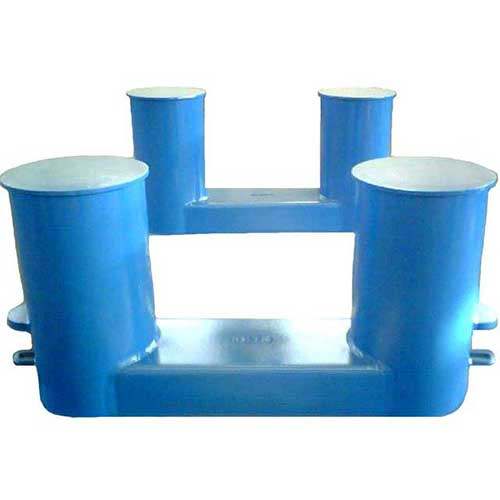
Functions of Marine Mooring Bollards
Safety
For vessels to be safely moored to docks, piers, or other maritime constructions, marine mooring bollards are required. They provide a reliable means of fastening vessels, preventing them from drifting or moving accidentally, which can lead to accidents, collisions, and damage to the vessels or marine structures. Mooring bollards that are correctly built, placed, and maintained ensure the safety of nearby vessels, crew, and workers.
Vessel Restriction
Marine mooring bollards are used to prevent ships from drifting or moving unintentionally. They serve as fixed locations for mooring lines or ropes, preventing the vessel from drifting away or moving along the dock or pier.
Distribution of Loads
Marine mooring bollards distribute mooring loads evenly across the vessel's structure, avoiding stress concentrations and the potential of hull or deck damage. They help distribute the weights exerted on the vessel during mooring operations, lowering the risk of overloading and structural damage.
Shock Absorption
The impact forces induced by vessel movement, waves, or wind loads are absorbed by marine mooring bollards, which also serve as shock absorbers. They provide a cushioning effect that aids in the reduction of unexpected pressures sent to the vessel and mooring lines, protecting both the vessel and the mooring system from excessive forces.
Flexibility
Marine bollards can be fitted to vessels of all sizes, types, and designs. They can be built and placed to meet specific mooring requirements, such as vessel size, mooring loads, environmental conditions, and operations requirements. This versatility allows for quick and safe mooring processes for a variety of vessels, from tiny boats to large ships.
Rapid Release Capability
Mooring bollards are designed to allow for the immediate release of mooring lines in the case of an emergency or unforeseen event. They are typically constructed with features such as horns or cleats that enable for the quick securing and release of mooring lines, which is an important safety factor for vessel mooring operations.
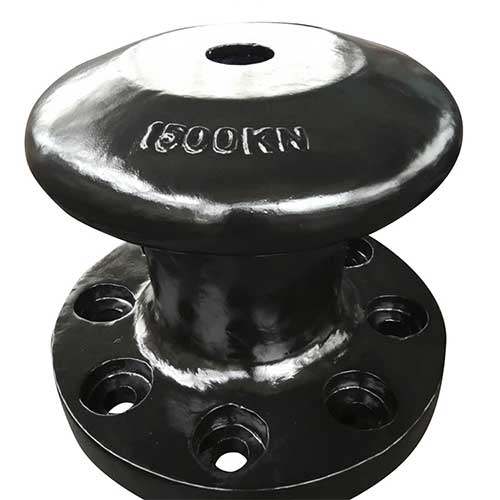
Maintenance of Marine Mooring Bollards
Inspection
Regular visual inspection of mooring bollards is recommended to detect signs of wear, corrosion, or damage. Examine the bollard body, horns, studs, base plate, and attachment points for cracks, deformation, or other signs of deterioration that could compromise performance. Examine the mooring line connection points, bolts, and nuts.
Cleaning
Cleaning maritime mooring bollards on a regular basis is recommended to remove dirt, debris, and marine vegetation that can develop on the surface and impair performance or accelerate corrosion. Use suitable cleaning procedures and materials, such as brushes, water, and mild detergents, to clean the bollards without causing damage.
Corrosion Protection
Because of their exposure to hostile sea environments, marine mooring bollards are prone to corrosion. Anti-corrosion methods, such as anti-corrosive coatings or galvanizing, can help to extend the life and performance of the bollard. Follow the manufacturer's recommendations and industry best practices for corrosion protection.
Lubrication
Lubricating moving parts, such as horns or studs, is critical for smooth functioning and wear prevention. To maintain the bollard's performance, put appropriate lubricants on moving parts and follow the manufacturer's lubrication plan.
Replacement or repair
During inspections, if any signs of wear, damage, or deformation are identified, the affected components should be fixed or replaced as soon as feasible. Damaged or worn components such as horns, studs, or bolts should be fixed or replaced with appropriate replacements to maintain the integrity and performance of the bollard.
Compliance with Standards
Check that the mooring bollards comply with relevant industry standards and regulations, such as ISO 3913 and PIANC recommendations, and that any suggested maintenance methods mentioned by the manufacturer or relevant standards are followed.
Mooring bollards are a vital component of any mooring system. It is the anchor point for mooring lines mounted on the deck to secure the ship or vessel. There are various types of marine bollards, including t-head, t-horn, kidney-shaped bollards, cleat, single-bitt bollards, double-bitt bollards, pillar bollards, tricorn bollards, T-head Japanese and Pillar bollards.

T Bollard
It is also named as“Tee Bollard”, “T-bollard”, or T- head bollard has a top shaped like a “T”. It is very prominent in many regions of the world due to its simplicity and it gets the job done well up to 300 tonnes. T-head bollards along with Horn Bollard or “Staghorn Bollard” can handle higher line load angles than single bitt and kidney-shaped bollards.Kidney-shaped Bollard
Kidney bollard has a simple design that is suitable when low to medium tidal range is expected. Kidney shaped bollards offer an economical solution for installations where securing of mooring lines at high angles is not a concern. This style is not recommended when multiple mooring lines will share one bollard as there may be a possibility of an unintentional release due to the shallow lip at the top of the bollard.Double bitt Bollard
Double bitt bollard, also known as the “Twin Horn” or “Twin". Small base area is space-saving for small areas. They are useful when high densities of mooring lines are present, this is a better choice for ship mooring and shifting.Single Bitt Bollard
It is particularly suitable for applications where tidal range variations are large and can handle steep mooring line angles. They are capable of accepting multiple mooring lines and have been designed to fit onto existing bolt patterns for older pillar bollards.Pillar Bollards
It is normally applicable where tidal ranges are small and use for warping operations along berths where vessels need to be re-positioned for loading purposes. Due to their 360 degree line of load range, they can also be placed on jetties where vessels berth on both sides of the jetty structure. Pillar Bollards can withstand use in harsh environments.How to choose the mooring bollards
Criterion for selecting mooring bollards are based on mooring pattern, changes in draft due to loading and discharge, wind and current forces, swell, wave and tidal forces, mooring line types, size and angles ice forces (where relevant). Ductile iron, cast steel, and stainless steel are some of the main materials used to make marine bollards. Besides size & design, bollards are also categorized by their grade and mooring capacities.
Furthermore, durability is a factor when choosing a suitable bollard design as maintenance is something that end user should be considered. To spot possible deterioration and to ensure that bollards are working well a continual durability testing and inspection should be done to ensure mechanical performance are maintained.
When looking for a marine mooring bollard supplier, the client must provide vital information about your project to a trusted supplier who understands the required International Standards and regulations, the level of support needed by your port, and all the other details associated with bollard production.
YSmarines mooring bollards are engineered accurately and manufactured in ductile cast iron or steel supplied with high-quality galvanized anchor bolts to offer our clients maximum resistance to berthing impact.
Mooring bollards are integral in any mooring system for offshore structures. These are used to secure mooring lines, and to prevent the vessels from drifting from their anchored location. Bollards may be formed into different types, depending on the use of the bollards, and what type of vessel would be anchored to it.
Some common types of mooring bollards are T-head bollards, kidney bollards, Japanese T-head bollards, and pillar bollards. These types may also be cast using different steel grades and shall depend on the design loads that the bollards would resist during its useful life.
YSmarines has a wide range of options to ensure we provide solutions to every application, each type suitable for different uses and loads. Mooring bollards are a vital component of any mooring system. It is the anchor point for mooring lines mounted on the deck to secure the ship or vessel.
Testing For Mooring Facilities
Mooring facilities testing procedures are carried out to ensure the correct design load capacities of the components.
1. To establish adequacy of mooring facilities.
2. Enable facility users to develop efficient berthing plans
3. Establish baseline data on existing mooring hardware and berthing capacity
4. Provide facility users with information sufficient to determine the level of effort necessary to maintain or upgrade existing capacity
To ensure the safety and efficient performance of the mooring bollards, you need to guarantee that they are in good working condition to use in daily mooring operations.
Due to their exposure to seawater, they are at high risk of corrosion which can significantly affect their service life. It is crucial to perform routine maintenance to extend the service life and reduce the possible damages to the installed mooring bollards.
How To Maintain a Mooring Bollard
Bollards are constantly exposed to the elements and the corrosive effect of sea splashes.
Although they are low-maintenance equipment, it's essential to conduct periodic inspections. These should include examining the following:
Surface inspection for scratches/damage to paint and corrosion of the materials.
Compare barrel thickness with manufacturer specifications.
Check with a torque wrench that all the anchor bolts are sufficiently tight.
Ensure anchor bolts are adequately coated and corrosion free
Inspect grout under bollard and replace if necessary.
A quarterly assessment should be performed in cases with recognizable irregular behaviors. A relevant corrective action should be taken to maintain its required performance.
Any chips or cracks in the paint should be repaired immediately to prevent corrosion from forming. Cast steel is particularly susceptible to corrosion.
For more information, you can visit the article of everything about mooring bollards.
The marine anchor chains play an important role in the safe berthing of the ship. This article describes how to do well maintenance of anchor chains.
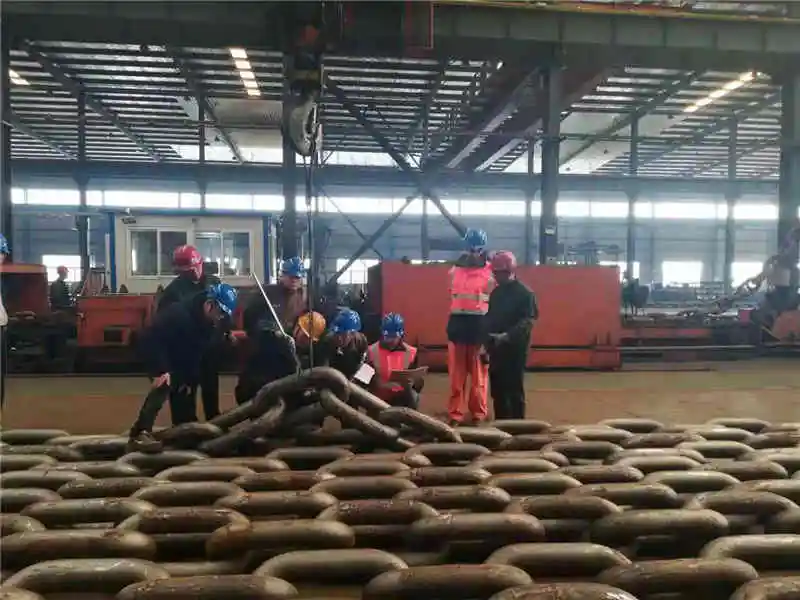
First of all, Before using the anchor chain, ensure that the chain wheel is installed on the shaft without deflection and swing. Timely check the tightness of the anchor chain and adjust it correctly. If the anchor chain is too long or stretched after use, which is difficult to adjust, the chain link can be removed as appropriate, but it must be an even number. The chain link shall pass through the back of the chain, and the locking plate shall be inserted outside. The opening of the locking plate shall face the opposite direction of rotation.
Secondly, the abrasion degree of anchor chain shall be checked frequently. More than 1/3 of the chain link of the same anchor chain has obvious elongation, and it cannot be used when the deformation and wear amount reaches 10% of the original diameter. After the chain of anchor chain is seriously worn, it shall be replaced with a new chain wheel and a new chain to ensure good engagement. At the same time, the end of the anchor chain and the commonly used end should be replaced in a planned way after one or two years of use, and the front and back positions of each chain link should be marked again.
Finally, pay attention to the anchor chain maintenance in the process of use. The anchor shall not be stopped before it reaches the bottom each time when it is anchored, and the anchor chain shall be washed clean when it is hoisted to remove sediment and other debris; Keep the anchor chain dry at ordinary times, and do not flush the water into the chain locker when washing the deck; Check every half a year, arrange all anchor chains on the deck for rust removal, painting, and inspection, and keep the marks clear and visible; The anchor chain shall be filled with lubricating oil in time during use, and the lubricating oil must enter the fitting clearance between the roller and the inner sleeve, to improve the working conditions and reduce wear.
The marine anchor chain can counteract the effect of external forces on the ship to ensure that the ship can safely berth in the designated waters. Therefore, attention should be paid to the anchor chain installation, inspection and maintenance during use.
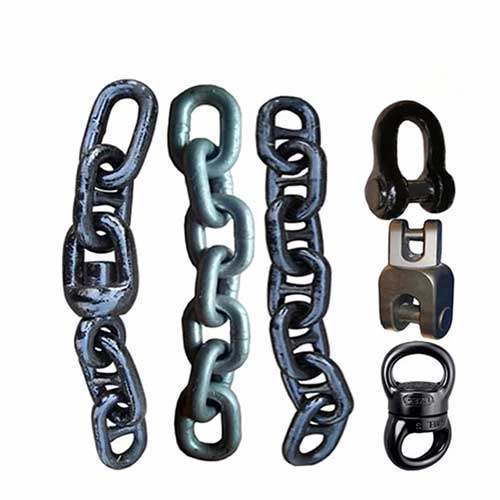
What Are The Installation Requirements
Before the installation of anchor, anchor chain, swivel ring, and connecting ring, the product number of the ship inspection, the manufacturer's product number, and the anchor quality shall be carefully copied. After inspection, the specification and quantity can be shipped only when they meet the requirements of the drawing, and the number shall be recorded.
According to the number of marine anchor chains required in the drawing, it is connected into a whole anchor chain through the connecting ring and swivel ring. The anchor chain is required to be firmly connected and installed and fixed with lead sealing. The two ends of each anchor chain shall be painted to identify the number of knots thrown by the anchor chain. This work can be completed at an appropriate time in the future.
How To Inspect Marine Anchor Chain
The chain link and shackle will be worn, cracked, deformed, and loose after long-term use, so marine anchor chain Inspection must be carried out, including wear inspection, crack inspection, deformation inspection, and loose structure inspection.
1. Wear Inspection
Check the contact point between rings and the friction point of the chain pipe, and measure its diameter with a caliper. The limit of anchor chain wear is: the average diameter of the anchor chain worn by ships in ocean shipping area shall not be less than 88% of the original diameter; The average diameter of the worn anchor chains of ships in offshore and coastal navigation areas shall not be less than 85% of the original diameter.
If the wear of the chain link or marine anchor shackle without guard exceeds 8% of the original diameter, it cannot be used again.
2. Deformation Inspection
Check whether the chain link is bent or twisted by visual inspection or measurement.
3. Structural Looseness Inspection
The pins of connecting chain links (after being disassembled for inspection, grease shall be applied to the inner joints before reassembly) and shackles will become loose due to the lead seal falling off, so they should be carefully inspected one by one.
4. Crack Inspection
Knock each chain link and shackle with a hammer to see if the sound is clear.
The anchor and anchor chain shall be deducted and painted regularly. After each repair and inspection, two coats of coal tar asphalt paint shall be applied, and then the anchor chain shall be marked.
YSmarines is a professional marine anchor chains supplier with the best prices. All the chains are tested by UT and MT detection and proof and loading test have been passed. Their surface could be blacking painting or hot-dip galvanized. All the chains could be approved by marine classification society such as ABS, DNV, RINA, LR, BV, CCS, BKI, etc.