
Marine anchors are essential components for keeping marine vessels moored securely. These devices are designed to give the vessel a secure and steady hold on the bottom, preventing it from drifting away due to wind, current, and wave forces.

Principle Of Marine Anchor
The principal purpose of a marine anchor is to create a holding force that keeps a vessel in place while at anchor or moored. The anchor is designed to sink into the seafloor and endure wind, tide, and wave stresses that would otherwise cause the vessel to drift or be damaged. When the anchor is fully set and the chain or rope is taut, it provides a holding force that is transmitted to the vessel.
An anchor's ability to generate a holding force is governed by its design and the resistance it encounters as it sinks into the bottom. The anchor must be heavy enough to sink into the seafloor and withstand the vessel's forces. It must also be able to penetrate the seafloor and take a strong grip.
The chain or rope that connects the anchor to the vessel must be strong enough to withstand the tension and stress induced by wind, current, and waves, as well as the weight of the vessel. The length of the chain or rope is also important since it determines the angle of the anchor as well as the amount of holding force supplied to the vessel.
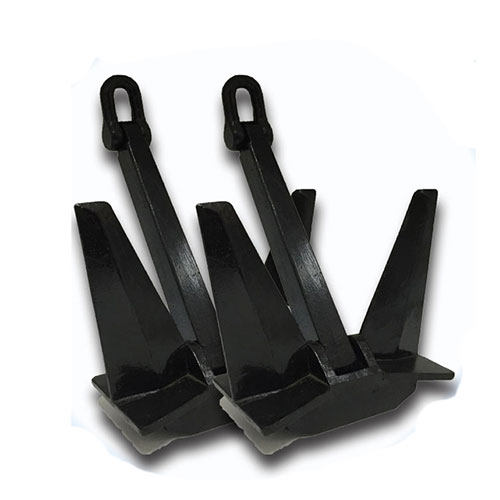
Explanation of the role of the anchor and chain in establishing a secure hold
The anchor and chain or rope are crucial in generating a stable hold for a moored or at anchor vessel.
For starters, the anchor is the vessel's primary point of contact with the seafloor. Its purpose is to sink into the seafloor and generate a holding force that can endure the forces of wind, current, and waves. Once the anchor is properly embedded in the seafloor, it offers a strong foundation for the vessel's stability.
Second, the chain or rope connects the anchor to the vessel and transfers the anchor's holding force to the vessel. The chain or rope must be strong enough to withstand the tension and stress created by wind, current, and waves, as well as the weight of the vessel. The length of the chain or rope is also important since it determines the angle of the anchor as well as the amount of holding force supplied to the vessel.
A major component that permits a vessel to remain at anchor or moored is the anchor and the chain or rope. Without the anchor, the vessel would be subject to the forces of wind, current, and waves and may be washed away or damaged. Similarly, without a strong and dependable chain or rope, the anchor cannot convey holding power to the vessel, and the vessel cannot remain in place.
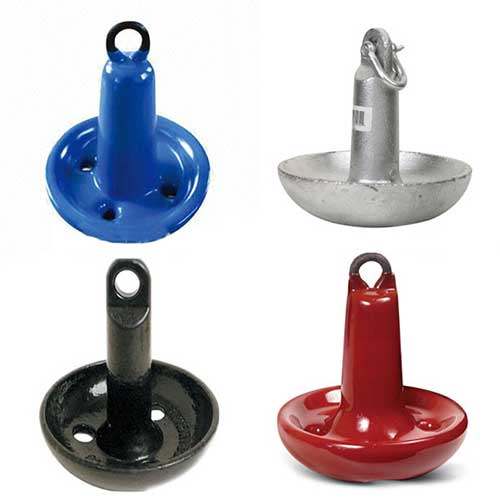
What are the Factors that Affect the Sinking Depth and Resistance
The greater the gripping force, the deeper the anchor dives and the greater the resistance. The ideal mix of anchor weight, design, chain/rope length, and anchor type is decided by the operating conditions as well as the vessel's size and weight.
Anchor weight
A heavier anchor sinks further and provides more resistance than a lighter anchor.
Anchor design
The shape and design of the anchor determine its ability to penetrate and retain in the seafloor. Different designs are better suited to different types of seafloor.
Seabed composition
The composition of the seabed effects the anchor's capacity to penetrate and hold. Soft, muddy seafloors are less resistant to erosion than hard, stony seafloors.
Anchor chain/rope length
The length of the anchor chain or rope determines both the angle at which the anchor sets and the amount of holding force it may generate. The anchor can be positioned at a flatter angle with a longer chain or rope, providing extra holding force.
Water depth
The depth of the water influences the length of the chain or rope required, as well as the amount of resistance that the anchor must provide.
Current and wind speed
The speed and direction of the current and wind influence the stress on the anchor and the amount of resistance it must provide to keep the vessel in place.
Vessel size
The amount of resistance required to keep the vessel in place is affected by its size and weight.
Anchor type
Different types of anchors operate differently in different settings. Some anchors are more effective on sandy or muddy seabeds, whereas others are more effective on rocky seabeds.
How the Holding Force Affected by the Marine Anchor
The holding force created by a marine anchor is a function of its design and the resistance it encounters as it sinks into the seabed. Once the anchor is fully set and the chain or rope is taut, the anchor generates a holding force that is transmitted to the vessel.
1. The surface area of the anchor that makes contact with the seafloor influences the holding force it produces. Anchors with bigger surface areas generate more holding force than smaller surface area anchors.
2. The design of the anchor determines its ability to penetrate the seafloor and generate holding force. Some anchor designs are better suited to soft or muddy seabeds, while others are better suited to rocky seabeds. The angle at which the flukes or blades of the anchor are positioned, as well as their shape, impact the anchor's ability to penetrate and hold.
3. The anchor's holding force is affected by the depth to which it sinks and the resistance it encounters as it sinks into the seafloor. A heavier anchor will generate more holding force than a lighter anchor that dives shallower and encounters less resistance.
4. The length and strength of the chain or rope that connects the anchor to the vessel influence the holding force delivered to the vessel. A longer, stronger chain or rope allows the anchor to be set at a flatter angle, resulting in greater holding force.
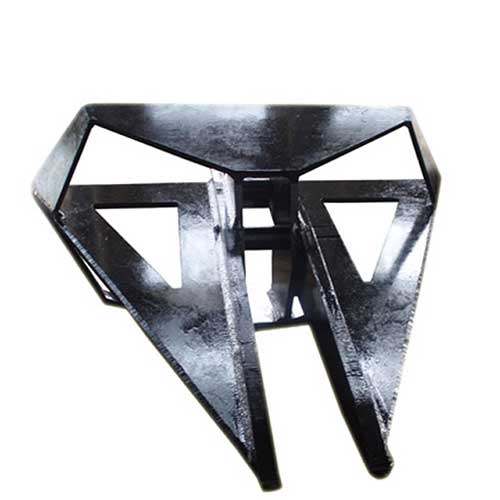
Summary
The article describes how marine anchors work, how they are used to secure boats, ships, and other marine vessels, and how the process of sinking the anchor into the seabed and creating the holding force that keeps the vessel in place works.
A marine mooring bollard is a sturdy, vertically placed post or structure used in maritime contexts to attach vessels to docks, piers, or other marine constructions.
Types of Marine Mooring Bollard
These are some of the most commonly used marine mooring bollards in maritime environments. Variables such as vessel size, load capacity, mooring arrangement, and environmental circumstances all influence the appropriate type of bollard, which should be chosen after careful study of the mooring operation and the marine structure.
Single Bollard
The most basic type of marine mooring bollard is a single vertically mounted post or structure. It usually has one or more horns or studs for attaching mooring lines.
Double Bollard
A double bitt bollard is made up of two vertically fastened posts or structures that are stacked one on top of the other. It provides more power and stability than a single bollard and is commonly employed for larger vessels or in areas with higher weights or stresses.
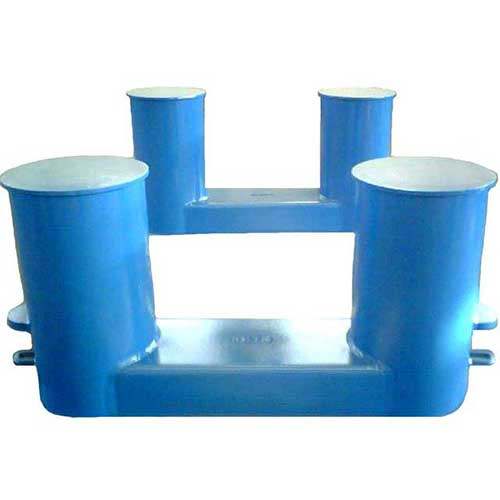
T-Head Bollard
A horizontal bar or beam connects two vertical supports to make a T-head bollard. It includes several mooring line attachment points, allowing ships greater mooring versatility.
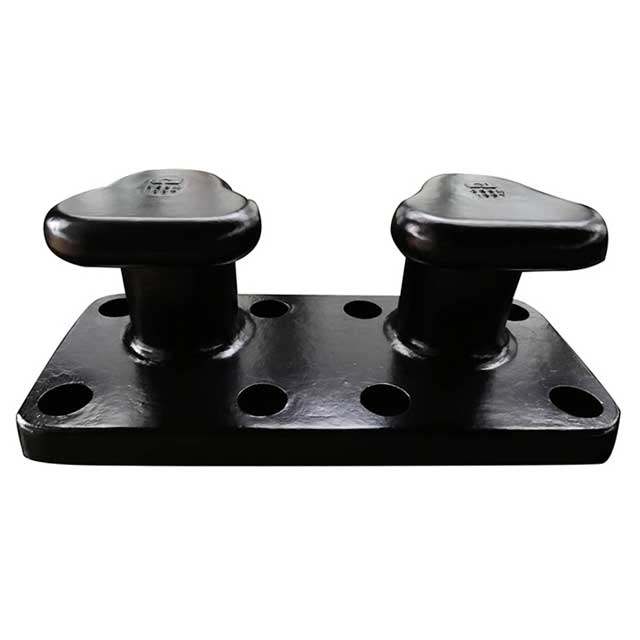
Kidney Bollard
A kidney dock bollard is an oval or kidney-shaped bollard with a smooth base and a curved top. It provides a larger surface area for mooring lines, which allows stresses to be distributed more uniformly and reduces the chance of mooring line or rope damage.
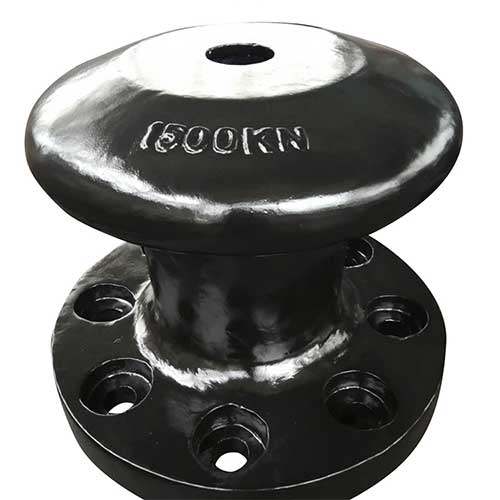
Pillar Bollard
A pillar bollard is a larger, more substantial type of maritime mooring bollard that is used for heavy-duty mooring or in locations prone to significant weights or stresses. When compared to other types of bollards, it is often larger, more robust, and has a higher weight capacity.
Camberhead Bollard
A camberhead bollard has a curved or sloped top surface that helps to lessen the angle of the mooring line, allowing for better alignment and lowering the chance of chafing or damage to the mooring line.
Components Of Marine Mooring Bollard
Body
The body of the bollard is the principal vertical post or structure that provides the strength and stability required to hold the mooring lines. To withstand the weights and forces placed on it, it is typically made of high-strength materials such as steel or ductile iron.
Base Plate
The base plate is the bottom section of the bollard that is bolted or welded to the pier or dock. It provides support for the bollard and distributes loads to the supporting framework.
Horns
Horns are protrusions or arms connected to the body of the bollard that serve as additional mooring line connection points. They are often found at the top of the bollard and come in a variety of designs, such as T-shaped or U-shaped, to accommodate different mooring lines and arrangements.
Bolts or Welds
Bolts or welds secure the bollard to the base plate or supporting framework. They are typically made of high-strength materials to withstand the stresses and forces delivered to the bollard during mooring operations.
Lifting Lugs
Lifting Lugs are used to raise and lower the bollard into position. They are normally located on the bollard's top or sides and are designed to accommodate lifting equipment such as cranes or hoists.
Finish
To protect the bollard from corrosion and environmental degradation, surface treatments such as painting, galvanizing, or powder coating may be utilized.
Bollard Cap
Some bollards may have a cap on top to protect them from the elements and to improve their appearance.
Load Rating Plate
A load rating plate can be attached to a bollard to indicate its safe working load or maximum load capacity, which can aid in the safe mooring of the bollard.

Installation of Marine Mooring Bollard
Site Preparation
The installation site should be prepared in accordance with the manufacturer's instructions and applicable local laws. Cleaning the surface of the foundation or base plate for the bollard, ensuring it is level and clear of debris, and ensuring that it is structurally sound enough to sustain the bollard and the projected loads are all examples of what this entails.
Positioning and Alignment
The mooring bollard must be correctly positioned and aligned on the base plate or in the installation site provided. The alignment should be extensively examined with a level or other relevant instruments to ensure that the bollard is upright and suitably orientated for the planned mooring direction.
Securing the Bollard
The maritime bollard should be securely fastened to the base plate or supporting structure with appropriate bolts or welds once it has been properly positioned. The fasteners should be tightened according to the manufacturer's recommendations to ensure proper connection and stability of the bollard.
Lifting and Handling
If necessary, the bollard can be lifted and placed using appropriate lifting equipment, such as cranes or hoists, and procedures. Lifting lugs or other clearly defined lifting points on the bollard should be used to avoid damage to the bollard or injury to personnel.
Testing and Inspection
After installation, the bollard should be extensively inspected to ensure that it is correctly installed, aligned, and fastened. Load testing may also be performed to check the bollard's load-carrying capacity and compliance with applicable standards and regulations.
Finishing and Protection
Surface treatments like metal painting, galvanizing, or powder coating can be used to protect the bollard from corrosion and environmental damage. Drainage or weep holes should be inspected and, if necessary, cleared to ensure proper water drainage.
Documentation proper documentation of the bollard placement should be retained for reference and future inspections, including records of inspections, load testing results, and any necessary certificates.
A roller fairlead is a mechanical device used in the maritime industry to guide ropes or cables while reducing friction. It is frequently made up of a number of rollers or sheaves that are fastened to a frame or structure and arranged in a certain arrangement to guide ropes or cables smoothly and evenly.
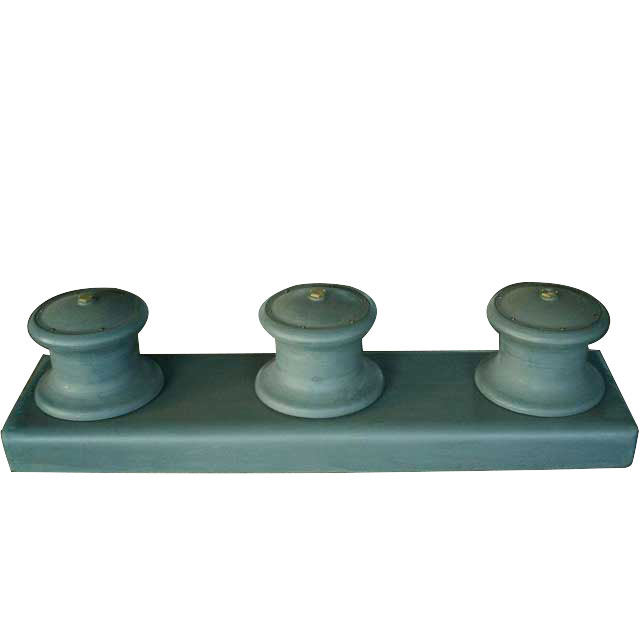
Function Of A Roller Fairlead
The key function of a roller fairlead is to guide ropes or cables in a controlled manner, eliminating the possibility of friction, wear, and damage. A roller fairlead reduces resistance during movement by providing a smooth and properly aligned passage for the ropes or cables, resulting in improved efficiency and less wear on the ropes or cables.
Roller fairleads are used in many industries, including maritime and offshore, construction, transportation, and other heavy-duty enterprises that require ropes or cables for lifting, towing, or other operations. Winches, cranes, hoists, towing systems, and other pieces of equipment that require the controlled movement of ropes or cables are common places to find them.

Benefits Of Using Roller Fairleads In Load Handling Operations
Reduced friction and wear
Roller fairleads reduce friction and wear by providing a smooth and controlled path for ropes or cables during movement. This increases rope and cable longevity by decreasing abrasion and damage caused by rubbing against sharp edges, corners, or rough surfaces.
Improving efficiency
Marine roller fairleads enable the smooth and even movement of ropes or cables, lowering resistance and increasing load handling efficiency. This can result in speedier and more efficient processes, as well as less downtime and higher productivity.
Enhancing safety
Roller fairleads reduce the danger of accidents and injuries during load handling operations by directing ropes or cables in a controlled manner, reducing the possibility of unexpected jerks or snags. Ropes and cables that are properly aligned and tensioned also reduce the potential of dangerous rope or cable breakdown.
Versatility
Roller fairleads are versatile and adaptable to a wide range of load handling requirements since they can be used in a variety of applications and industries. They can be used on a wide range of equipment, such as winches, cranes, hoists, towing systems, and so on.
Consistency in load handling
Marine roller fairleads maintain perfect alignment and tension on ropes and cables, allowing for more consistent weight handling activities. This can improve load handling precision and accuracy, reducing the possibility of weight shifting or unequal distribution.
Factors To Consider When Selecting A Roller Fairlead
Load capacity
The roller fairlead's load capacity should be sufficient to handle the maximum load imparted to the ropes or cables during the load handling activity. To ensure safe and dependable operation, it is necessary to examine both static and dynamic loads and select a roller fairlead with an adequate load rating.
Rope or cable size
The roller fairlead should be compatible with the size and kind of rope or cable used in the weight handling operation. Examine the diameter, construction, and substance of the ropes or cables when selecting a roller fairlead to ensure a proper fit and smooth movement.
Mounting arrangement
The installation arrangement for the roller fairlead should be compatible with the equipment or structure where it will be installed. Consider the available space, mounting options (e.g., horizontal, vertical, angled), and the structural soundness of the mounting arrangement to ensure safe and secure installation.
Roller or sheave configuration
The rollers or sheaves on the roller fairlead should be configured specifically for the task. Consider parameters such as the number of rollers or sheaves, their spacing, and alignment. to ensure proper rope or cable guidance and to reduce friction during movement.
Material and construction
The material and structure of the roller fairlead should be appropriate for the environment and conditions in which it will be used. Factors such as corrosion resistance, durability, and maintenance requirements should be considered to ensure long-term performance and reliability.such as the number and spacing of rollers or sheaves.
Safety features
The roller fairlead should incorporate suitable safety elements such as guards, covers, or locking mechanisms to avoid accidental disengagement or entanglement of ropes or cables during operation. Safety elements should be in conformity with relevant industry norms and laws to ensure safe operation.

Manufacturer reputation and support
Consider the roller fairlead manufacturer's reputation and support. Look for reputable manufacturers with a track record of producing dependable and high-quality roller fairleads, and ensure that they provide adequate technical support, documentation, and after-sales service.
Mooring chocks are used to secure mooring lines, which are used to anchor or dock a vessel to a berth, jetty, or other mooring points, and distribute the load from the mooring lines, preventing excessive stress or damage to the ship’s structure. They are used for docking, anchoring, and fastening vessels during loading and unloading activities.
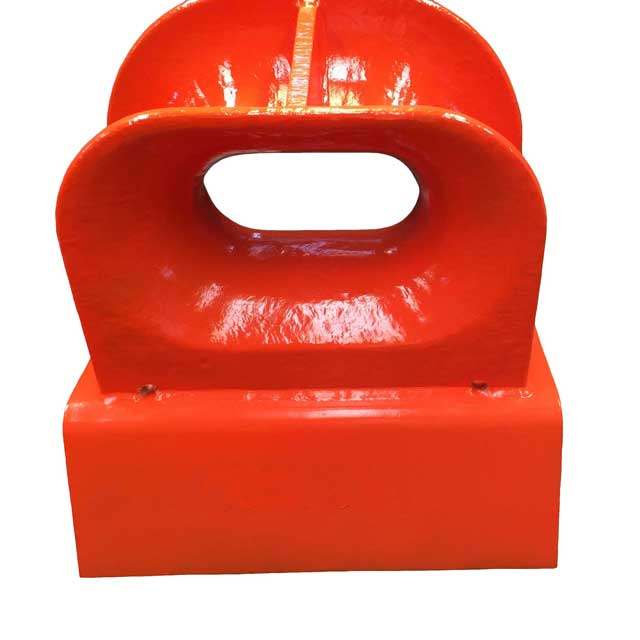
Mooring Chock Material Selection
Marine mooring chock materials must be carefully selected to ensure their lifespan, strength, and resistance to corrosion and wear in the harsh marine environment.
When selecting materials for mooring chocks, several factors are taken into account.
Strength and load bearing capacity.
Marine mooring chocks are subjected to heavy weights and stresses from mooring lines, which vary depending on vessel size and type, as well as environmental conditions. As a result, mooring chocks are typically manufactured of high tensile strength and load-bearing materials, such as steel, to ensure that they can withstand the imposed loads without deformation or failure.
Corrosion Protection
Because of the presence of saltwater, marine environments are very corrosive, causing metals to corrode quickly. To ensure long-term performance and durability, materials with superior corrosion resistance, such as stainless steel, bronze, or high-quality composites, are often utilized for mooring chocks.
Wear Resistance
Mooring chocks can wear out over time owing to friction with mooring lines, resulting in surface damage or erosion. Hardened steel or long-lasting composites, for example, are routinely used to decrease wear and increase the life of mooring chocks.
Weight and Density
The weight and density of the materials used for mooring chocks can have an impact on the total weight and stability of the vessel. Low density materials, such as aluminum or some composites, can be used to make mooring chocks lighter without compromising strength or longevity.
Cost
The cost of mooring chocks also influences material choices. While stainless steel and bronze are extremely strong and resistant to corrosion, they may be more expensive than other materials. As a result, a balance of performance, durability, and cost must be considered while selecting materials.
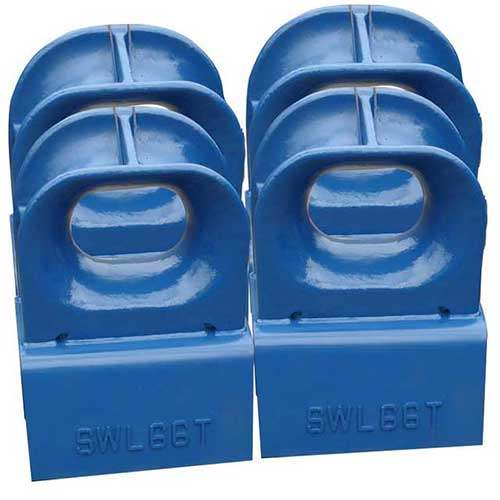
Common materials used for mooring chocks
Steel
Steel is a preferred material for mooring chocks due to its high strength, load-bearing capacity, and longevity. It can be used in mild steel, high-tensile steel, or stainless steel, depending on the application and environmental conditions.
Bronze
Bronze is a corrosion-resistant material that is commonly used in maritime applications like mooring chocks. It offers high strength, wear resistance, and endurance, making it perfect for mooring chocks that must operate well and resist corrosion.
Composites
Fiberglass reinforced plastic (FRP) and carbon fiber reinforced plastic (CFRP) are lightweight, corrosion-resistant, and have a high strength-to-weight ratio. They are increasingly being employed in marine applications such as mooring chocks due to their excellent performance.
Aluminum
Aluminum is a lightweight material with moderate strength and resistance to corrosion. When weight reduction is desired, it is commonly used for mooring chocks on small boats or lightweight vessels.
Structural Components And Features Of Mooring Chock
Marine mooring chocks are frequently made up of multiple structural components and have certain design elements to ensure optimum performance.
Chock Body
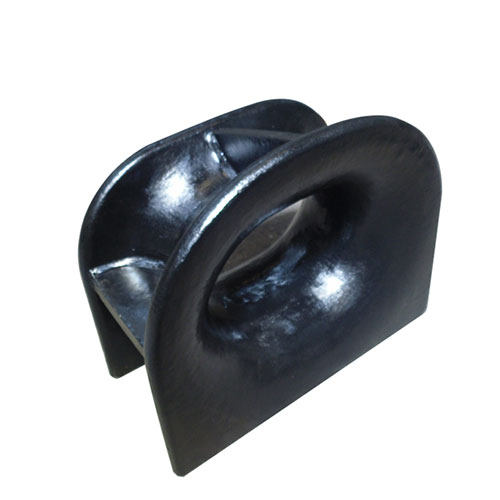
The primary body of the mooring chock is often a strong metal or composite construction that serves as the chock’s main framework. It could be shaped like a U or V, with smooth, rounded sides to protect the mooring lines. The chock body is designed to bear mooring line loads and distribute them equally to the vessel’s structure.
Mounting Base
A mounting base or flange is often used to secure the mooring chock to the vessel’s deck or hull. The mounting base is intended to securely attach the mooring chock to the framework of the vessel, providing stability and strength during mooring operations.
Fairlead
A fairlead is a guiding element in the chock body that helps to direct and guide mooring lines as they pass through the chock. It prevents mooring lines from rubbing against the chock body, thereby reducing line wear and tear and ensuring smooth movement during mooring operations.
Rollers or Sheaves
Rollers or sheaves are integrated into the body of some mooring chocks. These are designed to reduce friction on the mooring lines as they pass through the chock, resulting in less line wear and tear and smoother movement.
Bolts or Fasteners
To secure maritime mooring chocks to the vessel's frame, bolts or fasteners are frequently employed. To maintain the mooring chock securely connected to the vessel during mooring operations, these bolts or fasteners are sturdy and corrosion-resistant.
Drainage Holes
Drainage holes or channels in mooring chocks allow water to drain away from the chock, avoiding water accumulation and lowering corrosion risk.
Load Ratings and Markings
Mooring chocks frequently have load ratings or signage indicating maximum load-bearing capability. This data ensures that the chocks are used within their design parameters and acts as a reference for safe mooring operations.
Proper Orientation and Placement
Marine mooring chocks are frequently built with certain orientation and position requirements to ensure optimal function. They are commonly installed in critical regions of the vessel to ensure appropriate force distribution and safe and successful mooring operations.
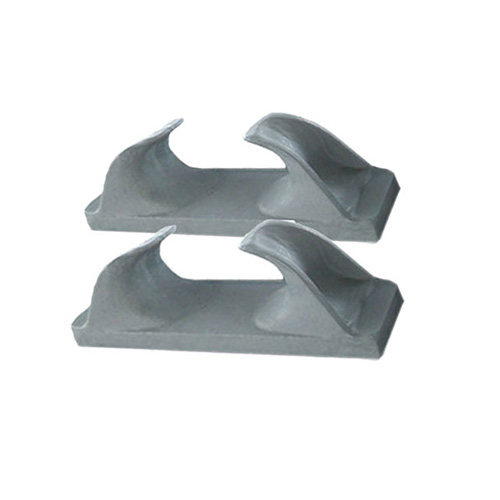
Innovations Of Mooring Chocks
Mooring chock materials, technologies, and designs have been continuously updated to improve performance, longevity, and safety.
Composite Materials
Traditional marine mooring chocks are generally made of metals such as steel or cast iron. Composite materials, on the other hand, are increasingly being used in marine mooring chocks due to features such as high strength-to-weight ratio, corrosion resistance, and reduced maintenance requirements. Composite materials, such as fiberglass-reinforced polymers (FRP), are used to make chock bodies, rollers, and fairleads, which provide greater durability and service life.
Non-metallic Coatings
Non-metallic coatings for marine mooring chocks have been developed as a result of developments in coating technology, providing improved corrosion resistance, less friction, and longer longevity. Specialized polymer coatings, epoxy coatings, or other corrosion-resistant coatings may be used to help mooring chocks last longer and require less maintenance.
3D Printing
Additive manufacturing, also known as 3D printing, is quickly becoming popular in the production of marine mooring chocks. Because 3D printing allows for complex geometry and customization, mooring chocks with optimized designs and improved performance are possible. 3D printing has the potential to enable more sustainable production processes by reducing material waste and energy use.
Integrated Load Monitoring
Some marine mooring chocks now have integrated load monitoring devices, such as load cells or strain gauges, that allow real-time monitoring of the loads applied to the chock. This improves safety by providing feedback on the actual loads faced by the chock during mooring operations, allowing for preventative maintenance and avoiding overloading.
Design Optimization
Advances in computer-aided design (CAD) and finite element analysis (FEA) have enabled optimized designs for maritime mooring chocks. Computational simulations can be used to anticipate and analyze mooring chock performance under various loads and environmental conditions, resulting in superior designs with more strength, better load distribution, and lower stress concentrations.
Environmentally-friendly Designs
Design advances in marine mooring chocks also address environmental sustainability. Some mooring chocks, for example, are designed with rounded curves and smooth surfaces to reduce the possibility of marine animal entanglement and, as a result, the impact on marine ecosystems.
Mooring chocks are required for the secure and successful mooring of vessels, preventing the vessel from drifting, shifting, or causing damage to the vessel and its surroundings.
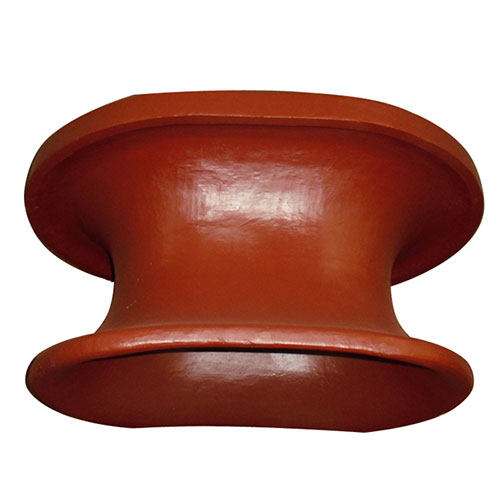
Marine mooring chocks of various varieties are used to keep vessels in place during various nautical operations.
Roller Chock
The rollers on this mooring chock allow for smooth movement of mooring lines, reducing friction and line damage. Roller chocks are commonly used on ships with longer mooring lines, and they provide flexibility in mooring configurations.
Closed Chock
Closed chocks have a closed circular or oval shape with a small aperture that allows mooring lines to go in a safe and constrained path. They prevent mooring line release by accident and are suitable for yachts with smaller mooring lines and limited space.
Open Chock
Open chocks have an open U-shape or V-shape with larger openings, making mooring line installation and removal easier. They provide for greater mooring arrangement and line angle flexibility and are often used in vessels with larger mooring lines and a broad deck area.
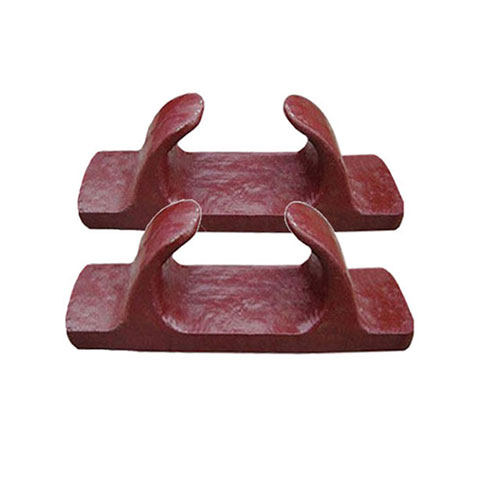
Bitt Chock
Bitt chocks are a cross between roller chocks and closed/open chocks. They have a roller on top and a closed or open shape below, allowing for smooth movement and secure mooring line closure. Bitt chocks are widely used in ports and harbours to secure the mooring of vessels with different mooring line sizes and deck area constraints.
Panama Chock
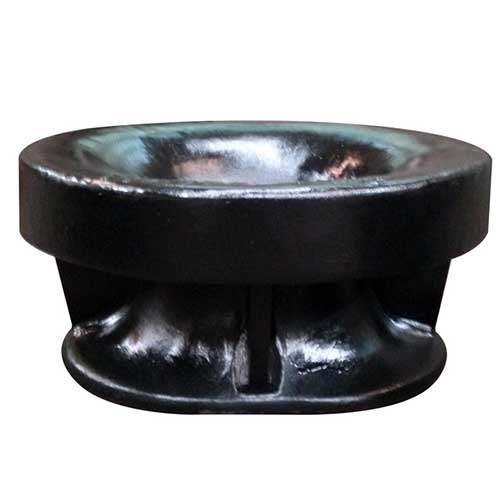
Panama chocks have a curved form with a larger aperture that allows mooring lines to run in a wide, smooth path. They are frequently used in offshore and heavy-duty mooring operations and are suitable for vessels with longer mooring lines and bigger loads.
T-Head Chock
T-head chocks are T-shaped with openings on the top and sides for mooring lines to pass through. They are widely used in shipyards, dry docks, and marine construction projects and are suitable for vessels with complex mooring systems.
Chock with Hinged Chock
Hinged Chock
Hinged chocks have a hinged mechanism that allows the chock to move and hence accommodate varied mooring angles. They are suitable for vessels with changing mooring conditions and are frequently used in floating docks, offshore facilities, and other dynamic mooring situations.
Marine Mooring Chock Design and Construction
The design and construction of marine mooring chocks are critical to guaranteeing their efficiency and longevity in securing vessels during mooring operations.
Material choice
1. Choosing marine-appropriate materials (e.g., stainless steel, cast steel, ductile iron)
2. Ensuring materials are corrosion, wear, and fatigue resistant.
3. Compliance with applicable industry standards and regulations for marine-related materials.
Considerations for Design
1. Selecting the most appropriate type of mooring chock for the vessel and application.
2. Considering vessel size, type, and mooring line properties (e.g., diameter, breaking strength).
3. Calculate loads and forces on the mooring chock during mooring operations. (For example, static and dynamic loads).
4 Incorporating safety measures to maintain structural integrity and prevent overloading.
5. Considering environmental factors (such as wave loads and tidal currents), as well as site-specific concerns.
6. Include relevant elements such as rollers, hinges, and openings according on the design requirements.
Fabrication and construction
1. Making use of tried-and-true fabrication and production procedures for marine mooring chocks.
2. Using proper welding and fabrication techniques to achieve the desired structural integrity.
3. Throughout the fabrication process, thorough inspections and quality control are performed.
4. Coating the mooring chocks to protect them from corrosion and wear.
5. Carrying out load testing and certification to ensure the performance of the mooring chocks.
Advantages of Marine Mooring Chock
Mooring chocks are required for safe and efficient vessel mooring operations.
1. Mooring line securing
Marine mooring chocks are used to hold mooring lines, ropes, or wires from vessels to permanent or floating structures such piers, jetties, docks, buoys, and mooring bollards.
2. Distribution of load
Mooring chocks distribute the weights generated by vessels during mooring operations, reducing stress and strain on mooring lines and preventing vessel and mooring structure damage.
3. Aiding in friction and stability
Mooring chocks provide friction to prevent mooring lines from slipping or sliding, hence increasing vessel stability and reducing inadvertent vessel movements.
4. Increasing safety
Properly built and fitted marine mooring chocks help to the safety of mooring operations by preventing accidents, injuries, and damages caused by uncontrolled vessel movements. They ensure that mooring lines are securely held in place, lowering the possibility of line failure or disconnection when the vessel is moored.
5. Improving the efficiency of anchoring processes
Marine mooring chocks enable for smooth and controlled mooring operations, allowing vessels to be held in place safely and efficiently under a variety of environmental and operating situations.
6. Increasing operational efficiency
Marine mooring chocks increase the efficiency of mooring operations by allowing vessels to be quickly and securely moored in place. This lowers downtime, delays in departure and arrival, and improves the overall operational efficiency of marine vessels.
7.Safeguarding the vessel and the mooring structure
Mooring chocks distribute weights and protect mooring lines from overstress, protecting both the vessel and the mooring structure from potential damage caused by high winds. This extends the life of both the vessel and the mooring structure, reducing repair and replacement costs.
8. Providing adaptability
Mooring chocks are available in a number of shapes, sizes, and combinations, making them versatile and adaptable to a wide range of boats, mooring configurations, and environmental conditions. This increases mooring adaptability, allowing for a greater range of vessel sizes, types, and mooring requirements.
9. Improving the efficiency of anchoring processes
Marine mooring chocks enable for smooth and controlled mooring operations, allowing vessels to be held in place safely and efficiently under a variety of environmental and operating situations.