
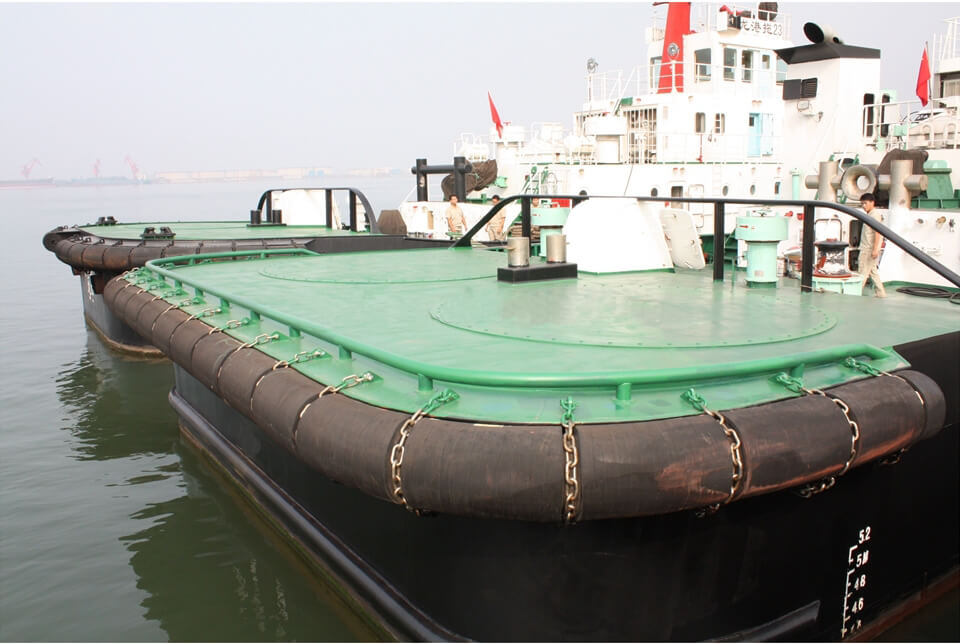
The rubber fender will affect the safety of the wharf and the ship's pilot berthing, and affect the scheduling of production ships. This paper introduces the placement, use, and manufacture of rubber fenders.
What Are The Production Quality Requirements For Rubber Fenders
During the molding of rubber fender products, the cohesive force of the elastomer cannot be removed after being pressed with a large pressure, and there is an unstable trend during molding (the shrinkage rate of rubber depends on the type of rubber).
Therefore, when designing rubber products, both the formula and the mold should carefully calculate the mixing quality, otherwise, the product size may be unstable, thus reducing product quality problems.
When designing and producing rubber fenders, the rubber fender manufacturers shall consider the reaction force acting on the hull and the port berthing position, the deformation of rubber fenders after absorbing the ship's kinetic energy, and the reaction force acting on the hull.
Which Marine Rubber Fender Material To Choose
Filler Material
Generally, rubber fender enterprises use polyester cord fabric for filling, but the tensile and elastic properties of polyester are not as good as nylon, so nylon with high elastic properties is selected for a better fender.
Nylon is mainly used in two kinds of airbags and fenders, 126D2 and 126D3. These two kinds of cord fabrics are well made and have a very long service life.
How To Place Rubber Fenders
The spacing and elevation of marine rubber fenders are very important. It is necessary to ensure that the ship can not directly touch the quay wall under the most unlucky berthing sight point allowed by the standard. It is also necessary to ensure that the ship can safely berth at different tide levels and draughts, and has strong adaptability to ships of different tonnage. Fender is an energy-absorbing device for ship berthing stability. Due to the effect of wind, wave, and current, as well as the difference between wharf azimuth, and the influence of high and long period wavelet waves on the harbor basin, a large amount of energy can occur when a ship collides with a dolphin, which requires that the fender has a good energy absorption characteristics.
How To Use The Combined Rubber Fender
The combined use method of the rubber fender aims to overcome the shortcomings of the prior art and provide a rubber fender that can be used in combination.
Even if a single fender can not meet the needs of large ships, several fenders can be combined into a longer fender to meet the needs of a longer fender.
The rubber fender is a cylindrical ring, which is characterized by a plurality of projections on one end face of the rubber fender and a plurality of grooves on the other end face. The number of pins and slots is the same. The shape of the pin and groove is the same, both are cylindrical. The positions of the protrusions and grooves on the end face correspond to each other. The grooves and projections of two adjacent fenders can be used together.
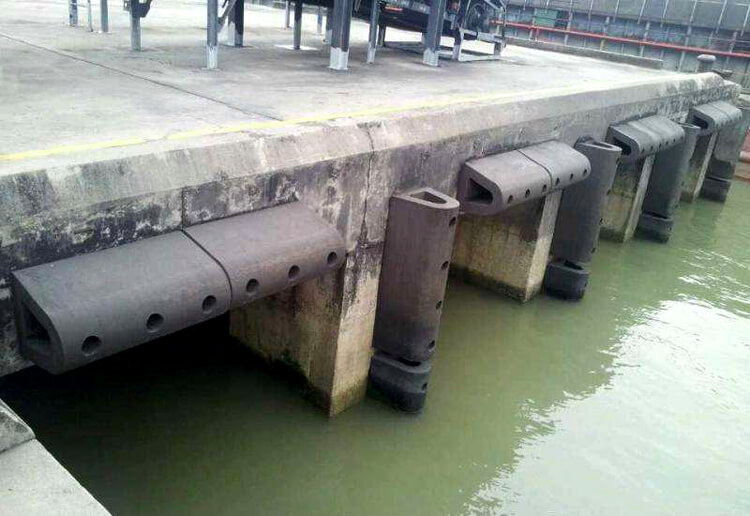
The quality of rubber fenders has always restricted the use of production berths, troubled the safety of wharf and ship pilot berthing, and affected the scheduling of production ships. We should analyze and study the placement, type selection, use, and fabrication of fenders.
The spacing and elevation of marine rubber fenders are very important. It is necessary to ensure that the ship can not directly touch the quay wall under the most unlucky berthing sight point allowed by the standard. It is also necessary to ensure that the ship can safely berth at different tide levels and draughts, and has strong adaptability to ships of different tonnage. Fender is an energy-absorbing device for ship berthing stability. Due to the effect of wind, wave, and current, as well as the difference between wharf azimuth, and the influence of high and long period wavelet waves on the harbor basin, a large amount of energy can occur when a ship collides with a dolphin, which requires that the fender has a good energy absorption characteristics.
Various Types Of Rubber Fenders
Arch V-Type Rubber Fender
At present, arched V-type rubber fenders are mostly used. Although fenders have been widely used and bridge piles are densely distributed, due to the small energy absorption of fenders, the surface is easy to be scratched and damaged, falling off and aging.
Rotary Rubber Fender
The rotary rubber fender uses a relatively large offset to solve the stress problem when the bridge pile is impacted. It is also a wise choice to use it in some narrow transport holes. However, due to the high engineering cost of the product, it is unlikely to be applied on a large scale.
Pneumatic Rubber Fender
As a key product of anti-collision, shock absorption, and energy absorption, pneumatic rubber fenders are simplified in model selection due to the emphasis on ports, which can achieve a good anti-collision effect and save costs. Except for tugs and small ships, large tonnage ships equipped with rubber fenders mainly use inflatable rubber fenders to protect ports and hulls when berthing.
The marine mooring system refers to the use of equipment to fix the ship at the wharf or other places to limit its movement. So, how to select the best marine mooring equipment?
Choosing The Mooring Bollard
1. For the selection of mooring bollards, attention shall be paid to the requirements of the specification and size. Because of the different specifications and sizes of the ships, there are certain restrictions on the device.
2. Attention shall be paid to the restrictions on the installation position to avoid problems in the installation.
3. Attention shall be paid to the installation requirements, especially the power restrictions, to ensure that the installation of the device meets the stability requirements and ensures the effect.
4. It is necessary to pay attention to the functional requirements and functional limitations, especially the functional requirements of the cable and the limit of the bearing capacity, to ensure the stability of the device in use.

Choosing The Marine Mooring Chock
1. Corresponding types: Different types of products have different structural shapes. We need to choose the corresponding type chock to be able to use normally because of the appropriate structural shape.
2. Corresponding models: There are different models of the same type of mooring chocks, and there are certain differences in decoupling strands and materials between different models of it. Based on this situation, we need to select the corresponding model of products to be applicable.
3. High precision: Because the application has high requirements on the structure and quality of the mooring chock, it needs products with high precision, which will have better applicability because of the excellent comprehensive quality.
Choosing The Roller Fairlead
1. When selecting, it is necessary to see whether the surface of the device in contact with the cable is smooth. To avoid large abrasion of the cable during use, which may lead to the cable being easily broken and unable to be used for a long time.
2. Observe the steel parts except for the body and pin shaft. Generally speaking, there is no problem with the fairlead roller in the body and pin shaft structure. Therefore, it is suggested that when selecting the device, we should focus on other steel parts, especially paying attention to whether the steel parts other than the body and pin shaft have been galvanized or painted.
Selecting Marine Anchor
1. Bruce claw anchor is one of the most popular anchors among leisure rowers in North America. For most rowers, Bruce or delta is the best balance between price and performance.
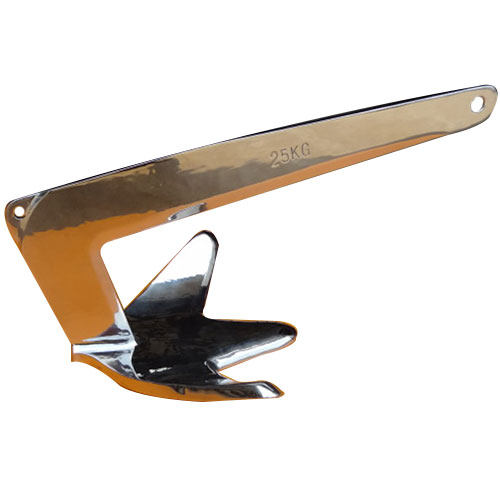
2. Plow anchors are suitable for most bow rollers. Fluke anchors are the perfect choice for auxiliary anchors or stern anchors. They perform well in sediment and can be easily stored on most bow rollers.
3. The head anchor of commercial ships mainly adopts rod less anchor, and the tail anchor sometimes adopts rod anchor and dovetail anchor.
4. There are many types of anchor materials, the most popular are low-carbon steel, high-strength steel, stainless steel, and aluminum. Most of the traditional steel anchors we are used to seeing in the market may be low-carbon steel or high-strength steel. When selecting ship anchors, in addition to the factors such as the length and weight of the ship, it is also necessary to carefully select the anchor materials.
Mooring is an integral part of cargo transportation. During the mooring period, the ship faces various natural forces and human forces. The mooring system refers to the use of equipment to fix the ship at the wharf or other places to limit its movement. There are five types of common mooring equipment that is essential.
Mooring Bollard
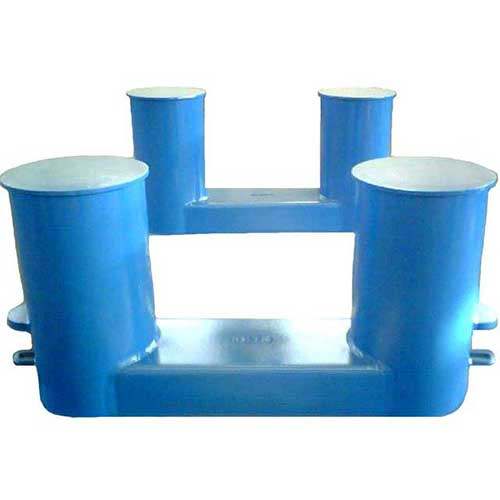
The mooring bollard is mooring ship equipment installed in the superstructure of the wharf. It is designed and selected according to the berth capacity and wharf structure type to meet the requirements of the safe, reliable, and convenient operation of ships leaving the wharf, berthing, shifting, and turning. It is composed of a shell, anchor rod, nut, washer, anchor plate, and column core packing. The most common types in the shipping industry are column mooring bollard and Cruciform Bollard.
Marine Mooring Chock
Marine mooring chock is a closed-hole fairlead that is arranged on the bulwark and used to limit the leading out of the position of the cable. The basic shapes are round, oval, square, and closed mooring chock.
204 steel seamless steel pipe specified in GB 8162 is selected as the material of its body. It can also be bent from grade a steel plate specified in GB 712. 1Cr18Ni9Ti stainless steel plate specified in GB 4237 is selected as the stainless steel clad plate. At the intersection line of the body and the outer edge, the welding surface shall be clean and free of cracks, warpage, and skew. The cutting shall be straight and the sharp edge shall be removed. The stainless steel clad plate shall be flat with the body, and the weld shall be free of defects such as pores, cracks, and burrs.
Roller Fairlead
Roller fairlead is a fairlead composed of several independent rollers in parallel, which can be divided into the closed type and open type.
According to the number of rollers, the commonly used two roller, three roller, and four roller fairleads. It can export several cables at the same time, and its mass is smaller than that of the fairlead with rollers. It is mainly used on large and medium ships.
Rubber Fender
A rubber fender is installed on the wharf or ship to absorb the collision energy between the ship and the wharf or ship when berthing or mooring, and protect the ship and the wharf from damage.
It is divided into the following categories: cylindrical rubber fender, DA type rubber fender, D type super arch rubber fender, drum type rubber fender, DO type rubber fender, and V type rubber fender. They are different in reaction force, surface pressure, device maintenance, and convenience of use.
Marine Anchor
The main function of the marine anchor is to fix and stabilize the ship. After the anchor is pulled into the water bottom, it can provide berthing capacity for the ship.
It should be noted that this capability is not only accomplished by one anchor, but also by a long anchor chain.
There are many types of anchors, which can be divided into rod anchors (also known as naval anchors), Rodless anchors (commonly known as hall anchors and Speke anchors), high grip anchors (generally rod rotating claw anchors), and special anchors (commonly used for permanent mooring) according to different structural solutions and uses.
The rubber fender has the characteristics of good elasticity, high engine absorption, convenient maintenance, long service life and facilitating large batch production with wide applications worldwide. Rubber fenders can not only protect ships and terminals but also reduce horizontal loads for the terminal, improving the berthing capacity of the wharf.
Types, Features, And Applications Of Rubber Fenders
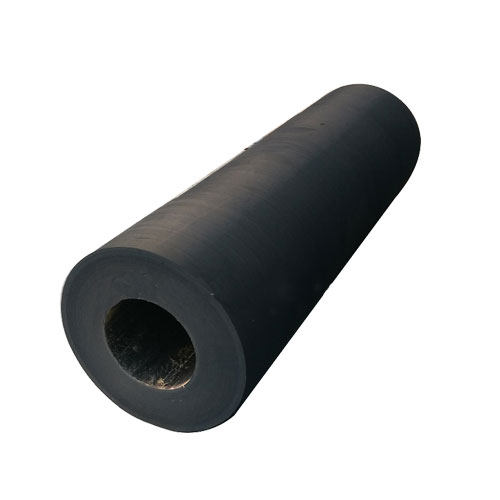
1. Circular rubber fender
Circular rubber fender also known as Y type fender, The characteristics are low reaction force, small in surface pressure, reasonable energy absorption, with wide applications and convenient installation and maintenance, especially suitable for vintage terminals.
2. D-type ( semicircle) rubber fender
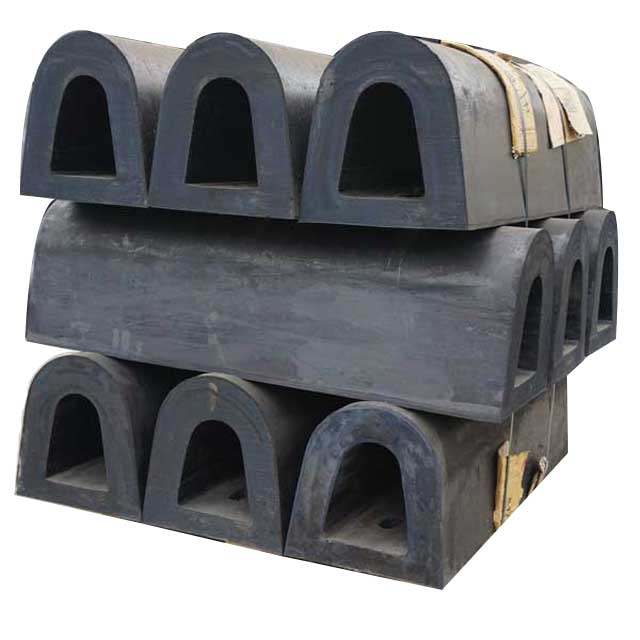
The D type rubber fender has a semicircle shape. It has the features of moderate reaction force, higher sucking energy than cylindrical fender, more convenient installation. Due to the small width bottom size, it is especially suitable for a frame-style wharf.
3. DO type rubber fender
The DO type rubber fender has a larger reaction force and energy absorption than the D type. Installation strength and service life are greatly improved than D type fender, suitable for frame-style terminals.
4. Super arch (V-type) rubber fender
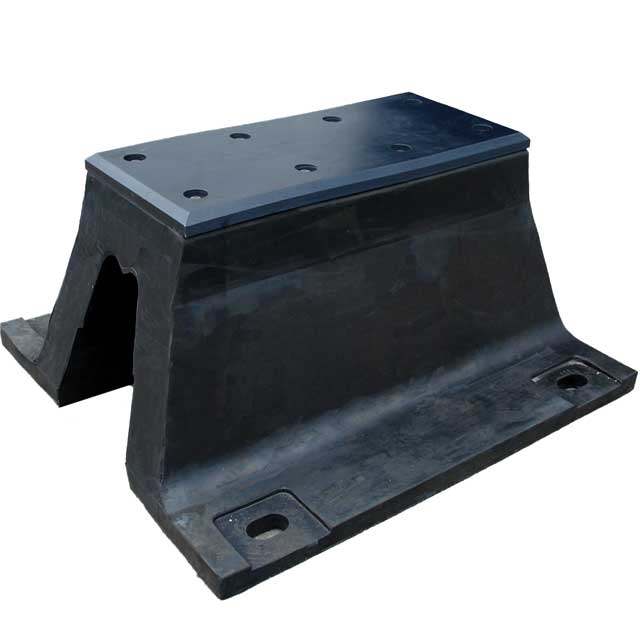
The SA super arch fender is also known as V type rubber fender with moderate reaction force, high suction energy, firm and convenient installation.
5. DA type rubber fender
DA type rubber fender has the characteristics of high suction energy and low reaction energy. The products have higher stress dispersibility, long service life. The front end is equipped with a defense board to reduce the surface pressure. It has various installation methods, more convenient.
6. Super cell(SC)rubber fender
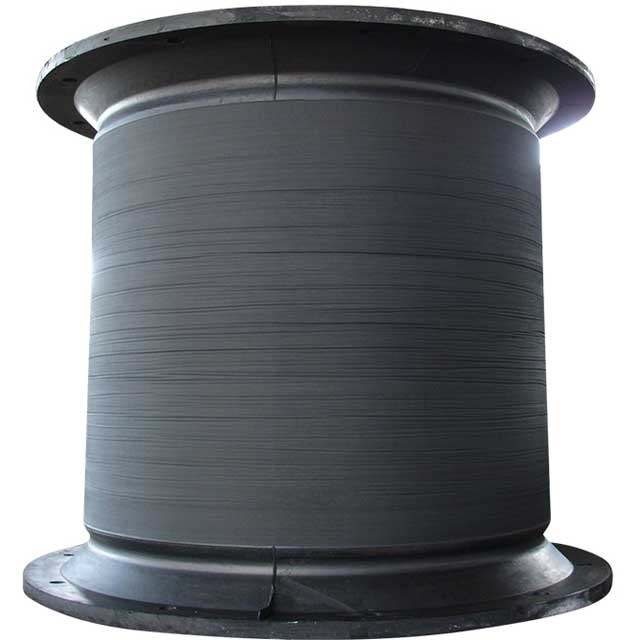
Super cell rubber fender also known as SC type rubber fender, has a drum shape. The main characteristics are low reaction force, large suction energy. The tilt compression mechanics property reducing is little. The installation is convenient. It is widely used for large and medium-sized wharfs.
Transportation And Storage Of Rubber Fenders
Transportation
1.The rubber fenders are transported by automobile.
2.Fender in the loading and unloading process, it should take the correct hoisting method. The rubber fender should be kept clean and do not hit. The fender should be placed firmly.
3. It should ensure the fender cargo is not unshifted, not loose in the entire transportation process.
4.After that the fenders are transported to the designated site, unload the cargo with suitable lifting equipment to avoid damage and collision.
Storage
When the rubber fender is stored, it should avoid direct sunlight, rain and snow and prevent contacting with acid, alkali, oils and organic solvent, 1 meter from the heat source. The inventory temperature is maintained at -15°C -40°C and the storage area is approximately about 400 square meters.
What Should Be Paid Attention To In The Daily Inspection Of Rubber Fenders
Concerning some things that should be paid attention to during the use of marine rubber fenders, the daily maintenance and inspection work must be done well.
1. Pay attention to check whether the fender is damaged and the air pressure is normal.
2. Check whether the surface of the fender rope has sharp things which will cause damage to the rubber fender.
3. Check whether the foot bolts of the fender and the bolts which fix the impingement plate are loose. If there is a loose, after tightened, it should fix the fixed bolt and pads through the welding method.
4. Check whether the impingement plate has the phenomenon of depression, cracking, corrosion, in order to prevent getting rust, the anti-corrosion treatment should be carried out once a year as much as possible.
5 Check whether the impingement plate has an anteversion which will easily be caused by the accumulation of materials on the inner side of the impingement plate.
6. Check whether there is scratching on the impingement plate, if so, it should be replaced in time.
7. Check whether the rubber elastic parts which will be lifting the impingement plate have an abnormality, timely treatment and replacement should be done for any abnormality.
Rubber fender used as a protection tool in wharf, all ships should be equipped with marine fenders, which can guarantee personal safety on board.