
To comprehend the differences between brass screws and bronze screws, as well as their advantages and applications across industries, let's first examine the disparity between brass and bronze materials.
What is brass material and bronze material? How are they different?
Brass and bronze exhibit clear discrepancies in terms of composition, properties, and applications. Brass is an alloy composed of copper and zinc. When copper and zinc form the alloy, it is known as ordinary brass, while alloys comprising more than two elements are referred to as special brass. The proportion of copper and zinc can vary, resulting in different types such as 59 copper, 65 brass, 68 brass, and 70 brass. On the other hand, bronze is an alloy of copper and tin, typically containing around 5% to 10% tin. Additionally, binary or multiple alloys of copper with aluminum, silicon, beryllium, and manganese are also classified as special bronzes. Bronze without tin is called tinless bronze. Common types of bronze include tin bronze, aluminum bronze, lead bronze, phosphorous bronze, beryllium bronze, nickel-aluminum bronze, manganese bronze, and silicon bronze.
In terms of characteristics and applications, brass possesses high strength, hardness, corrosion resistance, and wear resistance. It is commonly employed in the manufacturing of valves, water pipes, air conditioning pipes, radiators, and other components. Brass exhibits excellent machinability, making it suitable for high-precision part production using automatic lathes and CNC lathes. Bronze, in addition to high corrosion resistance, abrasion resistance, and electrical conductivity, possesses good lubricity and favorable mechanical properties. It is primarily used in applications such as turbine-wearing parts, gears, bearings, shaft sleeves, precision springs, electric contact elements, and welding electrodes. Bronze is also utilized in the production of explosion-proof tools, navigation compasses, and other critical components.
Understanding Brass Screws and Bronze Screws
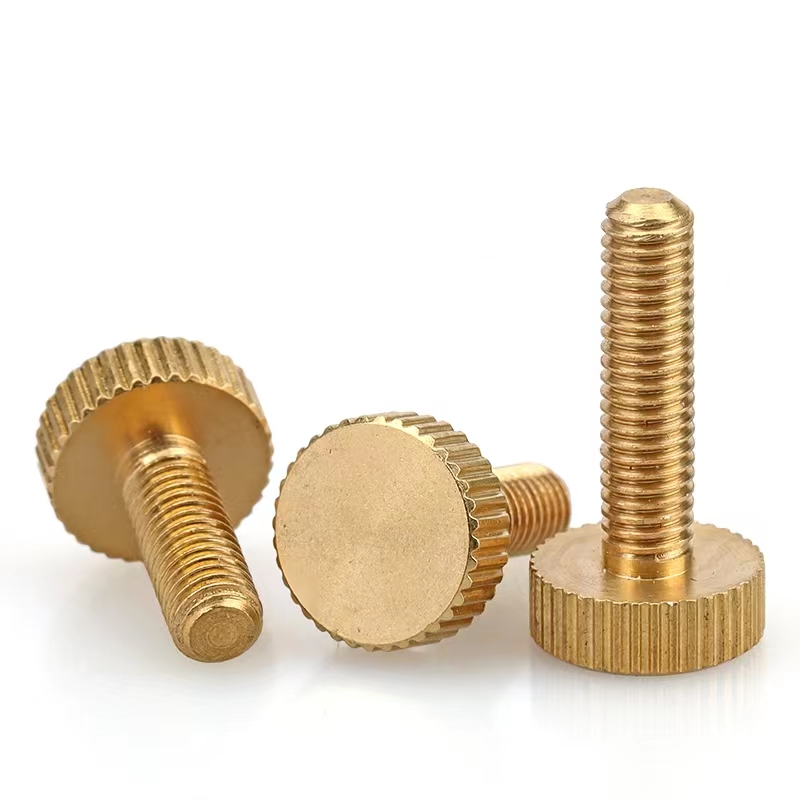
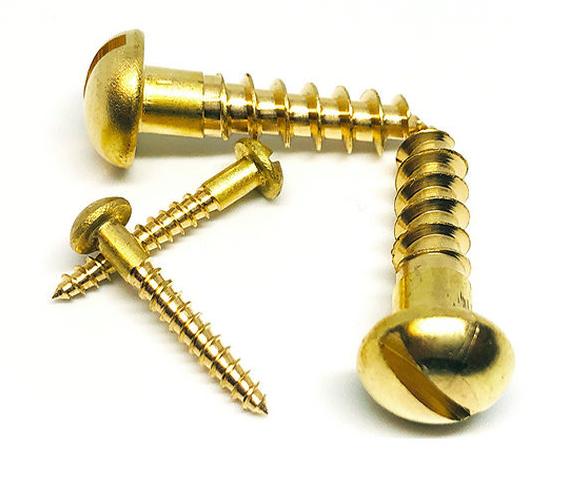
Brass screws are simply screws made of brass material. Various types of screws made from brass are encountered in daily life, including mechanical screws like Philips countersunk head screws, self-tapping screws such as slotted tapping screws or Philips self-tapping screws, thumb screws like knurled flat head screws, and set screws such as hex socket set screws.
Advantages of Brass Screws
Brass screws possess greater conductivity compared to screws made of stainless steel, carbon steel, and other materials. Additionally, brass exhibits excellent mechanical properties, wear resistance, and recyclability. Consequently, many customers prefer brass material over other copper materials.
Bronze screws, on the other hand, are highly resistant to acid, alkali, and high temperatures. When specific environmental requirements necessitate it, customers often opt for bronze screws despite their higher price compared to brass screws.
Industries Where Brass Screws are Primarily Used
Brass screws find widespread usage in industries such as cables, electrical and electronic components, and construction materials, where numerous alloy compositions are employed. The communication industry, in particular, extensively utilizes brass screws due to their excellent conductivity. Furthermore, the soft texture of copper screws minimizes the risk of damaging the threaded components during repeated disassembly, making them ideal for communication and electronic equipment. Brass screws also have wide-ranging applications in electrical appliances, light industry, machinery manufacturing, construction, and other fields.
Industries Where Bronze Screws are Mainly Used
Bronze screws are primarily utilized in mechanical equipment, power generation, iron and steel, metallurgy, petroleum, chemical industry, machine tools, textiles, automobiles, motors, precision instruments, mining machinery, construction machinery, railways, and other sectors.
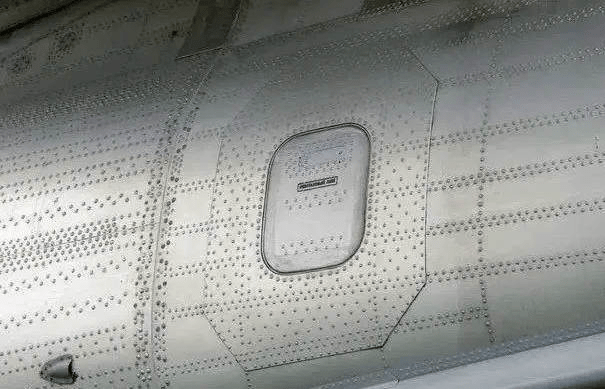
Fasteners are commonly utilized in the aerospace industry. Aircraft wings are typically thin yet extremely strong. When we examine the plane closely, we can observe that there are numerous rivets on the plane's envelope.
A plane has millions of rivets, according to legend. So, why does the airplane use the rivet process instead of welding method? In this article, we will discuss the reasons as following.
1. Welding is difficult.
Engineers utilize the lightest materials feasible in aircraft building to reduce aircraft weight. Aircraft envelopes are often comprised of very thin materials. Welding together envelopes that are too thin is quite challenging. Furthermore, the composite material of the envelope is more vulnerable to welding damage, and the connectivity of different elements must be fixed physically. As a result, rivets are preferable.
2. The material to be welded will generate a lot of heat during flight and welding, and it is not suitable for use in aircraft.
A lot of heat is generated on the surface of an airplane when it is flying at high speeds. Because the temperature of the flying environment varies so much, this phenomena of thermal expansion and contraction will have a significant impact on the integrity of solder junctions.
Some airplane fuselages are built of aluminum, which has a low heat resistance. Because the welding procedure generates a lot of heat during the welding process, it is not suited for aircraft with aluminum fuselages.
3. The airplane has been in a resonance environment for an extended period of time.
Because the aircraft is in a resonance environment for an extended period of time when flying. It is easy to break if welding is applied.
4. Rivets are stronger than welding.
(1) Welding has numerous downsides. Welding, whether thin or thick, may have an effect on the aircraft.
(2) Rivets make the airplane safer, and they also help to reduce resistance in flight.
v(3) Using rivets can significantly cut costs.(4) Rivets are less harmful to the environment than welding.
(5) If the turbulence is severe throughout the flight, the aircraft's wings will swing up and down dramatically. The envelope of the wing is expanded or squeezed throughout the swing. If the welding procedure is employed, the weld's strength will be greatly diminished when subjected to frequent stress variations. These welding spots are likely to develop some minor cracks over time. The weld is prone to metal fatigue after a long period of time.
The rivet connection can decrease the transmission of vibration between the joints, lowering the danger of shock cracking. The firmness is better and more reliable for such repetitive stress variations.
5. Riveting allows for standardized and quantitative output.
The welding quality is mostly determined by the operator's expertise, and the randomness of the welding thickness is very high. It is still challenging to create consistent standards.
The characteristics of the rivets used in the riveting process have relatively tiny mistakes, making quality control and uniform production simple. Rivet machining accuracy is controlled to the micron level.
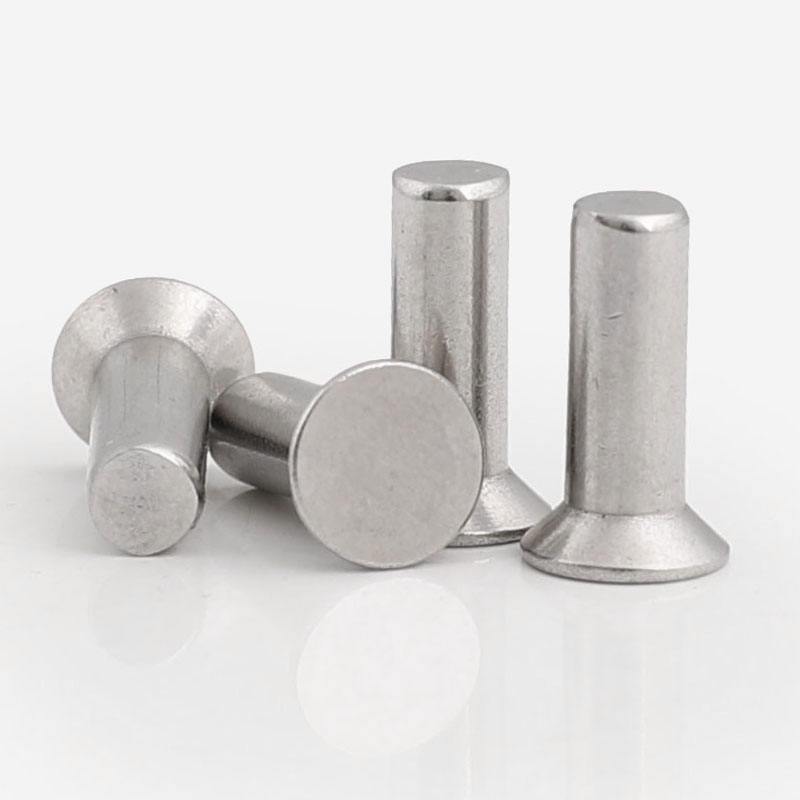
6.Rivets will lower the aircraft's aerodynamic drag during flight.Rivets reduce rather than increase aerodynamic drag. Because the rivets used in the aerospace industry are mostly convex and countersunk. Because there is no demand for aerodynamic design in the interior of the aircraft, convex head rivets with low cost and easy processing are primarily used. Countersunk rivets are mostly employed on the aircraft's exterior, where they can significantly reduce drag. During the milling process, there are rigorous tolerances for the nail cap and adjacent structures.
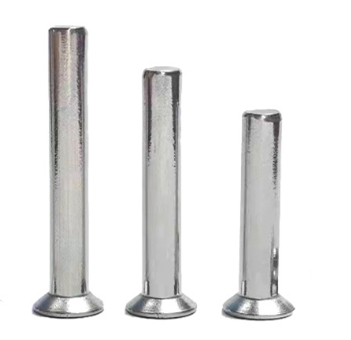
This application has produced outstanding outcomes. According to pertinent World War II data, the use of countersunk rivets can reduce aircraft resistance by around 3%.
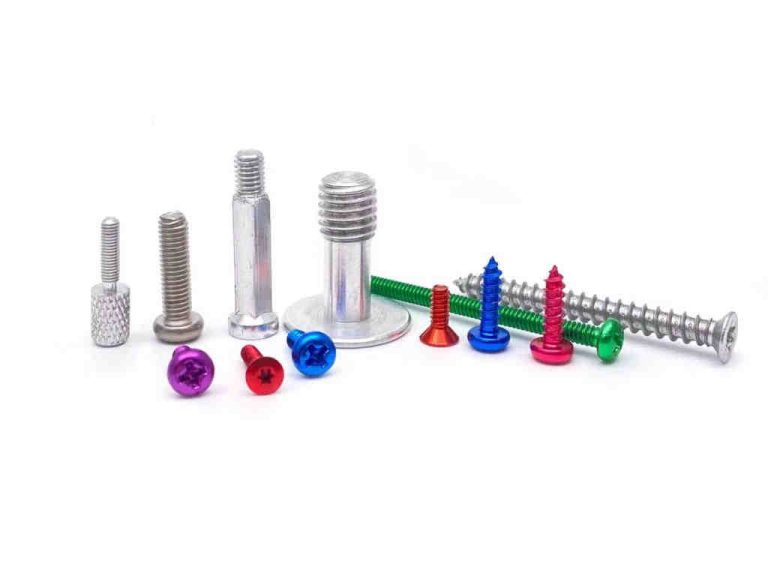
Screws are brightly colored. Screw fasteners of various colors, such as silver, black, yellow, purple, and so on, can be found everywhere. So, how did these multicolored screws come to be? Screw plating is a procedure that adds vibrant colors and beauty to screw fasteners.
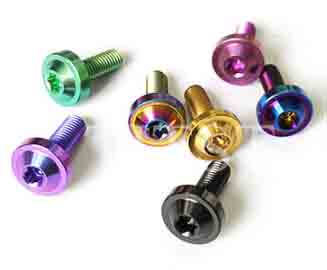
Screw plating is used for colored products
The screw is quite greasy and unclean when it is freshly manufactured. At this moment, it must be brought to an electroplating plant to be made attractive and functional. The color of the screw electroplating can be matched with the color of the material. When a screw fastener is plated, it takes on a more colorful and bright appearance.
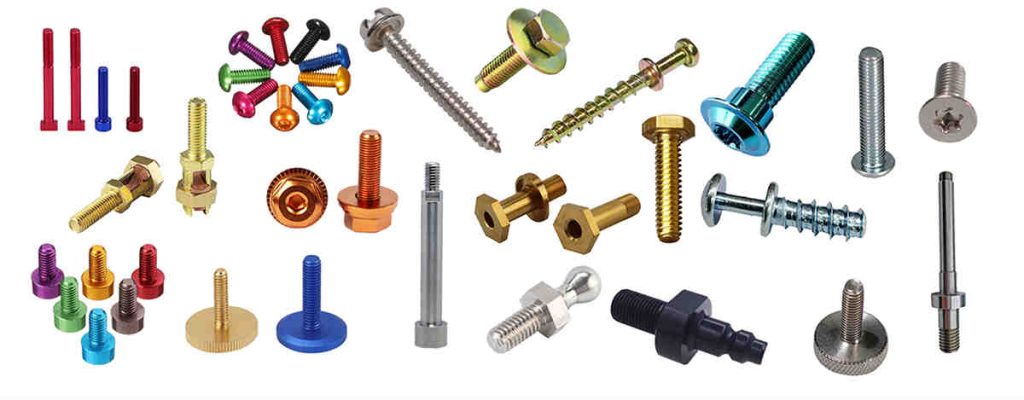
Screw plating is available in white zinc, blue zinc, colorful zinc, white nickel, black nickel, black zinc, and green.
What should be paid attention to during the screw plating process?
1. If screws with different specifications mix together for electroplating, some areas cannot be plated, resulting in product scrapping. Before electroplating, the screws must be cleaned.
2. It is difficult to achieve the quality requirements of electroplating layers and diverse specifications, such as the appearance color and screw properties, under the process conditions of conventional electroplating, most of which require professional operation.
3. Screw specs are too near, for example, the size and length appear to be the same. This type of screw plating should be done separately; otherwise, it is difficult to screen.
4. Plate heavier screws and lighter screws separately. To electroplate, smaller and larger screws should be separated. Otherwise, screws of various specifications and models become locked together during the electroplating process, causing harm to the screw.
5. The screws are easily electrocuted when they become trapped together. Otherwise, the two distinct specifications and models of screws become entangled, which quickly leads to plating failure, even after the screw plating has been completed. It is also difficult to separate different types of screws.
Quality control methods of screw plating product
The key measurement standard for screw plating quality is corrosion resistance and attractiveness. The corrosion resistance is designed to mimic the product's environment. Set the test settings to the environment and conduct the corrosion test. So, what are the quality assurance procedures for screw electroplating products?
1. Appearance
The screw's entire surface must be coated. Scorching, roughness, grayness, peeling, crusting, visible stripes, pinholes, loose passivation film, cracking, and severe passivation traces are not permitted.
2. The thickness of the plating
In a corrosive environment, the service life of a self-tapping screw is directly proportional to the plating thickness. Hot-dip galvanized has an average thickness of 54um and a minimum thickness of 43um.
3. Distribution of plating
The plating aggregation technique on the fastener surface differs. The plating metal is not consistently deposited on the edge of the outer peripheral while plating. To achieve a thicker plating at the corner, various accumulation processes are used. The screw's thickest plating is at the top of the thread, gradually becoming thinner at the front of the thread, and thinnest at the bottom. Hot dip galvanizing is the polar opposite. The inner corner and bottom of the thread receive thicker plating. Mechanical plating has the same metal accumulation propensity as hot dip plating, but it is considerably smoother and the thickness of the overall appearance is much more consistent.
4. Emrittlement due to hydrogen
When fasteners are processed, particularly during the pickling and alkaline processes before to plating and subsequent electroplating, the appearance absorbs the hydrogen atom, and the accumulated metal plating captures hydrogen. When the screw is tightened, the hydrogen moves to the most concentrated region of the stress, causing the pressure to rise to levels that exceed the strength of the base metal, resulting in a little appearance fracture. Hydrogen is especially aggressive and quickly enters into newly created cracks. This cycle will continue until the fastener snaps. It usually happens within a few hours of the first stress. To reduce the risk of hydrogen embrittlement, the fastener should be heated as soon as possible after plating to allow the hydrogen to be expelled from the plating. The heat treatment is normally performed for 3-24 hours. Mechanical galvanizing is non-electrolyte, hence the threat of hydrogen is eliminated.
Summary
Screw plating gives fastener products vivid colors, making them beautiful, colorful, and gorgeous. What should be paid attention to throughout the electroplating process and how to control the quality of the screw products are major concerns. The article provides some important information for improving the effect of screw plating.
Stainless steel bolts can provide enough corrosion resistance in various industries. In addition to mechanical failure, stainless steel corrosion is mostly displayed as localized corrosion, which includes stress corrosion cracking, pitting corrosion, and corrosion fatigue. So, what are the advantages and disadvantages of stainless steel bolts?

Advantages of Stainless Steel Bolts
SUS310S, 309S, 316L, 316, 316Si, 317, 304, 304L, 309, 305, 31403, 321, 301, 202, 201, and other stainless steel product grades are available.
1. Adaptability is more powerful. If the metric thread size requirements are met, stainless steel bolts can be utilized. As a result, stainless steel bolts are more common than ordinary anchor bolts.
The distinction and relationship between anchor bolts and bolts
An anchor bolt is a type of bolt connection, and there are many other types of bolt connections.
The anchor bolt connects the screw section and the concrete base material in some way that cannot be detached, and only the nut can be disassembled. In the case of bolts, the nut can be unscrewed from the bolt and the two components separated, resulting in a detachable connection.
The anchor bolt is a post-anchoring technology that must be drilled first and then tightened into the screw to anchor. The bolts have already been drilled.
The anchor bolt's head is buried in the concrete substrate, while the bolt's head is exposed.
2. The installation is less complicated. The placement of prior typical anchor bolts was more difficult. However, the installation of today's stainless steel bolts is relatively simple, which increases user convenience.
3. There were fewer issues experienced during installation. There is no need to be concerned about standard anchor bolts tilting while drilling. Because of the analysis of the corrosion resistance and fracture causes of stainless steel bolts, while installing stainless steel bolts, you can directly drill holes and then install them, resulting in a virtually 100% success rate.
4. Doesn't cause any problems when not in use. It can provide safety, is reasonably easy, and does not damage the aesthetic as long as the hole is closed with stainless steel bolts or the additional section is eliminated.
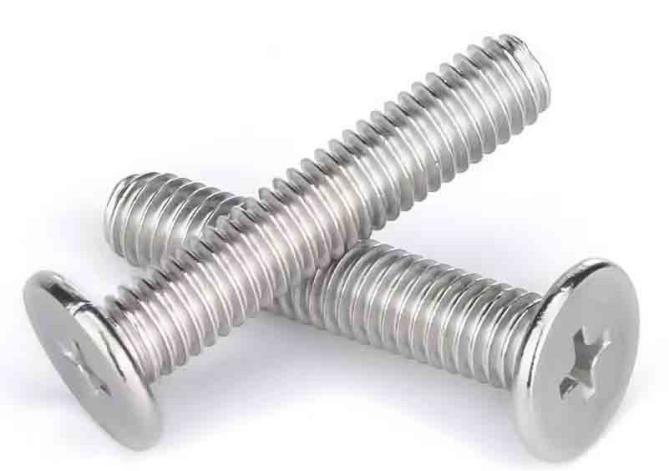
5. Stainless steel bolts perform better during installation, resulting in greater bolt use.
6. Excellent corrosion fatigue and wear resistance. Under certain corrosive medium conditions, it is used in pumps, valves, and other equipment.
It can be recycled and reused completely during the recycling process. It is very much in keeping with the green environmental preservation aspect of modern workmanship.
Excellent tolerance to extreme temperatures. The hardness of the stainless steel bolt is sufficient, and the fastener after manufacture and processing has a good anti-oxidation capacity, and it can perform normally under high temperatures, so high temperatures will not cause too much disruption.
The force capacity is sufficient to suit daily requirements. The maximum load that stainless steel fasteners can withstand is moderate. Even though it is not as strong as high-strength bolts, the force capacity of stainless steel fasteners is sufficient for most people's daily needs.
Disadvantages of Stainless Steel Bolts
1. The initial investment is substantial. The life cycle cost, on the other hand, is rather cheap.
2. Incompatible with long-term storage or use. The production cost is significant, and it is prone to sticking if not dismantled for an extended period of time after locking.
3. When the force is too great, it is easy for the teeth to slip or break. The toughness is lower than that of common iron screws.
4.Stainless steel screws have a low strength. High-strength screws are often constructed of carbon steel or iron.
With the development of the aerospace industry, the demand for aerospace fasteners has increased rapidly. As aerospace fasteners are applied under an environment of high temperature, high pressure, and high intensity, their quality requirements are also particularly high. Here, we introduce some useful knowledge about aerospace fasteners.
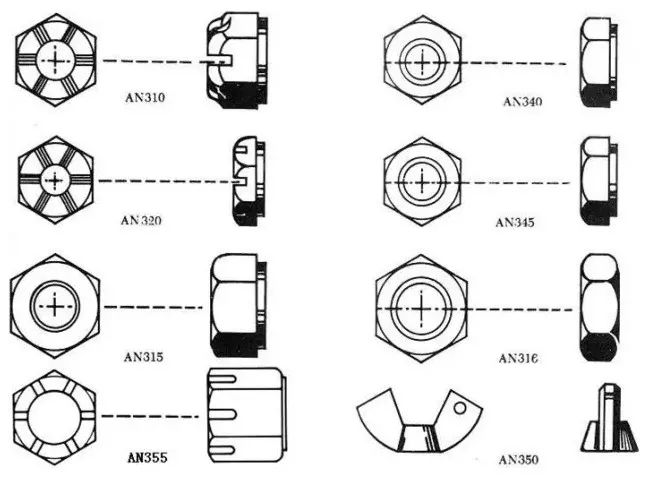
The need for aircraft fasteners has increased dramatically as the aerospace sector has grown. Because aerospace fasteners are used in high-temperature, high-pressure, and high-intensity environments, their quality standards are exceptionally stringent. In this section, we will discuss some useful information concerning aircraft fasteners. A fastener is a type of mechanical device that connects two or more parts together. The scope of application is extremely broad. Aerospace fastener is a fastener that is specifically designed for use in the aerospace sector. It uses materials with unique qualities or applications.
Aerospace fasteners are commonly found in aircraft, satellites, and rockets. It is a standard high-end fastener. It is also a vital basic component of aerospace aircraft. The performance criteria are substantially higher than for other types of fasteners. There are several typesof aerospace fasteners, each with its own set of requirements and types to fulfill the unique needs of various materials and constructions.
What are the different types of aerospace fasteners?
1. Aerospace fasteners are divided as detachable and permanent fasteners based on their ability to be removed. Bolts, screws, and nuts are among the detachable fasteners. Permanent fasteners include high-locking nuts, rivets, and other similar items.
2. Aerospace fastener types include bolts, screws, nuts, single-sided fasteners, special fasteners, and so on.
3. Carbon structure steel fasteners, alloy steel fasteners, stainless steel fasteners, high-temperature alloy fasteners, aluminum alloy fasteners, titanium alloy fasteners, non-metal fasteners, and so on are the materials used in aircraft fasteners.
4. It can be split into single-sided fasteners and double-sided fasteners based on the variations in the requirements of the aerospace assembly operation.
Commonly used important aerospace fastener
Rivet fasteners
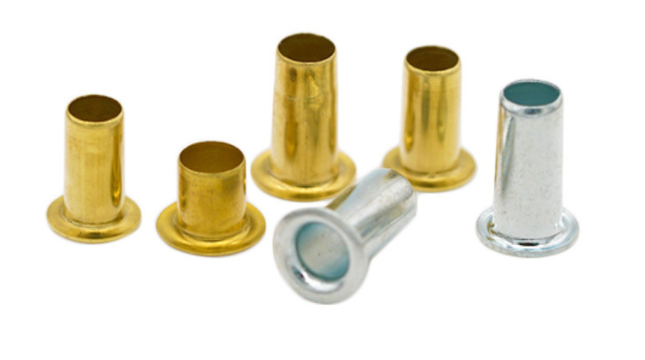
The most essential selection parameters for rivet fasteners used in aircraft are quality assurance and lightweight. It is one of the most common airplane fasteners. Aluminum alloy, stainless steel, heat-resistant alloy, titanium alloy, and other materials are used. The majority of rivets are made of composite materials such as aluminum alloy and titanium alloy. With the continual increase of rivet material intensity, support rivets used in corresponding vital sections, such as dual metal rivets and high shear rivets, have been created, and their strength can reach the intensity of titanium alloy high lock bolts.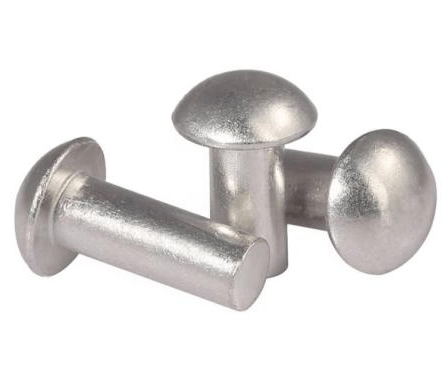
Bolt fasteners
The bolt fastener, which includes regular bolts, high lock bolts, and tapered bolts, is the most commonly used fastening for bearing the bigger sections of the aircraft. A high lock bolt is a single-sided thread fastener that is commonly used in the aerospace sector. Weight loss is an essential signal in airplane design. High-ratio intensity materials can be used to substitute large-sized fasteners with lesser intensity. Furthermore, anti-fatigue, corrosion resistance, rigidity, brittleness, compatibility, heat resistance, and other features must be taken into account.

Nut fasteners
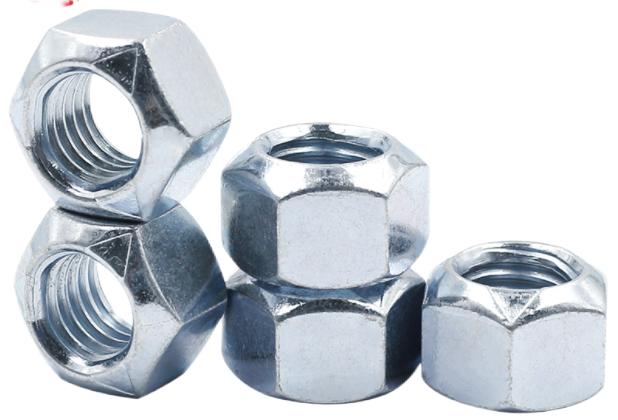
Nut fasteners are used in conjunction with bolts. They come in a range of structural forms to satisfy the needs of various aerospace applications, such as hex nuts, bihexagon nuts, bracket nuts, barrel nuts, and high lock nuts, the majority of which feature a self-lock construction. The hexagonal nut has been extensively used on the airplane. Bihexagon nuts are commonly seen on engine and high-strength bolts.
Single-sided fastener
In the open areas of the airplane, there are two types of fastening pieces. The bracket nut/bolt and rapid unloading fastener used in removable elements such as the airplane hatch is one example. The other is a single-sided nail, which is utilized in the permanent connection section. The screw thread nail is specifically created for the composite material structure, which can increase sealing and anti-fatigue performance.
Special fasteners
Ring grooved nails are a form of double-sided permanent fastener that is inserted with single-sided riveting. They are frequently utilized in Boeing and Airbus aircraft. The fast unloading fastener is mostly used to connect the cover to the hatch. It can perform fast loading and unloading duties and has a range of structural configurations. It has stringent reliability requirements. Composite fasteners, such as rivets, bolts, screws, and nuts, are formed of composite materials. It is a suitable aerospace fastener used to tackle problems in the aircraft such as weight, strength, corrosion, lightning strike, and other challenges.