
Bolts are essential components used in various applications, and their performance depends on proper tightening. Different types of bolts, such as stainless steel bolts, iron bolts, alloy steel bolts, and plastic bolts, serve specific purposes. Bolts are crucial in important joint positions, and understanding the tightening process is vital for their effective use.
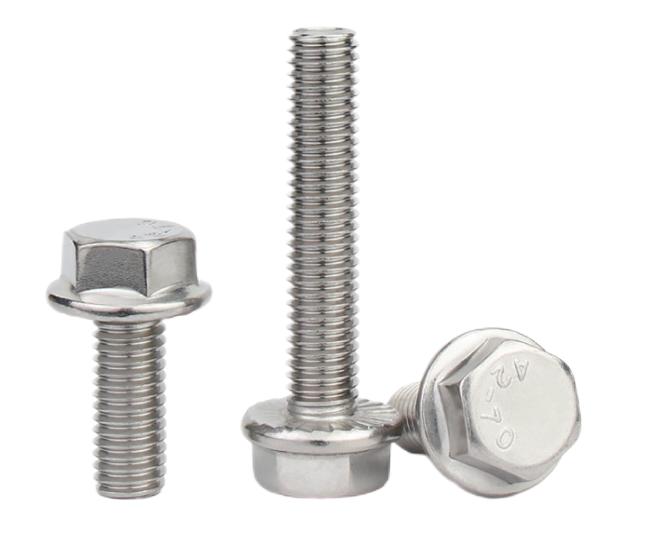
Factors Affecting Bolt Tightening
When choosing a bolt, consider the performance grade mark on the head, which indicates the bolt's yield strength and tensile strength. Higher values suggest lower risks of fracture and thread slipping during tightening. Over-tightening can lead to deformation and permanent damage to the bolt. Hence, bolts should be tightened to their specified torque as indicated during fastening. Selecting bolts with the highest performance grade may not always be ideal, as excessive strength may damage the equipment. Instead, choose bolts that suit the specific usage scenario.
Benefits of Bolt Tightening
Tightening bolts generates an initial pre-tightening force, offering several benefits:
Transmitting Lateral Force or Torque: Pre-tightening creates pressure between connector contact surfaces, allowing the transmission of lateral forces via friction. This reduces shear and compressive stress on the bolts, enhancing safety.
Sealing: In pressure pipes or vessels, proper pre-tightening ensures a seal. The total pre-tightening force should exceed the fluid pressure between contact surfaces.
Preventing Structural Slit: Fatigue-loaded bolted connections must avoid gaps between parts. Seams can cause rapid increases in bolt pulling force, leading to potential slippage and damage.
Improving Bolt Fatigue Life Through Tightening
The fatigue life of bolts depends on material fatigue strength, stress amplitude, average stress, and frequency of stress cycles. To extend fatigue life, the amplitude of alternating stress or average stress must be reduced. Properly tightening bolts using design torque reduces stress range, improving fatigue life of bolts.
When bolts are tightened to the design torque, they experience smaller stress changes, leading to longer fatigue life. Ensuring bolts remain connected to external loads helps reduce stress variation. Properly designing pre-tightening forces maximizes the utilization of bolt materials, optimizing fatigue life.
Summary
This article examines three key aspects of bolt tightening: factors influencing tightening, benefits of bolt tightening, and how tightening enhances bolt fatigue life. Selecting the right bolts and tightening them to their specified torque ensures their effective use in various applications. Proper bolt tightening is vital to maintaining the safety, stability, and longevity of structures and equipment.
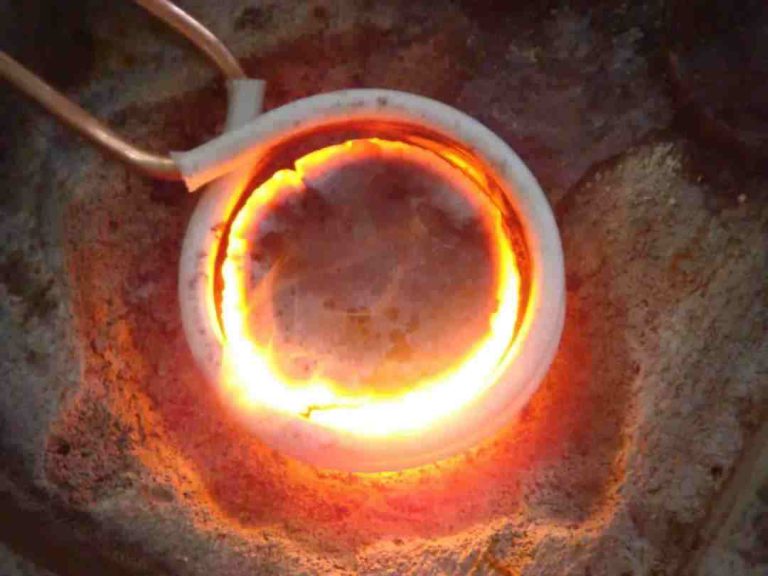
The heat treatment process involves three main steps: heating, heat preservation, and cooling. It is used to enhance the properties of materials such as steel, aluminum alloy, copper alloy, and titanium alloy. Different heat treatment processes include quenching, tempering, normalizing, and annealing.
Quenching:
Quenching steel involves heating it to a temperature above the critical temperature Ac3 (for hypo-eutectoid steel) or Ac1 (for hyper-eutectoid steel). The steel is then kept at this temperature for a specific period to fully or partially austenitize it. Afterward, the steel undergoes a rapid cooling process, below the Ms temperature (or isothermally near Ms), at a cooling rate higher than the critical cooling rate. This results in the formation of martensite or bainite, leading to significant changes in the steel's properties.
The purpose of quenching includes improving the mechanical properties of metal products or parts, enhancing the material properties of certain steels (e.g., corrosion resistance in stainless steel), and achieving high hardness and wear resistance in tools and bearings.
Tempering:
Tempering is a heat treatment process that follows quenching. In this process, the quenched metal product or part is heated to a specific temperature and held for a certain duration. It is then cooled in a controlled manner. The main purposes of tempering are to reduce internal stress and brittleness, adjust the mechanical properties of the workpiece (e.g., hardness, strength, plasticity, and toughness), and stabilize the metallographic structure.
The function of tempering is to improve the stability of the structure, eliminate internal stress, and adjust the mechanical properties of steel to meet specific application requirements. As the temperature rises during tempering, atomic activity increases, allowing for rearrangement and combination of atoms, resulting in the transformation of unstable structures into stable ones.
There are different tempering requirements for workpieces depending on their intended use. Low-temperature tempering (below 250°C) is used for tools, bearings, and carburizing and quenching parts. Medium-temperature tempering (350-500°C) is suitable for springs and forging dies, while high-temperature tempering (500-650°C) is used for gears and crankshafts.
Normalizing:
Normalizing is a heat treatment process that enhances the toughness of steel. It involves heating the steel components to a temperature slightly above the Ac3 temperature and then air-cooling. The cooling rate during normalizing is faster than annealing but slower than quenching. The process refines the crystal grains of the steel, resulting in improved strength and reduced cracking tendency.
Annealing:
Annealing is a metal heat treatment process in which the metal is slowly heated to a certain temperature, kept for a sufficient time, and then cooled at an appropriate rate. The purpose of annealing is to improve or eliminate various structural defects and residual stresses in the material, soften the workpiece for cutting, refine the grain and improve its structure to enhance mechanical properties, and prepare the tissue for final heat treatment (e.g., quenching and tempering).
There are various annealing processes, including fully annealing, spheroidizing annealing, isothermal annealing, recrystallization annealing, graphitization annealing, diffusion annealing, and stress relief annealing. Each process serves specific purposes and is applied based on the characteristics and requirements of the material or workpiece being treated.
KENENG is a professional manufacturer of fastener, spring, magnet, and battery holder. If you want to learn more about our production procedures, heat treatment processes, and surface treatment processes, please contact us.
Flat washers and spring washers play important roles in various hardware connections. In this article, we will explore the functions of these washers, their installation sequence, and when they should be used.
Function of Flat Washers:
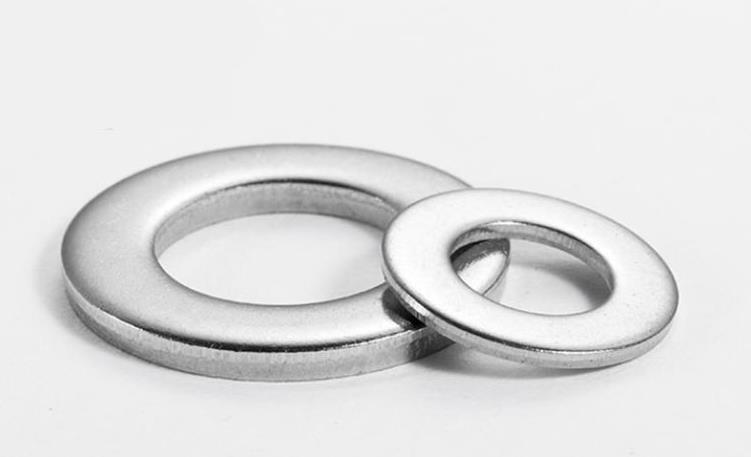
Flat washers are typically made by stamping iron plates and come in round or square shapes with a hole in the center. The size of the hole is generally determined based on the bolt diameter or customer specifications.
The main functions of flat washers are as follows:
Increasing Contact Area: Flat washers increase the contact area between the machine and the screw, distributing the load more evenly.
Protecting Surfaces: They prevent damage to the machine's surface when removing screws. It is important to place the flat washer next to the machine's surface, with the spring washer between the flat washer and the nut. This setup increases the bearing surface of the screw and provides some buffer protection against stress from the spring washer.
No Anti-Vibration or Anti-Loosening Function: Flat washers do not provide anti-vibration capabilities or prevent loosening, so they need to be used carefully.
Function of Spring Washers:
Spring washers are placed under nuts to prevent them from loosening. Commonly used spring washers come in specifications such as M3, M4, M5, M6, M8, M10, M12, M14, and M16.
The main function of spring washers is:
Preventing Loosening: After tightening the nut, the spring washer applies an elastic force that presses against the nut, preventing it from easily coming off and increasing the friction between the nut and the bolt. This is especially useful in equipment with vibrations, as the spring washer ensures the nut remains secure.
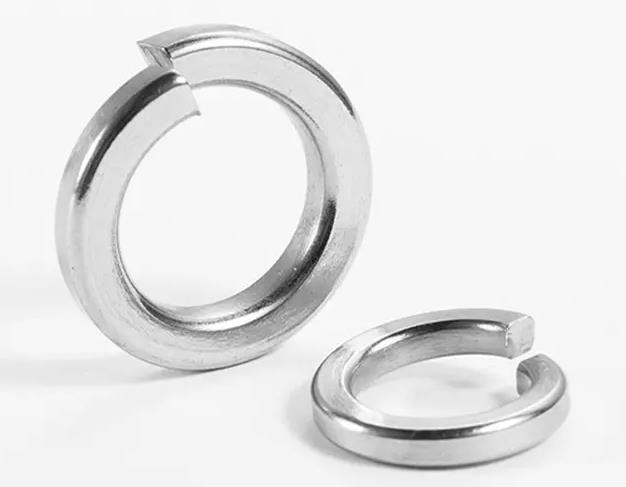
Installation Sequence:
When installing washers, it is crucial to follow the correct sequence:
Flat Washer First: The flat washer should be installed before the spring washer. This is because the spring washer has sharp corners that may scratch the connector if installed first. The flat washer, being flat, will not cause any damage during rotation.
Bolt Assembly: For rigorous hardware connections, it is advisable to use a combination of bolts, spring washers, and flat washers. This ensures a secure and reliable connection, reducing the likelihood of loosening.
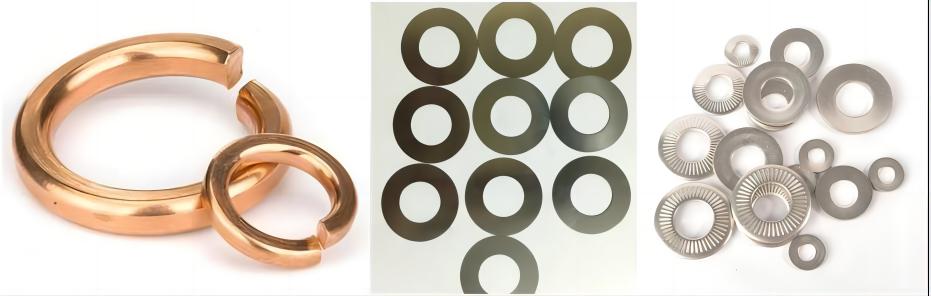
When to Use Flat Washers and Spring Washers:
The decision to use flat washers or spring washers depends on the specific application and load conditions. Here are some guidelines:
Flat Washers: Use flat washers when the load is relatively small, and there is no significant vibration load.
Combination of Flat Washers and Spring Washers: When dealing with larger loads or applications subjected to vibration loads, a combination of flat washers and spring washers is necessary to provide additional security and prevent loosening.
Spring Washers: Spring washers are generally not used alone but in combination with other washers for enhanced performance.
In summary, flat washers increase contact area and protect surfaces, while spring washers prevent loosening and provide preload. Understanding their functions and using them appropriately in hardware connections ensures reliable and secure fastening.
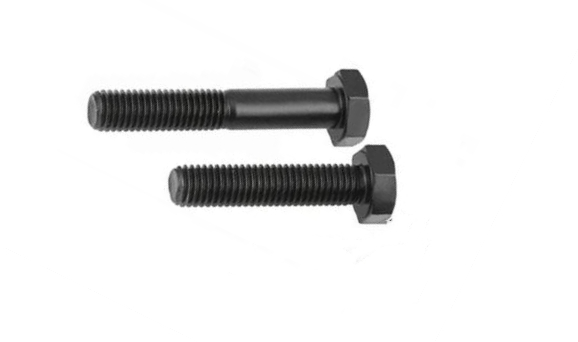
A hex bolt is a type of fastener that consists of a head and shaft. It is designed to be used with a nut to connect and fasten two parts with a through-hole. The distinguishing feature of a hex bolt is its hexagonal head.
Hex bolts come in two types: fully threaded or partially threaded, with the latter having a clear shank on one part of the body. They are suitable for various applications, particularly in mechanical and construction settings.
These bolts are available in different types, sizes, materials, and surface treatments, allowing you to choose the most suitable bolt for your specific task or application. Due to their distinct head shape, hex bolts are sometimes referred to as hex head bolts or hexagon bolts.
Hex bolts have a wide range of uses in different industries and applications, including:
Versatile Fastening: Hex bolts are used in wood, metal, and various other environments. They offer strong tensile properties and can be used in multiple positions, depending on the material and finish.
Heavy-Duty Applications: Hex bolts are commonly used for heavy-duty fixing and fastening tasks. They find applications in mechanical assembly, carpentry, building installations, repairs, and maintenance projects. They are used for fastening frames, engineering vehicles, automobiles, lifting machinery, and various structures like industrial plants, towers, bridges, and roads.
Hex bolts work by withstanding external forces through the close connection of multiple structural parts. They can be used in pre-tapped holes or with nuts, depending on the specific application.
Various tools can be used to tighten hex bolts, including hex bolt wrenches, sockets, wrenches, hex keys, and ratchet wrenches. The hex head design allows for easy gripping from different angles, simplifying the installation and removal process. This facilitates easy tightening or loosening of the hex bolts once they are in place.
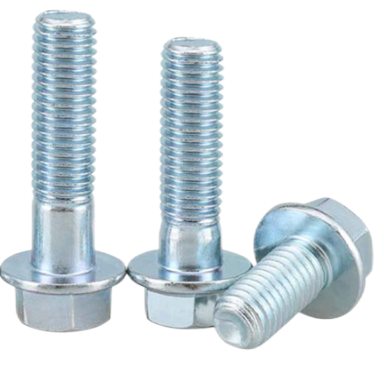
There are different types of hex bolts available, each suited to specific applications and environments. Hex bolts can be classified based on factors such as size, material, surface treatment, and whether they are fully or partially threaded.
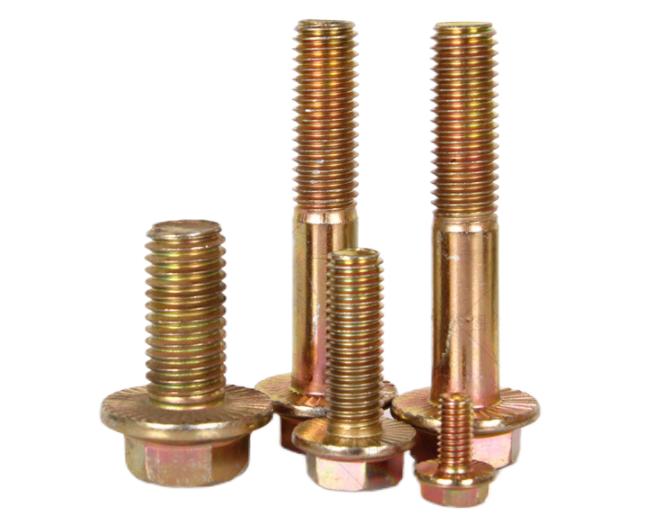
Threading is an important aspect of hex bolts. Both fully threaded and partially threaded hex bolts are available. Partially threaded bolts have threading only on half of the bolt's length, with an unthreaded shank connecting the threaded shank to the head. This design ensures strength and prevents strain on the non-threaded part. Fully threaded hex bolts have threading from the end to the head and are ideal for heavy-duty applications.
Hex bolts are typically made of steel or stainless steel. Steel and stainless steel hex bolts are the most common, although other materials like iron and copper may be used by some manufacturers. Different coatings and finishes are also available, such as galvanized, zinc-plated, passivated, oxidized black, and natural finishes. The choice of material and finish depends on the specific requirements of the application.
In conclusion, hex bolts are versatile and widely used fasteners with a range of applications. They provide secure and reliable connections in various industries and are available in different types, sizes, materials, and finishes to meet specific needs.
Bolts are common multi-notched parts, and the fatigue strength of bolts is significantly influenced by various factors, including size, structure, material, and manufacturing process. Understanding the concept of fatigue strength and fatigue failure is crucial when evaluating bolt performance.
Fatigue strength refers to the maximum stress a material can withstand under infinitely repeated loads without failure, commonly known as the fatigue limit. Mechanical parts such as shafts, gears, bearings, blades, and springs experience periodic stress changes during operation. This stress that fluctuates over time is referred to as alternating stress or cyclic stress. Over an extended period of time, under the influence of alternating stress, cracks may develop or the part may suddenly rupture, a phenomenon known as metal fatigue.
Fatigue failure is a significant cause of mechanical part failures, accounting for more than 80% of such occurrences. Fatigue failures often result in major accidents as there is no noticeable deformation prior to failure.
Therefore, when selecting materials for shafts, gears, bearings, blades, springs, and other components subjected to alternating loads, it is essential to choose materials with superior fatigue strength.
Characteristics of Fatigue Failure Strength:
Fatigue failure exhibits suddenness, localized occurrence, and sensitivity to environmental factors and defects.
Due to the difficulty in early detection, fatigue failure can lead to accidents.
Factors Affecting Bolt Fatigue Strength:

Surface Quality of the Thread:
Smaller surface roughness reduces stress concentration and increases fatigue strength. As surface roughness increases, the fatigue limit decreases.
Different steel grades and manufacturing methods can result in varying degrees of fatigue limit reduction. For example, a change in roughness from 0.08-0.16 to 0.63-1.35 in an M6-1.0 40CrNiMo steel bolt reduces fatigue strength by 33%. In bolts with an M1.2-1.5 thread, a roughness change from 0.08-0.16 to 0.16-0.32 leads to a 21% decrease in fatigue strength.Surface treatments such as grinding, shot blasting, and rolling can improve the fatigue strength.
Influence of the Thread-Rolling Process:Thread rolling produces a deformation-strengthened layer and residual compressive stress, effectively preventing fatigue crack initiation and early growth.
Thread rolling reduces valley surface roughness, which improves fatigue strength.
Note:
If the thread is roll-pressed and subsequently heat treated, the favorable factors mentioned above are nullified. For improved fatigue performance, the thread should be roll-pressed after heat treatment.
Heat treatment can increase the hardness of bolts, especially high-strength bolts, potentially reducing the lifespan of the thread-rolling die. Poor-quality thread rolling can result in micro-cracks or peeling similar to contact fatigue, which may reduce or negate the improvement in fatigue performance.Distance Between Nut Face and Thread:
Tests have shown that the closer the nut face is to the threading location, the earlier bolt failure may occur.
Material Defects:
Bolts that are not machined after cold heading or cold drawing may retain surface defects from the raw material. These defects can serve as sources of fatigue cracks, leading to premature fatigue failure.
Thread Valley Shape:
Stress concentration occurs at the thread valley during bolt loading, with the shape of the valley playing a significant role. A smoother valley groove results in reduced stress concentration and higher fatigue strength.