
In the realm of fasteners, the self-locking nut stands as a formidable solution against vibrations and loosening. Its role becomes paramount in specialized contexts. Operating primarily through friction, self-locking nuts encompass a range of functionalities, including nylon ring embedded nuts, necked nuts, and metal locking devices. This article delves into the world of self-locking nuts, spotlighting 5 distinct types, their working principles, and application landscapes.
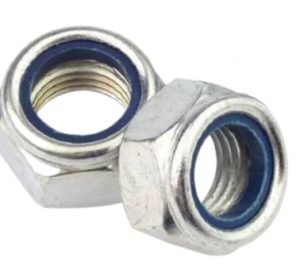
Understanding Self-Locking Nuts
The self-locking nut represents a novel class of fasteners characterized by exceptional anti-vibration and anti-loosening properties. Engineered for mechanical and electrical applications spanning temperatures of -50°C to 100°C, the demand for nylon self-locking nuts has surged across various domains, including aerospace, automotive, mining, and machinery. This is due to their superior performance compared to other anti-loosening methods, offering prolonged vibrational endurance.
Working Principle of Self-Locking Nuts
Friction serves as the cornerstone of self-locking nuts. Typically, these nuts feature embossed teeth that engage with pre-set holes in the sheet metal. For square preset holes, the hole diameter is marginally smaller than that of the rivet nut. A locking mechanism connects the nut, ensuring that tightening locks the ruler body in place. Conversely, loosening disengages the locking mechanism, allowing the ruler frame to move along the ruler body.
Standards for Self-Locking Nuts
In accordance with GJB125.1~125.6-86 specifications, the double-eared traveling self-locking nut comprises four components: sealing cover, self-locking nut, pressure ring, and sealing ring. This compact and reliably sealed configuration is ideal for products with operating pressures up to 22 atm, handling mediums like gasoline, kerosene, water, or air, within a temperature range of -50°C to 100°C. Despite its manufacturing complexities and stringent airtight testing, this standard serves diverse applications.
Types of Self-Locking Nuts
High Strength Self-Locking Nut
Designed for robustness and reliability, high-strength self-locking nuts cater to demanding applications in road construction, mining, and vibration-heavy machinery. With European technology influences, these products are relatively scarce in China's market.
Nylon Self-Locking Nut
Nylon self-locking nuts emerge as champions of anti-vibration and anti-loosening performance across a broad spectrum of mechanical and electrical applications. With a temperature range of -50°C to 100°C, they have witnessed soaring demand in aerospace, automotive, machinery, and more. These Nylon nuts not only outperform other anti-loosening devices but also exhibit unmatched vibrational longevity.
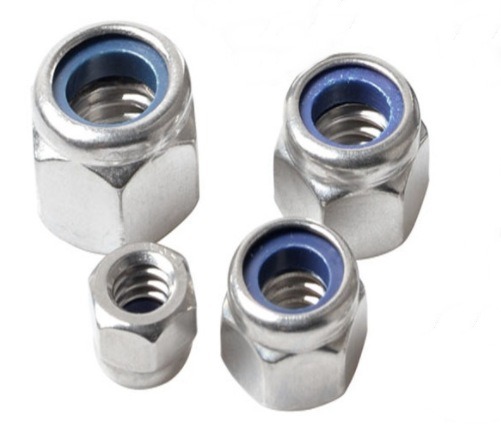
Traveling Self-Locking Nut
Configured with double ears as per GJB125.1~125.6-86, the traveling self-locking nut boasts a compact, reliable, and sealed structure. It finds utility in environments with working pressures up to 2 atm, accommodating mediums like gasoline, kerosene, water, or air. Its operational temperature spans -50°C to 100°C, though its manufacturing intricacies and rigorous airtight testing pose challenges.
Spring Self-Locking Nut
Comprising an S-shaped spring clip and a self-locking nut, the spring self-locking nut offers convenient installation and reliable post-installation performance. The elastic force of the spring clip secures the nut to the connecting plate or support, making it a versatile assembly carrier and tool.
SPIRALOCK Nut
Distinguished by its 30-degree wedge bevel at the female thread base, the SPIRALOCK nut generates substantial locking force when bolt and nut are tightened. This force results from the interaction between the bolt's tooth tip and the wedge bevel. The unique tooth shape angle enhances friction and load distribution, offering prolonged service life and mitigating loosening under vibrational conditions.
Conclusion
The realm of self-locking nuts is both intricate and diverse, comprising an array of types catering to specific needs. Operating on the foundation of friction, these nuts have solidified their place in anti-vibration and anti-loosening strategies across industries. As their applications evolve and expand, self-locking nuts continue to play an indispensable role in ensuring secure and reliable fastening solutions.
In a multitude of tasks, whether it's assembling furniture or electrical components, screws play an indispensable role in securing components together. Among them, the hexagon socket head cap screw stands out for its robust fixation capabilities and broad applications. This article dives into the intricacies of hexagon socket head cap screws, shedding light on their functions, advantages, and manufacturing requirements.

Understanding Hexagon Socket Head Cap Screws
The screw head boasts a distinct circular concave hexagonal shape, earning it the monikers of hex socket head screw, hexagon socket head bolt, or hexagon socket head cap screw. This unique design offers compelling advantages. Hexagon socket cap screws are typically crafted from materials like stainless steel, carbon steel, and alloy steel. Greater strength is achieved with higher performance-grade materials. These screws demand a special wrench for both installation and removal. Their primary function lies in mechanical fixation, with the hexagonal wrench playing a pivotal role. This wrench, featuring a 90-degree curved ruler, utilizes its extended side for increased torque during screwing, facilitating robust tightening. This design also mitigates the risk of thread slippage caused by misaligned screwdrivers.
Hexagon socket head cap screws find extensive use in machinery manufacturing due to their superior fixation capabilities. However, their utility extends beyond this realm, often finding application in hardware components, electrical products, and furniture assembly.
Manufacturing Demands for Hexagon Socket Head Cap Screws
Quality Raw Materials: Hexagon socket head cap screws' production necessitates the use of high-quality raw materials tailored to different customer applications. Clear classification of electroplating methods should be a priority.
Precise Specifications: Screw manufacturers must meticulously adhere to size and specification standards for hexagon socket screws to cater to diverse customer requirements.
Anti-Corrosion Measures for Hexagon Socket Head Cap Screws
Given the inherent corrosivity faced by metal materials, safeguarding hexagon socket head cap screws is vital. Corrosion-resistant methods ensure their durability and aesthetics. While these screws are employed to secure machinery, minimizing oil contamination is imperative. A dry environment enhances their longevity. Additionally, it's crucial to shield these screws from corrosive liquids to prevent air erosion.
Advantages of Hexagon Socket Head Cap Screws
Enhanced Load Bearing: With six force-bearing surfaces, hexagon socket screws offer superior load-bearing capabilities compared to slotted and cross screws, which have just two surfaces. Opt for hexagonal socket screws for high-stress applications.
Seamless Countersinking: The screw's entire nut is recessed within the workpiece, preserving surface flatness and aesthetics.
Ease of Installation: The inner hexagon design suits various assembly settings, especially those with space constraints. This ensures convenient assembly, maintenance, and debugging.
Security in Fixation: Hexagon socket bolts demand a specialized wrench for removal, making them resistant to casual disassembly.

In Conclusion
The prevalence of hexagon socket head cap screws across diverse industries is attributed to their potent fixation capabilities. This article elucidates the definition, functions, applications, and advantages, aiding in selecting appropriate hex socket head screws based on distinct application demands. In an ever-evolving landscape, understanding these screws empowers professionals to optimize their utility while ensuring steadfast and secure component assembly.
Ensuring the security of fasteners is crucial in various industries to prevent failures and accidents. Bolt locking methods encompass friction, mechanical, and permanent techniques. Permanent locking methods like welding and riveting are irreversible and unsuitable for reuse. Friction methods involve elements like washers and self-locking nuts. In this article, we'll delve into 8 effective methods for preventing bolt loosening.
Double Nut Technique:
The double nut method creates two friction surfaces during locking: one between the nut and the fastener, and another between the nuts. The initial preload on the first surface is 80% of the second. Under impact and vibration, the first surface's friction decreases while compressing the first nut increases the second surface's friction. This dual friction mechanism resists loosening effectively.
Self-Locking Nuts:
Self-locking nuts rely on friction to prevent loosening. High-strength variants suit heavy-duty equipment, while Nylock nuts find use in aerospace and machinery.
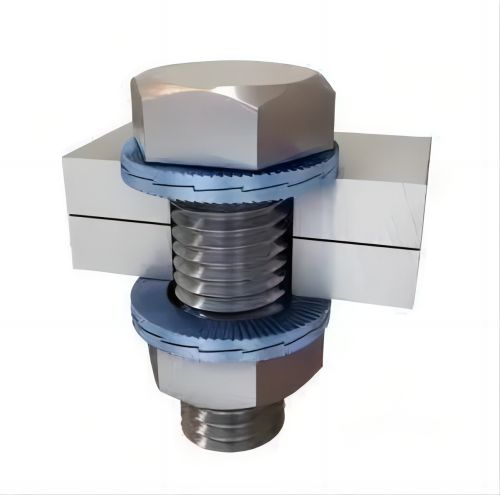
Wedge Nord Lock Washer:
With radial serrations on its outer surface, this washer engages the workpiece, allowing displacement only on the inner surface. The expandable distance surpasses bolt longitudinal displacement. It uses clamping force rather than friction to secure bolts.
Cotter Pin and Slotted Nut:
Insert a cotter pin into the nut slot and bolt tail hole after tightening the nut. Spreading the split pin tail inhibits nut and bolt rotation. Slotted nuts combined with threaded rod bolts and cotter pins prevent relative rotation.
Lock Washer:
Bend and attach the lock washer to the nut's side and connector to lock it post-nut tightening. Double lock washers can interlock two bolts if needed.
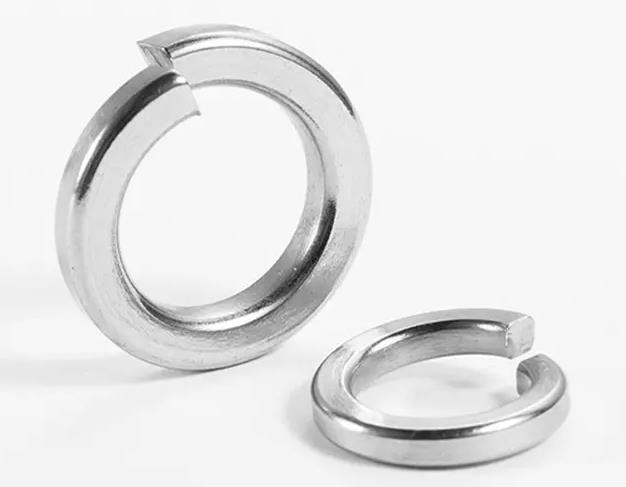
Spring Washer:
A spring washer generates continuous elastic force upon compression, maintaining friction between the nut and bolt threads to prevent loosening. Its sharp opening corner embeds into the bolt and connected piece, preventing relative rotation.
Hot Melt Fastening Technology:
Applied without pre-opening, this cold-forming process taps and connects under closed profiles. Widely used in the automotive sector, it involves high-speed motor rotation causing plastic deformation through friction heat for self-tapping and screw connection.
Pre-Tightening:
High-strength bolts often eliminate the need for additional anti-loosening measures. The substantial pre-tightening force creates strong pressure between the nut and connected part, generating friction torque that counteracts nut rotation.
Conclusion:
Ensuring bolt security is paramount to maintaining equipment integrity. Employing effective anti-loosening bolt methods prevents failures and enhances safety. The eight methods discussed—double nut, self-locking nuts, wedge lock washer, cotter pin and slotted nut, lock washer, spring washer, hot melt fastening technology, and pre-tightening—provide diverse options to suit specific needs. With these techniques in your toolkit, you can confidently secure your fasteners and bolster the reliability of your projects.
The pop rivet, a dynamic variant of the traditional rivet, soars into prominence as a single-sided riveting solution. This innovative fastener necessitates a unique tool—the rivet gun (available in manual, electric, and automatic variants)—to facilitate its assembly.
Tailored for scenarios where conventional rivets prove cumbersome due to their dual-sided application, the pop rivet finds its niche across diverse sectors. Its widespread utility encompasses domains like construction, automotive manufacturing, maritime ventures, aviation, machinery, electrical appliances, furniture crafting, and an array of product fabrication.

Advantages Propelling Pop Rivet Equipment
The pop rivet's versatility lies in its capacity for swift and expansive riveting. This characteristic has galvanized processing and manufacturing industries nationwide. Key advantages encompass a broad scope for single-sided riveting, expedited installation, substantial clamping force, heightened seismic resistance, and robust locking prowess.
A Glimpse into the Standard Pop Rivet Installation Process
Embed the rivet within the nozzle of the rivet gun, guiding it into a pre-drilled aperture.
Activate the tool, prompting the rivet to expand and unfurl, snugly fitting into the void within the workpiece.
As the load attains a predetermined magnitude, the rivet's head breaks flush, while the rod secures itself within the rivet, locking the connection firmly.
Decoding the Ingenious Mechanism of the Pop Rivet
The pop rivet's operational essence hinges upon exerting force from within to outwardly pull its core head. Mastery over this mechanism holds the key to optimizing pop rivet application.
The open-type round-head pop rivets reign supreme in ubiquity. For scenarios demanding sleek surfaces, countersunk head pop rivets come to the fore. Conversely, closed-type pop rivets cater to high-load contexts and sealing prerequisites.
Unraveling the Art of Riveting with Pop Rivets
Riveting with pop rivets hinges on employing a metal cylinder or tube (the rivet) slightly smaller than the pre-drilled hole's diameter. This rivet passes through the workpieces, whereupon impacts or pressure exerted upon both ends deform the rivet's extremities, thickening the metal column or tube. This simultaneously forms rivet heads or caps, securing the workpieces and thwarting detachment. When external forces strain to separate the workpieces, the rivet's rod and cap withstand the ensuing shear force, a formidable bulwark against separation.
Cold riveting and hot riveting delineate two distinct methods. Cold riveting transpires at ambient temperatures, an efficient process for most riveting scenarios. Hot riveting emerges in contexts demanding heightened connection durability, such as the steel beam riveting in iron bridges. During hot riveting, preheated rivets—glowing red with heat—are inserted into rivet holes, creating rivet heads. The subsequent cooling process contracts the rivets, intensifying the connection's strength.
Simplifying the Complex through Single-Sided Riveting
Historically, riveting necessitated a dual-sided approach. However, the advent of the pop rivet has revolutionized this landscape, ushering in the simplicity of single-sided operation. The pop rivet epitomizes the confluence of innovation and efficiency, fostering ease within the realm of riveting.
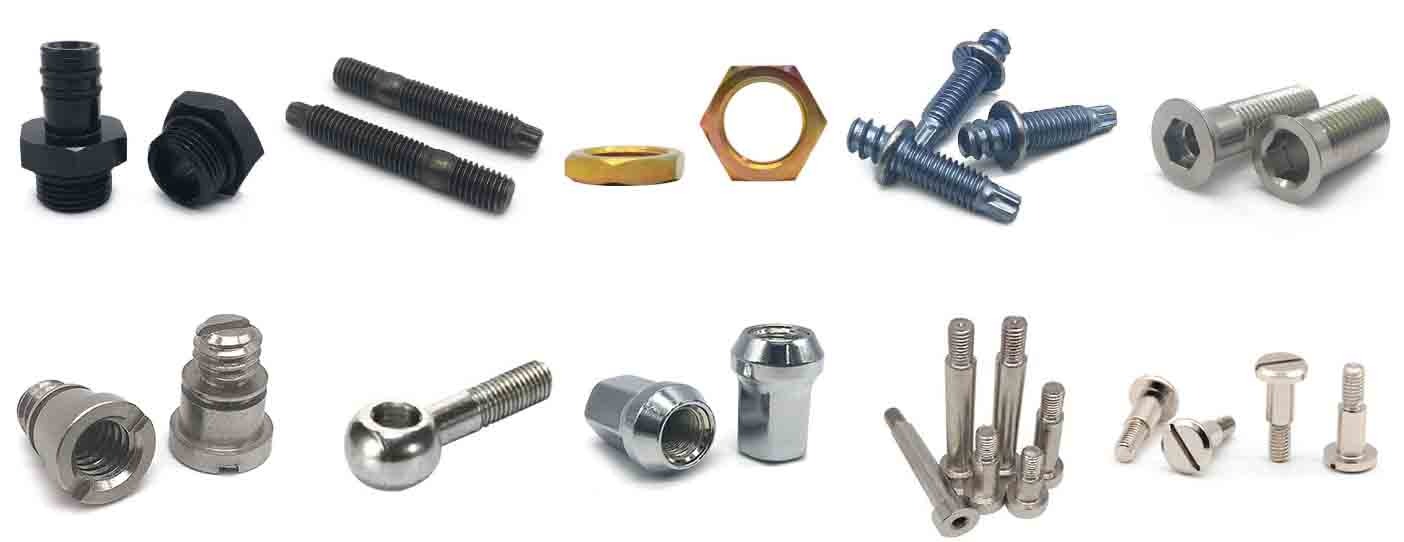
Cold heading is a widely used forging method in fastener manufacturing, where metal bars are upset using a mold at room temperature. This process is commonly used for creating the heads for various types of fasteners, and it offers advantages like reduced cutting requirements and a variety of forging material options, such as copper, aluminum, carbon steel, alloy steel, stainless steel, and titanium alloy. Cold heading is typically carried out using specialized machines that allow for continuous, multi-station, and automated production.

Key Characteristics of the Cold Heading Process:
Plastic Deformation: Cold heading involves applying pressure to the metal blank at room temperature, causing plastic deformation to occur in the mold cavity, resulting in the desired shape and size.
High-Quality Materials: Selecting metal materials with excellent plasticity, adhering to strict chemical composition and mechanical property standards, is crucial for successful cold heading.
Cold Heading Machinery: Specialized machines for bolt and nut manufacturing come in various models and series, offering reliable performance, high efficiency, and stable quality.
Forging Force: The process requires significant forging force, making the power equipment used in the process relatively expensive.
Surface Quality and Size Accuracy: Cold heading produces workpieces with excellent surface quality and high size accuracy, but excessive deformation should be avoided due to cold hardening.
Wide Application Scope: The cold heading process is suitable for large-scale production and a wide range of workpiece specifications.
Factors Influencing Cold Heading Accuracy:
Raw Material Chemical Composition: Pure metals generally have better plasticity than alloys, and impurities can reduce plasticity.
Metallographic Structure of Raw Materials: Different multiphase tissue characteristics impact plasticity, and defects like grains, mixtures, bubbles, and looseness can reduce metal plasticity.
Process Deformation Temperature: Plasticity increases with temperature, but this relationship is not strictly linear.
Metal Strain Rate: Strain rate changes can both increase and decrease metal plasticity, depending on the specific conditions.
Deformation Mechanics Conditions: Compression strain is favorable for plasticity, while stretching strain is not conducive to plasticity.
Other Factors: Discontinuous deformation can improve metal plasticity, especially during hot deformation for low-plasticity metals.
Choosing a High-Performance Cold Heading Machine:
To ensure precise and efficient cold heading, selecting the right machine is essential. Consider the following factors:
Wear-Resistant Alloy Copper Tile: The connection between the crankshaft, machine body, and impact rod should use high wear-resistant alloy copper tile for durability and low maintenance costs.
Alloyed Ductile Iron Body: The machine body should be cast from alloyed ductile iron, offering high tensile strength and wear resistance.
Two-Stage Gear Transmission: A two-stage gear transmission system with high efficiency and large transmission torque is ideal.
Pneumatic Clutch Brakes: Equipping the machine with pneumatic clutch brakes helps reduce motor power consumption.
Efficient Cutting System: A cutting system driven by a guide plate with a reciprocating movement ensures stability and good dynamic balance.
Multi-Station Design: Multi-station cold heading machines with tension closed clamp systems allow for flexible and efficient production.
Variable Frequency Speed Regulation: Variable frequency speed regulation devices offer versatile control options.
Safety Features: Including fault detectors and safety protection devices to safeguard equipment and molds.
Selecting Raw Materials for Cold Heading:
To achieve precision in cold heading, raw materials should meet certain criteria:
Spheroidizing Annealing Treatment: Raw materials must undergo spheroidizing annealing treatment to attain a spherical pearlite metallurgical structure.
Reduced Material Hardness: Lower material hardness is preferred to minimize cracking tendencies and extend mold service life.
Size Accuracy: Raw material size should align with product requirements and manufacturing processes.
High Surface Quality: Raw materials must have a dark color with a lubrication film and be free of defects like scratches, folding, cracks, rust, or oxidation.
Minimal Decarburized Layer: The total thickness of the decarburized layer in the raw material radius direction should not exceed 1% of the raw material diameter.
Surface and Core Hardness: Raw materials should possess a hard surface and a soft center to ensure cutting quality during cold forming.
Cold Heading Test: A cold heading test helps assess material performance, with lower sensitivity to cold hardening indicating better performance.
In conclusion, adhering to these key points will significantly enhance the cold heading accuracy for the fastener manufacturing process. By selecting suitable materials, utilizing high-performance machinery, and understanding the factors that influence accuracy, manufacturers can achieve precise and efficient production of various fasteners.