
Bolts are ubiquitous in both industrial production and daily life. The performance grade of bolts, particularly in steel structure connections, encompasses a range of more than ten grades, including 3.6, 4.6, 4.8, 5.6, 6.8, 8.8, 9.8, 10.9, 12.9, and others.
Bolts rated 8.8 and above are crafted from low carbon alloy steel or medium carbon steel and undergo heat treatment processes like quenching and tempering. These are generally referred to as high-strength bolts, while the remainder are termed ordinary bolts.
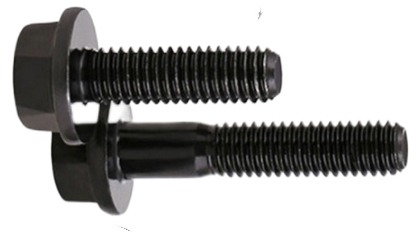
The Principle of High-Strength Bolt Connections
High-strength bolt connections offer several advantages, including straightforward assembly, robust mechanical performance, disassembly capability, resistance to fatigue, and stability under dynamic loads.
The high-strength bolt connection process involves tightening the nut with a specialized wrench to generate substantial and controlled pre-tension in the bolt. This pre-tension is transmitted uniformly to the connected components through the nut and backing plate. Under the influence of this pre-tension, a substantial frictional force arises along the surfaces of the connected components. As long as the axial force remains below this frictional force, the components will not slip, and the connection remains intact. This forms the fundamental principle of high-strength bolt connections.
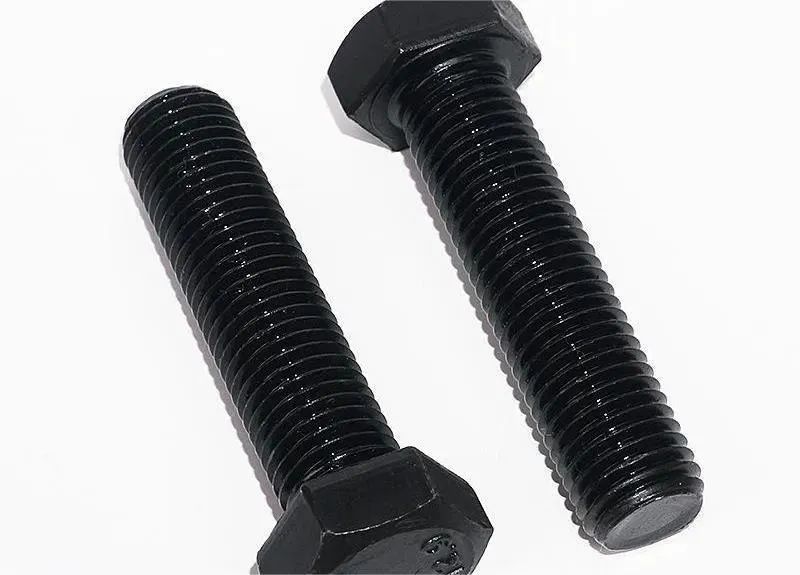
Distinguishing High-Strength Bolts from Ordinary Bolts
1. Material Difference
High-strength bolts can bear greater loads than their ordinary bolt counterparts of the same specification, primarily due to differences in material strength.Ordinary Bolts: These are typically composed of Q235 (A3) material.
High-Strength Bolts: High-strength bolts are manufactured from high-quality materials, such as 35# steel or other superior materials. Following fabrication, they undergo heat treatment to enhance their strength.
2. Strength Level Difference
High-strength bolts come equipped with higher strength levels compared to ordinary bolts.
High-Strength Bolts: Commonly utilized grades include 8.8s and 10.9s, with 10.9 being the more prevalent choice.
Ordinary Bolts: Ordinary bolts exhibit lower strength levels, typically ranging from 4.4, 4.8, 5.6 to 8.8.
3. Stress Characteristics Difference
The stress distribution and transfer mechanisms vary between high-strength bolts and ordinary bolts.
High-Strength Bolts: High-strength bolts operate by inducing pre-tension and transferring external forces through friction. In addition to their superior material strength, high-strength bolts generate significant pre-tension forces, resulting in the compression of connecting members and the creation of substantial friction forces perpendicular to the screw direction.
Ordinary Bolts: Ordinary bolt connections rely on the shear strength of the bolt rod and the pressure against the hole wall to transmit shear forces. When the nut is tightened, the pre-tension generated is minimal and can be disregarded in its impact.

4. Usage Perspective
The choice between high-strength bolts and ordinary bolts depends on the specific application and structural requirements.
High-Strength Bolts: High-strength bolts are commonly employed for critical components in building structures. They are often used for permanent connections, with two primary types—friction-type, applied with torque wrenches to achieve specified pre-stress, and pressure-type, which are unscrewed using special tools.
Ordinary Bolts: Ordinary bolts, with their lower shear performance, find application in secondary structural components. These bolts only require tightening and can be reused. Conversely, high-strength bolts are not reusable due to their pre-stressed nature.
In summary, understanding the distinctions between high-strength bolts and ordinary bolts is crucial for selecting the appropriate fasteners for different structural and load-bearing requirements in construction and engineering applications.
Bolts are fundamental components in construction, manufacturing, and various industries, and the choice of material for bolts is critical to their performance and durability. Among the many materials used for bolts, carbon steel and stainless steel are two common options. This article aims to highlight the distinctions between carbon steel bolts and stainless steel bolts.
1. Material Composition:
Carbon Steel Bolts:
Carbon steel is primarily an iron-carbon alloy with a carbon content ranging from 0.0218% to 2.11%. The hardness and strength of carbon steel increase with higher carbon concentrations, but plasticity decreases.
Carbon steel may contain small amounts of silicon, manganese, sulfur, and phosphorus.
Carbon steel is categorized into carbon structural steel, carbon tool steel, and free-cutting structural steel based on intended use.
Stainless Steel Bolts:
Stainless steel is primarily composed of iron, chromium (Cr), and nickel (Ni). Other elements like molybdenum, titanium, nitrogen, and copper may also be present in varying proportions.
The minimum chromium content required for stainless steel is 10.5%. Different stainless steel grades have varying levels of chromium and nickel, contributing to their corrosion resistance and other properties.
Stainless steel is classified into several types, including ferritic, austenitic, austenitic-ferritic duplex, and martensitic stainless steel, each with unique characteristics.
2. Use Environment:
Carbon Steel Bolts:
Carbon steel bolts are commonly used in conventional environments, such as construction, furniture, and general manufacturing applications.
Stainless Steel Bolts:

Stainless steel bolts are preferred in environments with high corrosion potential, extreme temperatures (both high and low), and exposure to corrosive substances. Industries like medical equipment and food processing rely on stainless steel bolts due to their corrosion resistance and hygiene factors.
3. Cost Considerations:
Stainless steel is generally more expensive than carbon steel due to its superior corrosion resistance and durability.
Carbon steel, while cost-effective, may require additional measures to protect against corrosion.
4. Magnetic Properties:
Carbon Steel Bolts:
Carbon steel is magnetic and can be attracted by magnets.
Stainless Steel Bolts:
The magnetic properties of stainless steel vary depending on the specific grade. Ferritic and martensitic stainless steel are magnetic, whereas austenitic stainless steel is non-magnetic. Heat treatment can alter the magnetic characteristics of stainless steel.
5. Appearance:
Carbon Steel Bolts:
Carbon steel bolts appear darker in color, reflecting the iron content in the alloy.
Stainless Steel Bolts:
Stainless steel bolts have a silver and bright appearance due to the presence of chromium and nickel.
In summary, the choice between carbon steel bolts and stainless steel bolts depends on the specific requirements of the application. Carbon steel bolts are cost-effective and suitable for many conventional uses, while stainless steel bolts excel in environments where corrosion resistance and durability are paramount. Understanding the differences between these materials is essential for selecting the right bolts to ensure the integrity and longevity of a project or product.
In the realm of fastener surface treatment processes, several methods, including electroplating, electrophoresis, painting, oxidation blackening, and phosphating, are commonly employed. This article will focus on surface phosphating treatment, shedding light on its purpose, key factors influencing its effectiveness, and the advantages it offers.
What is Surface Phosphating Treatment?
Surface phosphating treatment is a chemical and electrochemical process that generates a phosphate chemical conversion film on metal surfaces. This film is referred to as a phosphating film and is primarily used on iron and steel surfaces, although it can also be applied to non-ferrous metals like aluminum and zinc.
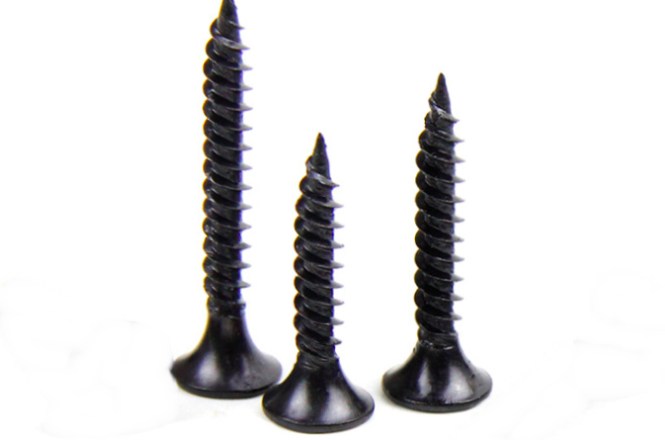
Purposes of Surface Phosphating Treatment:
Enhancing Paint Adhesion and Corrosion Resistance: Phosphating treatment acts as a primer before painting, improving the adhesion and corrosion resistance of the paint layer. The porous nature of the phosphating film allows paint to penetrate into its structure, creating a strong bond with the metal surface.
Protecting Base Metal: It provides a protective layer on the base metal, reducing susceptibility to corrosion. The phosphating film serves as a non-metallic, non-conductive isolation layer, preventing the formation of micro-batteries on the metal's surface and effectively safeguarding the underlying metal from corrosion.
Anti-Friction Lubrication: Surface phosphating treatment can function as a lubricant in metal cold working processes, reducing friction and wear.
Creating a Clean Surface: Phosphating film only forms on clean, oil-free, and rust-free metal surfaces. Consequently, metal workpieces subjected to phosphating treatment exhibit a clean, grease-free, and rust-free surface.
Factors Influencing Phosphating Effectiveness:
Temperature: The temperature plays a significant role in the phosphating process. Lower temperatures result in thinner phosphating layers with finer crystallization, while higher temperatures lead to thicker layers with coarser crystallization.
Free Acidity: The concentration of free hydrogen ions in the phosphating solution, known as free acidity, affects the process. Excessive free acidity accelerates corrosion on steel surfaces, hindering phosphating film formation and reducing corrosion resistance. Conversely, low free acidity results in slow corrosion reactions and difficulties in film formation.
Total Acidity: Total acidity, the sum of phosphates, nitrates, and acids in the solution, should ideally be controlled within the specified range. Maintaining higher total acidity accelerates phosphating reactions and produces finer and more uniform film grains.
pH Value: The pH value of the solution is crucial. Manganese phosphating solutions are typically kept between pH 2-3 to prevent powder formation on the workpiece surface. For iron systems, the pH is generally controlled between 3-5.5.
Ion Concentration: The concentration of ions in the solution, such as Fe2+ and Zn2+, also affects phosphating outcomes. Excessive Fe2+ can hinder film formation and reduce corrosion resistance, while high levels of Zn2+ result in coarse-grained films and increased brittleness.
In conclusion, surface phosphating treatment is a valuable process with multiple benefits, including improved paint adhesion, corrosion protection, lubrication, and surface cleanliness. To achieve optimal results, it is essential to consider and control factors such as temperature, acidity levels, total acidity, pH value, and ion concentration during the surface treatment process.
Spring washers play a crucial role in mechanical assemblies, primarily by preventing nuts from loosening. Positioned beneath the nut, they find widespread application in both load-bearing and non-load-bearing structures of general mechanical products. What sets spring washers apart is their affordability, ease of installation, and suitability for components subjected to frequent assembly and disassembly.
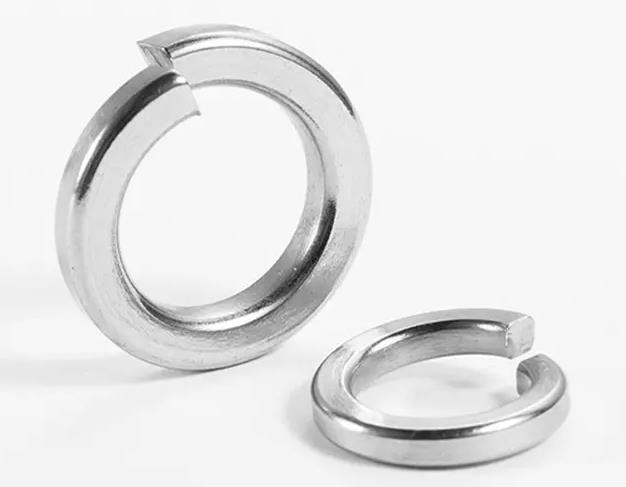
Key Functions of Spring Washers
The fundamental purpose of a spring washer is to counteract loosening by applying force once screws and bolts are tightened. It accomplishes this by generating friction between the screw or bolt and the material it secures. During vibrations, this friction prevents the screw or bolt from coming loose. In cases where a cotter pin is inserted into the hole of a screw, the slotted hex nut is employed to prevent automatic nut loosening. This configuration is especially useful in situations involving vibration loads or alternating loads.
Another important role of spring washers is their collaboration with three screw and bolt assemblies, often used in conjunction with flat washers.
The Anti-Loosening Mechanism of Spring Washers
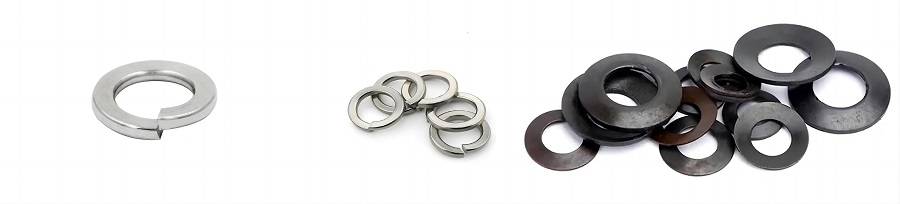
Spring washers function based on an anti-loosening principle. When compressed, they produce continuous elastic force, generating friction between the nut and the threaded connection of the bolt. This friction creates torque, which prevents the nut from loosening. Simultaneously, the sharp edge at the opening of the spring washer embeds itself into both the bolt's surface and the connected piece, preventing relative rotation between the bolt and the connected component.
Varieties of Spring Washers
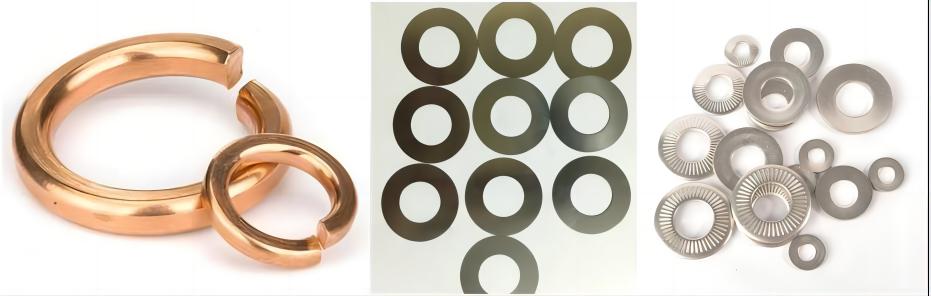
Wave Spring Washers
WG Type and WL Type Wave Washers: These open spring washers can be installed in tight spaces, making them ideal for applying prestress to bearings, reducing bearing noise, and enhancing operational accuracy and stability. They also find extensive use in electronic appliances. Materials commonly used include carbon steel, stainless steel, and copper alloys.
WN Type Wave Washer: This multi-layer wave crest overlapping spring washer is composed of multiple layers of material, designed for situations requiring substantial elastic force and uniform force release throughout the working stroke.
Disc Spring Washer
DIN6796 Disc Spring Washer: Compliant with DIN 6796 standards, this lock washer is used in medium to high-strength bolt and screw connections. It bears significant loads and possesses strong elastic recovery force, capable of withstanding wear, thermal expansion, contraction of wear parts, or seal compression. Disc spring washers can effectively replace ordinary spring washers but are not suitable for use in combination with wedge lock washers and flat washers.
Internal Tooth Spring Washer and External Tooth Spring Washer
These spring washers feature sharp, elastic teeth around their circumference, which press against bearing surfaces to prevent fastener loosening. The internal tooth elastic washer is used beneath screws with small head sizes, while external tooth spring washers are commonly placed under bolt heads and nuts. Toothed spring washers are smaller than conventional spring washers and evenly distribute stress on fasteners, ensuring reliable anti-loosening. However, they are not ideal for parts that require frequent disassembly.
Causes of Spring Washer Breakage
Several factors can contribute to the breakage of spring washers:
Expansion Ring: The spring washer's expansion ring experiences radial outward tension resulting from the axial clamping force generated by tightening torque.
External Chamfer: A nut-bearing surface's external chamfer can generate a radial component from the axial clamping force, causing the spring washer's opening to expand. Smaller chamfer diameters increase the likelihood of expansion ring occurrence.
Flat Washer: Placing a flat washer between the nut and spring washer can help prevent expansion ring formation. However, excessively thin or soft flat washers may not be effective.
Hydrogen Embrittlement: This issue typically arises due to an inadequate heat treatment process and the failure to conduct timely hydrogen removal treatment after zinc electroplating.
Conclusion
This article provides valuable insights into the world of spring washers, encompassing their primary functions, anti-loosening mechanisms, various types, and potential causes of breakage. Armed with this knowledge, individuals can harness the full potential of spring washers in their applications, ensuring optimal performance and reliability.
Bolts are an omnipresent component in various industries, playing a crucial role in connecting and fastening structures. However, have you ever wondered about the significance of those grade markings? In this article, we delve into the performance grades of bolts and screw threads.
Performance Grades of Bolts
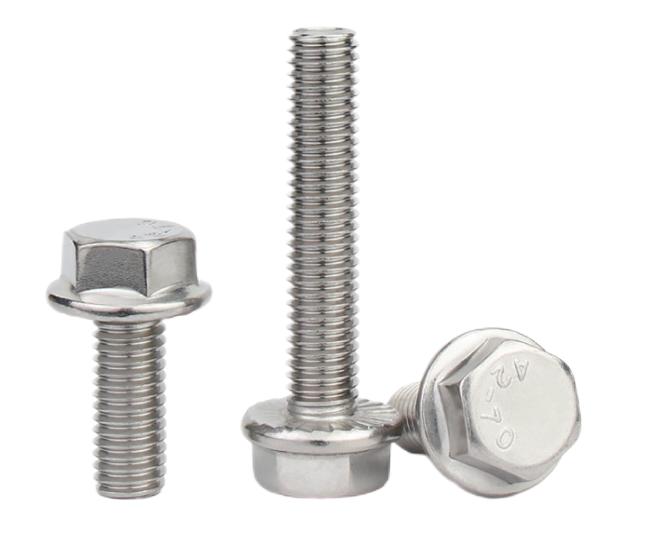
Bolts used in steel structure connections come in various performance grades, numbering more than ten, including 3.6, 4.6, 4.8, 5.6, 6.8, 8.8, 9.8, 10.9, and 12.9. Bolts rated 8.8 and higher are crafted from low-carbon alloy steel or medium-carbon steel, treated through heat processes, and are commonly known as high-strength bolts. The rest are typically referred to as ordinary bolts. The grade markings on bolts consist of two figures, representing the nominal tensile strength value and the yield strength ratio of the bolt material.
For instance, a bolt with a performance grade of 4.6 signifies that the nominal tensile strength of the bolt material reaches 400 MPa, and the yield ratio is 0.6. In contrast, a high-strength bolt marked as 10.9 attains even greater strength after heat treatment, with a nominal tensile strength of 1000 MPa and a yield ratio of 0.9, achieving a nominal yield strength of 900 MPa.
It's important to note that the bolt performance grade is an internationally recognized standard. Bolts with the same performance grade exhibit uniform performance characteristics, regardless of their material or origin. Consequently, when designing structures, engineers rely on the performance grade as the key parameter.
In the realm of bolts, strength is typically expressed as "X.Y," where X * 100 equals the tensile strength, and X * 100 * (Y/10) equals the yield strength, given that yield strength/tensile strength equals Y/10, following standard identification regulations.
Performance Grades of Screw Threads
Screw threads are integral to countless applications, characterized by their uniform spiral profiles on solid surfaces, both internal and external. They can be classified into three primary categories based on their structural features and intended use.
Common Screw Thread: Featuring a triangular tooth profile, common threads are primarily used for connecting or fastening components. These threads come in coarse and fine variations, with fine threads offering enhanced connection strength.
Transmission Screw Thread: Transmission threads encompass trapezoidal, rectangular, sawtooth, and triangular tooth profiles, serving specific transmission purposes.
Sealing Screw Thread: Reserved for sealing connections, this category includes pipe threads, taper threads, and taper pipe threads.
The concept of thread fit refers to the degree of looseness or tightness between threaded components. Thread fit grades are defined by a combination of deviation and tolerance on both internal and external threads.
For instance, in the unified inch system, external threads have grades 1A, 2A, and 3A, while internal threads have grades 1B, 2B, and 3B. The higher the grade, the tighter the fit. Grade 1A and 1B offer loose tolerances, suitable for less critical applications, while grade 3A and 3B provide a tight fit suitable for safety-critical designs.
In metric threads, external threads are categorized as 4h, 6h, and 6g, while internal threads are categorized as 5H, 6H, and 7H, each with distinct applications based on their tolerance zones.

Thread Markings
Understanding thread markings is essential when dealing with fastener components:
Major Diameter/Tooth of Outer Diameter (d1): Represents the nominal diameter of the thread size.
Minor Diameter/Tooth Root Diameter (d2): Denotes the diameter where the thread root coincides.
Tooth Pitch (p): Refers to the axial distance between adjacent teeth on the meridian. In the imperial system, pitch is measured in teeth per inch, equivalent to 25.4mm.
Metric and Inch Self-Tapping Screws: These screws come in various specifications and pitches, allowing for precise applications.
In summary, understanding the grade markings of bolts, screws, and screw threads is vital, as different grades and markings indicate distinct applications and functions of bolts with different types in various industries and structures. Whether it's for high-stress steel connections or precise threading requirements, these markings provide essential information for engineers and manufacturers alike.