
When it comes to hardware fasteners, nuts are essential components that hold structures and machinery together, ensuring stability and integrity. Among the myriad of nuts available, two commonly encountered options are hex nuts and square nuts. While both serve the purpose of securing fasteners, they possess distinct characteristics suitable for different applications.
Hex Nuts:
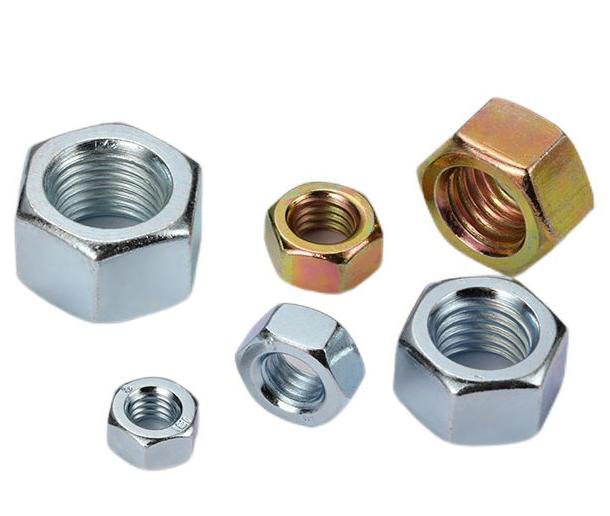
Hex nuts, characterized by their six-sided shape resembling a hexagon, are ubiquitous in construction, automotive, and industrial settings. These custom hex nuts come in various sizes and materials, typically metal like steel or brass, and feature internal threads to mate with external threads on bolts or screws. Hex nuts are versatile and find applications in assembling components, providing a stable and reliable connection crucial in diverse industries.
Advantages of Hex Nuts:
Versatility: Hex nuts are compatible with a wide variety of fasteners, making them suitable for diverse applications.
Secure Fastening: The six-sided design provides multiple contact points, ensuring a secure and tight connection.
Torque Distribution: Hexagonal shape allows for even distribution of torque during installation, reducing the risk of damage or stripping.
Ease of Use: Hex nuts can be easily tightened or loosened using standard wrenches or socket sets, making them convenient for assembly and maintenance tasks.
Common Availability: Hex nuts are widely accessible in hardware stores, making procurement easier compared to specialized nuts.
Limitations of Hex Nuts:
Limited Access: Hex nuts may be challenging to install or remove in tight spaces due to their design.
Angular Misalignment: Hexagonal shape may restrict movement or adjustment in situations requiring angular misalignment.
Surface Damage: Improper wrenching or excessive force can lead to surface damage, affecting nut integrity.
Corrosion Susceptibility: Depending on material and finish, hex nuts may be prone to corrosion, especially in harsh environments.
Square Nuts:
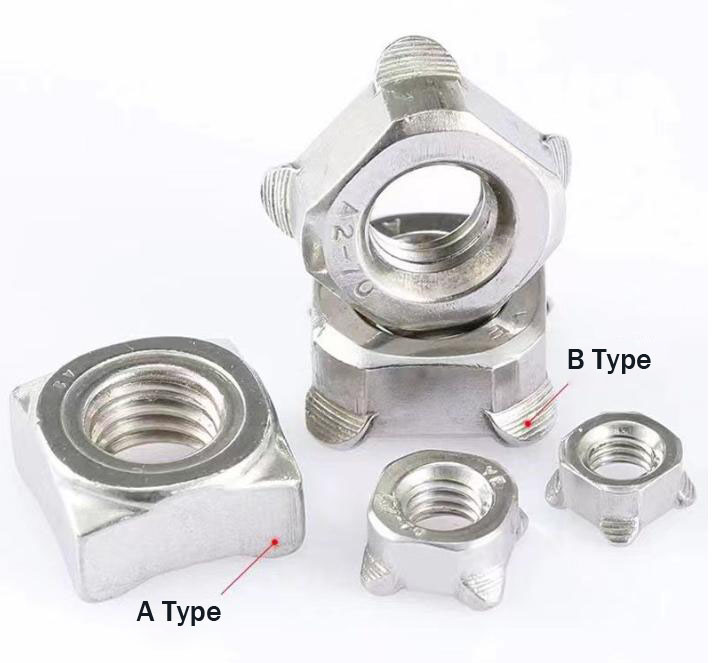
Square nuts stand out with their four equal sides and right angles, finding specific uses in woodworking, furniture assembly, and applications where stability and anti-rotation features are vital. Similar to hex nuts, square nuts are made of metal, commonly stainless steel or zinc-plated steel, and feature internal threads matching external threads on bolts or screws. They offer a secure grip and resistance to loosening due to their unique shape.
Advantages of Square Nuts:
Anti-Rotation Feature: Square shape prevents rotation when tightened, providing added stability to the connection.
Secure Fastening: Square nuts offer a firm grip and resist loosening due to vibration or torque.
Easy Alignment: Flat sides facilitate alignment during installation, making positioning and securing easier.
Enhanced Wrenching Surface: Larger surface area allows for better wrenching, reducing the risk of surface damage or stripping.
Aesthetic Appeal: Square nuts provide a unique visual element and are preferred in applications where appearance matters.
Limitations of Square Nuts:
Limited Availability: Square nuts may not be as widely available as hex nuts, making procurement slightly less convenient.
Tool Requirements: Specialized tools like square socket wrenches or pliers may be needed for installation and removal.
Compatibility: Square nuts may not be compatible with certain fasteners, requiring specific bolts or screws with matching square heads.
Accessibility Challenges: Similar to hex nuts, square shape may hinder installation or removal in tight spaces.
Conclusion:
Choosing between hex nuts and square nuts depends on project-specific requirements, including size, compatibility, strength, accessibility, and cost considerations. Hex nuts offer versatility and common availability, while square nuts provide anti-rotation features and enhanced stability. Understanding the differences between these two nut types allows for informed decisions, ensuring secure and reliable fastening solutions tailored to specific applications.
Washers are indispensable components utilized across various applications, spanning from automotive engines and plumbing systems to electrical connections and industrial machinery. Serving as fundamental elements for load distribution and tight sealing between surfaces, they play a crucial role in preventing leaks, corrosion, and other potential issues. Despite their widespread use, questions regarding the proper installation, selection, and maintenance of washers may still arise. Here, we address common inquiries to assist users in making informed decisions and ensuring the safe and effective performance of washers in their applications.
How to Install a Washer?
Installing a washer involves a straightforward process. Here are the basic steps:
Select the Correct Washer: Choose the appropriate size and type of washer for your application.
Placement: Position the washer onto the fastener, ensuring it sits flush against the surface being fastened.
Fastening: Insert the fastener through the hole in the washer and into the corresponding hole in the surface being fastened.
Tightening: Use a wrench or socket to tighten the fastener, applying the correct amount of torque.
Lock Washer Usage: If employing a lock washer, place it onto the fastener between the nut or bolt head and the washer.
Final Tightening: Fully tighten the nut or bolt to the required torque, ensuring the joint is secure and the washer properly seated.
Verification: Inspect the joint to confirm its security and the washer's proper installation.
It's important to note that the installation process may vary depending on the application and washer type. Always refer to the manufacturer's instructions and adhere to best practices for safe and effective installation.
Can Crush Washers Be Reused?
Crush washers are designed for single-use applications and should not be reused. These washers deform upon tightening to create a tight seal between surfaces, typically in automotive or plumbing settings. Once deformed, the crush washer cannot revert to its original state, compromising its sealing ability upon reuse.
Attempting to reuse a crush washer can lead to leaks or other complications, as the washer may fail to recreate the initial level of deformation or seal. Therefore, it's advisable to utilize a new crush washer whenever a seal is required, even if the used washer appears undamaged.
How to Clean Washers?
Regular cleaning of washers is crucial to maintain their functionality and ensure reliable joint performance. Here are some cleaning tips:
Regular Maintenance: Clean washers periodically to remove dirt, debris, or contaminants that may accumulate over time.
Inspection: Routinely inspect washers for signs of wear, damage, or corrosion. Replace any worn or damaged washers promptly.
Proper Storage: Store washers in a clean, dry, and protected environment to prevent corrosion or deterioration. Avoid exposure to moisture or corrosive substances.
Correct Selection: Choose the appropriate washer type and size for your application to optimize joint performance and longevity.
By following these cleaning practices, users can ensure that washers function effectively and provide dependable joint performance over time.
Are Washers Suitable for High-Temperature or High-Pressure Applications?
The suitability of washers for high-temperature or high-pressure applications depends on their material composition and design. Here are four types of washers recommended for such conditions:
Stainless Steel Washers: Known for their corrosion resistance and strength, stainless steel washers excel in high-temperature and high-pressure environments. They are commonly used in industrial and automotive applications that demand superior temperature and pressure resistance.
Inconel Washers: Inconel, a family of superalloys, offers exceptional high-temperature resistance and strength. Inconel washers find applications in aerospace and chemical processing industries where extreme temperature and corrosive conditions are prevalent.
PTFE Washers: Polytetrafluoroethylene (PTFE) washers boast chemical resistance and non-stick properties, making them suitable for high-temperature and corrosive environments. They are frequently utilized in chemical processing and food and beverage industries.
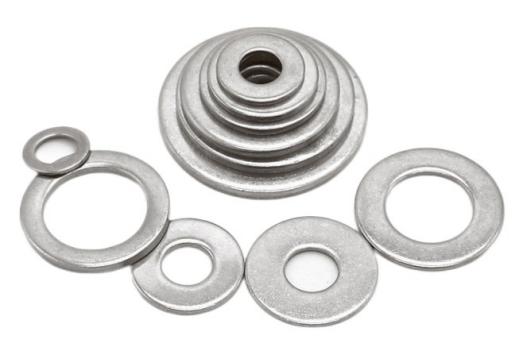
Copper or Aluminum Flat Washers: While flat washers made of copper or aluminum materials are appropriate for high-temperature applications like automotive engines or electrical connections, they are not recommended for high-pressure conditions due to their lower strength.
When selecting washers for high-temperature or high-pressure applications, factors such as operating conditions, material compatibility, and specific requirements must be considered. Consulting with a qualified professional or the manufacturer can aid in determining the most suitable washer for a particular application.
In conclusion, understanding the the proper use, selection, and maintenance of washers is essential for achieving optimal performance and reliability in diverse applications. By following recommended practices and guidelines, users can ensure the effective functioning of washers and the integrity of their assemblies.
This comprehensive guide provides valuable insights into the diverse world of washers, encompassing their types, dimensions, and finishing options. Let's summarize the key points highlighted:
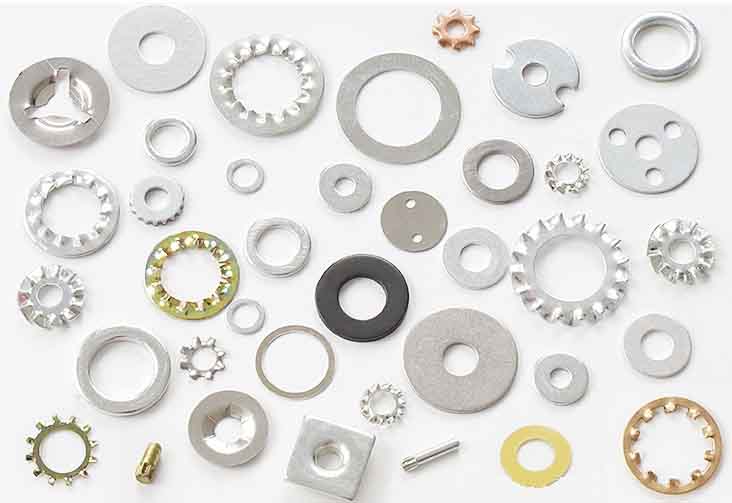
1. Types of Washers:
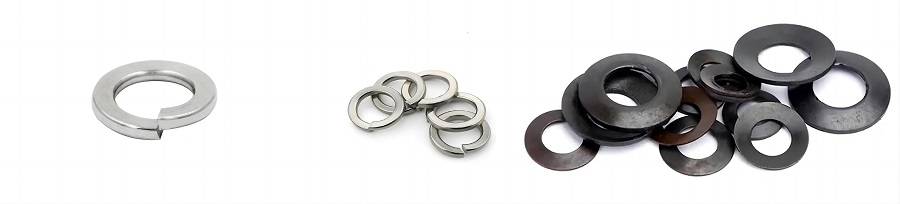
Spring washers, wave washers, Belleville washers: Designed for preload force and tension maintenance.
Flat washers, plain washers, conical washers, square washers: General-purpose washers for load distribution and surface protection.
Lock washers, tab washers: Preventing loosening of nuts and bolts due to vibration.
Thrust washers: Distributing axial loads in machine assemblies.
2. Dimensions of Washers:
Outer Diameter (OD), Inner Diameter (ID), Thickness: Basic measurements for sizing washers.
Bolt Size: Selection based on corresponding inside diameter.
ANSI Standard Size: Conforming to ANSI standards for specifying washer sizes.
3. Finishing Types of Washers:
Plain finished washers: Simple finish for applications where appearance is not critical.
Zinc plated washers: Coating for corrosion protection, available in different thicknesses.
Black oxide washers: Chemical treatment for aesthetic purposes or corrosion prevention.
Nickel plated washers: Durable and corrosion-resistant finish, available in various thicknesses.
Chrome finishing washers: Decorative, shiny surface for aesthetic purposes.
Galvanized finishing washers: Zinc coating for rust and corrosion protection, suitable for outdoor use.
Powder coating washers: Durable, customizable finish available in different colors and textures.
Conclusion:
Washers, despite their simple appearance, are essential components with significant roles in various applications across industries. Understanding the types, dimensions, and finishing options of washers enables informed decision-making for selecting the most suitable components for specific applications. Proper measurement, selection, and installation ensure optimal performance, safety, and efficiency in projects. With this comprehensive knowledge, individuals can confidently tackle projects involving washers, ensuring their effectiveness and longevity.
By incorporating this knowledge into practice, individuals can ensure optimal performance, safety, and efficiency in projects involving washers. Whether it's selecting the appropriate type and size of washers or choosing the right finishing option for a specific application, informed decisions are key to achieving successful outcomes.
Rivets are indispensable in various industries for their ability to create durable joints that withstand stress and vibration. Choosing the right rivet types depends on factors like material compatibility, joint strength, and accessibility. This article delves into solid rivets and blind rivets, aiding in selecting the most suitable option for diverse applications.
Understanding Solid Rivets and Blind Rivets:
Solid Rivets:
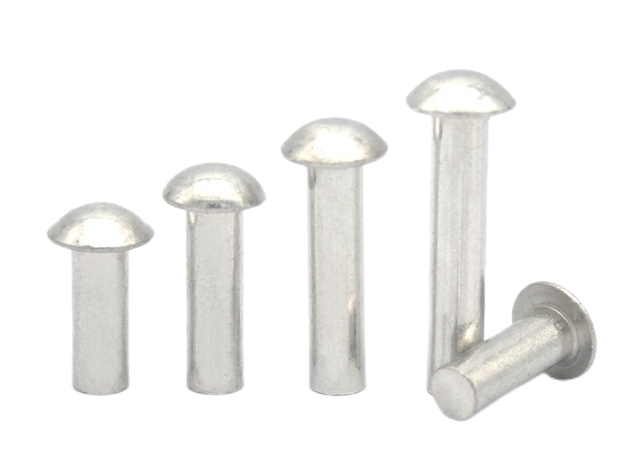
Solid rivets feature a cylindrical shaft with a head and tail. Installed by deforming with a hammer or rivet gun, they offer high strength and durability, ideal for extreme environments. However, they necessitate access to both sides of the material and specialized tools for installation.
Blind Rivets:
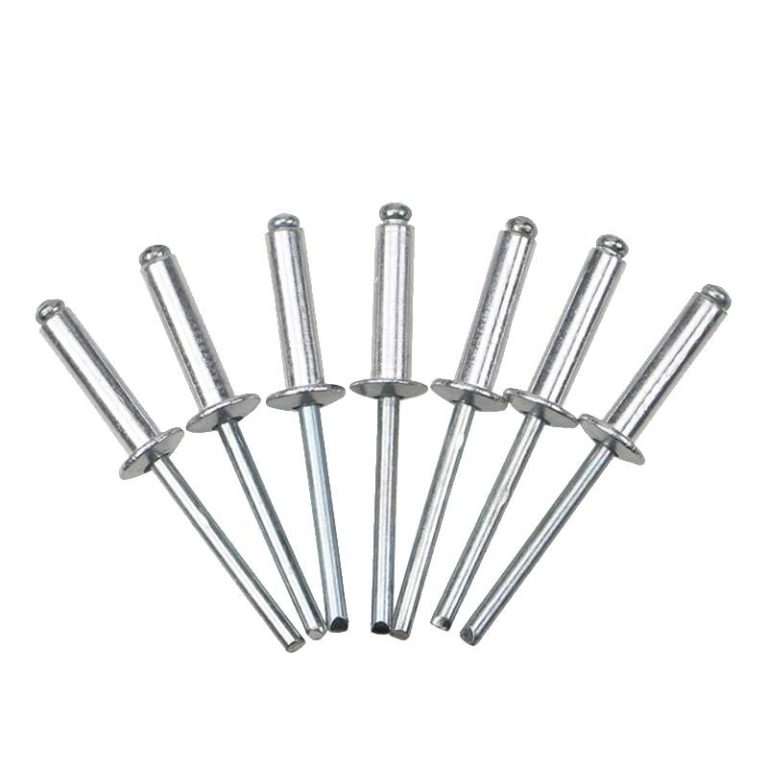
blind rivets, also known as pop rivets, are installed from one side, comprising a tubular body and mandrel. They expand upon installation, forming a head on the opposite side. Popular for their ease of installation and one-sided accessibility, blind rivets come in various materials and head styles.
Comparative Analysis:
Head Types and Shapes: While solid rivets have rounded or flat heads, blind rivets offer diverse options like dome, countersunk, and large flange heads.
Installation Methods and Tools: Solid rivets require tools for installation from both sides, whereas blind rivets can be installed from one side using simpler hand or pneumatic tools.
Material Compatibility and Strength: Solid rivets are typically stronger, crafted from materials like steel or titanium, while blind rivets offer versatility with materials such as aluminum, steel, stainless steel, and copper.
Joint Accessibility and Versatility: Solid rivets need access to both sides, posing a challenge in some cases. Blind rivets excel in limited-access applications and offer various lengths and diameters for versatility.
Cost and Availability: Solid rivets are generally pricier due to installation complexity, whereas blind rivets are more readily available and cost-effective.
Choosing Between Solid Rivets and Blind Rivets:
Consider factors such as material compatibility, joint strength, and accessibility. Solid rivets suit applications requiring high strength but demand access to both sides and specialized tools. Blind rivets are ideal for limited-access scenarios, offering easy installation and versatility in materials and head styles.
Conclusion:
Solid rivets and blind rivets each possess unique advantages and considerations. By understanding their differences and aligning them with specific application requirements, engineers and enthusiasts can make informed decisions, ensuring robust and reliable joints for diverse projects.
In various industrial sectors like automotive, aerospace, construction, and manufacturing, the significance of heat treatment in the production of bolts cannot be overstated. By undergoing a carefully regulated heat treatment process, bolts can significantly enhance their mechanical properties to meet specific criteria, ensuring reliability and performance in diverse applications.
Heat treated bolts are the result of a controlled heat treatment technique designed to alter their microstructure, thereby improving their mechanical characteristics. This crucial manufacturing step greatly influences the performance and durability of bolts, making them indispensable in various industries.
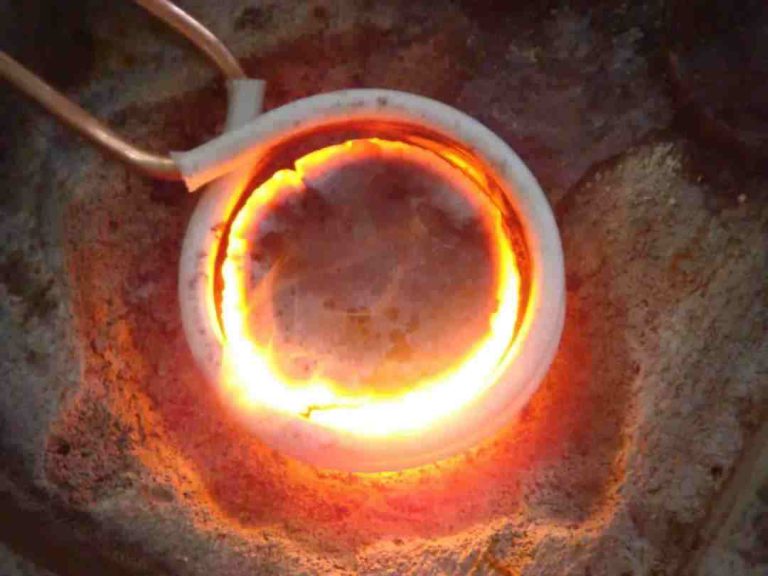
The process involves subjecting the bolts to high temperatures followed by rapid or gradual cooling, depending on the desired properties. This manipulation of temperature and cooling rate can enhance crucial qualities such as strength, ductility, toughness, wear resistance, and corrosion resistance.
One of the primary advantages of heat treated bolts lies in their increased strength. Through heat treatment, bolts can exhibit heightened hardness, toughness, and wear resistance, making them suitable for demanding applications that require superior load-bearing capacity, such as heavy machinery and structural components.
Furthermore, heat treatment process improves the ductility of bolts, reducing the likelihood of brittle fracture or failure. This increased ductility ensures that bolts can flex under stress without breaking, enhancing their dependability and safety, particularly in harsh operating conditions.
Corrosion resistance is another key benefit of heat treated bolts. By undergoing heat treatment, bolts can better withstand rust, oxidation, and other forms of corrosion, making them ideal for applications exposed to extreme environmental conditions or chemicals, as seen in marine, automotive, and aerospace industries.
Moreover, heat treatment enhances the fatigue resistance of bolts, crucial for withstanding repeated or cyclic stress. Bolts treated through this process exhibit improved fatigue strength, enabling them to endure multiple stress and load cycles without fracturing or failing, essential for applications subject to dynamic or variable loads.
Various heat treatment methods are employed in the production of bolts, including quenching, tempering, annealing, and normalizing, each offering distinct advantages in enhancing bolt properties.
Quenching involves rapid cooling of heated bolts in a quenching liquid to increase hardness and wear resistance, although it may lead to brittleness, often mitigated through subsequent tempering.
Tempering, on the other hand, involves controlled reheating and cooling to improve ductility and toughness, striking a balance between strength and flexibility.
Annealing entails slow cooling of bolts after heating to relieve internal stresses, enhance machinability, and reduce hardness, ideal for applications requiring ductile and durable bolts.
Normalizing, similar to annealing but with air cooling, refines grain structure to enhance strength and fatigue resistance, commonly used in heavy machinery and structural components.

In summary, heat treated bolts play a crucial role in various industries, offering superior strength, corrosion resistance, and fatigue resistance. Understanding the principles and methods of heat treatment is essential for ensuring optimal bolt performance across diverse applications, contributing to the reliability and safety of industrial systems.