
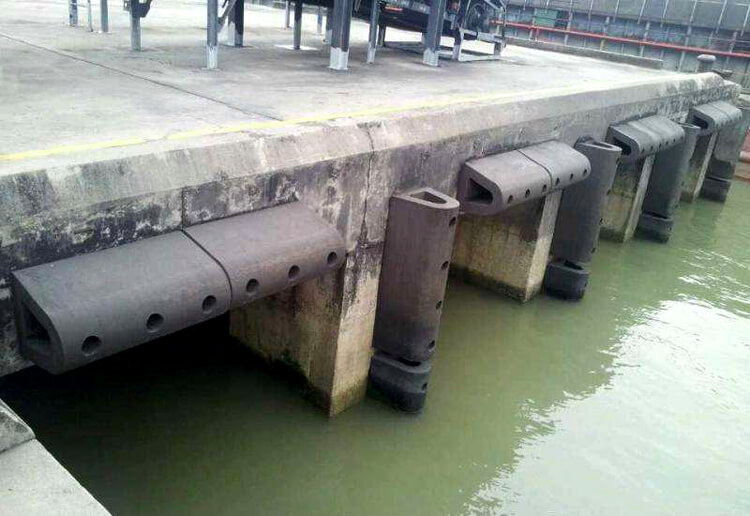
The production of marine rubber fenders has moved from the manufacturers that developed them to lower-cost producers, with no heritage knowledge of the products they currently make. This has created a disjoint between the manufacturers and the people that design and sell the end products. Complicating matters, there are no true standards governing the ‘nuts and bolts’ of fender design. There is little to assist in the design of cost-effective fenders. Furthermore, there is little understanding of neither what actually causes fenders to fail, nor how buyers can optimize their fender lifetimes.
Standards are of little practical help
The bad news for those looking to invest in new fenders is that the most critical issues for successful rubber marine rubber fenders are not covered in any standard. Current standards and guidelines deal primarily with broad theories and virtually not at all with the simple details that make virtually all the difference between troublesome and robust designs.
The only extant standards deal with these general theories, the proprietary design of specific rubber fender elements (not the entire fender), and/or the assessment of the energy capacity of fender elements. The most widely used guideline for the design of fender systems is Guidelines for the Design of Fenders (sic) Systems: 2002, published by the International Navigation Association (PIANC). It gives guidelines for determining energy requirements, but no details of how to design a fender system. Its six-page Appendix A, ‘Procedure to Determine and Report the Performance of marine rubber fenders’ is the only section of this seventy page document familiar to most fender specifiers. However, not only is Guidelines…not a standard, but due to errors in the final editing process, two critical sections were reversed. The result is that for the majority of testers a critical part of the procedure description is likely unintelligible. Thus, its actual usefulness is limited.
This is not as much of a problem as it otherwise would be, because the same year Gudelines… was published, ASTM International, the largest standards-writing organization in the world, issued Standard F 2192, ‘Standard Test Method for Determining and Reporting the Berthing Energy and Reaction of marine rubber fenders’. An important revision was issued in 2005. This is the document that the performance testing part of Appendix A was intended to be, and it is the only standard for determining the performance of marine rubber fenders.
ISO 9000 certification is not necessarily any assurance. Achieving ISO 9000 status requires that a manufacturer produce a consistently-repeatable product, and document it, but does not require that it make a product that is fit for service. On balance, it is better than nothing but not a magic bullet.
My own experience has led me to believe strongly that all the worry about measuring fender energy and reaction is a tempest in a teapot. Investigations of many fender problems, multiple types and manufacturers show that inadequate fender performance (energy and reaction) is almost never the primary cause of fender problems.
Also, seldom is fender compression deflection a cause of fender failure. Often specifications stipulate that fender deflection shall not exceed a certain percent of undeflected height (for durability concerns). Actually, fenders designed to have a greater rated deflection operate at a lower strain and stress level than ones designed to deflect less.
Specifying rubber
The ultimate useful life potential of any rubber product is controlled by its chemistry. Aging and ozone resistance of the rubber, from which fender elements are molded, are two of the most important criteria that determine useful life potential. Most fender specifications don’t specify rubber ozone resistance at all, and many specify an acceptable aging resistance that is considerably lower than it could be for maybe one percent higher cost.v
For more professional information, please visit the page of ysmarines.com.
In general, light warehouse shelves, medium-sized warehouse shelves, heavy warehouse shelves are common storage shelves. The structure of these storage shelves mainly in the following areas:

The first thing to say is the light warehouse shelves, its structural features are: universal angle steel column, plug assembly structure, warehouse shelves can be arbitrarily combined, generally steel plate, layer height every 50 cm arbitrarily adjustable installation easy, The appearance of lightweight and beautiful, manual access to goods, commonly used to store light items, and its capital investment, can be widely used in electronics, light industry, supermarkets, culture and education and other industries.

For the medium-sized warehouse shelves, the structure of such storage shelves features: plug-in modular structure, the standard group of components, do not have a connecting bolt, warehouse shelves to install and remove quickly and easily, the board for the cut, Strong closed steel layer, and the bottom of the board with reinforced or reinforced ribs, the height of every 50 cm height-adjustable, the unit shelf load per layer can reach 400 kilograms, square column, the number of positive punching Less, so that storage shelves more stable and elegant, widely used in all walks of life.
Finally, it is said that the characteristics of heavy-duty warehouse shelves, it is a combination of beam-type shelf shelves shelf, belonging to the ladder-type beams, the general can be configured steel lumber or wood laminated board, the height of every 50 mm arbitrary Adjustable, the unit shelf load of up to 800 kilograms per layer, size specifications according to customer demand tailored, the structure of such storage shelves suitable for use in the manufacturing industry and other industries.

Loft shelves, usually using medium shelf shelves or heavy shelf shelves as the main support plus floor panels (depending on the total load weight of the shelf unit to decide which shelf to use), floor panels are usually selected cold-rolled steel floor, pattern steel floor or Steel grating floor.
In recent years, the use of cold-rolled steel floor, it has a strong carrying capacity, good integrity, good load uniformity, high precision, smooth surface, easy to lock and other advantages. There are many types of optional, and easy to match the lighting system, Take, management are more convenient. Floor design according to a variety of installation conditions can be easily assembled in the field, without welding. Loft shelf systems in the field of auto parts, automotive 4S shop, light industry, electronics and other industries have more applications.
Arise web guiding provides a high precision edge or marking line control with advanced technology and professional certificates, the most competitive price guaranteed.

How to install the web guide system
Mounting
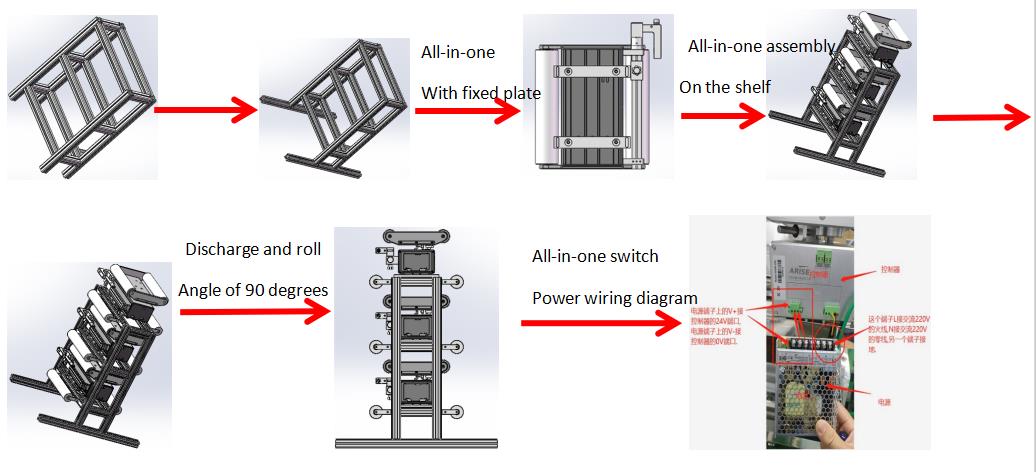
1. Make sure to install the guide correctly according to the direction of the roll paper and the marks on the roller platform. The sensor must always be downstream on one side of the material flow.
2. Fix the guide on the machine by using the supplied bolts.
3. Tighten each bolt with a wrench by hand until each bolt is firmly locked. Do not tighten the bolts.
Installing the sensor
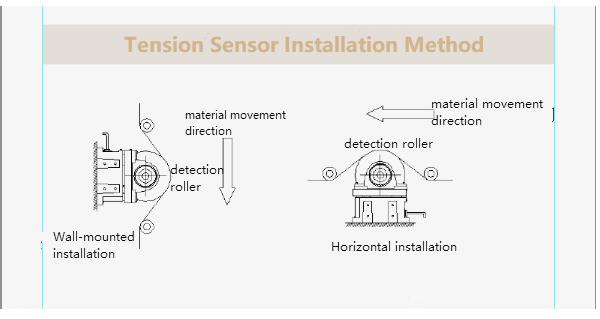
1.The sensor assembly consists of a sensor head, a sensor connection cable and two sensor carriages with M3 thumbscrews. All these elements are shipped from the factory.
2.Assemble into a ready-to-install unit.
3.Each sensor carriage will have a locking thumbscrew. Loosen the two thumbscrews to allow the carriage to slide into the sensor guide, which is installed under the roller assembly on the downstream side of the roll paper guide.
4.There is a filter cover (infrared or visible filter cover) on the surface of the sensor. When the sensor assembly slides into the guide rail, make sure that the filter cover faces the roll paper material.
5.After installing the sensor to the sensor rail, install the plastic end cap on the end of the rail. Clip-on plastic end caps are usually equipped with roll paper guides.
6. After installing the sensor, connect the sensor connector at the end of the sensor cable to the sensor port on the connector interface on the other side of the housing assembly.
Pre-wired
In the pre-wiring option, the equipment may be supplied with a 2.5-meter power cord (via compression nut) for customers to connect to a properly grounded 24 VDC power source.
Grounding
For safety and normal operation, a web guiding system is equipment used by the web and the installed guide plate must be properly grounded. The ground screw on the back connector is to connect the ground wire interface.
For more detailed information, please visit the aritcle page on how to install an all-in-one web guide system.
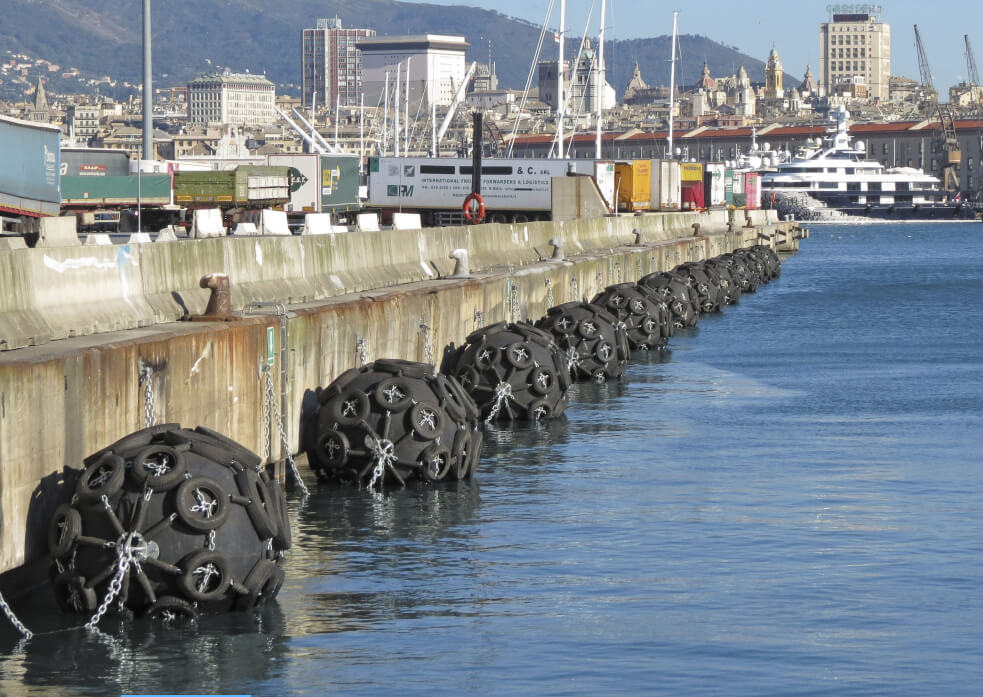
The main aim of installing marine rubber fender is to protect both the vessel and the dock from major failure during the berthing period. External forces, such as abrasion or other natural factors can possibly occur during the berthing process. Therefore, marine rubber fenders are made to solve this problem, and therefore, more money can be saved due to less vessel or dock fixing.
Rubber fenders are designed to absorb the energy that a vessel transfers to a berthing structure, hence the term energy absorption, so that the amount of energy received by the dock is much less compared to when fenders are absent. The force that is bounced back and relieved by the dock through the fender is called reaction force. A good quality marine fender can be determined by measuring the energy absorption and reaction force. A good quality marine fender has a high energy absorption and the low reaction force, hence the reduced impact yielded from the vessel to the dock, as well as the minimized impact bounced back from the dock to vessel.
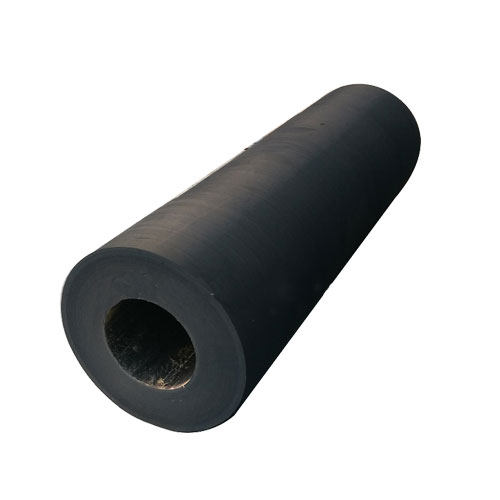
There are a lot of fender types that can be used on the port, for instance: cylindrical fender, V-type, A-type, M-type, super cell, and super cone fender. Tugboat fenders, however, are installed on tugboats to protect vessels from major failure in the incidence of a crash. In order to achieve the best result, there are several factors that to consider in choosing the right type of marine rubber fender, namely the dimension of berthing vessels, the type of the port, situation around the port and the existence tugboat to guide the vessel while berthing.
1. Vessel dimensions
Vessel dimensions, in terms of type and dead weight tonnage, become significant factors in choosing not only the right fender type, but also the size of the fender. The larger the vessel, the larger the required fenders will be. Usually, fenders which are equipped by frontal frames are chosen as they have large contact area. From the economical perspective, V-type fender can be one of the options. However, to yield the maximum result, super cell and super cone fender are selected. For the ports that are used for the small to medium vessel, the type A, V, M, LMD or cylindrical are chosen to protect the port wall.
2. Type of the port
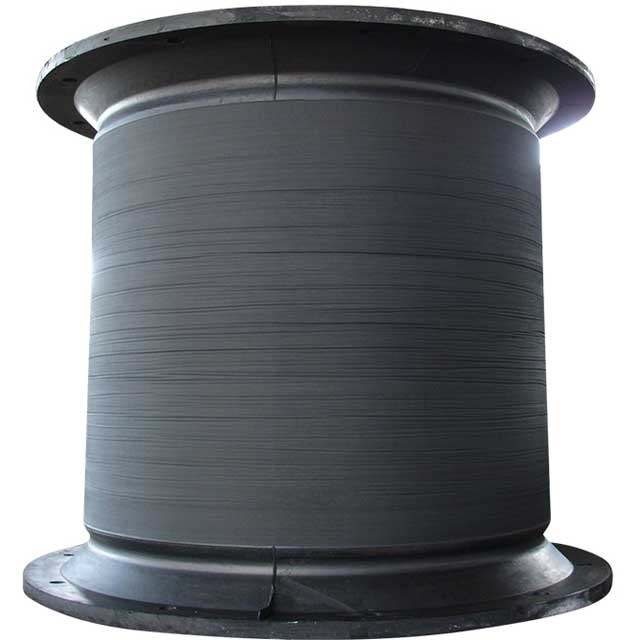
Another significant factor that can influence in choosing the right type of fender is the type of the port. Based on the location and position of the port, there are several port structures that are usually used including dolphin, monopile, jetty and quay wall. In the dolphin terminal, the terminal consists of poles that are used for vessels to berth. Rubber fender that is usually used in this terminal is super cell fender. However, jetty terminal, which is also known as floating terminal, does not need a really tough construction as it floats. This terminal is used for passenger ships. Unlike other kinds of ports, terminals with quay wall consists of concrete structure which parallels the beach. Large vessels cannot berth on this terminal due to the shallow waters in which the terminals are usually located.
3. Marine environment
The marine environment, such as high and low tides of the seawater, the power of wind which influences the waves, is another factor that needs to be considered in choosing the right fender type and dimension. If there is a big difference between the high and low tides, elongated fenders must be chosen, especially when the port is used by diversely sized vessels. If a small vessel needs to berth during the low tide, it can still berth to this port. Therefore, it is recommended to have the fenders installed in vertical position. On the other hand, when the sea is windy and wavy, the water also gets rough. This causes vessels to bump into the port wall. Elongated V type fender, super cell or super cone fender equipped by frontal frames can be used for this type of port.
4. The availability of guidance during berthing process
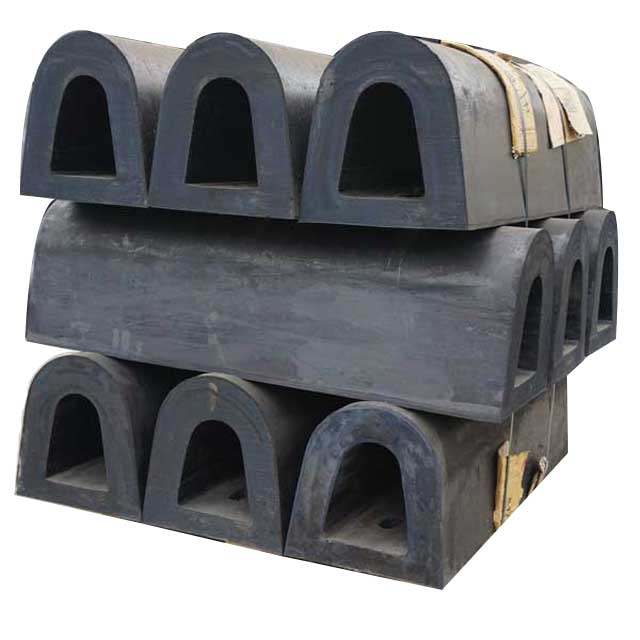
The availability of tugboats during berthing process is very important in order to avoid vessels from crashing into the port wall. This is because the speed of the vessel and the berthing angle can be adjusted as the vessel moves closer to the port.
Warehouse storage shelves are the basic storage equipment of the cargo transfer station, in warehousing management has an important role, to properly preserve the integrity of the goods. Storage shelves set up seven principles of custody, the goods can be properly kept:
1, for the channel for custody. In order to facilitate the goods out of storage, easy to move in the warehouse, the basic conditions for the goods for the channel custody.
2, as far as possible to the height of the code, improve storage efficiency. Effective use of the volume of the library should be put to the height of the code, in order to prevent damage, to ensure safety, should be used as much as possible scaffolding and other storage equipment.
3, according to the selected frequency of the location of the library. Goods that are shipped and purchased in high frequency should be placed near the entrance, easy to work; the poorly placed items are located far from the entrances and exits; seasonal items are selected according to their seasonal characteristics.
4, the same species in the same place custody. In order to improve the efficiency and efficiency of the operation, the same item or the like should be kept in the same place, and the familiarity of the employee with the place of placing the item in the store has a direct impact on the time of entry and exit, placing the similar item in the neighboring place and improving the efficiency an important method.
5, according to the weight of goods arranged custody position. When placing a place, heavy items are placed underneath, and light items are placed on top of the shelves. Need to manually carry the large items are based on the height of the waist. Sichuan warehouse shelves said to improve efficiency, to ensure safety is an important principle.
6, according to the shape of the arrangements for storage methods. It is also important to keep the goods in accordance with the shape of the items, such as the standard goods should be placed on the tray or shelf custody.
7, according to the principle of first-in-first-out. Preservation of an important one is for perishable, easy to break, easy to corrupt items; for the function of easy to degenerate, aging items, as far as possible according to the principle of ancestors first to speed up the turnover. Because the diversification of goods, personalization, the principle of short life is very important.
For more professional knowledge, please visit the official website of sanji-first.com.