
Web guide technology has developed rapidly in recent years. Thanks to the high-performance automatic web guide control system, the edge position controller ensures that the materials will not deviate from the correct position. The position of the coil is always be tracked during the production process with real-time web guiding without any manual intervention, which ensures and improves the quality and efficiency of the products.
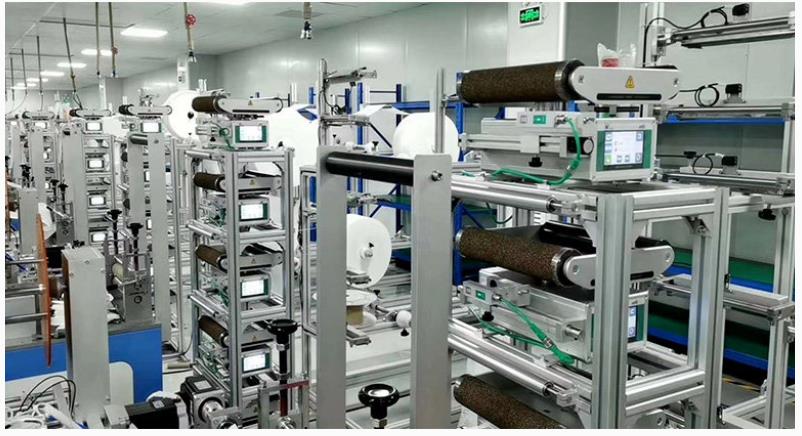
Characteristics Of The Web Guide System
1. Driven by brushless servo motor, maintenance-free
2. Precision ball screw
3. Large guide stroke
4. The length and span of the guide roller can be customized
5. The mesh material which is the most difficult to detect, also be easily controlled
Professional Web Guide System Manufacturer - Arise
Arise is a professional web guide system manufacturer, located in chongqing, China and it focuses on the research, development and production of the position sensors, web guiding system, and tension system including photoelectric, CCD, color sensitivity and ultrasonic. The products are widely used in steel, no-woven fabric, corrugated paper, textile, printing, labeling, plastic film, building materials, cables, rubber, tires, etc. The web guide equipment provided by Arise will ensure that your machine runs normally at full speed. The automatic guide system can ensure continuous, accurate control of various types of materials in various production processes, and limit waste and downtime to a minimum.
YSmarines has introduced the marine mooring chock which is a mooring system that is designed to support safe and reliable moorings of all types and purpose through its patented low friction technology.
The transition from steel wire rope to fiber rope is widespread across industry. Fiber rope has a good strength to weight ratio and ease of handling, resulting in much lower risk of injury.
Although advantageous, a major weakness of fiber rope is poor resistance to external abuse and abrasion through everyday operations and poor surface contact. Abrasion continues to be one of the most common root causes of rope failure and reduction in its residual strength.
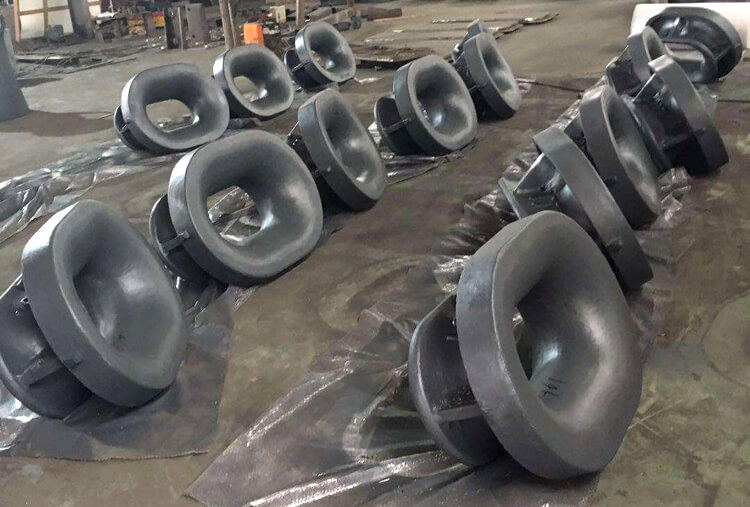
It is impossible for the synthetic rope to perform to its maximum capabilities when used with poorly maintained deck equipment, often rusted or with a rough surface finish. Rope manufacturers recommend surfaces are correctly prepared, maintained and routinely inspected before and after rope installation. A 300-microinch (7.62-microns) finish is recommended for all deck hardware which comes into contact with the rope, in addition to the avoidance of chocks heavily scored from previous wire rope use.
The YSmarines marine mooring chock is said to provide vessels with the ability to be moored with greater safety, performance, and efficiency.
The marine mooring technology is said to provide vessels with the ability to be moored with greater safety, performance and efficiency, offering multiple benefits. The marine mooring chock is versatile and capable of being fitted to brand new vessels and retro fitted to existing chocks and Panama fairleads with no hot works or dry docking required.
Increased safety is a feature of the marine mooring chock which reduces rope wear and abrasion, reducing the risk of breaking or failure. There is also no need for crew members to be near mooring lines under tension, as minimal (if any) chafe protection is required following the installation of the new system.
The marine mooring chock’s smooth surface and finish and its material characteristics provide better equalization of mooring loads, especially when in the high swell. The self-lubricating, low friction marine mooring chock material requires little or no maintenance and no painting, coating or external protection. Corrosion-resistant materials technology is featured on the new system, providing protection against the arduous environments faced in the global maritime industry.
Custom manufactured from initial chemistry to end product, the marine mooring chock is available for use on all chock and vessel sizes. Developed to optimize and enhance vessel moorings, much of the advantages derived from the unique materials technology developed through over 20 years of field experience in design, testing and material selection with fiber ropes.
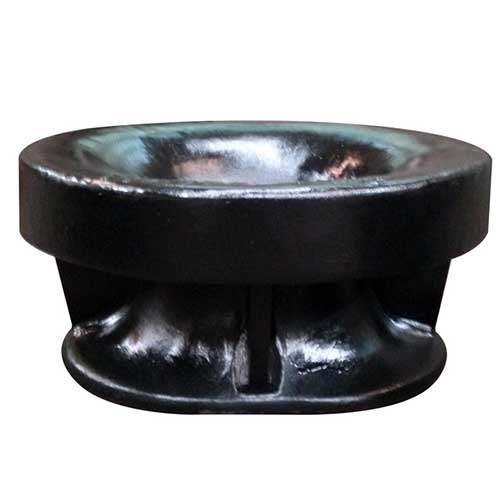
The featured materials technology in YSmarines marine mooring chocks allow for the accommodation of HMPE fibre rope with lower risk of abrasion and wear when in contact with the Panama chock. The marine mooring chock is also suitable for polyester/polypropylene, polyester and nylon ropes, as required for FLNG, FSRU and STS where a specific synthetic pennant may pass through the fairlead. In all cases, due care and attention are required in relation to the loads involved, chock designs and rope sizes.
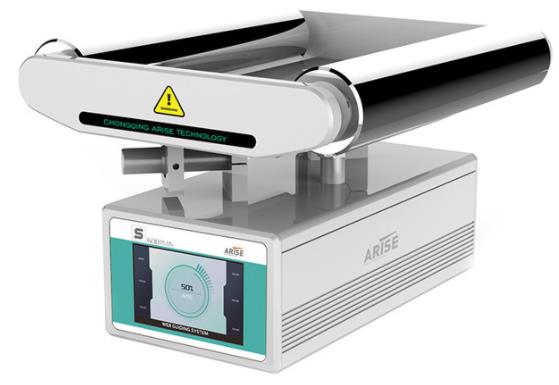
Web guide control refers to the technical operation for the coil materials and must always keep the edge of the coils neat and consistent during the spraying, printing, punching, laminating, slitting or other coil winding processes. Once the edges of the coils are not aligned, it will cause errors in subsequent steps, resulting in material waste. Therefore, when processing coils, it is necessary to do the correct deviations in time for the offset coils. The whole process is called web guiding. The equipment, which is used for the whole process, constitutes a set of web guide system. A typical system includes a controller, a sensor, a guide mechanism and a driver.
The importance of the web guiding system
The flexo printing machine often adopts an automatic web guide system to ensure the stable horizontal position of the printing material before entering the printing unit. It can detect the deviation of a certain horizontal edge position of the printing material and correct it in time, with an accuracy of ±0.5 mm. Generally, for opaque materials, such as paper and aluminum foil, photoelectric sensors are often used, for transparent materials, such as films, ultrasonic sensors are used. Once the printing material enters the printing area and die-cutting rewinding area, the stability of its horizontal edge position is guaranteed by the installation accuracy of the own processing machine and the parallelism between the rollers.
The working principle of the web guiding system
The web guide control system is a closed-loop controller. First, the sensor detects the edge or line of the coil, and the system automatically reads the deviation of the actual position and setting position of the coil and convert the offset into an electrical signal. The send the signal to the controller. After that the signal is calibrated by the controller, it is outputted to the linear driver. The linear driver drives the deviation correction according to the magnitude of the signal. Then the guide mechanism adjust the coil to the set position. The drive signal of the current drive is only proportional to the deviation of the coil, which makes it possible to provide precise control for various coils.
Applications of the web guiding system
The web guide system covers a wide range of applications and is essential in various industries such as packaging, printing, labels, building materials, paper pulp, non-woven fabrics, and corrugated paper processing.

For more professional knowledge, please visit the article page of web edge guiding system.
A marine searchlight is one of the handiest marine accessories to have aboard. It can help you find a navigation aid or landmark in the dark. A searchlight can also help you find things dropped in the water — if the thing floats, or the water is shallow and clear. It can also be a safety aid, used to signal for help or warn other boats of a hazard in the water. Here’s what to look for in a marine searchlight, whether for your existing boat or as an option aboard a boat you are buying.

Installing a searchlight in a Boat
The particulars of the installation have a large impact on a permanently installed searchlight. For instance, a light mounted on a hardtop is convenient to install and may even allow the use of a light that can be aimed manually. However, a light beam shooting over the white bow of a boat often creates a bloom of hazy light that impedes the skipper's ability to see. If you are set on a top-mounted light, temporarily wire the light and have a helper hold it on your top while the boat is stationary at night so you can check whether this will be a problem for you. Mounting the light forward is preferable. Just be careful about searchlight rail mounts.
Many boat rails vibrate while the boat is underway. This vibration might not seem excessive for a rail, and mostly, it isn’t. But we have observed numerous boats aboard which a small vibration in the rail resulted in a huge vibration to the light’s beam, making it difficult to aim and keep on a target. For this reason, we suggest you favor a light mounted directly to the deck.
Hand-Held searchlights for Boats
Some hand-held searchlights are wired. These connect to a cigarette-lighter receptacle. If you choose this type, consider buying a quality receptacle that locks the male plug from the light. You’ll have to cut off the plug that came with the light and splice in the new locking plug, a simple DIY task. A locking plug and receptacle prevents the light’s cord from pulling out inadvertently in use — a thing that can happen at the worst moment. Also, consider installing auxiliary receptacles at other places from which you might use the light. These include at the bow, on the flying bridge, and in the engine compartment.
Other hand-held searchlights are battery-operated. These provide the freedom to move around the boat without the restrictions of a cord. Of course, unlike wired lights, which have power as long as your boat’s batteries are charged or the engine is running, a hand-held light’s batteries tend to go dead at exactly the same time a wired light’s cord tends to get pulled out of its nonlocking receptacle. Charging vigilance is required for the boater who owns a battery-operated searchlight.

With either type, make sure you select a hand-held searchlight that is heavily armored with rubber or plastic because, as sure as the tide, you will drop it. I also like lights with a brow or rim that extends beyond the lens. This not only adds shock protection but also cuts down glare and helps preserve night vision. Pick the best searchlight for your boat. A marine boat searchlight is vital for boating at night.
For more information about other various types of boat lighting at night, please visit the page of marine lighting.
Sanji-first strives to manufacture innovative various kinds of tool storage with high-grade materials and supports this commitment with professional representation and consistent, superior service to meet the different requirements of the customers.
Plastic Parts Box
The plastic boxes are used for the storage of small parts. It can be used together with a tool cabinet and workbench etc. There are three colors of yellow, blue and red. The boxes also are suitable for heavy-duty. One-piece industrial strength boxes are rust, water and corrosion-proof. Full-width hanger lip supports heavy loads when suspended from hanging rails or louvered panels. The reinforced side-rib design adds strength and prevents spreading when stacked. The products improve material handling efficiency in virtually any industry. Sanji-first provides high-quality plastic parts boxes at modest prices, which can help optimize storage space and improve parts protection.

Tool Storage Box
The tool storage box also can be sold separately. It has two types including CNC toolbox BT type including BT30, BT40, BT50, BT60 and CNC toolbox HSK type including HSK50, HSK63, HSK100. It is made of advanced punching pp material with high life. It can be easily fitted into the bracket by screws. It is suitable for tools for cylindrical shanks. The color is red. It can accommodate different tool holders. It can help saves space and spend the least time to find with easy to see at a glance. It has double reinforcement around with super bearing. It has a porous position with large storage and less land occupation.

Tool Storage Sheath
The tool storage sheath is used for BT30, BT40 and BT45. It is applicable to all kinds of tool carts. It is suitable for the machining center of the factory workshop, warehouse handling, storage, a knife to protect all kinds of knives, a knife with easy handling and safety. It is made of ABS material with the feature of anti-slip. It has centralized management with access to convenient, improving efficiency. Different cutting toolset can be placed in collocation. The tool storage sheath manufactured by Sanji provides the perfect solution for tool storage, offering professional storage in inserts specially optimized for your machining and cutting tools. Tools are stored in a space-saving and organized way and are always within reach and ready for use. The advanced production equipment is creating durable products for long service life.

Tool Storage Holder
The tool storage holder for CNC tool to fulfill the daily practice. The storage accessibility of tools affects the cost-effectiveness of modern machine tools. It has two series. CNC tool holder BT series is for the storage of BT30, BT40, BT50 and BT60.The HSK series ones for the storage of HSK50, HSK63 and HSK100. The tool holder bracket accommodates every size of CNC tool holder. The cutting tools inserted into tool holders & these tool holder brackets, which are fitted into Different CNC trolleys, CNC racks and CNC tool cabinet. It is designed with a steel sheet and has 2 handles for easy carrying. Sanji-first provides a wide range of choices for the organization and storage of tool and can offer customer the best quality tool storage holders with high standard materials, protection and security promised.
