

The tungsten carbide is an alloy which has the main component of powders including tungsten carbide, titanium carbide and metal powder such as cobalt, nickel, etc, as an adhesive, obtained through the powder metallurgical method. It is mainly used to make high-speed cutting tools and hard, tough material cutting edges, and high wear parts for fabrication of cold dies, measuring tools.
Mechanical And Physical Properties Of Tungsten Carbide
1.Wear resistance
The wear resistance of the tungsten carbide is its most important feature. In practical applications, carbides are 20-100 times longer than some wear-resistant steel alloys.
2.Bending resistance
The sintered carbide has a high elastic modulus and the smallest bend is obtained when subjected to bending force.
3.Corrosion resistance
It is usually used in many chemical and corrosive environments because carbides are typically chemically inert.
4.Torsional strength
The amount of torsion is two times than the high-speed steel and the carbide is the preferred material for high-speed operation applications.
5.Compressive strength
Some grades of cobalt carbide and cobalt have perfect performance under ultra-high pressure and is very successful in pressure applications of up to 7 million kPa.
6.Toughness
Cemented carbide grades with high binder content have excellent impact resistance.
7.Low temperature wear resistance
Even at an extremely low temperature, the carbide remains good to wear resistance and provides relatively low friction coefficients without using a lubricant.
Applications Of Tungsten Carbide
Cutter tool
Tungsten carbide cutter tool is the widest application, used for making lathe tool, milling cutter, planner tool, drilling bit, etc. Among them, the tungsten cobalt carbide is suitable for black metal, non-ferrous metals, processing of non-metallic materials, such as cast iron, cast brass, colloidal wood, etc. Tungsten titanium cobalt is suitable for long chip processing of steel and other black metals. In the same alloy, what has more cobalt content suitable for rough machining, what has less cobalt content suitable for fine machining.
Mold material
The cemented carbide is mainly used for cold wire drawing dies, cold stamping dies, cold extrusion dies, and other cold work molds.
Under the wear-resistant working conditions of the impact or strong impact, the tungsten carbide dies are required to have good anti-polishing toughness, fracture toughness, fatigue strength, bending strength, and good wear resistance.
In general, the relationship between the wear resistance and toughness of the carbide is contradictory, the increase in wear resistance will result in a decrease in toughness, and the increase in toughness will inevitably lead to a decrease in wear resistance. Therefore, when choosing a tungsten carbide grade, it is necessary to meet specific usage requirements based on the processing objects and machining conditions.
If the selected grade is easy to produce early cracks and damage, it is advisable to use the grade with high toughness. If the selected grades are easily damaged as the wear, it is appropriate to choose a grade with a higher hardness and better wear resistance.
Measuring tool and wear parts
The tungsten carbide is used in the easy to wear surface inlay and parts of the measuring tool, grinding machine precision bearing, the wear parts such as guide plate and guide rod of centerless grinder, lathe center.
Heat Treatment Of Tungsten Carbide
The hear treatment process of tungsten carbide can be divided into four basic stages
1.Removal of the molding agent and the pre-sintering
In the initial stage of sintering, the molding agent gradually decomposes or vaporizes, excluding the sintered body, while at the same time, molding agents carburize sintering and the amount of carbon will vary depending on the type, quantity and the sintering process. The powder surface oxide is reduced, and hydrogen can reduce oxides of cobalt and tungsten at a sintering temperature. When the reaction between carbon and oxygen is not strong, the contact stress between the powder particles is gradually eliminated. The bonding metal powder begins to generate reply and recrystallization and the surface diffusion begins to occur. The strength of the block is improved.
2.The solid phase sintering stage (800°C - eutectic temperature)
In the presence of the liquid phase, in addition to the process of continuing the previous stage, solid-phase reactions and diffusion exacerbating with plastic flow enhancement, and the sintered body appears obvious contraction.
3. Liquid phase sintering stage (eutectic temperature - sintering temperature)
When the liquid phase of the sintered body occurs, the contraction is quickly completed and then a crystallization transition is generated. The basic organization and structure of the carbide are formed.
4.Cooling stage (sintering temperature - room temperature)
At this stage, the organizational and phase components of the tungsten carbide have certain changes with the different cooling conditions, which can utilize this feature, heat treatment of the cemented carbide will improve its physical-mechanical performance.
High performance tungsten carbide has excellent mechanical and physical properties including high wear resistance, corrosion resistance, bending strength, torsional strength, etc, widely used for the making of cutter tools, cold mold, wear parts, etc. The article also briefly introduces the four basic stages of tungsten carbide heat treatment which can improve physical mechanical performance of the cemented carbide.

Tungsten carbide precision part machining technology is more and more widely adopted. It is essential and important in the precision part factory. The article mainly introduces useful knowledge about carbide precision part processing, such as four preparation work, heat treatment of the precision parts.
Four Preparations Must Be Done For Machining Tungsten Carbide Precision Part
There are three preparation stages when performing carbide precision parts machining.
1.Preparation stage
Before the precision machining of tungsten carbide, you need to analyze the pattern of processing parts, then determine the machining scheme, such as a process, selecting machine tool, processing cutting volume, tool, fixture, etc, and calculate the coordinate value of the tool path. It is worth spending some time for these necessary preparations, which can make your tungsten carbide parts machining are more smoothly completed.
2.Programming stage
After getting the process route and drawings, we need to write a CNC machining program language describing the processing based on the processing technology information, which can be identified by the system. Do a good job in programming, which isone of the key steps for precision parts machining.
3. Machining stage
When the program is executed, the machine tool system decodes, registers, and calculates the program, and sends a motion command to the machine servo mechanism, driving the moving parts of the machine tool automatically completing the precision parts processing.
The above three preparation stages are the indispensable steps before processing precision parts, which is a process from the drawing to the machining.
Points For Attention In Heat Treatment Of Tungsten Carbide Precision Part
In order to improve the performance of tungsten carbide precision parts, material cutting performance and eliminate the internal stress of the workpiece, some heat treatment procedures should be arranged in the machining process.
1. Preparatory heat treatment
The purpose of pre-heat treatment is to improve the cutting performance of the material, eliminate residual stress during blank manufacturing. Commonly used methods include annealing, normalizing.
2. Eliminate residual stress
Since the internal stress generated during the fabrication of the blank will cause the workpiece to deform and affect the machining quality, heat treatment must be arranged to eliminate residual stress. The best arrangement of the heat treatment for eliminating residual stress is after rough machining and before fine finishing. For parts that do not require high precision, annealing is usually performed before the blank enters the workshop to eliminate residual stress. For high-precision cemented carbide parts, such as precision screws, precision spindles, multiple heat treatments should be arranged to eliminate residual stress, and even ice-cold treatment is often used to stabilize size.
3.Final finish
The purpose of final processing is to increase the strength, surface hardness and wear resistance and is usually performed prior to grinding of tungsten carbide precision parts. Commonly used are quenching, carburizing, nitriding and carbonitride.
Therefore, in the tungsten carbide part machining, in order to improve the mechanical properties of the precision parts, heat treatment is essential, so that the processing quality conforms to the product requirements.

Cutting is one of the common methods used in a tungsten carbide rod, carbide sheet and cemented carbide wire. For cutting the material of 1 mm or less, diamond ultra-thin cutting pieces are commonly used for machining.
The diamond resin matrix cutting piece, wherein the outer ring belt is a resin binding agent abrasive working layer, and the central portion is a high-strength metal, mostly for medium, large cutting slots and cutting.
During the tungsten carbide machining, the cutter tool itself must be higher than the hardness of the machined workpiece. At present, the cutting tool materials for turning tungsten carbide parts are mainly made of high-hardness high-resistant non-metallic adhesive CBN and the diamond PCD.
1. The tungsten carbide components which have a hardness of less than HRA90, select the BNK30 material CBN tool to carry out a large amount of turning and the tool is not broken. The carbide components which have a hardness greater than HRA90 generally select CDW025 Material PCD cutter tool or grinding with a diamond grinding wheel adopting a resin binding agent.
2.To process R3 groove or more of the carbide precision parts, for large machining allowance, generally adopts BNK30 CBN tool for roughing processing, then grinding with grinding wheels. For small processing margins, the grinding can be done directly with wheels , or adopting PCD tool for flush processing.
3.When the crescent groove rib of the tungsten carbide roller is processed, the CDW025 diamond carving milling cutter tool also known as rotary milling cutter is adopted.
For the milling process of carbide parts, according to customer needs, CVD diamond coating milling cutters and diamond insert milling cutter can be provided to perform tungsten carbide precision parts machining, which can replace electrolytic corrosion technology and electric spark process, improving production efficiency and product quality, such as a CVD diamond coating milling cutter to micro-milling the cemented carbide, and the surface roughness can reach 0.073 μm.
What Are The Factors Affecting The Machining Accuracy Of Tungsten Carbide Part
1. Machine tool error
The machine tool error refers to the manufacturing, installation errors and wears of machine tools. It mainly includes guide error of machine tool guide rail, machine tool spindle rotation error, transmission error.
2. Machining principle error
The machining principle error refers to an error generated by adopting the approximate blade profile or approximate transmission relationship for machining. The principle error often occurs in a thread, gear, complex surface machining.
3. Residual stress inside the workpiece
The residual stress is generated during the blank manufacturing, heat treatment process, cold strengthening and cutting processes.
4.Machining environment
The machining site often has many small chips. If there is a part locating surface or location of locating hole, which affects the processing accuracy of the parts, for high-precision processing, some small particles will affect the accuracy.
5.Manufacturing error and wear of the fixture
The error of the fixture is mainly referred to as the manufacturing error of positioning elements, tool guiding elements, an indexing mechanism. The fixture is assembled, with the relative dimensional error between the various components and worn on the working surface during use.
6.Manufacturing errors and wear of tools
The influence of tool error on machining accuracy varies according to the type of tools.
7.Thermal deformation of the processing system
During the machining process, due to the internal heat source, such as cutting heat, frictional heat or an external heat source such as temperature, heat radiation, the processing system is modified, thereby affecting the machining accuracy. In large workpieces and precision machining, the processing error caused by the thermal deformation of the processing system accounted for 40% -70% of the total processing error.
For more detailed information, please visit the article page of tungsten carbide precision part machining technology.
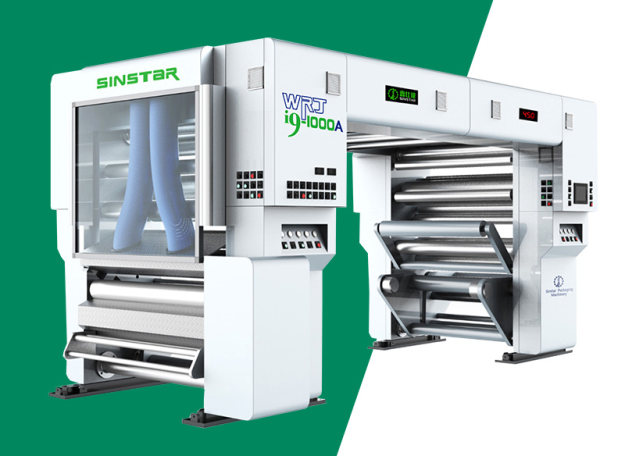
When the composite packaging film is produced, the composite method can be divided into extrusion composite, dry composite, wet composite, solventless composite. The most used methods are dry composite and solvent-free composite. What are the differences between the dry composite and solvent-free composite, and can be used for which type of packaging respectively?
Composite Method And Applications
Solvent-free Composite
The solvent-free composite film is different from dry composites that do not use organic solvents, which not only avoids the environmental pollution caused by organic solvents volatilization, but also does not require dry operating work segments, directly reducing production costs, and eliminating the influence of solvent and high temperature drying on the composite substrate, so that the size of the packaging film is more stable.
Dry composite
Dry composite is a kind of composite method. The adhesive is evenly coated on the substrate film by the roller. After dried, The composite film was synthesized by pressing and sticking on the composite part. The dry composite packaging film has a wide range of applications, with excellent chemical dielectric erosion performance, mostly used in packaging containing alkali, spicy, oil, etc., which is also suitable for cosmetic flavors, emulsifiers, especially for the high-temperature cooking packaging, very advantageous.
Coating Method
Solvent-free Composite
1. Multi-roller transfer coating
2. Thin adhesive layer, uniform thickness
3.The amount of coating is mainly determined by each roller speed, which can be adjusted online.
Dry composite
1.Concave roller coating
2.Thick adhesive layer, with a concave-convex shape, uneven thickness.
3.The amount of coating is mainly determined by the number of concave rolls, and the adjustment is limited only through replacing the convex rolls.
Glue Film And Compound Fastness Formation
Solvent-free Composite
1.low initial adhesion
2. The glue film and composite fastness are basically formed during the process of curing.
3. The glue film formation is mainly a chemical process of two components.
Dry composite
1.Heated through the oven, high initial adhesion.
2. The glue film and composite fastness are mainly formed on the machine, and the curing process only plays an auxiliary role.
3. The glue film formation is mainly a physical process for drying volatile and composite pressure.
Dry And Cooling
Solvent-free composite
1.No need to dry
2.Single component glue needs to cool, double-component glue generally does not need cooling.
Dry composite
1. The necessary step
2. Drying is usually under high temperature, and the drying temperature and cooling temperature of each segment have a large impact on the composite.
Curing
Solvent-free composite
Curing is the key process of solventless composite. Effect of curing temperature and time on two-component adhesive, which will have an influence on composite quality.
Dry composite
Curing usually is the auxiliary process and temperature and time have a certain effect on composite quality.
These two packaging composite have their own advantages. For choosing which composite method, should refer to the properties, weight of the packaging content. Although there are still many problems to be solved for solvent-free composite, it surely has advantages in health, safety, environmental protection, and cost.
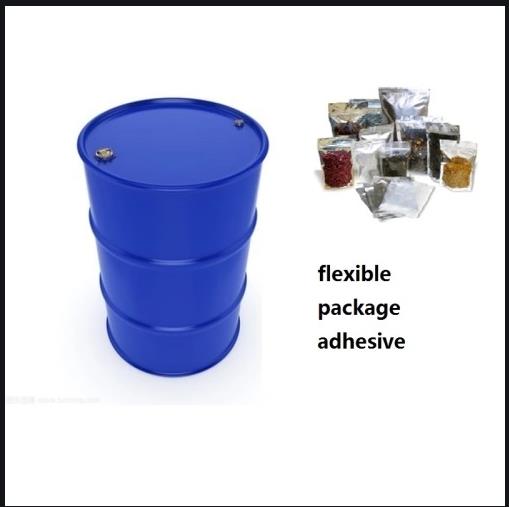
In recent years, with the increasing environmental protection awareness, solvent-free laminating adhesives are more widely used in the flexible packaging industry. This article will introduce the advantages, problems and development trends of solventless adhesives..
Advantages Of Solventless Adhesives
1.Environmentally friendly
Solvent-free laminating composite adopts solventless adhesive, which will not volatilize VOCs nor produce any irritating odor. It solves the problem of residual solvents in the packaging, eliminating the erosion of the organic solvent on the printing ink, can also achieve cleaning production, conducive to environmental protection.
2. Energy saving
The solventless laminating machine does not need to be dried, which reduces energy consumption. Moreover, in the late-ripening process, the maturation temperature of the solvent-free composite is substantially the same as the dry composite, so the energy consumption is also relatively close.
3. Safety
Since there is no organic solvent, so no need to adopt explosive and warm measures during production, transportation, storage and use and no need to specifically build a warehouse for solvent storage, more importantly, there is no harm to the health of the operator.
4.High Efficient
The speed of solventless machine adopting solvent-free adhesive is generally 250 ~ 350 m / min, even up to 400 to 500 m / min, while the solvent-based adhesive composite is generally 150 ~ 180 m / min.
5. Low cost
a. The coating amount of solvent-free adhesive is usually from 1.3 to 1.8 g / m2, while dry composite is 2.5-4 g / m2, and therefore, the amount of adhesive consumption can be reduced by about 50% compared to dry composite.
b. Since the solventless composite process does not require a drying process, energy cost is effectively reduced. After calculating, the energy consumption cost of the solventless lamination machine is 1/15 of the cost of dry composite consumption.
c. From the production efficiency, the efficiency of the solvent-free lamination machine is 1.5-2 times higher than that of ordinary dry composite, effectively reduces production costs.
Problems Existed In Solventless Adhesives
1.A great effect on the smoothness of PE film
When the solvent composite ripening temperature is greater than 40 ° C, it has a great effect on solvent-free composite film which has the inner layer of a PE film, and it is easy to appear the phenomenon that friction coefficient increases obviously. This is mainly because the higher the ripening temperature, the more intensely moved the molecular motion of the PE film, which is easy to migrate to the adhesive layer and the reaction is consumed, resulting in the increasing friction coefficient of the composite film.
2.Aluminum plating layer transfer
Aluminum plating film, especially a polyester plating aluminum film, is prone to aluminum transfer during the solvent-free composite, thereby causing insufficient strength of the composite film peeling.
3.Dissolve with ink
During the solventless composite, the phenomenon of adhesive and ink phase dissolution may occur, especially the dye-type ink.
4. Low peel strength of aluminum foil composite
At present, for the solventless composite of the aluminum foil, since the peel strength is not enough, it is still necessary to satisfy the heavy-duty packaging and requirements for cooking resistance.
5. Frequent replacement of solventless adhesive types
With the development of the solventless composite process, many solvent-free adhesive suppliers have introduced general solvent-free adhesives, cooking solvent-free adhesives, aluminum foil special solventless adhesive, low friction coefficient no solvent adhesive, etc. Although the diversification of the product can meet the composite requirements of different materials, the flexible packaging company also has to clean the gluing equipment and solventless machine according to the different composite materials. Not only it wastes time, human resource, financial, but also has low production efficiency.
Development Trend of Solventless Adhesives
1. Functional solventless adhesive
Solventless adhesives should develop to functional products, such as DMF organic solvent mixture with content less than 20%, a product resistant to pesticide corrosion.2.UV curable solventless adhesive
UV curable solvent-free adhesives have the advantages of fast curing speed, transparent peel strength, non-toxic, non-corrosive, energy-saving and environmentally-friendly, widely used for plastic/plastic, plastic/paper, plastic/metal film, or other materials rapidly solvent-free composite. At present, UV cured solventless adhesive has been developed, but it still needs to increase research and development efforts to launch more mature products to the market.
3.Solventless adhesive used in other industries
The solventless adhesives used for textile, automotive interiors and other industries, as well as paper including kraft paper, cardboard paper, ordinary paper, plastic including various transparent films, aluminum plating films, aluminum foil, should be developed.
Solventless adhesives bring great benefits to environmental protection, health, safety, cost, etc, but still, have some problems that need to be paid attention to. The future development trends of solvent-free adhesives are multi-functional, can be used with various materials in different industries.