
The demand for the mask has a rapid growth in recent years, especially after the outbreak of the epidemic and the mask machine becomes important for satisfying the growing need for the mask.
The commonly used accessories of mask machines include magnetic powder brake, air shaft, servo all-in-one web guide system, servo web tension control system, safety chuck, etc.
Magnetic powder brake

The magnetic powder brake is a novel transmission element, adopting powder as the medium, magnetic particle chain formed to transmit torque when energized, which is mainly composed of inner rotor, outer rotor, magnetic coil and magnetic powder. When the coil is not powered, the active rotor rotates. Due to the centrifugal force, the magnetic powder is smashed on the inner wall of the active rotor, and there is no contact between the magnetic powder and the driven rotor. After the DC power is turned on, the electromagnetic field is generated, and the working medium magnetic powder forms a magnetic powder chain with the magnetic line action, which connects the inner rotor and the outer rotor, thereby achieving the purpose of transmitting and brake torque.
Air shaft
The air shaft is based on the principle of air compression. The outer diameter of the shaft is changed and the roll core is privileged, facilitates the transmission of the material on the production line. It is not necessary to unload the whole shaft for unloading materials of the air shaft and the materials can be taken away after direct venting. Since its width is not large, the natural operation is also more convenient. The air shaft is selected for the machine with a lightweight and small width.
All-in-one web guide system
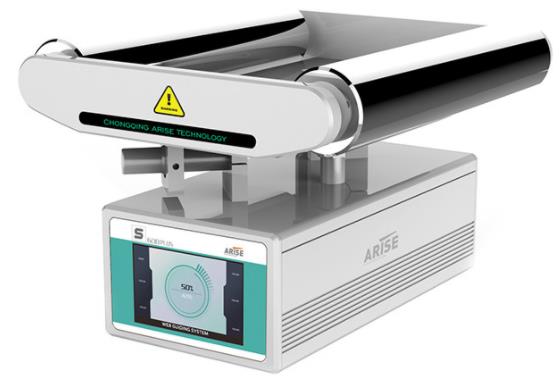
The servo all-in-one web guide system is working, when the web guide sensor transmits the infrared light, ultrasonic, particle beam, or monochromatic light-detecting the web, sending the signal to another sensor. After the sensor finds the web offset, according to the commands set in advance, the controller makes the web guide steering structure swaying and correct the web edge position. The automatic web guide system adopts a photoelectric sensor, ultrasonic sensor, or CCD sensor to detect the edge of the web, and the measured portion deviation signal will be sent into the sensor, and the motor is controlled by the manipulation module.
Web Tension control system
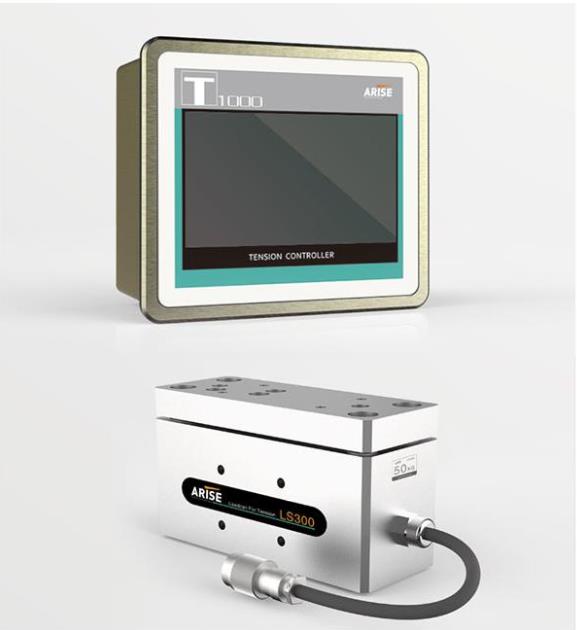
The servo web tension control system is mainly used for automatic folding mask machine. According to the loop tension control, a servo tension control system is divided into open loop and closed loop. Open-loop tension control system is composed of a tension sensor, a tension controller and a tension controller, with no tension value feedback. Closed-loop tension control system is composed of a tension sensor, a tension controller, a magnetic powder brake, a magnetic powder clutch, which has a tension value feedback, according to the feedback tension value, adjusting the control, making the result in a right state. The closed loop control system is more stable. Nowadays, the automatic tension control system is generally adopted, and the generated additional tension will change reversely with the change of unwinding tension, compensating the tension to keep the tension constant.
The web guide system is mainly applied to the lateral deviation control of the coil materials, which can control various reel materials on a production line. The automatic web guide system is simple to operate, easy to install and has fast response speed, strong anti-interference, high-precision web guiding.
The coils are on a long and fast production line, as the speed, tensile, the nonuniform material thickness and all kinds of mechanical damage, resulting in moving and unidirectional deviation, causing the machining operation of the middle section not easy to cooperate, resulting in the loss of many materials and the difficulty of subsequent processing. The automatic web guiding system can solve these problems, which can always keep the edge postilion of the web always be neat and consistent. Web guide control can make steel, corrugated paper, textile, printing, labeling, non-woven fabric processing and other much more industries realize automated control.
A typical automatic web guide system which is a closed-loop system, includes a web guiding controller, a web guide sensor, a web guide framework, and a driver. The sensor detects the difference between the detection value of the edge or the line and the set value, and converts it into a proportional signal through the PLC controller. The driver realizes the web guide. It has three guiding methods, including edge position control, line control and center control.
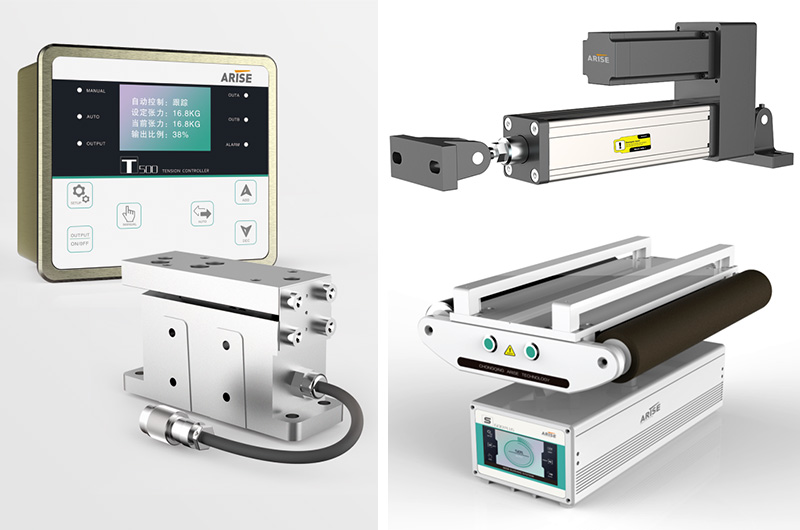
Technical Parameters Of Automatic Web Guide System
1. Support photoelectric sensor, ultrasonic sensor, CCD sensor.
2. Intelligent detection sensor parameters, no need for calibration sensors in most situations.
3. Automatic stroke measurement, not any mechanical switch needed.
4. Adopts variable PI adjustment algorithm, high precision, fast responding, with smaller error.
5. Super high response speed of 500 microseconds.
6. Analog sensor signal adopts 16-bit AD sampling.
7. Adopts the FIR digital wave filter, with strong anti-interference ability and more stable signals.
v8. DC servo motor pushing the ball screw9.Support Simplified Chinese, Traditional Chinese, English, three languages.
10. User-friendly operation, fast and easy.
11. Support MODBUS and PLC operation.
High-precision Automatic Web Guide System
The precision of the web guide system is defined as the position accuracy of the web just coming out of the probe. The accuracy of the web guiding system is determined by three factors, including the deviation of the invasive web, the accuracy of the web guiding system itself, the installation accuracy of the web guide machine.
The automatic web guide system is a controller of tracking edge or printed line of the working material to perform high-precision differential and swing, which is composed of large-scale industrial integrated circuits, with strong anti-interference ability, high reliability and long service life. The lateral web offset in the transmission is detected by the photoelectric sensor, and the electrical signal proportional to the offset will be sent to the controller. After power amplification, it is sent to the motor to make it rotate forward, stop or reverse and the motor shaft end is connected with a lead screw. The screw drives the roller to move the rolling roller in the rolling rail to move laterally in the offset direction, thereby reaching the purpose of the automatic web guide. The signal is being firmly measured and the high-precision of the web offset is the premise of automatic web guiding.
Wide Applications Of Automatic Web Guide System
An automatic web guide system can be widely used for various coils such as web films, non-woven fabric, woven fabrics, on a production line.
Applicable industries: printing, packaging, paper, non-woven fabric, lithium battery, rubber tire, metallurgy.
Applicable coils: wrapping materials, such as roll paper, film, metal foil, film, leather, non-woven fabric, woven fabric, etc.
Applicable equipment: print packaging, flexo printing machine, gravure printing machine, label printing machine, slitting machine, coating machine, composite machine, die cutter, blown film machine, etc.
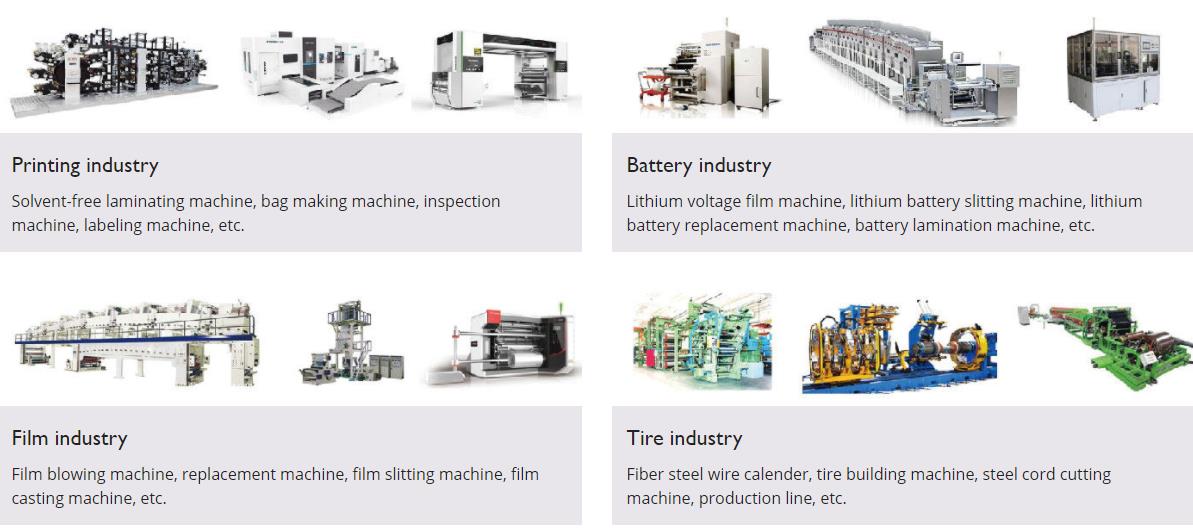
The automatic web guide system is an integrated high-tech product with a wide range of applications, It has the characteristics of fast responding speed, high accuracy, long service life and high stability. It is essential in the coil material production line.
Tungsten carbide plates, also known as carbide strips or carbide sheets. They have shapes of rectangular and square. The main alloy ingredients of cemented carbide plates are WC and CO. They have extremely high hardness, wear resistance, high elastic modulus, good chemical stability, etc.

Wide Applications Of Tungsten Carbide Plates
The carbide plates have a high-pressure strength, high impact toughness, low expansion coefficient and thermal conductivity and electric conduction are similar to iron and its alloys. tungsten carbide plate is an excellent material for making high-temperature resistance parts, wear-resistant parts, anti-shielding parts, corrosion-resistant parts, suitable for making cast iron rolls and shaping cutter for high-nickel-red rolls, applied for silicon steel sheets, cold-rolled plates, production of wire drawing dies, wear-resistant parts, stamping parts, carbide automatic press mold cores, topping mode, such as top forging molds for screws, rivets, stamping molds. squeeze mold. punching mold.
Grade Properties And Applications
YG6
Fine grade alloy, with good wear resistance, used for processing blades, wear resistance parts
YG8
high bending strength, lower abrasion resistance than YG6A, suitable for manufacturing the form-cutter, wear-resistant consumable parts, etc.
YG15
Suitable for making stamping molds, wear-resistant parts, etc.
YG20
High bending strength, used for stamping dies.
YG20C
It is a fine grain carbide material, which has excellent wear resistance, high bending strength, anti-bonding ability, suitable for processing high-temperature alloys, stainless steel, high manganese steel and other materials.

Trustworthy Tungsten Carbide Plates Manufacturer - XYMJ
XYMJ, which has more than 20 years of experience in tungsten carbide products and tools such as tungsten carbide dies, carbide nozzles, cutting tools, mining tools, carbide wear parts, provide high-quality tungsten carbide plates at affordable prices. XYMJ is a professional carbide factory with advanced, highly effective equipment and high-precision grinding machines. All the products must be strictly inspected with ultrasonic. The sizes of XYMJ tungsten carbide plates can be customized as customers’ requirements.

Advantages of XYMJ tungsten carbide plates
1. The purity of the raw material is above 99.95% and the physical properties of the plates are stable.
2. Using spray drying technology, the material uses high purity nitrogen protection with full sealing, effectively reducing the oxygenation possibility in the preparation process of mixed material.
3.The plate density is uniformly adopting 300MPa pressures, effectively eliminating the generation of pressing defects, and the plate blank density is much more uniform.
4. Excellent density, strength and hardness are in line with the standard.
5. Adopting low-pressure sintering technology, so that the pores inside the plate can be effectively eliminated and the quality is much more stable.
6. Using deep cold treatment technology to improve the internal metallographic tissue of the plates or strips, and the internal stress can also be greatly reduced, effectively avoiding the appearance of cracks in the cutting process.

The tungsten carbide blades and tips which are made of cemented carbide as the raw materials through fine finishing can be used as an industry blade, with excellent performance including high hardness, wear resistance, toughness and good corrosion resistance.
Advantages Of Tungsten Carbide Blades
1. The hardness is extremely high, up to Moh's hardness of 8.9-9.1, which is 10 times higher than the hardness of 18K gold. The high hardness makes carbide blades have good wear resistance, not easy to appear scratches and deformation.
2.It has high brightness like a mirror, with highly polished, fully glow in the color and light like the gemstone.
3.The corrosion resistance of tungsten carbide blades is good. It does not change color, no rust, and the luster can be maintained for a long time, which are the other metals don’t have.
What Should Be Paid Attention To Using Tungsten Carbide Blades
The characteristics of the carbide material determine the importance of the safe operation of cutting carbide blades.
1. Blade installation
Before the installation, please clear the dust, chips and other debris on the bearing mounting surface in advance, keep the bearing mounting surface and the tipper clean.
a.To carefully put the blade on the mounting surface of the bearing, rotate the tip machine shaft to automatically find the insertion of the blade center.
b. Install the crimping block on the tipper blade.
c. Load the hexagonal bolt, fasten the screws in the hex wrench to securely mount the blade on the bearing.
d.After the blade is installed, ensure no loose and no deflection.
2. Safety protection
After the blade is installed, the protective device must be equipped before starting the predicted machine and acts as a real protective effect.
3. Working speed
The working speed of the tipper is limited to below 4500 rpm/minute. It is strictly forbidden to exceed the limit speed.
4. Test machine
After the blade is installed, it is necessary to operate for 5 minutes and carefully observe the operation of the argument and cutting machine. It is absolutely not allowed to have obvious loose, vibrations and other abnormal sounds.
5.Push the circuit board uniformly
In the cutting process, please push the circuit board that needs to be cut at a uniform speed, avoiding being too rapidly to push the circuit board. When the circuit board has severely collided with the blade, it will cause blade damage.
6.Blade storage method
It is strictly forbidden to write on the blade with an electricity pen or other scratches to prevent damage to the blade body. The blade of the cutter is extremely sharp, but it is very crisp, In order to avoid accidental damage, ensuring the blade does not touch the human body or other metal hard objects.
Regardless of iron, aluminum or steel, the blades will cut them into the desired shapes when machining. The tungsten carbide blades are made of cemented carbide as the basic materials which is an alloy material hard made with hard compounds of refractory metals and bind metal through the powder metallurgy process.

Material Performance Of Tungsten Carbide Used As Blades
The tungsten carbide blade, also known as carbide tips, mainly adopts the overall hard alloy as the matrix and it is fine finished through various kinds of production processes. Carbide blades have extremely high hardness and high strength, excellent high wear resistance, high elastic modulus.
The tungsten carbide is distinguished according to the grain size, which can be divided into ordinary type, fine grain, sub-fine grain, ultra-fine grain, newly launched double-grain. According to the main chemical composition, cemented carbide can be classified into three types including tungsten cobalt (YG), titanium-tung-ste (YT), and adding rare carbonization (YW).
The tungsten carbide has a high hardness of 86 ~ 93HRA, equivalent to 69 ~ 81HRC, second only to diamond, good heat hardness of up to 900 ~ 1000 ° C, keeping 60 HRC, the high bending strength of MPA5100, good impact toughness and high corrosion resistance. The general alloy blade does not have these characteristics.
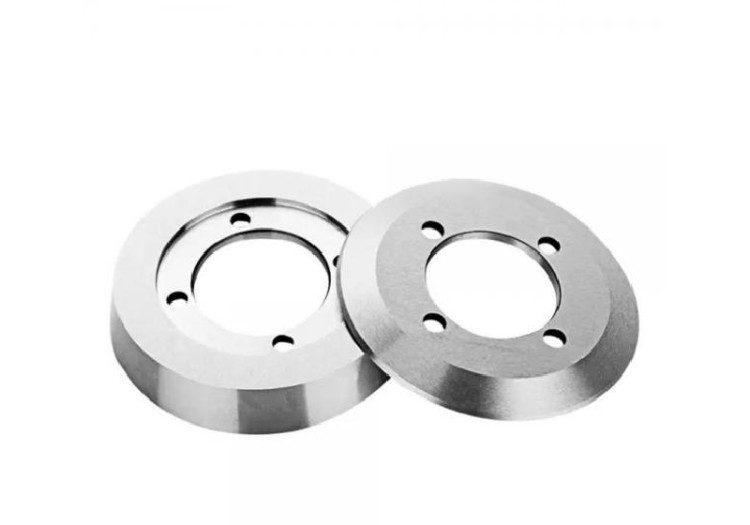
The Production Process Of Tungsten Carbide Blades
1. Ingredient
The main component of the cemented carbide blade is a different ratio of tungsten carbide and cobalt and the initial form of the raw material is the powder. The container is filled with a prepared raw material, which will be used to produce different powders.
2. Proportion
In the workshop, the dried raw materials are mixed with ethanol and water to form a grey pulp.
3. Open mold
After the grey pulp is dried, the sample is sent to the laboratory for quality detection. These powders are consisted of many particles having a diameter of 20 to 200 μm.
4. Press
These powders are contained in a bucket with the capacity of 100 kg, to be delivered to a punching machine for manufacturing a blade. Operation workers place the stamping dies into the machine tool. The pressure used for stamping each blade is as high as 12 tons. The machine tool will weigh the blade, and the operator will also perform observation and control. At this period, the blade is very fragile.
5.Sintering
For hardened, the blade after stamping needs to be heated. This work is done by the sintering furnace. Thousands of blades can be processed at a time. The pressed blade powder is heated to about 1,500° C for 13 hours. The shrinkage ratio of the sintering process is about 50%.
6. Waiting for grinding
Complete the required thickness of the quality inspection in the laboratory. Because the tungsten carbide is very hard, it is necessary to adopt industrial diamonds for grinding.
7. Grinding
When the blade reaches the required thickness, it is further grinded to obtain geometric shapes and sizes. Tolerance requirements are extremely stringent.
8. Coating
After the grinding is finished, the blade will be cleaned and sent to the coating. At this period, in order to avoid any oil grease or dust, the gloves must be worn for dealing with the blade and then sent into a coating furnace with lower pressure for different colors.