
The marine anchor chain can counteract the effect of external forces on the ship to ensure that the ship can safely berth in the designated waters. Therefore, attention should be paid to the anchor chain installation, inspection and maintenance during use.
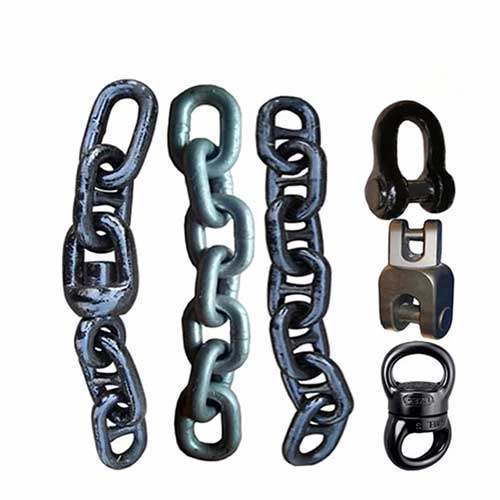
What Are The Installation Requirements
Before the installation of anchor, anchor chain, swivel ring, and connecting ring, the product number of the ship inspection, the manufacturer's product number, and the anchor quality shall be carefully copied. After inspection, the specification and quantity can be shipped only when they meet the requirements of the drawing, and the number shall be recorded.
According to the number of marine anchor chains required in the drawing, it is connected into a whole anchor chain through the connecting ring and swivel ring. The anchor chain is required to be firmly connected and installed and fixed with lead sealing. The two ends of each anchor chain shall be painted to identify the number of knots thrown by the anchor chain. This work can be completed at an appropriate time in the future.
How To Inspect Marine Anchor Chain
The chain link and shackle will be worn, cracked, deformed, and loose after long-term use, so marine anchor chain Inspection must be carried out, including wear inspection, crack inspection, deformation inspection, and loose structure inspection.
1. Wear Inspection
Check the contact point between rings and the friction point of the chain pipe, and measure its diameter with a caliper. The limit of anchor chain wear is: the average diameter of the anchor chain worn by ships in ocean shipping area shall not be less than 88% of the original diameter; The average diameter of the worn anchor chains of ships in offshore and coastal navigation areas shall not be less than 85% of the original diameter.
If the wear of the chain link or marine anchor shackle without guard exceeds 8% of the original diameter, it cannot be used again.
2. Deformation Inspection
Check whether the chain link is bent or twisted by visual inspection or measurement.
3. Structural Looseness Inspection
The pins of connecting chain links (after being disassembled for inspection, grease shall be applied to the inner joints before reassembly) and shackles will become loose due to the lead seal falling off, so they should be carefully inspected one by one.
4. Crack Inspection
Knock each chain link and shackle with a hammer to see if the sound is clear.
The anchor and anchor chain shall be deducted and painted regularly. After each repair and inspection, two coats of coal tar asphalt paint shall be applied, and then the anchor chain shall be marked.
YSmarines is a professional marine anchor chains supplier with the best prices. All the chains are tested by UT and MT detection and proof and loading test have been passed. Their surface could be blacking painting or hot-dip galvanized. All the chains could be approved by marine classification society such as ABS, DNV, RINA, LR, BV, CCS, BKI, etc.
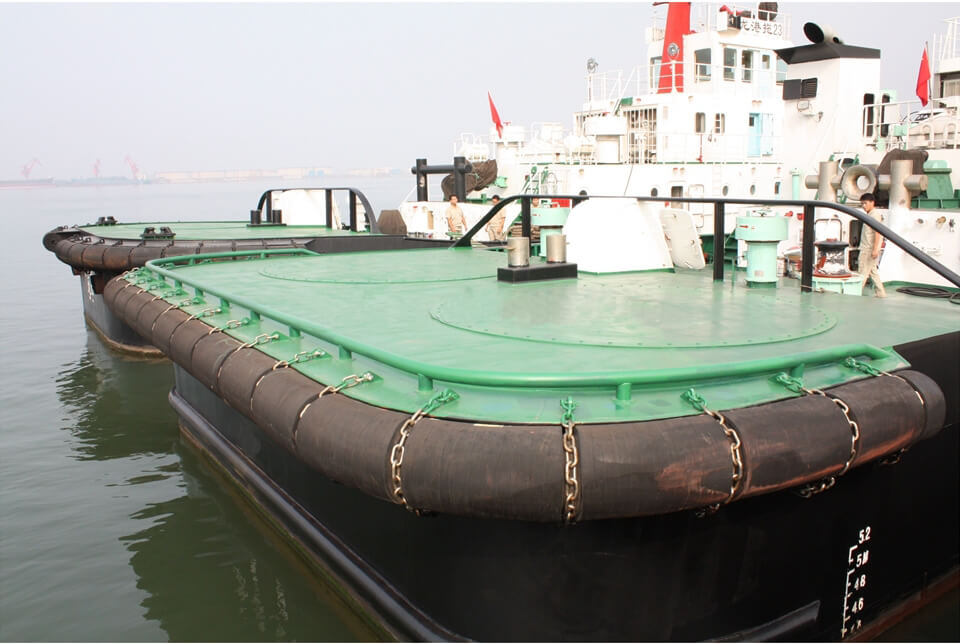
The rubber fender will affect the safety of the wharf and the ship's pilot berthing, and affect the scheduling of production ships. This paper introduces the placement, use, and manufacture of rubber fenders.
What Are The Production Quality Requirements For Rubber Fenders
During the molding of rubber fender products, the cohesive force of the elastomer cannot be removed after being pressed with a large pressure, and there is an unstable trend during molding (the shrinkage rate of rubber depends on the type of rubber).
Therefore, when designing rubber products, both the formula and the mold should carefully calculate the mixing quality, otherwise, the product size may be unstable, thus reducing product quality problems.
When designing and producing rubber fenders, the rubber fender manufacturers shall consider the reaction force acting on the hull and the port berthing position, the deformation of rubber fenders after absorbing the ship's kinetic energy, and the reaction force acting on the hull.
Which Marine Rubber Fender Material To Choose
Filler Material
Generally, rubber fender enterprises use polyester cord fabric for filling, but the tensile and elastic properties of polyester are not as good as nylon, so nylon with high elastic properties is selected for a better fender.
Nylon is mainly used in two kinds of airbags and fenders, 126D2 and 126D3. These two kinds of cord fabrics are well made and have a very long service life.
How To Place Rubber Fenders
The spacing and elevation of marine rubber fenders are very important. It is necessary to ensure that the ship can not directly touch the quay wall under the most unlucky berthing sight point allowed by the standard. It is also necessary to ensure that the ship can safely berth at different tide levels and draughts, and has strong adaptability to ships of different tonnage. Fender is an energy-absorbing device for ship berthing stability. Due to the effect of wind, wave, and current, as well as the difference between wharf azimuth, and the influence of high and long period wavelet waves on the harbor basin, a large amount of energy can occur when a ship collides with a dolphin, which requires that the fender has a good energy absorption characteristics.
How To Use The Combined Rubber Fender
The combined use method of the rubber fender aims to overcome the shortcomings of the prior art and provide a rubber fender that can be used in combination.
Even if a single fender can not meet the needs of large ships, several fenders can be combined into a longer fender to meet the needs of a longer fender.
The rubber fender is a cylindrical ring, which is characterized by a plurality of projections on one end face of the rubber fender and a plurality of grooves on the other end face. The number of pins and slots is the same. The shape of the pin and groove is the same, both are cylindrical. The positions of the protrusions and grooves on the end face correspond to each other. The grooves and projections of two adjacent fenders can be used together.
Spring is everywhere in various machines. From consumer goods to heavy industrial equipment, as long as you remove anything involving mechanical devices, you may find the spring inside, which is a mechanical storage device.

Cylindrical Helical Spring
Circular cross-section type
It is a compression spring with a circular section.
The characteristic line is linear, stable in stiffness, with a simple structure, convenient manufacturing, and wide application. It is mostly used as a buffer, vibration reduction, energy storage, and control movement in mechanical equipment.
Rectangular cross-section type
Under the same space conditions, the cylindrical spiral compression spring with a rectangular cross-section has greater rigidity and more absorption energy than the circular section type. The characteristic line is closer to the straight line and the stiffness is closer to the constant.
Flat-shaped section type
Compared with the circular cross-section type, the cylindrical helical spring with a flat-shaped section has large storage energy and large compression. Therefore, it is widely used in the installation space such as engine valve mechanisms, clutch, and automatic transmission.
Variable pitch type
When the load is increased to a certain degree, as the load increases, the spring gradually tightens the spacing from the section, and the stiffness gradually increases. Therefore, its autobiography frequency becomes a variable value, which has a good effect on eliminating or easing resonance and is widely used for high-speed load-changing mechanisms.
Multi-wire type
The material is steel wire rope. When it is not loaded, the contact between the steel wires is relatively loose. When the external load reaches a certain degree, the contact is tight and the spring rigidity has been increased. It is widely used in weapons and aero motors.
Extension Spring
The performance and characteristics of extension springs, are the same as the cylindrical helical spring with a circular cross-section. It is mainly used in situations under tensile load.
Torsion Spring
The torsion spring is under the torsion load, mainly used for compression, energy storage, and the elasticity of the transmission system. It has a linear characteristic line and wide applications, such as measuring metering and the compulsory air valve closure mechanism.
Conical Coil Spring
The role is similar to the variable pitch cylindrical helical spring. After the loading reaches a certain degree, the spring is gradually tightened from the large coil to the small coil. The stiffness increases gradually and the natural frequency is variable. It is conducive to eliminating or easing resonance and the anti-resonance capacity is strong. This spring structure is compact and stable. It is mostly used to withstand large loads and vibration reduction. For example, suspension springs are applied in heavy vibrating screens and automobile transmissions.
Spiral Spring
Compared with other springs, the spiral spring can absorb larger energy in the same space, and the friction between the plates can be used to attenuate vibration. It is often used to absorb thermal expansion deformation. The disadvantage is that the gap between the board is small and difficult to quench and the spray treatment cannot be performed. In addition, the manufacturing accuracy is not high enough. It can be used as a measuring element and pressing element.
Torsion Bar Spring
The torsion bar spring has a simple structure, but the requirements for the quality of materials and manufacturing accuracy are high. It is mainly used as a suspension spring for cars and small vehicles.
Ring-shaped Spring
The ring spring is widely used in occasions that need to absorb large energy but is limited by space, such as springs for locomotive traction devices, and buffer springs for cranes and cannons.
Leaf Spring
A leaf spring is a metal piece that has a rectangular cross-section, which is mainly used for situations when the loading and deformation are not large. It can be used as a sensitive element in the detection instrument or automatic device.
Plate Spring
The plate spring is laminated of multiple spring steel plates. It is widely used as a suspension device in cars, tractors, and trains, as a role of buffer and vibration reduction.
Rubber Spring
Due to the small elastic modulus of rubber springs, it can get greater elastic deformation, and it is easy to achieve the required non-linear characteristics. The shape is not restricted and the rigidity of each direction can be freely selected according to the design requirements. The rubber spring can withstand multi-directional loads at the same time, so it can simplify the structure of the system. The application of rubber springs on machinery equipment is increasing.
Rubber-metal Spring
The characteristic line is gradually increased. This rubber-metal helical spring has a larger rigidity compared to the rubber spring and has larger damping compared to metal springs. Therefore, it has the advantages of large loading capacity, strong vibration reduction, and wear resistance, suitable for suspension structures for mining machinery and heavy vehicles.
Air Spring
Air spring is a non-metallic spring that uses the compression of air to achieve elastic effects. It is widely used in vehicle suspension device, which can greatly improve the power performance of cars, so air spring is widely used on cars and trains.
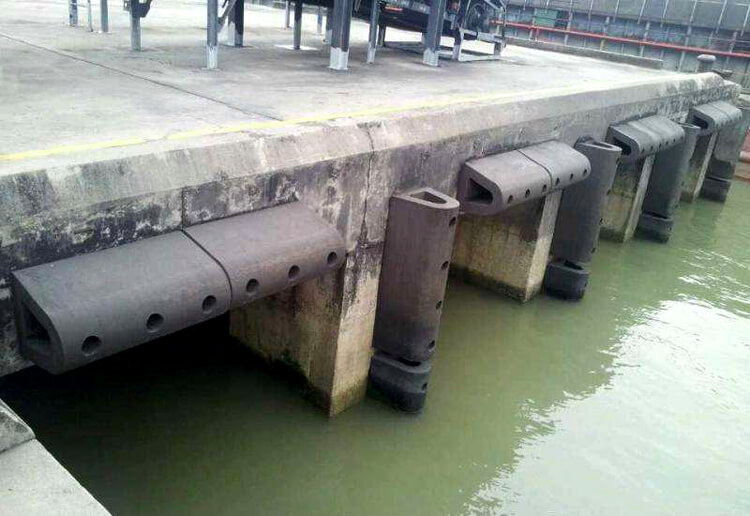
The quality of rubber fenders has always restricted the use of production berths, troubled the safety of wharf and ship pilot berthing, and affected the scheduling of production ships. We should analyze and study the placement, type selection, use, and fabrication of fenders.
The spacing and elevation of marine rubber fenders are very important. It is necessary to ensure that the ship can not directly touch the quay wall under the most unlucky berthing sight point allowed by the standard. It is also necessary to ensure that the ship can safely berth at different tide levels and draughts, and has strong adaptability to ships of different tonnage. Fender is an energy-absorbing device for ship berthing stability. Due to the effect of wind, wave, and current, as well as the difference between wharf azimuth, and the influence of high and long period wavelet waves on the harbor basin, a large amount of energy can occur when a ship collides with a dolphin, which requires that the fender has a good energy absorption characteristics.
Various Types Of Rubber Fenders
Arch V-Type Rubber Fender
At present, arched V-type rubber fenders are mostly used. Although fenders have been widely used and bridge piles are densely distributed, due to the small energy absorption of fenders, the surface is easy to be scratched and damaged, falling off and aging.
Rotary Rubber Fender
The rotary rubber fender uses a relatively large offset to solve the stress problem when the bridge pile is impacted. It is also a wise choice to use it in some narrow transport holes. However, due to the high engineering cost of the product, it is unlikely to be applied on a large scale.
Pneumatic Rubber Fender
As a key product of anti-collision, shock absorption, and energy absorption, pneumatic rubber fenders are simplified in model selection due to the emphasis on ports, which can achieve a good anti-collision effect and save costs. Except for tugs and small ships, large tonnage ships equipped with rubber fenders mainly use inflatable rubber fenders to protect ports and hulls when berthing.
The new LGA4189-D96, LGA4189-D97, LGA4189-D82 and LGA4189-D83 are dedicated, customized solutions for Intel’s professional LGA4189 platform (Whitley), which makes these LGA 4189 cpu coolers an ideal fit for both Ice Lake-SP based 3rd generation Xeon Scalable CPUs (Platinum, Gold, Silver or Bronze) and W-3300 series Xeon processors for workstations (Ice Lake-64L). Whereas the large LGA4189-D97cpu cooler with two fans and LGA4189-D97 cpu cooler with one fan are an excellent choice for tower-style cases and thus lend themselves to use in high-performance quiet workstations, the smaller LGA4189-D96 fit 4U cases, which makes them perfect for more compact workstations as well as 4U class rack-mount servers that need to run as quietly as possible. While the LGA4189 cooler relies on a single 9225 PWM fan to achieve maximum performance, thanks to its large surface area, the LGA 4189 cpu cooler with two fans to ensure outstanding performance despite their smaller size and surface area.

In addition to the new LGA 4189 heatsinks, the NM-i4189 mounting kit allows LGA 3647 series coolers and TR4-SP3 series coolers to be installed on LGA4189.
All the new lga 4189 coolers are available as of today via Lori’s website: https://www.loricooler.com/lga-4189.html
Designed in China, Lori’s cpu coolers and fans are internationally renowned for their superb quietness, exceptional performance and thoroughgoing quality. Having received more than 6000 awards and recommendations from leading hardware websites and magazines, Lori’s fans and heatsinks are serving hundreds of thousands of satisfied customers around the globe.