
The screw, nuts, and bolt markets have seen a lot of changes in the kinds of products that consumers buy. Over the years, fastener manufacturers have been coming up with unique customized products. Why is this happening? Because they know that consumers have different needs and they want unique screws to fulfill those needs.

Which thread-locking mechanism is ideal for your micro fasteners? Is copper or steel a perfect option for your custom screw options? These are some of the questions that most product assembly technicians ask when looking for fastener options. The global market of micro fasteners is massive, but how can you get the best of what you’re seeking?
This post highlights some of the essential factors that you’ll need to consider when buying micro fasteners for your assembly project. Understanding the primary features of the micro screws that you seek will better and quicken your sourcing process.
For example, custom manufactured micro screws come in different sizes and shapes to meet the various needs of consumers. If you have been looking for the best fastening solutions, you may want to check out the various products that reputable suppliers can offer. But how can you determine whether the supplier is trustworthy or that the products they carry will align with your requirements? Here is a look at some of the factors to consider when looking for the best supplier.
Look For Screws with Washers
When you want to build a custom fastener, you should think of ways to make the screws stronger. One of the best ways of doing so is by using washers. You will notice that although some fasteners come with one washer, others come with several because some machines may need a stronger bond than others. Therefore, before you buy custom screws, ask the supplier about the number of washers that they come with and to what extent they will make your machines stronger.
What’s the Coating Material of Your Micro Screws?
Corrosion quickens the wear of micro fasteners and makes the fastened components loose. But with a proper coating, your micro screws experience less wear and tear. Some linings also make your screws more appealing, and this is ideal for decorative miniature screws.
You may choose to buy chrome-plated or zinc plated screws. Chrome-plated screws have a corrosion-resistant and decorative polished finish. These screws are ideal for components that need high-quality polished finishes. The zinc-plated micro fasteners have improved resistance to corrosion under most environments.
Ask For Screws with Locking Patches
Custom manufactured micro screws are likely to be of better quality when they come with locking pieces. Most manufacturers use nylon threads to coat the external and internal threads. When the coat is applied, it creates a self-locking mechanism on the screws, and this makes them fasten better. Custom fasteners are made using different threads based on the kinds of situations under which they will be used. You may want to talk to the supplier to find out what they can do based on your needs.
Which Material is Ideal for Your Micro Fasteners?
The material that makes up micro screws determines the micro fasteners’ cost, brittleness, strength, and corrosion resistance. Approximately 90% of the micro screws in the market are manufactured from stainless steel. Steel is a preferred material for micro screws because it has a high degree of formability, durability, and strength.
Bronze and brass alloys have considerable corrosion resistance, which makes them ideal for marine engineering. But bronze is expensive, and that is why it’s used in marine works. Aluminum is also a common material used in making corrosion-resistant micro screws. Aluminum is also light-weight and ideal for parts that shouldn’t get heavy.
What’s the Size of Your Preferred Micro Screws?
Screws differ in size, which is a conventional screw differentiating factor for these micro fasteners. Manufacturers of screws make capabilities in specific screw size ranges such as the M5 and smaller or M6 and larger screw sizes.
Inquire About the Screws Suited to Your Size Specifications
Manufacturing screws to the correct value is another crucial factor to consider when buying custom manufactured micro screws. Sometimes, you will notice that fasteners are too small or too big. When they are big, it means that you will have to use a lot of force to fix them. The result is that they will be prone to breakage. On the other hand, screws that are too small are likely to be weak no matter how much you fix them. It is for these reasons that you should talk to the supplier so that they understand the correct values for your needs. The best suppliers have several custom screw options.
What Screw Features Do You Want?
There are many kinds of industrial micro fasteners in the market with diverse applications. For instance, different types of screws may have different heads, sizes, threading, and thread-locking mechanisms. Each type of head and thread-locking method determines the kind of purpose your screw will serve.
As such, you have to choose your micro screws based on their different physical features. You may also opt to customize your micro fasteners to suit your unique needs. Custom screws are ideal when off-the-shelf options can’t fulfill your needs.
Search For a Variety of Plastic Thread Forming Screws
If you want custom manufactured micro screws to have more holding power, you should look for a variety of thread forming screws. You should ensure that you have several fastener options because different types of screws need different types of fastening options. When using the fasteners, you will notice that some of them are easier to drive, but others are not because there is a difference in the size of threads. It is good to ask the suppliers for narrow or broader threads based on what you want to do with the fasteners.
What's Your Micro Fastener Source?
You can source your tiny screws from a screw manufacturer or a screw distributor. The latter is often the preferred option when looking for diversified types of screws and large volume orders. But when looking for a wider variety of fasteners in the low volume range, then it is advisable to buy from a distributor.
Unlike manufacturers who may fail to give quotes on small volumes of micro screws, your distributor can provide quotes for any quantity of screws. Sourcing from a distributor is also beneficial when you’re looking for screws from different manufacturers.
Identify the Best Manufacturers and Suppliers
Identifying the right screw supplier involves looking at the kinds of customers that use their services. For instance, the best manufacturers are those that have a broad customer base. If they are supplying to some of the largest custom manufacturers, you can count on them to provide enough screws. Imagine a situation where you need 100 piece packages of screws. In such a case, you will be looking for suppliers with the capacity to deliver large quantities.
Mooring bollards are a vital component of any mooring system. It is the anchor point for mooring lines mounted on the deck to secure the ship or vessel. There are various types of marine bollards, including t-head, t-horn, kidney-shaped bollards, cleat, single-bitt bollards, double-bitt bollards, pillar bollards, tricorn bollards, T-head Japanese and Pillar bollards.

T Bollard
It is also named as“Tee Bollard”, “T-bollard”, or T- head bollard has a top shaped like a “T”. It is very prominent in many regions of the world due to its simplicity and it gets the job done well up to 300 tonnes. T-head bollards along with Horn Bollard or “Staghorn Bollard” can handle higher line load angles than single bitt and kidney-shaped bollards.Kidney-shaped Bollard
Kidney bollard has a simple design that is suitable when low to medium tidal range is expected. Kidney shaped bollards offer an economical solution for installations where securing of mooring lines at high angles is not a concern. This style is not recommended when multiple mooring lines will share one bollard as there may be a possibility of an unintentional release due to the shallow lip at the top of the bollard.Double bitt Bollard
Double bitt bollard, also known as the “Twin Horn” or “Twin". Small base area is space-saving for small areas. They are useful when high densities of mooring lines are present, this is a better choice for ship mooring and shifting.Single Bitt Bollard
It is particularly suitable for applications where tidal range variations are large and can handle steep mooring line angles. They are capable of accepting multiple mooring lines and have been designed to fit onto existing bolt patterns for older pillar bollards.Pillar Bollards
It is normally applicable where tidal ranges are small and use for warping operations along berths where vessels need to be re-positioned for loading purposes. Due to their 360 degree line of load range, they can also be placed on jetties where vessels berth on both sides of the jetty structure. Pillar Bollards can withstand use in harsh environments.How to choose the mooring bollards
Criterion for selecting mooring bollards are based on mooring pattern, changes in draft due to loading and discharge, wind and current forces, swell, wave and tidal forces, mooring line types, size and angles ice forces (where relevant). Ductile iron, cast steel, and stainless steel are some of the main materials used to make marine bollards. Besides size & design, bollards are also categorized by their grade and mooring capacities.
Furthermore, durability is a factor when choosing a suitable bollard design as maintenance is something that end user should be considered. To spot possible deterioration and to ensure that bollards are working well a continual durability testing and inspection should be done to ensure mechanical performance are maintained.
When looking for a marine mooring bollard supplier, the client must provide vital information about your project to a trusted supplier who understands the required International Standards and regulations, the level of support needed by your port, and all the other details associated with bollard production.
YSmarines mooring bollards are engineered accurately and manufactured in ductile cast iron or steel supplied with high-quality galvanized anchor bolts to offer our clients maximum resistance to berthing impact.
More than 200 billion fasteners are used in the U.S. each year. from technological to construction-based industries, that’s a lot of demand. Screws are responsible for holding your product or project together.

The electronics industry has always been driven by innovation. Whether a company is involved in creating consumer electronics, medical devices, small toys, miniaturized robots, circuits board assemblies, or electrical components, they all invest heavily in the research and development of new products. With constant pressure on company engineering teams to create new, and improve existing products, more quickly and more cheaply, many electronics companies are using analytics to gain insights into improving their manufacturing processes. In addition, a growing number of companies in the electronics industry are outsourcing the manufacturing of their parts or even their products, so they can concentrate instead on developing strategies to remain competitive in the global marketplace.
Another factor of cost-control, often overlooked in manufacturing cost-analysis, is the importance of specifying the correct fasteners in the conceptual and research phases of product design. Not using the best type or size of fastener can have a major impact on production costs and the ultimate success of the product in the marketplace.
The cost of making small electronic screw changes during the production cycle can be significant. However, making the right fastener decisions, such as specifying custom-designed small screws for electronics, early in the product’s design phase, can lower production and assembly costs by reducing the component’s per-piece price or eliminating manual operations. To assure that you can offer new products of maximum quality at the lowest cost, take advantage of the input of top design engineers, like the experts at Screw, to customize fasteners to your specific needs during design and development. The right fasteners can prevent costly failures and delays in production, and increase your ability to offer high-quality products at the lowest cost.
When considering a redesign, such as switching to a more durable material for a frequently impacted small component, you’ll want to consult a micro screw specialist to customize fastener compatible with the new material. If this element of the redesign is overlooked, the consequences could be very costly – with products being returned for repairs, lower customer satisfaction, higher warranty costs, or even a recall of the product.
We have the knowledge and expertise to offer materials and finish options for your specific product needs. The team at Screw works diligently to provide unparalleled solutions to meet the electronics industry need for micro fasteners by creating custom machine screws with the highest level of integrity for their product or assembly.
Finding a screw manufacturer that can produce high quality items is absolutely key — don’t take a risk on a cheap price and a cheap product. If you rely on custom fasteners, you’ve got a lot of options in terms of handpicking your own manufacturer. Selecting the right one can mean the difference between a product that withstands the test of time, or one that crumples at the first sign of stress; here are the most important characteristics you should look for in a custom screw manufacturer.
Screw operates a global network of world-class technical professionals to provide cost-effective solutions for any small diameter application. As a leading supplier of custom manufactured small screws for electronics, our goal continues to be saving our customers substantial costs with design and manufacturing efficiency. We accomplish this by working closely with company teams at the initial product design phase, or whenever a product change is deemed necessary. We also supply custom micro screws for small projects, encouraging innovation world-wide.
Did you know that it wasn’t until 1928 that the National Screw Thread Commission established a standard for screw threads? Before that, all screws needed to be handmade, so no two were ever alike. While those methods are obviously long gone, sometimes — especially in the case of extremely low-cost fasteners — inconsistencies exist. As a business owner, you can’t afford to have some products that stay together and some that fall apart. Look into your screw manufacturer’s previous clients’ experiences to see if they’ve had any similar issues.
Mooring bollards are integral in any mooring system for offshore structures. These are used to secure mooring lines, and to prevent the vessels from drifting from their anchored location. Bollards may be formed into different types, depending on the use of the bollards, and what type of vessel would be anchored to it.
Some common types of mooring bollards are T-head bollards, kidney bollards, Japanese T-head bollards, and pillar bollards. These types may also be cast using different steel grades and shall depend on the design loads that the bollards would resist during its useful life.
YSmarines has a wide range of options to ensure we provide solutions to every application, each type suitable for different uses and loads. Mooring bollards are a vital component of any mooring system. It is the anchor point for mooring lines mounted on the deck to secure the ship or vessel.
Testing For Mooring Facilities
Mooring facilities testing procedures are carried out to ensure the correct design load capacities of the components.
1. To establish adequacy of mooring facilities.
2. Enable facility users to develop efficient berthing plans
3. Establish baseline data on existing mooring hardware and berthing capacity
4. Provide facility users with information sufficient to determine the level of effort necessary to maintain or upgrade existing capacity
To ensure the safety and efficient performance of the mooring bollards, you need to guarantee that they are in good working condition to use in daily mooring operations.
Due to their exposure to seawater, they are at high risk of corrosion which can significantly affect their service life. It is crucial to perform routine maintenance to extend the service life and reduce the possible damages to the installed mooring bollards.
How To Maintain a Mooring Bollard
Bollards are constantly exposed to the elements and the corrosive effect of sea splashes.
Although they are low-maintenance equipment, it's essential to conduct periodic inspections. These should include examining the following:
Surface inspection for scratches/damage to paint and corrosion of the materials.
Compare barrel thickness with manufacturer specifications.
Check with a torque wrench that all the anchor bolts are sufficiently tight.
Ensure anchor bolts are adequately coated and corrosion free
Inspect grout under bollard and replace if necessary.
A quarterly assessment should be performed in cases with recognizable irregular behaviors. A relevant corrective action should be taken to maintain its required performance.
Any chips or cracks in the paint should be repaired immediately to prevent corrosion from forming. Cast steel is particularly susceptible to corrosion.
For more information, you can visit the article of everything about mooring bollards.
The marine anchor chains play an important role in the safe berthing of the ship. This article describes how to do well maintenance of anchor chains.
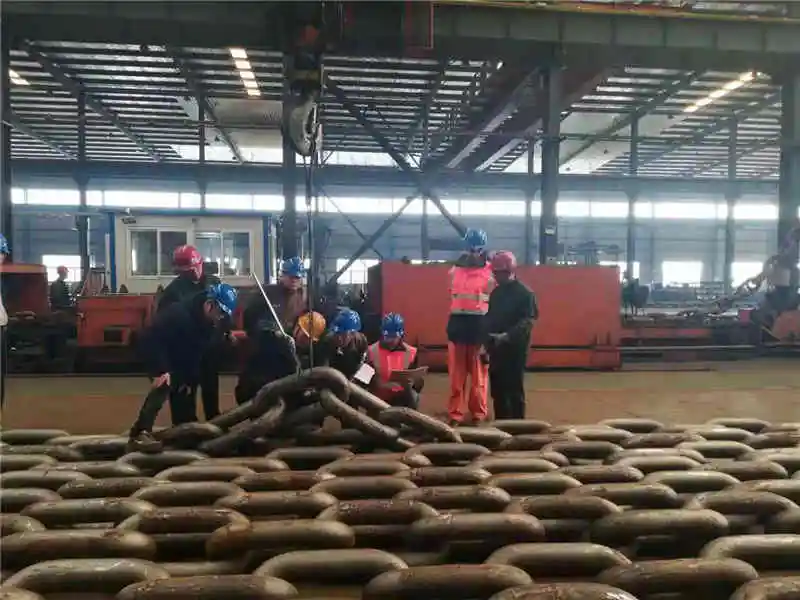
First of all, Before using the anchor chain, ensure that the chain wheel is installed on the shaft without deflection and swing. Timely check the tightness of the anchor chain and adjust it correctly. If the anchor chain is too long or stretched after use, which is difficult to adjust, the chain link can be removed as appropriate, but it must be an even number. The chain link shall pass through the back of the chain, and the locking plate shall be inserted outside. The opening of the locking plate shall face the opposite direction of rotation.
Secondly, the abrasion degree of anchor chain shall be checked frequently. More than 1/3 of the chain link of the same anchor chain has obvious elongation, and it cannot be used when the deformation and wear amount reaches 10% of the original diameter. After the chain of anchor chain is seriously worn, it shall be replaced with a new chain wheel and a new chain to ensure good engagement. At the same time, the end of the anchor chain and the commonly used end should be replaced in a planned way after one or two years of use, and the front and back positions of each chain link should be marked again.
Finally, pay attention to the anchor chain maintenance in the process of use. The anchor shall not be stopped before it reaches the bottom each time when it is anchored, and the anchor chain shall be washed clean when it is hoisted to remove sediment and other debris; Keep the anchor chain dry at ordinary times, and do not flush the water into the chain locker when washing the deck; Check every half a year, arrange all anchor chains on the deck for rust removal, painting, and inspection, and keep the marks clear and visible; The anchor chain shall be filled with lubricating oil in time during use, and the lubricating oil must enter the fitting clearance between the roller and the inner sleeve, to improve the working conditions and reduce wear.