
The X-ray diffractometer employs the principle of X-ray diffraction to precisely determine a substance's crystal structure, texture, and stress. An X-ray diffractometer is capable of performing phase analysis, qualitative analysis, and quantitative analysis on substances.
How does an X-ray Diffractometer Work
Characteristic X-ray is an extremely short wavelength electromagnetic wave (approximately 200.06nm) that may penetrate a specific thickness of material and cause fluorescent materials to emit light, photographic latex photosensitivity, and gas ionisation. The X-ray diffractometer produced by the X instrument hitting the metal "target" with electron beams contains characteristic (or identifying) X-rays with certain wavelengths corresponding to various elements in the target.
Given that the wavelength of X-rays is similar to the distance between atoms inside crystals, German physicist M.von Laue proposed an important scientific theory in 1912: crystals can emit diffracted light as X-ray space, which means that when A beam X Rays pass through the crystal, the superposition of diffracted waves will increase the intensity of the rays in some directions while weakening the light in others. Analyzing the diffraction pattern left on the photographic film can reveal the structure of the crystal under test. This theory's viability was demonstrated in future experiments.
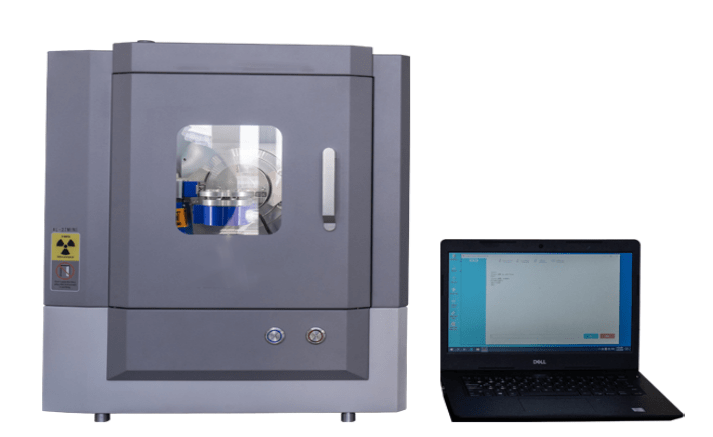
What are the Application Areas of X-ray Diffraction
Metallurgy, petroleum, the chemical industry, scientific research, aircraft, teaching, material production, and other fields all make extensive use of X-ray diffraction.
When the X-ray wavelength is known (choose typical X-rays with a set wavelength), you can meet the Bragg criterion by using fine powder or fine-grained polycrystalline linear samples from a pile of crystals with any orientation from any angle. Reflection will occur on the reflecting surface. After measuring, apply the Bragg formula to get the lattice spacing d, unit cell size, and unit cell type.
In X-ray structural analysis, X-ray diffraction uses the theoretical basis of the powder technique or Debye-Scherrer method to calculate the intensity of the diffraction line and hence the arrangement of atoms in the unit cell.
The single-crystal sample used in the Laue method to determine the single crystal orientation must keep the measured substance constant (that is, the remains unchanged), and the wavelength of the radiation beam is used as a variable to ensure that all crystal faces meet the conditions of the Bragg formula, so choose a continuous X-ray beam. Then, for measurement, utilise a crystal with a known structure (known as an analytical crystal). Once the direction of the diffraction line has been determined, the wavelength of the X-ray can be computed to find the element that provides the characteristic X-ray. This is an X-ray spectrometer for determining the composition of metals and alloys.
Then, for measurement, utilise a crystal with a known structure (analysis crystal). After determining the direction of the diffraction line, the crystal's X-ray wavelength can be estimated and analysed to discover its characteristic X-ray element. This is an X-ray spectrometer for determining the composition of metals and alloys.
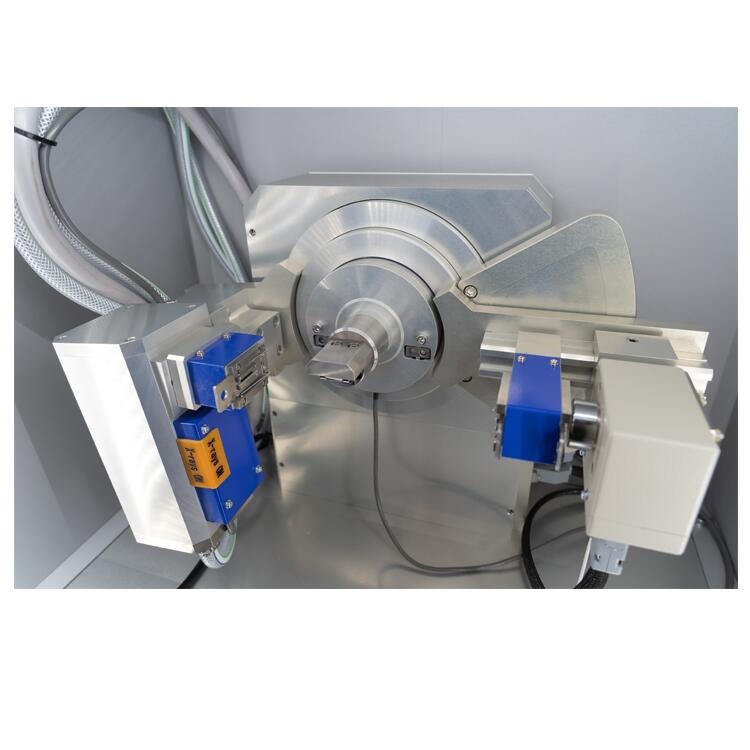
Application of X-ray Diffractometer in Metallurgy
Then, for measurement, utilise a crystal with a known structure (analysis crystal). After determining the direction of the diffraction line, the crystal's X-ray wavelength can be estimated and analysed to discover its characteristic X-ray element. This is an X-ray spectrometer for determining the composition of metals and alloys.
In the field of mental determination, the most often utilised X-ray diffraction methods are qualitative analysis and quantitative analysis. To determine the phases present in the material, qualitative analysis compares the measured lattice spacing and diffraction intensity of the material to be tested with the diffraction data of the standard phase; quantitative analysis determines the phases of the material to be tested based on the intensity of the diffraction pattern Proportional content.
The accurate estimation of lattice parameters is frequently used to build the phase diagram's solid-state solubility curve. When the solute approaches the solubility limit, if the solute continues to increase, it will cause the precipitation of new phases and will no longer cause the lattice constant to change. This tipping point is known as the dissolution limit. Furthermore, exact measurement of the lattice constant can yield the number of atoms per unit cell, which can be used to define the kind of solid solution; it can also yield valuable physical constants such as density and expansion coefficient.
X-rays can be used to measure grain size (mosaic) and microscopic tension. The size and micro-stress of the crystal grains can be estimated by examining the shape and intensity of the diffracted light pattern. Metal deformation and heat treatment both result in visible changes, and these characteristics have a direct impact on the material's performance.
Furthermore, the X-ray diffractometer can be utilised to investigate the instantaneous dynamics of metals at high, low, and special temperatures.
The preceding is a simple overview of the X-Ray Diffractometer. You must decide whether you require an X-Ray Diffractometer based on your requirements. However, as a piece of essential laboratory equipment, the functionality and purpose of the X-Ray Diffractometer must be confirmed. Furthermore, the X-ray diffractometer can be utilised to investigate the instantaneous dynamics of metals at high, low, and special temperatures. If you have any questions about X-Ray Diffractometer or quickly learn the professional knowledge, please visit the article of "what is X-ray diffractometer"
Many factors influence the tension control system, which can lead to related issues. According to the structure and working principle of the tension control system, analysing and determining the reasons, and correcting problems with appropriate techniques to ensure the tension control system's stable operation. This article discusses three typical faults and their solutions of tension control system.
1. Inaccurate Overprinting Of Tension Control System
Fault phenomenon
During normal printing operations, the swing roller swings erratically and has a considerable swing amplitude, resulting in inaccurate overprinting.
Solutions
Because the construction of the tension control system is quite complex, there are numerous explanations for this failure, which are summarised below.
(1) The swing roller cylinder's pneumatic control circuit components are prone to deterioration, resulting in piston leakage and unstable swing roller cylinder loading pressure. In this regard, it is possible to consider replacing damaged pneumatic circuit components, as well as replacing the swing roller cylinder if necessary.
(2) The high-precision potentiometer runs for a long time within a specific range, and when the resistance value within that range varies, it is easy for the high-precision potentiometer's feedback signal to become unstable. At this point, the high-precision potentiometer should be replaced as soon as possible.
(3) There is an excessive gap between the potentiometer gear and the rotary shaft gear. The position of the swing roller will shift as the tension changes. However, because of the gap, it is easy for the swing roller to repeatedly swing back and forth, reducing printing accuracy. The clearance should be modified in accordance with guidelines for this.
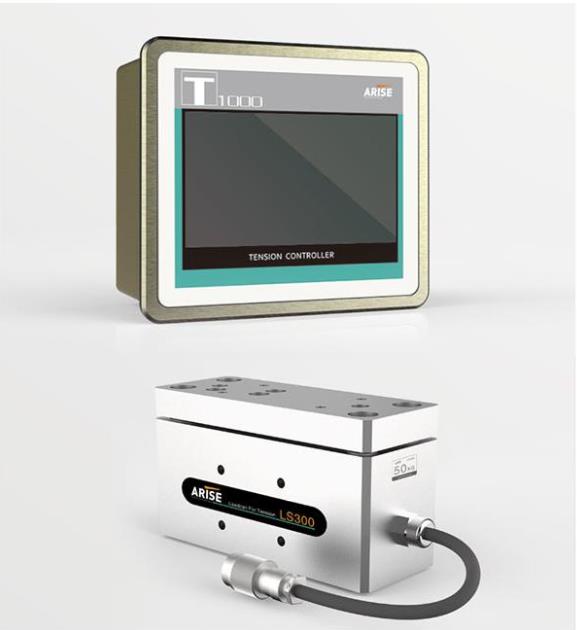
2. Unstable Tension Of Tension Control System
Fault phenomenon
When the winding diameter is big during the winding process, the winding tension display value frequently drops as the winding diameter grows. At this point, the driver's output current will continue to rise. When the output current exceeds the motor's rated current, the driver will activate overcurrent protection and send a fault alarm.
Solutions
First, ensure that the load on the driver and the motor speed encoder are both normal. Following calibration of the winding web tension controller, it was discovered that one of the tension sensors had failed, causing the detected winding tension signal value to be half of the real winding tension value. To achieve the predetermined winding tension, the web tension controller will constantly raise the output until it reaches 100% as the winding diameter grows. The actual winding tension has significantly exceeded the predetermined winding tension at this point, and the reel material is extremely tight. As the load grows, the drive overcurrent protection kicks in. After replacing the tension sensor and recalibrating, the system returns to normal. It should be noted that when calibrating the winding tension controller, the weight used should be as close to the full tension value as possible to improve the tension control accuracy.

3. Excessive Winding Starting Tension Of Tension Control System
Fault phenomenon
When the tension control system starts, the full tension value of the winding tension controller is exceeded, and the equipment must run for approximately 2 minutes to establish constant tension functioning. This not only wastes a considerable amount of raw materials, lowering yield, but it also readily causes zero displacements of the tension sensor, resulting in tension control value deviation.
Solutions
Adjust the driver's input signal, as well as the gain, bias, and PID parameters of the tension feedback signal, but the fault persists. Check to see if the tension reset and tension sensor signals are normal. When the take-up tension controller was detected, it was discovered that its internal stall storage reset point was broken, despite the fact that the external reset signal of the take-up tension controller was normal. In fact, the take-up tension controller not only did not reset but also saved the previous roll's take-up tension value, resulting in a significant take-up starting tension problem. The winding beginning tension will revert to normal after repairing the internal stall storage reset point of the winding tension controller and replacing damaged parts.
Although the spring is a minor component of the manufacturing business, it serves a significant role. Various types of springs include extension springs used in fitness equipment, battery springs in remote controls, and compression springs used in ballpoint pens and bicycles. But how much do you know about these springs, such as their properties, applications, categories, and customisation, and so on? This post will provide you a general overview of the spring.
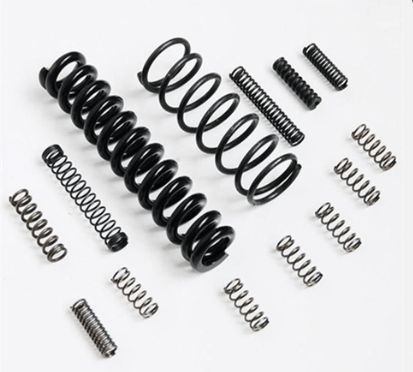
What exactly is Spring?
Definition
A spring is a mechanical component that works by utilising elasticity. Elastic materials deform when subjected to external force, and the original state is restored after the external force is removed.
Characteristics
Elongation and compression are features of springs. The spring's stiffness can be determined based on the application. The stiffness of a steel wire is determined by its diameter, the elastic modulus of the material, and its length in relation to tension and expansion.
Materials for manufacturing
Spring production materials should have high elasticity, impact toughness, and thermal treatment performance in general. Carbon spring steel, alloy spring steel, stainless spring steel, copper alloy, nickel alloys, and rubber materials are the most common materials used to make springs.
Wide Applications Of The Spring
Spring products play a significant part in the growth of the national sector. The expansion and improvement of the spring quality are required for mechanical equipment upgrading and enhanced host machine support performance. Toys, locks, staplers, ballpoint pens, fitness equipment, mattress, sofa, suspension springs for passenger cars and small vehicles, detecting instruments, automatic devices, pressure meters, and so on are all examples of where springs are employed.
The Main Categories of The Spring
The spring is classified as tension springs, compression springs, torsion springs, and bending springs based on its mechanical qualities.
It is classified as disc springs, ring springs, leaf springs, coil springs, truncated cone scroll springs, torsion bar springs, and so on based on its shape.
The most commonly used springs are compressed springs and tension springs, the majority of which may be customised by expert spring manufacturers who use CNC computer control or mechanical spring machinery for the manufacturing process, ensuring automatic and labour-saving production.
1. Torsion Spring
Torsion deformation is represented by a spring. The spring's terminal structure is a torsion arm that can be formed into a variety of shapes. Torsion springs employ the idea of leverage by twisting or rotating elastic material that is soft and stiff, resulting in a high mechanical energy.
2. Extension Spring
It is an axially tensioned coil spring. When there is no strain on the extension spring, the coils are normally tight with no gaps.3. Compression Spring
It is a coil spring, and the material utilised frequently has a circular cross-section. It is constructed from rectangular and multi-steel rollers. Their forms are often cylindrical, conical, medium convex, and medium concave. It has a steady stiffness, a simple construction, a simple production process, a wide application, and is mostly employed in mechanical equipment with buffer, vibration dampening, energy storage, and control activity features.4. Disc Spring
Disc springs are excellent for bearing buffering and damping. diverse combinations can produce diverse properties, which are commonly employed in pressure safety valves, automated transfer devices, reset devices, and clutches.5. Wire Spring
The elasticity coefficient of the wire spring's thickness and density from top to bottom is fixed. This spring's design can provide the vehicle with a more stable and linear dynamic response, which is beneficial to the driver and allows for greater control of the vehicle. It is primarily utilised for high-performance modified automobiles and competition vehicles.6. Lowering Spring
Lowering springs are shorter and thicker than original springs. Installing the spring significantly reduces the gravity of the car body and the inclination when turning, making the turning more stable and smooth, and increasing vehicle handling in bends.Spring Customization
Customized spring and inventory spring, which is better?
A bespoke spring is preferable when a precise spring size is required. If you need the spring right away, the inventory spring may be the best option. If you don't need to customise it, using the original spring can save you money.
These two types of springs, on the other hand, are cost-effective. In some circumstances, a customised spring is a more cost-effective option because you can acquire a correct size for the first time.
Professional custom spring supplier – KENENG
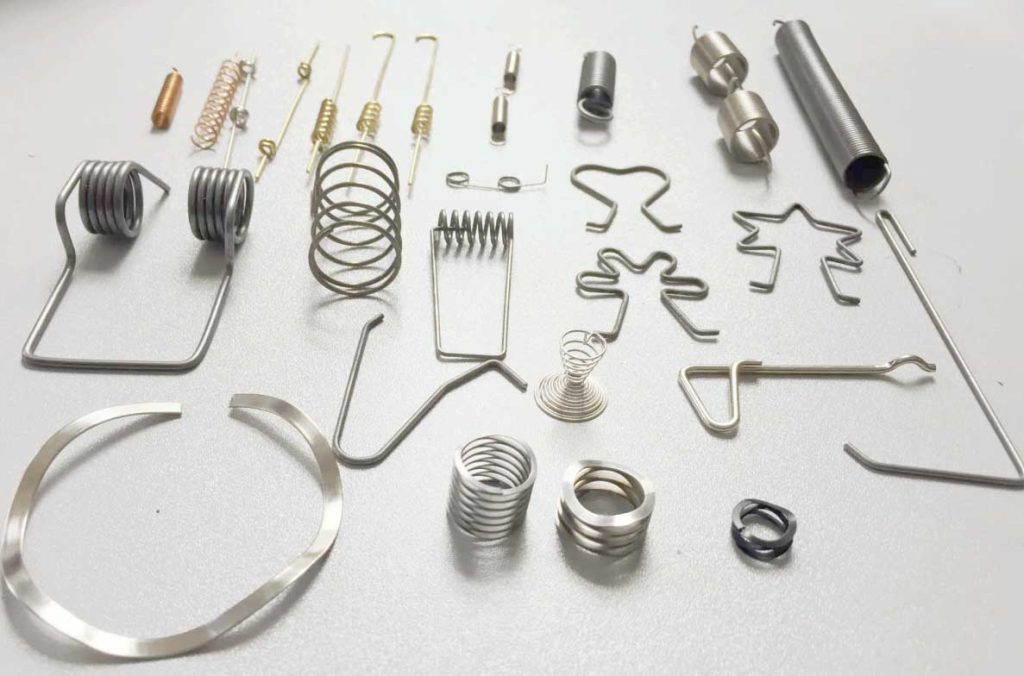
With 20 years of designing, researching, and developing, manufacturing experience, and a variety of standard and customised sizes available, KENENG is one of China's leading spring suppliers, offering both regular stock goods and customised service. KENENG, as a competent bespoke spring maker, can suit a wide range of industrial requirements, with diameters ranging from 0.1 to 80mm. KENENG can supply spring customization in the form of drawings, turning direction (left and right hand), material, finishing, wire diameter, spring force, end type (closed, grounded, close and grounded, open), and unique processing technology for the spring.
Oil and gas drilling is a highly specialised and dangerous occupation. This article will quickly present the oil and gas drilling process and steps, as well as the simulation training platforms or simulators required for teaching oil and gas drilling created by Esimtech.
A lot happens during oil drilling, which requires complex drilling apparatus and technical procedures. The drilling process is fraught with dangers, including the possibility of blowouts, necessitating the use of safety devices such as blowout preventers. (BOPs).
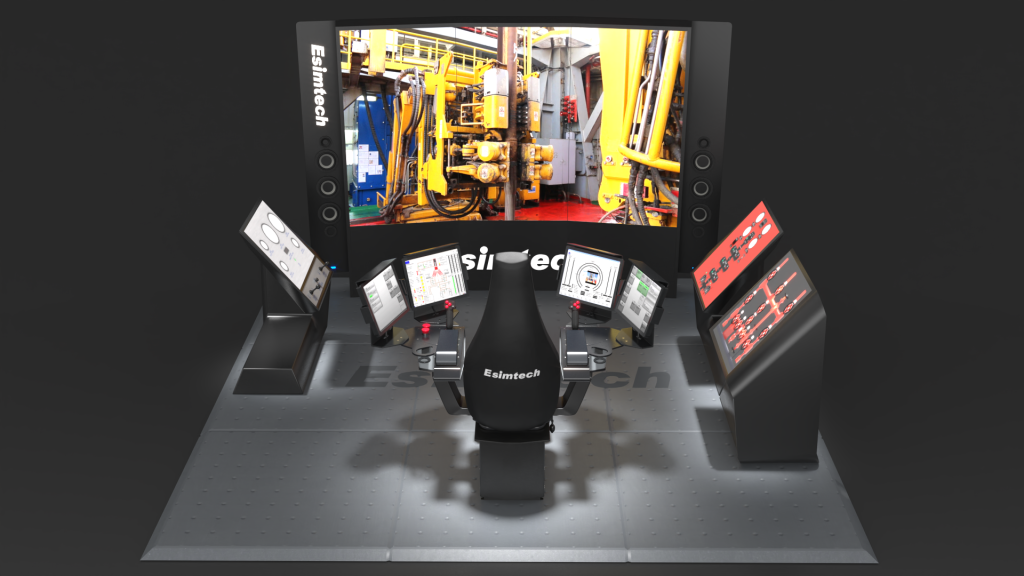
The first step in oil drilling is to drill a hole through the earth's crust. A drill string and a long bit are required. Remember that the drill bit's diameter is 5 to 50 inches. After drilling a hole, a tiny diameter steel pipe is installed, and the spaces around it are filled with cement.
The Drilling Procedure
Cementing and Testing
Once the appropriate distance has been reached, the drill pipe is removed and the steel pipe is pushed to the bottom. Cement is used to hold this "well casing" in place. Before any gas or oil production can begin, the pipe must undergo rigorous tests to demonstrate that it is impermeable.
Completion
Before drillers can tap the oil and natural gas, a perforating gun is often lowered into the earth and shot into the rock layer in the deepest area of the well, creating holes that connect the rock holding the oil and natural gas and the wellhead.
Fracking
Now that the well's first stage is open, it's time to liberate the oil and gas trapped in the rock. Fracking fluid is blasted into perforating holes to create paper-thin fractures in the shale rock, releasing trapped oil and natural gas. Specialized equipment is utilised to continuously monitor well pressure and data.
Drill operators feed the hole during drilling with a range of materials, liquids, and chemicals to lubricate the revolving bit and clear the route of the broken rocks. New pipes must be added to the drill string as the drill bit progresses. It must be tightened to keep the pipe connections from separating in the well.
Having exceeded the financial limit
When the amount of oil and gas a well can produce is insufficient to sustain its continuous operations, we say it has reached its economic limit. As a result, the extraction must be halted by withdrawing the drill pipe and sealing the hole. This keeps the hydrocarbon reservoirs separate from the water.
Esimtech is a simulation trainer maker that does research and development. Drilling, well control, logging, oil production, gas production, downhole operations, oil and gas gathering and transportation, fracturing and acidizing, drilling rig installation, coiled tubing, pressure operation, and other petroleum engineering training simulation systems are all part of its comprehensive product line.
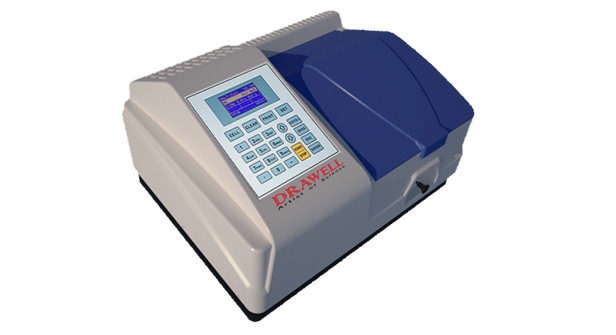
A form of UV spectrophotometer is the UV vis spectrophotometer. It is an analytical equipment based on the principle of ultraviolet-visible spectrophotometry, which analyses the absorption of radiation in the ultraviolet-visible spectrum using material molecules. The light source, monochromator, absorption cell, detector, and signal processor are the primary components. The light source's function is to provide a stable continuous spectrum of suitable intensity.
A hydrogen lamp or a deuterium lamp is typically used in the ultraviolet light zone. A tungsten or halogen lamp is typically used in the visible light zone.
The monochromator's function is to separate the monochromatic light of the desired wavelength from the composite light emitted by the light source.
Dispersive elements are classified into two types: prisms and gratings. A glass absorption cell is used for visible light measurements, and a quartz absorption cell is used for UV measurements.
The detector detects the intensity of the transmitted light using a photoelectric conversion element and converts the light signal into an electrical signal. Phototubes, photomultiplier tubes, and photodiode array detectors are common photoelectric conversion elements.
There are numerous spectrophotometer categorization methods: It is classified into single-beam ultraviolet-visible spectrophotometers and dual-beam ultraviolet-visible spectrophotometers based on the optical path system. It is classified into single-wavelength and dual-wavelength spectrophotometers based on the measurement method. The detection method of producing the spectrogram can be classified as spectrum scanning detection or diode array full spectrum detection.
What is the operation of the UV-Vis spectrophotometer?
The molecule's ultraviolet-visible absorption spectrum is the absorption spectrum created by the electronic energy level transition after some groups in the molecule absorb ultraviolet-visible radiation.
Because different chemicals in the analyte have distinct molecules, atoms, and molecular spatial configurations, their absorption of light energy will change. Spectrophotometric analysis is a powerful tool for investigating the composition, structure, and interaction of substances using their absorption spectra. It is a band-shaped spectrum that reflects information from different groups in the molecule. For qualitative investigation, the conventional light spectrum can be complemented with various methods.
Lambert-Beer's law states that light absorption is proportional to the thickness of the absorption layer, and Beer's law states that light absorption is proportional to the solution concentration; Lambert-Beer's law holds true when both the thickness of the absorption layer and the influence of the solution concentration on the light absorption rate are taken into account. That example, if A=bc (A is the absorbance, is the molar absorption coefficient, b is the liquid pool thickness, and c is the solution concentration), then the solution can be quantitatively analysed. The analytical and control samples are produced in the same solvent at the same concentration, and the ultraviolet-visible absorption spectra are analysed independently under the same conditions. If they are the same substance, their spectra should be the same. If no standard sample is available, it can be compared to a ready-made standard spectrum control.
What is the structure and function of the UV-Vis spectrophotometer?
The UV-Vis spectrophotometer is composed of five parts: light source, monochromator, absorption cell, detector, and signal display system. Light source: A device that produces incident light that meets the specifications. Heat radiation light sources and gas-discharge light sources are the two categories. Thermal radiation light sources, such as tungsten lamps and tungsten halogen lamps, are used in the visible light region, with a wavelength range of 3501000nm; gas-discharge light sources, such as hydrogen and deuterium lamps, are used in the ultraviolet region, with a continuous wavelength range of 180360nm.
The function of a monochromator is to isolate the needed monochromatic light beam from the composite light created by the light source. It is the spectrophotometer's brain.
A cuvette is another name for an absorption cell. Its purpose is to determine the absorbance of the test solution. It has ground glass on the bottom and two sides, and optically clear surfaces on the other two sides. The optical surface of the absorption cell must be complete in order to limit light reflection loss. Perpendicular to the direction of the beam. It can be separated into glass cells and quartz cells based on the material. The former is used to measure the visible light region, whereas the latter is used to measure the ultraviolet light zone.
Detector: An optical signal converter that converts optical signals to electrical signals. Instead of directly detecting the intensity of light flowing through the absorption cell when measuring absorbance, it turns the intensity of light into a current signal for testing. A detector is a photoelectric conversion device.
Signal display system: A device that amplifies and displays the signal emitted by the detector.
What are the features and benefits of the UV vis spectrophotometer
Sensitivity is really high.
Excellent selectivity.
High precision.
Widespread use.
Use a variety of concentrations.
The expense of the analysis is little.
Simple to use.
The analysis is completed quickly.
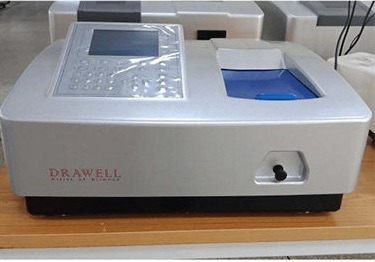
How to choose a high-quality UV-Vis spectrometer is an important topic in the laboratory because it is an important laboratory tool. I'd like to suggest the UV-ViS spectrophotometer from DRAWELL to you. It can provide you with high-quality spectrometers as a professional spectrometer manufacturer. The UV-Vis spectrophotometer from DRAWELL is classified as a single beam spectrophotometer or a double beam spectrophotometer based on the instrument structure, and as a visible spectrophotometer or an ultraviolet spectrophotometer based on the wavelength and atmosphere of the absorbed light. If you have any questions about DRAWELL or UV-Vis Spectrometer, please contact us, and our engineers will offer you with high-quality technical assistance.