
The well control simulation training system is a simple, user-friendly, effective, and efficient training system is a simple, user-friendly, effective, and efficient training system created for blowout prevention in the oil and gas industry.

Why Choose Well Control Simulation Training System
Blowout is the phenomena in which the pressure of formation fluid, such as oil, natural gas, or water, exceeds the pressure in the well during the drilling process, and the blowout is uncontrolled from the wellhead. A blowout is a dangerous drilling accident. Once it occurs, it frequently has catastrophic repercussions, necessitating strong preventive measures.
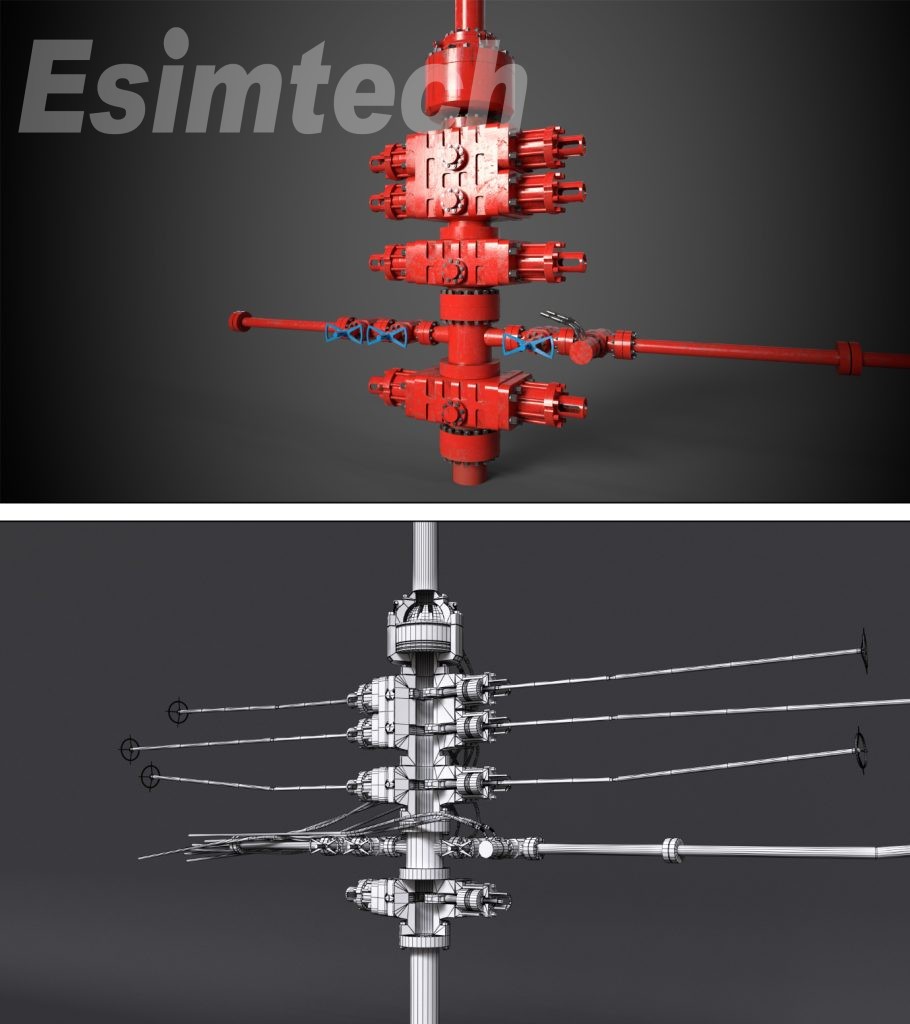
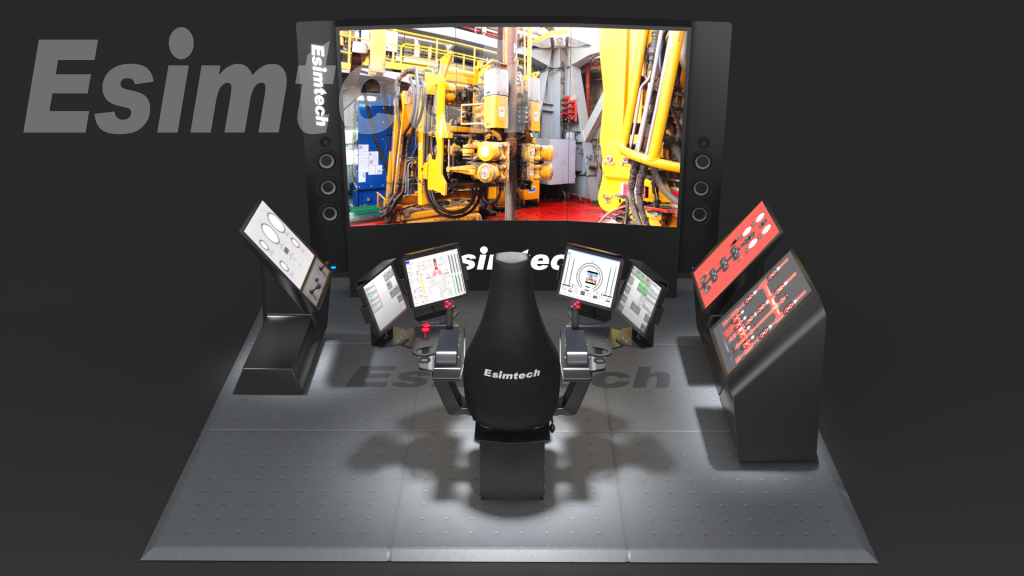
It is difficult to locate and recreate the overflow and blowout occurrence when conducting well control training for petroleum industry employees. To address this issue, Esimtech introduced an advanced well control simulation training system that uses 3D scene reconstruction technology to reproduce the overflow phenomenon at a low cost and with high realism, and there are corresponding virtual characters in the 3D scene to replace the students in operation.
What Is Well Control Simulation Training System
A well control simulation training system is a simulation training system designed for use in blowout prevention operations in the oil and gas drilling industry. The system is primarily utilized to assist trainees in learning and mastering operating procedures as well as well control theory understanding.
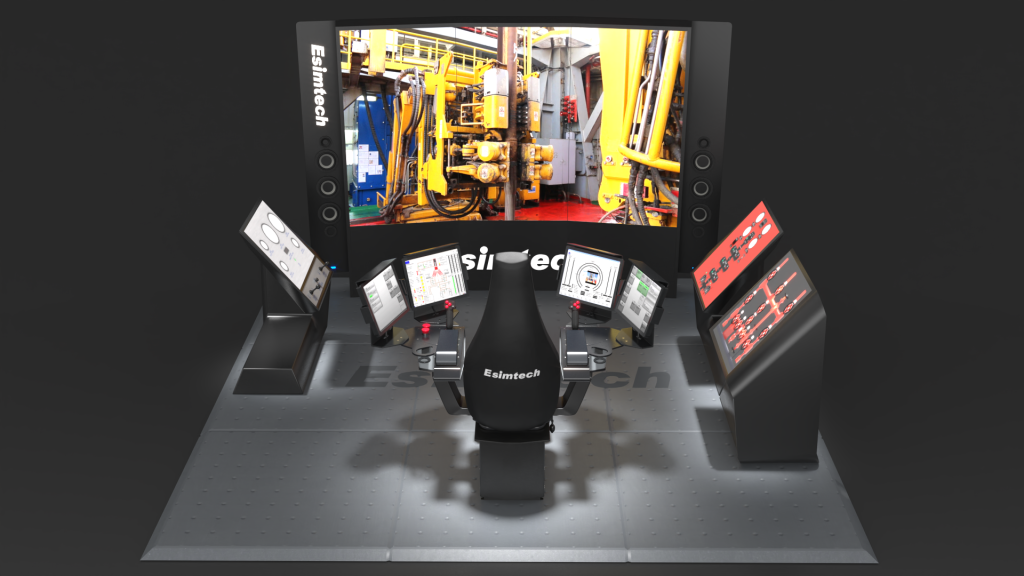
The system uses 3D visualization technology to recreate the well control operation site and can provide virtual reality training on operation rules. It uses mathematical models to simulate various operating circumstances, parameters, and relationships between parameters in the petroleum engineering process, such as pressure, torque, drilling rate, discharge rate, and so on. The students' perceptual knowledge will be strengthened by the addition of semi-physical equipment, the shape of which is highly consistent with that of the genuine equipment and whose internal circuit digitally communicates numerous signals. It encompasses the entire training process, including teaching, learning, training, and examination, so that each student can receive high-quality training results. At the same time, the system also developed a theoretical examination training system to assist students in theoretical study and assessment.
The Benefits Of Well Control Simulation Training System
The Well control simulation training system is the result of a collaboration between petroleum engineering, computer science, and virtual reality technologies. It can complete training programs for primary, intermediate, and senior workers in areas such as tubing tripping, sand flushing, lead mold printing, eccentric roller shaping, TCP perforation operation, pipe scraping after perforation, downhole control technology, and so on. Its primary purpose is to train new staff, downhole operators, and on-site supervisors. Trainees can master the most often used downhole operation construction technology and downhole operation well control technology by using this method.
3D interactive animation in action
The UI is user-friendly and straightforward to use.
Well control technology simulation that is reasonable
Voice prompts and realistic sound effects
Fair evaluation of all intellect scores
Stable and trustworthy industrial components
Real-time voice prompting
Project flexibility, methodical and extensive training content
Industrial PLC control with high stability
Through this training system, students can study the working principle and operation method of a downhole operation simulator, fracturing and acidizing process, and workover rig process, among other things.

Applications Of Well Control Simulation Training System
The Well Control Simulation Training System is a sophisticated training tool that simulates well control scenarios and equipment, allowing operators to practice their skills and procedures in a safe and regulated setting. The
Well Control Simulation Training System can be used for a variety of purposes, including:
Well Control Simulation Training System is a prominent tool in the drilling business for training operators on well control methods. It mimics drilling equipment and helps operators to practice responding to well control events like kicks and blowouts.
Well intervention: The Well Control Simulation Training System is used in the well intervention sector to train operators on well control methods such as wireline, coiled tubing, and snubbing operations. It simulates well intervention equipment and allows workers to practice controlling and monitoring the well while performing these procedures.
Rig personnel training: The Well Control Simulation Training System is used to train rig workers on well control techniques, including drillers, assistant drillers, and rig crews. It simulates the drilling rig and allows staff on the rig to practice responding to well control events.
In the event of a well control emergency, the Well Control Simulation Training System is utilized to teach emergency response teams on well control protocols. It mimics emergency response equipment and enables teams to practice responding to well-controlled events.
Regulatory compliance: The Well Control Simulation Training System is used to ensure that well control regulations and standards are followed. It enables drilling companies to verify that their workers are properly trained and equipped to respond to well control events.
System Requirements for Control Simulation Training
Specific Well Control Simulation Training System requirements can vary depending on the application and sector. However, the following are some general specifications for a typical Well Control Simulation Training System:
The simulation software is an important component of the Well Control Simulation Training System, and it must be able to precisely recreate the well control scenarios and equipment being simulated. The software should be adaptable to various settings and conditions, and it should be capable of providing feedback on operator performance.
Control panels: The control panels provide a realistic interface for operators to control the simulation. They should be user-friendly and simple to use, and they should be intended to mirror the real controls and buttons used in the well control equipment being replicated.
Computer systems: Computer systems control simulation software and data, and they must be able to run simulation software smoothly and without latency. They should also be able to store and analyze operator performance data.
Hardware: Well Control Simulation Training System may require extra hardware, such as sensors, actuators, and other equipment used in the well control equipment being simulated, depending on the application. This gear should be able to integrate with simulation software and provide operators with realistic feedback.
Training materials: To use the Well Control Simulation Training System effectively, operators must have access to training materials such as user manuals, videos, and other resources that explain how to operate the simulation software and control panels.
Emergency response equipment: Well Control Simulation Training System may require emergency response equipment, such as blowout preventers and other well control equipment, for emergency response training. This equipment should be able to integrate with simulation software and provide operators with realistic feedback.
Why Well Control Simulation Training System Is Important
The well control simulation training system is a valuable tool for the oil and gas industry because it provides a safe and regulated environment for teaching and practicing well control techniques. Well control is a key part of drilling operations, and the implications of being unprepared for well control events can be disastrous, including loss of life, environmental harm, and large financial losses. Some of the reasons why Well Control Simulation Training System is vital are as follows:
Safety: The Well Control Simulation Training System offers operators with a safe and regulated environment in which to practice their well control operations. During drilling operations, this decreases the chance of accidents, injuries, and equipment damage.
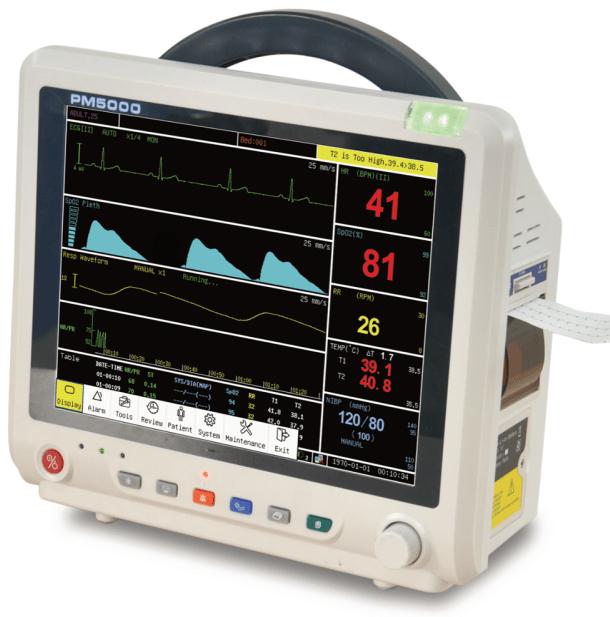
A patient monitor, as we all know, is a medical instrument that is often employed in disease treatment. During use, it continually monitors the patient's physiological parameters, detects shifting trends, and can alarm and remind abnormal monitoring signals to alert clinicians to crucial conditions for emergency treatment and therapy.
It is critical to comprehend the monitor, whether it is a patient or a family member, and being able to understand the monitor will also make the patient's companion feel more at ease and secure.Patient monitors are tools that are used to closely monitor and assess the condition. They are classified into two types: desktop monitors and telemetry monitors.
What is a patient monitor?
The patient can walk while wearing a telemetry monitor, which is mostly used for patients who need to monitor their heart rate. It may continuously record the patient's heartbeat rhythm. If an aberrant heartbeat is found, it can be evaluated retrospectively.
Desktop monitors frequently record heart rate, blood pressure, and breathing rate, as well as identify hypoxia by measuring finger oxygenation.
The main application scenarios of the patient monitor
There are several monitor application scenarios, and monitor devices are required both within and outside the hospital.
Different sorts of monitoring products will be employed depending on the clinical demands. Monitoring goods are used in the following scenarios:
1. Emergency, outpatient, general ward, intensive care unit, operating room, in-hospital transfer, and so on.
2. Outside of the hospital, for example, at home.
What are the values on the patient monitor?
The ECG on the ECG monitor is an electrocardiogram in general, and the right side is a column of values from top to bottom. The heart rate is shown by the green value. Non-invasive blood pressure (NIBP) is also known as blood pressure. SpO2 is blood oxygen saturation. RR is the respiratory rate. TEMP is body temperature.
The following is the number reference:
Heart rate: A normal person's heart rate ranges between 60 and 90 beats per minute.
Blood pressure: Blood pressure is often checked one to two hours following surgery. The two red readings on the left and right indicate systolic and diastolic blood pressure, respectively. The normal systolic blood pressure range is 90-140mmHg, and the normal diastolic blood pressure range is 60-90mmHg.
Blood oxygen saturation: In order to carry oxygen, hemoglobin in human blood must combine with oxygen. Normal bodily functions necessitate the consumption of oxygen. The capacity of oxyhemoglobin in human blood, which is typically between 95% and 99%, is represented by blood oxygen saturation.
Non-invasive blood pressure: Non-invasive blood pressure monitoring uses the Korotkoff sound detection method, and the brachial artery is occluded with an inflatable cuff. A variety of distinct tones will appear during the pressure drop blocking operation. Systolic and diastolic blood pressure can be calculated based on tone and time.
A microphone is utilized as a sensor during monitoring. When the cuff pressure exceeds the systolic pressure, the blood artery is squeezed, the blood under the cuff stops flowing, and the microphone receives no signal.
When the microphone detects the first Korotkoff sound, the cuff pressure is systolic. The microphone then measures the Korotkoff sound again, this time from the attenuated stage to the quiet stage, and the matching cuff pressure is the diastolic pressure.
Body temperature: The outcome of the body's metabolism, body temperature is one of the conditions for the body to carry out regular functional activities. The temperature inside the body is referred to as "core temperature" and reflects the condition of the head or torso.
When can I stop using the patient monitor?
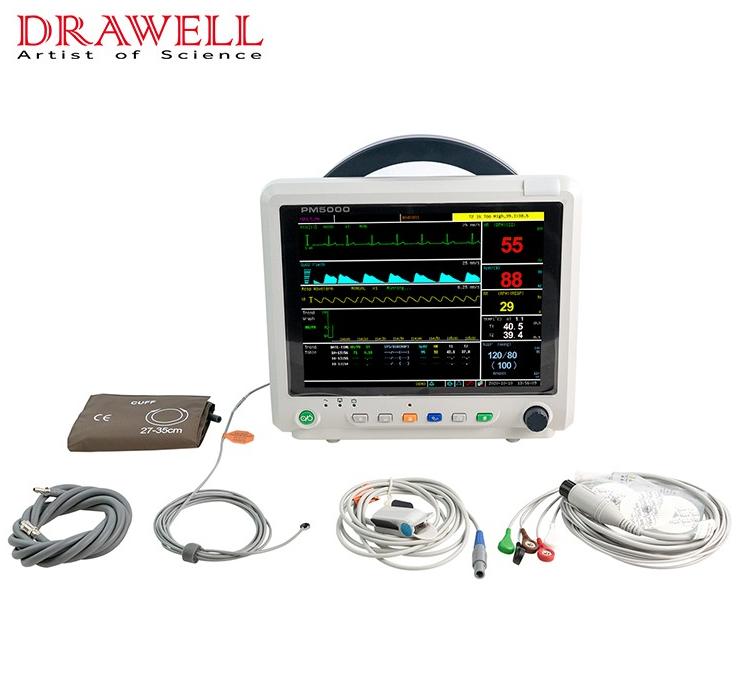
The desktop monitor in the hospital can restrict the patient's movement and cause discomfort. As a result, many patients expect to be released from monitoring as soon as their health improves slightly. Is this correct? When will I be able to remove the ECG monitor?
The improvement in the sickness that you observe is merely an improvement in the symptoms or the surface of the patient monitor. The natural history of the condition, the severity of the underlying ailment, and the findings of laboratory tests will all be considered by a physician when determining disease improvement. The monitor can only be turned off with the doctor's permission after all examinations have been finished.
A web guiding system is made up of several key components, including a web guide sensor, a web guide controller, a web guide actuator, a human-machine interface, a power supply, a mechanical structure, communication interfaces, diagnostic and monitoring tools, and safety precautions.
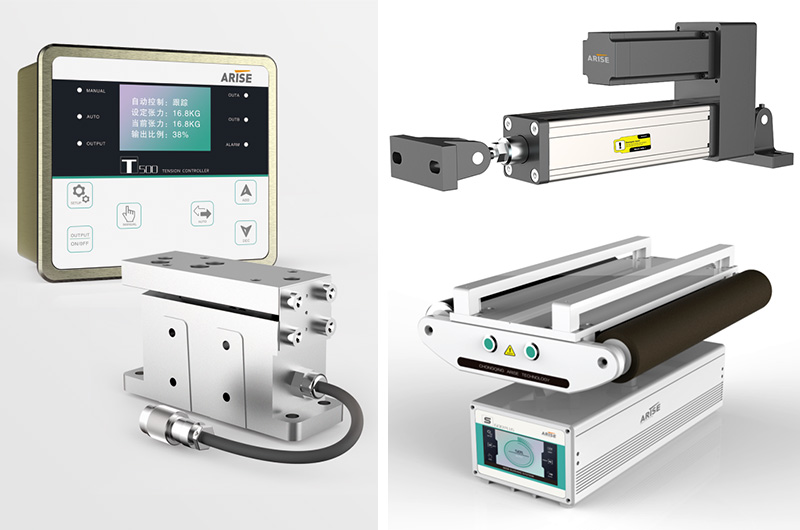
Web Tension Control Devices Of Web Guiding System
Because it ensures correct tension in the moving web throughout manufacturing operations, web tension control is an important aspect of a web guiding system.
Load cells
Load cells are sensors that measure and quantify the force exerted to the web by the roller or other guiding devices. They convert tension force into an electrical signal that is used by the controller to control tension.
Brakes
Brakes are mechanical or electromagnetic devices that apply controlled resistance to the web, hence controlling tension. Magnetic powder brakes can be applied directly to the web or through a tension control mechanism like a dancer roller or a pneumatic brake.
Clutches
Clutches are mechanical devices that generate torque in order to manage web tension. By engaging and disengaging the web from the motor system, they allow for precise tension control.
Dancer rollers
Free-rotating rollers used to gather or release web tension are known as dancer rollers. They move up and down in reaction to web tension and give feedback to the controller, which modifies the tension.
Pneumatic or hydraulic cylinders
Pneumatic or hydraulic cylinders can be used to apply or release strain on the web by adjusting the position of the guiding devices or rollers. By manipulating them, the controller manages the tension in the web.
Inverters or drives
Inverters or drives regulate the speed of the motors that power the web guiding system. The tension in the web can be changed by modifying the motor speed.
Algorithms And Controllers For A Web Guidance System
PID controllers (Proportional-Integral-Derivative)
The web PID controller is commonly used to adjust web tension and position in web guiding systems. They compute the difference in web position or tension between the desired position or tension and the actual position or tension measured by the sensors. The controller then changes the guiding devices or rollers by providing control signals that provide proportional, integral, and derivative actions to rectify the error and maintain accurate web alignment.

PLC (Programmable Logic Controller)
Web guide controllers that take sensor inputs, execute control logic, and generate control signals for guiding devices or rollers are known as PLCs. PLCs are programmable and can be configured to perform a variety of control techniques, such as PID control, feed-forward control, and advanced control algorithms, based on the requirements of the production process.
Feed-forward control
The mechanism of feed-forward control prevents web misalignment by predicting changes in web tension or position based on known process factors. Feed-forward control algorithms predict web behavior using mathematical models or empirical data and provide appropriate control signals, improving system responsiveness and accuracy.
Adaptive control
Adaptive control is a control strategy that adapts control settings in response to changing process conditions in order to maintain optimal performance. Adaptive control algorithms update the control settings on a continual basis based on real-time sensor data, responding to changes in web properties, machine speed, and other process variables, ensuring perfect web directing even under changing conditions.
Fuzzy logic control
Fuzzy logic control is a type of control system that uses fuzzy logic to process sensor inputs and generate control signals. Fuzzy logic provides a mathematical foundation for dealing with uncertainty. Fuzzy logic controllers can deal with ambiguous or imprecise inputs and are useful in web guide systems where process variables are not well-defined or change over time.
Neural network control
Neural network control is a control method that uses artificial neural networks to process sensor inputs and generate control signals. Neural networks have the ability to learn from previous data and adapt to changing process conditions, making them ideal for sophisticated nonlinear and dynamic web guiding systems.
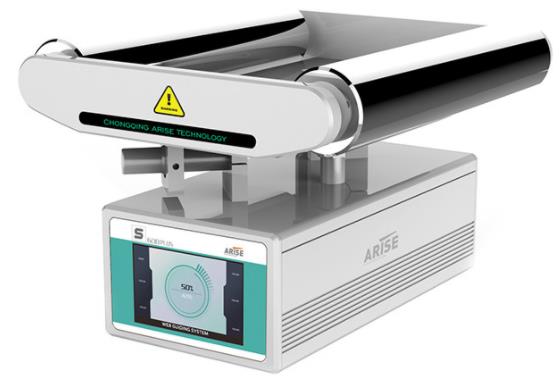
User Interface And Operator Controls Of Web Guiding System
The user interface and operator controls of a web guiding system are designed to make it easy for operators to interact with the system and monitor its performance.
HMI (Human-Machine Interface)
The HMI is the graphical interface that allows operators to communicate with the web guidance system. It typically incorporates a touchscreen display that provides visual feedback on the condition of the system, such as web position, tension, and alarms. The HMI may also allow operators to alter control parameters and configure system settings, as well as set desired web position or tension.
Control panel
The control panel is a physical interface that allows users to control the web guidance system through the use of buttons, switches, and knobs. It may provide options for adjusting the guiding devices or rollers, setting tension limits, starting system calibration, and conducting other manual control tasks.
Remote control
Some web guiding systems may additionally provide remote control, allowing operators to interact with the system via remote control devices or a remote access interface. Remote control makes it easier and more flexible to run the system from various locations inside the manufacturing environment.
Alarms and notifications
The user interface may incorporate alarms and notifications to alert operators to any flaws or abnormalities in the web guiding system, such as web misalignment, tension variances, or system malfunctions. Alarms and notifications can help operators identify and address problems quickly, allowing the system to run smoothly and effectively.
Data visualization and logging
The user interface may display visual representations of real-time and historical data, such as web location, tension, and other process factors. Data visualization can help system administrators monitor system performance, spot patterns, and make informed decisions. Data logging is another option that allows operators to examine historical data for troubleshooting, analysis, and process optimization.
System status and diagnostics
The user interface may display information about the system's health, communication status, and diagnostics. Indicators, status messages, and diagnostic tools can all be used to convey information to operators about the performance and health of the system.
Help and documentation
The user interface may also incorporate aid and documentation tools such as user manuals, online help, and troubleshooting guides to assist operators in effectively operating and maintaining the web guidance system.
Summary
The web guiding system's components work together to accurately align and steer online material during production operations, ensuring high-quality output and efficient operation.
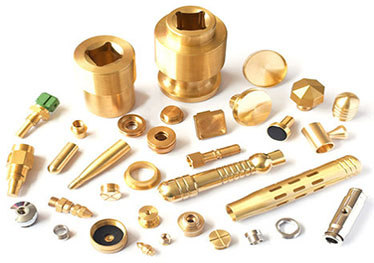
Fasteners, for example, can be made in a variety of techniques, including metal stamping, CNC machining, and others. Before selecting on CNC machining or stamping, several things should be considered for manufacturing fasteners. Cost, production speed, processing materials, and so on.
Introduction of Metal Stamping
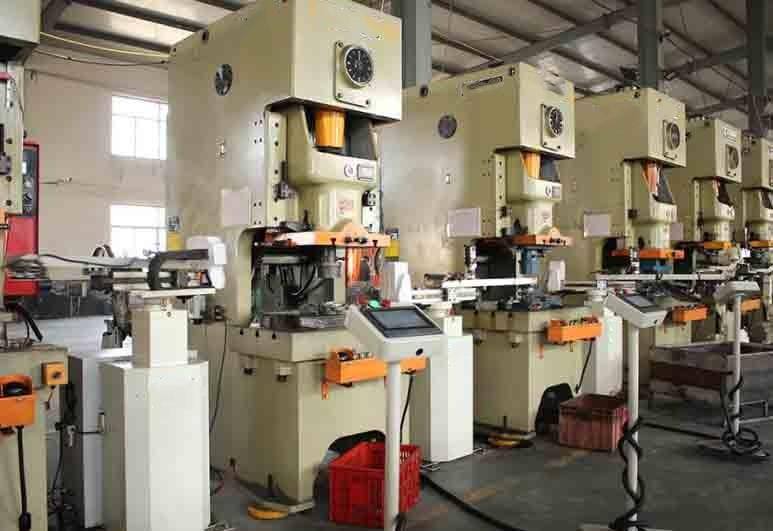
Stamping machinery
Metal stamping is the process of deforming or breaking stainless steel, iron, aluminum, copper, and other plates and other materials with punches and dies to obtain a specific shape and size. It entails stretching and blanking the metal plate in two or three dimensions. Perforation and other operations can also be used in the metal stamping process.

The following glossary defines common technical words used in metal stamping parts.
1. Deep drawing: A stamping process that converts raw steel or process parts into hollow parts or changes the shape and size of hollow parts. The flow of material outside the bottom of the punch into the die mostly forms the hollow part during deep drawing.
2. Trimming: A stamping procedure in which the forming process's edge is trimmed with a metal stamping die to have a specific diameter, height, or shape.
3. Punching: A punching technique that separates waste from the material or process piece along the closed contour and creates the desired hole in the material or workpiece.
4. Flanging: A stamping procedure that turns the material into a short side that stands on the side of the contour curve.
5. Flipping hole: A stamping procedure in which the material is transformed into a side flange around the inner hole's circle.
6.Blanking is a stamping technique used to separate materials along a closed outline. The separated material becomes a workpiece or process piece, most of which are flat.
7. Shaping: a stamping technique that uses material flow to adjust the shape and size of process parts in a small amount to assure workpiece precision.
When compared to CNC machining, stamping is a relatively inexpensive and quick method of production. Metal stamping is the ideal choice when speed is the most important factor. CNC machining, on the other hand, is more advantageous when complicated or high-precision forms are required.
Introduction of CNC Machining
CNC machining is a method of machining that employs digital data to control the displacement of parts and equipment. It is appropriate for a variety of parts, small batches, complex shapes, and high precision.
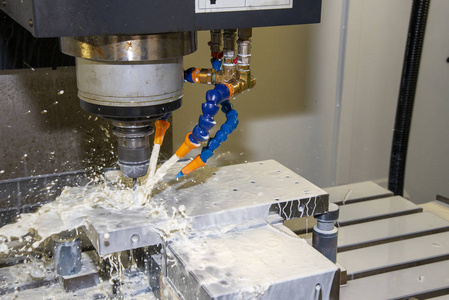
Axis motion driven by a spindle is included in CNC machine tools. A device may contain many spindles that receive computer program instructions to direct each spindle to the appropriate geometry.
CNC machining can provide
High tolerance precision.
Excellent surface polish and bespoke treatments are available.
Even with huge production, repeatability is important.
What Factors Should Be Considered Prior to Choosing CNC Machining or Stamping?
Processing Volume
Metal stamping is suited for high-volume production, whereas CNC machining is ideal for low-volume production.

Price
CNC machining is expensive, whereas stamping is quite inexpensive.
Capacity for Production
Metal stamping provides a better production capacity, faster speed, and a broader application than CNC machining. While it takes time to prepare a punch for production, when properly set up, it can run efficiently and effectively.
Production Speed
Metal stamping is the most efficient method of producing metal shapes. When the production line is working normally, it produces at a high rate. However, metal stamping cannot produce the complicated, high-precision pieces that CNC machining can. Stamped items may require extra processing before usage in order to meet greater precision requirements.
Manufacturing Precision
CNC machining offers great precision, and it serves a variety of manufacturing businesses since its technology is dependable and efficient. CNC machining is the preferred method for advanced components requiring tight tolerances and high.
The status of diverse oil wells and oilfields has become more complex as oil and gas development has progressed, and the hazards faced by the construction site have increased. The drilling and well control simulation system has been widely used for drilling technician experimentation, training, and evaluation. Traditional field training is constrained by the location and ocular aspect, and the training impact is suboptimal. VR virtual reality technology is an excellent tool for drilling well control training.
VR virtual reality technology works with 3D interactive equipment to simulate the well site environment, equipment and facilities, operators, and work processes, as well as the formation structure, borehole trajectory, drilling targets, and other objects that can be seen with the naked eye, and the display effect is accurate, intuitive, and diverse. Reduce the design cost and development cycle significantly.
Why Should You Use a Drilling And Well Control Simulation System?
The drilling and well control simulation system completely covers the knowledge and theory of numerous disciplines, types of work, and equipment used in system engineering, and the teaching system is thorough. Students are not required to take precise measurements of the abandoned oil fields.
The virtual reality system communicates with external handheld devices to display the structure through dynamic viewing, moving, rotating, and scaling actions. The work cycle is primarily illustrated by video and audio.
In comparison to offline training, simulator training is not limited by space or time as it may be carried out by attending a virtual classroom online. It also sets clear and consistent training evaluation standards, which supports unified management. Furthermore, through virtual and realistic scene simulation, online training methods can realize some related dangerous procedures and some advanced training that are difficult to achieve in offline training.
The device also activates the downhole accident mode to imitate the actual process caused by incorrect operation. To expand their study of safety principles and emergency measures, trainees can receive timely error prompts and feedback on training results.
Furthermore, teachers can train numerous students at the same time, saving resources. After completing their study, students can conduct post-class consolidation reviews at any time.
Handling emergencies necessitates the seamless coordination of all links, in addition to training personal practical operation competence. The VR virtual reality remote information sharing system, developed in conjunction with the Internet, spans workshops and departments, allowing for multi-user engagement and collaboration, and significantly increases the effectiveness of department collaboration, workflow mode, and sharing mode. A relationship between the online simulator training system and the offline training system is not required.
Drilling and Well Control Simulation System Applications
Drilling and well control simulation applications include rig installation, well logging, oil and gas gathering and transportation, fracturing and acidizing, coiled tubing, oil and gas production, transportation, downhole operations, emergency exercise simulator, and other areas, with a wide range of 3D oil & gas animations, such as drilling and well control equipment disassembly and working principle animation.
Drilling and well control simulation systems make extensive use of 3D technologies.3D simulation, 3D interaction, and other technologies are utilized to provide realistic simulation and 3D interaction of drilling drill scenes, human situations, equipment and facilities, and environmental conditions.
These simulation training systems can automatically work with trainers to complete various exercise programs, have realistic settings, and provide an excellent user interaction experience thanks to virtual reality technology.
Workflow of Drilling and Well Control Simulation System
The drilling and well control simulation system is a useful tool for increasing the safety, efficiency, and effectiveness of drilling operations in the oil and gas industry. Drilling and Well Control Simulation System can help to decrease accidents and equipment damage, increase operator skills and competency, and promote continuous improvement in drilling operations by providing a safe and controlled environment for training and practice. A Drilling and Well Control Simulation System's work process includes numerous steps:
1.The initial phase is to design and configure the Drilling and Well Control Simulation System. This often entails selecting and setting the right simulators, control panels, and computer systems to model the desired drilling situations and circumstances.
2.Operator training: After the Drilling and Well Control Simulation System is installed, operators are trained to use the simulator and control panel. Drilling techniques, well control, and emergency response procedures are often covered in this training.
3.Simulation: After installing the Drilling and Well Control Simulation System and training operators, simulations can commence. Operators improve their skills and tactics by manipulating the simulator and responding to various scenarios and conditions during simulations.
4.Performance evaluation: The Drilling and Well Control Simulation System delivers real-time feedback on operator performance during simulations. This feedback can include information on drilling parameters, well control, and emergency response methods, which allows operators to discover areas for improvement.
5.Operators can perfect their skills and procedures through further training and practice based on the input supplied by the Drilling and Well Control Simulation System. This can aid in the advancement of continuous improvement and innovation in drilling operations.

Drilling and Well Control Simulation System Benefits
There are various benefits to employing a Drilling and Well Control Simulation System in the oil and gas business. Here are some of the primary benefits:Safety: The Drilling and Well Control Simulation System allows operators to practice their skills and procedures in a safe and regulated environment. This helps to limit the danger of accidents, injuries, and damage to drilling equipment during drilling operations.
Drilling and Well Control Simulation System simulates real-world drilling scenarios and conditions, allowing operators to train in an immersive and realistic environment. This improves their abilities and confidence, preparing them to conduct actual drilling operations.
Drilling and Well Control Simulation System is a less expensive alternative to traditional training methods including on-the-job training or pricey drilling schools. DWCSS can help to reduce operational expenses and boost profitability by minimizing the demand for costly equipment and resources.
Drilling and Well Control Simulation System can help to increase drilling operations' efficiency and productivity. Drilling and Well Control Simulation System can help to reduce the time and resources required to accomplish drilling projects by giving operators the opportunity to practice and perfect their abilities.
Drilling and Well Control Simulation System gives quick feedback on performance, allowing operators to identify areas for development and fine-tune their skills.
The Drilling and Well Control Simulation System of the Future
Drilling and Well Control Simulation Systems have a bright future, with the potential for considerable technological and application improvements. The following are some of the important areas in which DWCSS is likely to evolve in the future:Integration with cutting-edge technologies: The Drilling and Well Control Simulation System will most likely become increasingly integrated with other modern technologies such as artificial intelligence, machine learning, and big data analytics. This integration will make simulations and feedback processes more sophisticated and precise.
Drilling and Well Control Simulation Systems will be used more for remote and virtual training, allowing operators to practice their skills and procedures from anywhere in the world. This will assist to decrease the need for costly and time-consuming travel while also giving operators more flexibility.
Drilling and Well Control Simulation System is planned to become increasingly configurable, with the capacity to construct bespoke training programs adapted to the specific needs and requirements of individual operators and organizations.
Drilling and Well Control Simulation System is predicted to increasingly replicate environmental and safety hazards such as well blowouts, fires, and gas leaks. This will help to improve drilling safety and provide operators with the skills and knowledge required to respond effectively to emergency circumstances.
Real-time data analytics: The Drilling and Well Control Simulation System is intended to improve its real-time data analytics capabilities. This will help operators to make better informed judgments throughout drilling operations and respond to changing conditions more effectively.