
Incubators are commonly used laboratory instruments that provide controlled environments for the growth of cells, tissues, microorganisms, and other biological samples. There are several types of incubators available, each designed for specific applications. In this article, we will explore the what are commonly used incubators, their features, and their uses.

Constant Temperature Incubators:
Constant temperature incubators maintain a steady temperature throughout the incubation process. They are widely used in various fields such as plant biology, microbiology, genetics, and medicine. These incubators simulate specific temperature conditions required for the growth and development of cells, tissues, and organisms.
Constant Temperature and Humidity Incubators:
Constant temperature and humidity incubators, as the name suggests, provide precise control over both temperature and humidity. They are commonly used in experiments and research involving sensitive biological samples that require specific humidity levels in addition to temperature control. These incubators find applications in fields like environmental testing, culture testing, and more.
Carbon Dioxide Incubators:
Carbon dioxide (CO2) incubators create an environment similar to that found in living organisms, particularly for cell and tissue culture. They regulate temperature, CO2 levels, and pH to support the growth and viability of cells. CO2 incubators are extensively used in cell biology, tissue engineering, drug screening, and other related research fields.

Anaerobic Incubators:
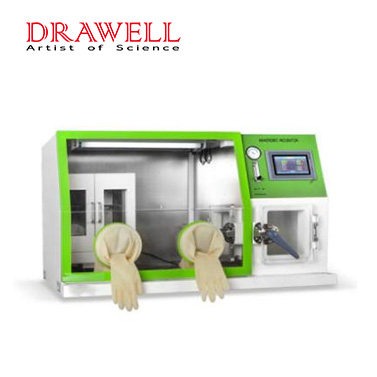
Anaerobic incubator, also known as anaerobic workstations or anaerobic glove boxes, provide a controlled environment devoid of oxygen for bacterial culture and experimentation. These incubators create strict anaerobic conditions, allowing the cultivation of anaerobic organisms that cannot survive in the presence of oxygen. They are essential tools for anaerobic biological detection and scientific research.
Mold Incubators:
Mold incubators are specifically designed for the cultivation of eukaryotic microorganisms such as molds. They typically maintain room temperature and a specific humidity level to support mold growth on solid substrates. Mold incubators feature refrigeration systems, heating systems, air humidifiers, control circuits, and operation panels to regulate temperature and humidity inside the incubation chamber.
Each type of incubator has distinct features and applications. It is important to select the appropriate incubator based on the specific requirements of the experiment or research being conducted. Additionally, proper use and maintenance of incubators are crucial to ensure accurate and reliable results.
In conclusion, the various types of incubators, including constant temperature, constant temperature and humidity, carbon dioxide, anaerobic, and mold incubators, offer researchers and scientists the ability to create controlled environments to support a wide range of biological studies and experiments. Understanding the differences and capabilities of these incubators will enable users to choose the most suitable option for their specific needs.
Stockless anchors are gaining popularity in marine applications due to their versatility and compact design. These anchors, suitable for small boats and large ships alike, offer a range of advantages for various seabed conditions. In this article, we will explore on the topic of what are stockless anchors, including the definition, design components, types, installation, maintenance, and the advantages and disadvantages of stockless anchors.

Definition of Stockless Anchors:
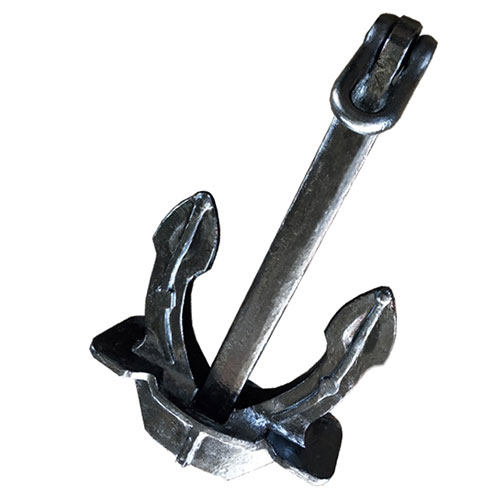
A stockless anchor is a type of marine anchor that lacks a vertical bar called a stock, which assists in proper pivoting and setting on the seafloor. Instead, the shank of a stockless anchor is directly attached to the anchor chain or rope. This design allows the anchor to rotate and dig into the seafloor without the need for a stock. Stockless anchors are popular due to their small size, ease of use, and ability to provide reliable holding power in various seabed conditions.
Design and Components of Stockless Anchors:
While the design and components of stockless anchors may vary depending on the manufacturer and intended purpose, they typically consist of the following parts:
Shank: The shank serves as the anchor's main body, providing the necessary weight and structure to keep the anchor in place. It features a bent or fluked end that aids in digging into the seafloor.
Flukes: Flukes are the flat, curved, or pointed sections of the anchor that dig into the seafloor, providing gripping power. They can be shaped like a scoop or a wing and vary in number, size, and angle based on the anchor's size and type.
Crown: The crown is the top part of the anchor, typically featuring a hole or slot for attaching the anchor chain or rope.
Tripping Ring: A small ring attached to the crown, the tripping ring is used in emergencies to remove the anchor from the seabed.
Chain or Rope: The anchor chain or rope connects the anchor to the boat, supplying the necessary tension to keep the anchor in place. A shackle is often used to secure it to the anchor's crown.
Various Types of Stockless Anchors:
Stockless anchors come in different types, each suited for specific marine applications and seabed conditions. Some common types include:
AC-14 Anchor: This anchor offers excellent dragging resistance and holding force, commonly found on offshore oil rigs and large marine vessels.
Hall Anchor: Lightweight and compact, the Hall anchor is ideal for smaller vessels, providing good holding power in soft to moderate seabed conditions.
Spek Anchor: Designed for challenging seabed conditions like rocks, the Spek anchor is a heavy-duty option frequently used on large ships and offshore rigs.
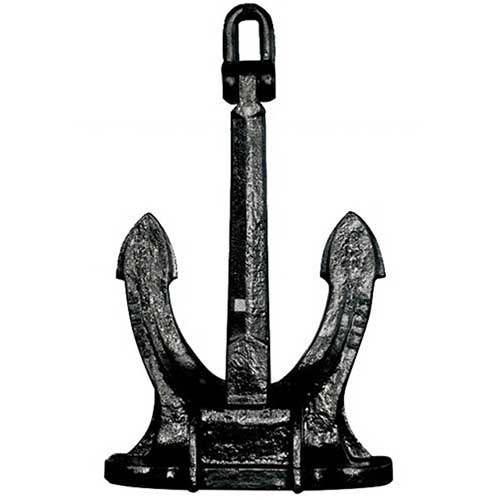
Pool Anchor: Pool anchors are versatile and adaptable, suitable for a variety of bottom conditions such as mud, sand, and rock. They are commonly seen on small to medium-sized ships.
Baldt Anchor: With high-strength capabilities, Baldt anchors are used in heavy-duty marine applications like oil rigs and large cargo ships.
Delta Anchor: Popular among recreational boats and smaller commercial vessels, the Delta anchor offers strong holding ability across different seabed situations.
Installation and Maintenance of Stockless Anchors:
Proper installation and maintenance are crucial for the optimal performance and longevity of stockless anchors. Follow these guidelines for installation and maintenance:
Installation:
Before installation, inspect the chain or rope for any damage such as fraying, rust, or wear and tear. Replace any damaged components before proceeding.
Ensure the anchor is appropriate for the size and weight of the vessel and the seabed conditions. Follow the manufacturer's instructions regarding chain or rope lengths.
Lower the anchor carefully and gradually, paying out the chain or rope to avoid damaging the anchor and to ensure proper placement on the seabed.
Verify that the boat is securely fastened in place once the anchor is set.
Maintenance:
After each use, inspect the anchor for any damage or wear, such as bent flukes or cracks in the shank. Rectify any damage or consider replacing the anchor if necessary.
Regularly clean the anchor to prevent corrosion and rust, which can weaken its holding capacity.
Inspect the chain or rope periodically for deterioration, corrosion, or fraying. Replace any damaged sections promptly.
Follow the manufacturer's instructions for maintenance and inspection intervals, which may vary depending on the material and usage of the anchor.
Advantages and Disadvantages of Stockless Anchors:
Consider the following advantages and disadvantages when selecting a stockless anchor for your marine application:
Advantages:
Compact design facilitates easier handling and storage.
Easy deployment, especially in shallow waters.
Good holding power on various seabed conditions.
Reduced risk of snagging on underwater debris.
Versatile and suitable for a wide range of vessels.
Disadvantages:
Limited pivoting capability compared to anchors with stocks.
May not perform as effectively in high winds.
Limited holding power in hard seabeds.
May require more frequent maintenance due to compact design.
Higher cost, particularly for high-strength materials.
Summary
Stockless anchors offer a compact and versatile solution for marine applications. Their design, lack of stock, and various components enable ease of use, reliability, and efficient anchoring. By understanding the advantages and disadvantages of stockless anchors, as well as considering specific requirements for each application, you can make an informed decision when selecting the most suitable anchor for your marine needs.
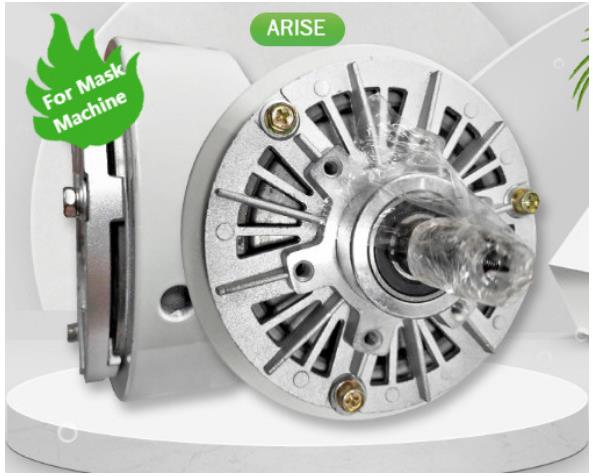
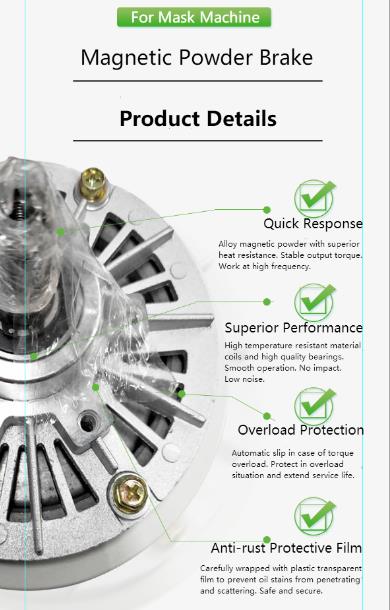
A magnetic powder brake is a device that controls the torque between a motor and a load in an exact and variable manner. It is an essential component in many industries that require accurate torque and tension control. Its durability, versatility, and ease of use make it a desirable solution in a variety of industries.
Magnetic Powder Brake is widely used in a variety of industries.
Magnetic powder brakes are useful in these industries because they enable precise and consistent control over torque and tension during the manufacturing process. This is essential for ensuring that the end product satisfies the specifications and is consistently of high quality.
Printing Industry
It is used in printing machines to control the tension of the web or paper during the printing process. This ensures that the printed material is consistently of high quality and devoid of aberrations.
Packaging Industry
It is used to regulate the tension of the packaging material throughout the manufacturing process. This is critical for ensuring that the packaging material is wound correctly and without slippage or wrinkling.
Textile Industry
A magnetic particle brake is used in textile industry to regulate yarn tension during the spinning and weaving operations. This is required to ensure that the yarn is tightly twisted and that the cloth is of uniform quality.
Industrial Equipment
During the manufacturing process, it is utilized to adjust torque and tension in various industrial machinery such as extruders, coaters, and slitters. This is essential for ensuring that the end product is consistently of high quality and meets the required parameters.
How Does a Magnetic Powder Brake Work?
The working of a magnetic powder brake is that the braking force is generated by the interaction of magnetic particles in powder form with the magnetic field created by an electromagnetic coil. A rotor and a stator comprise a magnetic powder brake. The rotor is the output shaft that is connected to the load, whereas the stator is the stationary component that houses the electromagnetic coil. Between the rotor and the stator is a magnetic substance sandwiched. When a current is passed through the electromagnetic coil, it generates a magnetic field that interacts with the magnetic powder, causing the particles to align in the direction of the magnetic field. When the rotor rotates, the magnetic particles are dragged along with it, creating a resistance force in the powder that opposes the rotor's motion. This resistance force is proportional to the strength of the magnetic field produced by the electromagnetic coil, which is directly proportional to the input current. The rotor’s braking force can be varied by adjusting the input current to the electromagnetic coil. This allows for exact adjustment of the torque supplied from the motor to the load.
Factors to Consider For Choosing a Magnetic Powder Brake
Output torque requirements
When choosing a magnetic powder brake, the first aspect to consider is the amount of torque required to stop or retain the load. You must select a brake that can provide the necessary torque to ensure that the load is managed safely and correctly.
Speed requirements
The load speed and rotating speed of the brake must be considered while selecting a magnetic powder brake. You must ensure that the brake is designed to perform at the speeds required by your application.
Environmental factors
The environment in which the brake will be used is an important factor. Temperature, humidity, and dust levels can all have an effect on brake performance and lifespan. You must choose a brake that is intended to work in the environmental circumstances of your application.
Power requirements
Magnetic particle powder brakes require electricity to operate, and the power supply must be compatible with the brake. You must ensure that the power supply voltage, frequency, and current are appropriate for the brake.
Size and weight
If space and weight are constraints in your application, the physical size and weight of the brake are critical considerations. If space and weight are significant considerations, a small and lightweight brake should be selected.
Cost
The price of the magnetic powder brake is also an important issue to consider. To obtain the most bang for your buck, you must weigh the cost of the brake against its performance and features.

Cold heading is a non-cutting metal pressure processing technology that falls under the topic of metal pressure processing. Cold extrusion process is a key procedure in the manufacturing of fastening pieces. Cold extrusion is the best method for producing bolts, screws, nuts, and rivets.
What is Cold Extrusion
Cold heading is a critical component of precision plastic forming technique. Cold extrusion is the process of inserting a metal blank into a mold cavity while it is still cold. The metal material is forced to form plastic flow under the influence of high pressure and a specific speed in order to obtain the desired shape, size, and some extrusion parts with specific mechanical qualities.
Obviously, the purpose of cold extrusion processing is to control metal flow via molds, and a significant quantity of metal volume is transferred to produce parts. In fact, any fastener can be formed not only by cold heading, but also by a range of deformation methods like as extrusion, punching, and rolling.

Advantages Of Cold Extrusion
1. Reducing the use of raw materials.
Cold extrusion uses plastic deformation of metal to create the required parts, which reduces the cutting process and increases resource use. Cold extrusion materials can often be utilized at a rate of more than 80%.
2. Improve labor productivity
Manufacturing parts using a cold extrusion technique rather than a cutting process can enhance production several times, if not dozens of times.
3. The pieces have the perfect surface roughness and size precision.
Cold extruded parts rarely require re-cutting and only need to be ground for exceptionally high standards.
4. Improve part mechanical properties
The cold work hardening of metal through cold extrusion processing and a reasonable fiber streamline distribution inside the parts results in a substantially higher strength of the parts than the raw materials. Furthermore, a proper cold extrusion process can create compression stress on the surface of the pieces, increasing fatigue intensity. As a result, some components that require heat treatment enhancement can be saved by using the cold extrusion procedure.
5. Machinable parts with complicated shapes and difficult to cut processing.
Such as irregular section, complex inner cavity and teeth, and invisible inner grooves.
6.Reduce production cost
Because the cold extrusion process has the advantages of saving raw materials, increasing productivity, reducing the amount of cutting processing, and using inferior materials instead of high-quality materials, which can greatly reduce cost.
Difficulties In Application of Cold Extrusion Technology
1. High requirements for molds
When cold extruding, the deformation resistance of metal blank is significantly increased under the pressure stress in the mold, which makes the stress suffered much larger than the general stamping mold. In addition to high-intensity, the mold also needs sufficient impact toughness and high wear resistance.
2.A large tonnage press machine is required.
Because of the high deformation resistance of the blank during cold extrusion, press machines weighing hundreds or even thousands of tons are required.
3.Only applicable on a large production scale
Because of the high cost of cold extrusion molds, it is often only appropriate to the manufacture of large quantities of parts. The minimum quantity is 50000 pieces.
4. The surface treatment must be done ahead of time.
Surface treatment not only adds procedures and requires a big manufacturing area, but it is also difficult to automate.
5.Inappropriate for high-intensity material processing
6. Part deformation and corrosion resistance reduce
The plasticity and impact toughness of cold extruded parts have become worse, and the residual stress of the parts is large, which will cause parts deformation and produce stress corrosion.
Development Trend of Cold Extrusion Technology
1.As the energy crisis worsens, people will pay more attention to environmental quality, and increased market rivalry will encourage the growth of forging production in the direction of efficiency, high quality, refinement, energy savings, and material savings. As a result, the production of refined forging parts produced by extruding forming and other techniques will compete in the market.
2.The car has evolved in the directions of lightness, fast speed, and stability. Higher requirements for size precision, weight accuracy, and mechanical qualities of forging parts have been proposed, which will encourage the development of refined production technology.
3. Cold extrusion production is still evolving toward specialized and large-scale organizational production.
4. Extrusion machines will become a trend in the future. The refined production development of small and medium-sized forging parts, as well as the application of cold extrusion technology, will drive the development of multi station cold extrusion machines, precision presses, and unique machines designed and constructed for some forged parts.
Summary
Cold extrusion technology is a high-precision, high-efficiency, high-quality, and low-consumption manufacturing technique that is typically used in large-scale production of fastening parts.

Diablo IV's primary world is a massive open world medieval apocalypse with gnostic mood, blood, gore, and dark comedy. Sanctuary is a location of calamity, degradation, and pain.
1. Open World
Diablo IV is a medieval role-playing game influenced by occult, demonic, and biblical elements rather than standard high fantasy. The globe will be bigger than ever, with regions 10-20 times larger than in previous Diablo games.
2.Regions in Sanctuary and Hell
In the open world, there are five separate, contiguous regions: Fractured Peaks, Scosglen, Dry Steppes, Kehjistan, and Hawezar. We shall also visit the Hell dimension. More regions may be added after the initial launch.
3.Local Events
There are several activities available in the open world. Events range from everyday occurrences, such as the Drowned attacking the coastline, to world boss occurrences, such as Ashava, the Pestilent.
4. Towns and Strongholds
Over 100 settlements of varying sizes, including Towns and Strongholds, are scheduled for deployment. Major towns are the game's social hubs, where you can find quests, vendors, a waypoint, and other players. You can examine other players, trade with them, or search for a group.
5.Waypoints
Waypoints are back as a quick way to travel long distances.
There is a navigation system in the open world that allows you to mark a location on the map, which will show the shortest route to that destination on the map.
6.Story and Campaign of Diablo IV
Diablo IV is set decades after the events of Diablo III: Reaper of Souls. Malthael's campaign wiped out 90% of Sanctuary's people and devastated the world. The Angels have abandoned humanity, and Heaven's gates are closed.
Lilith (Daughter of Mephisto, Mother of Sanctuary and Humanity) was summoned to Sanctuary by a wicked ritual for which the Triune is accountable after ages in exile.