
The extraction and utilization of oil have undeniably shaped the modern world, fueling industries, transportation, and daily life. However, this pursuit of a valuable resource is not without its dangers. Oil field accidents, ranging from minor mishaps to catastrophic events, can have profound consequences on human lives and the environment. In this comprehensive exploration, we delve into the intricate causes and impacts of oil field accidents, discuss prevention strategies, and highlight how simulation technology is emerging as a transformative tool in enhancing safety within the oil and gas industry.
Understanding Oil Field Accidents:
Oil field accidents encompass unforeseen incidents occurring during various phases of oil and gas operations, including exploration, extraction, production, transportation, and processing. From equipment malfunctions to explosions and toxic chemical releases, these accidents result from a combination of technical failures, human errors, and external factors. Their consequences can be severe, impacting human lives, the environment, economies, and company reputations.
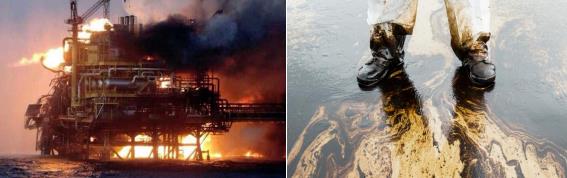
Influences of Oil Field Accidents:
Oil field accidents exert profound influences across environmental, economic, and societal dimensions:
Human Lives: Loss of lives and worker injuries.
Environmental Devastation: Contamination of water bodies, soil, and air.
Economic Disruption: Revenue loss, cleanup costs, legal settlements, and fines.
Reputation and Trust: Public outcry, increased scrutiny, and calls for stricter regulations.
In summation, these accidents cast a long shadow over the environment, economy, society, and policy framework, necessitating comprehensive preventive measures.
Preventing Oil Field Accidents:
A multi-faceted approach is essential for prevention:
Robust Training: Simulation-based training for workers in a controlled environment.
Regular Maintenance: Inspection and maintenance to identify potential issues.
Advanced Technologies: Sensors, monitoring, and predictive analytics for early warnings.
Stringent Regulations: Government oversight to enforce safety standards.
Safety Culture: Fostering a culture of safety within organizations.
Investment in Research: Developing safer extraction methods and technologies.
Role of Simulation in Prevention:
Simulation technology is pivotal in preventing oil field accidents:
Real-World Replication: Identifying vulnerabilities and risks without endangering personnel or the environment.
Training and Education: Virtual traning simulation used in drills for hands-on experience in responding to emergencies.
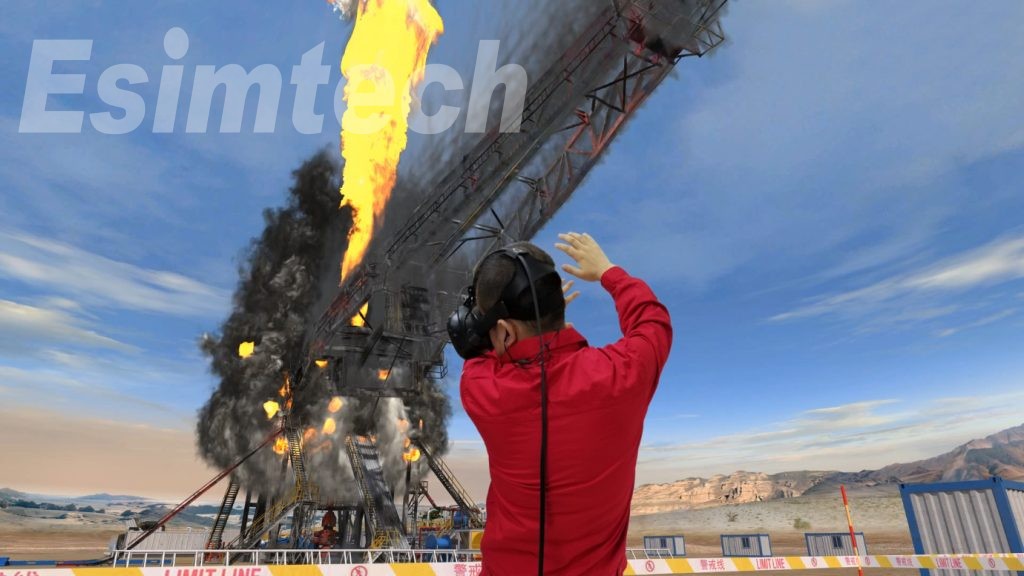
Emergency Response Strategies: Assessing different strategies for optimal responses.
Fostering Collaboration: Stakeholder collaboration in visualizing and analyzing potential accident scenarios.
Real-World Applications of Simulation:
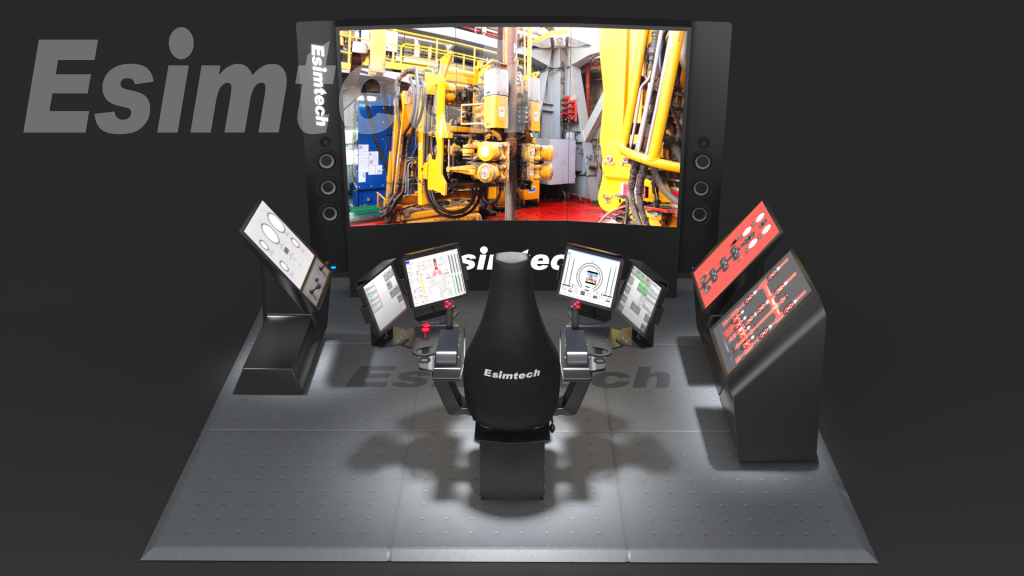
Drilling Operations: Drilling simulators analyze variables like pressure and equipment performance.
Predicting Blowouts: Predicting blowout scenarios to design fail-safes.
Pipeline Integrity: Assessing factors like corrosion and pressure changes.
Conclusion:
Oil field accidents pose significant threats, but simulation technology emerges as a powerful ally in enhancing safety. By providing a controlled environment for analysis, training, and innovation, simulations empower professionals to make informed decisions, prevent accidents, and ensure responsible resource extraction. As technology evolves, simulations will play a vital role in shaping the future of oil field safety.
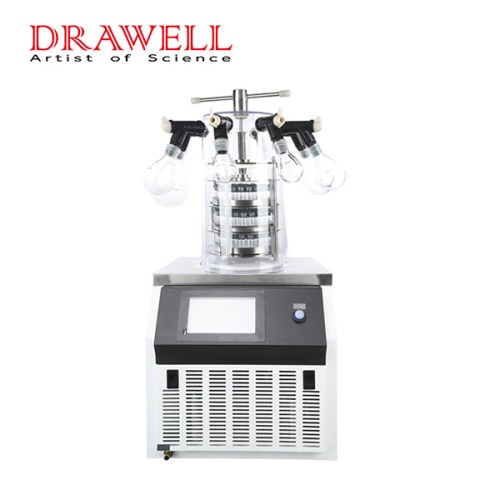
The laboratory freeze dryer, is a cutting-edge device integrating refrigeration, vacuum, heat conduction oil heating, and dehumidification systems for the drying of high-grade materials like medicines, marine organisms, and pharmaceutical intermediates. As the freeze-drying industry expands, it is crucial to address common problems that may arise during its usage, ensuring seamless operation. Let's delve into the widespread applications of freeze dryers and explore practical solutions to potential issues.

Wide Applications of Freeze Dryers:
The primary application scenario for freeze dryers is laboratories, particularly in the drying of high-grade raw materials crucial to various industries. Over the past decade, the freeze-drying industry has experienced rapid development, expanding its field of application. In life science research, vacuum freeze-drying technology plays a pivotal role in antibody, protein, tissue, and microorganism research, making it integral to biopharmaceuticals. Additionally, the pharmaceutical industry widely employs freeze-drying for the preparation of vaccines and antibiotics.
Common Problems and Solutions:
Indoor Temperature Exceeds 30°C:
Issue: The condenser may fail to exert the condensing effect when the indoor temperature surpasses 30°C.
Solution: Maintain an indoor temperature around 28°C by optimizing ventilation conditions. This can be achieved by opening the back door of the condenser or the room door to enhance airflow and cooling.
High Environmental Humidity:
Issue: Elevated humidity levels can lead to electrical failures or short circuits.
Solution: Mitigate humidity issues by incorporating ventilation equipment or opening windows to improve airflow and reduce moisture.
Unstable Power Supply Voltage:
Issue: Deviation from the average working power supply voltage (215V-380V) can render the compressor ineffective.
Solution: Replace the power supply with a qualified one when the voltage is outside the acceptable range. To address varying power supply voltage, consider adding an AVR (220V) or a voltage stabilizer to maintain stability.
Excessive Dust on the Freeze Dryer or in the Environment:
Issue: Accumulated dust on the condenser and compressor can hinder condensation efficiency, impacting the compressor's performance.
Solution: Regularly remove dust from the compressor and condenser covers every month, especially in environments with high dust levels. Use a soft brush to prevent damage to the freeze dryer while cleaning the compressor, condenser, and pipelines.
Ensuring the optimal functionality of freeze dryers involves proactive maintenance and addressing issues promptly By understanding and implementing these solutions, users can enhance the reliability and efficiency of freeze dryers, ensuring their continued success in various scientific and industrial applications.
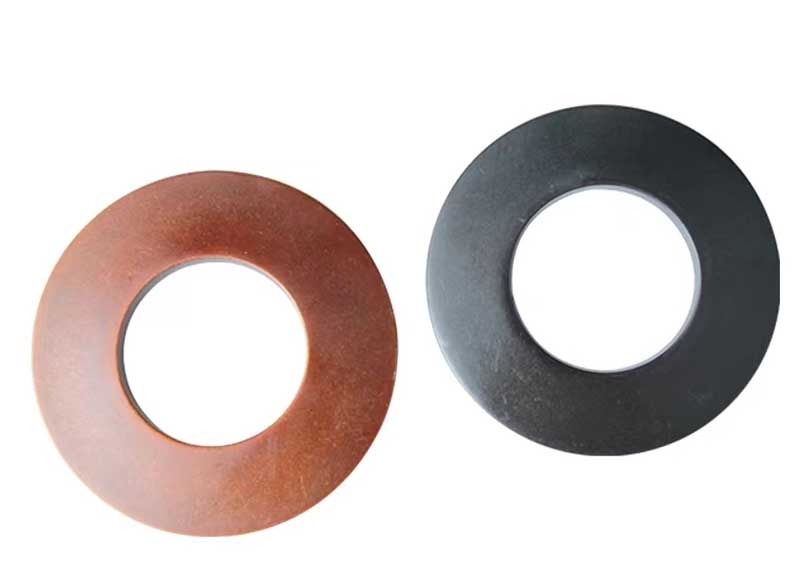
Disc springs, aptly named for their bowl or dish-like shape, are integral components in various maritime, industrial, and mechanical applications. Comprising four key parameters—outer diameter (D), inner diameter (d), thickness (t), and height (H)—these washer-type springs exhibit a truncated conical section and are crafted from metal sheets or forging blanks.

Principle of Disc Spring:
The fundamental principle behind disc springs involves their function as conical annular discs bearing axial loads. Typically, the disc thickness remains constant, with the load evenly distributed on the inner edge of the upper surface and the outer edge of the lower surface. Constructed from spring steel, disc springs excel in withstanding static, impact, or dynamic alternating loads, meeting stringent requirements for fatigue life.
Types of Disc Springs:
Anti-loose Disc Spring:
Application: Ideal for bolts subject to severe vibration but not under excessively large loads. Effectively prevents bolts from loosening and reversing, ensuring lasting and reliable sealing. Versatile for various bolt and equipment configurations.
High-Temperature Preloaded Disc Spring:
Application: Suited for bolt preloading in high-temperature environments, such as flanges, pipe flanges, valves, and heat exchangers. Especially valuable in applications with temperature differences exceeding 100°C.
High Torque Preloading Disc Spring:
Application: Applied in scenarios demanding substantial load and torque, such as pre-tightening valve and pipe flange bolts. Used in diverse engineering applications involving anchor bolts, fans, pumps, centrifuges, heat exchangers, reactors, agitators, generators, pipe supports, and hanger devices.
Buffer Tension Disc Spring:
Application: Widespread use in various industries, including brakes, safety overload devices, mechanical starters, industrial furnaces, clutches, molds, and more.
Advantages of Disc Springs Compared to Other Springs:
Space Efficiency:
Disc springs bear substantial loads in minimal space, making them efficient in applications with spatial constraints.
Variable Stiffness:
By altering the ratio of the inner cone's height to the disc thickness, disc springs exhibit variable stiffness characteristics, providing flexibility in spring curves.
Different Bearing Capacities:
Varying the number or combination of discs enables obtaining different bearing capacities, facilitating adaptability to a wide range of applications.
Long Service Life:
Correctly designed and manufactured disc springs boast a prolonged service life, contributing to their reliability in diverse settings.
How to Select Disc Springs:
When choosing disc springs for specific applications, several factors come into play:
Load Size and Characteristics:
Consider the magnitude and nature of the load, including static, impact, or dynamic loads.
Working Temperature:
Select disc springs suitable for the working temperature range, accounting for variations up to 600°C.
Equipment Working State:
Assess factors such as pre-tightening, stroke, vibration, pulse pressure frequency, and pre-tightening force.
Medium Corrosivity:
Evaluate the corrosivity of the working medium and the pH value, as these factors influence disc spring selection.
Pressure:
Different working pressures in pipes produce varying pulse pressures and thermal expansion and contraction, influencing disc spring selection.
Conclusion:
The versatility, efficiency, and durability of disc springs make them indispensable in a myriad of applications. Whether serving as strong cushioning devices or as components in safety valves and clutches, disc springs continue to play a vital role in diverse industries, offering small deformations, high loading capacities, and extended service lives. As their usage expands, understanding the selection criteria becomes crucial for optimizing their performance in various operational environments.
In the contemporary world, the insatiable demand for energy has driven the exploration and extraction of oil reserves from the Earth's crust. Oil rigs, serving as technical marvels, play a pivotal role in facilitating this intricate process, enabling access to vast quantities of fossil fuels concealed beneath the ocean floor. This article explores the workings of an oil rig, from its construction to the extraction process.
Drilling Operations in the Workings of an Oil Rig
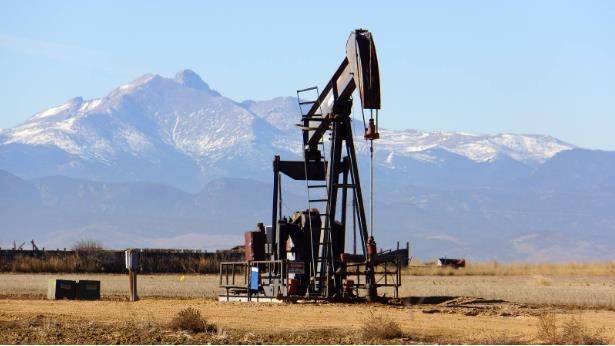
The primary objective of an oil rig is to drill wells for the recovery of oil and gas from beneath the Earth's surface. The process commences with the meticulous selection of drilling locations based on geological surveys and seismic data. Once a suitable location is identified, the construction of the rig begins.
Platform Construction
Oil rigs come in two primary types: offshore and onshore. Offshore drilling rigs are frequently utilized in water, presenting intriguing challenges due to the open sea and drilling depths. Offshore platforms vary in styles, including fixed platforms, floating platforms, and subsea systems. Fixed platforms are erected on concrete or steel constructions anchored to the seabed, while floating platforms float on the water's surface, secured by mooring systems. Subsea systems involve drilling holes in the ocean floor without a visible surface structure.

Drilling Process
Oil drilling involves a multi-step procedure of boring holes through rock layers to access hydrocarbon sources. The process includes several phases:
Site Preparation and Well Design: Extensive geological studies inform the selection of potential drilling sites. Engineers design the well, considering factors like goal depth, expected reservoir characteristics, and the surrounding environment.
Rig Setup: Before drilling begins, the drilling rig, including the derrick, drawworks, and rotary table, must be transported to the site.
Spudding In: The initial drilling, known as spudding in, involves attaching a drill bit to the bottom of the drill string. The rotary table rotates, driving the bit into the ground. Sections of drill pipe are added to reach the desired depth as drilling progresses.
Circulation of Drilling Fluid: Drilling fluid, or "mud," is crucial for cooling the bit, pushing rock cuttings to the surface, and preventing the well from collapsing.
Casing and Cementing: Steel casing is placed into the well to support it and prevent collapses. Cement is poured into the annular gap between the casing and wellbore walls to produce a secure seal, limiting fluid flow between formations and protecting groundwater.
Drill Bit Types: Different drill bits are employed based on the rock formation. Roller cone bits are commonly used for softer formations, while diamond bits are suitable for harder rock.
Measuring and Logging: Sensors and equipment capture data about the well, aiding geologists and engineers in understanding the subsurface environment.
Directional Drilling: Wells may need to be drilled at an angle to access reservoirs beneath impediments or in atypical formations. Directional drilling techniques involve using specialized equipment to control the hole's trajectory.
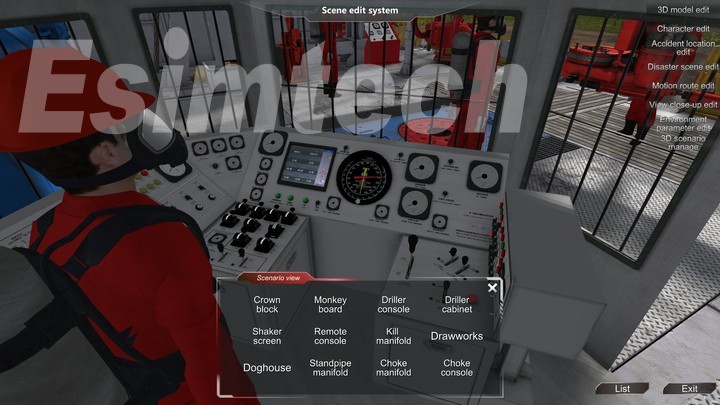
Drilling Engineering Simulations in the Drilling Process
Drilling engineering simulations use computer-based models to simulate and analyze various aspects of the drilling process. These simulations include hydraulic modeling, drilling dynamics modeling, wellbore stability modeling, pore pressure prediction, and wellbore trajectory planning.
Extraction and Production in the Workings of an Oil Rig
After drilling, the extraction and production process begins, constructing channels for oil and gas to flow from the reservoir to the surface.
Casing and Cementing: Steel casing stabilizes the wellbore and prevents collapse. Cement is poured into the annular gap between the casing and rock walls to maintain a secure seal and protect groundwater.
Well Completion: The well is finished by inserting production tubing into the casing, providing a conduit for the passage of oil and gas to the surface while maintaining well integrity.
Extraction and Separation: Oil and gas naturally rise to the surface due to reservoir pressure. Additional measures may be used to improve flow. Extracted fluids are sent to the platform’s processing facilities upon reaching the surface.
Processing and Storage: Separation techniques remove contaminants, water, and gas from the produced oil. Crude oil is produced and stored in tanks on the platform before being transported to refineries for further processing.
Conclusion
Oil rigs involve sophisticated procedures requiring expertise from diverse sectors—from selecting drilling sites and navigating the challenging drilling process to subsequent extraction and production operations. As technology and procedures continue to evolve, oil rig operations will contribute to meeting the energy needs of modern society.
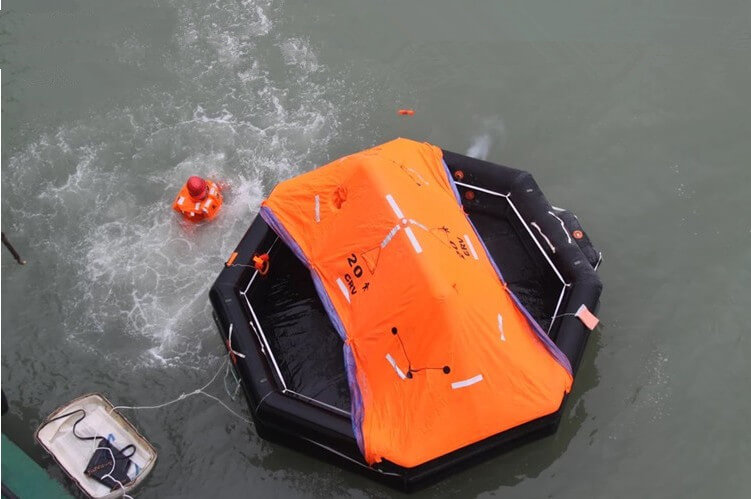
In the realm of maritime safety, Inflatable Life Rafts play a pivotal role, offering a dependable means of survival during emergencies at sea. Engineered to keep individuals afloat and secure, these inflatable structures serve as crucial lifelines until rescue arrives. As technology and engineering progress, various types of inflatable life rafts have emerged, each tailored to specific needs and scenarios. This article explores the diverse world of inflatable life rafts, including their types, features, and considerations for selecting the most suitable option.
Common Types of Inflatable Life Rafts
Throw-Overboard Inflatable Life Rafts
Design: Intended to be manually thrown into the water.
Activation: Automatic upon immersion or manual activation.
Use: Common on smaller vessels with limited deck space.
Davit-Launched Inflatable Life Rafts
Design: Installed on the ship’s deck in a cradle and the life rafts launched using davit systems.
Activation: Manual or hydrostatic launch.
Use: Found on larger vessels or those adhering to specific safety regulations.
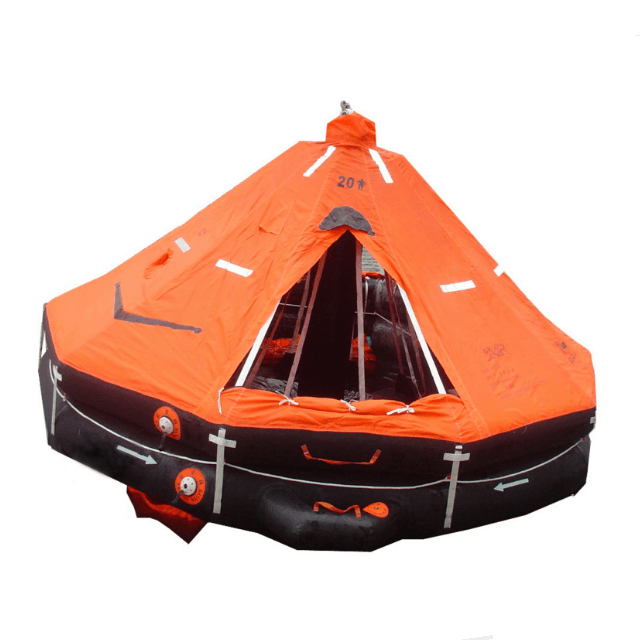
Canister-Packed Inflatable Life Rafts
Design: Housed in a rigid canister on the ship’s deck or deckhouse.
Activation: Manually or automatically released and inflated upon immersion.
Use: Versatile, suitable for various vessel types, providing protection during inflation.
Valise-Packed Inflatable Life Rafts
Design: Compact and versatile, stored in a soft valise.
Activation: Manually launched and inflated upon immersion.
Use: Lightweight and easily deployable, ideal for vessels with limited storage space.
Reversible Inflatable Life Rafts
Design: Opens at the top, allowing easy boarding from the water.
Capacity: Accommodates a larger number of people for efficient evacuation.
Use: Suitable for calm sea conditions and rapid deployment scenarios.
Self-Righting Inflatable Life Rafts
Design: Includes a self-righting mechanism for stability in rough seas.
Stability: Self-righting inflatable life rafts are ideal for vessels navigating unpredictable and difficult waters.
Aviation Inflatable Life Rafts
Design: Specifically for aircraft emergencies, compact and lightweight.
Portability: Easily stowed on aircraft and manually or automatically inflated upon ditching.
Use: Essential for flights over water, ensuring passenger and crew safety in aviation emergencies.
Design: Extended survival at sea, often equipped with additional features.
Capacity: Larger and capable of sustaining occupants for an extended duration.
Use: Ideal for offshore vessels and long-distance voyages.
Coastal Inflatable Life Rafts
Design: Suitable for coastal waters and shorter voyages.
Compact: Smaller and more compact than offshore rafts.
Use: Designed for vessels operating in areas with easy access to rescue services.
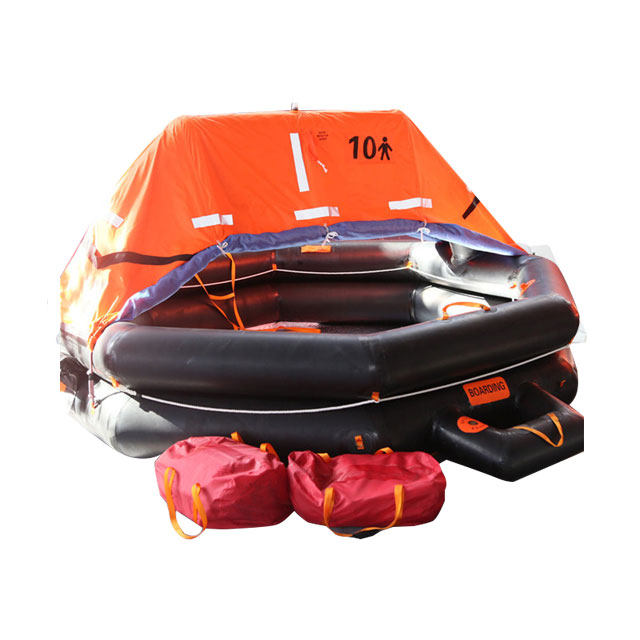
Inflatable Life Rafts with Canopy
Design: Equipped with a canopy for protection from the elements.
Shelter: Enhances survival chances in adverse weather conditions.
Use: Recommended for vessels operating in regions with unpredictable weather.
Key Factors for Choosing a Suitable Inflatable Life Raft
Selecting the right inflatable life raft is a critical decision impacting maritime safety. Consider the following factors to ensure the chosen life raft suits the vessel's needs:
Vessel Type and Size: Match the raft to the vessel's size, type, and stability.
Occupancy Capacity: Ensure the raft accommodates both passengers and crew.
Operating Environment: Consider sea conditions, climate, and potential exposure to adverse weather.
Regulatory Compliance: Verify compliance with international maritime safety regulations.
Deployment Method: Choose a deployment method that suits the vessel's characteristics.
Stowage Space: Consider available space for stowing the life raft on the vessel.
Inflation Mechanism: Examine the inflation mechanism and its reliability.
Additional Features: Explore features like canopies, survival equipment, and signaling devices.
Maintenance and Inspection: Consider maintenance requirements to ensure proper operation.
Training and Familiarization: Ensure the crew is trained in the deployment and use of the chosen life raft.
Conclusion
The evolution of inflatable life rafts reflects the industry's commitment to enhancing maritime safety. Choosing the best inflatable life raft demands careful consideration of vessel specifications, operating conditions, and safety regulations. As technology advances, innovative features in inflatable life rafts will contribute to higher safety standards and increased survival chances in emergency situations at sea.