
Navigation is a crucial element of maritime operations, ensuring the safe passage of vessels of all sizes. While traditional aids like lighthouses have long guided ships through dangerous waters, modern technology is revolutionizing maritime navigation. Today, marine searchlights are being seamlessly integrated with contemporary navigation systems, leveraging advanced technologies to enhance safety and efficiency in maritime operations.
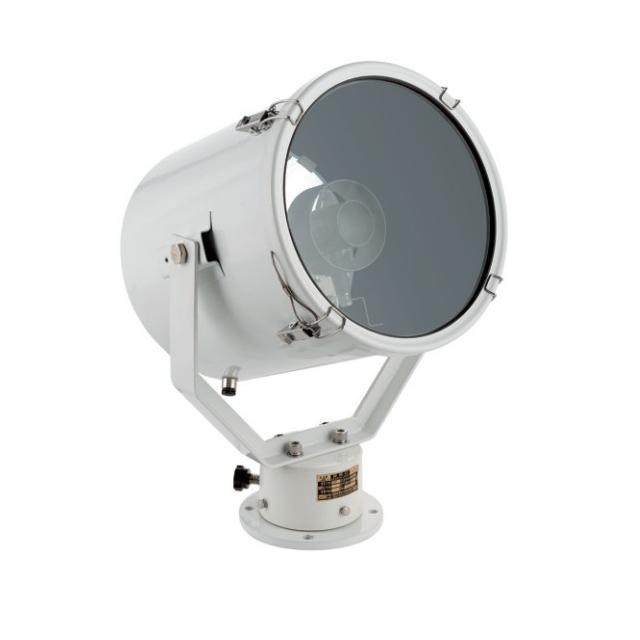
Evolution of Marine Searchlights
Marine searchlights have a storied history, dating back to the early days of seafaring when oil lamps and primitive lanterns were used to signal hazards and guide ships into port. Over time, these rudimentary devices evolved into powerful electric searchlights capable of illuminating vast stretches of the ocean with precision and clarity. Today’s marine searchlights are sophisticated devices equipped with advanced optics, durable housings, and efficient LED or xenon lamp technologies, providing unmatched performance in even the most challenging maritime environments.
Integrating Marine Searchlights with Modern Navigation Systems
GPS Positioning Integration
Modern marine searchlights can be equipped with GPS receivers that synchronize with a vessel’s navigation system. This integration allows searchlights to automatically adjust their direction and intensity based on the vessel’s position, ensuring that critical areas such as navigational buoys, harbor entrances, and offshore structures remain illuminated as the vessel moves.
Radar Targeting Capabilities
Advanced marine searchlights can incorporate radar-targeting features, enabling them to track and illuminate specific targets detected by the vessel’s radar system. This functionality is particularly valuable for search and rescue operations and for highlighting potential collision hazards such as drifting debris or other vessels in the vicinity.
Wireless Connectivity
Integration with wireless communication networks allows remote monitoring and control of marine searchlights from onboard consoles or shore-based command centers. Operators can adjust searchlight parameters—such as direction, intensity, and beam width—in real-time, maximizing visibility while conserving energy.
Collision Avoidance Systems
Marine searchlights can be integrated with collision avoidance systems, such as Automatic Identification Systems (AIS) and radar, to provide early warning of potential hazards and improve navigation safety. By automatically illuminating approaching vessels or navigational hazards, searchlights help mitigate the risk of collisions, ensuring safe passage for maritime traffic.
Automated Control and Monitoring
Automation features enable marine searchlights to dynamically adjust their settings based on environmental conditions and vessel movements. For example, searchlights may dim or change direction in response to changes in visibility, vessel speed, or the presence of nearby obstacles, enhancing safety and reducing the need for manual intervention.

Integration with Electronic Charting Systems (ECS) and Electronic Navigation Displays
Marine searchlights can be integrated with Electronic Charting Systems (ECS) and Electronic Navigation Displays, allowing operators to overlay searchlight information—such as target positions and illumination patterns—onto electronic navigation charts. This integration enhances situational awareness and facilitates more precise navigation in low-light or adverse weather conditions.
Energy Efficiency Measures
Integration with modern navigation systems enables marine searchlights to optimize energy consumption while maintaining effective illumination. Smart algorithms and sensors can adjust light output and operating parameters based on environmental conditions, vessel speed, and battery levels, ensuring efficient use of onboard power sources.
Benefits of Integrating Marine Searchlights with Modern Navigation Systems
Enhanced Visibility
By synchronizing with modern navigation systems, marine searchlights provide targeted illumination of navigational hazards, critical areas, and nearby vessels. This improves visibility of navigation lighting during low-light conditions or adverse weather, reducing the risk of accidents and collisions.
Improved Safety
Integrated searchlights enhance safety at sea by providing early detection and warning of potential hazards such as submerged objects, navigational buoys, or other vessels. This allows ship operators to take timely evasive actions, protecting lives and preventing environmental damage.
Optimized Navigation
The seamless integration of searchlights with navigation systems enhances navigational accuracy and efficiency. Operators can rely on illuminated markers and reference points to maintain course, identify safe passages, and navigate through congested or poorly marked areas with confidence.
Collision Avoidance
Integrated searchlights aid in collision avoidance by illuminating approaching vessels, navigational hazards, and other potential obstructions. This early warning system enables operators to make informed decisions and take corrective actions to prevent accidents.
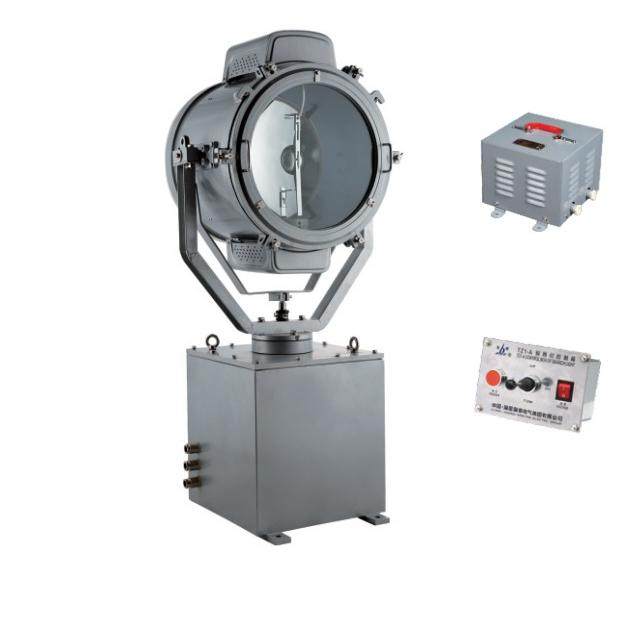
Remote Monitoring and Control
Integration with modern navigation systems allows for remote monitoring and control of searchlight parameters from onboard consoles or shore-based command centers. Operators can adjust searchlight settings in real-time, maximizing visibility while conserving energy and optimizing performance.
Compliance with Regulations
Many maritime regulations require vessels to maintain adequate lighting and visibility, especially in restricted visibility conditions or congested waterways. Integrated searchlights help vessels comply with these regulations by providing reliable and effective illumination of critical areas and navigational aids.
Search and Rescue Support
Integrated searchlights are invaluable in search and rescue operations, aiding in the detection and location of distressed vessels or individuals in the water. By providing powerful illumination over large areas, searchlights improve visibility for rescue teams and enhance the chances of successful outcomes in emergency situations.
Conclusion
The integration of marine searchlights with modern navigation systems represents a significant advancement in maritime technology, offering enhanced safety, visibility, and operational efficiency for ships navigating at sea. This seamless integration is poised to play an increasingly vital role in shaping the future of maritime navigation, ensuring safe passage for vessels and protecting the lives of seafarers around the globe.
Bolted connections are essential components in numerous mechanical systems, with the amount of preload or bolt pretension playing a crucial role in their reliability. Bolt pretension, the force applied to a bolt when tightened, ensures clamping force between mating surfaces, contributing to system safety and longevity. This article explores methods to achieve precise bolt pretension.

Importance of Accurate Bolt Pretension
Accurate bolt pretension is vital for the proper and safe functioning of mechanical systems. This force, generated by the bolt stretching when tightened, maintains the clamping force. Inadequate tightening can lead to issues such as:
Structural failure
Leaks
Reduced operating efficiency
Increased maintenance costs
Downtime
Conversely, overtightening can damage the assembly, causing:
Cracks or fractures in the material
Thread stripping
Reduced fatigue life
Reduced clamping force
Thus, achieving precise bolt pretension is essential to ensure the bolt remains secure and maintains its clamping force without damaging the assembly. Adhering to the manufacturer's torque specifications and using a calibrated torque wrench are critical steps.

Factors Affecting Bolt Pretension Accuracy
Several factors influence the accuracy of bolt pretension:
Friction: High friction between threads, the bolt head, and the nut can cause twisting, preventing proper pretension.
Surface Condition: Uneven bolt surfaces can distort and prevent achieving the correct pretension.
Bolt Material: Different materials have varying elasticity, affecting the pretension level.
Torque Accuracy: An inaccurate torque wrench can lead to over- or under-tightening.
Lubrication: Thin lubricants can cause slipping, while thick lubricants can lead to overtightening.
Environmental Factors: Temperature and humidity can impact bolt pretension accuracy.
Methods for Obtaining Accurate Bolt Pretension
Various methods are used to achieve precise bolt pretension, each suited to different applications:
Torque Method
A common method involves using a torque wrench to tighten the bolt to a specific torque value based on the size, material and intended use of bolts. However, this method assumes a constant friction level, which can vary with surface conditions.
Procedure: Use a calibrated torque wrench and follow the manufacturer's torque specifications. Re-torque bolts after initial tightening to ensure the correct pretension.
Turn-of-Nut Method
This method involves tightening the bolt beyond the snug-tight state to a predefined angle, often used in construction for its reliability.
Procedure: Tighten the bolt to snug-tight with a wrench or socket, then use a calibrated wrench to turn the nut a specified number of degrees based on the bolt's size and material.
Ultrasonic Method
The ultrasonic method uses ultrasonic waves to measure bolt elongation, providing accurate results but requiring specialized equipment.
Procedure: Attach a transducer to the bolt head and transmit ultrasonic waves. Measure the wave reflection time to determine elongation, then calculate pretension using the bolt's material properties.
Load-Indicating Method
This approach uses a load-indicating device, such as a strain gauge, to measure bolt load, offering accurate and consistent results, especially in critical applications.
Procedure: Attach a strain gauge to the bolt and tighten with a calibrated torque wrench. The strain gauge measures deformation proportional to the bolt load, from which pretension is calculated.
Summary
Accurate bolt pretension is crucial for the safety and reliability of mechanical systems. The method chosen depends on the specific application and required precision. Ensuring proper pretension through appropriate methods and tools enhances system performance and longevity.
Offshore drilling is consistently recognized as one of the top job opportunities accessible without a college degree, according to various business publications like Forbes and Yahoo!. For those familiar with offshore oil drilling, this is unsurprising. The role of an offshore driller has minimal entry barriers and offers compensation well above the average for similar non-degree roles. Typically, workers spend about half of the year on 12-hour shifts, rotating on and off for periods ranging from two to four weeks. However, offshore drilling is not for everyone seeking high-paying jobs with substantial growth potential. It is one of the most perilous, physically demanding, stressful, and isolating occupations, akin to working in a nuclear submarine or the International Space Station, but with greater risks.
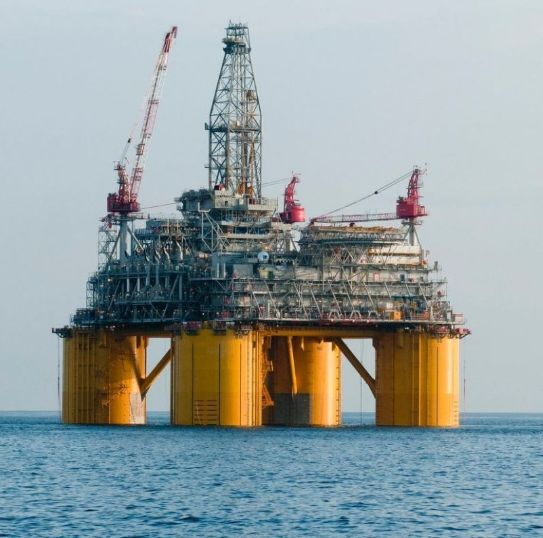
Venturing into a Career as an Offshore Driller
If you believe you have the grit for the challenging yet highly rewarding realm of offshore drilling, here's how to start your career as an offshore driller.
What Does an Offshore Driller Do?
An offshore driller oversees and operates the equipment and machinery used in drilling for oil or gas in offshore locations, typically on oil rigs or platforms situated at sea. Their primary duties involve managing the drilling process, maintaining equipment, ensuring safety protocols are adhered to, and overseeing the crew’s operations. Specific responsibilities include:
Drilling Operations: Conducting drilling procedures by operating and controlling specialized equipment to extract oil or gas from beneath the seabed. This involves handling drilling machinery, directing drilling processes, and monitoring drilling parameters.
Equipment Maintenance: Maintaining and overseeing the maintenance of drilling machinery to ensure it operates efficiently and meets safety standards.
Safety Compliance: Enforcing and overseeing safety protocols to guarantee a safe working environment for the crew and prevent accidents or environmental hazards.
Supervision: Overseeing and managing the crew’s activities, including training, task assignment, and ensuring the team operates efficiently and safely.
Problem-solving: Resolving technical issues, addressing challenges, and making critical decisions during drilling operations to ensure productivity and safety.
Offshore drillers are essential in extracting oil and gas from beneath the seabed, and their expertise and oversight play a significant role in maintaining safe and efficient drilling operations at sea.

Education and Qualifications for an Offshore Driller
A high school diploma is generally the minimum educational requirement for entry into the field of offshore drilling. However, acquiring higher education, such as a degree in petroleum engineering, mechanical engineering, or similar technical disciplines, significantly enhances one’s prospects in this competitive industry. Technical training programs or apprenticeships offering hands-on experience are also valuable.
Gaining Experience and Essential Skills for an Offshore Driller
Entry-level positions, such as roustabouts or roughnecks, are common starting points for individuals aspiring to become offshore drillers. These roles provide a fundamental understanding of rig operations, safety procedures, and the basics of handling drilling equipment. To progress in the field, it’s crucial to develop technical skills such as equipment operation, troubleshooting, and maintenance, alongside demonstrating a strong commitment to safety standards and fostering teamwork.
Leveraging oil and gas drilling simulations can significantly complement hands-on experience, offering a risk-free environment to refine skills in drilling operations and safety protocols. Integrating these simulated experiences into training can enhance the learning curve and proficiency in handling critical situations encountered in offshore drilling.

Challenges and Rewards of an Offshore Driller
Offshore drilling presents a unique combination of challenges and rewards that define the industry’s landscape. This demanding field offers lucrative opportunities but demands a high level of skill, endurance, and adaptability from those involved.
Challenges:
Safety and Risk: Offshore drilling is recognized as one of the riskiest occupations. Workers face hazardous conditions, extreme weather, and high-pressure environments that demand stringent safety protocols and constant vigilance to prevent accidents and environmental disasters.
Physical Demands: The work is physically demanding and often performed in challenging environments. Workers endure long hours, demanding schedules, and laborious tasks in adverse weather conditions.
Isolation and Mental Strain: Offshore platforms can be isolated environments, requiring workers to spend extended periods away from family and friends. The isolation and mental strain from long shifts can take a toll on an individual’s well-being.
Environmental Impact: The potential for environmental damage, such as oil spills, remains a significant concern, necessitating strict adherence to environmental regulations and sustainable practices.
Rewards:
Financial Benefits: Offshore drilling offers significantly higher salaries compared to many other industries, providing substantial financial rewards for workers.
Career Advancement: It offers opportunities for career growth and skill development, allowing individuals to progress from entry-level positions to specialized roles with experience and expertise.
Technological Advancements: The industry constantly adopts cutting-edge technologies and innovations, providing workers exposure to the latest equipment and practices, fostering professional development.
Global Impact: Offshore drilling plays a crucial role in meeting global energy demands, contributing to the production of oil and gas essential for various industries and economies.
Summary
Embarking on a career in offshore drilling offers both enticing rewards and formidable challenges. It’s a field where financial incentives are substantial, career growth potential is real, and access to cutting-edge technology is constant. Yet, offshore drilling is also known for its high risks, physically demanding work, isolation, and environmental concerns.
Aspiring offshore drillers must equip themselves with the necessary skills, undergo practical training, and maintain a steadfast commitment to safety and environmental stewardship. The unique combination of skills, resilience, and dedication to safety is key to thriving in this dynamic and demanding industry, where the rewards are commensurate with the risks. Those who navigate these challenges with determination find not only financial success but also an industry that plays a vital role in meeting global energy demands, contributing to various sectors, and shaping the world’s energy future.
The precise measurement of tension is crucial for ensuring product quality, operational efficiency, and safety. Tension sensors, also known as tension transducers or load cells, are fundamental instruments used to gauge the force applied to an object by measuring the tension in a material or structure. This article delves into the essence of tension sensors, unraveling their significance, workings, and evolution in the modern technological landscape.

Understanding Tension Sensors
Tension sensors are designed to measure the force or tension applied to an object or material. Whether monitoring the tension in a conveyor belt, a surgical suture, or an aircraft cable, these sensors provide invaluable insights into the mechanical dynamics of various systems.
Working Principles of Tension Sensors
Tension sensors operate on various principles, each tailored to specific applications and requirements.

Strain Gauge Technology
Principle: The electrical resistance of a conductor changes when it is stretched or compressed.
Mechanism: Thin metallic foil patterns called strain gauges are bonded to a flexible substrate. When tension is applied, the strain gauges deform, causing a change in their electrical resistance, measured using Wheatstone bridge circuits.
Load Cell Designs
Principle: Converts mechanical force into electrical signals.
Mechanism: Comprising a mechanical element (bending beam, diaphragm, or shear beam) with bonded strain gauges, load cells deform under tension, changing the resistance, which is then converted into an electrical signal proportional to the applied force.
Piezoelectric Effect
Principle: Piezoelectric materials generate an electric charge in response to mechanical stress.
Mechanism: When tension is applied, the piezoelectric material deforms, producing a voltage output proportional to the applied force, which is then measured to determine the tension.
Capacitive Sensing
Principle: Measures the change in capacitance between two conductive plates.
Mechanism: Tension changes the distance between plates, altering capacitance. This change is measured to determine the material's tension.
Magnetic Induction
Principle: Uses a magnet and a coil to measure tension.
Mechanism: Tension changes the magnetic field between the magnet and coil, inducing a voltage in the coil, proportional to the applied force, which is then measured.
Applications Across Industries of Tension Sensors
Tension sensors are versatile instruments with applications across various industries, playing a pivotal role in monitoring and controlling tension or force in different materials and structures.
Manufacturing Industry
Textile Production: Maintain proper tension in fibers and yarns during spinning, weaving, and knitting processes.
Papermaking: Control tension in the paper web during forming, pressing, and drying to prevent defects.
Printing: Regulate paper or substrate tension for accurate color registration and preventing jams.
Film and Foil Processing: Maintain uniform tension in film stretching, slitting, and laminating processes.
Automotive Industry
Timing Belt Tensioning: Monitor and adjust timing belt tension for proper engine synchronization.
Drive Belt Tensioning: Maintain correct tension in accessory drive belts to prevent slippage and wear.
Suspension Systems: Measure tension in suspension components, providing feedback for adaptive systems and safety features.
Aerospace Industry
Aircraft Structures: Ensure precise tension in cables, wires, and composite materials in aircraft assembly and maintenance.
Parachute Deployment: Monitor deployment force for safe and controlled descent.
Satellite Deployment: Ensure proper deployment of satellite components in space.
Medical Industry
Surgical Robotics: Provide haptic feedback in surgical robotic systems for precise force control during procedures.
Prosthetics and Orthotics: Monitor tension in artificial muscles and joints for natural movement in prosthetic limbs.
Material Handling and Packaging Industry
Conveyor Systems: Maintain proper tension in conveyor belts, chains, and rollers for efficient material handling.
Packaging Machinery: Control packaging material tension for secure and uniform product packaging.

Notable Advancements in Tension Sensors
Recent advancements in tension sensor technology have brought about significant improvements in accuracy, reliability, versatility, and integration capabilities.
Miniaturization
Microfabrication Techniques: Development of smaller, lighter tension sensors.
Applications: Integration into compact devices, wearable technology, and microsystems for healthcare, robotics, and consumer electronics.
Wireless Connectivity
Wireless Communication: Transmit data without physical wiring.
Benefits: Real-time monitoring in remote or inaccessible locations, predictive maintenance, and IoT integration.
Capabilities: Measure tension in multiple axes simultaneously.
Applications: Precise measurement in three-dimensional structures, enhancing versatility and accuracy.
Smart Sensing Algorithms
Advanced Signal Processing: Enhance accuracy and reliability.
Techniques: Machine learning and AI for data analysis and proactive maintenance.
Integration with IoT and Industry 4.0
IoT Integration: Seamless data collection, analysis, and visualization.
Benefits: Predictive maintenance, remote monitoring, and adaptive control in real-time.
Enhanced Material Properties
Novel Materials: Improved sensitivity, durability, and stability under harsh conditions.
Applications: Expanded range of applications in tension sensing technology.
Conclusion
Tension sensors, though often unseen, are the unsung heroes of precision engineering, ensuring that the invisible threads of tension are carefully monitored and controlled across industries. As technology continues to evolve, advancements in sensor design, materials, and data processing capabilities will further enhance their performance and expand their range of applications, contributing to improved efficiency, safety, and quality in numerous sectors.
Anaerobic incubators are indispensable tools in microbiological laboratories, facilitating the cultivation and manipulation of anaerobic microorganisms in a controlled environment. This guide delves into the features, gases, and utilization of anaerobic incubators, offering insights into their selection and safe operation.
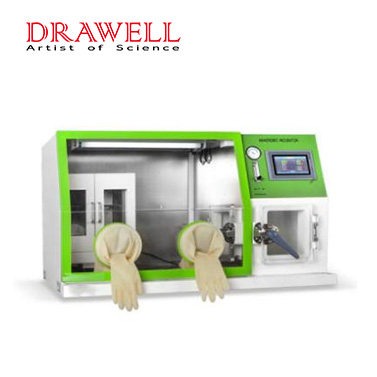
Exploring Anaerobic Incubator Features
Airtight Seal: Prevents oxygen ingress, maintaining an anaerobic atmosphere within the chamber.
Gas Inlet and Outlet Ports: Facilitate the introduction and venting of anaerobic gas mixtures.
Gas Flow Control: Regulates gas flow rate to establish and sustain desired anaerobic conditions.
Gas Mixing System: Automatically blends nitrogen and carbon dioxide gases for optimal gas composition.
Temperature Control: Enables precise temperature regulation for microbial growth.
Humidity Control: Maintains suitable moisture levels for specific culture requirements.
Anaerobic Indicators: Visual cues indicating the absence of oxygen in the chamber.
Safety Features: Alarms for gas leaks, temperature deviations, and overpressure conditions ensure user and culture safety.
Interior Shelving or Racks: Accommodate culture vessels for efficient space utilization.
Observation Window: Allows visual monitoring of cultures without compromising the anaerobic environment.
User-Friendly Interface: Intuitive controls for easy setup and monitoring.
Data Logging and Connectivity: Advanced models offer data logging and connectivity options for enhanced monitoring and analysis.
Understanding Anaerobic Incubator Gases
Anaerobic incubators primarily utilize nitrogen and carbon dioxide gases to create and maintain an oxygen-free environment conducive to anaerobic microbial growth:
Nitrogen (N2): Purges the chamber of oxygen, creating an inert atmosphere.
Carbon Dioxide (CO2): Maintains a low redox potential, preventing the accumulation of reducing compounds and supporting microbial metabolic processes.
Applications of Anaerobic Incubators
Anaerobic incubators find extensive use across various fields, including:
Clinical Microbiology: Culturing and identifying anaerobic bacteria responsible for infections.
Food Microbiology: Studying anaerobic bacterial growth in food to prevent spoilage and foodborne illnesses.
Environmental Microbiology: Investigating anaerobic microbial diversity and functions in natural ecosystems.
Biotechnology: Producing enzymes, antibiotics, and other biotechnological products from anaerobic microorganisms.

Utilizing Anaerobic Incubators
Installation: Confirm compatibility, clean the chamber, install gas supply, and set temperature and humidity parameters.
Maintenance: Regularly inspect for leaks, ensure proper gas flow, and monitor temperature and humidity levels. Promptly address any issues to maintain optimal performance.
Conclusion
Anaerobic incubators are indispensable tools for the cultivation and study of anaerobic microorganisms. By providing a controlled environment free of oxygen, these incubators enable researchers to explore microbial worlds and unlock their potential applications across various scientific disciplines. When choosing an anaerobic incubator, consider your specific research needs, safety features, and manufacturer support to ensure successful microbial cultivation and experimentation.