
Blowouts are without a doubt the most dangerous and catastrophic possible disasters in the area of oil drilling. They can cause serious injury, even death, as well as large-scale, catastrophic production shutdowns and a negative influence on succeeding well output. Blowouts can have major consequences for the environment. It is critical to have a well-control system in place when working with high-pressure drilling activities. You can reduce your chance of a blowout by taking precautions and following control procedures.v
The term "blowout prevention" refers to a variety of activities, ranging from preventative measures taken on drilling rigs to prevent "kicks" — the unexpected and unwanted flow of formation fluids into a well — to the use of sophisticated Blowout Preventers (or BOPs) designed to seal off a well in the event of an impending blowout. Here are the steps of "how to prevent blowout during oil drilling"
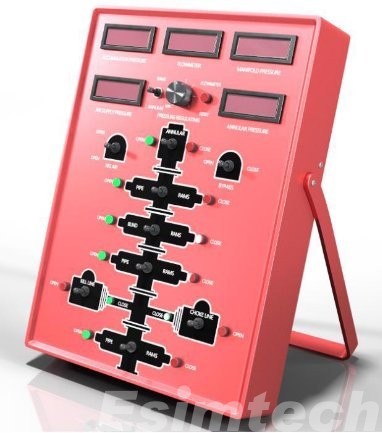
The first step in preventing blowouts is preparation.
In order to prevent kicks, drilling operators must balance the immense upward pressure of formation fluids going up the well with "drilling mud," also known as drilling fluid, a viscous liquid that resembles mud and comes in a variety of densities. Bottomhole pressure refers to the downward pressure of the drilling fluid. It is a difficult but necessary task for drilling fluid engineers to monitor and be cautious to ensure that the pressures are balanced.
The Signs of a Wellbore Kick
Every oil field worker understands the importance of maintaining a steady fluid balance in the wellbore. When the amount of drilling fluid unexpectedly and drastically increases, it is a signal that something is really wrong and a kick is occurring. Knowing the indications of a wellbore kick can allow you to take proper action and avoid a blowout.
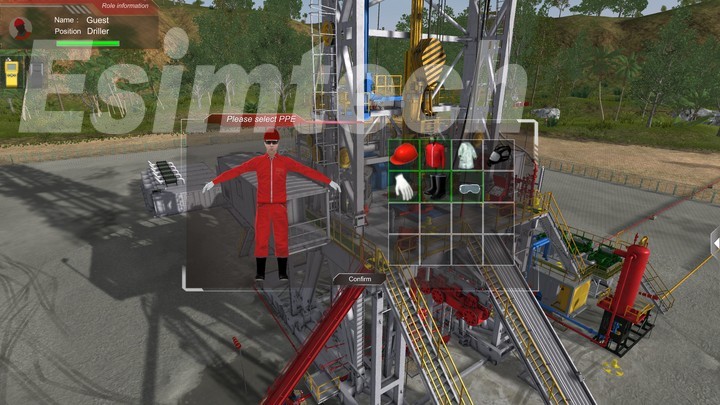
How to Prevent Well Blowouts
Well blowouts can be averted in several ways before they occur. To reduce the likelihood of a leak or pressure escape, keep BOPs in good condition by cleaning out the mud and removing metal fragments with a downhole magnet. You should also be aware of how your equipment performs under harsh conditions. To accomplish this, run several computer simulations of diverse scenarios. Finally, ensure that everyone on the job site is always informed of the correct safety protocols in order to be prepared for any emergency.
A Blowout Protector
Before making a purchase, you should identify which type of blowout preventer (BOP) is best for your application. You can choose between ram blowout preventers and annular blowout preventers, each of which serves an important purpose. Whether you need a BOP for a long-term project or for immediate needs, your industry has a large assortment of new and secondhand components and equipment.
diverse BOPs with diverse functionalities may be used in a well.
It is critical to detect the problem, secure it as soon as possible, and then take proper action.
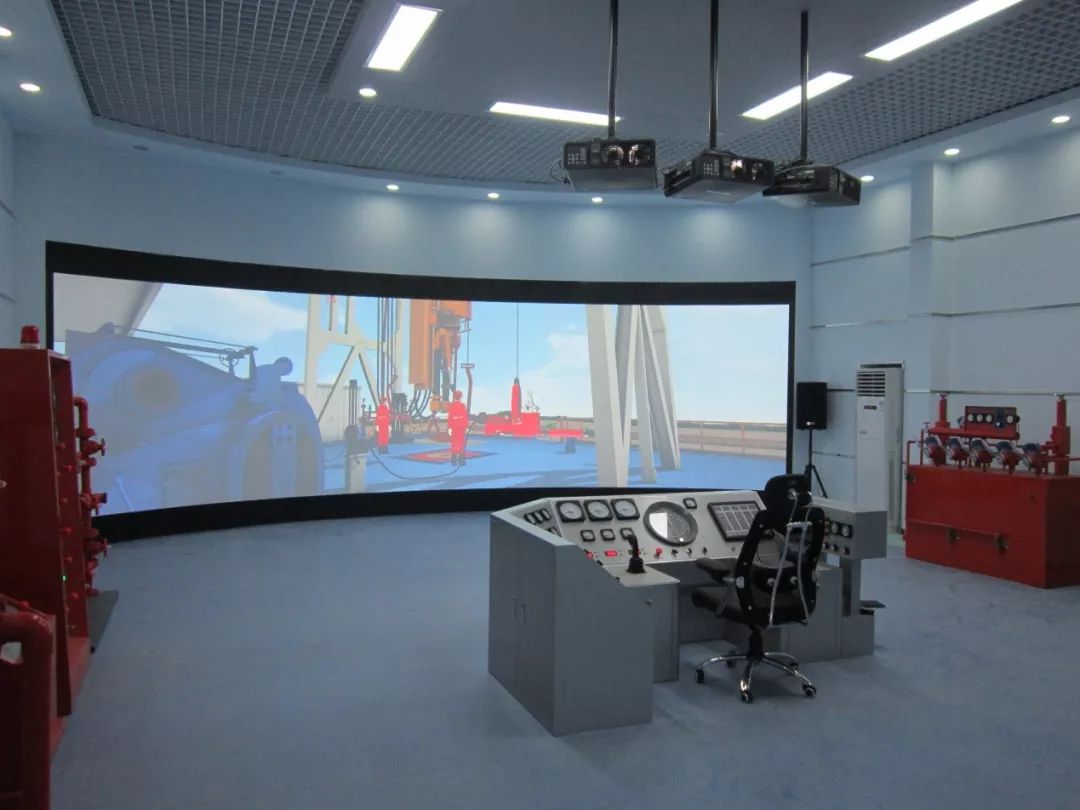
Summary
Ensure that your employees have the necessary control tools and information to know what to do in the event of a controllable kick. The easiest way to deal with a blowout is to prevent it from happening in the first place.
Esimtech is a manufacturer of simulation training systems for drilling and well control that can help certified professionals. As training simulators, we build entire oil and gas manufacturing lines. Please contact us if you have any specific requirements.
If a well leaks, an oil and gas business could face disaster. Fortunately, blowout preventers(BOPs) are effective tools for preventing this disaster. A blowout preventer (BOP) effectively closes the valve running underneath the machinery, preventing any liquid from surfacing in the case of a potentially catastrophic explosion or kick.
Blowout preventers (BOPs) simply keep the oil well's secure seal intact in order to avert damage and financial loss. Different BOP types perform somewhat different roles and may be more effective than others in resolving oil well troubles. To identify the type you need, you must first understand what each type accomplishes.
The types of BOP can be divided into ordinary BOP, universal BOP and rotary BOP.
In an emergency, the universal blowout preventer can be engaged to deal with any size drilling equipment and empty wells.
The rotating blowout preventer allows you to drill while spraying.
In deep well drilling, in addition to the two conventional blowout preventers, a universal blowout preventer and a rotating blowout preventer are frequently put on the wellhead, resulting in three or four combinations.
Rotary BOP
An annular blowout preventer is a massive, specialised BOP that is used to seal, manage, and monitor oil and gas wells.
The annular BOP is classified into two types based on the shape of the sealing rubber core: conical annular BOP and spherical annular BOP. Its structure is made up of four parts: the shell, the top cover, the rubber core, and the piston. When drilling tools, tubing, or casing are present in the well, the annular blowout preventer can use a rubber core to seal a variety of annular voids of varying diameters. It may entirely seal the wellhead while there is no drilling tool in the well, as well as the annular area formed by the kelly, coring tools, cables and steel wires, and the wellbore during drilling, coring, logging, and other operations. When the pressure lowering and regulating valve is used, the drilling tool can be forced into the drill pipe.
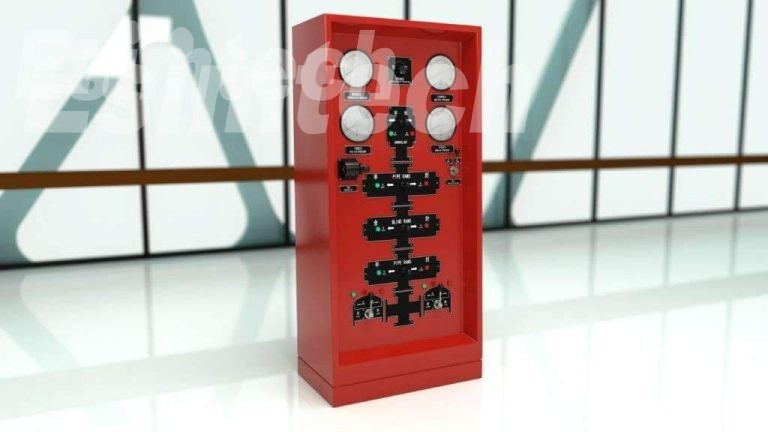
RAM BOPs
The shell, side door, oil cylinder, cylinder head, piston, piston rod, locking shaft, seals, ram, and other components make up the ram blowout preventer. Its functioning mechanism is to employ hydraulic pressure to push the piston, which drives the ram to close or open the wellhead, in order to achieve the aim of sealing and and opening the well.
A RAM BOP prevents oil from spilling out and foreign things from entering the well by closing it. It also allows for a controlled flow of oil as needed. Depending on your requirements, you may also find the following RAM BOP versions useful:
Line valves must be turned off.
Line choking valves.
RAMs with no vision.
Manifolds with chokes.
Pro tip: Some RAM BOPs have a remote control! Examine whether the needed model supports remote work.
API Hardware
Flanged crosses, drilling spools, male and female adapters, and other critical BOP components are used to create and maintain high-quality BOPs. By customising the equipment, any BOP needs can be met. Whether you need to repair an old blowout preventer or design a new one for your oil well, quality API equipment can assist you.
Of course, Esimtech can manufacture oil and gas simulator equipment, including Blowout Preventers (BOPs) simulation training equipment.
The various oil drilling tools are all necessary for the extraction procedure. Some of the equipment, however, contributes more to the drilling operation. They help to reduce the cost, risk, and environmental impact of oil drilling.
Sand Pumps
Sand pumps, one of numerous pumps used in oilfield drilling, are utilised to move deposits away from the drilling site. Sand pumps are most commonly found in fluid tanks containing oil or other fluids and sand. These pumps rotate a grooved disc around a central axis.
Any particles that come into touch with the grooves on the surface will be removed and transported elsewhere via a pipe network. Despite its nickname, "sand pumps," these pumps also move other materials. Sand pumps, in addition to tank maintenance and cleaning, replace the use of other machinery or manual labour to move particles away from the area of the oilfield.
Shale Shaker
The most significant component of a rig's solids separation and control system is the shale shaker, which separates the mud from the cuttings. The mud is used to cool the drill bit once it has separated. If all goes as planned, the drillers will be able to use these fluids several times.
Separating mud disposal allows for lower drilling costs and environmental impact. The performance of the remaining downstream controlling devices is inextricably linked to good drilling fluid management.
Mud Cleaners
The mud collected from the cuttings is used to cool the drill bit. Mud cleaners function to keep the drilling fluids (mud) clean so that the drill runs smoothly. Because heavy muck stops the drill and increases downtime, it is critical that the mud be as clean as possible before it reaches the drill.
The mesh used in mud cleaners features microscopic pores that keep contaminants out of the mud.
Degassers
Once the fluids have been separated from the large particles, any trapped gas and air must be eliminated. Degassers are necessary to remove gases from the oilfield such as hydrogen sulphide, methane, carbon dioxide, and others. This improves safety by minimising the likelihood of gas explosions.
Stabbing Guides
Drilling pipes might become misaligned, resulting in damage and downtime. Stabbing guides are essential to ensure precise and damage-free connections. They also protect pipelines from damage and corrosion. In more demanding applications such as oil drilling, stabbing guides can also aid protect against severe temperatures, impacts, and corrosion.
Blowout Stoppers
Blowout preventers (BOPs) are critical during drilling to ensure the safety of the workers. Ram BOPs and Annular BOPs are two prominent examples of the numerous BOPs.
Blowout preventers are among the most important oil rig equipment for protecting people from dangerous blowouts and ensuring their safety.
These devices, along with a number of others, must be integrated into an oilfield drilling workflow. The oilfield equipment indicated above is required for a project to successfully drill for oil. Understanding how they interact with one another is much more important.
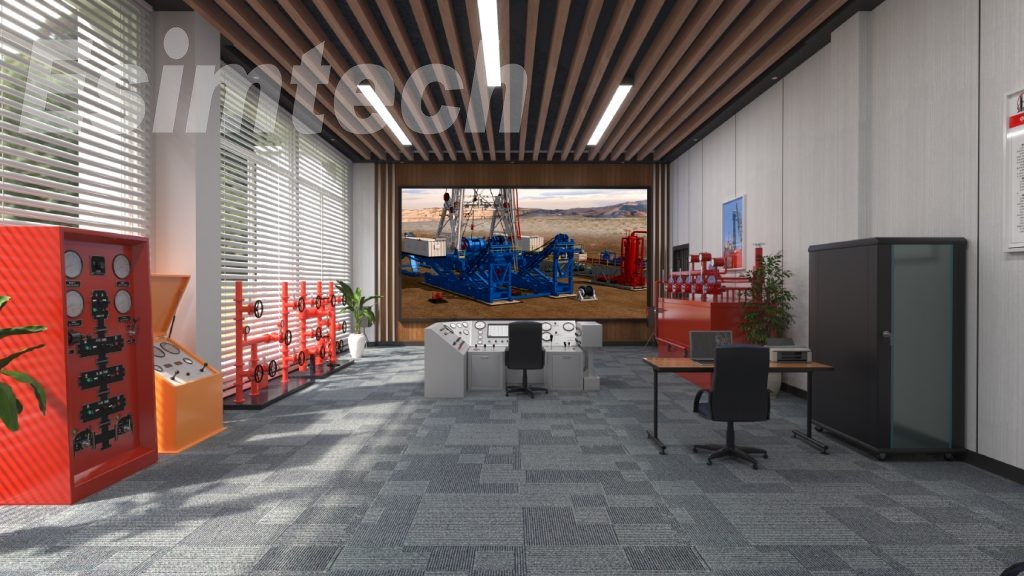
Esimtech can design and manufacture simulation training equipment for the oil and gas industry, such as drilling and well control simulators, downhole operation simulators, emergency drill training simulators, and so on. It can also be customised to your specifications; if you require this, please contact us.
Geological exploration wells, pre-exploration wells, detailed exploration wells (evaluation wells), and development wells (including inspection data wells, production wells, water injection wells, adjustment wells, and so on) are the most common types of oil drilling. It can be separated into vertical wells, horizontal wells, and some other specific structure wells based on the well structure.
Production Well
Production wells, also known as development wells, are wells drilled during the oilfield development stage for oil and gas production, and include oil (gas) wells, water injection (gas) wells, adjustment wells, and so on. Drilling production wells rarely takes cores since the formation conditions are clear, the drilling speed is fast, and the cost is low.

(1) Oil (gas) wells: During the development of an oil field, wells drilled for the extraction of oil and natural gas are classified as oil-producing wells or gas-producing wells.
(2) Water (gas) injection wells: wells drilled to inject water and gas into the oil field to supplement and rationalise formation energy in order to increase recovery rate, and can be classified as positive injection wells (wells that inject water from the tubing to the formation) or reverse injection wells (wells that inject water from the casing into the formation).
(3) Adjustment wells: The supplemental drilling to improve the oilfield development effect refers to wells drilled in favourable positions during the oil and gas field development process to better develop the oil and gas fields based on the original well pattern.
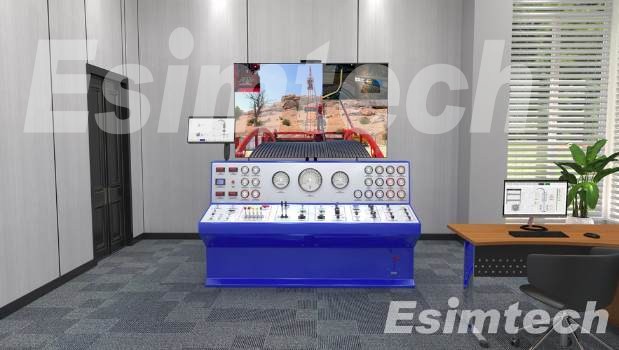
Exploration well
Exploration wells, which include geological wells, pre-exploration wells, detailed exploration wells, and evaluation wells, are wells drilled for the goal of acquiring geological data. In most cases, exploration wells are drilled vertically.
(1) Pre-exploration wells: These are wells drilled to identify oil and gas reservoirs in favourable traps defined by intensive seismic examination and extensive geological research, as well as wells drilled to discover new oil and gas reservoirs in established oil fields.
(2) Detailed exploration wells: These are wells that are dug in identified oil and gas traps to prove the boundaries and reserves of oil and gas, as well as to comprehend the structure and oil production capability of oil and gas layers.
(3) Evaluation well: a well drilled to demonstrate the oil and gas area and geological reserves of the trap after the oil and gas reservoir is located in the preexploration well.
Drilling exploratory wells takes a long time and costs a lot because of the unknown formation conditions and the requirement to take cores and measure geological data.
Exploration wells include geological exploration wells, pre-exploration wells, and detailed exploration wells (evaluation wells). Oil production wells, gas production wells, water injection wells, and gas injection wells dug for oil production are one type of development well; the other is adjustment wells, supplemental wells, inspection of resource wells, and so on.
Directional well
In oil drilling, directional wells, which include horizontal and deviated wells, are wells drilled following the design trajectory for specific reasons and requirements, in addition to vertical wells. Since the 1990s, as drilling technology has advanced and improved, highly deviated wells, horizontal wells, and extended reach wells have been the development direction to satisfy the needs of oil and gas field exploitation.
(1) Horizontal well
A horizontal well is one that is drilled along the (nearly) horizontal direction to a fixed length and has a large well inclination of between 86° and 120°. Horizontal well technology has been developed since the 1990s because it can expand the exposed area of the produced oil layer, raise the oil output of the oil layer, and increase the recovery rate of the oil field. Horizontal wells have four curvature radius types: long, medium, medium-short, and short. Horizontal well drilling is a relatively challenging task that necessitates the use of specialised equipment, drilling tools, tools, instruments, and processes.
(2) Deviated well
Deviated wells refer to wells whose designed large inclination angle does not exceed 85°, and can be divided into low-inclination wells, medium-inclination wells, and high-inclination wells, among which medium-inclination wells are used more.
(3) Cluster wells
Due to the constraints of the ground, environment, and other conditions, as well as the requirements for rational use of land resources, it is often necessary to drill several or dozens of directional wells and one vertical well in a planned manner on a well site or platform during the development of an oil field. Cluster wells are the collective name for these wells. The average distance between cluster wells' wellheads (well spacing) is 23m. Cluster wells are frequently employed in offshore oilfield development because they lower the cost of building well sites or platforms and make oil well production management easier.
Deep and ultra-deep wells
It can be split into shallow wells (drilling depth less than 2000 metres) and deep wells (drilling depth greater than 2000 metres).
Wells with a drilling depth of 2000-4500 metres
Deep wells (drilling depths ranging from 4500 to 6000 metres)
Ultra-deep wells (wells drilled to depths greater than 6,000 metres)
Esimtech is a manufacturer of simulation training systems for the oil and gas industry, and its products include the whole oil and gas production line. Drilling simulators, well control simulators, emergency training simulators, and more are available. You can look at our product categories. If the product you require is not on the list, we can customise it to meet your specifications.
Oil and gas drilling is a highly specialised and dangerous occupation. This article will quickly present the oil and gas drilling process and steps, as well as the simulation training platforms or simulators required for teaching oil and gas drilling created by Esimtech.
A lot happens during oil drilling, which requires complex drilling apparatus and technical procedures. The drilling process is fraught with dangers, including the possibility of blowouts, necessitating the use of safety devices such as blowout preventers. (BOPs).
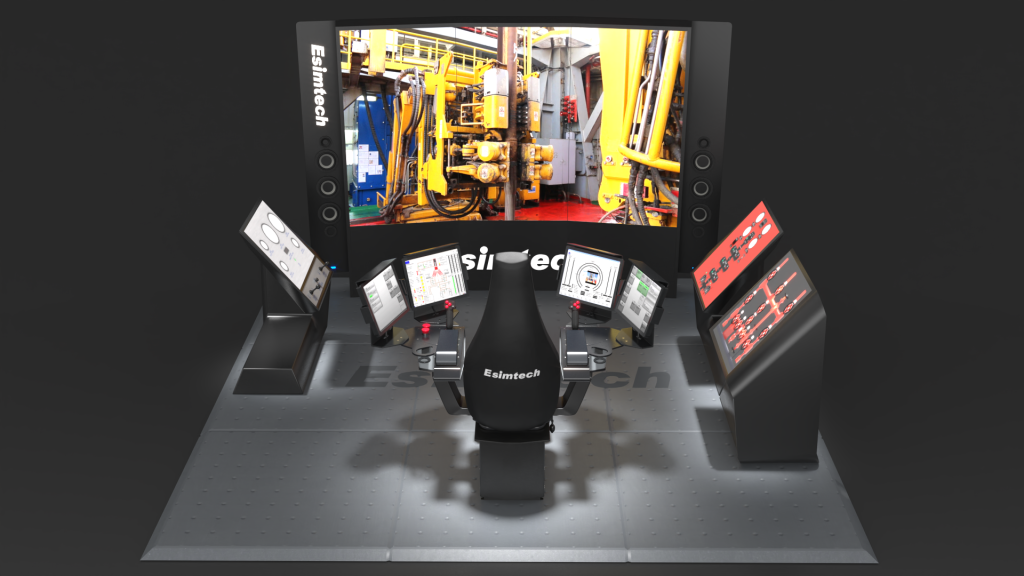
The first step in oil drilling is to drill a hole through the earth's crust. A drill string and a long bit are required. Remember that the drill bit's diameter is 5 to 50 inches. After drilling a hole, a tiny diameter steel pipe is installed, and the spaces around it are filled with cement.
The Drilling Procedure
Cementing and Testing
Once the appropriate distance has been reached, the drill pipe is removed and the steel pipe is pushed to the bottom. Cement is used to hold this "well casing" in place. Before any gas or oil production can begin, the pipe must undergo rigorous tests to demonstrate that it is impermeable.
Completion
Before drillers can tap the oil and natural gas, a perforating gun is often lowered into the earth and shot into the rock layer in the deepest area of the well, creating holes that connect the rock holding the oil and natural gas and the wellhead.
Fracking
Now that the well's first stage is open, it's time to liberate the oil and gas trapped in the rock. Fracking fluid is blasted into perforating holes to create paper-thin fractures in the shale rock, releasing trapped oil and natural gas. Specialized equipment is utilised to continuously monitor well pressure and data.
Drill operators feed the hole during drilling with a range of materials, liquids, and chemicals to lubricate the revolving bit and clear the route of the broken rocks. New pipes must be added to the drill string as the drill bit progresses. It must be tightened to keep the pipe connections from separating in the well.
Having exceeded the financial limit
When the amount of oil and gas a well can produce is insufficient to sustain its continuous operations, we say it has reached its economic limit. As a result, the extraction must be halted by withdrawing the drill pipe and sealing the hole. This keeps the hydrocarbon reservoirs separate from the water.
Esimtech is a simulation trainer maker that does research and development. Drilling, well control, logging, oil production, gas production, downhole operations, oil and gas gathering and transportation, fracturing and acidizing, drilling rig installation, coiled tubing, pressure operation, and other petroleum engineering training simulation systems are all part of its comprehensive product line.