
Stamping mold materials play a crucial role in the manufacturing industry, offering numerous advantages like high production efficiency, excellent material utilization, precision, and complexity in industrial production processes. As the demand for precision and complexity in stamping products continues to grow, the importance of these materials becomes even more pronounced.
These materials find extensive use in the production of precision instruments, including automobiles, aircraft, electronics, and home appliances. The selection of the appropriate type of mold material and the right processing technology are essential in ensuring the quality of molds used in production.
Classification of Stamping Mold Materials
In industrial production, several common stamping mold materials are used, each catering to specific needs:
Carbon Element Steel: Carbon element steel stands out for its relatively low cost and price, along with excellent processing ductility and high strength after heat treatment. It exhibits optimal wear resistance during usage. Carbon steels are suitable for smaller-sized molds with common shapes and low compressive loads.
Low-Alloy Steel: Low-alloy steel is based on carbon element materials with additional alloying elements to enhance its properties. It offers a higher yield point of structure, superior strength, and better corrosion resistance compared to ordinary carbon steel. It is ideal for structural parts and other applications requiring strength and light weight.
High Carbon and High Cadmium Steel: This material excels in hardness, strength, and wear resistance during the production process. It also demonstrates good object stability, hardenability, and permeability. Additionally, it is less susceptible to deformation caused by high temperatures during heat treatment.
Steel-Bonded Cemented Carbide: This type of cemented carbide exhibits higher hardness and wear resistance, making it a durable material suitable for mass-production molds. It is produced using iron powder as a binder, along with hard phases like titanium carbide and tungsten carbide through powder metallurgy.

Surface Treatment of Stamping Mold Materials
Apart from requiring high strength and toughness in the base metal, the surface properties of the mold significantly impact production efficiency and mold life. Essential mold performance requirements include corrosion resistance, wear resistance, and fatigue resistance.
Surface treatment technology for stamping molds falls into two main categories: chemical surface treatment and physical surface treatment.
Chemical Surface Treatment
Chemical surface treatment includes two primary methods: surface diffusion infiltration and coating.
Surface diffusion infiltration involves placing the mold in a controlled environment with a specific temperature and active medium, allowing the medium to penetrate the surface of the mold. This process alters the chemical composition and structure of the mold surface, enhancing wear and corrosion resistance. Methods like nitriding, carburizing, and carbonitriding are used for surface diffusion infiltration.
Surface coating, on the other hand, involves applying a layer of new material to the mold's surface to improve its performance. Techniques like electroless plating, ion implantation, and chemical vapor deposition are employed in chemical surface coating.
Physical Surface Treatment
Physical surface treatment strengthens the mold material's surface using physical methods, thereby increasing load force, corrosion resistance, and improving mechanical and physical properties. Technologies like laser surface quenching and high-frequency quenching are used to enhance hardness, strength, wear resistance, and corrosion resistance of the mold's surface.
Conclusion
The choice of stamping mold materials and their surface treatment significantly impact the quality and performance of molds used in the manufacturing industry. With the right selection and treatment, manufacturers can achieve greater efficiency, precision, and longevity in their production processes. For specific stamping needs, KENENG offers professional metal stamping services, producing tailored products and components. Don't hesitate to contact us if you require our expertise.
Stamping is a widely used pressure processing method that involves applying pressure to materials at room temperature through a specially designed mould to achieve the desired shape of parts or semi-finished products. The performance of the stamping mould is of utmost importance as it directly influences the accuracy of the workpiece and the efficiency of the stamping process. Let's explore key performance characteristics of a stamping mold.
Wear Resistance: Wear resistance is a fundamental property of the mould material. During the metal stamping process, the material undergoes both flowing and sliding along the mould cavity's surface, leading to significant friction that can cause wear and eventual mould failure.
Hardness: The hardness of the material has a direct impact on the mould's service life and overall quality. A high level of hardness ensures prolonged durability and effective performance of the mould.
Strength and Toughness: To prevent sudden brittle fracture during operation, the mould must exhibit high strength and toughness. Strength indicates the material's ability to resist deformation and fracture, while toughness reflects its resistance to brittle fracture under the influence of strong impact loads.
Fatigue Fracture Properties: Good fatigue resistance is crucial for stamping moulds as they endure repeated loading conditions. Fatigue fractures can occur due to the cyclic stress experienced during the mould's working process.
High-Temperature Performance: Working at elevated temperatures can cause the hardness and strength of the mould material to decrease, resulting in early wear or plastic deformation.
Cold and Thermal Fatigue Resistance: Stamping moulds must demonstrate resistance to cold and thermal fatigue. The repeated heating and cooling cycles can induce tension, pressure, and variable stress, leading to surface cracking, increased friction, and reduced dimensional accuracy.
Corrosion Resistance: Some moulds, like plastic molds, may be exposed to corrosive gases during operation, which can erode the mould cavity's surface, causing wear and failure.
Geometric Parameters: The shape, fit clearance, and fillet radius of the die significantly influence the forming of stamped parts and affect the mould's wear and lifespan.
Good Process Performance: Forging performance and heat treatment performance are vital aspects of process performance. Forging performance refers to how the material behaves during the forging process, while heat treatment significantly affects the quality of the stamping mould, ensuring the desired hardness and wear resistance.
KENENG, as a reliable source manufacturer, can create customised stamping moulds according to your specific needs and carry out mass production. If you require assistance, do not hesitate to reach out to us. We are committed to providing high-quality and cost-effective services and products for all your stamping needs.
Fasteners, for example, can be made in a variety of techniques, including metal stamping, CNC machining, and others. Before selecting on CNC machining or stamping, several things should be considered for manufacturing fasteners. Cost, production speed, processing materials, and so on.
Introduction of Metal Stamping
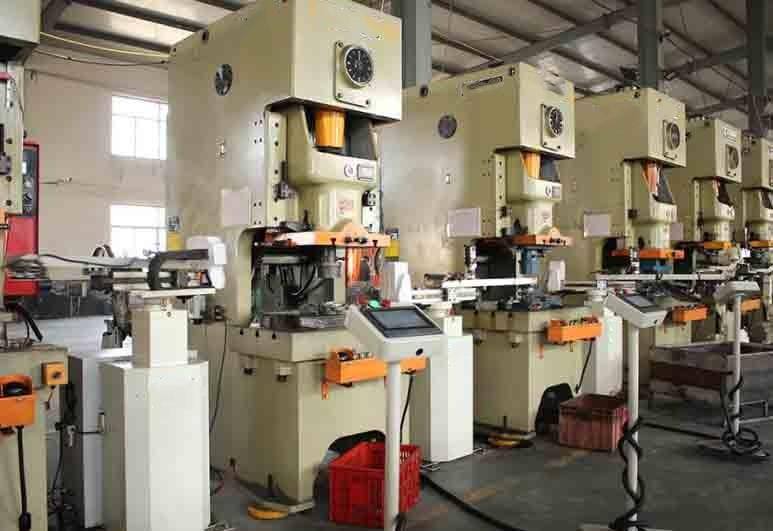
Stamping machinery
Metal stamping is the process of deforming or breaking stainless steel, iron, aluminum, copper, and other plates and other materials with punches and dies to obtain a specific shape and size. It entails stretching and blanking the metal plate in two or three dimensions. Perforation and other operations can also be used in the metal stamping process.

The following glossary defines common technical words used in metal stamping parts.
1. Deep drawing: A stamping process that converts raw steel or process parts into hollow parts or changes the shape and size of hollow parts. The flow of material outside the bottom of the punch into the die mostly forms the hollow part during deep drawing.
2. Trimming: A stamping procedure in which the forming process's edge is trimmed with a metal stamping die to have a specific diameter, height, or shape.
3. Punching: A punching technique that separates waste from the material or process piece along the closed contour and creates the desired hole in the material or workpiece.
4. Flanging: A stamping procedure that turns the material into a short side that stands on the side of the contour curve.
5. Flipping hole: A stamping procedure in which the material is transformed into a side flange around the inner hole's circle.
6.Blanking is a stamping technique used to separate materials along a closed outline. The separated material becomes a workpiece or process piece, most of which are flat.
7. Shaping: a stamping technique that uses material flow to adjust the shape and size of process parts in a small amount to assure workpiece precision.
When compared to CNC machining, stamping is a relatively inexpensive and quick method of production. Metal stamping is the ideal choice when speed is the most important factor. CNC machining, on the other hand, is more advantageous when complicated or high-precision forms are required.
Introduction of CNC Machining
CNC machining is a method of machining that employs digital data to control the displacement of parts and equipment. It is appropriate for a variety of parts, small batches, complex shapes, and high precision.
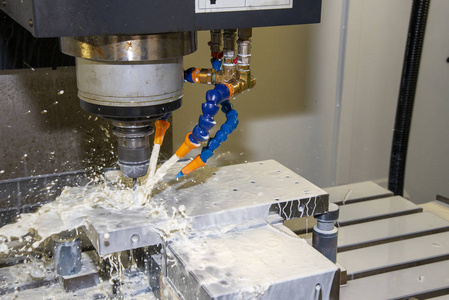
Axis motion driven by a spindle is included in CNC machine tools. A device may contain many spindles that receive computer program instructions to direct each spindle to the appropriate geometry.
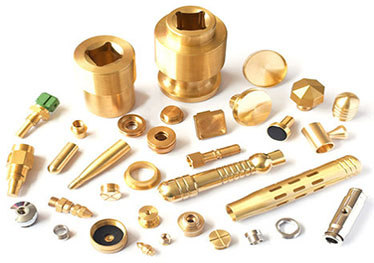
CNC machining can provide
High tolerance precision.
Excellent surface polish and bespoke treatments are available.
Even with huge production, repeatability is important.
What Factors Should Be Considered Prior to Choosing CNC Machining or Stamping?
Processing Volume
Metal stamping is suited for high-volume production, whereas CNC machining is ideal for low-volume production.
Price
CNC machining is expensive, whereas stamping is quite inexpensive.
Capacity for Production
Metal stamping provides a better production capacity, faster speed, and a broader application than CNC machining. While it takes time to prepare a punch for production, when properly set up, it can run efficiently and effectively.
Production Speed
Metal stamping is the most efficient method of producing metal shapes. When the production line is working normally, it produces at a high rate. However, metal stamping cannot produce the complicated, high-precision pieces that CNC machining can. Stamped items may require extra processing before usage in order to meet greater precision requirements.
Manufacturing Precision
CNC machining offers great precision, and it serves a variety of manufacturing businesses since its technology is dependable and efficient. CNC machining is the preferred method for advanced components requiring tight tolerances and high.