
Metal stamping is a common manufacturing process, with stamped metal parts finding widespread applications across various industries. However, within the realm of metal stamping, there exists a notable distinction between ordinary metal stamping and precision metal stamping. In this article, we'll delve into the nuances of precision metal stamping, its characteristics, advantages, applications, and considerations for choosing the right stamping process.
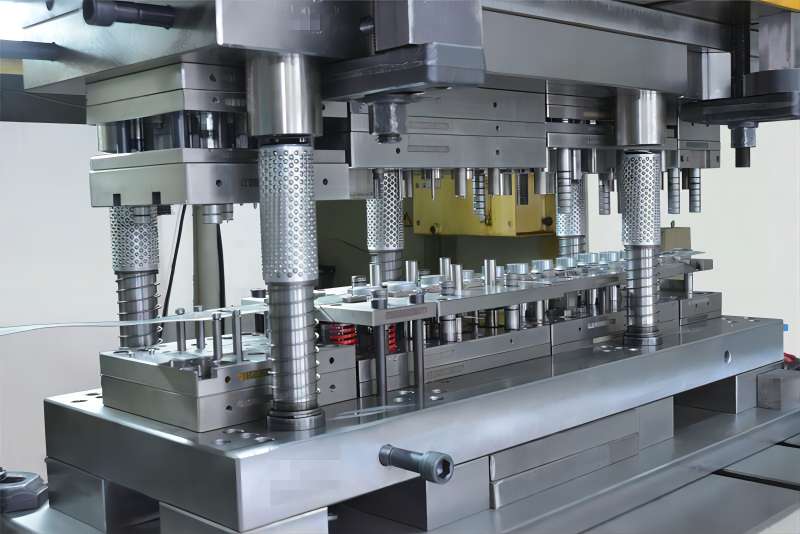
What is Ordinary Metal Stamping?
Ordinary metal stamping primarily involves relatively thick substrates without the need for intricate cutting, stretching, or other complex processes. Furthermore, the precision requirements for parts produced through ordinary metal stamping are not particularly high.
What is Precision Metal Stamping?
Precision metal stamping, on the other hand, demands meticulous attention to detail, incorporating a synergy of precise punching machines, materials, molds, lubricating oils, and advanced technologies. This method places a premium on achieving high levels of precision in the stamped parts, making it an ideal choice for applications where precision is paramount.

Applications of Precision Metal Stamping:
Automotive and Aerospace: Precision metal stamping plays a pivotal role in manufacturing parts for the automotive and aerospace industries. These parts must meet stringent standards, making precision stamping a necessity.
Electronics Industry: The electronics sector relies on precision metal stamping to produce intricate components such as sockets, circuit breakers, and fuse boxes.
Medical: Precision metal stamping proves invaluable in creating medical components, including temperature probes and surgical equipment.
Renewable Energy: This process finds application in renewable energy sectors, contributing to the production of components for solar panels and related equipment.
Specialized Parts: Precision metal stamping is ideal for crafting complex or highly specialized items across various industries.
Choosing Between Ordinary and Precision Metal Stamping:
The choice between ordinary and precision metal stamping hinges on the precision requirements and production volume:
For high-precision parts in large quantities: Opt for precision metal stamping.
For low-precision parts: Ordinary metal stamping is a suitable choice.
Characteristics of Precision Metal Stamping:
Strict Tolerance Requirements: Precision metal stamping demands strict tolerance adherence, showcasing an exceptionally high level of precision.
Flexibility and Adaptability: This method exhibits robust flexibility and adaptability, making it ideal for mass production.
Complex and Tiny Part Production: Precision metal stamping excels in creating intricate, small parts, particularly suited for the aerospace industry.
Computer-Aided Simulation: Before embarking on precision metal stamping operations, computer modeling simulations are often employed to identify errors or defects. This significantly reduces the likelihood of errors during the actual process.
High-Quality Mold: Precision metal stamping relies on molds with outstanding wear resistance, ductility, fatigue resistance, and high-temperature resistance.
High-Precision Equipment and Materials: Utilizing high-precision machines and materials is crucial to achieving the desired results in precision metal stamping.
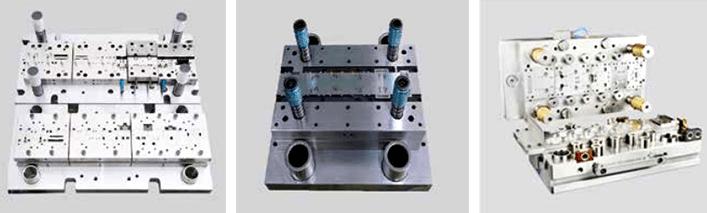
Requirements for Precision Metal Stamping Dies:
High Strength and Wear Resistance: Precision metal stamping dies must possess high strength and exceptional wear resistance to withstand the rigors of the metal stamping process.
Ductility: Ductility is critical to prevent brittle fracture during mold operation.
High Temperature Resistance: The dies should exhibit good high-temperature resistance to maintain strength and hardness when exposed to elevated temperatures.
Anti-Fatigue Properties: To withstand long-term cyclic pressure, precision metal stamping dies must have excellent fatigue resistance.
If you require precision metal stamping parts, KENENG is a reliable source for your needs. Their expertise spans various components, from stamping dies to precision connectors, metal clips, brackets, screws, springs, and more. With their extensive experience in the hardware industry, KENENG offers mature stamping production processes and a dedicated team. Simply reach out with your requirements, and they'll provide you with a tailored, cost-effective solution. Welcome customers from all corners to inquire and collaborate with them at your convenience.
Metal processing commonly utilizes two methods: stamping processing and CNC numerical control (CNC) machining. KENENG offers CNC machining, stamping, and injection molding services. This article aims to elucidate the distinctions between CNC machining and stamping, as well as how to differentiate between CNC machining and stamping parts.
Understanding the Definition Difference Between CNC Machining and Stamping:
Stamping Processing:
Stamping processing is a manufacturing technique that utilizes stamping equipment to apply direct deformation force to a sheet within a mold. This process results in parts with specific shapes, sizes, and performance characteristics.
CNC Machining:
CNC machining involves the production of parts with defined dimensions, shapes, and performance attributes through programming control using CNC machining language. It entails regulating the tool's feed speed, spindle speed, tool changes, and various mechanical cutting processes, including turning, milling, planing, grinding, among others.
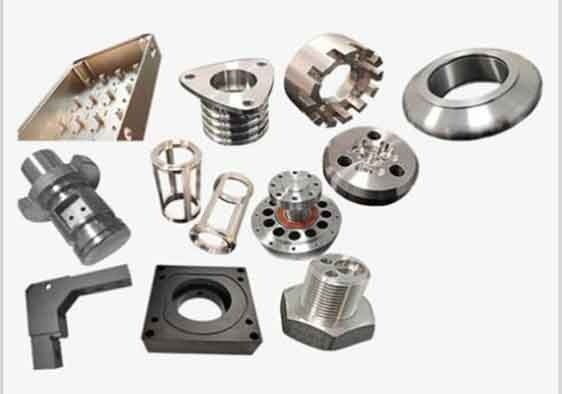
Differences Between CNC Machining and Stamping:
Production Speed:
CNC machining is comparatively slower in production compared to stamping. When speed is the primary concern, stamping is the preferred choice.
Output:Stamping is ideal for high-volume production, while CNC machining is more suitable for lower volume production.
Cost:
CNC machining is known for its precision but comes at a higher cost, whereas stamping is relatively cost-effective.
Production Accuracy:
Stamping struggles to achieve complex designs, while CNC machining exhibits higher precision and easily handles intricate designs.
Processing Characteristics:
Characteristics of CNC Machining:
Strong adaptability: CNC machines can process new workpieces with reprogrammed processing programs.
High processing precision: CNC machine tools work with precision, often achieving a pulse equivalent of 0.001mm.
Low labor intensity: CNC equipment carries out tasks automatically, reducing manual labor.
Good economic benefits: CNC machining delivers stable precision, minimizing waste, and ensuring economic efficiency.
Characteristics of Stamping Processing:
High production efficiency: Ordinary presses can perform numerous strokes per minute, achieving one stamping part per stroke.
Stable stamping quality: Molds ensure the size and shape accuracy of stamped parts, with long mold lifespans ensuring consistency.
High strength and rigidity in stamped parts.
Material-saving: metal stamping generates minimal waste and is an eco-friendly processing method.
Distinguishing Between CNC Machining Parts and Stamping Parts:
Stamping parts typically exhibit burrs at notches, leading to less smooth and flat surfaces that can potentially cause cuts when touched.
CNC machining parts, on the other hand, feature smooth and flat surfaces, promoting safety and tactile comfort.
This article outlines the disparities between CNC machining and stamping, along with variations in their resulting products. KENENG specializes in the sale and production of stamping dies and parts, as well as CNC numerical control processing products. These offerings are renowned for their cost-effectiveness and quality, and KENENG is committed to swift delivery and exceptional customer service.
At its core, the stamping process is a metal fabrication technique founded upon the principles of plastic deformation. This method harnesses the prowess of stamping equipment and molds to exert controlled pressure on sheet metal, thereby inducing plastic deformation or separation. The ultimate goal is to sculpt these materials into parts with specific shapes, sizes, and performance attributes, collectively known as metal stamping parts.

The Impact on Automotive Manufacturing:
In the realm of automotive manufacturing, the stamping process stands as a pivotal player, particularly when it comes to crafting substantial body components. These encompass intricate shapes, expansive dimensions, and even spatially curved surfaces. To meet these demands, the art of stamping processing is harnessed. From truck cabs and front sheet metal components to car body panels and diverse bus frameworks, a significant portion of these elements arises from the meticulous practice of stamping.
The Distinct Traits of Stamping Process:
Efficiency and Minimal Material Consumption: Stamping is lauded for its remarkable efficiency in production and its judicious use of materials. With its inclination towards large-scale production, mechanization, and automation are readily achievable, resulting in heightened productivity. Additionally, the process is adept at minimizing waste and optimizing material usage, even accounting for intricate geometries.
Accessibility and Convenience: The beauty of the stamping process lies in its ease of operation, requiring minimal skill levels from operators. This convenience extends without compromising dimensional precision.
Dimensional Accuracy: Stamping yields parts with impressive dimensional accuracy, often obviating the need for further mechanical processing.
Interchangeability: Stamping parts boast excellent interchangeability. This virtue stems from the stability of stamping processes, ensuring that a batch of parts can be readily interchanged without compromising assembly or product performance.
Surface Quality: Given that stamping employs sheet materials, the resultant parts showcase superior surface quality. This characteristic not only facilitates subsequent surface treatments like electroplating and spray painting but also elevates the overall product aesthetics.
Strengthening and Lightweighting: Stamping bestows parts with superior strength, stiffness, and reduced weight, a triumvirate that holds immense value across industries.
Cost-Efficiency: The mass production of stamped parts with dies incurs relatively low costs, presenting an economical solution.
Complexity Capabilities: Stamping can craft intricate shapes, often deemed challenging for other metal processing methods.
Key Stages in the Stamping Process:
Stamping frequently amalgamates several processes in its execution. The primary processes include blanking, bending, shearing, stretching, bulging, spinning, and shaping.
Blanking: This foundational step employs a die to separate materials, generating flat parts or preparing blanks for subsequent processes.
Bending: A plastic forming technique, bending manipulates sheet metal, pipe fittings, and profiles to achieve specific angles, curvatures, and shapes.
Deep Drawing: Also known as drawing or calendering, deep drawing employs a die to transform flat blanks into open hollow parts.
Stretch Forming: Tension is exerted on sheet metal through a tensile die to achieve uneven tensile stress and strain, expanding the sheet metal until it bonds with the die surface.
Spinning: Involving metal rotation, spinning creates hollow rotary parts by manipulating the blank's interaction with a spinning die or head.
Shaping: This involves secondary trimming to refine abrasive tool shapes, commonly used for pressure planes and spring feet.
Bulging: Bulging employs a die to stretch thin sheet metal, enhancing surface area and forming open hollow parts.
Flanging: By bending the edge of thin sheet billets, flanging strengthens parts, fosters connections, and improves stiffness.
Shrinkage: This process reduces the diameter of stretched hollow parts or tube blanks without flanges, enhancing the overall form.
In Summary:
The stamping process stands as a testament to the marriage of innovation and craftsmanship in metal transformation. It has carved a niche in various industries, with its intricate procedures and intricate techniques, yielding parts that fulfill precise requirements. Its efficiency, adaptability, and ability to shape complexity make it an indispensable tool, guiding the creation of components that power the modern world.
As society advances, the diversity of stamping products continues to expand, finding applications across various industries. To enhance efficiency, scrutinize work quality, and ensure product excellence, meticulous inspection of stamping parts becomes imperative. This article sheds light on prevalent inspection methods for stamping parts.
1. Flexible Gauze Mesh Grinding
Process:
Begin by cleansing the outer surface with clean gauze.
Employ flexible gauze mesh to systematically grind the entire surface of stamping parts along the longitudinal axis. This approach facilitates the identification of any pitting or indentations.2. Touch Test
Procedure:
Clean the outer surface with gauze.
Don touch gloves and gently touch the stamping parts along the longitudinal axis, assessing the presence of discernible burrs, indentations, scratches, rough edges, etc.
Note: This method relies on the inspector's experience and is a swift yet effective examination technique.
3. Visual Inspection
Steps:
Inspect the surface for rust, cracks, sand holes, slag inclusions, burrs, or blemishes.
Quality parts exhibit precision and a lustrous finish. Crucial components demand higher precision and stringent anti-rust packaging.
Check for secure bonding between parts. In multi-part assemblies, tight adhesion, gluing, or welding is essential to prevent looseness.
Note: Visual inspection primarily identifies surface irregularities and macro defects in stamping parts.
4. Grinding with Oil Stone
Protocol:
Clean the surface using gauze.
Employ an oilstone (20 × 20 × 100mm or more), and smaller oilstones for areas with curves or challenging access.
Note: Opt for a fine-grained oilstone; the grinding direction should align with the longitudinal axis. Horizontal grinding may complement certain spots.
5. Inspection with Special Tools
Method:
Place metal stamping parts into inspection tools and follow the tool manual to perform the inspection.
6. Oiling Inspection
Procedure:
Clean the surface using gauze.
Evenly apply oil across the stamping surface in the same direction using a clean brush.
Inspect the oiled parts under strong light.
Note: This technique effectively reveals minor pits, dents, ripples, etc. on the stamping parts.
7. Adopt Approximate Process Testing
In actual production, process tests akin to stamping operations—such as tensile and bulging tests—are often utilized to assess material stamping performance, ensuring high product quality and qualification rates.
Characteristics of Stamping Parts
Rapid Process Completion: Stamping accomplishes feeding, stamping, delivery, and waste disposal in minutes, yielding tens or hundreds of parts per minute.
Uniformity and Precision: Unified molds generate uniform products with minimal errors and high dimensional accuracy. Random sampling of such products exhibits a weighing error below 3%.
Stamping Equipment
Mechanical presses are predominantly used for stamping, along with hydraulic presses for thick plates. Combining conveying machinery, die libraries, and rapid die-changing devices, automated stamping lines boost productivity, supported by computer program control.
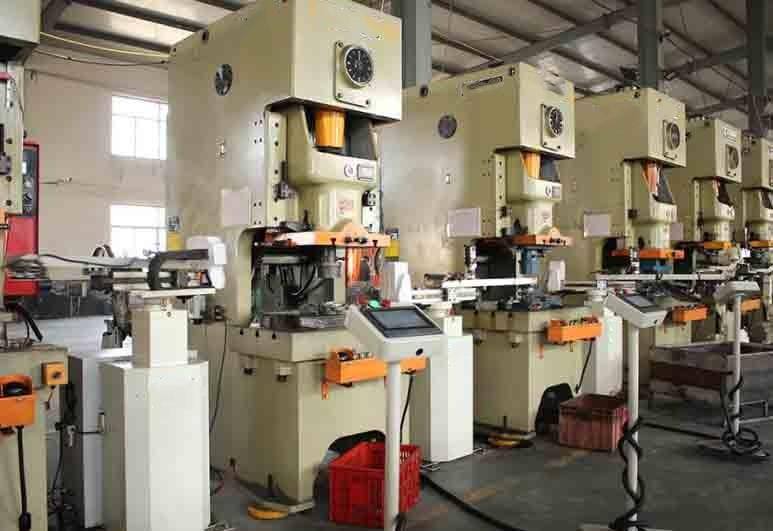
Impact of Stamping Molds
The precision and structure of stamping molds directly influence part formation and accuracy. Mold manufacturing cost and lifespan significantly impact part quality and cost. Mold design requires time, which extends preparation for new stamping parts.
Trends in Stamping Mold Development
Standardized mold bases and guide pieces.
Innovation in simple molds (for small batches), composite molds, and multi-station progressive molds (for large-scale production).
Advancements in rapid mold change devices, aiming to apply advanced stamping technology to diverse production scales.
The goal is to streamline production preparation, making advanced stamping technology feasible for both mass production and small-batch, multi-variety production scenarios.
Metal stamping stands as a prevalent manufacturing process that involves employing a series of metal stamping dies to mold a metal sheet into intricate three-dimensional workpieces. It's vital to discern when to opt for metal stamping, understanding its advantages, and acknowledge its limitations.

Advantages of Metal Stamping:
Cost-Effectiveness and Automation:
Metal stamping boasts a distinctive advantage with its low-cost die utilization and high degree of automation. The manufacturing and maintenance expenses associated with metal stamping dies are often considerably lower compared to other prevalent processes. Additional costs like cleaning and electroplating are also minimized, contributing to overall cost-efficiency.
Precision in Dimensional Accuracy:
The inherent precision of stamping parts is ensured by the uniformity of the die's characteristics. The extended lifespan of the mold further guarantees stable stamping quality and exceptional interchangeability of components.
Versatility in Shape and Size:
Stamping exhibits unparalleled versatility in handling parts with an expansive range of sizes and intricate shapes. By virtue of the die manipulation, the process adeptly crafts items with thin walls, lightweights, robust rigidity, superior surface quality, and complex configurations that may otherwise pose challenges for alternative manufacturing techniques.
Economical Production:
Stamping often circumvents the need for blank heating and substantial material removal inherent in cutting processes. As a result, it consumes less material, yielding not only energy savings but also metal conservation.
High Efficiency:
Stamping's efficiency is remarkable. Regular presses can yield dozens of pieces per minute, while high-speed presses achieve even hundreds or thousands. Each stamping stroke generates a part, contributing to the process's remarkable efficacy. The stamping procedure aligns well with automation, leveraging sophisticated computer control systems for enhanced precision, accelerated production, and rapid turnaround, effectively curbing labor costs.
Disadvantages of Metal Stamping:
High Production Die Costs:
A significant drawback is the elevated cost of production dies. Unique to stamping, the need for various stamping processes to complete products necessitates bespoke dies. Constructing these custom metal stamping dies involves considerable investments, lengthy pre-production phases, and mandates precision-driven, experience-rich expertise from mold technicians.
Limitation for Single-Piece and Small Batch Production:
Stamping's reliance on specialized dies makes it optimal for mass production. It imposes limitations on single-piece and small batch manufacturing, aligning best with large-scale operations to truly leverage its benefits and derive optimum economic returns.

Mould Design Complexity:
Designing stamping mould demands a fusion of classical theory, imagination, and creativity. The process requires skilled die designers and manufacturers with an adept understanding of the intricate interplay between design and function.
Noise and Vibration:
Production often incurs significant noise and vibration, which may require additional attention to occupational health and environmental concerns.
Precision Challenges:
When stringent precision requirements are imposed, stamping may encounter limitations in meeting those demands. Intricate geometries and complex geometrical deviations might stretch the capabilities of the process.
Material Limitations:
While strides have been made in hot forming technology for high-strength and ultra-high-strength steel, cold forming of such materials remains a challenge. The growing demand for lightweight vehicle bodies and enhanced crash strength has spurred research into cold forming these advanced materials, but certain limitations persist.
Summary
Metal stamping presents a blend of advantages and disadvantages, making it a valuable tool within the manufacturing spectrum. By carefully evaluating the scope and requirements of a project, industry professionals can leverage the strengths of metal stamping while mitigating its inherent limitations.