
The high-speed benchtop refrigerated centrifuge is a refrigerated centrifuge that is used for separation in the domains of medicine, life science, and agricultural science. This machine can be outfitted with a variety of rotors to satisfy the needs of diverse scientific research experiments. It also contains high-quality compressors, motors, and rotors with little vibration and noise. A maximum speed noise of the high-speed benchtop refrigerated centrifuge is less than 67dB. The normal working noise is less than 62dB when it is operating regularly. Here are ten tips for the refrigerated benchtop centrifuge to help you extend the life of your high-speed benchtop refrigerated centrifuge.
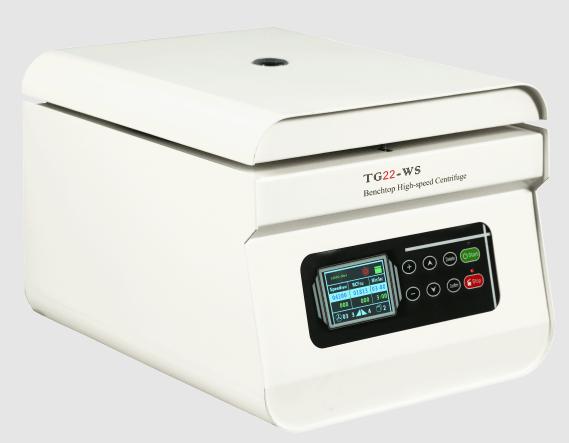
1. To avoid the rotor from clinging to the rotating shaft or the transmission shaft from bending owing to static load for an extended period of time, the rotor must be withdrawn from the centrifuge machine after each use. Before utilizing the rotor, put a layer of oil to the connection between the rotor and the rotating shaft if the machine will be working for an extended period of time.
2. Avoid colliding with the rotor with sharp items. Also, avoid shocks during shipment and disassembly, as well as cracks in the rotor caused by scratches or trauma during usage.
3. The rotor and centrifuge cup are typically cleaned once a week. The benchtop high-speed chilled centrifuge should be cleaned immediately after separating saline solutions or other corrosive samples. If the sample splattered, soaked, or dripped onto the rotor while in operation, it should be sucked dry and cleaned on the spot.
4. When cleaning the rotor, use the cleaning chemical on a sponge or cotton towel to avoid damaging the surface oxide layer. The cleaning ingredient should then be washed away with distilled water or rubbed away with 70% olein. Do not spray or splash water on the rotor, as the liquid could become trapped somewhere and cause damage.
5. After replacing the belt, turn the motor's belt clockwise several times by hand to verify the balance of the running stagnation balance and to examine if the belt is twisted and slipping. Once you've identified this, you may install the rotor and take it through its paces.
6. Before removing the high-speed benchtop refrigerated centrifuge's side panel, unplug the power supply, and no live operation is permitted to safeguard the user from electric shock or machine damage.
Summary
The procedures described above can be used to maintain a high-speed refrigerated centrifuge. If none of the above approaches work, you should contact the manufacturer or seller of a high-speed benchtop refrigerated centrifuge.
A refrigerated centrifuge is a specialized apparatus that separates precipitated mixed liquids, including solids, using centrifugal force. High-speed and low-speed refrigerated centrifuges, benchtop high-speed refrigerated centrifuges, micro high-speed refrigerated centrifuges, and multipurpose benchtop refrigerated centrifuges are examples of centrifuges often used in laboratories. This article discusses the rationale for the development of refrigerated centrifuges, the various types of benchtop high-speed refrigerated centrifuges, and how to select a benchtop refrigerated centrifuge.
Reasons for the emergence of refrigerated centrifuges
1. When the centrifuge is running at high speed, the rotor body and air generate heat owing to friction, making it difficult to control the body temperature. Excessive heat shortens the life of the centrifuge's internal components. To safeguard the machine components, the refrigerated centrifuge incorporates a cooling system that can manage the temperature.
2. The user's experiment needs, such as separation of some organic active chemicals, must be fitted with a low-temperature control system: Enzymes, organic volatile substances, and so on, must be kept at a constant temperature, or the temperature differential should not exceed plus or minus 10°C. It must be ensured that the experimental conditions meet the requirements of the experimental plan and ensure that the experiment runs smoothly.

Five types of benchtop high-speed refrigerated centrifuge
1. TGL-16M/MC Benchtop High-Speed Refrigerated Centrifuge
This type of benchtop high-speed refrigerated centrifuge is equipped with a microcomputer processor for precision control, a digital display of data such as speed, temperature, and time, key programming, and switching to display operating parameters and RCF values. The TGL16 has a brushless DC motor that is maintenance-free and provides great torque and fast lifting speed.
2. High-Speed Refrigerated Benchtop Centrifuge TGL-18M/MC
This machine employs a dual-core CPU to accomplish compatibility of high and low speed, size, and capacity, and is the most advanced device produced in response to current worldwide biological research requirements. TGL18 features a variable frequency brushless motor that is maintenance-free and provides strong torque and quick lifting speed.
3.TGL-20M/MC Benchtop High-Speed Refrigerated Centrifuge
It has a brushless frequency converter motor, precision control by a microcomputer processor, a large-panel LCD screen display, real-time display of all instrument operating parameters, and real-time display of all instrument operation parameters. It uses a fluorine-free compressor unit, produces no emissions, and cools quickly.
4.TGL-22M/MC Benchtop High-Speed Refrigerated Centrifuge
TGL-22M/MC is suitable for routine usage in biotechnology, PCR, life science, and clinical laboratories, among others.
5.TGL-24M/MC Benchtop High Speed Refrigerated Centrifuge
TGL-24M/MC is suitable for routine usage in biotechnology, PCR, life science, and clinical laboratories, among others.

How to choose a Benchtop Refrigerated Centrifuge
Multiple criteria, such as usage requirements, laboratory space, and instrument purchasing budget, must be considered when selecting a benchtop chilled centrifuge. Buying on demand allows you to meet your own needs without squandering the centrifuge's functionality. At the same time, when selecting a benchtop refrigerated centrifuge, you should examine product performance, safety, stability, maintainability, and so on, in addition to your personal needs.
1. Rotating speed
If the intended speed is 10000rpm, a tabletop chilled centrifuge with a maximum speed greater than 10000rpm is recommended.
2. Temperature
Some samples must be stored at low temperatures without being damaged, and thus a refrigerated centrifuge must be chosen. The temperature of a chilled centrifuge varies depending on the brand. Drawell's refrigerated centrifuge uses a high-efficiency, ecologically friendly refrigeration system to keep the instrument cold at high speeds.
3. Rotor
The rotor has a fixed size that is combined with the centrifuge's capacity. It is crucial since it defines the type of rotor and the capacity of the centrifuge.
4. Volume
There are floor-standing, benchtop, and tiny centrifuges available, depending on the size of the space, the amount of sample to process, and the desired speed.
In laboratories, the centrifuge is a relatively frequent separating equipment. It is frequently employed in the separation of experimental materials in sectors such as biomedicine, petrochemistry, agriculture, food hygiene, and others. Since its inception, the lab centrifuge has undergone low-speed, adjusted-speed, and over-speed modifications. Its advancement is primarily represented in the two complementary elements of centrifugal equipment and centrifugal technology. In terms of rotation speed, desktop centrifuges fall into two categories: low-speed and high-speed centrifuges. The advent of general-purpose desktop centrifuges has blurred the distinctions between low-speed, high-speed, micro-volume, and large-capacity centrifuges. Numerous rotors offer scientific researchers a wide range of applications. The scope of application has become the top choice for scientific research institutes.
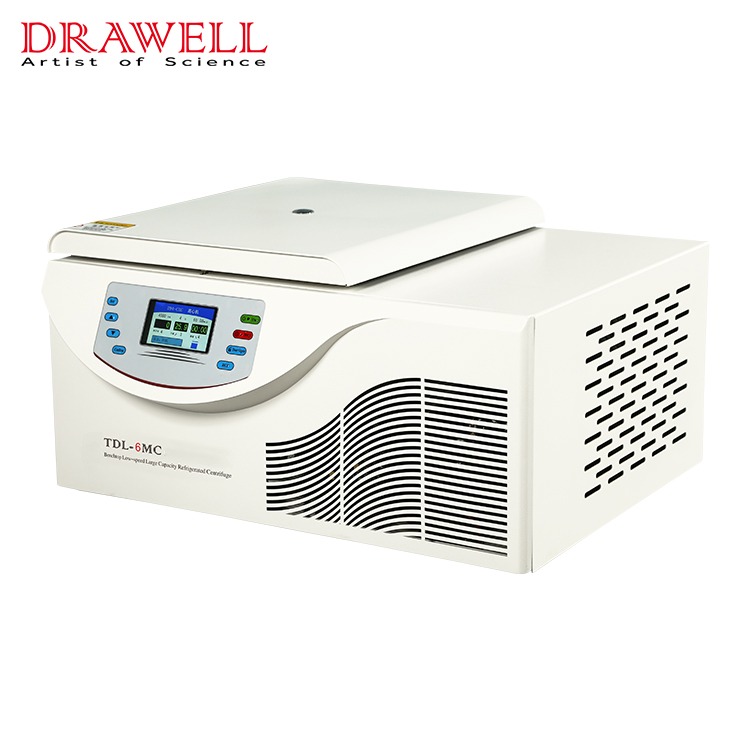
How to use a Benchtop Low-Speed Centrifuge
1.The benchtop low-speed centrifuge is set up on a level table or platform. The four rubber feet should be securely planted on a flat surface. Check for balance visually. Shake the centrifuge gently by hand to ensure that it is properly positioned.
2. Place the centrifuge tube into the rotor body after opening the door. The centrifuge tube must be in even-numbered symmetry (the centrifuge tube test solution must be weighed and added). Pay close care to tightening the screws on the rotor body, and double-check that the test tube is symmetrically placed and that the screws are tightened.
3. Close the door cover, make sure it's locked, and then check to make sure it's closed tightly.
4. Plug in the power adapter and turn on the power switch.
5. Configure the rotor number, speed, temperature, and time.
In the stopped state, the user can set the rotor number, speed, temperature, and time by pressing the SET button; in the running state, the user can only set the rotation speed, temperature, and time by pressing the set (SET) button; the centrifuge is in the setting state at this time, the running light is on, and the stoplight is flashing (in the stopped state, press the "SET" key to switch between timing modes). Cycle selection (in the running mode, press the "SET" key to cycle through time, temperature, and speed).
Set the rotor number as follows: When the decimal on the lower right corner of the rotor digital tube lights up, it will enter the rotor number setting, and then press the "" or "" key to select the centrifuge's rotor number this time. There are six different types of rotors to choose from. Note that the rotor number must be consistent with the rotor selected, and no errors can be set.
1.Set the speed: press the "SET" key until the decimal in the lower right corner of the last digital tube of the speed lights up, and then press the "" or "" key to determine the speed of the centrifuge at this time.
2.Set temperature: Press the "SET" key; when the decimal in the lower right corner of the final digital tube lights up, the temperature setting is entered; then press "" or "" to determine the centrifuge's operating temperature.
3.Set time: Press the "SET" key, and when the decimal in the bottom right corner of the final digital tube lights up, it will enter the time setting. Then, press the "" or "" key to ascertain the centrifuge's current working time (the longest time is 99 minutes), and the time counts down.
4.After completing the preceding four stages, hit the "ENTER" key again to confirm the rotor, speed, temperature, and time settings, and then press the "START" key to start the centrifuge.
5.When the rotor comes to a halt, open the door and remove the centrifuge tube.
6.Turning off the power switch turns off the centrifuge.
Precautions for the use of the centrifuge
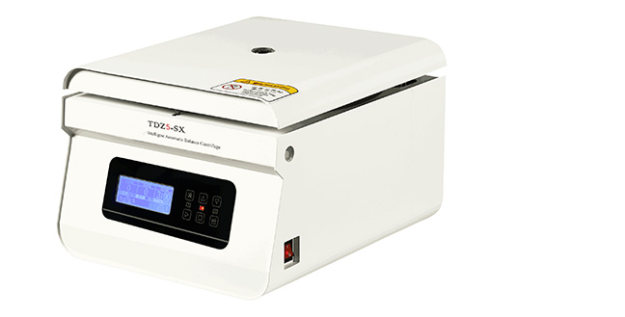
The rotor cover can be put on the centrifuge platform or the experimental table while the Benchtop Refrigerated Centrifuge is pre-cooling. Make sure it's tight and floats on the rotor, because if it starts by accident, the rotor cover will fly out and cause an accident.
When the centrifuge produces a noise or vibrates, the power should be turned off immediately and the issue should be corrected as quickly as feasible. To prevent the machine from vibrating, the centrifuge tube must be symmetrically inserted in the shell. If only one sample tube is available, the other should be replaced with water of comparable quality.The centrifuge is simple to use and has no technical content, proper use and maintenance are still required. When an experiment fails, it causes a delay that is not worth the loss.