
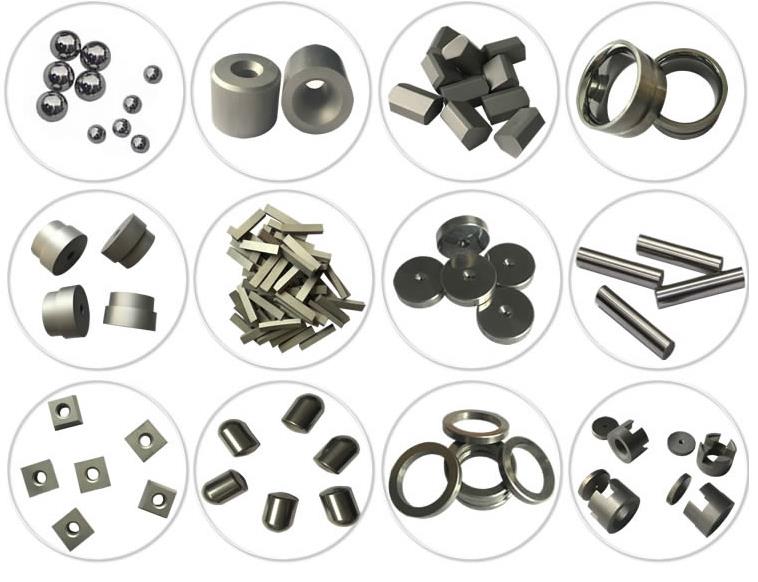
HSS, which is the abbreviation of high-speed steel, is a standard material for metal cutting tools in the past time. When the tungsten carbide had been created, it was considered to be a direct replacement for HSS with good toughness, excellent wear resistance and extremely high hardness. Cemented carbide is usually compared to HSS, with similar applications and high hardness.
Performance
Tungsten carbide
The cemented carbide is a powder of a micron-magnitude metal carbide, which is hard to melt and has high hardness. The binder is made with cobalt, molybdenum, nickel, etc. It is sintered under high temperature and high pressure. Tungsten carbide has a higher high-temperature carbide content than high-speed steel. It has an HRC of 75-80 and excellent wear resistance.
Advantages
1. The red hardness of Tungsten carbide can reach 800-1000°C.
2.The cutting speed of cemented carbide is 4-7 times higher than the high-speed steel. Cutting efficiency is high.
3.The mold, measure tools and cutting tools made by tungsten carbide will have 20-150 times higher service life than alloy tool steel.
4.Cemented carbide can cut material with 50 HRC.
Disadvantages
It has low bend strength, poor impact toughness, high brittleness and low shock resistance.
HSS
HSS is high-carbon high alloy steel, which is a tool steel with high hardness, high wear resistance and high thermal resistance. In the quenching state, iron, chromium, partial tungsten and carbon in high speed steel form a extremely hard carbide, Improving the wear resistance of steel. The other partial tungsten is dissolved in the matrix, increasing the red hardness of steel, up to 650°C.
Advantages
1.Good strength, excellent toughness, sharp cutting edge.
2. Stable quality, generally adopted to make small tools with complex shapes.
Disadvantages
The hardness, service life and HRC are much lower than tungsten carbide. At a high temperature of 600°C or above 600°C, the hardness of HSS will decrease significantly, and it can’t be used.
Manufacturing Methods
Tungsten carbide
The manufacturing of cemented carbide is to mix tungsten carbide and cobalt in a certain proportion, pressurize into various shapes, and then semi-sintering. This sintering process is usually carried out in a vacuum furnace. It is placed in a vacuum oven to complete the sintering, and at this time, the temperature is approximately 1300°C and 1,500°C. The sintered tungsten carbide forming is to press the powder into a blank and then is heated to a certain degree in the sintering furnace. It needs to keep the temperature for a certain time and then cool down, thereby obtaining the desired carbide material.
HSS
The heat treatment process of HSS is more complicated than cemented carbide, which must be quenched and tempered. During the quenching, due to the poor thermal conductivity, it is generally divided into two stages. Preheat first at 800 ~ 850 °C, so as not to cause large thermal stress, then quickly heat to the quenching temperature 1190°C to 1290 °C which is distinguished when the different grades in the actual use. Then cool down by oil cooling, air cooling or gas-filled cooling.
Applications
Tungsten carbide
Wide applications of tungsten carbide, includes used as rock-drilling tools, mining tools, drilling tools, measuring tools, carbide wear parts, cylinder liner, precision bearings, nozzles, hardware molds such as wire drawing dies, bolt dies, nut dies, and various fastener dies, which have excellent performance, gradually replacing the previous steel mold.
HSS
HSS has good process performance with a good combination of strength and toughness, therefore mainly used to manufacture metal cutting tools with complex thin edges and good impact-resistant, high-temperature bearings and cold extrusion molds.
Material Ingredients
Tungsten carbide
The cemented carbide has a main component of a metal high hardness refractory carbide with WC, TiC micron powder, cobalt (CO) or nickel (Ni), molybdenum (MO) as the binder. It is the powder metallurgical product sintered in a vacuum furnace or hydrogen reduction furnace.
HSS
High speed steel is complex steel, with a carbon content generally between 0.70% and 1.65%, and 18.91% Tungsten content, a 5.47% Chloroprene rubber content, a 0.11% Manganese content, which is very close to the subsequent W18CR4V component.
For more information, please visit the article page of comparison between tungsten carbide and HSS.

Tungsten carbide is made of refractory metal hard compound (hard phase),which is generally a carbide, and metal binder (binding phase)obtained by powder metallurgy method,. As a hard alloy for cutting tools, the commonly used carbides are tungsten carbide (WC), titanium carbide (TiC), and tantalum carbide(TaC), niobium carbide (NbC), etc. The mostly used binder is Co. The strength of the tungsten carbide depends mainly on the content of cobalt.
Because of the high melting point,high hardness, good chemical stability, and good thermal stability that carbides in the cemented carbide have and the large amount of high-temperature carbon materials, the hardness and resistance Abrasiveness and heat resistance are higher than high speed steel.
The main component of the hard alloy hard phase is WC. WC has good wear resistance.although some carbides have the same hardness and WC, but do not have the comparable wear resistance. Besides,WC has a higher yield strength, so its resistance to plastic deformation is better. WC has good thermal conductivity, which is one of the most desirable properties for making tool materials. In addition. WC has a low coefficient of thermal expansion that is about 1/3 of steel.WC’s modulus of elasticity is three times that of steel, and its torsional modulus is twice that of steel. Therefore, the compressive strength of cemented carbide is also higher than that of steel. In addition, WC has good corrosion and oxidation resistance at room temperature, good electrical resistance, and high flexural strength. these excellent properties of WC have been passed to a hard alloy with its main component.
Compared with high speed steel, the hardness of cemented carbide is HRA89-94, which is much higher than the hardness of HSS (HRC63-70 or HRA83-86.6). The maximum cutting temperature allowed for tungsten carbide can reach 800-1000 °C or more, which could be much higher than HSS’s (550-650 ℃). The high temperature hardness of cemented carbide could be HRA82-87 at 540 °C,which is the same as the normal temperature hardness of high speed steel. The hardness at 760 ° C is HRA 77-85, and can maintained in HRA 73-76 at the environment of 1000-1100 ° C. Besides, Carbide’s wear resistance of cemented carbide is 16-20 times higher than that of the best HSS. Due to its high temperature hardness and wear resistance, cemented carbides have much higher cutting performance than high-speed steel and can increase tool durability by several tens of times. When machining ordinary structural steel, the cutting speed allowed is 4-10 times higher than that of high speed steel tools.
Tungsten carbide is widely used as tool materials, In the turning process, except for a small number of small diameter bores and some non-ferrous metal workpieces, almost all of them can be processed with carbide turning tools. In the drilling process, in addition to the existing carbide drills, carbide drills, deep hole drills, carbide injection drills and indexable carbide drills have also been successfully used to machine steel. In addition, carbide end mills have been widely used. Others such as reamer, end mill, small modulus gear hob, medium and large modulus gears for hard tooth surfaces, broaches and other tools use hard Alloys are also increasing. Although the proportion of cemented carbide in tool materials is lower than HSS and ranks second, its proportion of cutting chips is as high as 68%. According to reports, in some countries, more than 90% of turning tools and more than 55% of milling cutters are made of tungsten carbide, and this trend continues to grow.
An excellent hard alloy for mining should have high strength, high hardness required for abrasion resistance and high toughness required for resistance to impact fracture. Because of the high hardness, wear resistance, and stable chemical properties, tungsten carbide mining tool is widely used.

1. Wear resistance of WC alloy
The shearer of the shearer is in direct contact with the coal seam during the working process. The abrasive wear characteristics of the shearer are closely related to the coal seam structure and hardness. The hardness of the coal is low, generally 100 to 420 HV, but the coal often contains different hardness. Impurities such as quartz and pyrite (900 to 1100 HV) have high hardness and have a great influence on the abrasive wear characteristics of picks.
In most of the operating examples, wear resistance is a basic function of material hardness. The higher the hardness, the higher the abrasive wear resistance. Pure WC is very hard and similar to diamond. In cemented carbide, WC particles form a strong skeleton, so WC cemented carbides exhibit very high hardness. In addition, WC belongs to the hexagonal crystal system and has anisotropy in hardness. The Vickers hardness of the bottom surface and the edge surface is 2 100 HV and 1 080 HV, respectively. In the coarse-grained cemented carbide, the proportion of WC grains on the plane is high, and thus the carbide containing the coarse-grained WC shows higher hardness. At the same time, at a high temperature of 1 000°C, coarse-grained WC hard alloys have higher hardness than ordinary hard alloys and show good red hardness.
In the coal cutting process, WC particles are exposed on the surface of the cemented carbide after cemented phases of the cemented carbide in the tool nose protected by the built-up edge have been squeezed away or are carried away by abrasive scraping. Bonded phase-supported WC particles are easily crushed, destroyed and released. Due to coarse WC grains, the cemented carbide has a strong holding force with respect to the WC, and the WC grains are difficult to pull out and exhibit excellent wear resistance.

2.Toughness of WC Alloy
When the cutter bit cuts the coal rock, the cutter head is subjected to high-stress stress, tensile stress and shear stress under the action of the impact load. When the stress exceeds the strength limit of the alloy, the alloy cutter head will be fragmented. Even if the generated stress does not reach the strength limit of the cemented carbide, the fatigue cracking of the cemented carbide will occur under the repeated action of the impact load, and the expansion of the fatigue crack may cause the tool head to fall off or chipping. At the same time, when cutting the coal seam, the shearer pick produces high temperature of 600-800°C on the cutting surface, and the cutting cutting coal seam is a periodic rotary motion. The temperature rise is alternating, and the temperature increases when the cutter head contacts the coal rock. , cool down when leaving the coal rock. Due to the constant change of the surface temperature, the dislocation density increases and concentrates, and the surface of the serpentine pattern appears.
The depth of cracks and the rate of propagation decrease with increasing carbide grain size, and the morphology, direction, and depth of cracks also vary with WC grain size. The cracks in fine-grained alloys are mostly straight and small and long; coarse-grained alloy cracks are irregular and short. The cracks mainly extend at the weak grain boundary. In the coarse-grained cemented carbide, if the micro-cracks bypass the coarse-grained WC grains, they are zigzag-shaped and must have energy that matches the fracture area; if they pass through When WC grains are expanded, they must have considerable fracture energy. As a result, the coarse-grained WC grains have enhanced deflection and bifurcation of cracks, which can prevent the further propagation of micro-cracks and increase the toughness of the cemented carbide. With the same content of cementitious phase, the coarse-grained alloy has a thicker bonding phase, which is beneficial to the plastic deformation of the bonding phase, inhibits the extension of cracks, and shows good toughness.
Studies on the strength and structure of WC-Co cemented carbide also show that there is a certain rule between the strength of tungsten carbide and the grain size of WC. When the cobalt content is constant, the strength of conventional low-cobalt alloys always increases as the grain size of WC in the cemented carbide becomes coarser, and the strength of the alloy with higher cobalt content peaks with WC grain coarsening.
Tungsten carbide nozzle is made of precision machinery and cemented carbide material (superhard alloy). The bending resistance is 2300n / mm and the hardness is hra90 degree. When machining XYMJ cemented carbide nozzle, it provides precision grinding and surface treatment to achieve the hole roughness of ra0.1 and the roughness of both ends of R is Ra0.025. There is a scientific radius of curvature design at the two entrances. This design ensures the smooth passage of the thread. Due to the whole material processing, there is no elevation angle on the drilling hole, and the bending and blocking phenomenon has been improved compared with ruby nozzle. Carbide nozzle is made by hot pressing and sintering hot straight hole and hill hole. Because of its hardness, low density, excellent wear resistance and corrosion resistance, tungsten carbide nozzle has been widely used in sand blasting and shot peening equipment, which ensures that the product can be used in the best air and abrasive for a long time.

Advantages
Carbide nozzle and other nozzles: common nozzle materials include cast iron, ceramics, tungsten carbide, silicon carbide, boron carbide. Ceramic nozzles are only used in non aggressive light equipment and abrasive in explosion cabinets. Tungsten, silicon, and boron carbide are the most popular blasting applications due to their long service life. The following is a list of carbide nozzles and their comparison with other nozzles.
Approximate service life per hour
Nozzle material: steel shot / sand sand / alumina
Carbide nozzle 500-800 300-400 20-40
Alumina nozzle 20-40 10-30 1-4
SiC nozzle 500-800 300-400 50-100
Boron carbide nozzle 1500-2500 750-1500 200-1000
Types
The shape of nozzle hole of cemented carbide determines its air flow pattern. The nozzle generally has a straight hole or a limiting hole, a hill hole.

1. Straight hole : the straight hole nozzle forms a sealed air flow mode for on-site or internal air flow. This facilitates the realization of small tasks, such as cleaning parts, weforming, cleaning handrails, steps, plaques, or stone carvings and other materials.
2. Traditional long hill design
3. The orifice nozzle forms a sufficient airflow pattern, and the grinding speed can be increased up to 100% for a given pressure. The best choice of Venturi surface is to improve the productivity of the nozzle. Compared with the straight hole nozzle, the productivity of the long mound nozzle can be increased by 40% when the abrasive consumption is about 40%.
4. Double venturi : Double venturi and wide throat nozzle are the enhanced version of long venturi nozzle. The double dome style can be thought of as having two nozzles between a set of slits and holes to allow the incoming atmosphere to enter the downstream section. The outlet end is also wider than the traditional nozzle. These two modifications are made to increase the size of the airflow pattern and minimize abrasive loss at a speed.
5. Wide throat nozzle: wide throat nozzle is equipped with a large outlet and a large divergent outlet. When matched with the same size hose, they can increase productivity by 15% over a smaller throat nozzle. When wide throat nozzles also have large divergent holes, they can use a lower abrasive mode under higher pressure, and the yield can be as high as 60%.
For some lattice bridges, the back of the flange, the inside of the pipe type of shrink point, can effectively use angled nozzles. Many operators spend a lot of time and abrasive to wait for a bounce to complete the job. The use of angle nozzle as long as hair less time is always able to repair quickly, reducing the overall time.
Applications
The advantages of tungsten carbide nozzles include economy and longer service life when it is unavoidable to rough load and unload and media used to cut abrasives (glass beads, steel balls, steel sand, minerals or cinders). Traditionally, cemented carbide is the preferred material for tungsten carbide nozzle.
Carbide nozzle is widely used in surface treatment, sandblasting, spray painting, electronic, chemical process and other industries.
Cemented carbide nozzles are also used in different applications, such as for wire straightening, wire guides and other aspects.
XYMJ has more than 20 years of experience in researching and manufacturing tungsten carbide products such as carbide wire drawing dies, carbide plates & strips, tungsten carbide mining tips, carbide buttons, carbide circular blade and other much more customized tungsten carbide wear parts. XYMJ manufactures tungsten carbide rods with 100% virgin material, advanced sintering furnaces, high-precision grind machines, high stability and high performance guaranteed.
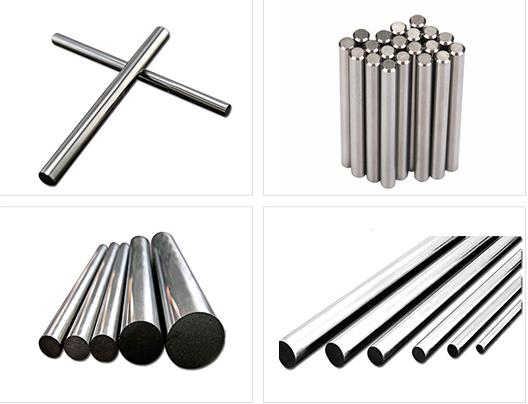
Advantages of XYMJ tungsten carbide rod
1. It adopts high-quality ultra-fine tungsten carbide and imported cobalt powder as raw materials.
.2. Standardized production technology using the advanced low-pressure sintering technique.
3. It has high strength and high hardness.
4. It has excellent red hardness, good wear resistance, high elastic modulus, high bending strength, superior chemical stability with high resistance of acid, alkali, high-temperature oxidation, superb impact resistance, low expansion coefficient.
5. It is manufactured with high-tech precision advanced equipment which is a low-pressure sintering furnace.
6. It is produced by a unique new process with the vacuum high temperature and high-pressure sintering. The pressure sintering is adopted at the finish time, which greatly reduces the porosity, improves the density and the mechanical properties of the product.
7. carbide rod has many material grades, which can adapt to different applications with complete specifications and precious carbide blank size which can reduce processing volume and improve productivity.
Tungsten carbide rod has the advantages of good HRC, high strength, excellent wear resistance, high chemical stability, etc, which is one of the preferred materials of the drill, end mills and milling cutters, widely used in various machining industries. XYMJ is one of the most trustworthy carbide rod manufacturers, with premium quality products, various types, high-precision equipment and competitive prices.