
Understanding viscosity and its measurement is crucial across various industries, from food processing to cosmetics. Digital viscometers have emerged as popular tools due to their precision, user-friendliness, and portability. This guide offers step-by-step instructions for utilizing a digital viscometer effectively.
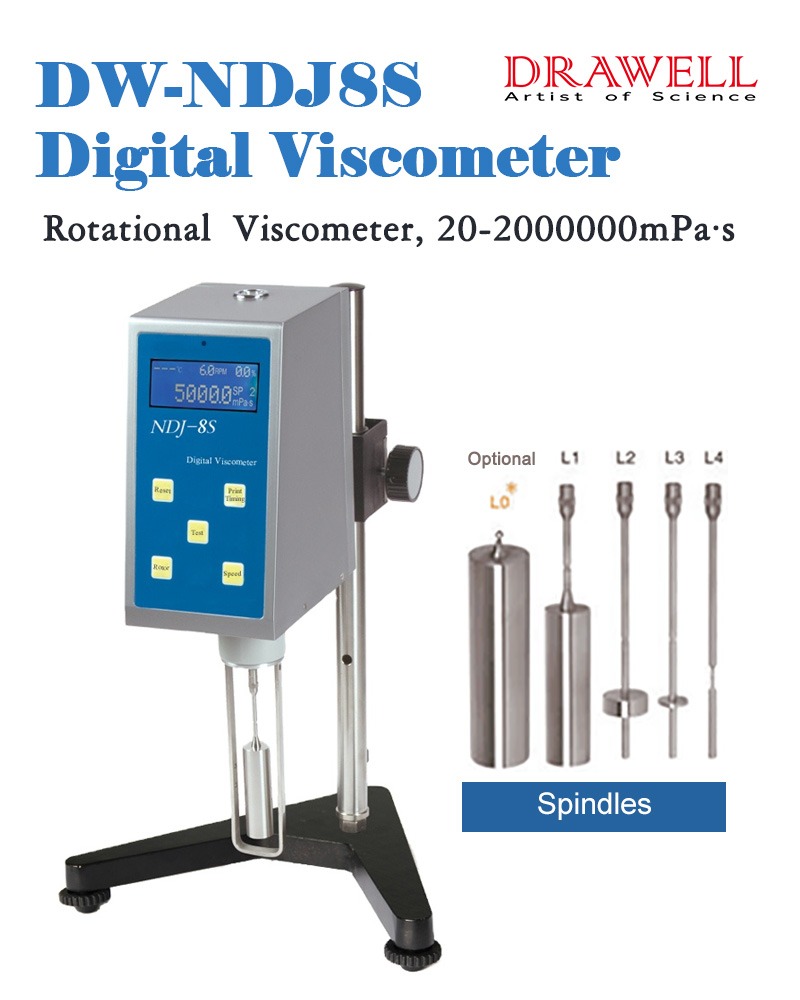
Selecting Rotor and Setup:
Begin by selecting the appropriate rotor based on the fluid's viscosity range. Attach the rotor securely by screwing it counterclockwise onto the connecting screw. Then, fit the fixed sleeve onto the viscometer body, aligning the groove with the pin and securing it with the fastening screw.
Sample Preparation:
Prepare a clean, dry sample container and pour 20-25 mL of the sample liquid into it. Insert the container into the fixed sleeve and tighten it securely. Ensure the sample liquid is at the desired temperature for accurate measurements.
Measurement Procedure with Bottomless Outer Container:
If utilizing a bottomless outer container, immerse the rotor and outer container into the fluid until the groove on the outer container aligns with the liquid surface. Lower them carefully until the groove is at the surface level.
Conducting the Measurement:
Turn on the viscometer and select the desired rotational speed or shear rate. Allow the viscometer to stabilize at the chosen speed before recording the viscosity reading displayed.
Cleaning and Maintenance:
After each measurement, clean the viscometer thoroughly by removing the sample container and cleaning it along with the rotor and connecting screw using appropriate methods. Regularly inspect the viscometer for any signs of damage or wear, contacting the manufacturer for repairs if necessary.
Conclusion:
Accurate viscosity measurements are essential, and mastering the operation of a digital viscometer ensures reliable results. By following these detailed steps, users can maximize the effectiveness of their digital viscometer, contributing to enhanced performance across various applications.
The drill ship rig stands as an impressive feat of engineering prowess within the realm of offshore oil and gas drilling, offering both spectacle and adaptability. These vessels seamlessly merge the capabilities of a standard drilling rig with the mobility of a ship, granting access to remote and challenging offshore locations. This article delves into the captivating world of the drill ship rig, exploring its architecture, functionalities, and pivotal role in unlocking substantial energy resources beneath the seabed.
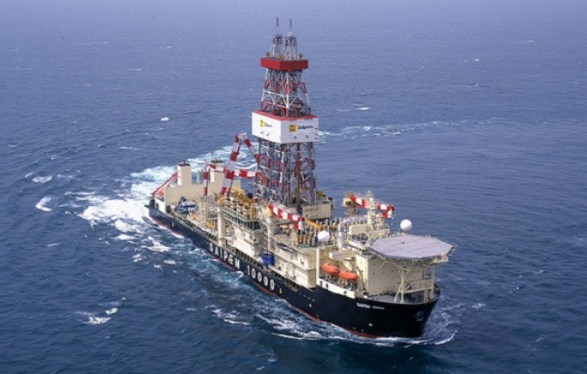
Key Components and Features of a Drill Ship Rig
A drill ship rig serves as a specialized vessel tailored for offshore drilling endeavors. Unlike conventional stationary oil drilling rigs fixed to the ocean floor, these ships boast self-propulsion capabilities, enabling them to traverse diverse drilling sites. This mobility proves invaluable in reaching deepwater reserves located in remote and demanding environments, rendering drill ships indispensable assets in the oil and gas sector.
Drilling Equipment:
Drilling Derrick: A towering structure that provides support to the drilling apparatus, often equipped with hoisting mechanisms for the manipulation of the drill string and associated tools.
Drilling Machinery: Robust drilling equipment such as drill bits and rotary systems, facilitating the creation of boreholes in the seabed. Blowout Preventer (BOP) System: A critical safety component designed to avert uncontrolled hydrocarbon discharges during drilling operations, featuring multiple valves and control mechanisms.Dynamic Positioning System (DPS):
A sophisticated amalgamation of thrusters and sensors enabling the drill ship to maintain a steady position above the drilling site, crucial for precise drilling operations in deepwater and challenging environmental conditions.
Storage and Processing Facilities:
Mud and Fluid Storage: Dedicated tanks for storing drilling mud and fluids essential for maintaining drill bit temperature and pressure.
Casing and Drill Pipe Storage: Designated areas for storing casing and drill pipes utilized in wellbore lining and stabilization.
Hydrocarbon Processing: Facilities for processing hydrocarbons, encompassing separation systems and storage tanks for recovered oil.
Accommodation and Support Facilities:
Crew Accommodation: Equipped with extensive safety systems and accommodations for crew members, including fire detection systems, lifeboats, and safety gear.
Supplies and Equipment Storage: Ample storage spaces for supplies, spare parts, and equipment, ensuring the rig's autonomy during extended operations.Workshops: Small workshops for maintenance and repair activities.
Helideck:
Essential for crew changes and transportation of supplies and equipment, facilitating helicopter landings for logistical and personnel rotations.
Control Room and Monitoring Systems:
Equipped with state-of-the-art control systems providing real-time data on drilling parameters, enabling precise monitoring and control of drilling operations.
Safety Systems:
Rigorous safety measures including fire detection systems, lifeboats, and crew safety equipment, bolstered by regular safety drills and procedures.
Power Generation and Propulsion:Massive generators and propulsion systems powering onboard systems and providing propulsion capabilities.
Subsea Equipment:
Risers and umbilicals connecting subsea wellheads and control systems to the drill ship, facilitating safe drilling, control, and maintenance operations.
Communication Systems:
Sophisticated communication infrastructure including satellite links for seamless coordination with onshore offices and ensuring operational safety.
Environmental Protection Systems:Systems for wastewater collection and treatment, waste disposal management, and spill response equipment to minimize environmental impact.
Mooring Systems:
Some drill ships feature mooring systems alongside dynamic positioning systems, using anchors or alternative methods to secure the vessel during drilling operations.
Functions and Capabilities of a Drill Ship Rig
Deepwater Drilling:
Specifically engineered for deepwater operations, capable of drilling to considerable depths below the sea surface with precise control.
Exploratory Drilling:
Essential for identifying potential oil and gas reserves, conducting test wells to assess hydrocarbon deposits in subsea formations.
Production Drilling:
Capable of extraction operations following successful exploration, serving as mobile production platforms for oil and gas extraction from the seabed.
Rapid Deployment:
Enables swift relocation to new drilling sites, facilitating rapid adaptation to evolving market conditions and exploration prospects.

Challenges and Environmental Concerns for a Drill Ship Rig
Environmental Impact:
Risk of oil spills and disruption of marine ecosystems, necessitating stringent spill response strategies and environmental management practices.
Safety Risks:Potential hazards including blowouts and fire incidents, demanding comprehensive safety protocols and emergency response capabilities.
Regulatory Compliance:
Adherence to complex international, national, and regional regulations governing offshore drilling operations.
Weather and Environmental Conditions:
Operating in remote and harsh environments, requiring resilience to extreme weather conditions and meticulous planning to mitigate risks.
Resource Depletion:
Considerations regarding the depletion of finite resources and associated environmental impacts.
Waste Management:
Proper handling and disposal of drilling waste materials to minimize environmental harm.
Climate Change Considerations:
Addressing the contribution of fossil fuel extraction to greenhouse gas emissions and climate change.
Accidental Discharges:
Potential inadvertent releases of chemicals, drilling fluids, or waste materials impacting marine environments.
Stranding Risk:
Potential risks of grounding or stranding, necessitating measures to mitigate environmental damage.
In summary, the drill ship rig stands as a versatile and self-sufficient platform for offshore drilling operations, capable of operating in demanding marine environments. While offering significant advantages, it also poses challenges and environmental concerns that must be diligently managed to ensure safe and sustainable operations. Through adherence to stringent safety measures, technological innovations, and environmental stewardship, the drill ship rig continues to play a pivotal role in unlocking offshore energy resources while minimizing environmental impact and ensuring operational safety.
In the contemporary realm of manufacturing and production, ensuring product quality stands as a paramount concern. The advent of web video inspection systems has revolutionized this landscape, enabling real-time monitoring and analysis of manufacturing processes. What sets these systems apart is their remarkable versatility, capable of catering to the unique requirements of diverse industries and evolving production methodologies. This article delves into the nuances of customization and adaptability, elucidating how web video inspection systems are tailored to address the distinctive needs of various sectors and ever-changing production protocols.

Tailored Solutions for Industry Specifics:
Web video inspection systems offer a distinct advantage in their ability to adapt to the specific challenges encountered across various sectors. Given that quality control standards vary significantly from automotive manufacturing to pharmaceuticals, these systems can be customized to address industry-specific concerns. This ensures that the inspection process aligns seamlessly with the requirements and intricacies of each production environment.
Flexibility in Configuration and Parameters:
The adaptability of web inspection systems is exemplified by their versatility in configuration. Manufacturers can fine-tune these systems to suit the nuances of their production processes. Parameters such as inspection criteria, tolerance levels, and fault detection algorithms are all customizable, allowing producers to precisely tailor the system in response to evolving needs and product specifications.
User-Friendly Interfaces for Seamless Customization:
Web inspection vision systems prioritize user interaction by offering intuitive interfaces. This ensures that operators, irrespective of their technical proficiency, can swiftly navigate and adjust the system settings. The user-friendly interfaces facilitate quick modifications to settings, inspection criteria, and other variables, enabling real-time adaptation to the dynamics of production.
Adaptive Integration of AI and Machine Learning:
Integration of artificial intelligence (AI) and machine learning (ML) enhances the adaptability of web video inspection systems. These technologies enable the system to continuously learn from and adapt to new data inputs. As patterns emerge and production processes evolve, the system becomes increasingly proficient at detecting flaws and anomalies. The adaptive nature of AI and ML empowers a proactive approach to quality management.

Real-Time Feedback and Corrective Actions:
The real-time capabilities of web video inspection systems bolster their adaptability by providing instantaneous feedback. Upon detecting anomalies, the system can trigger alerts, prompting operators to take corrective measures promptly. This real-time adaptability minimizes the risk of producing substandard products, thereby upholding the integrity of the manufacturing process.
Scalability for Changing Production Needs:
The adaptability of web video inspection systems extends to scalability, allowing them to accommodate fluctuations in production requirements. Whether a production facility undergoes expansion, contraction, or technological upgrades, these systems can scale accordingly. This scalability ensures that the investment in inspection technology remains relevant and valuable over the long term.
Beyond Visual Inspection:
While visual inspection remains a primary focus, modern web inspection systems transcend mere visuals. Some systems integrate additional sensors and technologies to enhance their inspection capabilities, including dimension measurement, structural integrity analysis, and thermal quality evaluation. This adaptability empowers manufacturers to tailor inspections to suit the unique characteristics of their products.
Conclusion:
Customization and adaptability define the contemporary landscape of web video inspection systems. These solutions not only address the distinct needs of various industries but also provide producers with the flexibility to adapt to evolving manufacturing processes. As automation and Industry 4.0 continue to advance, the customizable and adaptable nature of web inspection systems ensures their prominence in quality control, contributing to the efficiency and perfection of diverse manufacturing sectors.
Ensuring safety amidst the challenges of icy waters is paramount for mariners and seafarers. In such harsh conditions where ice poses significant threats to vessels, the selection of anchors becomes a critical decision. High Holding Power (HHP) anchors emerge as indispensable assets in safeguarding ships and ensuring stability when navigating through icy waters. This article explores the pivotal role of HHP anchors in tackling the challenges posed by icy conditions.
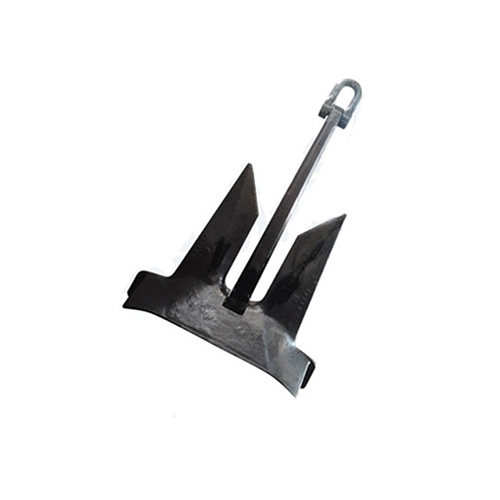
Ice presents a myriad of challenges to maritime operations, including reduced maneuverability, potential hull damage, and the risk of collisions with ice formations. In such demanding circumstances, the reliability and performance of anchoring equipment are pivotal for maintaining vessel position and ensuring the safety of the crew.
Here are the key factors highlighting why HHP anchors excel in ice-prone waters:
Enhanced Holding Power: The primary advantage of HHP anchors lies in their ability to provide high holding strength, crucial for securing vessels amidst moving ice and fluctuating currents. Their robust construction and unique characteristics enable them to dig deep into the ice, ensuring a stable grip and reducing the risk of dragging or displacement.
Reliable Penetration and Grip: Engineered to penetrate ice effectively, HHP anchors ensure a firm hold even in the harshest conditions. Specialized fluke designs and reinforced materials allow them to grip the ice securely, providing stability and preventing drifting or movement.
Structural Resilience: Operating in ice-prone waters subjects anchors to significant forces and stresses. HHP anchors are built to withstand these harsh conditions, with reinforced materials and rugged construction ensuring structural integrity even in extreme environments, crucial for maintaining safety and effectiveness.
Swift Deployment and Retrieval: In emergencies or when rapid maneuverability is required, efficient anchor deployment and retrieval are critical. HHP anchors are designed for quick deployment and retrieval, enabling vessels to respond promptly to changing ice conditions or unforeseen emergencies, thereby enhancing overall safety and operational efficiency.
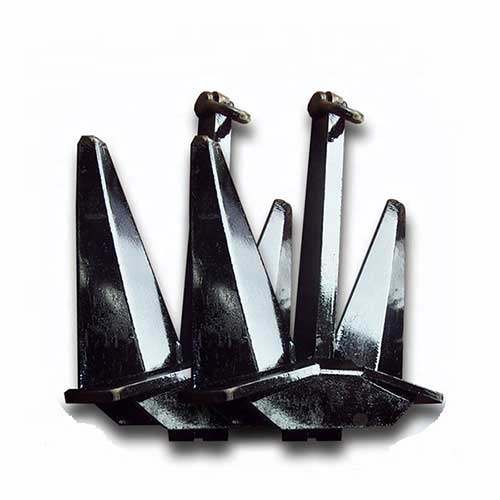
Compatibility with Ice-Class Vessels: Many vessels operating in ice-prone waters adhere to ice-class standards, incorporating reinforced hulls and specialized equipment. HHP anchors complement these vessels by providing tailored anchor solutions, ensuring seamless integration and optimal performance.
Resistance to Drifting and Drift Ice: Ice movement and drift ice pose significant challenges to anchored vessels. HHP anchors are built to resist drifting, offering a reliable hold that minimizes the risk of displacement. Their ability to grip the seabed firmly, even in icy conditions, helps maintain vessel stability and safety.
Reliability in Extreme Conditions: HHP anchors demonstrate consistent performance and reliability under extreme conditions, making them trusted assets for vessels navigating ice-prone waters. Their ability to maintain holding power and structural integrity, even in severe weather conditions, enhances overall safety and operational efficiency.Ease of Handling: User-friendly design features and operational simplicity are crucial for efficiently using HHP anchors, especially in difficult conditions. Easy handling improves crew safety and reduces the likelihood of mishaps during anchoring procedures.
In conclusion, in the challenging environment of ice-prone waters, anchor selection plays a critical role in vessel safety and operational efficiency. High Holding Power anchors emerge as indispensable assets, offering unparalleled dependability, performance, and endurance in anchoring vessels in severe ice conditions. They prove vital in guaranteeing the safety and success of marine operations in icy waters, solidifying their reputation as critical tools for navigating through some of the world’s most formidable marine environments.
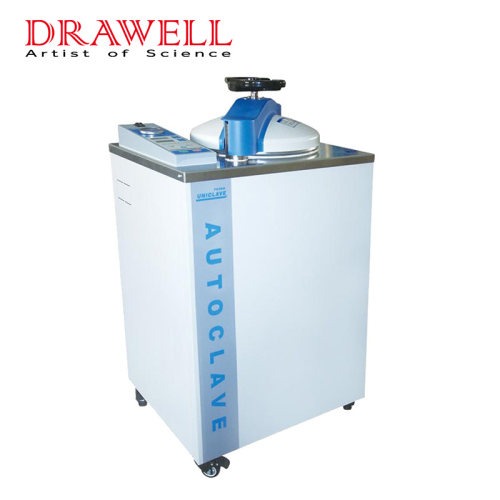
Autoclaves stand as indispensable tools across medical, scientific, and industrial sectors, playing a pivotal role in upholding hygiene standards and ensuring procedural safety. These versatile and reliable devices have revolutionized sterilization processes, facilitating the eradication of harmful bacteria and mitigating the risk of contamination. In this comprehensive overview, we delve into the myriad applications of autoclaves, underlining their significance in diverse industries.
Understanding Autoclaves:
An autoclave serves as a device designed for sterilizing equipment, tools, and materials through the application of high-pressure steam. Employing a combination of heat, pressure, and moisture, autoclaves effectively eradicate bacteria, viruses, fungi, and spores present on sterilized items, maintaining stringent hygiene standards. To achieve optimal sterilization results, autoclaves are engineered to reach and sustain precise temperature and pressure conditions.
Medical and Laboratory Applications:
Sterilization of Surgical Instruments: Autoclaves are extensively utilized in medical settings to sterilize a wide array of surgical instruments, including scalpels, forceps, scissors, and clamps. Through the application of high-pressure steam, autoclaves ensure the elimination of microorganisms, thus reducing the risk of postoperative infections.
Infection Prevention in Healthcare Facilities: Autoclaves play a pivotal role in maintaining sterile environments within hospitals and clinics by sterilizing various items such as gowns, gloves, masks, and curtains, thereby preventing the spread of illnesses among healthcare professionals and patients.
Sterilization of Dental Instruments: Dental offices rely on autoclaves to sanitize dental instruments, including drills, probes, and mirrors, ensuring a germ-free environment and minimizing the risk of cross-contamination.
Sterile Laboratory Equipment: In research and diagnostic laboratories, autoclaves are indispensable for sterilizing glassware such as test tubes, beakers, and flasks, as well as laboratory equipment like microscopes and centrifuges, ensuring accurate experimental results.
Culture Media Preparation: Autoclaves are essential for preparing sterile culture media in laboratories, crucial for cultivating microorganisms under controlled conditions, thereby facilitating research and analysis.
Industrial Applications:
Biohazardous Waste Management: Autoclaves are employed in laboratories and medical facilities to sterilize biohazardous waste materials, including used cultures, Petri plates, and disposable gloves, before disposal, thereby reducing the risk of disease transmission and ensuring proper waste management practices.
Food and Beverage Industry: In the food and beverage industry, autoclaves are utilized for sterilizing packaging materials such as cans, bottles, and pouches, extending the shelf life of products and safeguarding against contamination.
Pharmaceuticals and Biotechnology: Autoclaves play a crucial role in sterilizing equipment, containers, and packaging materials in pharmaceutical and biotechnology industries, ensuring the purity and sterility of pharmaceutical products and biological substances.
Waste Management: Waste management facilities utilize autoclaves for the sterilization of medical waste, including sharps and contaminated items, to mitigate the spread of infectious diseases and adhere to safety standards.
Research and Development: Autoclaves find applications in research and development centers for sterilizing laboratory equipment and materials, maintaining sterile conditions for experiments and production processes.
Cosmetics and Personal Care Products: Autoclaves are employed in the manufacturing of cosmetics and personal care products to sterilize containers and packaging materials, ensuring product safety and quality.
Aerospace and Composites Industry: Autoclaves are essential in the aerospace and composites industries for manufacturing high-performance materials and components through processes like autoclave molding, ensuring optimal strength and quality.
Textile Industry: Autoclaves are utilized in the textile industry for fabric dyeing and finishing, allowing for the treatment of fabrics under high-pressure and temperature conditions, ensuring excellent penetration of chemicals and finishes.
Safety and Best Practices:
Proper loading of items to be sterilized to ensure uniform steam penetration.
Regular monitoring of temperature and pressure gauges to maintain optimal operating conditions.
Adherence to instructions of autoclave manufacturer for operation and maintenance, including calibration and servicing.
In summary, autoclaves represent indispensable tools across various industries, facilitating effective sterilization processes and upholding hygiene standards. Their versatile applications underscore their importance in ensuring safety, quality, and efficiency across medical, scientific, and industrial sectors.