
Managing oil and gas involves a vast range of activities, from exploration and extraction to transportation and distribution. In this article, we will delve into the complexities of oil and gas management, analyzing its essential components, challenges, the evolving landscape of this critical sector, and how simulation is revolutionizing oil and gas management.

Key Aspects of Oil and Gas Management
Exploration and Production
The first phase of oil and gas management is exploration and production (E&P). These processes involve locating potential hydrocarbon reserves, drilling wells, and extracting crude oil and natural gas. Geologists, engineers, and other professionals play a crucial role in identifying viable drilling locations. Advanced technologies, such as seismic surveys and sophisticated drilling techniques, have revolutionized E&P, enabling more precise identification of hydrocarbon reservoirs.
Challenges in Exploration and Production
Environmental Concerns: Balancing the demand for energy resources with environmental conservation is a significant challenge. The industry must minimize the environmental impact of drilling and extraction processes.
Technological Advancements: Keeping up with rapidly evolving drilling and exploration technologies is crucial for the industry’s competitiveness.
Geopolitical Issues: Oil and gas reserves are often located in politically sensitive regions, which can lead to geopolitical challenges and supply disruptions.
Refining and Processing
After crude oil and natural gas are recovered, they must be refined and processed to be used in various applications. Refineries play a critical role in this phase by converting crude oil into valuable products like gasoline, diesel, and petrochemicals. To maintain efficiency and product quality, the refining process requires innovative equipment and skilled workers.
Challenges in Refining and Processing
Environmental Regulations: Cleaner and more efficient refining procedures are necessary as environmental regulations become increasingly stringent.
Energy Efficiency: Refineries must enhance their energy efficiency to minimize carbon emissions and operational costs.
Supply Chain Management: Managing the supply chain is vital to ensure a steady flow of crude oil and products to meet market demand.
Transportation and Distribution
Transportation and distribution of oil and gas products involve moving them from refineries to end users, typically via pipelines, ships, trucks, and railroads. Effective logistics and infrastructure are essential for ensuring a steady and secure supply of energy resources.
Challenges in Transportation and Distribution
Infrastructure Investment: Maintaining and expanding transportation infrastructure requires significant investment and is a constant challenge.
Safety and Security: Ensuring the safe transport of hazardous materials is a top priority for the industry.
Market Fluctuations: Oil and gas prices can fluctuate significantly, affecting transportation and distribution decisions.
Environmental and Regulatory Compliance
Compliance with environmental and regulatory requirements is a critical aspect of oil and gas management. The sector faces increasing scrutiny and pressure to reduce its environmental impact. Compliance with environmental regulations is essential for maintaining a social license to operate and avoiding potential legal and reputational risks.
Challenges in Environmental and Regulatory Compliance
Shifting Regulations: Regulatory requirements are constantly evolving, necessitating adaptability and proactive compliance strategies.
Public Perception: Maintaining a positive public image is challenging in an industry often viewed with skepticism due to environmental concerns.
Health and Safety: Ensuring the health and safety of workers and communities is a top priority and a constant challenge in the oil and gas sector.
Technology and Innovation
Technology and innovation are driving forces in the oil and gas industry. Advances in drilling techniques, automation, data analytics, and renewable energy are transforming the industry. To remain competitive and sustainable, oil and gas management must embrace and adapt to technological advances.
Challenges in Technology and Innovation
Talent Acquisition: Attracting and retaining skilled personnel to drive innovation is a continuous challenge.
Energy Transition: As the world shifts towards cleaner energy sources, oil and gas management faces the challenge of diversifying and adapting to meet changing energy demands.
How Simulation Technology is Revolutionizing Oil and Gas Management
Simulation technology is helping the oil and gas industry simulate and analyze various aspects of their operations, from exploration and production to refining and distribution.
Exploration and Reservoir Simulation
Reservoir modeling is a critical application of simulation technology in the oil and gas sector. Geologists and engineers use this technology to create computer models of subsurface reservoirs, providing a detailed understanding of the reservoir’s characteristics. Simulations allow experts to predict reservoir performance under different conditions, optimizing drilling and production strategies.
Benefits of Reservoir Simulation
Improved Reservoir Management: Simulations enhance reservoir characterization, leading to better production techniques and higher recovery rates.
Risk Mitigation: Companies can anticipate potential issues and manage risks by modeling various production scenarios.
Cost Reduction: Simulation technology helps reduce drilling and exploration costs by providing insights for more efficient well placement and operation.
Drilling and Well Control Simulation
Drilling and well control also benefit from simulation technology. Drilling simulators offer operators a realistic training environment to practice various drilling scenarios and well control procedures safely. These simulations help improve the skills and preparedness of drilling personnel.
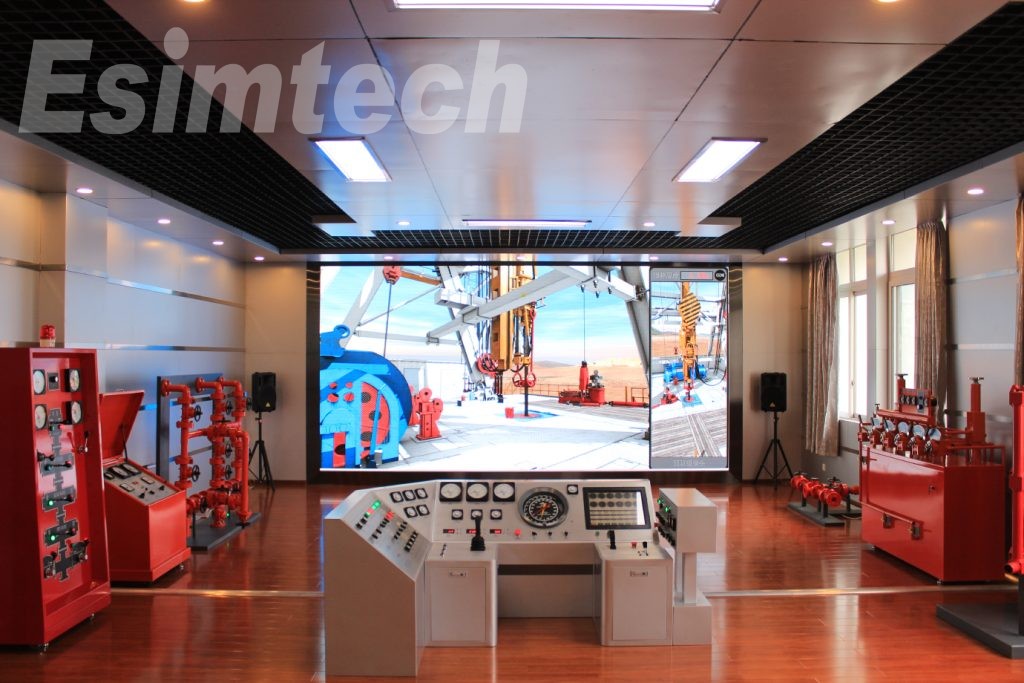
Benefits of Drilling Simulation
Enhanced Training: Drilling simulation systems provide a safe and cost-effective way to train operators and improve their ability to manage drilling operations.
Error Prevention: Simulations enable the practice of well control responses, reducing the likelihood of human error during actual drilling operations.
Realistic Scenarios: Operators can encounter a wide range of drilling challenges, from equipment failures to unexpected wellbore conditions, in a controlled environment.
Refinery and Process Optimization
Refineries and processing plants use simulation technology for process optimization. By creating digital replicas of refinery operations, companies can identify inefficiencies, reduce energy consumption, and improve product quality. These simulations enable engineers to experiment with different process variables and make informed decisions to enhance plant operations.
Benefits of Refinery Simulation
Efficiency Gains: Simulations help identify opportunities to streamline operations, reduce energy consumption, and increase overall process efficiency.
Product Quality: Companies can produce higher-quality products while reducing waste and emissions by fine-tuning refining processes.
Cost Savings: Optimizing processes through simulation can lead to significant cost savings in energy, maintenance, and raw materials.
Pipeline and Distribution Management
In pipeline and distribution management, oil and gas gathering and transportation simulation systems are used. Pipeline simulation software allows companies to analyze variables like flow rates, pressure, and temperature to ensure the safe and efficient transport of hydrocarbons from refineries to end users.

Benefits of Pipeline Simulation
Safety Assurance: Pipeline simulations help identify potential issues and ensure safe and reliable transportation of hazardous materials.
Resource Optimization: Companies can minimize energy consumption and maintenance costs by optimizing pipeline operations.
Compliance Support: Simulation technology assists in meeting regulatory requirements for pipeline operations and environmental protection.
Conclusion
Oil and gas management is a complex and multifaceted field vital to our daily lives and the global economy. Effective management in this industry requires addressing a wide range of issues, from environmental concerns to geopolitical challenges. As the world continues to evolve, oil and gas management must adapt and innovate to ensure a sustainable and reliable energy future. Simulation technology is a crucial tool for ensuring the industry’s long-term viability and dependability, enabling companies to navigate the complex landscape of this vital sector with confidence and precision.
Ensuring the safety of crew and passengers on maritime vessels is crucial, and inflatable life rafts play a vital role in emergency preparedness. Effective emergency response planning involves comprehensive preparation, regular training, and adherence to established safety protocols to ensure these devices can be deployed efficiently and effectively in critical situations.

What are Inflatable Life Rafts?
Inflatable life rafts are essential maritime safety devices designed to provide temporary refuge and support in emergencies such as shipwrecks, fires, or collisions. These rafts are compact and stored in a deflated state, making them easy to store on vessels. Upon deployment, they quickly inflate either automatically or manually, forming a stable, buoyant platform that can accommodate multiple people. Equipped with survival essentials such as food, water, first aid supplies, and signaling devices, inflatable life rafts are crucial for ensuring the safety and survival of crew and passengers awaiting rescue.
Key Elements of an Effective Emergency Response Plan for Inflatable Life Rafts
1. Risk Assessment and Analysis
Identify Potential Hazards: Conduct thorough risk assessments to identify potential emergency scenarios, such as collisions, fires, and severe weather conditions.
Evaluate Vessel Specifics: Consider the ship’s design, route, cargo, and operating environment to tailor the emergency response plan to specific risks.
2. Provision and Maintenance of Life Rafts
Compliance with Standards: Ensure that the number and capacity of life rafts meet international safety standards set by organizations like the International Maritime Organization (IMO).
Regular Inspections: Perform routine inspections to check the integrity of life rafts, including inflation mechanisms, hydrostatic release units, and the condition of survival equipment.
Maintenance Schedules: Establish and adhere to regular maintenance schedules to keep life rafts in optimal condition, replacing any outdated or damaged components promptly.
3. Crew Training and Drills
Comprehensive Training: Provide extensive training for all crew members on the proper use of life rafts, including deployment techniques, boarding procedures, and survival skills.
Regular Drills: Conduct routine emergency drills simulating various scenarios to ensure crew members are well-prepared and can perform their roles efficiently under stress.
Assessment and Feedback: Evaluate the performance of crew members during drills and provide constructive feedback to address any weaknesses or gaps in knowledge.
4. Clear Communication Protocols
Emergency Alerts: Establish a reliable system for emergency alerts, including alarms and public announcements, to ensure timely and clear communication during an emergency.
Instructions and Coordination: Develop clear instructions for crew and passengers on evacuation procedures, ensuring coordination and orderly movement towards life rafts.
Language and Accessibility: Ensure that communication protocols are accessible to all, considering language barriers and the needs of passengers with disabilities.
5. Effective Deployment Procedures
Deployment Techniques: Develop detailed procedures for deploying life rafts, including the use of hydrostatic release units and manual deployment methods.
Accessibility: Ensure life rafts are strategically placed and easily accessible from various points on the vessel to facilitate quick deployment.
Training on Deployment: Train crew members on both standard and emergency deployment procedures to cover all potential scenarios.
6. Survival Kits and Supplies
Essential Equipment: Equip life rafts with comprehensive life saving items, including food, water, first aid supplies, signaling devices, thermal protection, and navigation tools.
Regular Updates: Regularly check and replenish survival kits to ensure all supplies are up-to-date and in good condition.
Inventory Management: Keep an inventory of all items in the survival kits and update it after each inspection or resupply.
7. Post-Evacuation Protocols
Life Raft Management: Outline procedures for managing the life raft after deployment, including securing the raft, organizing passengers, and maintaining order.
Supply Rationing: Develop protocols for rationing food and water supplies to ensure they last until rescue.
Morale and Health: Include measures for maintaining morale and health, such as regular health checks, mental support, and activities to keep spirits up.

Continuous Improvement and Evaluation in Emergency Response Planning for Inflatable Life Rafts
1. Incorporating Technological Advancements
Adopt New Technologies: Stay updated on the latest advancements in life raft technology and emergency response equipment. Integrate these technologies into the emergency response plan to improve efficiency and effectiveness.
Training on New Equipment: Ensure that crew members are trained on any new equipment or technologies introduced. This training should cover both theoretical knowledge and practical use.
2. Lessons Learned from Real Incidents
Incident Analysis: Analyze real-life maritime incidents to learn from them. Understand what went wrong and what was done correctly. Use these insights to refine and improve the emergency response plan.
Case Studies: Review case studies and reports from other vessels and organizations to gather valuable lessons and best practices that can be applied to your own emergency response planning.
Feedback Mechanisms: After each drill, gather feedback from participants to understand what worked well and what didn’t. Use this feedback to make necessary adjustments to the emergency response plan.
3. Engagement with Industry Forums
Industry Collaboration: Participate in industry forums, workshops, and conferences to stay informed about best practices, innovations, and regulatory changes. Engaging with the broader maritime community can provide valuable insights and foster collaboration.
Knowledge Sharing: Share experiences and lessons learned with other maritime operators. This collaborative approach can help improve safety standards across the industry.
4. Monitoring and Auditing
Internal Audits: Conduct regular internal audits of emergency preparedness, focusing on the condition of life rafts, the availability of survival supplies, and the readiness of crew members.
Third-Party Inspections: Engage third-party inspectors to conduct independent evaluations of the emergency response plan and equipment. These external audits provide an unbiased assessment and help identify areas for improvement.

Conclusion
Effective emergency response planning for inflatable life rafts is a critical aspect of maritime safety. By conducting thorough risk assessments, maintaining life rafts, training crew members, establishing clear communication protocols, and continuously improving procedures, maritime operators can significantly enhance the chances of survival in emergencies. Ensuring that in the face of an emergency, the crew and passengers can rely on well-maintained life rafts and a well-practiced plan to guide them to safety.
In the fast-paced world of manufacturing, maintaining high-quality standards is paramount. Companies are increasingly turning to advanced technologies that provide precise, real-time monitoring and analysis of their production processes. Multi-sensor web inspection systems have emerged as powerful tools, leveraging various sensor technologies to monitor and enhance the quality of materials continuously processed in manufacturing.
Understanding Multi-Sensor Web Inspection Systems
A multi-sensor web inspection system integrates various types of sensors to monitor and evaluate the quality of continuous materials, or webs, such as paper, plastic, metals, textiles, and nonwovens during the manufacturing process. These systems are designed to detect defects, inconsistencies, and other issues that could compromise the final product’s quality.
Key Components of Multi-Sensor Web Inspection Systems
1. Optical Sensors
High-Resolution Cameras: Capture detailed images of the web surface to detect surface defects, including scratches, holes, stains, and discolorations.
Laser Scanners: Use laser beams to scan the surface, providing precise measurements and detecting minute surface irregularities like fine cracks and texture variations.
2. Thermal Sensors
Infrared (IR) Cameras: Detect infrared radiation emitted by the web, creating thermal images to show temperature variations and identify issues like overheating or improper curing.
3. Ultrasonic Sensors

Ultrasonic Transducers: Emit high-frequency sound waves that penetrate the material. By analyzing reflected waves, ultrasonic sensors detect internal defects such as voids, delaminations, and thickness variations.
4. X-ray Sensors
X-ray Cameras: Capture images based on the differential absorption of X-rays by the material, ideal for identifying internal inconsistencies like cracks, inclusions, and density variations.
5. Magnetic and Eddy Current Sensors
Magnetic Flux Leakage (MFL) Sensors: Detect defects in ferromagnetic materials by measuring disruptions in magnetic fields caused by flaws.
Eddy Current Sensors: Induce eddy currents in conductive materials and measure the resulting electromagnetic field to identify defects like cracks and inclusions.
6. Lighting Systems
LED Lighting: Provides consistent, bright illumination essential for capturing high-quality images.
Laser Light Sources: Offer concentrated beams of light, highlighting fine surface details and improving detection capabilities.
7. Image Processing and Analysis Software
Image Processing Algorithms: Enhance images and extract relevant features for defect detection.
Machine Learning Models: Analyze large datasets to recognize patterns and predict defects with high accuracy, continuously improving with more data exposure.
8. Data Management Systems
Data Storage Solutions: High-capacity storage systems, including cloud-based solutions, store vast amounts of image and sensor data.
Data Analytics Tools: Analyze stored data, providing insights into the manufacturing process and helping identify trends and recurring issues.
9. User Interface and Control Systems
Graphical User Interfaces (GUIs): Web inspection vision system provide real-time feedback and control over the inspection process.
Automated Control Systems: Adjust inspection parameters based on real-time data, optimizing the inspection process and ensuring consistent quality.
Industrial Applications of Multi-Sensor Web Inspection Systems
1. Automotive Industry
Application: Inspection of metal sheets, coatings, and composite materials.
Benefits: Detects surface defects, ensures consistent thickness of coatings, and verifies weld integrity.
2. Textile Industry
Application: Inspection of fabrics, nonwovens, and other textile materials.
Benefits: Detects defects, ensures pattern consistency, and monitors tensile strength.
3. Packaging Industry
Application: Inspection of plastic films, paperboard, and other packaging materials.
Benefits: Identifies surface defects, ensures dimensional accuracy, and verifies seal integrity.
4. Electronics Industry
Application: Inspection of printed circuit boards (PCBs) and electronic components.
Benefits: Verifies component placement, inspects solder joints, and checks trace integrity.
5. Paper and Pulp Industry
Application: Inspection of paper and pulp during production.
Benefits: Detects surface defects, monitors grammage, and measures moisture content.

6. Metallurgical Industry
Application: Inspection of rolled metal products.
Benefits: Identifies surface defects, ensures dimensional accuracy, and inspects coating quality.
7. Pharmaceutical Industry
Application: Inspection of blister packs, labels, and other packaging materials.
Benefits: Verifies label accuracy, ensures blister pack integrity, and detects foreign objects.
8. Food and Beverage Industry
Application: Inspection of packaging materials and processed food products.
Benefits: Detects packaging defects, ensures product uniformity, and identifies contaminants.

Challenges and Future Solutions in Multi-Sensor Web Inspection Systems
Multi-sensor web inspection systems offer comprehensive quality control but face several challenges:
1. Integration Complexity
Solution: Develop standardized interfaces and middleware software to facilitate seamless sensor integration.
2. Data Management
Solution: Implement edge computing, advanced data compression techniques, and cloud-based solutions for efficient data handling.
3. Cost Considerations
Solution: Develop modular and scalable systems, leasing models, and shared service platforms to make these systems more affordable.
4. System Calibration and Maintenance
Solution: Automate calibration and implement predictive maintenance using AI.
5. Environmental Sensitivity
Solution: Develop robust sensor housings and advanced algorithms to compensate for environmental variations.
6. User Training and Expertise
Solution: Enhance training programs using VR and AR, and develop user-friendly interfaces with AI-driven decision support systems.
Conclusion
Multi-sensor web inspection systems are revolutionizing quality control in manufacturing. By leveraging various sensor technologies, these systems provide comprehensive, real-time monitoring and analysis, helping manufacturers ensure the highest quality standards. The future of manufacturing is poised to be smarter and more efficient, with multi-sensor web inspection systems playing a pivotal role in this transformation.
Bolts are among the most common fasteners used across a wide range of applications, from machines and structures to various other objects. However, bolts can loosen over time due to factors like vibration, thermal expansion and contraction, and other environmental influences. This loosening can pose significant safety risks, including machine failure or structural collapse. To mitigate these risks, various bolt anti-loosening measures must be implemented. Each method has its own advantages and disadvantages, and the best choice depends on the specific requirements of the application.

Common Types of Bolt Anti-Loosening Methods
There are three primary types of anti-loosening methods: friction-based, mechanical, and permanent.
1. Friction-Based Methods:
Thread-Locking Compounds: Lubricants that increase friction between the bolt and nut to prevent loosening.
Hexagon self-locking nuts: Nuts designed to create additional friction, reducing the likelihood of loosening under vibration.
2. Mechanical Methods:
Cotter Pins: Pins inserted through the bolt to lock it in place.
Locking Washers: Washers that create mechanical interference to prevent loosening.
Wedge-Shaped Washers: Washers that create a force pressing the bolt and nut together.
3. Permanent Methods:
Heat-Treated Bolts: Bolts treated to resist loosening.
Thread-Locking Adhesives: Adhesives that cure to form a permanent bond.
Rivets: Permanent fasteners that cannot be undone without destroying the rivet.
12 Commonly Used Methods for Bolt Anti-Loosening Design
Here are twelve methods frequently employed to design anti-loosening features into bolts:
1. Double Nuts:
Mechanism: Two nuts are tightened against each other on the same bolt.
Benefit: Increased friction makes it more difficult for the bolt to loosen.
2. Tang Thread Locking:
Mechanism: A tang in the bolt thread engages with a slot in the nut.
Benefit: Provides a mechanical lock to prevent loosening.
3. 30° Wedge Thread Technology:
Mechanism: A wedge-shaped washer is placed between the bolt and nut.
Benefit: The 30° angle enhances the locking mechanism, making it more secure.
4. Self-Locking Nuts:
Mechanism: Special design creates friction between the nut and bolt.
Benefit: Reduces loosening even under vibration.

5. Thread-Locking Adhesive:
Mechanism: Adhesive applied to bolt threads cures to form a hard layer.
Benefit: Popular for high-vibration applications.
6. Wedge Locking Double Washer:
Mechanism: Two washers with a wedge shape create a locking force.
Benefit: High-strength material and serrated edges increase security.
7. Cotter Pins and Slotted Nuts:
Mechanism: Cotter pins secure the bolt; slotted nuts accommodate the pin.
Benefit: Additional security through mechanical locking.
8. Series-Connected Wire Anti-Loosening:
Mechanism: Wires connected to the bolt and nut create a locking force.
Benefit: High-strength wires enhance security.
9. Locking Washers:
Mechanism: Special design creates friction between the washer and bolt.
Benefit: Effective under vibration.
10. Spring Washers:
Mechanism: Spring-like design creates a force pressing the bolt and nut together.
Benefit: High-strength material provides additional security.

11. Heat Staking Technology:
Mechanism: Melting a metal tab onto the bolt creates a permanent bond.
Benefit: Permanent and often used in critical applications.
12. Color-Changing Bolts:
Mechanism: Material changes color under excessive torque.
Benefit: Indicates potential over-tightening and risk of loosening.
Conclusion
The various anti-loosening methods discussed can ensure secure fastening across a wide range of applications. The best method for a particular application depends on specific factors such as vibration, thermal expansion, and the operating environment. By carefully selecting and implementing the appropriate anti-loosening method, engineers can prevent serious safety hazards and ensure the long-term reliability of their designs.
Refrigerated centrifuges are at the forefront of laboratory equipment, enabling a wide range of applications from biology and chemistry to clinical diagnostics. These powerful instruments rely heavily on advanced cooling systems. In this article, we explore the significance of cooling systems in refrigerated centrifuges and delve into the latest technological advancements that are revolutionizing temperature control in centrifugation processes.

1. Preservation of Sample Integrity
Perhaps the most crucial role of cooling systems in refrigerated centrifuges is to maintain sample integrity. Many biological and chemical processes are extremely temperature sensitive. Without sufficient cooling, the heat created by high-speed centrifugation might cause sample degradation, denaturation, or change. Cooling systems ensure a steady and controlled environment within the centrifuge chamber, protecting sensitive samples’ molecular structures.
2. Temperature Control for Precise Experiments
Accurate and reproducible results in scientific investigations rely greatly on precise temperature control. Cooling systems in refrigerated centrifuges allow researchers to establish and maintain specified temperatures, according to the unique needs of various sample types. This is especially important in domains like molecular biology, where DNA, RNA, and proteins can be extremely sensitive to temperature fluctuations.
3. Prevention of Thermal Stress
The forces created during centrifugation might cause thermal stress to samples. Cooling systems serve an important function in dispersing heat and minimizing thermal stress, which could impair the samples’ integrity. Maintaining a steady temperature reduces the possibility of artifacts and ensures that the results accurately reflect the attributes of the original samples.
4. Enhanced Versatility in Applications
Advanced cooling systems extend the versatility of refrigerated centrifuges, allowing them to accommodate a diverse range of applications. From routine clinical diagnostics to specialized research protocols, the ability to control and adjust temperatures ensures that these instruments can effectively process various sample types with specific temperature requirements.
5. Longer Centrifugation Duration
In many experiments, especially those involving the separation of complex biological mixtures, centrifugation processes can be time-consuming. Cooling systems enable the extension of centrifugation durations without compromising sample integrity. This is particularly beneficial in experiments that require prolonged exposure to high centrifugal forces.
6. Minimization of Experimental Variability
Maintaining a constant temperature during the centrifugation process reduces experimental variability. Temperature fluctuations can provide inconsistent findings, making it difficult to draw precise conclusions from tests. Cooling systems improve the repeatability and dependability of study findings.
7. Energy Efficiency and Cost Savings
Advanced cooling systems in refrigerated centrifuges are designed to be energy-efficient, contributing to sustainable laboratory practices. Energy-efficient components, such as variable speed compressors, not only reduce power consumption but also lower operational costs in the long run.

Key Components of Advanced Cooling Systems in Refrigerated Centrifuges
1. Cryogenic Cooling Technology
In some advanced refrigerated centrifuges, cryogenic chilling technology is used. This entails fast reaching extremely low temperatures using liquefied gases such as liquid nitrogen or liquid helium. Cryogenic cooling is extremely successful at maintaining accurate and consistent temperatures during centrifugation.
2. Variable Speed Compressors
Variable speed compressors are an essential part of modern cooling systems. These compressors can alter their rotation speed to meet cooling demands, allowing for precise temperature control. The ability to dynamically adjust compressor speed enhances energy efficiency and ensures that the temperature within the centrifuge chamber remains stable, even during varying loads or environmental conditions.
3. Heat Exchangers
Integrated heat exchangers play a significant role in the efficient dissipation of heat generated during centrifugation. These heat exchangers transfer heat away from the centrifuge chamber, helping to maintain a consistent temperature. Advanced designs optimize the heat exchange process, contributing to temperature uniformity and preventing fluctuations that could affect sample integrity.
4. Insulation Materials
The choice of insulation materials is crucial in minimizing heat exchange between the inside and outside of the centrifuge. Advanced cooling systems incorporate high-quality insulation materials with low thermal conductivity. This insulation helps to create a well-isolated environment, reducing the impact of external temperature variations on the samples being processed.
5. Thermal Sensors and Monitoring Systems
To ensure precise temperature control, advanced cooling systems are equipped with thermal sensors and monitoring systems. These sensors continuously measure the temperature within the centrifuge chamber, providing real-time feedback to the control system. The monitoring system adjusts cooling parameters based on this feedback, ensuring that the set temperature is maintained accurately.
6. Adaptive Cooling Algorithms
Some refrigerated centrifuges use adaptive cooling algorithms that automatically modify cooling parameters in response to changing conditions. These algorithms include aspects like load variations, changes in ambient temperature, and the unique needs of the samples being processed. This adaptive technique ensures optimal temperature regulation under a variety of conditions.
7. User-Programmable Cooling Protocols
Advanced cooling systems often include user-programmable cooling protocols. Researchers can customize temperature profiles based on the specific needs of their experiments. This level of customization allows for flexibility in handling diverse sample types and conducting experiments with varying temperature requirements.
8. Low-Noise Cooling Systems
The noise generated by cooling systems can impact the laboratory environment. Advanced refrigerated centrifuges are designed with low-noise cooling systems, reducing disruptions in shared laboratory spaces. This is achieved through the use of sound-dampening materials and optimized cooling system designs.
9. Energy-Efficient Components
Energy efficiency is a key consideration in the design of advanced cooling systems. Components such as variable speed compressors, energy-efficient motors, and optimized heat exchangers contribute to reducing overall energy consumption. This not only benefits the environment but also aligns with the trend toward sustainable laboratory practices.
10. Safety Features
Advanced cooling systems often incorporate safety features, such as overheat protection and fail-safe mechanisms. These features ensure that the refrigerated centrifuge operates within specified temperature limits, minimizing the risk of damage to samples or the centrifuge itself.
Conclusion
The continuous evolution of refrigerated centrifuges is characterized by ground-breaking advances in cooling systems. These advancements provide researchers with accurate temperature control, sample preservation, and flexibility in experimental applications. As technology advances, we may expect increasingly more advanced cooling systems that will enhance the capabilities of refrigerated centrifuges, making them important equipment in laboratories doing cutting-edge scientific research and diagnostic developments.