
Web guide systems are essential in a variety of industries for ensuring precise alignment of materials during processing. These systems are critical in manufacturing environments that deal with web-based materials such as paper, film, textiles, and other flexible substrates. While large-scale enterprises have long benefited from advanced web guiding technologies, small enterprises are increasingly exploring these systems to improve their operational efficiency and product quality. This article delves into the benefits of web guide systems for small enterprises, and tips for selecting the right system.

What Are Web Guide Systems
A web guiding system is an automated system used in the manufacturing process to maintain the alignment of a moving web (a continuous sheet of material) as it travels through different stages of production. By ensuring that the material remains centered or follows a specific path, web guide systems help prevent defects, reduce waste, and improve production efficiency.
These systems typically consist of:
Sensors: Used to detect the position of the material and provide feedback.
Actuators: Adjust the material’s position based on the sensor feedback.
Control Units: Manage the communication between sensors and actuators to maintain consistent alignment.
Benefits of Web Guide Systems for Small Enterprises
Increased Product Quality: Web misalignment can lead to material defects such as uneven cuts, wrinkles, or misprints. Web guide systems ensure consistent alignment, minimizing these issues and enhancing the overall quality of the finished product.
Reduction in Waste: Inaccuracies in material alignment often result in wasted material and production downtimes due to rework. By maintaining precise control over the web, small enterprises can reduce material loss and improve cost efficiency.
Enhanced Productivity: Automation in web guiding means fewer manual adjustments, leading to faster and smoother production runs. This increased efficiency allows smaller operations to boost their output without hiring additional labor.
Cost Savings: While implementing a web guide system requires an initial investment, the long-term savings from reduced waste and improved productivity make it a cost-effective solution for small businesses.
Versatility: Modern web guide system equipment are adaptable to different types of materials and processes, allowing small enterprises to diversify their production capabilities without needing multiple specialized systems.

Types of Web Guide Systems Suitable for Small Enterprises
Edge Guiding Systems: Ideal for materials that need to maintain their position relative to one edge. These systems use sensors to detect the edge of the material and adjust its position accordingly.
Center Guiding Systems: Suitable for maintaining the center alignment of the web. This type of system is often used when precise centering is crucial, such as in printing applications.
Line and Pattern Guiding Systems: These systems are designed for applications where the material has printed lines or patterns that must remain in alignment during processing. They are especially useful for industries like packaging or textiles.
Key Considerations for Small Enterprises
Budget: Cost is a significant factor for small businesses. It’s important to find a system that offers a good balance between affordability and functionality. Consider entry-level or mid-range systems that still offer the essential features without excessive costs.
Ease of Integration: Choose a system that can be easily integrated into existing production lines without major overhauls. Compatibility with current equipment and user-friendly interfaces can help minimize training and setup time.
Maintenance and Support: Select a provider that offers reliable customer support and maintenance services. A well-maintained system will ensure consistent performance and longevity.
Scalability: Small enterprises should look for systems that can scale up as their business grows. Modular designs or systems with upgrade options allow for future expansions without needing a complete replacement.
Best Practices for Implementing Web Guide Systems
Conduct a Needs Assessment: Understand the specific requirements of your production process, including the types of materials used, production speed, and the level of precision needed.
Employee Training: Ensure that operators and maintenance staff are adequately trained to use the new system. Proper training helps maximize the system’s benefits and reduces potential downtime due to errors.
Regular Calibration: Schedule periodic calibrations and maintenance checks to keep the system running efficiently and accurately.
Feedback Loop: Implement a feedback system where operators can report on the performance of the web guide system. This can help in identifying areas for improvement or catching issues early.

In summary, investing in a web guide system can provide small enterprises with a competitive edge by boosting production quality, reducing waste, and enhancing overall operational efficiency. By choosing the right system that fits their budget and needs, small businesses can streamline their manufacturing processes and set the stage for future growth.
Plushies, also known as stuffed animals or soft toys, are beloved items that bring comfort and joy to people of all ages. From childhood companions to collectible items for adults, the materials used in plushie production are carefully selected to ensure that these toys are soft, durable, and safe. This article delves into the common materials used to create plushies and the roles these components play in shaping the perfect cuddle-worthy companion.

Fabric Coverings
The outer material of a plushie plays a crucial role in its appearance and tactile experience. Common fabrics used include:
Polyester Fabric: This is the most common material for plushies due to its softness, durability, and affordability. Polyester is a synthetic fiber that holds up well against wear and tear, making it ideal for toys that are frequently handled.
Cotton: Some high-quality plush toys are made with cotton coverings, which are natural, breathable, and soft. Cotton is often used for plushies marketed as eco-friendly or hypoallergenic.
Faux Fur and Minky Fabric: These fabrics add texture and luxury to plush toys, mimicking the feel of real animal fur. Minky fabric, a type of plush polyester knit, is particularly popular for its ultra-soft and smooth feel.
Velour: A plush, knitted fabric that has a soft pile and is often used for baby plush toys due to its gentle touch.
Stuffing Materials
The interior stuffing of a plushie determines its softness, shape retention, and overall feel. Common stuffing materials include:
Polyester Fiberfill: This synthetic stuffing material is lightweight, fluffy, and affordable. It provides a soft, cushiony feel and is highly moldable, making it perfect for a variety of plushie shapes and sizes.Cotton Fill: Some plushies, especially handmade or artisanal ones, may use cotton stuffing. Cotton is natural and can be biodegradable, appealing to environmentally conscious consumers.
Memory Foam and Microbeads: Higher-end custom plushies or specialized comfort toys sometimes use memory foam or tiny microbeads as stuffing. These materials provide a unique, moldable quality that helps the plushie conform to the user’s shape.
Recycled Materials: An increasing number of plushies are made with recycled polyester fiber or other sustainable materials to promote eco-friendly practices in the toy industry.
Additional Elements
Depending on the complexity and design of the plushie, additional materials may be included:
Plastic or Safety Eyes: The eyes on plushies are often made from durable plastic and are secured with safety backings to prevent detachment, making them safer for children.
Embroidered Features: To avoid potential choking hazards, many plushies have embroidered eyes and facial features instead of attached parts. This method adds a layer of safety and durability.
Accessories and Clothing: Plushies may come with fabric clothing or accessories, which are typically made from cotton or polyester blends. These elements are often designed for removable play or sewn-on details.
Wires or Jointed Parts: Some plushies, particularly collectible or poseable ones, may include internal wiring or joints to make limbs movable. These parts are encased in soft material to maintain the plushie’s huggable nature.

Safety and Regulations
Plushies, especially those intended for children, must adhere to strict safety standards. Materials are often flame-retardant and free from harmful chemicals or allergens. The stitching and construction must be robust enough to withstand pulling and play without tearing or exposing the stuffing.
Specialty Materials
High-end plushies or custom-made plush toys may incorporate specialty materials such as:
Organic Cotton and Natural Fibers: For environmentally friendly options, some plushies are crafted from organic cotton and natural fibers that are free from synthetic dyes and chemicals.
Silk and Satin Accents: Used in luxury plush toys, these materials provide a soft, smooth touch that adds a premium feel to the toy.

In summary, plushies are made from a combination of carefully chosen materials designed to provide comfort, durability, and safety. From the soft fabric on the outside to the fluffy filling inside, each component is selected with the user experience in mind. Whether it’s a simple teddy bear or an elaborate character plushie, the materials used contribute to its quality, making it a treasured companion for years to come.
IP (Ingress Protection) ratings are crucial for determining the suitability of explosion-proof lighting in marine operations, ensuring these lights can withstand both environmental conditions and potential explosive hazards. Here's a breakdown of the key considerations regarding IP ratings in this context:

Understanding IP Ratings
IP ratings are defined by the IEC (International Electrotechnical Commission) to specify the degree of protection against solid objects, dust, accidental contact, and water ingress.
An IP rating consists of two numbers: the first digit indicates protection against solid particles (0-6), and the second digit indicates protection against liquids (0-8).
Typical IP Ratings for Marine Applications
IP66: This rating ensures that the lighting is dust-tight and protected against powerful water jets. Suitable for general marine environments where saltwater spray and harsh weather conditions are present.
IP67: This level of protection guarantees dust-tight construction and immersion resistance in water up to 1 meter for a limited time, providing an extra layer of protection in cases of submersion during rough sea conditions.
IP68: Ideal for environments where sustained submersion may occur. Lighting with this rating can withstand deeper water pressures for longer periods.
Explosion-proof Considerations
Beyond IP ratings, explosion-proof lighting must comply with ATEX (ATmosphères EXplosibles) or IECEx standards, indicating that the fixture is designed to prevent ignition in hazardous environments with flammable gases or vapors.
Zone classifications (e.g., Zone 1 or Zone 2) determine the level of risk, with Zone 1 indicating areas where explosive atmospheres are likely to occur during normal operation and Zone 2 being areas with less frequent risk.

Combining IP and Explosion-proof Ratings
Lighting fixtures should have a combination of a high IP rating (e.g., IP66 or higher) and meet ATEX or IECEx certification to ensure they are both water-resistant and explosion-proof.
Example rating: Ex d IIC T6 IP67 signifies explosion-proof design (Ex d), suitable for gas groups (IIC, the most stringent), and a temperature class (T6, maximum surface temperature of 85°C) with IP67 water and dust protection.
Materials and Design
Corrosion resistance is essential due to saltwater exposure. Materials such as marine-grade aluminum, stainless steel, or polycarbonate lenses are commonly used.
Sealed gaskets and robust housing are designed to prevent moisture and dust ingress, further ensuring safe operation.
Operational Environment Specifics
In offshore drilling rigs, ship decks, and confined spaces where explosive vapors may accumulate, IP68-rated explosion-proof lights with ATEX Zone 1 certification are often required.

For cargo holds or maintenance areas, IP66-rated lights might suffice, provided they meet the relevant explosion-proof standards.
Selecting the right lighting requires balancing IP ratings, explosion-proof certifications, and material resilience to withstand the harsh and potentially explosive marine environment.
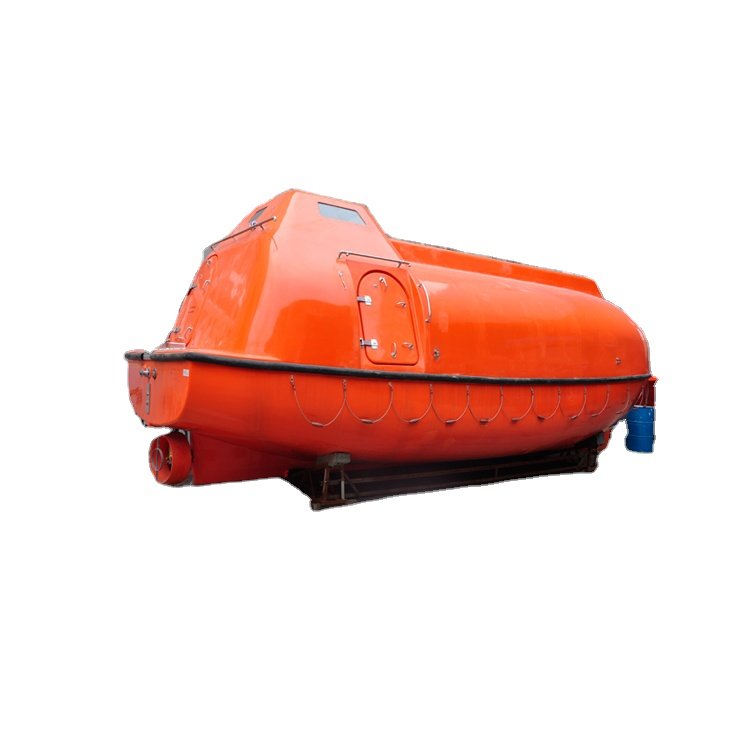
Communication systems for lifeboats are crucial for ensuring safety and coordination during emergencies at sea. These systems allow lifeboats to communicate with the ship from which they are launched, nearby rescue vessels, and coastal authorities to facilitate timely search and rescue operations. Here’s a detailed look at key components and modern innovations in lifeboat communication systems.

1. VHF Radio Systems
Purpose: VHF (Very High Frequency) radios are standard on lifeboats for two-way voice communication. They operate on frequencies designated for maritime use, enabling clear communication with the mother ship and other nearby vessels.
Features: Waterproof, shock-resistant designs and integration with built-in GPS for distress location transmission.
Recent Advances: Enhanced VHF systems now include digital selective calling (DSC) to send distress signals with precise location data.
2. Satellite Communication Systems
Functionality: Satellite phones and transceivers provide global coverage, allowing communication beyond the VHF range, especially critical in remote or open-sea scenarios.
Technology: These systems often utilize networks like Inmarsat or Iridium for reliable connectivity.
Innovations: Compact and energy-efficient satellite communication devices tailored for lifeboat installations have been developed, improving accessibility and usage during emergency conditions.
3. EPIRBs (Emergency Position Indicating Radio Beacons)
Role: EPIRBs automatically transmit a distress signal when activated, typically when a lifeboat is launched into the water or manually triggered by the crew.
Improvements: Modern EPIRBs are equipped with GPS capabilities that can provide an accurate location to search and rescue teams within a short timeframe.
Battery Life: Newer models feature extended battery life, ensuring signal transmission for longer periods.
4. AIS (Automatic Identification System) Transponders
Description: AIS transponders help lifeboats broadcast their position, course, and speed to nearby ships and coastal stations.
Usefulness: This enhances situational awareness for rescuers and aids in collision avoidance.
Technology Trends: Recent AIS systems come with integrated displays and the ability to share more detailed vessel information, improving communication clarity during emergency operations.
5. Handheld GPS and Locator Devices
Purpose: Portable GPS units provide real-time location tracking, essential for coordinating with rescuers.
Hybrid Devices: Some devices combine GPS functionality with shortwave communication, enabling updates to be sent to rescue operations while maintaining the lifeboat's position tracking.
6. Visual and Auditory Signaling Equipment
Examples: Flares, signal mirrors, and whistle devices are traditional but reliable methods for visual and auditory signaling.
Modern Enhancements: LED-based electronic distress lights have become more common, offering greater visibility and longer operational life compared to conventional pyrotechnic flares.
7. Integrated Communication and Monitoring Systems
Full Integration: Advanced lifeboats now come with fully integrated systems that combine GPS, AIS, VHF, and satellite communication into a single unit for easier operation.
Benefits: Streamlined interfaces ensure that even in high-stress situations, communication can be initiated quickly and efficiently.
Resilience: Systems are designed to be waterproof, impact-resistant, and able to operate in extreme temperatures.
8. Digital Solutions and Automation
Smart Systems: Some lifeboats are being equipped with digital monitoring solutions that automatically notify rescuers of the lifeboat’s status and position once deployed.
App-Based Integration: Mobile apps connected to onboard systems provide a secondary way to communicate and send updates if primary systems fail.
Emerging Trends and Future Developments
AI and Predictive Capabilities: Some prototypes and newer systems explore using AI to predict potential communication needs and optimize signal transmission based on environmental conditions.
Improved Power Sources: Solar panels and rechargeable batteries provide sustainable power options for long-term emergency readiness.

These systems collectively enhance the safety and survivability of lifeboat occupants by ensuring consistent and clear communication, essential for coordinating swift rescue operations.
Recent technical advancements in safety and emergency response systems on offshore oil rigs have significantly enhanced the ability to prevent, detect, and respond to incidents more effectively. These innovations focus on improving the efficiency, reliability, and overall safety of offshore operations. Below are some of the key advancements:

1. Advanced Fire and Gas Detection Systems
Multi-Sensor Detection: Modern fire and gas detection systems use a combination of sensors (e.g., infrared, optical, and ultrasonic) to identify various types of fires (e.g., hydrocarbon or electrical fires) and gas leaks (e.g., methane, hydrogen sulfide). These multi-sensor systems provide faster and more accurate detection, reducing false alarms and ensuring a rapid response.
Smart Fire Systems: Integration with artificial intelligence (AI) allows for predictive analytics, helping to anticipate potential fire hazards based on historical data and real-time monitoring, which enables proactive maintenance and adjustments.
Wireless Sensors: Wireless fire and gas detection systems allow for easier installation, flexible positioning, and faster deployment, improving the coverage and responsiveness of detection systems across the rig.
2. Blowout Preventer (BOP) Technology
Enhanced BOPs: Technological advancements in BOP design, including the introduction of hybrid BOP systems, have improved their ability to manage high-pressure wells and prevent blowouts. These systems are more reliable, with improved seal integrity and pressure capabilities.
Remote-Controlled BOPs: Some rigs now utilize remotely operated BOPs, allowing for better control during drilling operations, especially in remote or dangerous conditions. These systems can be operated from a distance, reducing the risk to personnel.
Real-Time Monitoring: The implementation of real-time data monitoring for BOP performance, including pressure, temperature, and equipment status, enhances the ability to detect anomalies early and take immediate corrective action.
3. Automation and Robotics
Robotic Arms and Drones: Drones and robotic arms are increasingly being used for routine inspections, maintenance, and emergency response tasks, such as searching for hazards or providing real-time video feeds during emergencies. This reduces the need for personnel to be exposed to dangerous situations.
Automated Evacuation Systems: Advances in automated evacuation technologies, such as self-evacuating lifeboats, have made offshore evacuation processes faster and more reliable. These lifeboats can automatically deploy, navigate to a safe distance, and communicate with onshore rescue teams.
Automated Emergency Shut-off Systems: These systems can autonomously shut down certain operations (e.g., drilling or pumping) in response to specific triggers, such as gas leaks or unsafe pressure levels, improving the speed and accuracy of emergency responses.
4. Enhanced Communication and Monitoring Systems
Integrated Communication Networks: New high-speed satellite communication technologies (e.g., 5G and satellite-based systems) enable faster, more reliable communication between offshore rigs and onshore teams, especially in remote locations. This integration allows for real-time data sharing and faster decision-making during emergencies.
Wearable Safety Technology: Smart helmets, body sensors, and personal gas monitors provide real-time data on the health and safety of workers. These wearables can detect falls, exposure to hazardous gases, and other risk factors, sending alerts to safety personnel and triggering automated emergency responses if needed.
Simulation Technology: By creating virtual environments that mimic real-life scenarios, simulation tools allow personnel to practice responding to a wide range of emergencies, such as fires, gas leaks, blowouts, and oil spills. These oil and gas simulations help workers develop their decision-making, coordination, and problem-solving skills without exposure to actual risks. Additionally, simulation technology enables testing and optimization of emergency response procedures, such as evacuation routes and equipment performance, ensuring that all systems are functioning effectively before a real emergency occurs.
Virtual Reality (VR) Training: Virtual reality(VR) is being used for more immersive and effective emergency response training. These technologies allow workers to simulate emergency scenarios and practice their responses in a controlled, virtual environment.

5. Oil Spill Prevention and Response
Advanced Spill Detection Systems: New sensor technologies, including fiber optic systems and underwater drones, enable real-time monitoring of potential oil spills and their spread. These systems can detect minute leaks and identify spill locations quickly, allowing for faster containment and mitigation.
Automated Spill Containment: Technological advancements in robotic systems for underwater spill containment, such as remotely operated vehicles (ROVs), have enhanced the ability to quickly deploy containment booms, skimmers, and oil-absorbing materials during an oil spill.
AI for Spill Modeling: Artificial intelligence (AI) and machine learning are being used to model the movement and impact of oil spills in real-time, allowing for more effective response strategies. These systems can predict how oil will move based on current weather and sea conditions, helping to optimize the deployment of response resources.
6. Health and Medical Response Technology
Telemedicine: Telemedicine systems on offshore rigs enable remote consultations with doctors or medical professionals onshore, allowing for better diagnosis and treatment of medical emergencies. This reduces the need for helicopter evacuations, which are costly and time-consuming.
Advanced Medical Kits: New medical kits now come equipped with diagnostic tools (e.g., portable ultrasound machines, blood gas analyzers) that allow offshore medical teams to perform more comprehensive assessments and treatments, increasing the chances of survival in emergencies.
AI-Assisted Medical Decision-Making: AI and machine learning are being incorporated into medical decision-making tools to assist offshore healthcare workers in diagnosing and treating a variety of medical conditions quickly and accurately.
7. Weather Prediction and Risk Management
Advanced Weather Forecasting: The use of big data analytics and AI for weather forecasting on offshore platforms has improved the accuracy and timeliness of predictions, allowing rigs to better prepare for storms, hurricanes, and other extreme weather events. This technology allows for more informed decision-making regarding evacuations and equipment shutdowns.
Real-Time Environmental Monitoring: Sophisticated environmental sensors now monitor not only weather conditions but also ocean currents, sea levels, and even air quality. This data helps anticipate environmental hazards and facilitates proactive risk management.
8. Integrated Safety Management Systems (SMS)
Digital Safety Management Platforms: Integrated digital platforms are enabling real-time tracking of safety protocols, incident management, and regulatory compliance. These platforms provide a centralized dashboard for monitoring risk factors, safety equipment status, personnel location, and training records, improving overall safety management.
Predictive Safety Analytics: Advanced analytics powered by AI are being used to predict potential safety hazards before they occur. By analyzing historical incident data, maintenance records, and environmental conditions, these systems can identify patterns and recommend preventive actions.
In summary, Technical advancements in safety and emergency response systems on offshore oil rigs are continuously evolving to improve the safety, efficiency, and effectiveness of operations. By integrating automation, real-time monitoring, AI, and improved communication, these innovations not only reduce risks but also enhance the ability to respond rapidly and effectively to emergencies, ultimately ensuring a safer environment for workers and minimizing environmental impact.