
Web guide control system refers to the timely correction operation of the offset coiled material when processing the coiled material. The occurrence of web guiding system plays an important role in the production of coil materials.
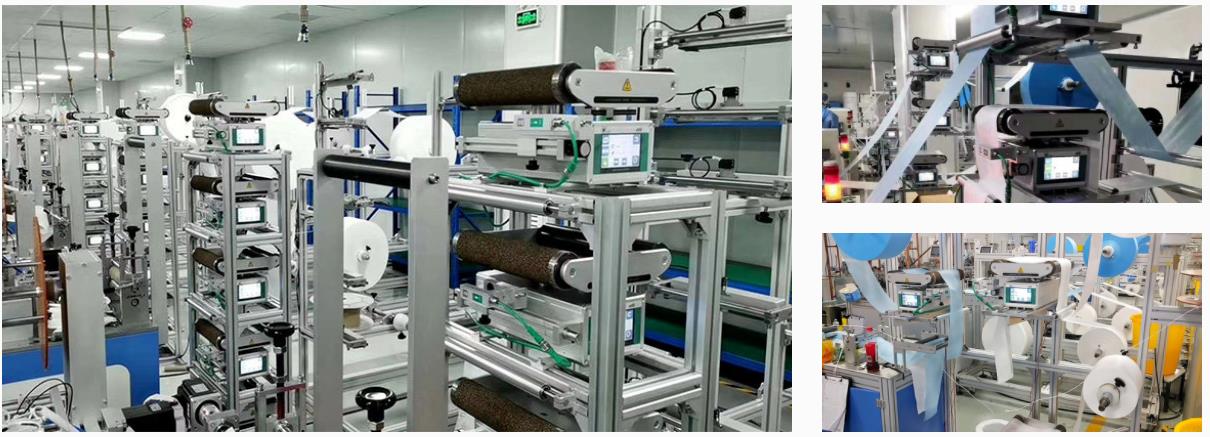
What Conditions Web Guide System Used For
The web guide system is usually used under the following conditions:
(1) Users need to adjust the sensor position frequently and it is difficult to approach the sensor, such as in the use of a large coating machine.
(2) The material width is constantly changing, such as in the application of plastic film extruder machine. The web guiding system needs to be installed at a higher position or a position that is difficult for workers to operate. Automatic width adjustment can be achieved by installing an automatic web guide rail.
Solutions To The Failure Of Web Guide System
1. The electric eye does not track, that is, the film is uneven and irregular.
Solutions
The sensitivity of the electric eye is reduced, or the lens is blocked by dust. Please clean the electric eye or replace it.
The system sensitivity is not enough. Under normal circumstances, the film should shake at the electric eye, and then adjust the sensitivity adjustment knob on the web guide controller to make it in the best state.
2. The web guide system can’t track some colors.
Solutions
Generally, LED colors of blue, white, and red have partial color images and do not know the true color. That is, blue light is the worst for blue recognition and yellow light is more difficult for white recognition. At this time, please press and hold the SET key for three seconds to let the photoelectric eye automatically adjust the light source or adjust the sensitivity knob of the controller to increase the sensitivity.
3. The actuator of the web guide controller goes to one side and can’t return.
Solutions
This phenomenon is generally caused by damage of the power tube of the web guide controller. Manually check whether the web guide actuator only moves to one side. If the actuator only moves to one side manually, replace the high-power tube. If it can walk on both sides manually, but only walk on one side after the electric eye is connected, the electric eye is broken or the positive/negative direction of the controller is incorrect. Replace the electric eye or adjust the controller.
4. The web guide controller does not work.
Solutions
If the power supply is not connected, check whether the 2A/5A fuse tube is broken or has poor contact.
5. The balance can’t be adjusted.
Solutions
Adjust the balance potentiometer for multiple turns. If the direction is wrong, it will never be adjusted to balance. Or the potentiometers on both sides are broken.
Why Choose Web Guide System Manufactured By Arise
The Arise automatic web guide system adopts a DC stepping motor, which brings advantages in accuracy and speed. Compared with similar products on the market, the web guide system of Arise has faster response, higher accuracy, more concise and beautiful appearance, and the sensor accuracy can reach 0.01mm, achieving accurate web guiding.
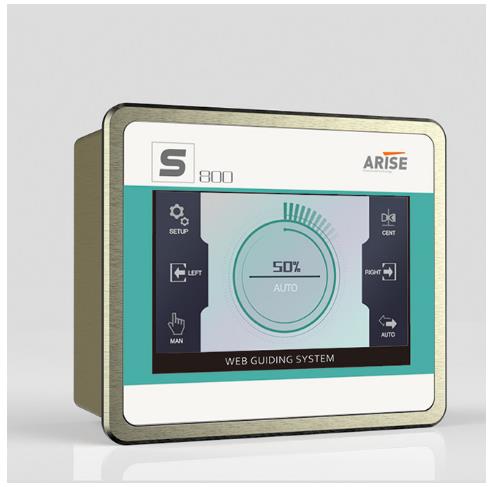
The Arise web guide controller integrates the logic control unit and the motor drive unit into an independent and very compact control box, with LCD color display to ensure a convenient and user-friendly interface.

Features of Arise Web Guide System
1. High accuracy
2. High speed: position detection response time within 10ms.
3. No additional maintenance required.
4. Combined ball screw.
5. The driving action is very agile and precise.
6. Low noise
7.Fast response
With the industry’s rapid development, the web tension control system has gradually become an essential product in every production line. It can replace the traditional floating roller tension control method with precise electronic control, as well as the old mechanical control method.
The Working Principles Of The Web Tension Control System
The tension of each unit is controlled at the unwinding portion of each unit, and the analog signal is fed back to the control unit, such as a PLC, via the tension amplifier, in order to precisely control the tension of the material and meet the requirements of the production line for the production process.
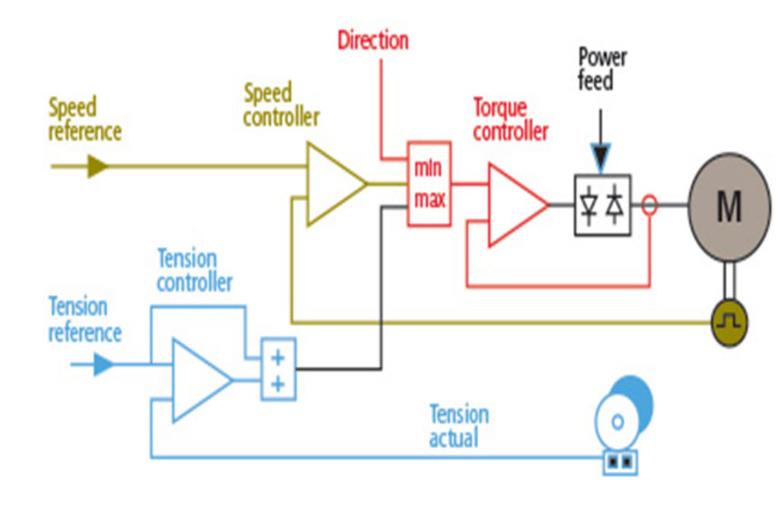
Composition Of Web Tension Control System
The web tension control system can be used to create tension signal amplifiers, tension display meters, and tension controller, among other things. Standard flange and housing mounting are two installation methods.
Web Tension Detector
It is used to detect the tension of coil material in real-time. It is built with a metal foil strain gauge and a wheatstone full bridge design. It has high detection precision, good linearity, high repeatability, little hysteresis, and a high overload coefficient.
Web Tension Controller
Web tension controller adopts the PID calculation output to various types of actuators including AC and DC motors, pneumatic brakes / clutches, magnetic powder brake clutches for tension control, the tension detection signal, the floating roller signal, the winding diameter position signal, and other signals.

Why Choose Arise WebTension Control System
Controlling web tension system has numerous applications in various industries. The precision of coil tension control is becoming increasingly precise as automation advances. Arise achieves true constant tension control through a precise detection and control system. In the field of tension control, has rich experience in tension control, and has a full range of tension control products. Its excellent web tension controller, web tension detector, web tension display, web tension signal amplifier, etc. provide customers with perfect solutions.
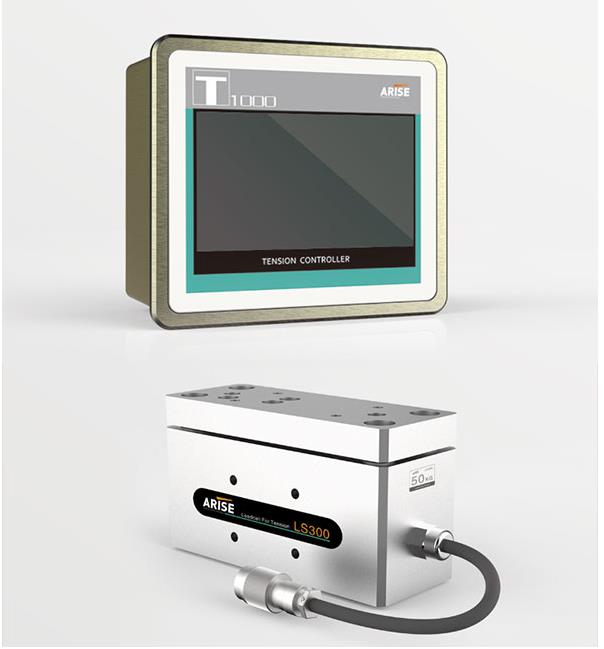
Many tension control problems on coating machines, printing machines, slitting machines, compound machines, and other models are solved by the Arise tension control system. These issues primarily affect material unwinding, feeding traction, and discharging. The four tensions refer to the four tensions that occur during the traction and winding process: unwinding tension, feed traction tension, discharge tension, and winding tension. All four tensions are fed into variable frequency motors, magnetic powder brakes, servo motors, and so on. To better meet customer needs, the Arise tension control system can also perform high-speed non-stop roll change and new roll pre-drive functions.
Magnetic powder clutch brake is widely used, and it is classified as follows: Brake Control, Start-Up This application includes normal start (clutch) and brake functionality (brake). Because the motor is idling, the maximum torque of the motor can be fully utilized when the load is started. As a result, even if the load GD2 or starting resistance is high, it can be started up easily and smoothly without causing significant impact. Furthermore, because the motor is completely idling, it is extremely beneficial to improve the motor’s working conditions and extend its service life. Furthermore, based on the torque characteristics, adjusting the excitation current is all that is required to control the start and braking time, or to change the start and brake process curves.
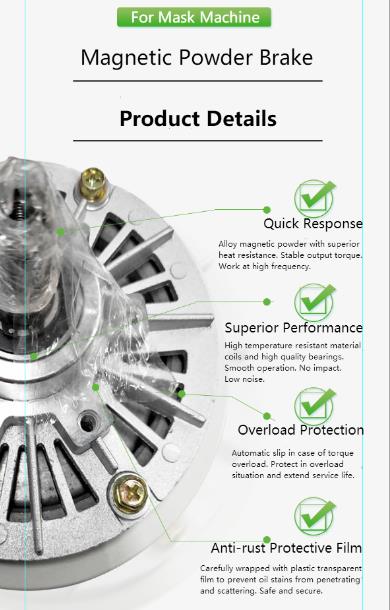
Application Of Magnetic Powder Clutch Brake
Large transmission equipment, walking cranes, large blowers, axial fans, air compressors, cement kilns, paper machines, rotary impact machines, rolling, rolling machines, wire drawing machines, large textiles, printing and dyeing, and printing are all practical applications. Machinery, as well as the inching and operation of various pieces of industrial machinery.
Selection Of Magnetic Powder Clutch Brake
1. Torque range of operation The magnetic powder clutch’s maximum torque is affected by coil heating, magnetic saturation characteristics, powder life, and mechanical strength. It is capable of absorbing 130% of the theoretical torque. The lower torque limit is determined by the idling torque and torque stability, with more than 50% of the theoretical torque.
2 . The structure type
A coil-type magnetic powder brake with a slip ring has good heat dissipation but is prone to failure and has low reliability. Furthermore, this structure necessitates frequent reverse operation during operation, which is detrimental to bearing life and unsuitable for high-speed transmission systems. The coil-type magnetic powder clutch operates reliably and has a low idling torque. After energization, the torque increases quickly, but the excitation power, volume, and weight are slightly increased.
3. The cylindrical rotor structure size, magnetic powder is uneven, stable performance, suitable for large machinery; cylindrical rotor moment of inertia and small size, suitable for mechanical transmission requiring high sensitivity The rotor has a low moment of inertia and moves quickly, allowing it to be used in high-frequency combinations.
The web guiding system reduces the possibility of cross-pulling, wrinkling, film rupture, corrugation, and other issues, allowing for high-speed and high-efficiency thin-film production.
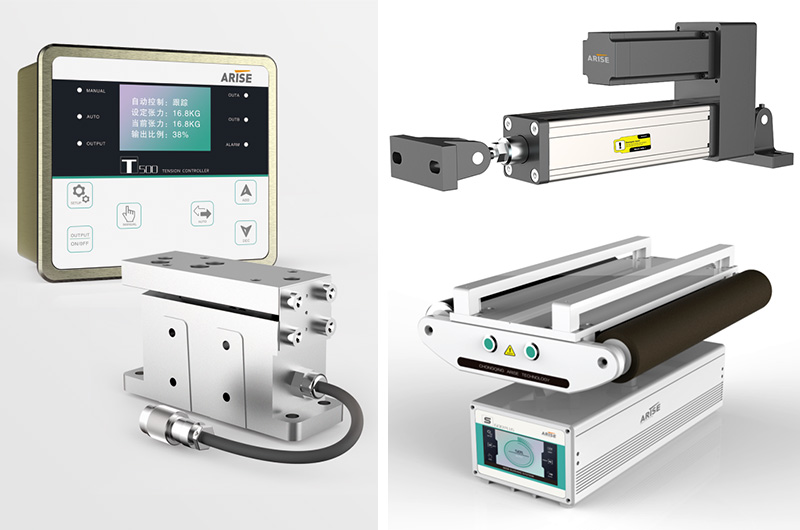
Working Principle Of Web Guiding System
The working principle can be reduced to a closed loop control loop: the starting point for automatic correction is to pull the current position of the inlet film by one or more sensors. Scan the film’s current position and send it to the controller. The measured actual position is compared to the set position by the controller. If there is a difference, the controller will send a guiding signal to the driver. In this cycle, the web guiding system always drives the track to reciprocate, preventing material removal and offset from occurring.
Operating Mode Of Web Guiding System
The web guiding mode selected is determined by the customer’s process requirements. The following are the primary guiding modes.
1. Edge guiding: Use a sensor to guide the deviation based on the film’s left or right edge.
2. Center guiding: Two sensors are used to align the offset according to the center line of the material, and can be divided into fixed centering guiding and moving centering correction.
3. Line guiding: Use a sensor to correct the deviation based on a continuous or discontinuous line contrast.
Control Method Of Web Guiding System
The EPC web guiding system has two control modes: automatic control and manual control, which are usually both. During production, the EPC guiding control of all film production lines switches to automatic control mode. The manual control mode is primarily used to test the system’s operation status in order to detect problems in real-time.
Wide Applications Of Web Guiding System
The wide applications of web guiding system include various industies including printing, film, tire, coil, battery, etc.

Application On Calendering Line
The curtain calendar is an important piece of equipment in the tire’s pre-production process. During the calendering process, parameters such as the position and width of the material are extremely important. It is required in key positions such as curtain lining opening, cooling, storage, compounding, and curtain lining.
Application On Small-angle Cutting Machine
The Arise web guiding is primarily used in the small angle cutting machine for material opening and winding. However, depending on the process requirements, the curtain may need to be cut into the same or different widths, so a set must be added before the cutting knife. The centering guide system keeps the material in the center at all times. The PRE CCD type correction system is commonly used here, and the precision can be controlled to within 1 mm.
Application On 90-degree Cutting Machine
Materials must be corrected for material opening, winding, and splicing in the 90-degree cutting machine. The precision of the two materials in the splicing is very high. In general, the PRE employs a master-slave correction system. Using a piece of material as the active material, only the position is not corrected, and the moving material’s position is referenced by the active material, and the following correction is performed, with a correction accuracy of 0.2 mm.
Application On The Molding Machine
Because of the high demands on the composite dimensional accuracy and centering accuracy of the sidewall and inner liner components, a set of centering guides should be installed before the sidewall and inner liner are combined. Infrared centering guiding is commonly used here to ensure the composite size and precision of the two rubber parts. Simultaneously, before the above composite parts are attached to the forming drum, a digital sensor guide system is added to the feeding conveyor to ensure the composite parts’ centering accuracy when they are attached to the forming drum.
Application On Slitting Machine
The slitting and creasing machine is an important part of the corrugated board production line that can significantly reduce cardboard waste. The Arise slitting machine guide system employs a high-precision, wide-width CCD detection probe with a large thrust electric drive, precisely aligning the edge of the paper or printed line, correcting the centering or opposite sides, ensuring accurate and stable cutting, and reducing corrugated paper. The quantity of waste edges.
Arise offers high-precision web guiding system to help industry customers to achieve stable high-speed processes in various machines which widely used in different industries.
In order to carry web material through roll-to-roll conversion machines, a web guiding system is required. Without an automatic web guiding machine, a variety of variables, including process fluctuations in tension and speed, differences in the quality of the material's properties, poorly maintained machinery, traction changes, and so on, can disrupt the appropriate alignment of the material.
Web Guide Components
The fundamental parts of a conventional web guiding system are a controller, a position or web edge sensor, an actuator, and a guide mechanism. The mechanical component that makes contact and moves the web material is known as a web guide mechanism. Depending on the machine, the mechanism comes in a variety of shapes and sizes.
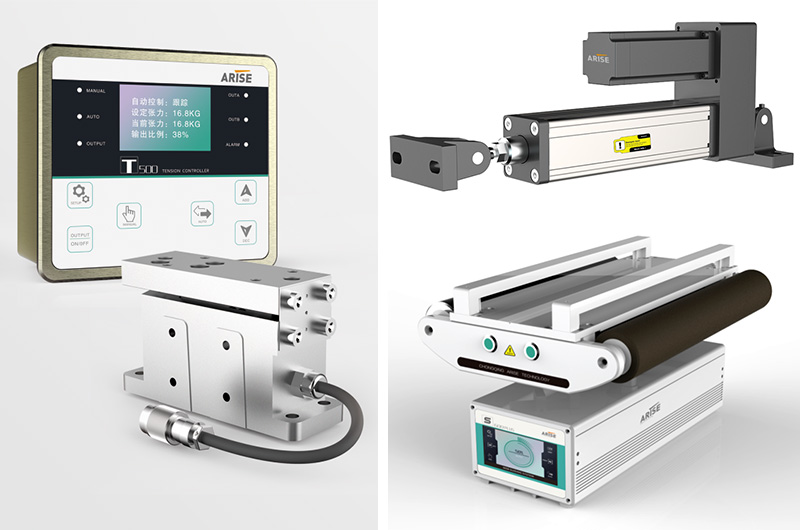
As the name suggests, a web edge sensor detects the position of the web as it travels through the web guide mechanism and the sensor’s position is the reference point that the web will be guided to. Web guide controllers are used to manage the web guiding system. The controller uses readings from the sensors to take necessary corrective measures and actions. Once processed, the controller sends a corrective command to the actuator to adjust the guide mechanism to actively control the web position.
What Type of Web Guide Do You Need?
Rolls are telescoped or offset, webs are cambered or baggy, and rollers are deflecting or out of alignment. All of these flaws will contribute to the web’s detour. A little off-tracking is fine, but too much lateral shifting can cause major issues. An automatic web guide system is the perfect solution you need to turn a losing hand into a winning one.
To find right web guiding , there are three easy steps.
1.Determine where lateral position accuracy is required.
2. At each guiding location, decide which web guide will best meet your needs.
3. Install the web guides in each location as directed by the application. Once you’ve decided on the type of guides you’ll use in your process, the next step is to make sure they’re all properly installed.
Four Types Of Web Guide
Web lateral-position control systems are classified into four types: unwind sidelay guide, displacement guide, steering guide, and winder sidelay guide. Three of these are true web-guiding systems (unwind sidelay, displacement, and steering), which redirect the web to the proper lateral position. The final option, winder sidelay, moves the equipment to meet or chase the web rather than guiding it.
The right web guide, set up correctly and in the right place, will give you a winning hand every time for every product. Continue reading to learn how to determine the appropriate based on process location and some rules for configuring each type of guide. But don’t be concerned. You are not required to play all of these cards by yourself.
Unwind Web Guides
Unwind guides are a type of terminal web guide that eliminates the need for pivoting when aligning web material into a converting machine. These web guides, unlike terminal web guides, do not require any pivoting motion. Automatically positioning an unwinding roll of material mounted on a laterally shifting roll stand carriage results in unwind guiding. The stand is equipped with a shifting idler roller. The sensor is fixed and not attached to the stand.
Rewind Web Guides
It is also called shifting rewinds, which are found at the end of roll-to-roll machines, are one of the tools used to ensure that the wound roll is not telescoping. Rewind guiding, also known as “chasing,” controls the edge position of the wound roll by having the shifting stand and attached sensor “chase” any web misalignment as the roll winds to align each new wrap or layer of the wound roll. Between the sensor and the rewinding roll, a fixed idler roller is required.
The third type is known as electrohydraulic, and it employs photoelectric sensing rather than an air signal. The sensor signal is routed through an electrically operated servo valve, and hydraulics is used to position the web-guide structure. WTI’s Tom Herold claims that electromechanical web-guiding systems can handle 95% of all converting applications.
The fourth type is electromechanical, which is the most sophisticated and versatile, but it is also the most expensive. Photocell, ultrasonic, or infrared edge sensors are commonly used in these systems. There is no such thing as a universal sensor; each has advantages and disadvantages, but because there are options, converters can choose the best sensor for specific environments or converting applications. The signals are routed through an amplifier to an electrically operated actuator.

Web guiding system realizes high-speed and high-efficiency production of coil, film materials, choosing the right type of web guide can greatly improve your working efficiency of various machines.