
Laboratory mixing equipment is a critical component in scientific research and industrial laboratories, facilitating the blending, homogenization, and suspension of various substances. These devices ensure consistent sample preparation, enabling accurate experimental results across multiple disciplines, including chemistry, biology, pharmaceuticals, and materials science. With a range of designs and functionalities, laboratory mixers cater to diverse mixing needs, from gentle stirring to intense agitation.
Types of Laboratory Mixing Equipment
Laboratory mixing equipment comes in various forms, each suited for specific applications. Understanding the different types helps researchers select the best tool for their needs.
Magnetic Stirrers
Magnetic stirrers use a rotating magnetic field to spin a stir bar within a container, facilitating efficient and contact-free mixing. They are ideal for mixing small volumes of liquids and are commonly used in chemical and biological laboratories due to their simplicity and ease of use.

Overhead Stirrers
Overhead stirrers are designed for mixing larger volumes or more viscous substances. Equipped with a motorized stir rod, they provide greater torque and can accommodate a range of stirring speeds. They are often used in industrial and pharmaceutical settings where robust mixing is required.

Vortex Mixers
Vortex mixers use a circular motion to create a vortex in a test tube or small container. These devices are ideal for rapid mixing of small samples, such as in clinical or molecular biology labs, where thorough sample preparation is crucial.

Shakers and Rockers
Shakers and rockers provide gentle, consistent motion for mixing biological samples, culture media, and other sensitive materials. Common designs include orbital shakers, which move in a circular motion, and rocking platforms, which tilt back and forth.
Homogenizers
Homogenizers break down and mix samples to achieve uniform consistency. They are essential in applications requiring the disruption of cells, emulsification of liquids, or dispersion of solids within liquids. These devices are widely used in life sciences and food research.
Rotary Mixers
Rotary mixers use rotational motion to mix samples in tubes or vials. They are commonly used for blood sample mixing, DNA extraction, and immunoprecipitation procedures. Their ability to maintain uniform mixing makes them indispensable in diagnostic and research laboratories.
Ultrasonic Mixers
Ultrasonic mixers use high-frequency sound waves to agitate particles within a solution. They are particularly effective for dispersing nanoparticles, emulsifying immiscible liquids, and degassing samples. This advanced technology is crucial in nanotechnology and materials science research.
Key Considerations When Selecting Laboratory Mixing Equipment
When choosing laboratory mixing equipment, several factors must be considered to ensure optimal performance and accuracy.
Sample Volume and Viscosity
The size and consistency of the sample influence the choice of equipment. For small volumes, magnetic stirrers are suitable, while overhead stirrers are better for handling larger or more viscous samples.
Mixing Speed and Control
Adjustable speed controls allow precise mixing to meet specific application needs. High-speed mixers are ideal for rapid homogenization, while low-speed models are better for delicate biological samples.
Temperature Sensitivity
Some processes require temperature control during mixing. Specialized equipment, such as heated magnetic stirrers, maintains sample integrity during temperature-sensitive reactions.
Durability and Chemical Resistance
Equipment materials must be compatible with the chemicals used. Stainless steel and chemically resistant polymers are often preferred for their durability and corrosion resistance.
Automation and Digital Controls
Modern laboratory mixers feature automated and programmable controls for consistency and repeatability. Digital displays provide real-time monitoring of speed, time, and temperature, enhancing process precision.
Applications of Laboratory Mixing Equipment
Laboratory mixing equipment is used in a variety of scientific and industrial applications:
Chemical Synthesis
In chemical research, accurate mixing is crucial for consistent reactions. Magnetic and overhead stirrers facilitate the combination of reagents in both small-scale and large-scale synthesis.
Pharmaceutical Development
Mixers ensure the uniform blending of active pharmaceutical ingredients (APIs) with excipients, supporting drug formulation and quality control.
Biotechnology and Life Sciences
Vortex mixers and homogenizers are essential for preparing biological samples, including cell lysates, tissue homogenates, and DNA extractions.
Food and Beverage Research
Homogenizers and stirrers aid in creating emulsions, testing product stability, and mixing formulations for food product development.
Environmental Analysis
Laboratory mixing equipment facilitates the preparation of water, soil, and air samples for pollution analysis and environmental monitoring.
Material Science
Ultrasonic mixers play a crucial role in dispersing nanoparticles and preparing advanced materials, ensuring consistent particle distribution.
Technological Advancements in Laboratory Mixing Equipment
Recent innovations have enhanced the efficiency and accuracy of laboratory mixing equipment:
Digital Interface and Programmable Functions
Modern mixers come equipped with digital displays and programmable settings for precise control over mixing speed, duration, and temperature.
Automated Sample Handling
Automation reduces human error and improves reproducibility by handling complex sample preparation tasks without manual intervention.
Enhanced Safety Features
Advanced laboratory mixers include safety mechanisms like overload protection, spill containment, and automatic shutdown to safeguard users and samples.
Energy Efficiency
Energy-efficient designs minimize power consumption while maintaining high-performance mixing, aligning with sustainability goals.
Maintenance and Calibration of Laboratory Mixing Equipment
To ensure optimal performance and accuracy, regular maintenance and calibration are essential:
Routine Cleaning
Regular cleaning prevents cross-contamination and extends the lifespan of mixing equipment. Non-corrosive cleaning agents should be used to preserve material integrity.
Calibration Checks
Calibration ensures consistent performance. Regularly verifying speed, temperature, and motion parameters ensures compliance with laboratory standards.
Lubrication and Part Replacement
Mechanical components like bearings and stir shafts should be lubricated and replaced as needed to prevent wear and tear.
Software Updates
For digitally controlled mixers, keeping the software updated ensures access to the latest features and performance enhancements.
Conclusion
Laboratory mixing equipment is a vital part of modern scientific research and industrial applications, enabling precise and reproducible sample preparation. With a range of devices designed to meet specific mixing needs, selecting the right equipment involves considering factors such as sample volume, viscosity, and temperature sensitivity. Advances in automation and digital control continue to improve mixing accuracy and efficiency. Proper maintenance and calibration further ensure reliable long-term performance, making laboratory mixers indispensable for achieving consistent, high-quality results.
In laboratory settings, mixing and agitation of substances are fundamental tasks that can influence the outcome of experiments, analyses, and research. Among the various tools available for this purpose, orbital shakers and vortex mixers are two of the most commonly used devices. While both serve the purpose of mixing liquids or suspensions, they operate differently and are suited to specific tasks. In this article, we’ll explore the differences between an orbital shaker and a vortex mixer, their key features, and their ideal applications in laboratory environments.
What is an Orbital Shaker?
An orbital shaker is a laboratory instrument used for continuous and uniform mixing of liquids, often in flasks, tubes, or beakers. The shaker’s motion involves a circular or orbital motion, where the container moves in small, circular paths. This motion provides a gentle yet effective agitation, making it ideal for tasks that require consistent mixing over longer periods of time.

Key Features:
Orbital Motion: The platform moves in a circular motion, typically ranging from 20 to 300 rpm (revolutions per minute), although higher or lower speeds may be available depending on the model.
Adjustable Speed: Most orbital shakers allow users to adjust the speed of agitation, depending on the sensitivity of the samples and the type of mixing required.
Temperature Control (Optional): Many orbital shakers come with a built-in temperature control system, which is useful for experiments that require a specific temperature range during mixing.
Capacity: Orbital shakers can accommodate a variety of containers, from small test tubes to large flasks or multi-well plates.
Long-Run Mixing: Ideal for extended periods of agitation, orbital shakers are often used for incubations or growing cultures where constant mixing is required.
Applications of Orbital Shakers:
Cell Culture: Commonly used in microbiology and biotechnology labs for growing bacterial or mammalian cultures that require consistent aeration and mixing.
Protein Precipitation: For gently mixing samples where protein aggregates or precipitates are being formed or dissolved.
Chemical Reactions: Ideal for reactions that require sustained and gentle mixing over a long period.
Solubility Studies: Used for mixing solvents and solutes to ensure even dissolution over time.

What is a Vortex Mixer?
A vortex mixer, on the other hand, is designed for rapid and intense agitation of small sample volumes. It works by creating a rapid, circular motion that generates a "vortex" in the center of the sample. The vortex mixer typically operates by placing a test tube or flask on the device, where the mixer’s action causes the liquid in the container to spin quickly, thoroughly mixing the contents.
Key Features:
High-Speed Mixing: Vortex mixers operate at higher speeds than orbital shakers, typically ranging from 1000 to 3000 rpm.
Compact Design: Vortex mixers are typically small, handheld devices that can easily fit on a laboratory bench or workspace.
Variable Speed Control: Many vortex mixers offer adjustable speed control to fine-tune the intensity of mixing.
Touch Activation (Optional): Some vortex mixers are designed with a touch feature, where the user presses down gently on the sample container to activate the vortex, making them convenient for quick, hands-free mixing.
Applications of Vortex Mixers:
Cell Lysis: Used to rapidly break open cells to release their contents in molecular biology applications.
Sample Homogenization: Ideal for mixing small amounts of liquids or powders, especially when fast and intense agitation is required.
Reagent Mixing: Perfect for quickly mixing reagents, buffers, or blood samples in clinical and research labs.
Suspension Mixing: Commonly used to mix particles in suspension or emulsions, where a vigorous and rapid mixing action is needed.

Key Differences Between Orbital Shakers and Vortex Mixers
1. Motion Type:
Orbital Shakers: They move the sample in a circular, orbital motion. This gentle, even movement is ideal for continuous and uniform mixing.
Vortex Mixers: They create a rapid, swirling vortex in the center of the container, which is ideal for quick, intense agitation of small sample volumes.
2. Mixing Speed:
Orbital Shakers: Operate at lower to moderate speeds, typically ranging from 20 to 300 rpm, allowing for steady and gentle mixing.
Vortex Mixers: These mix at much higher speeds, usually between 1000 to 3000 rpm, producing intense, short bursts of mixing.
3. Sample Size:
Orbital Shakers: Can accommodate larger containers like flasks, beakers, or multi-well plates, and are suitable for larger sample volumes.
Vortex Mixers: Designed for small sample volumes, such as test tubes, microcentrifuge tubes, and vials, making them ideal for quick mixing of small amounts of liquid.
4. Mixing Duration:
Orbital Shakers: Typically used for long-duration mixing, sometimes over hours, making them ideal for incubations, cell cultures, or solubility studies.
Vortex Mixers: Provide short, rapid mixing durations (usually a few seconds), perfect for quickly homogenizing or mixing reagents.
5. Temperature Control:
Orbital Shakers: Many models come with built-in heating systems, which is useful for experiments that require temperature control while mixing.
Vortex Mixers: Do not typically offer temperature control, as they are meant for quick mixing of small samples.
6. Device Size and Versatility:
Orbital Shakers: Larger in size, with a flat platform that can hold various containers, such as flasks, tubes, and plates, making them versatile for different experiments.
Vortex Mixers: More compact and typically designed for specific containers like test tubes, offering a more focused and intense mixing action.
Choosing the Right Mixer for Your Lab
The choice between an orbital shaker and a vortex mixer depends on the specific needs of the experiment, the sample type, and the desired results. Here’s a guide to help you decide:
Use an Orbital Shaker If:
You need to mix larger volumes of liquid.
The experiment requires continuous and gentle mixing over a long period.
You are working with cell cultures, enzyme reactions, or protein dissolution.
Temperature control is essential for your experiment (e.g., incubating cells or reactions).
The task involves shaking a variety of containers or multi-well plates.
Use a Vortex Mixer If:
You need rapid mixing of small samples or reagents.
You’re working with test tubes or microcentrifuge tubes and need quick agitation.
Your samples require intense mixing, such as breaking down cellular structures or suspending solids.
You need a compact, easy-to-use device that doesn’t require long-duration agitation.
Speed and intensity are more important than gentle mixing.
Conclusion
Both orbital shakers and vortex mixers play pivotal roles in laboratory mixing and agitation, each suited to different tasks and sample types. The orbital shaker excels in continuous, gentle mixing of larger volumes, ideal for tasks that require sustained agitation over a long period. In contrast, the vortex mixer is perfect for rapid, intense mixing of small sample volumes, offering quick results when high-speed agitation is needed. Understanding the differences between these two devices allows lab professionals to select the right equipment for their specific needs, ensuring both efficiency and the quality of experimental outcomes.
In laboratory workflows, the importance of using the right equipment cannot be overstated. Among the various tools available, vortex mixers and centrifuges are two indispensable devices, each serving unique purposes. Although both involve the manipulation of liquids in containers, their operational principles, applications, and benefits are entirely different. This article delves into the intricacies of vortex mixers and centrifuges, offering insights into their roles, features, and ideal applications to help you make an informed choice.

Understanding Vortex Mixers
What is a Vortex Mixer?
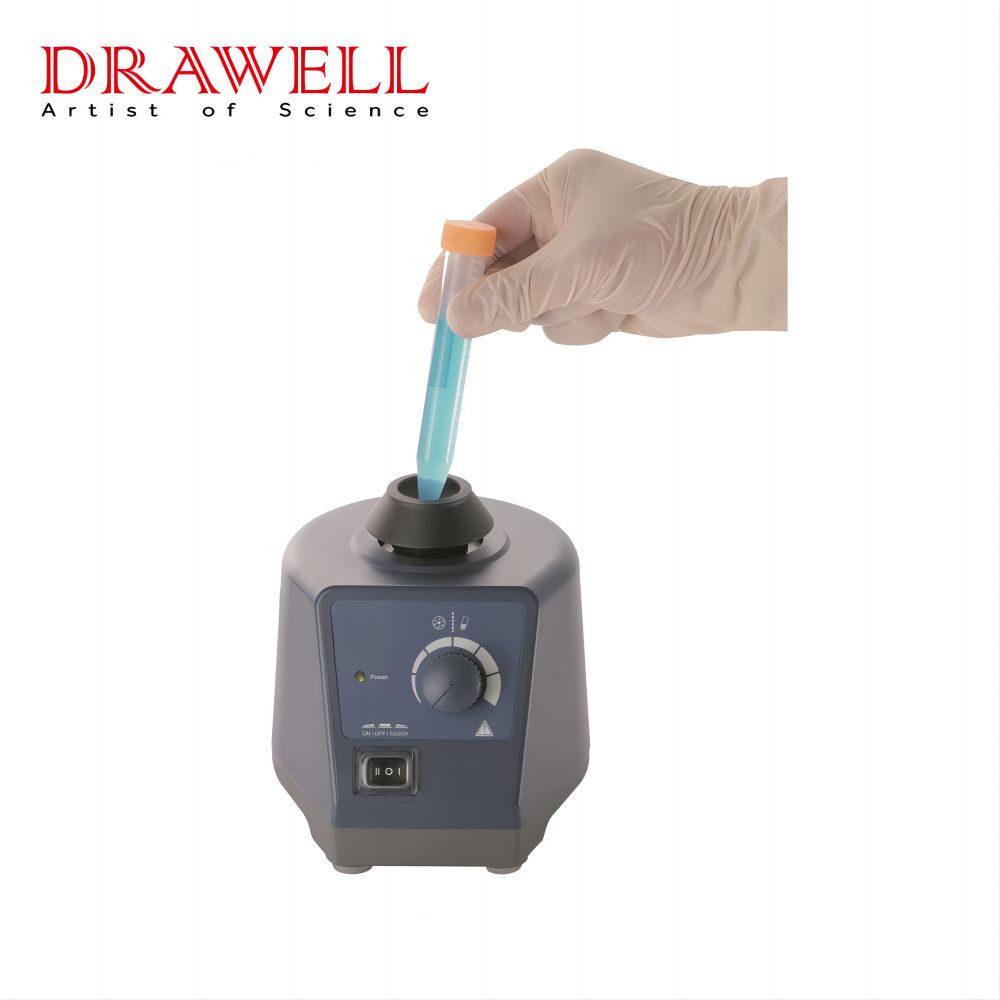
A vortex mixer is a compact, motor-driven device designed to mix liquids in tubes or small containers by creating a vortex. This action ensures homogeneity in the sample, making it an essential tool for various laboratory tasks that require quick and efficient mixing.
How Does It Work?
The vortex mixer has a motor attached to a rubber cup or platform.
When a tube is pressed against the platform, the motor causes the liquid inside the container to move in a circular motion, forming a vortex.
Depending on the model, the device can operate in touch-activated mode or continuous mode.
Key Applications of Vortex Mixers
Mixing Reagents: Ideal for preparing chemical solutions and reagents quickly and effectively.
Resuspending Cells: Frequently used in microbiology and molecular biology to resuspend cells or pellets in culture media.
Homogenization: Effective for homogenizing liquids prior to downstream analysis or processing.
General Mixing: Suitable for blending components in small tubes, vials, or microplates.
Understanding Centrifuges
What is a Centrifuge?
A centrifuge is a laboratory device used to separate components of a mixture based on density. By spinning samples at high speeds, it applies centrifugal force, causing denser materials to settle at the bottom while less dense materials remain at the top.

How Does It Work?
Samples are loaded into tubes and placed in a rotor inside the centrifuge.
As the rotor spins, centrifugal force acts on the sample.
This force pushes denser particles outward (toward the bottom of the tube) while lighter components form a supernatant layer above.
Key Applications of Centrifuges
Blood Fractionation: Separating plasma, serum, or blood cells for diagnostic or research purposes.
Protein and Nucleic Acid Purification: Essential for molecular biology techniques, including isolating DNA, RNA, and proteins.
Cell Harvesting: Used to collect and concentrate cells from culture media.
Industrial Applications: Used in pharmaceutical manufacturing, food processing, and waste treatment.
Comparing Mechanisms and Functionality
Mixing vs. Separation
The fundamental difference between a vortex mixer and a centrifuge lies in their purpose. A vortex mixer is designed to mix liquids, ensuring uniformity, while a centrifuge is used to separate components within a liquid mixture based on their densities.
Speed and Force
Vortex Mixers: Operate at lower speeds (2,500–3,000 RPM) suitable for gentle mixing.
Centrifuges: Operate at significantly higher speeds (10,000–100,000 RPM for ultracentrifuges) to generate the high centrifugal forces required for separation.
Operational Modes
Vortex Mixers: Simple to use, with touch-activated or continuous operation modes.
Centrifuges: Require programming of speed, time, and sometimes temperature, depending on the complexity of the model.
Advantages and Limitations
Vortex Mixers
Advantages:
Compact and affordable.
Easy to operate and maintain.
Quick and efficient for small-scale mixing tasks.
Limitations:
Limited to mixing and cannot separate components.
Unsuitable for large volumes or complex mixing requirements.
Centrifuges
Advantages:
Capable of high-precision separation.
Versatile, with applications ranging from research to industrial processes.
Advanced models include temperature control and vacuum features for sensitive samples.
Limitations:
Expensive and requires more maintenance.
Bulky and space-consuming.
Longer setup and operation time compared to vortex mixers.
Practical Considerations for Selection
When choosing between a vortex mixer and a centrifuge, it is important to consider the specific needs of your application:
Nature of the Task:
For simple mixing of liquids or resuspension tasks, a vortex mixer is ideal.
For separating components or isolating substances, a centrifuge is essential.
Sample Volume:
Vortex mixers are suitable for small volumes in tubes or microplates.
Centrifuges can handle a wide range of volumes, from microcentrifuge tubes to large industrial-scale containers.
Precision Requirements:
Vortex mixers provide uniform mixing but lack precision control.
Centrifuges allow precise control over speed, time, and temperature for accurate separations.
Budget and Space:
Vortex mixers are cost-effective and compact, making them ideal for small labs.
Centrifuges are more expensive and require dedicated space, especially high-capacity models.
Real-World Scenarios
Scenario 1: Molecular Biology Research
In a molecular biology lab, both devices may be used in tandem. A vortex mixer is used to resuspend DNA or RNA in buffer solutions, while a centrifuge is utilized for isolating and purifying these nucleic acids.
Scenario 2: Clinical Diagnostics
In clinical settings, centrifuges are critical for blood fractionation, while vortex mixers assist in preparing reagent mixtures for diagnostic assays.
Scenario 3: Pharmaceutical Industry
Pharmaceutical labs frequently employ centrifuges for drug formulation and quality testing. Vortex mixers, on the other hand, are used for preparing chemical solutions during research and development.
Emerging Trends and Innovations
Vortex Mixers:
Advanced models with digital controls and multiple attachments for increased versatility.
Integration with automation systems for high-throughput workflows.
Centrifuges:
Development of ultracentrifuges capable of higher speeds and precision.
Energy-efficient designs with reduced noise and heat generation.
Enhanced safety features, such as imbalance detection and automatic shut-off systems.
Conclusion
Vortex mixers and centrifuges are foundational tools in laboratories worldwide, each excelling in their respective domains. While vortex mixers are perfect for quick, efficient mixing tasks, centrifuges are indispensable for precise separations. Understanding their differences and applications allows for optimal use, ensuring that laboratory operations are efficient, accurate, and aligned with experimental goals.
Whether you’re managing a small research lab or a large industrial facility, the choice between these two devices ultimately depends on your specific needs. By selecting the right tool for the job, you can enhance productivity and achieve superior results in your work.
In laboratory settings, the vortex mixer stands as a versatile tool, efficiently blending, mixing, and agitating liquid samples through its distinctive swirling action. This article presents a detailed step-by-step guide on harnessing the full potential of a vortex mixer, ensuring impeccable results in laboratory experiments and processes.
Step 1: Get Acquainted with the Vortex Mixer
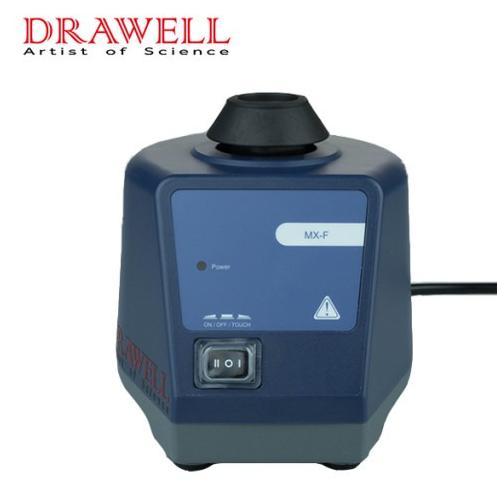
Before diving into operation, familiarize yourself with the different types of vortex mixers as well as its components functionalities, and safety precautions. Understanding its control settings and stability characteristics lays a solid foundation for effective usage.
Step 2: Setup Procedures
Ensure the vortex mixer sits on a stable, level surface, and inspect attachments for any debris that might impede mixing. Customize the setup with suitable foam inserts to accommodate various sample container sizes.
Step 3: Sample Preparation
Prepare your sample adequately, including adding reagents or diluents, and ensure secure closure to prevent spillage during mixing.
Step 4: Proper Sample Positioning
Positioning the sample correctly is crucial for efficient mixing:
Select the appropriate container and ensure cleanliness and closure.
Adjust container size and secure it firmly in place.
Position the container on the mixer's platform, aligning smaller tubes centrally and larger containers slightly off-center.
Verify stability, clearance, batch size, and load balance to avoid interference and maintain stability.
Step 5: Speed and Mixing Time Adjustment
Fine-tune the vortex mixer's speed and mixing duration:
Start at a low speed to prevent splashing.
Gradually increase speed for optimal mixing, observing vortex formation.
Consider sample sensitivity and adjust speed and mixing time accordingly.
Monitor progress, consider intermittent mixing, and prioritize safety at all times.
Step 6: Cleaning and Maintenance
After usage, clean the attachment or platform according to manufacturer guidelines to ensure longevity and optimal performance.
Conclusion:
Mastering the utilization of a vortex mixer is paramount for achieving consistent and effective sample mixing in laboratory settings. By following this comprehensive guide, you can seamlessly blend and agitate your liquid samples, ensuring precise and reliable results every time.