
Crude fat extraction is a crucial analytical process used in various industries, particularly in food, feed, and agricultural research. Accurate fat quantification is essential for quality control, nutritional analysis, and regulatory compliance. Soxhlet extractors are one of the most reliable and widely adopted methods for determining crude fat content, offering consistent and precise results. The Soxhlet extraction method has stood the test of time, and its efficiency in extracting lipids from solid matrices makes it a gold standard in laboratories around the world.

How Soxhlet Extraction Works
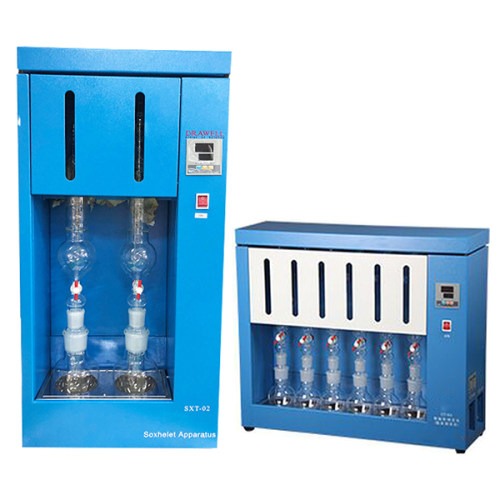
The Soxhlet extraction process is based on the continuous use of a solvent to extract fat from a solid sample. The apparatus consists of three main components:
Boiling Flask: This contains the solvent, which is heated to generate vapors.
Extraction Chamber: This holds the sample, typically contained in a porous thimble.
Condenser: This cools the vaporized solvent, allowing it to return to the extraction chamber.
In the extraction process, a selected solvent (such as petroleum ether, hexane, or other non-polar solvents) is heated to a boiling point in the boiling flask. The solvent vapors rise into the condenser, where they are cooled and condense back into a liquid form. The liquid solvent then drips into the extraction chamber that contains the sample. As the solvent passes through the sample, it dissolves the fat content. The solvent and dissolved fat mixture is then siphoned back into the boiling flask for the cycle to repeat. This process continues until the fat is fully extracted from the sample.
Applications of Soxhlet Extractors
Automatic soxhlet extractor fat analyzers are used in a variety of industries to determine the fat content in different materials.

Food Industry: Soxhlet extraction plays an important role in the food industry by helping to determine the fat content of dairy products, meats, oils, and processed foods. This information is essential for nutritional labeling, product formulation, and quality assurance.
Animal Feed: Accurate fat measurement is crucial in the formulation of balanced animal feed. The Soxhlet method ensures precise fat content analysis, which is important for optimizing animal health and growth.
Agricultural Research: The method is extensively used in agricultural research for studying the oil content in seeds, grains, and other plant materials. This information is key to improving crop yield, oil extraction efficiency, and overall agricultural productivity.
Pharmaceutical and Cosmetic Industries: Soxhlet extractors are also used for extracting fat-soluble compounds from plant materials for pharmaceutical and cosmetic applications. Lipids play an essential role in many cosmetic products, such as moisturizers and balms.
Advantages of Soxhlet Extraction
Thorough Extraction: One of the primary benefits of Soxhlet extraction is its ability to extract lipids thoroughly. The continuous cycle of solvent washing ensures that even small amounts of fat are extracted from the sample, resulting in accurate and reliable analysis.
Repeatability: The method is highly reproducible, making it ideal for laboratory analysis where consistency is essential. Soxhlet extractors have been used for decades and are widely recognized for their dependable results.
Minimal Sample Handling: Soxhlet extraction involves minimal handling of the sample, reducing the chances of contamination and maintaining sample integrity throughout the process.
Versatility: Soxhlet extraction fat analyzers can be used to extract fats from a wide range of sample types, including solids, powders, and semisolids. They are effective in both routine analysis and more complex research applications.

Considerations in Soxhlet Extraction
While Soxhlet extractors are highly effective, there are a few factors to consider when using this method:
Time-Consuming: Soxhlet extraction can be a lengthy process, often taking several hours to complete, depending on the sample and solvent used.
Solvent Usage: The choice of solvent is crucial to the extraction process. Solvents such as petroleum ether or hexane are commonly used due to their ability to dissolve fats effectively. Proper care must be taken in selecting the appropriate solvent to ensure efficiency and avoid sample contamination.
Environmental Impact: Although solvents can be recycled, Soxhlet extraction can consume a significant amount of solvent, which may raise concerns regarding environmental impact and safety. Proper solvent handling, storage, and disposal protocols are essential for minimizing risk.
Automation: While traditional Soxhlet extractors are manual, advancements in automated Soxhlet systems have been made, which significantly reduce processing time, solvent use, and increase throughput for high-volume laboratories. These automated systems also ensure greater consistency and reproducibility.
Conclusion
Soxhlet extractors remain a staple in laboratories for crude fat extraction due to their reliability, efficiency, and ability to deliver accurate results. The method is widely used across food, feed, agricultural, and pharmaceutical industries to analyze fat content and ensure product quality. Despite some considerations such as time consumption and solvent use, the Soxhlet extraction method continues to be a trusted and effective technique for fat determination. As technology evolves, Soxhlet systems have been enhanced to improve efficiency, reduce solvent consumption, and streamline the extraction process, ensuring that they remain an essential tool in modern laboratories.
Soxhlet extraction stands as a well-established method widely employed in laboratories and industries to extract a diverse array of chemicals from solid samples. This article provides a comprehensive guide covering the steps involved in soxhlet extraction, factors affecting its efficiency, and essential safety considerations for a secure working environment.
Follow the Soxhlet Extraction Steps:
Soxhlet extraction is a continuous process involving the cycling of a solvent through a solid sample to extract the desired chemical. Follow these steps for effective Soxhlet extraction:
Prepare the Soxhlet Extractor: Assemble the apparatus, connect the condenser, and attach the syphon tube. Place glass wool or filter paper in the Soxhlet flask to prevent material escape.
Weigh the Solid Sample: Measure an appropriate amount of the solid sample and insert it into the Soxhlet flask.
Add the Solvent: Pour sufficient solvent into the round-bottom flask to cover the solid material, choosing a solvent compatible with the target chemical.
Start the Extraction: Heat the round-bottom flask, causing the solvent to vaporize and extract the target component from the solid sample.
Continue the Extraction: Run the extraction for several hours or overnight, allowing the solvent to cycle through the sample, extracting the target chemical.
Collect the Extracted Solution: Once complete, separate the round-bottom flask with the solution from the Soxhlet flask containing the solid sample.
Remember the Efficiency Affecting Factors of Soxhlet Extraction:
Efficient Soxhlet extraction relies on understanding and optimizing various factors:
Sample Characteristics: Particle size, surface area, and composition influence extraction efficiency. Properly choose and prepare the sample for optimal contact with the extraction solvent.
Solvent Selection: Choose a polar solvent with a high boiling point, compatible with both the target chemicals and the solid material.
Extraction Time and Temperature: Manage the duration and temperature to balance extraction yields without degrading heat-sensitive chemicals.
Extraction Cycles: Determine the optimal number of extraction cycles for each sample and chemical to avoid diminishing returns.
Extraction Thimble: The type and condition of the extraction thimble impact extraction efficiency; choose the material and pore size carefully.
Agitation and Reflux Rate: Adjust the solvent cycling pace to promote sample-solvent interaction without causing packing or channeling.
Solvent-to-Sample Ratio: Optimize the ratio to ensure enough solvent for extraction without dilution, varying based on sample type.
Operator Skills and Experience: Operator proficiency and attention to detail during assembly and operation can influence extraction efficiency.

Take Safety Considerations During Soxhlet Extraction:
Prioritize safety during Soxhlet extraction with the following precautions:
Ventilation: Perform Soxhlet extraction in a well-ventilated space or under a fume hood to reduce solvent vapor exposure.
Personal Protective Equipment (PPE): Wear appropriate gear like gloves, goggles, and a lab coat to prevent solvent contact and splashes.
Solvent Selection: Choose solvents carefully, considering toxicity and combustibility, and follow proper handling, storage, and disposal practices.
Heat Safety: Use heat-resistant gloves, secure electrical connections, and employ heating equipment with temperature controls to prevent burns or fires.
Equipment Handling: Follow manufacturer instructions for proper handling, operation, and maintenance of soxhlet extractors.
Monitoring: Regularly check the extraction process for any leaks, blockages, or other issues.
Emergency Preparedness: Keep spill kits, fire extinguishers, emergency eyewash, and showers accessible, and know how to respond to accidents.
Training and Supervision: Only experienced individuals should operate Soxhlet extraction equipment, with supervision for novices.
Proper Cleanup and Disposal: Dispose of used solvents and debris according to local regulations and ensure proper equipment cleaning.
Conclusion:
Soxhlet extraction, when approached with knowledge, skill, and safety protocols, proves to be an efficient and secure method for extracting various chemicals from solid samples. Adhering to proper procedures ensures reliable results while minimizing risks in the laboratory environment.
The soxhlet extractor is a versatile apparatus widely employed in pharmaceutical, biological, food, and environmental analysis, featuring distinct components—condenser, extraction cylinder, and a flask. During material extraction, the extraction barrel holds the material powder, while the flask contains the solvent. Upon heating, the solvent evaporates, travels through the extraction barrel's side tube to the condenser, and then drips onto the material. The solvent overflow is collected through a siphon, enabling solvent recycling until complete extraction is achieved.
Advantages of Soxhlet Extractor:
Dynamic Extraction:
The Soxhlet extractor excels in dynamic extraction, maintaining a constant concentration difference between the material and solvent. This dynamic process enhances extraction efficiency compared to static devices.
Continuous Reflux:
Utilizing a siphon, the Soxhlet extractor facilitates automatic reflux. Excess extraction liquid flows back to the flask through the siphon, eliminating the need for additional power, thus streamlining the extraction process.
Reduced Solvent Consumption:
By recycling the condensed solvent, the Soxhlet extractor achieves solvent efficiency without requiring additional solvent. This significantly reduces solvent consumption, contributing to cost-effectiveness.
Disadvantages of Soxhlet Extractor:
Low Extraction Temperature:
Due to reliance on recycled solvent from the extraction solution's heated evaporation, the Soxhlet extractor is ideal for components with good thermal stability. For those requiring higher extraction temperatures, alternative methods may be more suitable.
Extended Cycle Time with Siphon Dependence:
The siphon-dependent cycle introduces delays as the extraction cylinder empties, and condensate slowly drips down, causing intermittent boiling. This extended cycle time may impact efficiency.
Incompatibility with High Boiling Point Solvents:
Components easily decomposed or discolored when heated and solvents with high boiling points are not ideal for Soxhlet extraction. Slow reflux speed and prolonged extraction times can affect efficiency.
Inconvenient Solvent Recovery:
Solvent recovery in Soxhlet extraction can be inconvenient, requiring the removal of the apparatus. This may pose environmental and health risks, and excess solvent in the residue can complicate further treatment.
Understanding the Soxhlet extractor's advantages and disadvantages allows researchers to make informed choices when selecting extraction methods for specific applications.