
Solvent-free composite has a wide range of applications. With the advantages of environmentally friendly, hygiene, high efficiency, the solventless laminator is especially applied for the flexible packaging industry.
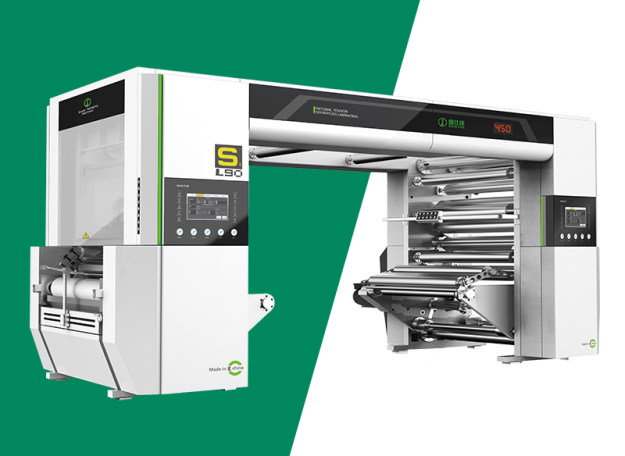
Solventless lamination is a method for the composite of two or more substrates using a solvent-free adhesive. The solventless laminator is the equipment which can be applied for a solvent-free adhesive composite. Composite substrates mainly include BOPP, PET, NYLON, CPP, PE, VMPET, VMCPP, PVC, aluminum foil, paper, etc.
Types of solventless laminator
There’re three types of solventless laminator including types of exclusive solvent-free, the combination of solvent-free and dry compound, multifunctional combination.
Exclusive solvent-free laminator is only used for solventless composite, once molding with two-layer structure or three-layer structure. It can be classified into types of manual roll changing and automatic roll changing.
The equipment adopting the combination techniques of solvent-free and dry compound can be used for solventless composite and the coating unit can be switched. This type of equipment can be connected with two machines, thereby achieving a one-time molding of three-layer structure. For example, the first machine produces PET / AL adopting a dry compound method and the second machine can complete the composite of PET / Al and PE using a solventless method.
The Multi-function type equipment can achieve solventless, dry compound, PVDC coating, cold sealing positioning coating, hot melt adhesive coating, reverse printing, etc, through switching coating units.
Work Principle Of Solventless Laminator
The mostly used solventless laminator has a structure of two-layer composite, a single station unwinding, which mainly constitutes of an unwinding unit and coating unit as a first-layer, and an unwinding unit, a composite unit, a rewinding unit. The structure of the solventless laminating machine includes a two-roller device, a winding device, and solvent-free adhesive coating composite equipment. The outstanding feature is that after entering the composite through a special coating device, it is not necessary for drying. The solventless composite machine satisfies the requirement of a solvent-free adhesive coating,which is a significant difference from the solvent drying compound equipment. The solvent-free machine has precise control for the temperature of the coating equipment, relying on the adjustment of temperature and the viscosity of the adhesive for promoting the coating application. It is equipped with a closed-loop tension controller which can strictly control the winding tension.
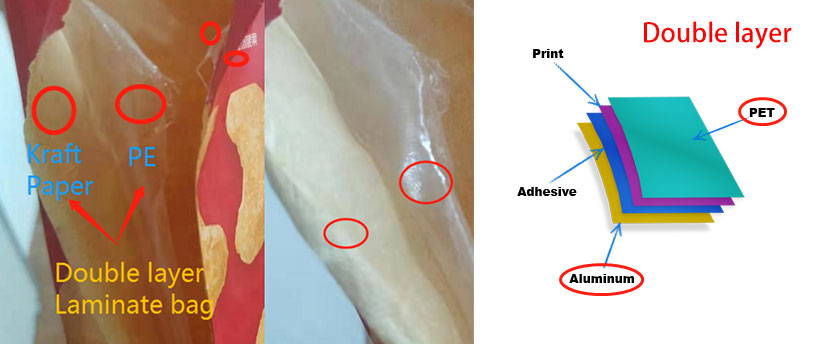
For more professional introduction, please visit the article page of why choose a solventless laminator.
Solventless lamination machine has fast speed and high efficiency but also means having high risks in the absence of deviations in process conditions. The most difficult factor is the lag phenomenon of composite materials quality performance. Therefore, the composite process is also known as a special process, how to minimize the risk of solvent-free composite?
1.The Necessary Small Process Sample
Changes in raw materials and process conditions, which will lead to the quality problems of the batch. For example, formulating film material, printing ink type, type adhesive, and so on. At present, the raw material quality of different suppliers is uneven. It is not easy to replace each other, moreover, film materials, ink, adhesives, process conditions, still matched, such as solvent-less.
For example, -oh which is now widely used in the polyurethane ink resin, consumes a certain amount of rubber curing agent and the degree of consumption is related to the ratio of the ink layer and the thickness of the resin in the ink layer. The adhesive layer of the ink layer portion does not appear.
After the sample test has been passed, technical documents should be formulated in strict accordance with the established process and the raw material supplier will provide a stable formulation. If the raw material formulation or process conditions have changed, the sample should be re-tested.
2. Comprehensive Quality Inspection
For quality inspection, it should focus on the composite film appearance, peel strength, heat sealing strength, heat sealing temperature, solvent residue, At the same time, food packaging, pharmaceutical packaging is different in terms of sample treatment, soaking method, soaking conditions (time/temperature), indicator units.
Today, food packaging safety is widely concerned that the safety test of packaging materials is also one of the important factors of reducing business risks.
3.Solvent-free Composite Technology
The maximum characteristics of solventless composite technology, materials for solvent-free composite and drying composite, are low initial viscosity, small coating. Various quality problems have occurred primarily related to these two factors. Therefore, the experience gained through dry composite methods can’t be simply transplanted into a solventless composite.
For example, when the glue flow at both ends of the gluing baffle is insufficient, it is easy to aging, resulting in reduced glue and insufficient peel strength at both ends of the composite film with the uneven glue. The side of the baffle should be stirred regularly.
At the same time, it is necessary to ensure the correctness of the ratio of the two-component binder and the curing agent. The metering pump blocking can result in a ratio error of the two-component gels and the curing agent, For example, a batch accident in which the curing agent is insufficient, resulting in insufficient dryness of the composite film, less than the peel strength and low heat sealing strength. So correctly detecting the refractive index of the rubber, monitoring the accuracy of the ratio, avoiding the situations, which including maintenance that cannot be maintained, the unbalanced binder proportion and no alarm for mixing pump, are necessary for improving solventless composite technology.
The solventless lamination is more and more widely used in the flexible packaging industry with the advantages of high efficiency, low cost and environmental friendly. Learning how to reduce the bulk loss and minimize the risk of solventless composite can greatly do a favor for the better operation of a solventless laminator.
Solvent-free composite technology is mainly adopted for solventless lamination machines. Significant advantages of the solventless composite process are reducing cost, high efficiency and energy saving, improving production safety, stability and product quality.
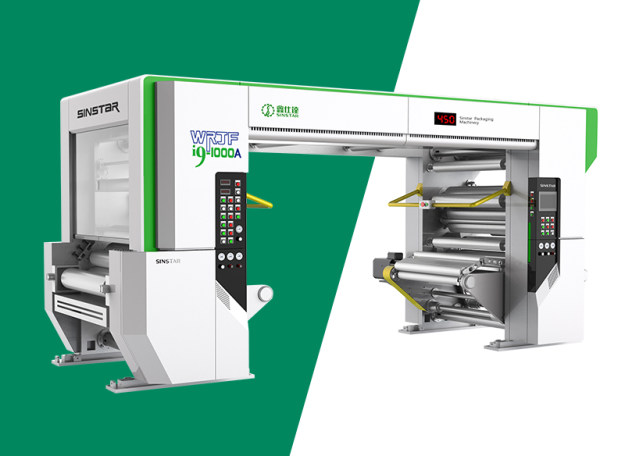
However, due to the immature solventless composite technology , and there are still some technical risks that are easily overlooked in the application for a flexible packaging company, leading to quality problems. Now we summarize three common risk control points of solvent-free composite technology.
1. The Technical Risk Of Increasing A Glue In Solventless Composite
Solvent-free composite adhesive with A glue and B glue, the adhesive mixing ratio is generally the weight ratio of A glue and B glue, rather than the volume ratio of both. The mixing ratio of the binder is usually determined by the adhesive manufacturer, as the proportion of the binder in different brands is generally different. The common ratios of A glue and B glue are 100: 80,100: 75,100: 50,100: 45. However, in the actual solvent-free composite production of flexible packaging companies, the ratio of the two-component adhesive will be disordered, which will affect the solventless quality of flexible packaging products.
Case
After printing, solvent-free compounding, the flexible structure of OPP / VMPET / PE has no quality problems.
The structural composite flexible bag is a low viscosity-free solvent-free binder brand and the proportion of A glue and B glue in actual composite production is 100: 67. When analyzing the cause of failure, we find that the bag is curled and the inner binder is not dry. Originally, because the composite film maturity is incomplete, prolongs the maturation time and then cuts into a bag. The problem of bag curling still exists and the opening performance has also deteriorated.
Combined with a ratio of A glue and B glue, it is not difficult to find that the bag is mainly caused by the excess of the A glue, because the solvent-free composite film is usually large and the effect of prolonging maturity is not obvious, water must be introduced into the cross-linking curing reaction with the -NCO.
The much more efficient methods are to rewind the composite film roll on a slitting machine and then increase the humidity of the workshop environment to absorb some moisture between the layer and the surface. The composite film, during aging, water will penetrate into the adhesive layer and reacted with an excess-NCO cross-linking curing reaction, so that the self-adhesive layer will be further completely cured, thereby effectively release the curling of the flexible packaging bags.
2. Risk Control For The Attenuation Of PE Membrane Peel Strength At Solventless Composite Material
A certain amount of linker is added to the film blow molding for reducing the friction between the film and the film, the film and the device, so that the surface of the film will be smoother, in order that the composite film operates successfully in the production process. Under normal circumstances, an excess sliding agent has added appropriately in the PE film, which can solve the phenomenon of abnormal increase in the friction coefficient of the solvent composite film after a certain extent, but this can also cause peel strength to be weakened, which is serious. When the aging is completed, the peel strength of the composite film is exceeded and in most cases, the peeling strength is reduced during the process of placing the composite film or during the cycle of the flexible packaging.
Case
The composite structure is a BOPA / PE film
Main parameters: a brand solvent-free adhesive, the amount of glue is 1.5 g / m2, aged at 40 ° C for 24 hours. The tracking and detection data of the peel strength of the composite film is as follows:
On October 13, the lateral peel strength was 15.37 N / m.
On November 4, the lateral peel strength was 4.62 N / m.
After the complex layer is peeled off, the surface of the PE film has a mist-like substance that can be wiped off.
On November 18, the lateral peel strength was 4.69 N / m.
It is closed to the final test data indicating that the peel strength of the composite film has reached a stable value.
Typically, the flexible packaging company only detects the peel strength of the composite film shortly after maturity. The composite film is rarely tracked during the process or the peel strength in the soft bag, which should be noted.
The migration of the solventless adhesive in the PE film produces a slipping agent, which is the main reason for the decrease in the peel strength of the composite film. We recommend a solvent-free adhesive. Add the formulated slipping agent to the formulation, so that the friction coefficient of the PE film in the solvent-free compound can be solved, and the problem of decrease in peel strength can also be solved.
3. Pay Attention To Identifying The Smell Characteristics Of The Solventless Adhesive
There are many factors that produce scent in the flexible packaging bag, such as residual solvent, ink resin, thin-film raw material resin, adhesive, etc. Although there is no solvent residue in a solventless composite, the resins and formulations in the solventless adhesive have a certain odor feature and some have effects after composite curing, even after the packaging. For flexible packaging companies, it is necessary to pay attention to the identification of the solventless composite film after the smell and prevent the problem.
a. In GB / T 10004-2008 standard, the detection method of packaging sensory indicators is specified, which is opening the box and lining the packaging film and immediately detect the smell.
b. Usually take a certain area of the composite films, cut into a 500 ml glass bottle, baked for 30 minutes at 60-80 ° C for detecting smell. It is also possible to seal the package in the air or actual content, rotating at a temperature of 50 to 60 ° C, tearing the package, and feel whether there is odor.
The odor of the composite film is mainly from a solvent-free adhesive. Therefore, the odor feature of the general solventless adhesive can be identified by the following method.
a. Take a certain amount of A glue and B glue with different brands for sensory testing and comparison.
b. Add a mixed solvent-free binder according to the specification to the glass bottle. Plastic film is placed in the bottom of the bottle and the cured adhesive is easily taken out and the crosslinking reaction is under 40-50 ° C. After an hour, the odor characteristics are determined. This method is more suitable for practical applications, including the odor characteristics of the resin itself.
Solvent-free composite technology is a production technology which is more and more widely used in the flexible packaging industry with the advantages of safety, environmental protection, saving costs. Through the learning of the common risk control points of solventless composite technology, the efficiency of solventless lamination will be improved.
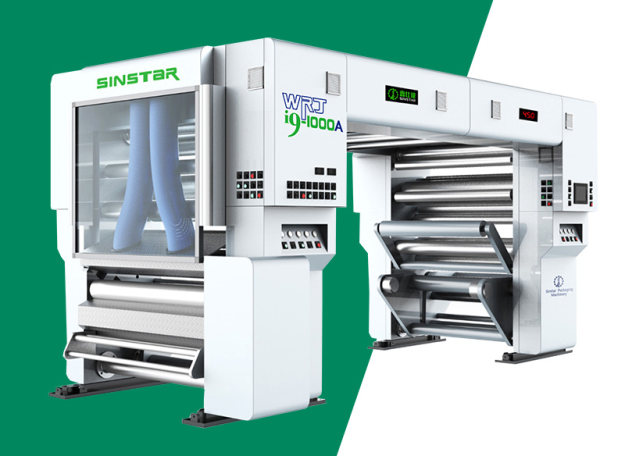
Here, we'll introduce the common problems that occur in the solvent-free composite and the effective solutions. Adopting the solutions can greatly improve the work efficiency of the solventless laminator.
Knife Line
The main reason is that the coating units are not cleaned up. At this point, the coating unit should be downtown, or the transfer roller is changed, and the blanket is eliminated.Poor Drying Of Adhesive
1. The adhesive is not configured in accordance with the correct matching requirements.
2. The adhesive has not been working.
3. Mixed glue contains moisture content or a large amount of ethyl acetate.
Composite Membrane Bubble
1. Since the material is not smooth and the ink particles are thick, the glue coating is insufficient. It should use high-quality materials or increase coating.
2. CO2 generated in curing cannot form in a film which has a good barrier property, mainly due to the use of a single-component solventless. So it should use a two-component adhesive.
3. The surface wettability is poor. It should increase the surface wetting tension of the material and improve the wettability of the adhesive.
4. Transfer roller is attached with foreign matter or scars and should be scrapped with bamboo pieces.
Poor Adhesion
1. The adhesive coating is too much, and the Internal curing of adhesive is slow.
2. When using a single-component adhesive, the humidification moisture content is insufficient.
3. The amount of coating is too small and the infiltration of the surface is incomplete.
4. Poor solubility of the ink and the adhesive, such as using polyamide ink.
Here, we give a detailed analysis of the undesirable phenomenon in the solventless composite and solventless laminating machine, such as the uniform winding, poor coating effect, etc and how to solve the problems.
Poor Coating Performance
1. The pressure of the transfer roller is not enough.
2. Mechanical brake adjustment error of transfer roller.
3. The coating roller is not clean well.
4. The poor finish of the glue pressure roller, the transfer roller, or the composite roller.
Poor Coating Performance Of Thin Film Edge
1. The adhesive close to the baffle does not replace for a long time, as long as it often swings the spray nozzle to maintain the adhesive fresh.
2. The coated pressure roller of the composite roller has glue or other impurities.
Uneven Section Of Rewinding
1. The glue amount is too large.
2. The cooling performance of the back film roll which is from the composite roller, is poor.
3. Tension is not suitable.
4. The flatness of the squeeze roll in the rewinding is poor.
5. The glue coating amount in the left and right sides of the film is too large and it is best to control the difference within 0.2g.
6. The paper core is not aligned with the film.White Spot
1. Low glue coating
There is not enough adhesive to penetrate into ink. At this time, it appears as a small and uniform spot in the entire composite film. The solutions are to appropriately increase the amount of glue and adjust the composite temperature and composite pressure.
2. The glue portion, the composite portion of the rollers have a poor surface finish. At this time, it is expressed as partial intermittent repeated spots. It can be judged by measuring the spacing of the two spots to find which rolls have foreign matter and clean up.
3.The tension of substrate film is uneven and wrinkles before entering the composite roller, resulting in poor partial composite performance, and the bubbles will appear, the macroscopic manifestation is a white spot. The solution is to adjust the deflection roller and keep the film neat before entering the composite roller. The tension can be appropriately adjusted or replace film.
4.The pressure of the composite portion of the glue portion is not properly set.
5. The solubility of the ink and adhesive is not good, white spots will occur at no adhesive penetrated ink, and the suitable adhesive or ink should be replaced.
For more information, please visit the article page of the undesirable phenomenon in solventless composite.