
Solventless lamination technology is an environmentally-friendly composite technology that has developed rapidly in recent years. It has the advantages of no solvent residues which has no pollution to the atmospheric environment, significantly reducing energy consumption, fast machine speed, etc. In the solvent-free lamination process, tension control is extremely important and must be very accurate. Tension control mainly includes the control for unwinding tension, film tension, auxiliary unwinding tension, winding tension, and winding taper.
The Application Of Tension Control In Solventless Lamination Machine
The tension of the solventless lamination machine is generally divided into four parts, including the first unwinding tension, the second unwinding tension, channel tension and winding tension. In the process of changing the roll diameter and production speed, solventless lamination has a requirement of constant tension. On the basis of ensuring the quality of the composite material, tension control of solventless lamination machine plays an extremely important role in improving the quality of the windings.
It is important to ensure that stable tension and winding integrity due to the frequent operations of starting and shutdown, acceleration and deceleration for solventless lamination equipment.
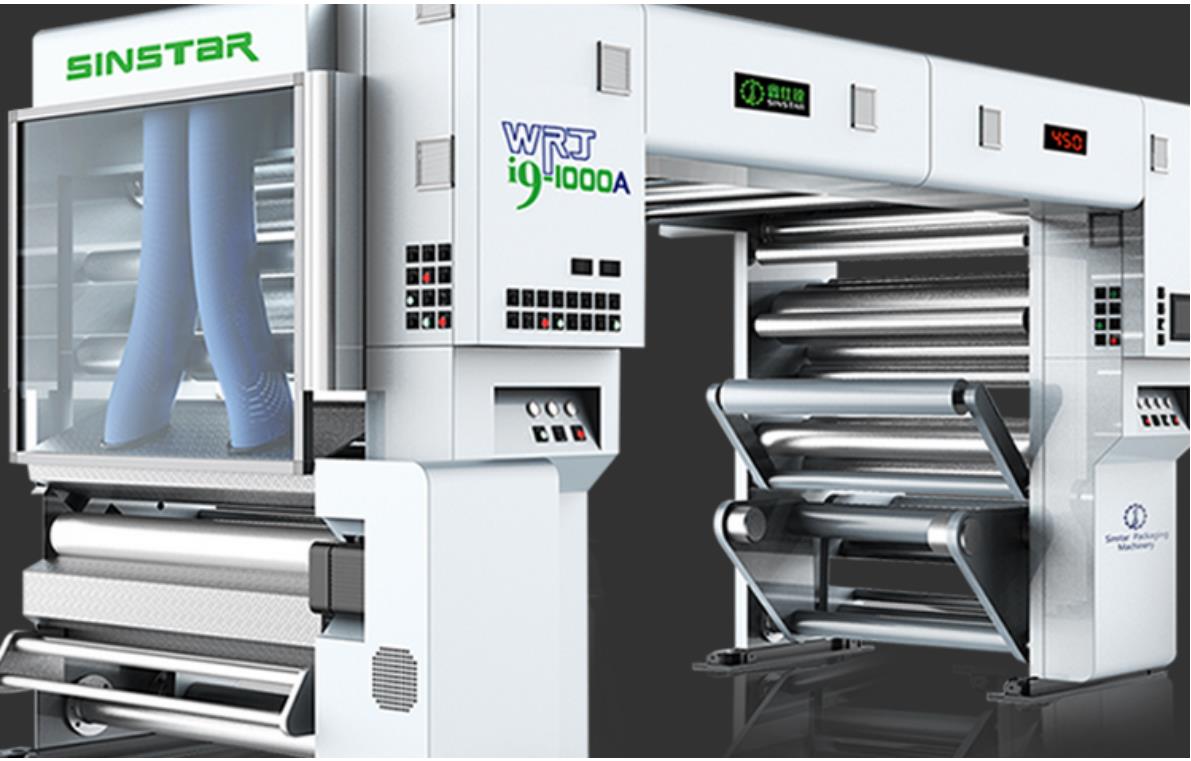
The floating roller has the function of absorbing kinetic energy. When the first unwinding tension is required to be constant, the second unwinding tension and the channel tension control adopt the low friction cylinder to control the swing rod tension control form to ensure the solvent-free. During the acceleration and deceleration, with the stable tension of the lamination machine, the membrane tension and relaxation caused by tension fluctuation are the smallest. If the first unwinding tension, the second rewinding tension and the channel tension are controlled by the bearing tension sensor, the first retraction unit harness, the second retraction unit harness, the coating harness, and the laminating harness are completely synchronized to ensure stability, acceleration and deceleration during the stretching process.
In addition, the flexibility of the guide roller rotation is an important factor in ensuring the stability of tension control during the acceleration and deceleration process. Under normal circumstances, the rotation of the guide roller is only synchronized with the moving movement of the film, so the ink on the film surface will not be scratched, which requires the static friction between the film surface and the guide rolls greater than the resistance of the roller. Therefore, the guide roller must be flexible with high assembly precision. The unwinding tension and channel tension of solventless laminator both have a requirement of constant tension. There are three winding methods, which include linear windings, hyperbolic windings, and parabolic windings.
The solvent-free adhesive is characterized by a solid content of 100%, low viscosity, low initial viscosity. If the composite intima is a stretched film such as PE film and CPP film, it is tried to use a hyperbolic winding method. When rolling up, the inner winding volume is relatively loose and the composite film is not wrinkled. The wrapped diameter is closely wound on the surface, with no bubbles on the surface.
Further, the winding pressure can also play a role of an auxiliary winding, and the air between the films is discharged, some of which have the effect of eliminating static electricity, which can increase the tightness and uniformity of the winding.

Key Points For Tension Control Of Solventless Lamination Machine
1. Generally speaking, the unwinding tension is based on the auxiliary unwinding tension. Increasing the main unwinding tension to match the auxiliary unwinding tension, making the composite film finally reach a flat straight state, the unwinding tension is the minimum tension without a wrinkle.
2. The tension of the film which is gluing, is slightly larger than the unwinding tension, which is used to tract the film, so that the corresponding coated steel roller does not require a large drive current.
3. The winding tension is slightly greater than the unwinding tension, the Initial viscosity of composite membrane which the winding tension needs to withstand, is only about 0.2 N / 15mm, and the winding taper is controlled within 20%, with the increase of coil diameter, the decreasing degree of tension is slower than dry lamination.
4. For the films of different materials, the tension in each part is different in the lamination process. Even the film has the same material and the tension is also very different depending on the different composite structures. For example, in the PET / PE structure, because PE is easy to stretch, its tension is substantially from 3N to 5 N. PET is contended with the shrinkage stress of P and its tension is relatively large, substantially 20N. But in the composite structure of PET/paper, since the stretchability of the paper is better, PET only requires the minimum tension, typically 5N.
Methods For Checking Whether The Tension Control Is Appropriate For Solventless Lamination Machine
Shut down the solventless machine, making a cut on the composite film with a blade at the winding position and the most ideal state is that the composite film remains flat. If the composite film is curled in a direction, which indicates the tension of the film is too large, the tension of the film should be appropriately reduced or increasing the tension of the film in another layer.
Summary
During solventless lamination, the requirements for tension control are higher than that of ordinary compounds. The solvent-free lamination machine tension control has high requirements, making the elongation of the two-layer material rolls as consistent as possible through accurate tension control to ensure that the two-layer coils don’t produce relative slip during the solventless laminating process. Accurate tension control is the premise of ensuring the quality of composite films.
The products in the packaging and printing industry are inseparable from the use of organic solvents, which brings many emissions of VOCs. Solventless lamination technology adopts a solvent-free adhesive instead of solvent-based adhesive, which can avoid VOCs emissions from the source.
What Is Solventless Lamination Technology
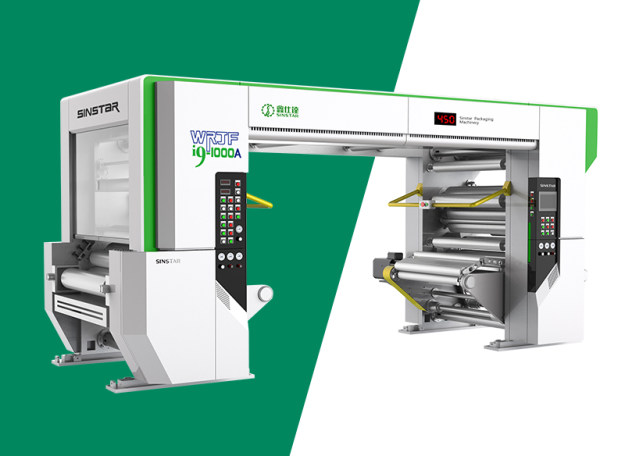
Solvent-free laminating technology is an important environmentally friendly technology applied to the flexible packaging industry. It is a machining method which adopts a solvent-free adhesive to make the membrane substrate such as plastic film or other film-shaped material laminate each other, through the curing process which is a chemical reaction of the adhesive, making each layer of substrate firmly bonded together, thus, multi-layer composite films are obtained.
Advantages Of Solventless Lamination Technology
Compared to traditional dry laminating, solventless lamination has significant advantages in the following aspects.
Saving resources
Due to no solvent use, it saves solvent costs and saves a large amount of energy consumption without the dried process. With less gluing, the coating weight of solvent-free lamination unit area adhesive is two-fifths of the coating weight of dry laminating unit area adhesive.
Safety and environmentally friendly
The adhesive of a solvent-free lamination is 100% glue, which does not contain any solvent, thus, in the production process, except that during the time of shutdown, there is a need to clean the gluing portion with a small amount of solvent, there are no emissions of solvent, VOCs and other pollutants, which will not produce pollution for the health and surrounding environment of the production worker. No combustible, explosive organic solvents in solventless laminating technology, there will be good safety. The hygienic performance of the composite film will not be reduced due to the existence of residual solvent.
Low costs
Each solventless laminating production line will have much less energy consumption than a dry laminating production line. The solventless laminating machine has high speed and the production cost can be lowered. The highest speed of the solventless machines is above 600 m/min, generally in 200m/min. As there’s no waste generated, there is no need to configure expensive environmental equipment and corresponding operating expenses.
What Should Be Paid Attention To In The Applications Of Solventless Lamination Technology Determining the components of the solventless adhesive The A component of the two-component solventless adhesive is easy to react with the water, affecting the adhesive ratio, thereby affecting the laminating quality of the product. So the requirements of the solventless lamination process for water vapor are particularly strict. The relative humidity of the workshop and the adhesive storage library are as low as possible. The drying and filtration of the gluing system must be thorough.For the lamination of paper to aluminum and paper to plastic, a one-component solvent-free adhesive will be an economic choice. However, moisture is involved in the curing process for the application of a one-component solvent-free adhesive and moisture needs to be added to ensure the curing of the lamination. This laminating method is subject to certain restrictions in dry winter and should be paid attention to.
Sample test
Nowadays, each flexible packaging company has its own unique product and technical characteristics. The raw materials used in each company are not the same. The substrates, inks and solvents used in different products are also various. The molecular weight of the solvent-free adhesive is generally Low and it is easily affected by external factors. Therefore, each product is recommended to have a sample test before first adopting solventless lamination technology and then put into mass production after the test is passed.
Pay attention to the individual differences in special products
Due to the low molecular weight of the solvent-free adhesive and the extremely strong penetration, the problems of adopting solventless lamination for some products will occur, which requires special attention. For example, when the laminating substrate is thin and the flexible package products with the auxiliaries which contain a large amount of molecular weight, adopting solvent-free lamination process, the adhesive will penetrate the substrate and In severe cases, it can accumulate on the thermal surface of the substrate, by secondary reactions, generating urea and other derivatives, which affects the heat-seal quality of the product. In addition, due to the high permeability of the solventless adhesive, the color of the product is different when using the solvent-free laminating process for some flexible packaging products which require printing. Moreover, the edge of the printing pattern for the lamination product will become larger and the stroke of the small text will be thicker.
With the increasing cost of organic solvents and the increasing environmental protection requirements, organic solvent emissions are increasingly strict restrictions. Solventless lamination machine has advantages of health, safety, environmental protection, low cost and flexible packaging manufacturers will adopt solvent-free lamination technology instead of traditional solvent laminate technology for expanding laminating production capacity.
Why Choose Solventless Lamination Machine
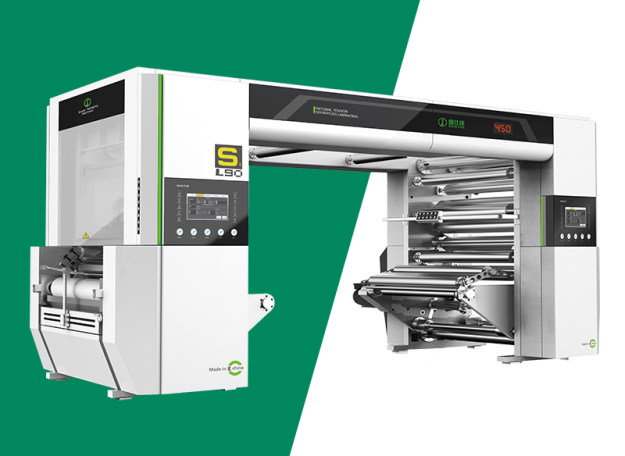
The lamination machine adopting safety, healthy and environmentally friendly process is more and more required, which is the reason why solventless lamination machine is developed rapidly all over the world.
1.It adopts 100% adhesive, no solvent residue, reducing the pollution of packaging contents, especially food, drugs, etc. There is no volatile solvent emissions in the production, and there is no pollution on the atmospheric environment.
2. Higher running speed. The speed of the solventless laminating machine can be as high as 480m/min, with no risk for fire and explosion.
3. Less adhesive consumption. Solvent-free lamination machine has Lower production cost than solve machine. Gluing and total cost have a certain decrease.
4. The solventless laminator has lower energy consumption. Since the usual drying system is not adopted, energy consumption can be significantly reduced.
5. Better return on investment. The investment efficiency of the solventless machine is doubled than the solvent-based laminating machine.
6. Reduce the danger of storage for organic solvent transportation.
Working Principe Of Solventless Lamination Machine
The glue of the solvent-free laminating machine is AB glue. Currently, the laminating structure of thin layer laminating thick layer, aluminized lamination, aluminum foil laminating, paper-plastic lamination. There is no solvent and no need to worry about solvent residue. It is greatly affected by the air temperature. The glue operability is only about twenty minutes. So the tension control and the winding taper have high requirements.
Sheet-fed gravure press adopts paper stack continuous sheet feeding and the web-fed gravure press adopts continuous feeding with web paper. There’re three types of arrangement of plate cylinder and impression cylinder, including vertical, horizontally, inclined and the plate cylinder is arranged below the printing portion. Generally, each unit has a printing cylinder and an impression cylinder. In order to increase the printing pressure, some are equipped with 2 impression cylinders.
The technical advantage of the solventless lamination machine is very obvious, with low glue cost and high efficiency, through the step-by-step method of the sample, small batch production, mass production, reducing risks and unnecessary losses.
How To Control The Coating Weight Of Solventless Lamination Machine
1. The effect of coating clearance on coating weight
The coating clearance of solventless laminating machine on the coating weight is very obvious and the coating clearance is various due to different solventless lamination machine manufacturers.
The material of the metering roller and the transfer steel roller are affected by temperature.
Bearing clearance of the coating roller. Bearing clearance of the metering roller. Stability of metering roller under mechanical vibration.
2. The effect of temperature on coating weight
The glue used by the solventless machine is highly affected by temperature. With the different temperatures of solventless lamination glue, the fluidity and viscosity of glue will change greatly. At the same time, The phenomenon of heating expansion and cooling contraction occurs in the coating roller and metering roller with the temperature changing of the gluing, which affects the coating clearance.
3. The effect of transfer rubber roller on coating weight
The hardness, proper alignment, smoothness of the transfer rubber roller directly affects the coating weight.
The corrosion resistance of the transfer rubber roller directly affects the coating weight. The pressure on the transfer rubber roller directly affects the coating weight.
4.Effect of the coating mechanism rotating speed on the coating weight
The coating weight adjustment of the solventless laminating machine is to adjust the ratio of the coating roller and the transfer steel roller. So the linear speed stability of the coating roller and the transfer steel roller will greatly affect the coating weight.
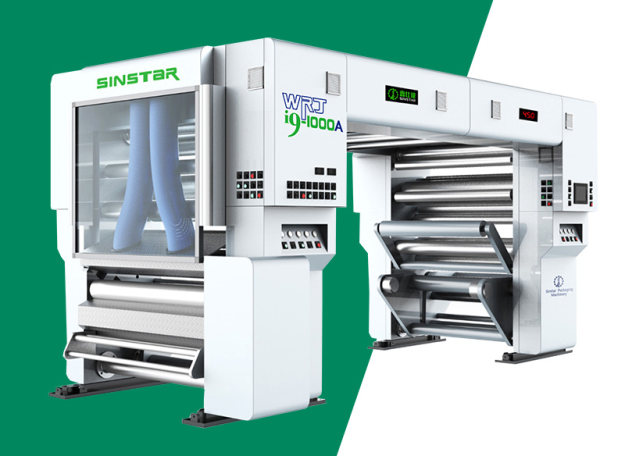
What Are Important For The Use Of Solventless Lamination Machine
1.High control accuracy
The solvent-free machine requires high accuracy control because that the solventless glue substantially has no initial adhesion. There is a considerable high requirement for the soventless laminator tension control and high control accuracy for the coating unit.
2.High accurate production process
A solventless laminator requires precise control for the process settings such as operating temperature, tension match, and coating weight. For different product structures, different production processes are required.
3. High requirement for operator
A qualified operator of a solventless laminator needs good work responsibility and excellent operation skills.
4. Widely applicable structure
Early solvent-free lamination can only be applied to the composite of simple plastic to plastic. With the continuous improvement of the adhesive and the continuous maturity of the operating process, aluminizing film and some multi-layer structural products can also be produced. But for some highly rigid materials, there will be further developed.
When the composite packaging film is produced, the composite method can be divided into extrusion composite, dry composite, wet composite, solventless composite. The most used methods are dry composite and solvent-free composite. What are the differences between the dry composite and solvent-free composite, and can be used for which type of packaging respectively?
Composite Method And Applications
Solvent-free Composite
The solvent-free composite film is different from dry composites that do not use organic solvents, which not only avoids the environmental pollution caused by organic solvents volatilization, but also does not require dry operating work segments, directly reducing production costs, and eliminating the influence of solvent and high temperature drying on the composite substrate, so that the size of the packaging film is more stable.
Dry composite
Dry composite is a kind of composite method. The adhesive is evenly coated on the substrate film by the roller. After dried, The composite film was synthesized by pressing and sticking on the composite part. The dry composite packaging film has a wide range of applications, with excellent chemical dielectric erosion performance, mostly used in packaging containing alkali, spicy, oil, etc., which is also suitable for cosmetic flavors, emulsifiers, especially for the high-temperature cooking packaging, very advantageous.
Coating Method
Solvent-free Composite
1. Multi-roller transfer coating
2. Thin adhesive layer, uniform thickness
3.The amount of coating is mainly determined by each roller speed, which can be adjusted online.
Dry composite
1.Concave roller coating
2.Thick adhesive layer, with a concave-convex shape, uneven thickness.
3.The amount of coating is mainly determined by the number of concave rolls, and the adjustment is limited only through replacing the convex rolls.
Glue Film And Compound Fastness Formation
Solvent-free Composite
1.low initial adhesion
2. The glue film and composite fastness are basically formed during the process of curing.
3. The glue film formation is mainly a chemical process of two components.
Dry composite
1.Heated through the oven, high initial adhesion.
2. The glue film and composite fastness are mainly formed on the machine, and the curing process only plays an auxiliary role.
3. The glue film formation is mainly a physical process for drying volatile and composite pressure.
Dry And Cooling
Solvent-free composite
1.No need to dry
2.Single component glue needs to cool, double-component glue generally does not need cooling.
Dry composite
1. The necessary step
2. Drying is usually under high temperature, and the drying temperature and cooling temperature of each segment have a large impact on the composite.
Curing
Solvent-free composite
Curing is the key process of solventless composite. Effect of curing temperature and time on two-component adhesive, which will have an influence on composite quality.
Dry composite
Curing usually is the auxiliary process and temperature and time have a certain effect on composite quality.
These two packaging composite have their own advantages. For choosing which composite method, should refer to the properties, weight of the packaging content. Although there are still many problems to be solved for solvent-free composite, it surely has advantages in health, safety, environmental protection, and cost.
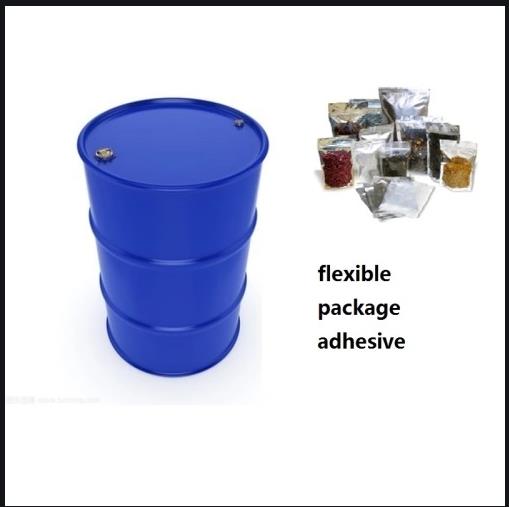
In recent years, with the increasing environmental protection awareness, solvent-free laminating adhesives are more widely used in the flexible packaging industry. This article will introduce the advantages, problems and development trends of solventless adhesives..
Advantages Of Solventless Adhesives
1.Environmentally friendly
Solvent-free laminating composite adopts solventless adhesive, which will not volatilize VOCs nor produce any irritating odor. It solves the problem of residual solvents in the packaging, eliminating the erosion of the organic solvent on the printing ink, can also achieve cleaning production, conducive to environmental protection.
2. Energy saving
The solventless laminating machine does not need to be dried, which reduces energy consumption. Moreover, in the late-ripening process, the maturation temperature of the solvent-free composite is substantially the same as the dry composite, so the energy consumption is also relatively close.
3. Safety
Since there is no organic solvent, so no need to adopt explosive and warm measures during production, transportation, storage and use and no need to specifically build a warehouse for solvent storage, more importantly, there is no harm to the health of the operator.
4.High Efficient
The speed of solventless machine adopting solvent-free adhesive is generally 250 ~ 350 m / min, even up to 400 to 500 m / min, while the solvent-based adhesive composite is generally 150 ~ 180 m / min.
5. Low cost
a. The coating amount of solvent-free adhesive is usually from 1.3 to 1.8 g / m2, while dry composite is 2.5-4 g / m2, and therefore, the amount of adhesive consumption can be reduced by about 50% compared to dry composite.
b. Since the solventless composite process does not require a drying process, energy cost is effectively reduced. After calculating, the energy consumption cost of the solventless lamination machine is 1/15 of the cost of dry composite consumption.
c. From the production efficiency, the efficiency of the solvent-free lamination machine is 1.5-2 times higher than that of ordinary dry composite, effectively reduces production costs.
Problems Existed In Solventless Adhesives
1.A great effect on the smoothness of PE film
When the solvent composite ripening temperature is greater than 40 ° C, it has a great effect on solvent-free composite film which has the inner layer of a PE film, and it is easy to appear the phenomenon that friction coefficient increases obviously. This is mainly because the higher the ripening temperature, the more intensely moved the molecular motion of the PE film, which is easy to migrate to the adhesive layer and the reaction is consumed, resulting in the increasing friction coefficient of the composite film.
2.Aluminum plating layer transfer
Aluminum plating film, especially a polyester plating aluminum film, is prone to aluminum transfer during the solvent-free composite, thereby causing insufficient strength of the composite film peeling.
3.Dissolve with ink
During the solventless composite, the phenomenon of adhesive and ink phase dissolution may occur, especially the dye-type ink.
4. Low peel strength of aluminum foil composite
At present, for the solventless composite of the aluminum foil, since the peel strength is not enough, it is still necessary to satisfy the heavy-duty packaging and requirements for cooking resistance.
5. Frequent replacement of solventless adhesive types
With the development of the solventless composite process, many solvent-free adhesive suppliers have introduced general solvent-free adhesives, cooking solvent-free adhesives, aluminum foil special solventless adhesive, low friction coefficient no solvent adhesive, etc. Although the diversification of the product can meet the composite requirements of different materials, the flexible packaging company also has to clean the gluing equipment and solventless machine according to the different composite materials. Not only it wastes time, human resource, financial, but also has low production efficiency.
Development Trend of Solventless Adhesives
1. Functional solventless adhesive
Solventless adhesives should develop to functional products, such as DMF organic solvent mixture with content less than 20%, a product resistant to pesticide corrosion.2.UV curable solventless adhesive
UV curable solvent-free adhesives have the advantages of fast curing speed, transparent peel strength, non-toxic, non-corrosive, energy-saving and environmentally-friendly, widely used for plastic/plastic, plastic/paper, plastic/metal film, or other materials rapidly solvent-free composite. At present, UV cured solventless adhesive has been developed, but it still needs to increase research and development efforts to launch more mature products to the market.
3.Solventless adhesive used in other industries
The solventless adhesives used for textile, automotive interiors and other industries, as well as paper including kraft paper, cardboard paper, ordinary paper, plastic including various transparent films, aluminum plating films, aluminum foil, should be developed.
Solventless adhesives bring great benefits to environmental protection, health, safety, cost, etc, but still, have some problems that need to be paid attention to. The future development trends of solvent-free adhesives are multi-functional, can be used with various materials in different industries.