
Polymerase Chain Reaction (PCR) stands as a pivotal technique in molecular biology, revolutionizing genetics and biotechnology. This method facilitates the amplification of specific segments of DNA, offering a wide array of applications ranging from genetic testing to DNA sequencing. Delving into the intricacies of PCR, let's explore its fundamental working principles and various adaptations.
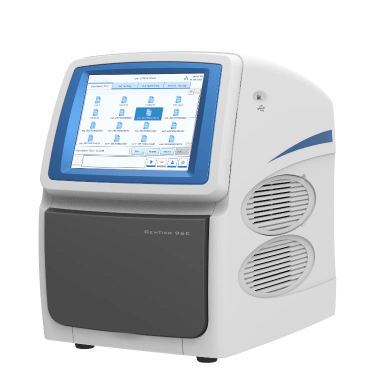
Fundamental Working Principles of PCR:
PCR entails a series of heating and cooling cycles to multiply a specific DNA segment, meticulously following the principles of natural DNA replication in a controlled manner.
Three Fundamental Working Steps of PCR:
Denaturation:
Heat is applied, typically around 94-98 degrees Celsius (201-208 degrees Fahrenheit), causing the DNA double helix to unwind and separate into single strands.
Annealing:
Temperature reduction to approximately 50-65 degrees Celsius (122-149 degrees Fahrenheit), allowing short DNA sequences called primers to bind to their complementary sequences on single-stranded DNA.
Extension/Elongation:
Elevation of temperature to about 72 degrees Celsius (162 degrees Fahrenheit), facilitating the synthesis of new DNA strands by a heat-resistant DNA polymerase enzyme.
Cycles and Amplification of PCR:
PCR cycles involve repeated processes of denaturation, annealing, and extension, resulting in exponential amplification of the target DNA sequence.
Each cycle doubles the amount of DNA, ultimately yielding a significant quantity of the target DNA from a minimal starting material.
Variants and Modifications of PCR:
Reverse Transcription PCR (RT-PCR):
Amplifies RNA molecules post-conversion into complementary DNA (cDNA) using reverse transcriptase enzyme, essential for examining gene expression and RNA-based activities.
Real-Time PCR:
Also known as quantitative PCR (qPCR), enables detection and quantification of DNA or RNA during amplification, facilitating precise quantification and real-time monitoring.
Nested PCR:
Utilizes two sets of primers to improve specificity and sensitivity, especially beneficial in scenarios involving low amounts of target DNA or complex DNA mixes.
Multiplex PCR:
Allows simultaneous amplification of multiple target DNA sequences using distinct primer sets, useful in genotyping, disease detection, and forensic analysis.
Hot Start PCR:
Incorporates modifications to enhance reaction specificity and prevent non-specific amplification by utilizing specific DNA polymerase or modified primers.
Digital PCR (dPCR):
Divides PCR reaction into numerous separate reactions, enabling absolute quantification of target DNA without external standards, particularly useful for detecting low-abundance targets.
Inverse PCR:
Amplifies DNA segments with known flanking sequences but an unknown sequence in between, facilitating gene cloning and discovery of unknown DNA sequences.
In Summary:
PCR, with its ability to exponentially amplify DNA, has emerged as a cornerstone in molecular biology, unlocking a plethora of applications across various disciplines. By comprehending the principles and variants of PCR, researchers have propelled advancements in genetic testing, forensics, disease diagnosis, and beyond, reshaping the landscape of science and medicine.
Polymerase Chain Reaction (PCR) stands as a cornerstone in molecular biology, offering scientists the ability to amplify specific DNA segments with unmatched precision and efficiency. At the heart of this transformative technique lies Taq polymerase, an enzyme extracted from the extremophile bacterium Thermus aquaticus. With its unique attributes, Taq polymerase has emerged as a fundamental component in molecular biology. This article delves into the reasons behind the widespread utilization of Taq polymerase in PCR and its indispensable role in DNA amplification.
Heat Stability of Taq Polymerase
Taq polymerase's remarkable heat stability renders it ideal for PCR applications. Traditional DNA polymerases, akin to those found in human cells, denature at temperatures surpassing 60-70°C (140-158°F). However, Taq polymerase, originating from T. aquaticus thriving in hot springs with temperatures up to 70°C, has evolved to withstand such extreme conditions. This inherent heat resistance allows Taq polymerase to remain active throughout the temperature cycles of PCR, ensuring efficient DNA amplification.
DNA Synthesis by Taq Polymerase
During the extension phase of PCR, Taq polymerase catalyzes DNA synthesis. Upon denaturation of the DNA template and annealing of primers, Taq polymerase utilizes the single-stranded DNA template to generate a complementary DNA strand by incorporating nucleotides. Through a series of steps including binding, nucleotide addition, phosphodiester bond formation, and processivity, Taq polymerase synthesizes a new DNA strand, resulting in the amplification of the target DNA fragment.
Exonuclease Activity of Taq Polymerase
Taq polymerase's exonuclease activity enhances DNA replication fidelity by proofreading and correcting misincorporated nucleotides. Upon recognizing a misincorporated nucleotide, Taq polymerase employs its exonucleolytic activity to remove the erroneous nucleotide from the growing DNA chain. Subsequently, Taq polymerase resumes DNA synthesis, ensuring the accurate replication of the DNA template.
Compatibility of Taq Polymerase with PCR Components
Taq polymerase's compatibility with various PCR components simplifies experimental workflows and enhances reproducibility. It efficiently binds to primers during annealing, incorporates nucleotides during extension, and remains stable throughout thermal cycling. Moreover, Taq polymerase exhibits compatibility with PCR buffers, Mg2+ ions, and other additives, ensuring consistent performance across diverse experimental conditions.

Commercial Availability of Taq Polymerase
Taq polymerase is commercially available in various formats, catering to diverse experimental needs. Biotechnology companies offer standalone enzymes, master mixes, and complete PCR kits, providing researchers with flexible options. Furthermore, specialized formulations tailored for specific PCR applications, stringent quality control measures, and widespread availability have cemented Taq polymerase's role as a ubiquitous tool in molecular biology research and diagnostics.
In summary, Taq polymerase has revolutionized molecular biology by offering scientists a reliable and efficient means of DNA amplification. Its unique properties, including heat stability, DNA synthesis capabilities, exonuclease activity, compatibility with PCR components, and commercial availability, underscore its indispensable role in PCR and molecular biology as a whole.
Polymerase Chain Reaction (PCR) technology stands as a cornerstone in molecular biology, particularly in the realm of forensic science, where it plays a pivotal role in amplifying specific DNA regions for analysis. This article delves into the advantages, limitations, and diverse applications of PCR in forensic investigations.
Advantages of PCR in Forensic Investigations
PCR boasts several attributes that render it well-suited for forensic applications:
High Sensitivity and Specificity:
PCR is highly sensitive and specific, enabling the accurate detection and amplification of even minute DNA amounts.
Versatility with Sample Types:
It can effectively work with small or degraded samples, such as those derived from hair, bones, or aged bloodstains.
Simultaneous Analysis of Multiple Samples:
The technology's capability to analyze multiple samples simultaneously enhances forensic scientists' efficiency in processing large sample numbers.
Types of PCR Assays Used in Forensics
Various PCR instruments used to meet the diverse needs of forensic investigations:
Short Tandem Repeat (STR) Analysis:
A common approach, STR analysis compares specific DNA regions to create unique profiles for individuals, facilitating the matching of DNA evidence to suspects or victims.
Single Nucleotide Polymorphism (SNP) Analysis:
This assay examines single nucleotide differences in DNA, aiding in determining relationships between individuals.
Mitochondrial DNA (mtDNA) Analysis:
Ideal for analyzing highly degraded samples, such as those from ancient bones or teeth.
Applications of PCR in Criminal Investigations
PCR finds widespread applications in criminal investigations, including:
Identification of Suspects or Victims:
Forensic scientists utilize PCR to identify perpetrators in cases like sexual assaults, based on DNA evidence left at crime scenes.
Exoneration of Wrongfully Accused Individuals:
PCR can prove the innocence of those wrongly accused by demonstrating a lack of match between their DNA and that found at the crime scene.
Limitations and Challenges of PCR in Forensics
Despite its advantages, PCR encounters limitations and challenges in forensic applications:
Contamination Concerns:
Potential contamination from the environment or other samples requires meticulous handling and the implementation of controls for result accuracy.
Interpretation of Complex DNA Mixtures:
Complex DNA mixtures, such as those from multiple individuals or degraded samples, pose challenges in interpretation, spurring the development of new technologies to enhance result reliability.
Future Developments in Forensic PCR
The future of forensic PCR holds promising developments:
Next-Generation Sequencing:
This technology enables the analysis of more complex DNA samples, providing detailed information about an individual's DNA profile.
DNA Databasing and Bioinformatics:
Advancements in DNA databasing and bioinformatics support the analysis of vast datasets, fostering connections between different cases.
Conclusion
PCR technology has transformed forensic science, providing investigators with a potent tool for individual identification and DNA analysis. Despite existing limitations and challenges, ongoing advancements, particularly in next-generation sequencing and bioinformatics, promise a bright future for PCR in forensic investigations. By continually refining and improving PCR technology, forensic scientists contribute to ensuring justice is served and holding the guilty accountable for their actions.