
In scientific research and industrial quality control, understanding the thermal behavior of materials is essential. The melting point is a fundamental physical property that provides critical insight into a substance’s purity, identity, and stability. A precision melting point apparatus is an advanced analytical instrument specifically designed to measure the exact temperature at which a substance transitions from solid to liquid with exceptional accuracy and repeatability.
What Is a Precision Melting Point Apparatus?
A precision melting point apparatus is a laboratory instrument that determines the melting point of a compound with fine temperature control and high-resolution optical detection. Unlike manual methods using simple capillary tubes and heating blocks, precision systems feature automated heating ramps, digital temperature sensors, real-time video observation, and software algorithms to detect the first signs of melting.

Key Features
High Temperature Accuracy and Stability
Precision melting point meters are equipped with platinum resistance thermometers (PRTs) or thermocouples that provide temperature readings with an accuracy as tight as ±0.1°C. This ensures reliable results, especially in pharmaceutical and chemical industries where slight deviations can affect compliance.
Automated Video Detection
Modern systems include a built-in camera and LED illumination to monitor the substance during the heating process. Advanced image recognition detects the onset and completion of melting, reducing operator subjectivity.
Programmable Heating Ramps
Users can set custom heating rates, typically between 0.1°C/min to 10°C/min, which is crucial for analyzing substances with broad or narrow melting ranges.
Multi-Sample Capability
Many instruments support simultaneous analysis of multiple capillaries, increasing throughput and reducing the need for repeat experiments.
Data Recording and Connectivity
Precision instruments record temperature data, melting range, and sample images. Many include USB or LAN connectivity for exporting results and integrating with Laboratory Information Management Systems (LIMS).
Applications Across Industries
Pharmaceuticals: Ensures batch-to-batch consistency and detects polymorphic transitions in APIs (active pharmaceutical ingredients).
Chemicals and Petrochemicals: Identifies contaminants or alterations in formulation based on melting point shifts.
Food Industry: Assesses the purity of fats and waxes, such as cocoa butter and beeswax.
Academia and Research: Provides a teaching and validation tool for chemical structure-property relationships.
Advantages of Using a Precision Melting Point Apparatus
Greater Reproducibility: Automatic melting point meter reduces operator-induced variability.
Enhanced Efficiency: Simultaneous sample testing and fast heating reduce lab time.
Regulatory Compliance: Suitable for GMP, GLP, and pharmacopeial standards (USP, EP, JP).
Minimal Sample Waste: Only a few milligrams of the sample are needed for testing.

Future Innovations
As the demand for faster, smarter lab instruments grows, future developments in precision melting point apparatus are expected to include:
Integration with AI for real-time anomaly detection
Touchscreen UIs with multilingual support
Cloud-based data storage and analysis tools
Portable models for field testing in remote environments

Summary
A Precision Melting Point Apparatus is a vital instrument in any modern laboratory concerned with material characterization, purity assessment, and quality control. Its ability to deliver highly accurate, reliable, and repeatable results not only enhances productivity but also ensures that products meet stringent industry and regulatory standards. With ongoing innovations, these instruments continue to evolve into smarter, more connected tools that push the boundaries of analytical excellence.
Understanding the melting point of bromide samples is fundamental in chemical and pharmaceutical industries. The melting point serves as a critical physical property, offering insights into the purity, stability, and behavior of a substance under various conditions. Determining the melting point of bromide compounds accurately is crucial due to their diverse applications in industrial processes, research, and material sciences.

This article explores the importance of melting point determination for bromide samples, the methods employed, challenges encountered, and innovations in analytical techniques that enhance accuracy and reliability.
1The Importance of Melting Point Determination
The melting point is defined as the temperature at which a solid becomes a liquid under atmospheric pressure. This property is essential for several reasons:
1. Purity Assessment
The melting point of a substance is a sensitive indicator of its purity. Pure bromide compounds exhibit sharp, well-defined melting points, whereas impurities typically lower and broaden the melting range.
2. Characterization of Compounds
Melting point determination aids in identifying bromide samples and distinguishing between different bromide salts or compounds. This is critical for verifying the identity of materials used in industrial and pharmaceutical applications.
3. Process Design
Knowledge of melting points informs the design of manufacturing processes, particularly when bromides are used as intermediates in chemical reactions.
4. Quality Control
In quality assurance protocols, melting point determination ensures that bromide samples meet specified standards, preventing suboptimal materials from entering the supply chain.
Methods for Determining Melting Points
Several methods are used to determine the melting points of bromide samples, each offering specific advantages depending on the application:
1. Capillary Method
The capillary method is one of the most traditional approaches to melting point determination. A small quantity of the bromide sample is packed into a thin glass capillary tube, which is then heated in a controlled manner. The temperature at which the sample transitions from solid to liquid is recorded.
Advantages:
Simple and cost-effective.
Suitable for routine laboratory applications.
Limitations:
Operator-dependent, introducing potential variability.
Time-consuming for large-scale testing.
2. Automatic Melting Point Meter
Automatic melting point meters use digital technology to automate the measurement process. These instruments feature precision heating and optical detection systems to monitor phase transitions.
Advantages:
High accuracy and reproducibility.
Suitable for high-throughput environments.
Limitations:
Higher initial investment compared to manual methods.
3. Differential Scanning Calorimetry (DSC)
DSC measures the heat flow associated with phase transitions as the sample is heated or cooled. This method is particularly useful for studying the thermal properties of bromide samples.
Advantages:
Provides detailed thermal profiles.
Capable of detecting impurities and polymorphic forms.
Limitations:
Requires specialized equipment and expertise.
4. Hot Stage Microscopy
In this method, a small sample is placed on a temperature-controlled microscope stage, and the melting process is observed visually.
Advantages:
Allows direct observation of phase changes.
Useful for studying microscopic impurities.
Limitations:
Less precise than automated or calorimetric methods.
Challenges in Melting Point Determination
Accurately determining the melting point of bromide samples involves addressing several challenges:
1. Hygroscopic Nature
Many bromide compounds, such as potassium bromide (KBr), are hygroscopic and absorb moisture from the air. This can affect the melting point by introducing water as an impurity.
Solution: Pre-dry samples in a desiccator or oven before analysis.
2. Thermal Decomposition
Some bromides decompose before melting, especially when subjected to rapid heating.
Solution: Use controlled, slow heating rates to minimize thermal decomposition.
3. Impurities
Even trace impurities can significantly alter the melting behavior of bromides.
Solution: Ensure sample purity through careful preparation and purification.
4. Volatility
Certain bromides may exhibit volatility, leading to evaporation during the heating process.
Solution: Use sealed capillaries or closed systems to prevent material loss.
Advances in Melting Point Determination
Technological advancements have revolutionized the determination of melting points, offering greater precision and efficiency:
1. Automatic Video Melting Point Meters
Automatic vidoe melting point meters integrate video technology to capture real-time images of the sample as it melts. Advanced software analyzes the images to determine the melting point.

Key Features:
High-resolution video recording.
Automated detection of phase transitions.
User-friendly interfaces with data storage capabilities.
2. Integrated Heating and Cooling Systems
Modern instruments feature integrated systems that allow both heating and cooling, enabling the study of crystallization and re-melting behaviors.
3. Data Connectivity and Analysis
Advanced melting point instruments now come with connectivity options, such as USB or Wi-Fi, for data transfer and analysis. This facilitates streamlined reporting and compliance with regulatory standards.
Case Studies: Bromide Melting Point Determination
1. Sodium Bromide (NaBr)
Sodium bromide is a widely used bromide compound with a melting point of approximately 755°C. Accurate determination of its melting point is critical for applications in the pharmaceutical and photographic industries.
2. Potassium Bromide (KBr)
With a melting point of 730°C, potassium bromide is commonly used in spectroscopy as a matrix material for infrared analysis. Precise melting point determination ensures its suitability for optical applications.
3. Ammonium Bromide (NH4Br)
Ammonium bromide exhibits a melting point around 452°C but decomposes upon heating. Advanced methods like DSC are particularly useful for studying its thermal behavior.
Applications in Industry and Research
The determination of bromide melting points plays a pivotal role across various sectors:
1. Pharmaceutical Industry
Accurate melting points are crucial for ensuring the purity and stability of bromide-based drugs.
2. Material Science
In materials research, melting point data guide the development of bromide-containing compounds with tailored properties.
3. Chemical Synthesis
Knowledge of melting points informs reaction conditions and facilitates the isolation of bromide intermediates.
4. Environmental Analysis
Bromides are used as tracers in environmental studies. Determining their thermal properties aids in understanding their behavior in different settings.
Conclusion
Determining the melting point of bromide samples is a vital analytical procedure that informs quality control, compound characterization, and process optimization. While traditional methods like the capillary technique remain valuable, advancements in automatic instruments and calorimetry have enhanced accuracy and efficiency. Addressing challenges such as moisture absorption, decomposition, and impurity effects is essential for reliable results.
In laboratories and research facilities, precise measurement of melting points is crucial for characterizing various substances. However, this process comes with inherent risks if not conducted safely. This article aims to provide comprehensive guidance on comprehensive guidance on using automatic melting point apparatus securely, ensuring both accurate results and personal safety.
Understanding Automatic Melting Point Apparatus
An automatic melting point apparatus is a laboratory instrument used to determine the melting point of a substance with high precision and accuracy. It offers automated temperature control and monitoring during the melting process, eliminating human error and providing consistent results.
Key Components
Heating Block: The platform where the sample is placed for heating.
Heating Element: Generates heat to raise the temperature of the sample.
Temperature Sensor: Monitors the temperature of the sample during the melting process.
Cooling System: (Optional) Rapidly cools the sample after reaching its melting point.
Digital Display: Video melting point meter shows current temperature and other relevant information.
Automated Controls: Allow users to set parameters like heating rate, temperature range, and cooling options.
Sample Holder: Securely holds the sample for uniform heating and accurate temperature measurement.
Safety Features: Prevent damage to the device or the sample, such as overheating protection.
How it Works
Sample Preparation: The sample is placed in a suitable container (often a capillary tube) and inserted into the heating block.
Heating: The heating element gradually increases the temperature of the heating block.
Temperature Monitoring: The temperature sensor continuously monitors the temperature of the sample.
Melting Point Determination: When the sample begins to melt, the temperature at which the first liquid droplet appears is recorded as the melting point.
Applications
Automatic melting point apparatus is widely used in various fields, including:
Chemistry: Characterizing organic and inorganic compounds
Pharmaceuticals: Quality control of drugs and pharmaceutical intermediates
Materials Science: Analyzing polymers, metals, and other materials
Forensic Science: Identifying unknown substances
Food Industry: Testing food additives and preservatives
Safety Precautions for Using Automatic Melting Point Apparatus
Before Operation
Read the Manual: Familiarize yourself with the manufacturer's instructions and safety guidelines.
Inspect the Apparatus: Check for any visible damage or defects.
Wear Personal Protective Equipment (PPE): Use appropriate PPE such as lab coats, safety goggles, and heat-resistant gloves.
Prepare the Workspace: Ensure a clean, well-ventilated workspace free from flammable materials.
Power Connection: Connect the apparatus to a grounded electrical outlet.
Sample Preparation
Handle Samples Carefully: Avoid contamination and minimize spills.
Label Samples Clearly: Prevent mix-ups and ensure accurate record-keeping.
Weigh Samples Accurately: Use a balance or scale to weigh the desired amount.
Avoid Overfilling: Overfilled containers can lead to uneven heating and inaccurate results.
Clean Sample Containers: Prevent contamination from previous experiments.
Consider Sample Solubility: Ensure complete dissolution if applicable.
During Operation
Follow Operating Instructions: Avoid unauthorized modifications or adjustments.
Monitor Temperature: Prevent overheating, which can lead to damage or safety hazards.
Avoid Contact with Hot Surfaces: Handle the apparatus with care and use heat-resistant tools.
Do Not Leave Unattended: Stay vigilant and ready to respond to emergencies.
Familiarize Yourself with Emergency Procedures: Know how to shut down the apparatus in case of malfunction or overheating.
Post-Operation
Cool Down Period: Allow sufficient time for the apparatus to cool down before cleaning or maintenance.
Turn Off Power: Switch off the power supply and unplug the apparatus when not in use.
Clean and Maintain: Regularly clean and maintain the apparatus according to manufacturer recommendations.
Store Properly: Store the apparatus in a dry, clean, and well-ventilated area.
Report Any Issues: Immediately report any problems or safety concerns to appropriate personnel.
Additional Safety Tips
Use High-Quality Samples: Avoid impurities or contaminants that can affect melting point.
Consider Sample Solubility: Ensure complete dissolution if applicable.
Protect Samples from Moisture: Moisture can alter melting behavior.
Use Suitable Sample Containers: Select appropriate containers based on the sample and apparatus requirements.
Handle Hazardous Samples Safely: Take appropriate precautions for hazardous or toxic substances.
Using an automatic melting point apparatus safely requires careful attention to detail and adherence to established safety protocols. By following the guidelines outlined in this article, researchers and laboratory personnel can minimize risks, safeguard their well-being, and obtain accurate melting point measurements essential for their scientific endeavors.
The drug melting point apparatus is a game-changer in pharmaceutical research, seamlessly integrating cutting-edge temperature control and high-definition video camera technology. This innovative combination not only delivers precise, stable, and dependable test results but also offers users an exceptionally convenient testing experience. With high-definition video capabilities, users can effortlessly observe the entire sample melting process, facilitating accurate measurement of melting points and distances.
At its core, the drug melting point apparatus leverages capillary tubes specified in the Pharmacopoeia as sample tubes and utilizes the liquid temperature transfer method, controlled by a computer-driven system for precise temperature management. Its operation is marked by reliability, high-precision temperature control, accurate measurements, excellent reproducibility, and user-friendly operation, all in strict adherence to the instrument, utensil, and determination method standards for melting point determination.
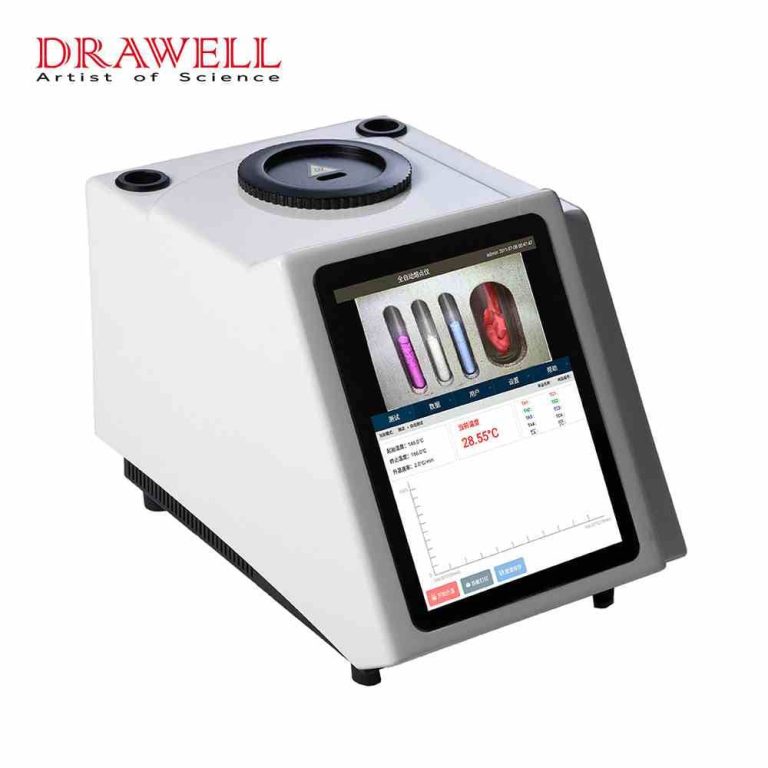
Diagnosing Common Issues and Remedies for Drug Melting Point Apparatus
Absence of Readings in the Final Melting Temperature Display Window
Issue Description: The temperature continues to rise, but the ammeter fails to reach the full scale, rendering the attainment of the final fusion temperature impossible.Analysis: This problem might arise due to the misplacement of the brass tube, blocking the light path, or issues with the light source, such as a broken bulb, incorrect light path alignment, light scattering, or inadequate light energy.
Solution: Adjust the light path to correct the issue.
Ammeter Fails to Reset to Zero After Capillary Insertion
After the drug melting point apparatus is inserted into the capillary, the ammeter should read zero due to the obstruction caused by the medicine in the capillary. When the medicine melts, light passes through the glass capillary, reaching the photocell. The photosensitive output current of the photocell leads to the final melting display and resets the ammeter from zero to full scale. If the ammeter does not reset to zero when the capillary is initially inserted, the device becomes unusable.
Potential Causes for Ammeter Not Resetting to Zero:
Foreign objects in the brass tube where the capillary is placed; remove foreign matter using a thin copper wire, typically caused by broken glass capillaries.
Inadequate resistance; adjust the zero setting using the knob.
Abnormal Temperature Increase After Initial Temperature Setting
Various factors can lead to abnormal temperature fluctuations after pressing the initial temperature setting button, including issues with the temperature sensing element, digital wheel for setting initial temperature, and circuit board components.
Blown Fuse
A blown fuse signifies excessive current flow, often the result of a circuit short-circuit. To rectify this, ensure the load resistance is normal, confirm there are no short circuits in the filter capacitor, and, if required, replace the rectifier diode of the heating circuit power supply with a component of identical parameters.
Anomalies in Measured Values
Anomalies in measured values can be addressed through calibration with standard samples and repeated adjustments. Often, this discrepancy arises when users employ a new capillary from a different batch.
Heating Table Fails to Heat
A non-heating heating table may result from a blown heating wire, fuse, or damaged SCR (Silicon Controlled Rectifier). In the event of a blown heating wire, it can be repaired by rewinding the wire with a 0.3 mm diameter nickel-chromium wire, inserting a 0.5 mm-thick mica paper in between. Alternatively, an electric iron core's heating wire and insulating mica paper can be used. When the SCR is damaged, it must be replaced as it controls the heating current's magnitude by varying the conduction angle.
In conclusion, through understanding advanced technology and thorough troubleshooting guidance of the melting point apparatus, enhance the accuracy and efficiency of drug melting point analysis, further advancing pharmaceutical research and development.