
Mechanical nuts are vital components in fastening systems, working alongside bolts to secure parts and assemblies in a wide range of applications. While there are many specialized types of nuts, several common varieties are widely used across industries due to their versatility, reliability, and ease of use. Below is an overview of the most commonly used types of mechanical nuts and their typical applications.
1. Hex Nuts
Description: Hexagonal lock nuts, or hex nuts, are the most widely used type of nut due to their simplicity and compatibility with standard tools like wrenches.

Key Features:
Six-sided design for easy gripping and tightening.
Available in various sizes and materials, such as stainless steel, brass, or nylon.
Common Applications:
Construction, automotive, and machinery.
2. Lock Nuts
Description: Lock nuts are designed to resist loosening caused by vibration or torque.
Types of Lock Nuts:
Nylon Insert Lock Nuts: Contain a nylon ring that grips the bolt thread to prevent movement.
All-Metal Lock Nuts: Use deformed threads to create resistance.
Common Applications:
Automotive engines, machinery, and heavy equipment prone to vibrations.

3. Flange Nuts
Description: Flange nuts have an integrated washer-like flange at the base to evenly distribute pressure over a larger area.
Key Features:
Reduces the need for separate washers.
Prevents damage to the attached surface.
Common Applications:
Automotive and manufacturing industries, especially in load-bearing connections.
4. Wing Nuts
Description: These nuts have two protruding "wings," allowing for manual tightening and loosening without tools.
Key Features:
Tool-free adjustments.
Ideal for applications requiring frequent assembly or disassembly.
Common Applications:
Furniture, fixtures, and light-duty equipment.
5. Cap Nuts (Acorn Nuts)
Description: Cap nuts feature a domed top, covering the exposed end of the bolt for protection and aesthetic purposes.
Key Features:
Prevents injury or damage caused by exposed bolt threads.
Protects threads from corrosion.
Common Applications:
Decorative applications, automotive wheels, and outdoor structures.
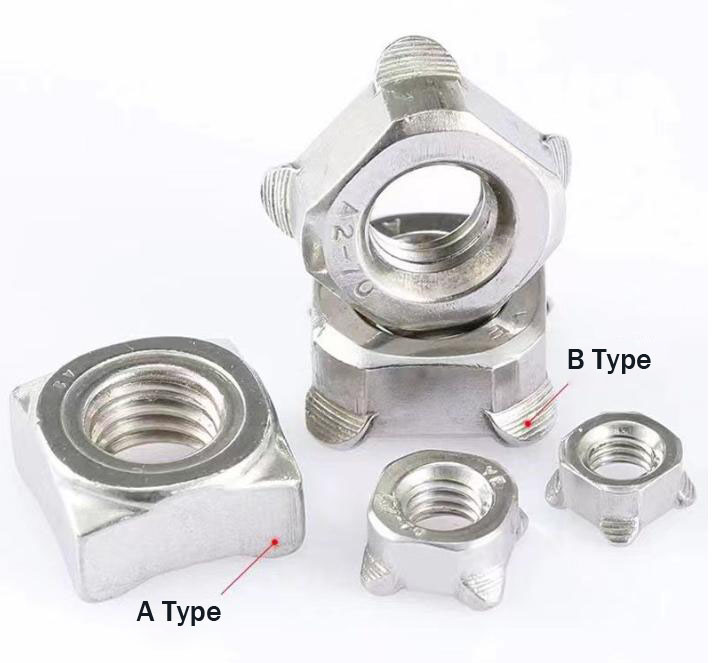
6. Square Nuts
Description: Square nuts have a four-sided shape that provides a larger surface area for better grip.
Key Features:
Easier to tighten in confined spaces.
Often paired with flat washers for a secure fit.
Common Applications:
Traditional woodworking and vintage machinery.
7. T-Nuts (Tee Nuts)
Description: T-nuts are shaped like the letter "T" and are embedded into wood or metal surfaces to provide a threaded hole for bolts.
Key Features:
Flush installation for a smooth surface.
Prevents pull-through under load.
Common Applications:
Furniture assembly, metal fabrication, and woodworking projects.
8. Coupling Nuts
Description: These cylindrical nuts connect two threaded rods or bolts, extending their length.
Key Features:
Provide a stable and secure extension for long assemblies.
Common Applications:
Plumbing, construction, and structural frameworks.
9. Slotted Nuts (Castle Nuts)
Description: Slotted nuts, also known as castle nuts, have slots that allow a cotter pin to secure them in place.
Key Features:
Prevent loosening in high-stress or vibrating environments.
Common Applications:
Automotive axles, machinery, and aerospace applications.
10. Insert Nuts
Description: Insert nuts are threaded sleeves designed to be embedded into softer materials like wood or plastic.
Key Features:
Provide a durable and reusable threaded connection.
Common Applications:
Furniture and lightweight structural components.
Conclusion
Mechanical nuts play an indispensable role in fastening systems, ensuring secure and durable connections. Among the many varieties available, commonly used nuts like hex nuts, lock nuts, flange nuts, and cap nuts find widespread applications across industries. By understanding the features and purposes of these commonly used types, users can make informed decisions to enhance the safety and reliability of their assemblies.
Zinc plating is one of the most common and effective methods to improve the performance and longevity of bolts. Whether in automotive, construction, or industrial applications, zinc-plated bolts are highly sought after for their excellent corrosion resistance, affordability, and ease of manufacturing. This article delves into the key aspects of zinc plating bolts, including the process, benefits, applications, limitations, and recent advancements.

Understanding Zinc Plating
Zinc plating, also known as galvanization, is a process where a thin layer of zinc is deposited onto the surface of bolts. This layer serves as a protective barrier, shielding the base material (often steel or iron) from corrosion caused by moisture, air, and other environmental factors.
Process of Zinc Plating
Zinc plating typically involves the following steps:
Cleaning: The bolts are cleaned to remove grease, dirt, and rust, ensuring better adhesion of the zinc layer.
Pickling: A mild acid solution removes any remaining surface oxides.
Plating: The bolts are submerged in an electrolyte solution containing zinc ions. An electric current is applied, causing the zinc to deposit onto the bolts' surface.
Post-Treatment: After plating, the bolts may undergo passivation or chromate conversion coating to enhance their corrosion resistance.
Inspection and Testing: The final step ensures the coating meets thickness and adhesion requirements.
Advantages of Zinc-Plated Bolts
Corrosion Resistance
Zinc plating provides a sacrificial layer that corrodes before the underlying material, offering superior protection in environments exposed to moisture or mild chemicals.
Cost-Effective
Compared to other protective coatings like stainless steel or specialty alloys, zinc plating is relatively inexpensive while providing comparable performance in many applications.
Enhanced Aesthetics
Zinc-plated bolts have a shiny, attractive appearance and are available in various finishes, including bright, blue, yellow, and black chromate coatings.
Improved Versatility
These bolts can be used in a wide range of industries due to their balanced properties of strength and resistance.
Ease of Manufacturing
Zinc plating is a straightforward process that can be applied to bolts of different sizes and shapes without significant modifications to the manufacturing line.
Applications of Zinc-Plated Bolts
Zinc-plated bolts are widely used in numerous sectors, including:
Automotive Industry
These bolts are commonly used in vehicle assembly, particularly for parts exposed to moderate environmental conditions, such as engine components and body panels.
Construction
Zinc-plated bolts secure structural elements, scaffolding, and roofing systems, providing durability in outdoor applications.
Electronics and Electrical Applications
Their conductivity and resistance to mild corrosion make zinc-plated bolts suitable for fastening electrical enclosures and devices.
Home Appliances and Furniture
The aesthetically pleasing finish of zinc-plated bolts makes them ideal for assembling furniture and home appliances.
Industrial Machinery
These bolts are integral in machinery that operates in non-aggressive environments where cost-efficiency and moderate protection are priorities.
Limitations of Zinc-Plated Bolts
While zinc plating offers numerous benefits, there are some limitations to consider:
Limited Resistance in Harsh Environments
In highly corrosive settings, such as marine or industrial chemical environments, zinc-plated bolts may not provide adequate protection compared to alternatives like hot-dip galvanized or stainless steel bolts.
Thickness Restrictions
The thin zinc coating can wear off under high mechanical stresses or repeated friction, leading to a shorter lifespan in certain applications.
Environmental Concerns
The traditional chromate conversion process used in post-treatment may involve hazardous chemicals, raising environmental and regulatory concerns.
Temperature Sensitivity
Zinc plating may degrade or lose effectiveness at elevated temperatures, making it unsuitable for high-temperature applications.
Advancements in Zinc Plating Technology
Recent innovations in zinc plating technology have addressed some of these limitations, providing enhanced performance and sustainability:
Trivalent Chromate Coatings
To meet stricter environmental standards, industries have shifted from hexavalent chromate to trivalent chromate coatings, which are less toxic and more environmentally friendly.
Thicker Zinc Coatings
Advancements in plating methods allow for thicker and more uniform zinc layers, improving the bolts' resistance to wear and corrosion.
Alloying Additions
Zinc-nickel and zinc-iron coatings are gaining popularity for their superior corrosion resistance and extended service life, especially in harsh environments.
Improved Passivation Techniques
Enhanced passivation treatments now offer better adhesion and durability, ensuring a longer-lasting protective layer.
Automation and Quality Control
Automated plating processes ensure consistent coating thickness and quality, reducing waste and improving efficiency.
Comparison with Other Protective Coatings
Zinc-plated bolts are often compared with other protective options such as hot-dip galvanizing, powder coating, and stainless steel.
Hot-Dip Galvanizing vs. Zinc Plating
Hot-dip galvanizing involves dipping bolts in molten zinc, resulting in a thicker coating. The hot dip galvanized bolts are suitable for harsher environments.
Zinc plating is thinner but offers a smoother finish and is more cost-effective for less demanding applications.

Stainless Steel Bolts vs. Zinc-Plated Bolts
Stainless steel bolts are inherently resistant to corrosion but come at a higher cost.
Zinc-plated bolts provide a more economical solution for moderate environments.

Powder Coating vs. Zinc Plating
Powder coating offers excellent aesthetic and protective properties but lacks the sacrificial nature of zinc plating.
Best Practices for Using Zinc-Plated Bolts
To maximize the performance and lifespan of zinc-plated bolts, consider the following practices:
Proper Selection
Choose zinc-plated bolts with the appropriate coating thickness and passivation layer for your application.
Regular Maintenance
Inspect the bolts periodically, especially in environments with high humidity or pollutants.
Avoid High-Stress Applications
Use alternative coatings or materials for bolts subjected to extreme loads or friction.
Environmental Considerations
Select trivalent chromate coatings to align with environmental regulations and ensure compliance.
To sum up, zinc-plated bolts are a versatile, cost-effective, and reliable solution for a wide range of applications. While they have certain limitations in highly corrosive or high-stress environments, ongoing advancements in zinc plating technology continue to improve their performance and sustainability. By understanding the properties, benefits, and best practices associated with these bolts, industries can make informed choices to enhance the durability and efficiency of their products and structures.
Torx screws are a popular fastening solution in industries ranging from electronics to automotive and construction. Known for their six-point star-shaped pattern, Torx screws provide improved torque transfer, reduced wear, and a secure fit, making them a reliable choice in various applications. This article explores the different types of Torx screws and their unique characteristics.
1. Standard Torx Screws
Standard Torx screws feature a six-pointed star recess designed for use with standard Torx screwdrivers or bits. These screws are commonly used in applications requiring a high torque without the risk of cam-out.

Key Features:
Available in a wide range of sizes (e.g., T1 to T100).
Suitable for electronics, automotive, and machinery applications.
Reduce tool wear and ensure consistent fastening.
2. Tamper-Resistant Torx Screws
Also known as Torx TR, these screws include a pin in the center of the star recess, requiring a special tamper-proof Torx bit for removal. They are ideal for preventing unauthorized access.
Key Features:
Enhanced security due to the unique recess.
Common in public installations, consumer electronics, and safety equipment.
Available in various sizes and finishes.
3. Torx Plus Screws
Torx Plus screws feature an updated design with rounded lobes, providing greater contact area between the screw and tool. This design delivers higher torque and minimizes wear.
Key Features:
Higher strength compared to standard Torx.
Improved resistance to stripping under high torque.
Often used in heavy-duty machinery and automotive assembly.
4. External Torx Screws
Instead of having a recessed star pattern, external Torx screws have the star shape protruding from the head. These screws are paired with external Torx sockets.
Key Features:
Allow for higher torque applications.
Commonly used in automotive and industrial equipment.
Offer enhanced grip for external tools.
5. Torx Wing Screws
These screws are a unique variation of the standard Torx design, incorporating a winged head for manual tightening or loosening. They are convenient for applications requiring frequent adjustments.
Key Features:
No tools required for operation.
Suitable for light-duty applications.
Found in furniture assembly and adjustable fixtures.
6. Flat Head Torx Screws
Flat head Torx screws have a countersunk design, allowing them to sit flush with or below the surface. They are widely used in applications where a smooth finish is desired.

Key Features:
Ideal for aesthetic applications.
Available in multiple lengths and diameters.
Common in woodworking, construction, and furniture.
7. Button Head Torx Screws
Button head Torx screws have a rounded top with a lower profile, making them suitable for applications requiring minimal protrusion.

Key Features:
Decorative and functional.
Provide a sleek, finished look.
Popular in electronics and consumer products.
8. Socket Head Torx Screws
These screws feature a cylindrical head with a recessed Torx drive, providing a strong, durable fastening solution for high-torque applications.
Key Features:
High strength for structural applications.
Common in machinery and industrial assembly.
Compact design reduces bulk.
In summary, Torx screws have revolutionized the fastener industry with their versatile designs and robust performance. From standard Torx screws for general use to specialized options like tamper-resistant and external Torx screws, there’s a Torx screw for every application. Selecting the right type ensures optimal performance, durability, and security in your project.
Knurled screws are a specialized type of fastener distinguished by their textured, patterned surface. This knurled design, often a diamond or straight-line pattern, provides enhanced grip, allowing for easy manual tightening and loosening without the need for tools. Knurled screws are widely used in various industries for their functional design and versatility.
In this article, we will explore the features, types, applications, and advantages of knurled screws.

What Are Knurled Screws?
Knurled screws are fasteners with a cylindrical head designed for hand operation. The head is textured with a knurled pattern, which enhances grip and prevents slipping during manual adjustments. These screws come in various materials, including stainless steel, aluminum, brass, and plastic, and are available in different thread sizes and head shapes.
Types of Knurled Screws
Knurled screws are categorized based on their head design and application:
Feature a large, knurled head that can be turned easily by hand.
Commonly used in applications requiring frequent adjustments.
Available with flat or rounded heads for added versatility.
2. Knurled Cap Screws
Have a knurled cap that provides a secure grip for tightening or loosening.
Often used in machinery and equipment where manual operation is necessary.
3. Knurled Set Screws
Designed with a knurled head but typically lack a protruding head.
Commonly used to secure components within machinery or tools.
4. Custom Knurled Screws
Tailored to specific applications with unique sizes, knurling patterns, or materials.
Ideal for industries with specialized requirements.

Applications of Knurled Screws
Knurled screws are versatile fasteners used in a wide range of applications:
1. Electronics and Gadgets
Used for securing panels, covers, or components that require easy access.
Popular in assembling computer cases and electronic enclosures.
2. Medical and Laboratory Equipment
Allow for precise, tool-free adjustments of instruments and fixtures.
Commonly used in microscopes, spectrometers, and diagnostic devices.
3. Machinery and Tools
Used in industrial machinery for securing and adjusting parts.
Their easy-to-use design ensures quick and reliable operations.
4. Furniture and Fixtures
Found in adjustable furniture, display stands, and camera mounts.
Enable users to make ergonomic adjustments with minimal effort.
5. Automotive and Aerospace
Used in assembling dashboards, panels, and other components requiring frequent access.
Their durability and grip make them suitable for high-stress environments.

Advantages of Knurled Screws
Knurled screws offer several benefits that make them indispensable in many applications:
1. Tool-Free Operation
The knurled design enables users to tighten or loosen the screws without tools, saving time and effort.
2. Enhanced Grip
The textured surface ensures a secure grip, even in greasy or wet conditions.
3. Reusability
Designed for repeated use, knurled screws maintain their functionality and durability over time.
4. Aesthetic Appeal
Available in polished finishes, knurled screws can enhance the visual appeal of equipment or fixtures.
5. Versatility
With a variety of materials and designs, knurled screws can be adapted to suit diverse environments, from heavy-duty machinery to delicate instruments.
Factors to Consider When Choosing Knurled Screws
Selecting the right knurled screw depends on several factors:
Material: Choose a material compatible with the operating environment (e.g., stainless steel for corrosion resistance).
Size and Thread Type: Ensure the screw fits the components and meets the application's mechanical requirements.
Knurling Pattern: Opt for a pattern that provides the necessary grip while maintaining aesthetic compatibility.
Load Capacity: Consider the load the screw will bear and select accordingly.
Maintenance Tips for Knurled Screws
To ensure the longevity and performance of knurled screws:
Clean the screws regularly to remove debris that may affect grip.
Inspect for signs of wear or corrosion, particularly in high-stress or corrosive environments.
Use appropriate torque when necessary to avoid damaging threads.
Overall, Knurled screws combine functionality, durability, and ease of use, making them indispensable in various industries. Their unique design not only provides excellent grip but also enables tool-free operation, making them a reliable choice for applications requiring frequent adjustments. Whether for assembling electronic devices, adjusting laboratory equipment, or securing machine components, knurled screws are a practical and efficient solution for modern fastening needs. By choosing the right type and maintaining them properly, you can ensure long-lasting performance and efficiency in your operations.
Bolts and nuts are fundamental components in various industrial, construction, and mechanical applications. Their primary function is to fasten two or more parts securely, ensuring stability and safety. However, improper tightening can lead to loose connections, material damage, or even catastrophic failures. This article explores the essential techniques and tools for tightening bolts and nuts effectively and safely.

1. Understanding Bolt and Nut Mechanics
Bolts and nuts work by creating tension and friction between the threads. This tension holds the connected materials in place. Proper tightening ensures the right amount of preload, preventing the joint from loosening under load or vibration.
2. Common Issues with Improper Tightening
Under-tightening: Leads to loose joints, causing vibrations, wear, or leaks in critical systems.
Over-tightening: Stretches or damages threads, weakening the fastener and reducing its load-bearing capacity.
Thread Stripping: Results from excessive torque, rendering the bolt and nut unusable.
Key Factors for Proper Tightening
Material and Thread Type: Understand the bolt and nut material, as this influences torque and tension limits.
Thread Lubrication: Lubricants reduce friction, affecting the torque required for proper tightening.
Environmental Conditions: Corrosive or high-temperature environments may require specific coatings or fasteners.
4. Tools for Tightening Bolts and Nuts
Wrenches: Standard tools like open-end, box-end, and adjustable wrenches are versatile but require careful handling to avoid over-tightening.
Torque Wrenches: Measure the torque applied, ensuring precise tightening according to specifications.
Impact Wrenches: Useful for high-torque applications, especially in construction or automotive work.
Hydraulic Torque Tools: Provide uniform and controlled tightening in heavy-duty applications.
Nut Runners: Offer speed and accuracy, often used in industrial assembly lines.

Steps for Proper Tightening
Preparation:
Inspect bolts and nuts for wear or damage.
Clean threads to remove dirt, rust, or debris.
Apply thread lubricant if recommended.
Alignment:
Ensure the bolt and nut are aligned correctly to prevent cross-threading.
Tightening:
Use a torque wrench to apply the specified torque.
Tighten in a crisscross or star pattern for flanges or similar assemblies to distribute tension evenly.
Inspection:
Recheck the tightness after a few hours or following initial use, especially in applications subject to vibration.
6. Advanced Techniques
Preload Measurement: Use ultrasonic or strain gauge methods to measure tension directly.
Locking Mechanisms: Incorporate locking washers, thread-locking compounds, or double nuts to prevent loosening.
7. Safety Considerations
Avoid Overexertion: Excessive force can damage tools or fasteners and cause personal injury.
Use Protective Gear: Gloves and safety glasses protect against slips or flying debris.
Follow Manufacturer Guidelines: Always refer to technical specifications for torque values and recommended tools.
8. Maintenance Tips
Regularly inspect fasteners for signs of wear, corrosion, or loosening.
Replace damaged bolts and nuts promptly to maintain structural integrity.
Keep tools calibrated to ensure accurate torque application.

Conclusion
Properly tightening bolts and nuts is essential for the safety and performance of mechanical systems. By using the right tools, techniques, and safety practices, you can ensure secure and reliable connections. Regular inspection and maintenance further extend the lifespan of fasteners, preventing costly failures. Whether for industrial, automotive, or home applications, mastering the art of tightening bolts and nuts is a skill that promotes efficiency and safety.