
A rotational viscometer is an essential instrument for measuring the viscosity of fluids in industries such as pharmaceuticals, food processing, petroleum, and coatings. Accurate viscosity measurements are critical for ensuring product quality and process efficiency. However, over time, factors such as mechanical wear, environmental conditions, and improper handling can lead to measurement errors. Regular calibration of a rotational viscometer ensures reliable and precise results, maintaining compliance with industry standards.

The Importance of Calibration
Calibration is the process of verifying and adjusting the performance of a rotational viscometer against a known standard. This step is necessary to detect and correct deviations in measurement accuracy. Even small inaccuracies in viscosity readings can lead to inconsistencies in product formulations, affecting quality and performance. Calibration also ensures compliance with regulatory requirements such as ISO, ASTM, and GMP guidelines, which mandate periodic verification of laboratory instruments.
Calibration Standards and Materials
To calibrate a rotational viscometer, certified viscosity reference standards are used. These standards, typically silicon-based or mineral oils with precisely defined viscosities, are traceable to national or international measurement standards. The viscosity values of these fluids are temperature-dependent, so maintaining a stable temperature during calibration is crucial.
The selection of a calibration standard depends on the expected viscosity range of the test samples. Using multiple standards that cover low viscometer, medium viscometer, and high viscosity rotational viscometer, allows for a more comprehensive calibration process, ensuring accuracy across the instrument’s full operational range.

Step-by-Step Calibration Procedure
Preparation and Environmental Conditions
Before calibration, ensure that the viscometer and standard fluids are at a stable and controlled temperature. Temperature fluctuations can significantly impact viscosity readings. The instrument should also be positioned on a level surface to prevent misalignment.
Cleaning and Inspection
Any residue or contamination on the spindle or sample container can affect readings. Clean the viscometer components thoroughly using a suitable solvent and inspect for signs of wear or damage.
Using the Calibration Standard
Pour the viscosity reference standard into the sample chamber, ensuring that the correct volume is used. Attach the appropriate spindle based on the viscosity range and set the rotational speed as specified in the manufacturer’s guidelines.
Measurement and Comparison
Allow the viscometer to stabilize before recording the viscosity reading. Compare the measured value with the certified viscosity of the calibration standard at the given temperature. If the readings fall within the acceptable tolerance range specified by the manufacturer or industry standards, the instrument is functioning correctly.
Adjustments and Corrections
If discrepancies are detected, adjustments may be needed. Some viscometers allow calibration adjustments through built-in correction functions. If significant deviations persist, professional recalibration or servicing may be required.
Documentation and Verification
Record the calibration results, including the standard used, temperature, viscosity readings, and any corrective actions taken. Proper documentation ensures traceability and compliance with quality control requirements.
Frequency of Calibration
The frequency of calibration depends on usage intensity, operating conditions, and regulatory requirements. For critical applications, calibration should be performed regularly, such as monthly or quarterly. In less demanding environments, annual calibration may suffice. Any signs of drift in readings or mechanical issues should prompt immediate recalibration.

Summary
Calibrating a rotational viscometer is essential for maintaining measurement accuracy and ensuring consistent product quality. By following a systematic calibration procedure, using certified viscosity standards, and maintaining proper documentation, laboratories and production facilities can ensure compliance with industry standards and prevent costly errors in viscosity measurements. Regular calibration not only extends the lifespan of the instrument but also enhances confidence in its performance, making it a vital practice in viscosity testing.
Viscosity measurement is a critical parameter in industries ranging from food and beverages to pharmaceuticals and paints. Digital rotational viscometers have become a popular choice for accurate and reliable viscosity measurements due to their advanced features and ease of use. In this article, we will explore the different types of digital rotational viscometers, their functionalities, and their ideal applications.

1. Basic Digital Rotational Viscometers
These are the simplest and most user-friendly models of digital rotational viscometers. They are designed for straightforward viscosity measurements and are suitable for routine laboratory testing.
Key Features:
Digital display for direct viscosity readings.
Single-speed or limited-speed options.
Easy calibration and operation.
Applications:
Ideal for quality control in industries like food production and cosmetics.
Suitable for testing low-to-medium viscosity fluids.
2. Advanced Digital Rotational Viscometers
Advanced models come with enhanced features for precise measurements and a broader application range. They allow for more flexibility in viscosity testing.
Key Features:
Variable speed control for detailed viscosity profiling.
Multiple spindles for handling a variety of fluid types.
Real-time data recording and analysis.
Applications:
Research and development in chemical and pharmaceutical industries.
Testing fluids with varying viscosities, such as oils, paints, and adhesives.

3. High-Temperature Digital Rotational Viscometers
The high-temperature digital rotational viscometers are equipped to measure viscosity at elevated temperatures, essential for certain industrial applications.
Key Features:
Integrated or external temperature control systems.
Heat-resistant spindles and chambers.
Accurate viscosity measurements under high-temperature conditions.
Applications:
Petrochemical industry for testing lubricants and fuel oils.
Food industry for products like molten chocolate or syrups.
4. Small-Sample Digital Rotational Viscometers
Small-sample viscometers are designed for applications where only a minimal sample volume is available or required.
Key Features:
Requires as little as 1-2 mL of sample.
Precision spindles designed for small volumes.
Compact design for efficient use in laboratories with limited space.
Applications:
Biotechnology and pharmaceutical industries for testing expensive or limited-quantity materials.
Applications in academic research.
5. Portable Digital Rotational Viscometers
Portable models are lightweight and battery-operated, making them ideal for field use or applications requiring mobility.
Key Features:
Handheld design with a digital display.
Simple operation and easy transport.
Durable construction for use in challenging environments.
Applications:
Field testing in oil and gas exploration.
On-site viscosity testing in the construction and paint industries.
6. High-Shear Digital Rotational Viscometers
These viscometers are tailored for high-shear rate testing, which is critical in industries where fluids undergo rapid movement or deformation.
Key Features:
High-speed capabilities for shear-dependent viscosity testing.
Robust construction to withstand extreme shear conditions.
Real-time shear rate and stress measurements.
Applications:
Automotive industry for lubricants and fuel additives.
Paint and coating industry to ensure stability and performance.
7. Cone-and-Plate Digital Rotational Viscometers
This specialized type of viscometer uses a cone and plate configuration to measure viscosity, especially at low shear rates.
Key Features:
Consistent shear rate for accurate viscosity measurements.
Suitable for small sample volumes.
Precise control over temperature and shear conditions.
Applications:
Testing non-Newtonian fluids such as creams and gels.
Research applications in rheology and material science.

Conclusion
Digital rotational viscometers offer diverse capabilities tailored to specific industrial and laboratory needs. Choosing the right type of viscometer depends on the application, the nature of the fluid, and the required measurement precision. With advancements in digital technology, these instruments continue to evolve, providing unparalleled accuracy and convenience for viscosity measurements.
Have you ever wondered how scientists measure a fluid’s thickness or its resistance to flow? Viscosity is a critical property in many industries, impacting product quality, process efficiency, and even consumer satisfaction. To accurately measure viscosity, viscometers play an essential role. Among the various viscometry methods, digital rotational viscometers are particularly valued for their precision, efficiency, and user-friendliness. This article explores the fundamentals and benefits of digital rotational viscometry, why it's preferred across industries, and how it operates.
What is Viscosity?
Viscosity represents a fluid's resistance to flow. High-viscosity fluids, like honey or molasses, flow slowly, while low-viscosity fluids, such as water, flow easily. Understanding viscosity is vital across industries—from pharmaceuticals to food processing—since it influences everything from manufacturing processes to product consistency.
Traditional Methods in Viscometry
Capillary Viscometry: Measures fluid flow through a narrow tube. However, its sensitivity to temperature changes limits its effectiveness.
Rotational Viscometry: Relies on a rotating spindle in a fluid but requires manual operation, which can reduce accuracy.
Falling Ball Viscometry: Determines viscosity by observing how fast a ball falls through the fluid, though it is limited to transparent fluids and can suffer from turbulence errors.
Vibrational Viscometry: Involves damping oscillations in a vibrating probe. However, this method requires precise calibration and may be influenced by external vibrations.
While these methods have their advantages, they often fall short in accuracy, versatility, and ease of use. Digital rotational viscometers address these limitations with automated operation, real-time data analysis, and higher precision.

Advantages of Digital Rotational Viscometry
Digital rotational viscometers offer several key benefits:
Precision and Accuracy: Automated operation reduces human error, providing reliable data for research, quality control, and process optimization.
Efficiency and Automation: Automated functions streamline the measurement process, allowing users to set parameters, initiate measurements, and obtain results quickly.
Versatility: Digital rotational viscometers handle a broad range of viscosities and can analyze both Newtonian and non-Newtonian fluids, making them versatile for various industries.
Real-Time Data Analysis: Built-in software enables real-time monitoring of viscosity changes, helping users analyze trends and make prompt decisions.
Cost-Effectiveness: While the initial cost may be higher, the long-term savings in maintenance and reduced manual labor make these viscometers a cost-efficient solution.
Compliance with Standards: These instruments often meet industry standards, simplifying regulatory audits and supporting consistent product quality.
Components of a Digital Rotational Viscometer System
Rotating Spindle: Applies shear stress to the fluid, with spindle types varying based on sample characteristics.
Torque Sensor: Measures the torque exerted by the fluid, which is crucial for determining viscosity.
Drive System: Controls the spindle’s rotation speed, allowing precise adjustments for different sample viscosities.
Temperature Control: Maintains a stable temperature for accurate readings, as viscosity can vary with temperature changes.
Display and Interface: Allows users to set parameters, initiate measurements, and visualize data.
Software: Enables data analysis, plotting of viscosity curves, and easy data export.
Sample Chamber: Holds the fluid sample and accommodates different spindles for varied viscosities.
Optional Accessories: Enhance functionality with items like temperature probes and sample holders.
Together, these components enable precise and efficient viscosity measurements, making digital rotational viscometers invaluable for both industrial and scientific applications.
How Digital Rotational Viscometers Operate
Digital rotational viscometers function based on the principles of shear stress, shear rate, and viscosity measurement:
Shear Stress and Shear Rate: Shear stress is the force exerted on a fluid, while shear rate is how fast the fluid layers move relative to each other.
Viscosity Measurement: The torque sensor quantifies resistance as the spindle rotates within the sample, which corresponds to the fluid’s viscosity.
Newton’s Law of Viscosity: This law states that shear stress is directly proportional to the product of viscosity and shear rate.
Calibration and Conversion: Calibration with standard fluids enables the viscometer to convert torque readings into viscosity values accurately.
Real-Time Analysis: With digital displays and software, users can monitor and analyze viscosity in real-time, enhancing process control.
By adhering to these principles, digital rotational viscometers deliver highly accurate and consistent viscosity data, essential for many applications.

Safety Guidelines for Operating Digital Rotational Viscometers
Read the Manual: Familiarize yourself with the manufacturer’s instructions and safety guidelines.
Personal Protective Equipment (PPE): Use goggles and gloves to prevent contact with potentially hazardous samples.
Proper Setup: Place the viscometer on a stable surface and ensure all connections are secure.
Sample Handling: Avoid overfilling to prevent spillage and potential contamination.
Temperature Control: Follow temperature guidelines to avoid measurement errors and protect equipment.
Spindle Installation and Removal: Handle carefully to avoid misalignment or equipment damage.
Power Safety: Only use the specified power sources and avoid damaged cords.
Cleaning and Maintenance: Regular cleaning prevents sample buildup and ensures measurement accuracy.
Emergency Procedures: Know the location of emergency shut-off buttons and have spill cleanup materials on hand.
Training and Supervision: Ensure operators are trained in safe handling, operation, and maintenance.
Following these safety protocols minimizes risk and ensures optimal performance when using digital rotational viscometers.
Digital rotational viscometers represent a substantial advancement in viscosity measurement, combining accuracy, efficiency, and versatility. By using the principles of shear stress and shear rate, these tools deliver real-time data for diverse industries. With their automated features and reliable performance, digital rotational viscometers are essential for applications in research, development, and quality control. For those looking for high-quality digital rotational viscometers, Drawell provides a trusted range of lab equipment to meet your needs.
Understanding viscosity and its measurement is crucial across various industries, from food processing to cosmetics. Digital viscometers have emerged as popular tools due to their precision, user-friendliness, and portability. This guide offers step-by-step instructions for utilizing a digital viscometer effectively.
Selecting Rotor and Setup:
Begin by selecting the appropriate rotor based on the fluid's viscosity range. Attach the rotor securely by screwing it counterclockwise onto the connecting screw. Then, fit the fixed sleeve onto the viscometer body, aligning the groove with the pin and securing it with the fastening screw.
Sample Preparation:
Prepare a clean, dry sample container and pour 20-25 mL of the sample liquid into it. Insert the container into the fixed sleeve and tighten it securely. Ensure the sample liquid is at the desired temperature for accurate measurements.
Measurement Procedure with Bottomless Outer Container:
If utilizing a bottomless outer container, immerse the rotor and outer container into the fluid until the groove on the outer container aligns with the liquid surface. Lower them carefully until the groove is at the surface level.
Conducting the Measurement:
Turn on the viscometer and select the desired rotational speed or shear rate. Allow the viscometer to stabilize at the chosen speed before recording the viscosity reading displayed.
Cleaning and Maintenance:
After each measurement, clean the viscometer thoroughly by removing the sample container and cleaning it along with the rotor and connecting screw using appropriate methods. Regularly inspect the viscometer for any signs of damage or wear, contacting the manufacturer for repairs if necessary.
Conclusion:
Accurate viscosity measurements are essential, and mastering the operation of a digital viscometer ensures reliable results. By following these detailed steps, users can maximize the effectiveness of their digital viscometer, contributing to enhanced performance across various applications.
As science and industrial production continue to advance, the measurement of viscosity in substances has become a crucial aspect of various processes. One of the most widely used tools for this purpose is the rotary digital viscometer, which allows for the accurate measurement of viscosity and flow behavior of polymer liquids.
The concept of rotary viscometry was pioneered by the Brookfield family in the United States, who introduced a rotational viscosity measurement method. This method relies on the unique relationship between shear and resistance generated between the rotating rotor and the fluid to obtain dynamic viscosity values. Over the years, this technology has evolved and improved, and today's rotary viscometers, like the brookfield viscometer series, offer exceptional performance and versatility.
Rotary digital viscometers come in different types, each tailored for specific applications:
Drum Viscometer: This type features a flat-bottomed cylinder with a coaxial cylinder in the center. The polymer liquid is placed in the slit formed between the two parallel surfaces. The cylinder is rotated by a stepless governor, and the viscosity of the liquid causes the cylinder to rotate until the torque balances with the spring force. The resulting angle of rotation provides information about shear force and shear rate at various positions in the annular seam.
Vertebral-plate Viscometer: Consisting of an upper cone and a lower disc, this viscometer has the cone and the circular plate on the same axis and both are rotatable. The polymer melt is placed in the slit formed by the cone and the circular plate at a specific angle. When the circular plate rotates, it drives the cone to rotate until a certain angle is reached, providing viscosity data.
Falling Ball Viscometer: Though less commonly used for measuring melt viscosity, this type is suitable for Newtonian fluids. It involves a ball falling through the liquid, and the maximum shear rate near the ball can be estimated. However, data processing can be challenging, and it is not ideal for comprehensive analysis of non-Newtonian fluids.
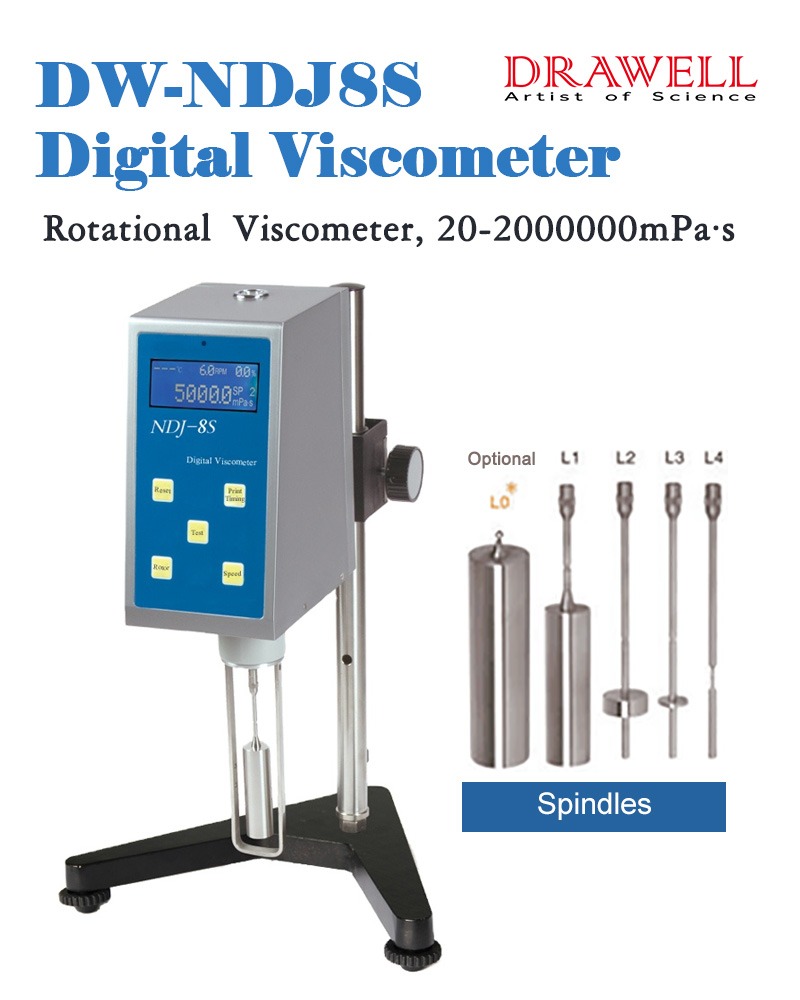
When selecting a rotary viscometer, the NDJ-8S type low viscosity viscometer is a popular choice with the following main parameters:
Measuring Range: 10 ~ 1×10^5 mPa.s
Rotor Specifications: 0, 1, 2, 3, 4, and No. 5 rotors (No. 0 rotor optional, for low viscosity down to 0.1 mPa.s)
Instrument Speed: 6 rpm, 12 rpm, 30 rpm, 60 rpm
Measurement Error: ±5% (Newtonian liquid)
Power Supply: 220V ± 10V; 50Hz
Net Weight: 1.5 Kg
When choosing the appropriate rotor and speed, one should estimate the viscosity range of the liquid to be tested and then refer to the range table. For instance, if the viscosity is around 3000mPa·s, a No. 2 rotor at 6 rpm or a No. 3 rotor at 30 rpm could be suitable.
If the viscosity cannot be estimated, a higher density should be assumed, and a range of rotors and speeds should be used, starting from small rotors and slow speeds for high-viscosity liquids and vice versa for low-viscosity ones.
To calculate the actual viscosity from the indicated viscosity on the dial, a specific coefficient from the coefficient table must be used. Additionally, if the frequency of the power supply is inaccurate, the NDJ-8S rotational viscometer can be corrected using a simple formula.
In conclusion, rotary digital viscometers offer invaluable insights into the viscosity into the viscosity and flow behavior of polymer liquids, playing a vital role in modern industrial processes. Proper selection and utilization of these instruments can significantly enhance the efficiency and quality of various applications in the field of polymer production and beyond.