
CNC machining, utilizing advanced CNC machining tools, offers distinct advantages such as stable machining quality, high accuracy, repetition precision, and efficiency. To meet the design accuracy requirements of parts, a systematic approach to CNC machining processes is essential. This article explores the principles and methods for dividing CNC machining processes and arranging their sequences.
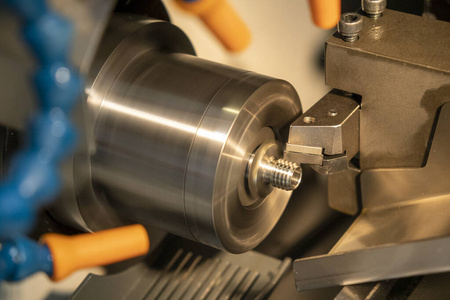
How To Divide CNC Machining Processes
Process planning encompasses the entire machining process, requiring careful consideration of factors such as part structure, machine tool capabilities, and CNC machining content. The division of CNC machining processes can be approached through the following methods:
1. Centralized Tool Sorting Method
Divide processes based on the tools used, aiming to utilize the same tool CNC for processing all applicable parts. This minimizes tool changes, reduces idle time, and mitigates positioning errors.
2. Sorting Method of Processing Parts
For parts with extensive CNC processing, divide them based on structural characteristics such as internal shape, outer shape, or specific surfaces. Prioritize processing planes and locating surfaces, followed by holes, simple geometric shapes, and then complex shapes.
3. Rough and Fine Machining Sequence Method
Apply a sequence method for parts prone to deformation, involving separate rough and fine CNC machining. Calibration after rough machining addresses potential deformations, ensuring precision.
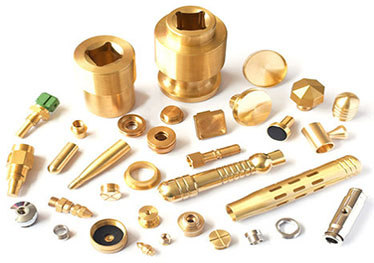
Principles For The Sequence Arrangement Of CNC Machining Processes
1. Principle of Rough Before Fine
Sequentially progress through rough machining, semi-finish machining, and finish machining to gradually enhance precision and surface quality. Consider allowing a resting period between rough and finish machining for stress release, particularly beneficial for parts with high accuracy requirements.
2. Principle of Machining Datum Plane First
Initiate machining with the surface designated as the finishing reference, ensuring accuracy and minimizing clamping errors. Follow a sequence based on datum conversion and gradual improvement of machining accuracy.
3. Principle of Face Before Hole
Prioritize processing flat surfaces before holes, especially for parts like boxes and brackets. This approach provides a stable reference for subsequent operations and facilitates accurate hole processing.
4. Principle of Inside Before Outside
For precision sleeves, process the hole before the outer circle, ensuring high coaxiality. This simplifies fixture structures and meets stringent requirements for outer circle and hole alignment.
5. Principle of Reducing Tool Change Times
Arrange machining sequences based on the tool entering the machining position to minimize tool changes and enhance overall efficiency.
In conclusion, adhering to these principles and methods ensures a systematic and efficient approach to CNC machining processes, meeting the design accuracy and quality requirements of machined parts.
In the realm of CNC turning, the Lathe tool stands as an indispensable instrument, wielding a cutting part that shapes the landscape of various materials. Widely utilized in CNC milling, the Lathe tool plays a pivotal role in generating and treating chips, ensuring precision and efficiency in the manufacturing process. This article explores the diverse types of CNC Lathe tools and sheds light on essential considerations for their selection.
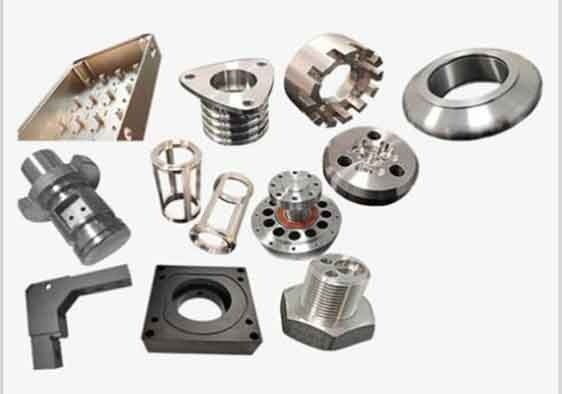
Types of CNC Lathe Tools
1. Turning Tool
Rough Turning Tool: Designed to swiftly remove large amounts of metal, this tool boasts a clear cutting angle, capable of withstanding maximum cutting force.
Finishing Tool: Used for precision, this tool delicately removes small amounts of metal, ensuring a smooth and precise surface.
2. Boring Tool
Boring Bar: Enlarges existing holes, facilitating the drilling and increasing the diameter of drilled holes for proper component installation.
3. Facing Tool
Face Cutter: Cuts a plane perpendicular to the axis of rotation, reducing the length of the workpiece by providing a perpendicular cut to the lathe’s axis.
4. Chamfering Tool
Chamfering Tool: Shapes bevels or grooves in bolts, specifically designed for chamfering corners of the workpiece.
5. Knurling Tool
Knurling Tool: Creates surface textures or non-slip surfaces, adding aesthetic and functional elements to the machined product.
6. Parting Tool
Parting Tool: Includes various cutting tools for high carbon steel and tool steel, facilitating precise cutting.
7. Thread Cutting Tool
External Thread Tool: Processes external threads on a workpiece.
Internal Thread Tool: Processes internal threads within the workpiece.
8. Grooving Tool
Grooving Tool: Creates narrow cavities of specific depths on different surfaces, offering versatility in machining.
9. Forming Tool
Forming Tool: Utilized to craft diverse workpiece shapes, using special lids or brackets to hold the tool in place.
How to Select CNC Lathe Tools
Choosing the right lathe tools involves a careful consideration of several factors:
– Type of Material
The material being worked on dictates the choice of lathe tool, considering attributes like hardness, wear resistance, toughness, and stiffness.
– Tool Shape
The shape of the lathe tool, including the position of the cutting edge, determines the cutting direction (right-hand, left-hand, or round head tool).
– Machined Shape
Each type of lathe tool produces a specified shape, and the desired outcome must align with the tool’s capabilities.
KENENG Providing CNC Machining Service With the Right CNC Lathe Tool
KENENG boasts a professional technology research and development team, offering customized CNC machining services and CNC parts. Their experienced machining team selects the appropriate CNC lathe tools based on material and processing requirements. With years of CNC lathe expertise and sophisticated production equipment, KENENG ensures both efficiency and quality in parts production. Choosing KENENG is synonymous with choosing quality and peace of mind in the world of CNC machining.
Tools made from gold, silver, copper, iron, tin, and other metals for fixing, processing, and decorating are referred to as hardware. CNC machine tool processing refers to the use of a computer to construct a set of processing programs and the digital processing of things. CNC hardware processing comprises operations such as cutting, drilling, and tapping. CNC hardware processing can lower the rate of product wear and tear, which is highly valued by hardware and processing producers.
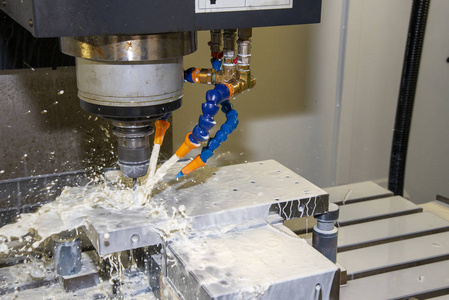
CNC machining is a type of machining and a new CNC hardware processing technology. The primary responsibility is to compile machining programs. Precision machining, CNC lathe processing, CNC milling machine processing, CNC boring and milling machine processing, and so on are all examples of general CNC processing. The CNC lathe feed processing route is the path that the turning tool takes from the tool setting point (or the machine tool's fixed origin) until it returns to this point and terminates the processing program. Cutting processing paths as well as non-cutting idle travel paths such as tool cut-in and cut-out are included.
The machining process of CNC machining tools is basically the same as that of ordinary machine tools in principle, but the whole process of CNC machining is carried out automatically.
The advantages of CNC hardware processing
1. There is a significant reduction in the number of tools. When cutting items with complex forms, complex tooling is not necessary. To change the shape and size of the part, just edit the part processing software, which is better suited for new product development and modification.
2. It can process complex profiles that would be difficult to process using traditional approaches, as well as certain unobservable processing elements. Because the program has control over it.
3. Production efficiency is higher when creating many types and small batches. The use of optimal stock removal reduces the time required for production preparation, machine adjustment, and process inspection, as well as cutting time.
4. High precision machining and consistent hardware quality. The dimensional precision of the machining is between 0.005-0.01 mm and is unaffected by the intricacy of the pieces. Because the machine performs the majority of the tasks, human error is eliminated, and the consistency of the batch size of components is enhanced. Furthermore, the precision control machine tool improves CNC cutting accuracy by incorporating a position sensing system.
5. High levels of automation. With the exception of human blank clamping, all other machining procedures can be accomplished automatically by CNC machine tools. CNC hardware processing minimizes the operator's work intensity, improves labor conditions, and effectively increases production efficiency.
6. It is simple to create computer communication and to implement group control. This is because the machine tool uses digital information control, making it simple to link to a computer-aided design system and construct a CAD/CAM integrated system.
About KENENG’s CNC hardware processing services
Types of CNC hardware processing materials that KENENG can provide
Stainless steel, copper (including brass, copper, beryllium copper, bronze, and other special copper), carbon steel (including various alloy steels), aluminum alloys, titanium alloys, and other special steels are examples of metal materials.
Types of CNC hardware processing products that KENENG can provide
Nylon, acrylic, PC, POM, PEEK, PF, and other insulation materials are available.
Compression springs, extension springs, torsion springs, die spring, wire spring, flat spiral spring, ferrite/ceramic magnet, smco magnet, permanent magnet, AlNiCo magnet, neodymium magnet.KENENG has a long history of CNC hardware processing with high-precision metal casings.
Threading, tapping, milling, turning, drilling, wire EDM, custom finishing, prototype, low-volume part machining, modification of existing parts, and other services are available from KENENG.