
Starting an engine can be relatively easy nowadays. You can get your car roaring just by simply Inserting and turning the key or even remotely through a phone. While things were a lot different 100 years ago, you might have to be strong enough to drive ‘cause the hand cranks were really exhausting. Then multiple types of starters were invented. After continuous upgrading, the electric starters that we recognize today are widely used in various kinds of engine startup. As for those old types, mostly disappeared in the long history. But the interesting thing is, one of them remains in service for all these time, and is gradually becoming an irreplaceable spring starter.
The history of engine starters
As mentioned above that hand-crank starter was what we use for startup 100 years ago. It is the original starter motor of all, widely used in the 1900s. The hand cranks gave our motorized vehicle its very first initial driving force, but honestly, they were lagging. The biggest problem with the hand-cranked starter is its unguaranteed safety. You turn the cranks, the cranks can turn against you and gives you a bone-breaking kickback.
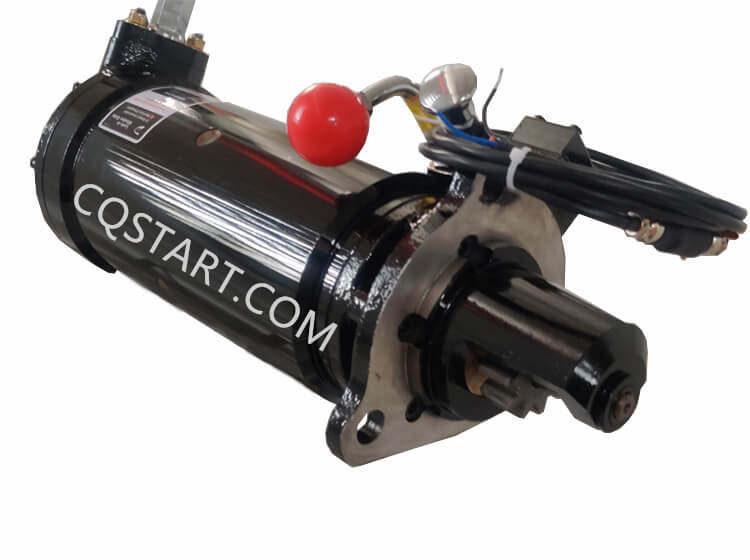
To improve simplicity and safety, spring-powered and gunpowder starters were created. A spring starter motor also need to be cranked, but you can bring the physical work forward. Its working principle is to convert and store kinetic energy in the spring to start engines after, removing the process which can cause a kickback. Similarly, the gunpowder motor uses the energy from the explosion to start the car. No manpower required.
The revolutionary “electric starting system” was patented in 1911. The Cadillac model of 1912 was the first to install this motor because it was the first car with a complete circuit, and that’s what we know as the start of modern engine-starting technology. After that, key-operated ignition and other enhancing techs were gradually added in, the engine start has become more diverse.
Why is spring starter still in service?
While it actually had retired for civilian cars, but returned in many other fields. The applications of mechanical spring starter extended to firefighting, emergency rescue, military, marine, Petroleum industry, etc. Mostly it’s used to initiate a diesel engine as an alternative starting system when there is no power source available. Yes, we came to realize that humans are walking batteries.
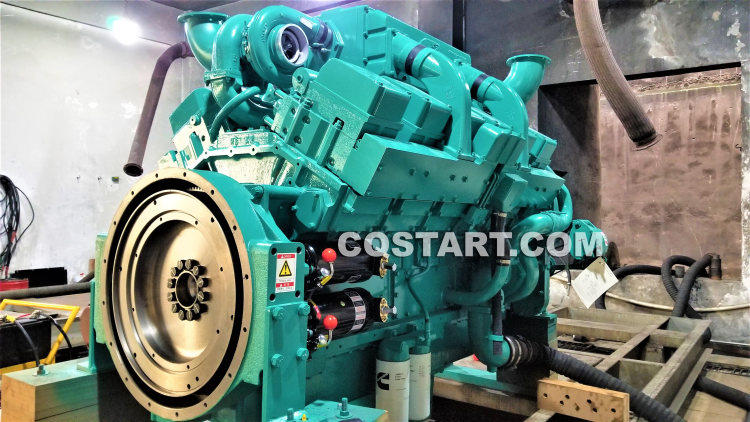
You might have noticed that a lot of diesel engines have more than one bore (or at least one detachable bore), leaving rooms for backup starters. In many situations we might suffer from property or even life loss because the battery of our diesel engine is dead. That’s why a backup starting system is necessary in emergency operations. Another factor is that many emergency operations are carried out in harsh environments like explosion-proof situation, meaning no electric allowed. So when you see someone turning a hand crank in a factory instead of a gym, don’t worry, you did not travel back to 1885.
Will spring starters be even longer-last than the electrics?
The way I think of it? Yes. The spring starter is one of the most primitive types of this tech, but it does not have the fatal drawbacks of a hand crank. Over the years, engines are constantly evolving and changing, but the spring starter’s simplicity and practicality made it through and kept it alive. Since it’s primitive enough, no magnetism, no circuit, no oil grease, it’s possible to start up a machine in almost any place and at any time. The only problem is a mechanical spring starter requires manpower, but manpower is exactly something we can take at any time. So I do think it’s probably the best alternative starting system and will stay that way for a very long time.

Reliable mechanical spring starter manufacturer - Cqstart
The foundation of the machinery industry is scientific research, which is what we have always valued most. Cqstart has designed and developed over a hundred different models of motor starter for now, deployed all over the world. Here I’ve listed some features of our products and services:
1. Pre-sale service
According to the displacement, load and installation space, our clients require, We’d help them to make an appropriate selection.
2. After-sale service
Complete and detailed operation guide through handbooks, videos or even on-site instruction if needed. The product undergoes several inspections before leaving the factory to ensure quality (torque, peak, revolving speed, input/output ratio, convention ratio, stabilization ratio, performance curve).
3. World record of starting power
Through the application of distributed energy storage technology, parallel release technology and special energy storage material technology, Cqstart has created the world’s new record of spring power capacity to provide emergency starting for large engines.
For more professional knowledge, please visit the page of spring starter articles.
The tungsten carbide products can be used as cutting tools, mining tools, wear parts, widely applicable for military, aerospace, machining, metallurgy, oil drilling, etc. Wide application and high-quality stability greatly increase the demands for carbide products.
Tungsten carbide rod

Having premium quality carbide rods is the base of furtherly machined high precision finished carbide parts. XYMJ has a professional production line with strict quality for carbide rods, manufactured by high-precision grind machines, skilled workers. XYMJ carbide rods adopt advanced technology and high standard material, mainly used in the manufacture of metal cutting tools, wood, plastics and other industries that require hardness and wear resistance & corrosion resistance. It has stable mechanical properties, easy welding, high wear resistance and high impact resistance.
Process flow
The main process flow includes powder milling formula according to application requirements → wet milling → mixing → crushing → drying → sieving → adding forming agent → re-drying → sieving to obtain a mixture → granulating → pressing → forming → low-pressure Sintering → Forming (blank) → Cylindrical grinding and fine grinding (the carbide blank does not have this process) → Detecting dimensions → packaging → warehousing.
Applications
Cemented carbide rods are mainly used for drill bits, end mills, and reamers. It can also be suitable for cutting, stamping and measuring tools. It is Applicable in paper-making, packaging, printing, and non-ferrous metal processing industries.
Grades YG6, YG8, YG6X are more wear-resistant than MK6. It can be used for hard wood, processing aluminum alloy profiles, brass rods and cast iron, etc. YG10 is resistant to abrasion, knocking, and is used for processing hard wood, soft wood, ferrous metals and non-ferrous metals.
Tungsten carbide rods can be used not only for cutting and drilling tools but also can be applied as input needles, various roll wear parts and structural materials. In addition, it can be widely used in many fields, such as machinery, chemical industry, petroleum, metallurgy, electronics and defense industries.
Tungsten carbide rotary burr

The tungsten carbide rotary burr can be used to process cast iron, cast steel, carbon steel, alloy steel, stainless steel, hardened steel, copper and aluminum. Since the carbide rotary burr is hand-controlled on a high-speed rotation, the pressure and feed speed are determined to the service life and cutting effect of the tool.
Advantages
1. It can process iron, cast steel, carbon steel, alloy steel, stainless steel, copper, aluminum, etc and non-metals such as marble, jade, bone. Processing hardness can reach HRA ≥ 85.
2. Basically, it can replace a small grinding wheel and no dust pollution.
3. High production efficiency. The processing efficiency is more than ten times higher than the handmade file and is nearly ten times that of the small grinding wheel with the handle.
4. Good processing quality and high finish. It can be processed in various high-precision shape mold cavities.
5. Long service life. Durable is ten times higher than that of high-speed steel tools, which is more than 200 times higher than small grinding wheels.
6. Easy to use, safe and reliable.
7. Comprehensive processing costs can be decreased by several times.
Applications
1. Finishing various metal mold cavities such as shoe molds, etc.
2. Various metals and non-metallic process engraving, craft gift engraving.
3.Clean up the feed, burrs, weld of the casting, forging, welding in machine casting factories, shipyards, automotive plants, etc.
4.Chamfered rounds and trench processing, cleanup pipelines, finishing pipelines, and mechanical plants, repair shops, etc.
5.Decoration of the impeller flow path in the automobile engine factory.
Tungsten carbide Dies

The carbide dies have several tens of times longer service life than steel molds. The carbide mold has high hardness, high strength, corrosion resistance, high-temperature resistance and small expansion coefficient, generally composed with tungsten cobalt.
Grades and production technology
The grades mainly include YG3, YG6, YG6X.YG8.YG15, YG20, YG20C, YG25 and HU20, Hu222, HWN1, etc.
Tungsten carbide dies to adopt native carbide material with special low-pressure sintering processes. The toughness will be better than routine production and the service life will increase by 3-5 times.
Classification
The carbide mold can be divided into three categories according to the applications.
1. Tungsten brushed mold, which is the most used carbide mold. The main grades include YG8, YG6, YG3, followed by YG15, YG6X, YG3X, a new grade YL used for high-speed brushes.
2. Cold rolling die & shaped mold, the main grades include YC20C, YG20, YG15, CT35, YJT30 and MO15.
3. Nonmagnetic alloy molds for magnetic materials production, such as YSN series including 20, 25, 30, 35, 40 and steel knot-free magnetic die tags TMF.
Due to its high hardness, heat resistance, corrosion resistance, wear resistance, excellent strength and toughness, tungsten carbide can be widely applied to machinery parts. The physical properties of the cemented carbide are 3 times higher than steel. It can be made into a variety of products. The commonly used tungsten carbide products include carbide plates, balls, dies, rotary burr, wear parts, etc.
Tungsten carbide Plate
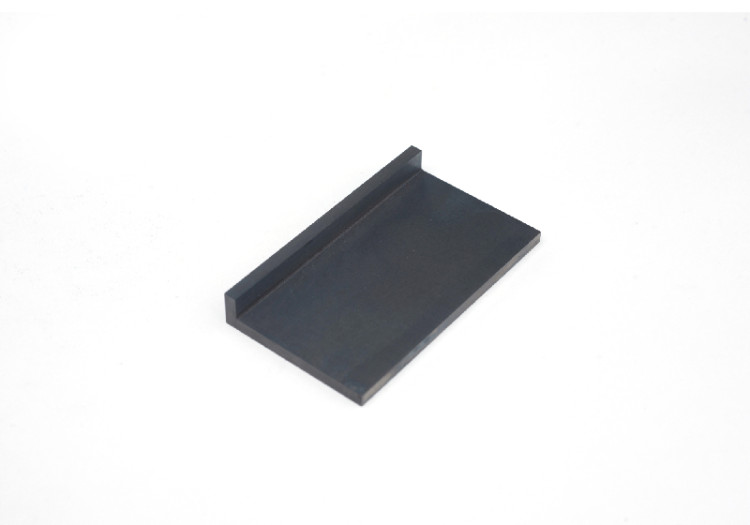
The main alloy ingredients of the carbide plate are WC and CO, and the ingredients of WC and CO are different according to various applications. It has good durability and impact resistance, which can be used in hardware and standard stamping molds. The tungsten carbide plates must be strictly checked, guaranteeing without any injuries, such as pores, bubbles, cracks, etc.
Features
The carbide plate has high hardness, good wear resistance, high strength and toughness, heat resistance, corrosion resistance and a range of excellent properties.
1. Excellent thermal stability and high-temperature resistance.
2. Keeping high mechanical temperature.
3. Good thermal shock resistance.
4. High heat transfer.
5. Excellent oxidation control.
6. Corrosion resistance at high temperatures.
7. Excellent anti-chemical corrosion resistance.
8. High Wear resistance.
9. Long service life
Applications
Carbide plate is widely used in electronic industries, motor rotors, stators, LED lead frames, EI silicon steel, etc. It has high density, high hardness and wear resistance and is an excellent material as a variety of tool parts. Carbide plate is suitable for the manufacturing of various metals.

Tungsten Carbide Ball
The carbide ball is a powder metallurgy product, the main component of which is metal carbide (WC, TiC) micron powder featuring a high hardness refractory.
Tungsten carbide ball
Classifications, grades and features
Tungsten carbide ball mainly includes blanks ball, refined balls, punch balls, bearing balls, Monel balls, metering balls, scratch balls, etc.
The grades include YG6, YG6x, YG8, YG13, YG20, YN6, YN9, YN12, YT5, YT15.
It has high hardness, excellent wear-resistant corrosion-resistant, anti-bending, and can be used in a harsh environment. It can replace all steel bead products. The hardness of the carbide ball is ≥90.5.
Applications
Carbide balls are widely used in precision bearing, instrument, pen production, spraying machine, water pump, mechanical fitting, sealing valve, brake pump, striking hole, oil field, Hydrochloric acid laboratory, hardness measuring instrument, fishing gear, etc.
XYMJ has more than 20 years of experience in researching and manufacturing tungsten carbide products as per customers' special requirements, OEM/ODM is available, With high-tech equipment and a strict quality test system.
The advancement of technology in metallurgy, petroleum drilling, mining tools, and the rapid development of nuclear energy, has greatly increased the demand for high-quality and high-stability tungsten carbide parts and carbide products.
The classification of tungsten carbide
Classified by composition
Tungsten Cobalt Cemented Carbide
The main components are tungsten carbide (WC) and binder cobalt (Co).
The grade is composed of "YG" and the percentage of the average cobalt content. For example, YG8 means that the average WCo=8%, and the rest is tungsten-cobalt cemented carbide.
General tungsten-cobalt alloys are mainly used in carbide tools, molds and geological products.
Tungsten Titanium Cobalt Cemented Carbide
The main components are tungsten carbide, titanium carbide (TiC) and cobalt. The grade consists of "YT" and the percentage of the average content of titanium carbide. For example, YT15 means that the average TiC=15% and the rest is tungsten carbide and cobalt.
Tungsten Titanium Tantalum (niobium) Carbide
The main components are tungsten carbide, titanium carbide, tantalum carbide (or niobium carbide) and cobalt. This kind of cemented carbide is also called general cemented carbide or universal cemented carbide.
Its grade name is composed of "YW" with a sequence number, such as YW1.
Classified by shape
Spheroid
Tungsten carbide balls are mainly composed of high-hardness, refractory metal carbide (WC, TiC) micron powders. Commonly cemented carbides include YG, YN, YT, and YW series.
Carbide ball

The commonly used carbide balls are mainly including grades of YG6, YG6x, YG8, YG13, YG20, YN6, YN12, YT5, YT15.
Rod
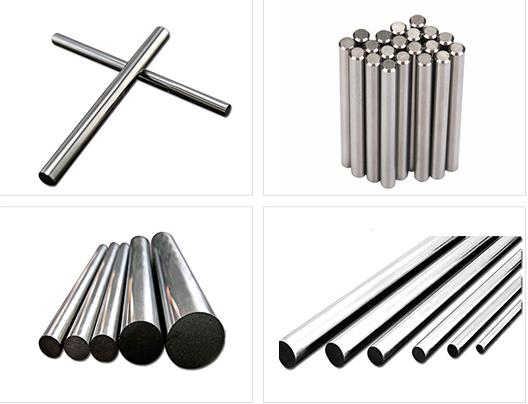
The main characteristics of carbide rods are stable mechanical properties, easy welding, high wear resistance and high impact resistance.
tungsten carbide rod
Advantages
1. Good wear resistance;
2. Good corrosion resistance;
3. High toughness;
4. Extrusion method and HIP sintering.
Applications
Tungsten carbide rods are mainly used for drills, end mills, and reamers. It can also be applicable for cutting, stamping and measuring tools. It is used in papermaking, packaging, printing, and non-ferrous metal processing industries. In addition, it is also widely suitable to process high-speed steel tools, cemented carbide milling cutters, carbide cutters, NAS cutting tools, aviation tools, carbide drill bits, milling cutter core bits, tapered milling cutters, metric milling cutter, micro end milling cutter, reaming pilot, electronic cutter, step drill, metal cutting, rotary file, etc.
Plate

The carbide plate has good durability and strong impact resistance and can be used in hardware and standard stamping dies.
Professional tungsten carbide manufacturer - XYMJ
XYMJ, which is the abbreviation of Zigong Xingyu Cemented Carbide Dies&Tools Co., Ltd, is a professional carbide manufacturer with more than 20 years of experience in the custom production of various kinds of carbide parts. The company has more than 10,000 square meters of standardized factory and office buildings in Bancang Industrial Zone, Zigong City, Sichuan Province.
XYMJ has a high-quality team, full coverage of material experts, designers, engineers, front-line technicians and after-sales technical teams.
Main XYMJ Carbide Products
The XYMJ carbide products include various types with high performance and can be widely used for all kinds of industries.
1. Carbide non-standard mold shells: cold stamping molds, battery molds, cemented carbide molds, drawing mold shells, etc.
2. Tungsten carbide wear parts: carbide valve core, carbide valve seat, carbide ball, carbide roller, etc
3.Cemented carbide products: carbide plates, carbide strips, carbide rod, etc.
4. Powder metallurgical molds: gear molds, sizing molds, auto parts, motor-driven mold parts.
5. Carbide tools: cutting tools, special mining tools.
XYMJ is one of the leading carbide manufacturers in China, which can provide custom carbide parts, OEM & ODM available.
Tungsten carbide is an alloy material made of hard compounds which are consist of refractory metals and bonding metals, through powder metallurgy. Carbide parts have a series of excellent properties such as high hardness, wear resistance, good strength and toughness, heat resistance and corrosion resistance, especially its high hardness and wear resistance, which remains basically unchanged even at a temperature of 500°C. It still has a high hardness at 1000°C.
The development history of tungsten carbide
In 1923, Schroeter who is from Germany added 10% to 20% of cobalt to tungsten carbide powder as a binder and invented a new alloy of tungsten carbide and cobalt. The hardness is second only to diamond, which is the first artificially made first cemented carbide in the world. When cutting steel with a tool made of this alloy, the cutting edge will wear out quickly, and even the cutting edge may crack. In 1929, Schwarzkov, from the United States, added a certain amount of compound carbide of tungsten carbide and titanium carbide to the original composition for improving the performance of the tool in cutting steel. This is another achievement in the development history of tungsten carbide.
In the past two decades, coated cemented carbide has also come out. In 1969, Sweden successfully developed a titanium carbide-coated tool. The matrix of the tool is tungsten-titanium-cobalt cemented carbide or tungsten-cobalt cemented carbide. The thickness of the surface titanium carbide coating is only a few microns, but compared with the alloy tools of the same brand, The service life is extended by 3 times, and the cutting speed is increased by 25% to 50%. The fourth generation of coated tools appeared in the 1970s, which can be used to cut difficult-to-process materials.
Wide applications of tungsten carbide
Tungsten carbide is widely used as tool materials, such as turning tools, milling cutters, planers, drills, boring cutters, etc., for cutting cast iron, non-ferrous metals, plastics, chemical fibers, graphite, glass, stone and ordinary steel, and can also be applied for cutting hard-to-process materials such as heat-resistant steel, stainless steel, high manganese steel, tool steel, etc. It is used to manufacturing cutting tools, cobalt tools and wear-resistant parts, and is widely applicable in the military industry, aerospace, mechanical processing, metallurgy, petroleum drilling, mining tools, electronic communications, and other much more fields.
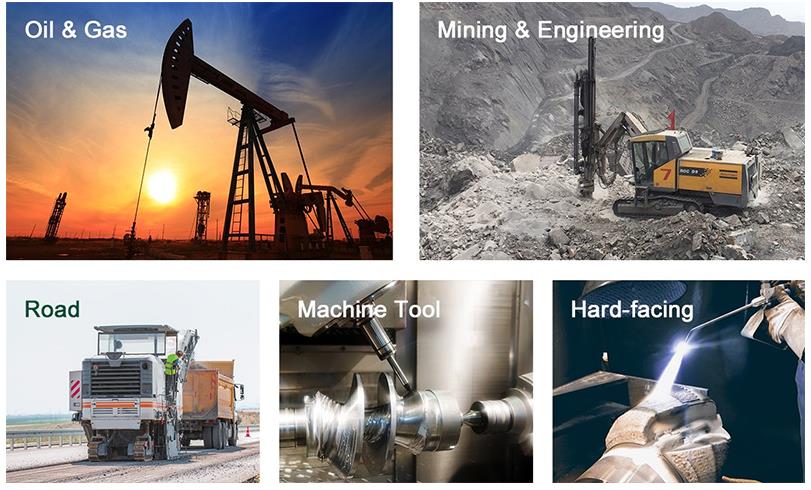
Carbide products have high hardness, high strength, excellent wear resistance and corrosion resistance and have been widely used in various industries. The excellent material properties of tungsten carbide make it become more and more important tool materials.