

The LED explosion-proof light, which is one kind of explosion-proof light, is a lighting device for special industries. Its working principle is basically the same as the explosion-proof lamp. The difference is that its light source adopts the LED light source. It is widely used in places which have high-protection requirements and are moist, such as ships, chemical, oil, mining, pharmaceutical and painting.
The LED explosion-proof lighting refers to the lighting fixtures which are the various specific measures taken to prevent ignition of the surrounding explosive mixtures. The LED explosion-proof light is currently the most energy-saving explosion-proof light, which can be used safely in a variety of flammable and explosive places, suitable for oil mining, military, offshore oil platform, cruise, etc.
The LED explosion-proof lamp includes a lampshade, a lamp cover at the front end of the lampshade, a light emitter and batteries inside the lampshade, a switch on the surface of the lampshade.
The illuminator is a high-power LED module, and there is a wide voltage input drive circuit between the illuminator and the battery, which includes a constant current chip. The constant current chip and the battery are composed of a power module. The power module is sealed with the LED module. The lamp cover and the lampshade are ultrasonic welded.
It uses a low heating value of LED to achieve an intrinsically safe level explosion-proof, and the LED source has a long service life. The heat dissipation device is installed on the lampshade, which can realize effective heat dissipation of the LED module, guaranteeing the use of high stability.
Performance And Advantages Of LED Explosion-proof Light
1. LED explosion-proof light can save 50% -70% energy compared to traditional light sources, that is, the same lighting effect can be obtained with smaller power LED luminaires replacing larger power traditional lighting.
2.The lampshade is made of aluminum alloy and has a surface treatment with high-pressure static spray.
3.The lamp cover is made of tempered glass with stainless steel exposed fasteners. The protective cover is galvanized with a sprayed surface, double anti-corrosion.
4.The lamp adopts the flameproof structure design and the material is high-strength die-cast aluminum. The surface is sprayed and the transparent cover adopts high-strength tempered glass, corrosion resistance, beautiful, and strong.
5.It has an integrated design, easy to install and repair, the ballast cavity independently design, effectively avoid the heat transfer of the light source cavity to the ballast.
6.It has a flexible light distribution, can be made into various LED floodlights.
7.It adopts LED as a light source with high light efficiency, long service life and the average service life is more than 50,000 hours, with long-term maintenance-free.
8. No Wireless fuse, nor electrode aging and other disadvantages
9. Power supply with DC low voltage, the heating value is much lower than the traditional electrical light source and does not generate high-frequency electromagnetic fields, no electromagnetic interference to surrounding equipment.
10.LED adopts epoxy resin solid package, impact resistance, anti-vibration, not easy to break.
11. The emission spectrum of LED is completely visible, no ultraviolet radiation, no mercury and does not produce heavy metal pollution.

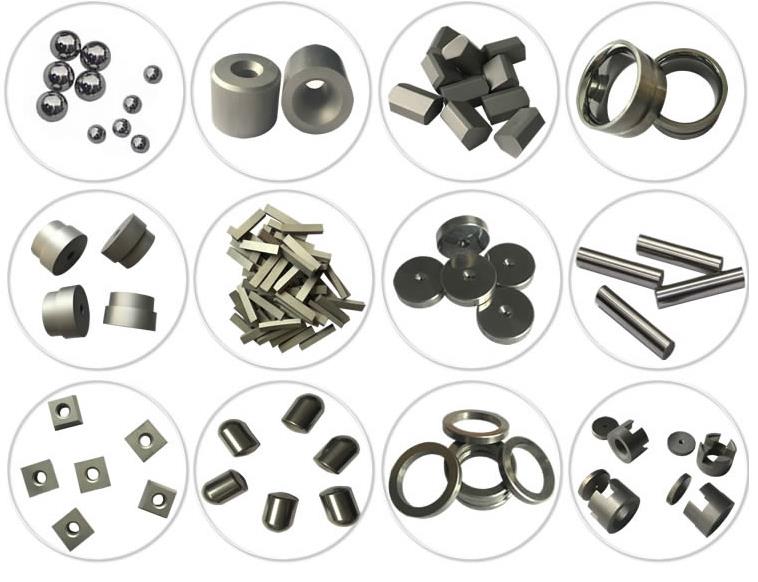
Tungsten carbide mining tools, including buttons, tips, inserts, drilling bits, etc, with high performance, are widely used in oilfield drilling, snow removing, snowplow machine and other much more mining equipment, such as roller drill bits, DTH drill, geological drilling tools.
XYMJ, which is one of the most professional carbide mining tool manufacturers in China, provides carbide buttons, cemented carbide tips & inserts, with various types and specifications, customized service as the drawings also available.
The carbide buttons, inserts and tips are produced adopting 100% tungsten carbide, with stable product performance. The over-pressure sintering furnace is used for secondary sintering after ordinary sintering and the drill bit teeth do not fall, long service life guaranteed. They are manufactured with high precision centerless grinding machine, ensuring the dimensions are accurate and standard.
Advantages
1. Made by raw materials, with high wear resistance and durability.
2. Increase the compactness of the carbide inserts through the over-pressure sintering.
3. Superior quality is guaranteed, with a strict quality QC management team.
4. Custom service is provided as the customers’ requirements.
XYMJ will be one of the best choices for professional and trustworthy tungsten carbide mining tool manufacturer, superb product quality, the long service life of mining tools and competitive price guaranteed.

The tungsten carbide as the preferred mining tool material, includes carbide inserts, tungsten carbide buttons, cemented carbide tips, etc, widely used in the high-pressure DTH hammer drilling industry, suitable for petroleum drilling, quarrying, mining of various rocks and tunnels.
Tungsten carbide mining tools have their own unique working performance, with high hardness, good wear resistance, high impact toughness. The tungsten carbide inserts have high drilling speed, long service life, doing a favor to saving unproductive time, reducing labor and speeding up engineering speed, suitable for the mining of granite, the most robust sandstone and limestone, lean iron ore, which is a special component of the mining bits, also is used as a drilling bit accessory, applied in a heavy-duty rock drilling or deep hole drilling tool accessories.
Carbide buttons and tips are often used in mining drilling tools, mine machinery tools, oil drilling tools, road repairing tools to remove snow and road cleaning. With the high hardness of cemented carbide, They are widely used in the mining and quarrying, cutting process and can also be placed in heavy excavator drills.
The Grades And Applications Of Tungsten Carbide Mining Tool
YG4C
Mainly used as impact drill bits for cutting soft materials
YG6
Used as electric coal drill bits, coal mining bits, petroleum roller bits and scraper ball bits.
YG8
Suitable for core drill, coal mining & petroleum roller bits.
YG8C
Applied as the impact button bits of small and medium sizes, bearing bush of rotary exploration drill.
YG11C
Most of them are used for impact drills and inserts for cutting high-hardness materials in the rotary drilling bits.
YG13C
Applied as the inserts for the rotary percussive drilling bits to cut medium, high hardness materials.
YG15C
Suitable for cutting tools used in oil cone drills and the mining of soft, medium-hardness rocks.
HSS, which is the abbreviation of high-speed steel, is a standard material for metal cutting tools in the past time. When the tungsten carbide had been created, it was considered to be a direct replacement for HSS with good toughness, excellent wear resistance and extremely high hardness. Cemented carbide is usually compared to HSS, with similar applications and high hardness.
Performance
Tungsten carbide
The cemented carbide is a powder of a micron-magnitude metal carbide, which is hard to melt and has high hardness. The binder is made with cobalt, molybdenum, nickel, etc. It is sintered under high temperature and high pressure. Tungsten carbide has a higher high-temperature carbide content than high-speed steel. It has an HRC of 75-80 and excellent wear resistance.
Advantages
1. The red hardness of Tungsten carbide can reach 800-1000°C.
2.The cutting speed of cemented carbide is 4-7 times higher than the high-speed steel. Cutting efficiency is high.
3.The mold, measure tools and cutting tools made by tungsten carbide will have 20-150 times higher service life than alloy tool steel.
4.Cemented carbide can cut material with 50 HRC.
Disadvantages
It has low bend strength, poor impact toughness, high brittleness and low shock resistance.
HSS
HSS is high-carbon high alloy steel, which is a tool steel with high hardness, high wear resistance and high thermal resistance. In the quenching state, iron, chromium, partial tungsten and carbon in high speed steel form a extremely hard carbide, Improving the wear resistance of steel. The other partial tungsten is dissolved in the matrix, increasing the red hardness of steel, up to 650°C.
Advantages
1.Good strength, excellent toughness, sharp cutting edge.
2. Stable quality, generally adopted to make small tools with complex shapes.
Disadvantages
The hardness, service life and HRC are much lower than tungsten carbide. At a high temperature of 600°C or above 600°C, the hardness of HSS will decrease significantly, and it can’t be used.
Manufacturing Methods
Tungsten carbide
The manufacturing of cemented carbide is to mix tungsten carbide and cobalt in a certain proportion, pressurize into various shapes, and then semi-sintering. This sintering process is usually carried out in a vacuum furnace. It is placed in a vacuum oven to complete the sintering, and at this time, the temperature is approximately 1300°C and 1,500°C. The sintered tungsten carbide forming is to press the powder into a blank and then is heated to a certain degree in the sintering furnace. It needs to keep the temperature for a certain time and then cool down, thereby obtaining the desired carbide material.
HSS
The heat treatment process of HSS is more complicated than cemented carbide, which must be quenched and tempered. During the quenching, due to the poor thermal conductivity, it is generally divided into two stages. Preheat first at 800 ~ 850 °C, so as not to cause large thermal stress, then quickly heat to the quenching temperature 1190°C to 1290 °C which is distinguished when the different grades in the actual use. Then cool down by oil cooling, air cooling or gas-filled cooling.
Applications
Tungsten carbide
Wide applications of tungsten carbide, includes used as rock-drilling tools, mining tools, drilling tools, measuring tools, carbide wear parts, cylinder liner, precision bearings, nozzles, hardware molds such as wire drawing dies, bolt dies, nut dies, and various fastener dies, which have excellent performance, gradually replacing the previous steel mold.
HSS
HSS has good process performance with a good combination of strength and toughness, therefore mainly used to manufacture metal cutting tools with complex thin edges and good impact-resistant, high-temperature bearings and cold extrusion molds.
Material Ingredients
Tungsten carbide
The cemented carbide has a main component of a metal high hardness refractory carbide with WC, TiC micron powder, cobalt (CO) or nickel (Ni), molybdenum (MO) as the binder. It is the powder metallurgical product sintered in a vacuum furnace or hydrogen reduction furnace.
HSS
High speed steel is complex steel, with a carbon content generally between 0.70% and 1.65%, and 18.91% Tungsten content, a 5.47% Chloroprene rubber content, a 0.11% Manganese content, which is very close to the subsequent W18CR4V component.
For more information, please visit the article page of comparison between tungsten carbide and HSS.
In the flexible packaging color printing composite industry, the solvent-free adhesive will be the direction of future development, affecting the development trend of the flexible packaging industry. As the enhanced awareness for environmental protection and the importance for the safety of food packaging, how to reduce costs and improve competitive advantage, producing the commodities conforming to the hygienic requirements for food packaging, is the problem of most food manufacturer concerning. The promotion of solventless adhesive in the market is in line with this trend. In Europe, the solvent-free adhesive has a share of 40% in the flexible packaging composite adhesive market.
High-temperature resistant solvent-free adhesive
The universal solvent adhesive is suitable for general flexible packaging composite applications, not suitable for cooking with a temperature above 100 ° C . Usually the solventless adhesive can be classified into 3 grades. Low-grade type is generally used for dry content packaging with lightweight and simple structures. Medium grade type is typically applied to multi-layer composite products which can withstand load or having a liquid content and is resistant to cooking and steaming. High-grade types could have adhesive applications with certain tolerances. Currently, the solvent-free adhesive is rarely used for high-temperature cooking, but the solventless composite material completely replacing the dry composite material and developing high temperature resistant solventless adhesive will be inevitable trends.
Two-component coating solvent-free adhesive
Two-component coating solvent-free adhesive is developed in 2016. The so-called two-component coating, that is, a primary agent, a curing agent, is a separate coating, when the two-component adhesives are mixed, the curing reaction is rapidly generated and the corresponding mechanical strength is achieved. The entire composite process does not require an ultraviolet lamp. It is a new type of flexible packaging composite technology. It has been widely concerned in the flexible packaging industry, mainly because it has the advantages of separate coating, quickly curing at normal temperature, easy to operate. It is clear that the two-component coating type will become the trend of solvent-free adhesive in the future.
Solvent-free adhesives are the trend and direction of flexible packaging composite adhesives, with the advantages of high efficiency, environment-friendly, lost-cost, no residual solvent, high safety, and high initial adhesion.