
Directional drilling has revolutionized the oil and gas industry by enabling access to reserves beneath challenging geological formations. This advanced drilling technique allows operators to navigate wells in a controlled manner, tapping into reservoirs previously considered inaccessible. Success in directional drilling requires specialized training to equip professionals with the necessary skills and knowledge. This article delves into the importance of directional drilling training, outlines the key components involved in mastering this complex technique, and explores the simulation technology used in the training process.

The Importance of Directional Drilling Training
Technical Expertise
Directional drilling demands a deep understanding of various technologies, equipment, and methodologies. Training programs provide participants with a solid foundation in drilling engineering, geology, and surveying. This knowledge is essential for making informed decisions during the drilling process.
Risk Mitigation
Directional drilling often occurs in hazardous environments, presenting significant risks and uncertainties. Training programs emphasize safety protocols, risk assessment, and hazard management, ensuring drillers can identify and address potential issues to prevent accidents and environmental damage.
Equipment Familiarity
Directional drilling requires specialized equipment, such as downhole tools, mud motors, and rotary steerable systems. Training programs familiarize participants with the operation, maintenance, and troubleshooting of these tools, enhancing drilling efficiency.
Key Components of Directional Drilling Training
Theory and Fundamentals
Training begins with an in-depth overview of drilling principles, including wellbore geometry, surveying techniques, and the use of mathematical models in planning and executing directional wells.
Surveying and Geosteering
Understanding subsurface geology is crucial for successful directional drilling. Training covers surveying methods, geostatistics, and geosteering technologies, enabling drillers to navigate the wellbore in real time and ensure precise positioning.
Drilling Software Proficiency
Directional drilling relies heavily on advanced oil and gas software for planning and monitoring. Training includes hands-on experience with industry-standard software, allowing participants to create well plans, analyze data, and optimize drilling parameters.
Problem-Solving Skills
Professionals must be adept at troubleshooting unexpected issues. Training programs emphasize problem-solving skills, preparing drillers to make quick decisions in dynamic drilling environments.
How Simulation Technology Enhances Directional Drilling Training
Simulation technology plays a crucial role in enhancing the effectiveness of directional drilling training by providing a realistic and immersive learning environment. As the oil and gas industry increasingly adopts cutting-edge technologies, simulation tools have become invaluable in training programs.
Virtual Reality (VR) and Augmented Reality (AR)
Immersive Learning Environments: VR and AR create immersive 3D environments that mimic real-world drilling scenarios. Trainees can use VR headsets or AR devices to experience a simulated drilling rig, downhole conditions, and the surrounding environment.
Hands-On Experience: These technologies allow trainees to interact with virtual equipment and tools, enhancing their understanding of the drilling process. They can practice tasks such as well planning, tool handling, and emergency response in a risk-free virtual space.
Drilling Simulators
Realistic Rig Operation: Drilling simulators replicate the operation of a drilling rig, providing trainees with a realistic experience of drilling procedures. Simulators include controls, displays, and feedback systems similar to those on a real rig, allowing trainees to practice their skills in a safe environment.
Dynamic Scenarios: Simulators can recreate various drilling conditions, including different geological formations, equipment malfunctions, and environmental challenges. This allows trainees to practice problem-solving skills and learn how to respond to changing circumstances.

Software-Based Simulations
Planning and Analysis: Directional drilling requires extensive planning and analysis. Software-based simulations using industry-standard tools enable trainees to create well plans, analyze geological data, and optimize drilling parameters, preparing them for real-world challenges.
Data Interpretation: Trainees can practice interpreting survey data, geosteer wells, and make decisions based on real-time information. Simulations provide a platform for refining data interpretation skills, crucial for precise wellbore navigation.
Downhole Tool Simulations
Tool Handling and Operation: Simulations for downhole tools, such as mud motors and rotary steerable systems, allow trainees to practice their operation and understand their impact on directional drilling. This includes troubleshooting common problems and optimizing tool performance.
Maintenance Training: Simulations offer a safe environment for learning about downhole tool maintenance and repair, enhancing trainees' familiarity with equipment and ensuring they can address issues efficiently.
Field Exercises and Team Collaboration
Team-Based Simulations: Directional drilling often requires collaboration among team members. Simulation technology enables trainees to engage in collaborative exercises, working together to solve problems, make decisions, and communicate effectively, fostering teamwork skills.
Field Training Simulations: Simulations can replicate field conditions, allowing trainees to practice directional drilling in diverse environments. These simulations may include challenging terrains, unexpected geological features, and adverse weather conditions.
Conclusion
Directional drilling training is vital for developing skilled professionals in the oil and gas industry. As the demand for energy resources grows, the ability to efficiently extract hydrocarbons from complex reservoirs becomes increasingly important. Incorporating simulation technology into training programs not only enhances the learning experience but also provides trainees with a safe and controlled environment to develop and refine their skills.
In industries where precise tension control is crucial, tension amplifiers play a vital role in ensuring optimal performance and efficiency. These devices are designed to amplify small tension variations into larger signals that can be accurately measured and controlled. Selecting the appropriate type of tension amplifier is essential for achieving accurate tension measurement and control in various industrial applications. Let’s explore some common types of tension amplifiers and how to choose the most suitable one for your needs.

Common Types of Tension Amplifiers
Load Cell Tension Amplifiers
Load cell tension amplifiers are designed to work with load cells, sensors that measure force or tension. These amplifiers are highly precise and sensitive, capable of accurately amplifying the small electrical signals generated by load cells. They are commonly used in applications where precise tension measurement and control are critical, such as in paper converting, textile manufacturing, and wire processing industries.
Strain Gauge Tension Amplifiers
Strain gauge tension amplifiers are compatible with strain gauge sensors, which detect changes in resistance caused by mechanical deformation. These amplifiers convert the small changes in resistance measured by strain gauges into larger, measurable outputs. They are widely used in applications such as printing presses, web handling systems, and packaging machinery, where precise tension control is essential for maintaining product quality and consistency.
Magnetic Particle Brake Tension Amplifiers
Magnetic particle brake tension amplifiers work with magnetic particle brakes, which generate resistance by controlling the flow of magnetic particles within a rotor. These amplifiers amplify the electrical signals generated by magnetic particle brakes, allowing for precise control of tension in winding and unwinding processes, film and foil processing, and other applications requiring consistent tension control.
Pneumatic Tension Amplifiers
Pneumatic tension amplifiers use compressed air to control tension by adjusting the pressure applied to pneumatic tensioning devices, such as air cylinders or pneumatic brakes. These amplifiers regulate airflow to pneumatic tensioning devices, allowing for precise tension control in applications where hydraulic or electric power sources are not available or where pneumatic systems are preferred for their simplicity and reliability.
Digital Tension Amplifiers
Digital tension amplifiers incorporate digital signal processing technology to amplify tension signals with high accuracy and reliability. These amplifiers often feature advanced digital filtering algorithms, real-time data processing capabilities, and communication interfaces for seamless integration with control systems and data logging devices. They are suitable for applications requiring precise tension measurement and control, particularly in industries where automation and digitization are prevalent.

How to Select the Suitable Type of Tension Amplifier
Understand Your Application Requirements
Identify the specific requirements of your application, including the type of material being processed, the desired tension range, and the operating environment (e.g., temperature, humidity, vibration levels). Consider factors such as process speed, precision required for tension control, and any regulatory standards or industry-specific requirements.
Determine Sensor Compatibility
Identify the type of tension sensor (e.g., load cell, strain gauge, magnetic particle brake) used in your tension control system. Ensure that the tension amplifier you select is compatible with the sensor technology used in your application, as different sensors require different amplification techniques for accurate tension measurement.
Evaluate Amplification Range and Accuracy
Consider the amplification range and accuracy requirements of your application. Choose a tension amplifier with an amplification range that encompasses the tension levels encountered in your process. Look for amplifiers with high accuracy and resolution to ensure precise tension measurement and control, especially in applications where small tension variations are critical.
Assess Environmental Considerations
Evaluate the environmental conditions in which the tension amplifier will operate, such as temperature extremes, humidity, dust, and vibration. Choose a tension amplifier with robust construction and environmental protection features (e.g., sealed enclosures, temperature compensation) to withstand the conditions present in your application environment.
Consider Integration and Connectivity
Determine how the tension amplifier will integrate with your existing control system or data acquisition system. Look for amplifiers with compatible communication interfaces (e.g., analog output, digital communication protocols) that allow seamless integration with your control system and enable real-time monitoring and data logging.
Review Features and Functionality
Evaluate additional features and functionality offered by the tension amplifier, such as signal conditioning capabilities, filtering options, diagnostic tools, and user interface design. Choose an amplifier that offers the necessary features to meet your specific requirements and facilitate ease of setup, operation, and maintenance.
Budget and Cost Considerations
Consider your budget constraints and the total cost of ownership when selecting a tension amplifier. Balance the upfront cost of the amplifier with factors such as long-term reliability, maintenance requirements, and potential cost savings resulting from improved process efficiency and product quality.
Seek Expert Advice
If you’re unsure about which type of tension amplifier is best suited for your application, seek advice from industry experts, manufacturers, or suppliers with experience in tension control systems. Consult with technical support representatives who can provide guidance and recommendations based on your specific application requirements and constraints.
Conclusion
By understanding the different types of tension amplifiers available and considering factors such as application requirements, accuracy, compatibility, features, and budget, you can select the right type of tension amplifier to meet your specific needs and achieve optimal tension control performance.
Refrigerated centrifuges are pivotal in various scientific fields, from biology and chemistry to clinical diagnostics. Central to their functionality are advanced cooling systems. This article explores the critical role of advanced cooling systems in refrigerated centrifuges and highlights the latest technological advancements that are enhancing temperature control in centrifugation processes.

The Crucial Role of Cooling Systems in Refrigerated Centrifuges
Advanced cooling systems are integral to the success and reliability of centrifuge processes for several reasons:
1. Preservation of Sample Integrity
The primary role of cooling systems in refrigerated centrifuges is to maintain sample integrity. Many biological and chemical processes are highly temperature-sensitive. Without proper cooling, the heat generated by high-speed centrifugation can cause sample degradation, denaturation, or alteration. Cooling systems ensure a stable and controlled environment within the centrifuge chamber, protecting the molecular structures of sensitive samples.
2. Temperature Control for Precise Experiments
Accurate and reproducible results in scientific investigations rely heavily on precise temperature control. Cooling systems in refrigerated centrifuges allow researchers to set and maintain specific temperatures according to the unique needs of various sample types. This is particularly crucial in fields like molecular biology, where DNA, RNA, and proteins are extremely sensitive to temperature fluctuations.
3. Prevention of Thermal Stress
The forces generated during centrifugation can cause thermal stress to samples. Cooling systems play a vital role in dissipating heat and minimizing thermal stress, thereby preserving sample integrity. Maintaining a steady temperature reduces the risk of artifacts and ensures that results accurately reflect the original samples' properties.
4. Enhanced Versatility in Applications
Advanced cooling systems enhance the versatility of benchtop refrigerated centrifuges, enabling them to accommodate a wide range of applications. From routine clinical diagnostics to specialized research protocols, precise temperature control ensures these instruments can effectively process various sample types with specific temperature requirements.
5. Longer Centrifugation Duration
In many experiments, especially those involving the separation of complex biological mixtures, centrifugation processes can be time-consuming. Cooling systems allow for extended centrifugation durations without compromising sample integrity. This is particularly beneficial in experiments requiring prolonged exposure to high centrifugal forces.
6. Minimization of Experimental Variability
Maintaining a constant temperature during centrifugation reduces experimental variability. Temperature fluctuations can lead to inconsistent results, making it difficult to draw accurate conclusions. Cooling systems enhance the repeatability and reliability of experimental findings.
7. Energy Efficiency and Cost Savings
Advanced cooling systems in refrigerated centrifuges are designed to be energy-efficient, contributing to sustainable laboratory practices. Components such as variable speed compressors reduce power consumption and lower operational costs over time.

Key Components of Advanced Cooling Systems in Refrigerated Centrifuges
1. Cryogenic Cooling Technology
Some advanced refrigerated centrifuges use cryogenic cooling technology, rapidly achieving extremely low temperatures with liquefied gases like liquid nitrogen or liquid helium. Cryogenic cooling is highly effective in maintaining precise and consistent temperatures during centrifugation.
2. Variable Speed Compressors
Variable speed compressors are essential in modern cooling systems. These compressors adjust their rotation speed to meet cooling demands, allowing for precise temperature control. Dynamic adjustment of compressor speed enhances energy efficiency and ensures temperature stability within the centrifuge chamber.
3. Heat Exchangers
Integrated heat exchangers play a crucial role in efficiently dissipating heat generated during centrifugation. These exchangers transfer heat away from the centrifuge chamber, maintaining a consistent temperature. Advanced designs optimize heat exchange, contributing to temperature uniformity and preventing fluctuations that could affect sample integrity.
4. Insulation Materials
High-quality insulation materials with low thermal conductivity are used to minimize heat exchange between the inside and outside of the centrifuge. This insulation helps create a well-isolated environment, reducing the impact of external temperature variations on the samples being processed.
5. Thermal Sensors and Monitoring Systems
Advanced cooling systems are equipped with thermal sensors and monitoring systems to ensure precise temperature control. These sensors continuously measure the temperature within the centrifuge chamber, providing real-time feedback to the control system. The monitoring system adjusts cooling parameters based on this feedback, maintaining the set temperature accurately.
6. Adaptive Cooling Algorithms
Some refrigerated centrifuges use adaptive cooling algorithms that automatically adjust cooling parameters in response to changing conditions. These algorithms consider factors such as load variations, ambient temperature changes, and the specific needs of the samples. This adaptive approach ensures optimal temperature regulation under various conditions.
7. User-Programmable Cooling Protocols
Advanced cooling systems often include user-programmable cooling protocols, allowing researchers to customize temperature profiles based on their experiments' specific needs. This flexibility is crucial for handling diverse sample types and conducting experiments with varying temperature requirements.
8. Low-Noise Cooling Systems
To reduce disruptions in shared laboratory spaces, advanced refrigerated centrifuges are designed with low-noise cooling systems. This is achieved through sound-dampening materials and optimized cooling system designs.
9. Energy-Efficient Components
Energy efficiency is a key consideration in the design of advanced cooling systems. Components like variable speed compressors, energy-efficient motors, and optimized heat exchangers help reduce overall energy consumption, benefiting both the environment and laboratory operational costs.
10. Safety Features
Advanced cooling systems often incorporate safety features such as overheat protection and fail-safe mechanisms. These features ensure that the refrigerated centrifuge operates within specified temperature limits, minimizing the risk of damage to samples or the centrifuge itself.
Conclusion
The continuous evolution of refrigerated centrifuges is characterized by groundbreaking advancements in cooling systems. These advancements provide researchers with precise temperature control, sample preservation, and flexibility in experimental applications. As technology progresses, we can expect even more sophisticated cooling systems that will further enhance the capabilities of refrigerated centrifuges, making them indispensable tools in laboratories conducting cutting-edge scientific research and diagnostic developments.
Injection molding is a transformative manufacturing technique that has revolutionized the production of plastic and polymer-based products. It offers unparalleled efficiency, precision, and scalability, making it an indispensable method across various industries. This article delves into the workings of injection molding, detailing its process and the essential equipment used.

What is Injection Molding?
Injection molding is a manufacturing process in which molten material, typically thermoplastic or thermosetting polymers, is injected into a mold cavity. Once the material cools and solidifies, it takes on the shape of the mold. This highly adaptable technology can produce intricate and detailed parts with exceptional dimensional accuracy.
The Injection Molding Process
The injection molding process involves several stages that work together to convert raw materials into finished plastic or polymer products. These stages include mold preparation, material selection and melting, injection of molten material, cooling and solidification, mold opening and ejection, post-processing, and recycling.
1. Mold Preparation and Clamping
The first step involves preparing the mold, which is typically made of hardened steel or aluminum and consists of two halves: the cavity and the core. These halves fit together to form the desired shape of the final product.
Once prepared, the mold is placed in the injection molding machine. The clamping unit secures the mold, applying high pressure to keep it tightly closed during the injection process.
2. Material Selection and Melting
Next, the appropriate material for the product is selected. Thermoplastic polymers like polyethylene, polypropylene, and polystyrene are commonly used due to their ability to melt and solidify repeatedly.
The material, in pellet or granule form, is placed in a hopper on top of the injection molding machine. It then gravity-feeds into a heated barrel.
Inside the barrel, a rotating screw or plunger pushes the material forward into the heating zone. As the material moves, it melts due to the barrel's heating elements.
3. Injection of the Molten Material
Once the material reaches the desired temperature and melts, the injection phase begins. The screw or plunger moves forward, injecting the molten material into the mold cavity through a nozzle. This injection is precisely controlled to ensure the entire cavity is filled.
The material flows into the mold under high pressure, conforming to the cavity’s shape and capturing the details and features of the final product.
4. Cooling and Solidification
After the cavity is filled, the molten material starts to cool and harden. Cooling channels within the mold circulate a coolant, usually water or oil, to rapidly remove heat from the material.
This cooling process is critical for maintaining dimensional stability and optimal part quality. It dictates the solidification rate and, consequently, the cycle time of the injection molding process. Cooling time varies based on the material and part design.
5. Mold Opening and Ejection
Once the material solidifies, the clamping unit opens the mold. Ejector pins or plates push the part out of the mold cavity. This ejection mechanism ensures the part is removed smoothly without damage.
The ejected part is separated from the runner system, which is the channel that transported the molten material to the cavity. Trimming or cutting is typically used to remove the runner system.
6. Post-Processing and Quality Control
Post-processing steps may be required to achieve the desired final product specifications. These steps can include trimming excess material, applying surface treatments, assembling multiple parts, and conducting quality inspections.
Quality control techniques such as dimensional checks, visual inspections, and functional testing ensure the finished product meets required standards.
7. Recycling and Material Reuse
Waste material, including runners and rejected parts, can be collected and recycled within the injection molding process. Recycling minimizes material waste and supports sustainability initiatives.
Equipment Involved in Injection Molding
Efficient injection molding requires several critical pieces of equipment:

Injection Molding Machine
The heart of the process is the injection molding machine, also known as an injection molding press. It comprises several components:
Hopper: Holds raw material in pellet or granule form, feeding it into the machine by gravity.
Barrel and Screw/Plunger: The barrel is a heating chamber that melts the raw material. Inside, a rotating screw or reciprocating plunger drives the material forward and homogenizes it as it melts. The screw/plunger also applies pressure to inject the molten material into the mold.
Heating Unit: Heats the barrel to melt the material, requiring precise temperature control for consistent melt consistency.
Clamping Unit: Holds the mold in place during injection, applying significant force to keep mold halves tightly closed and prevent leaks.
Control System: Advanced controls manage temperature, pressure, injection speed, and other parameters to ensure precise and consistent production.
Mold
The mold, also known as the tool or die, defines the shape, size, and features of the final product. It consists of two halves: the cavity and the core, often made of hardened steel or aluminum alloy to withstand high pressures and temperatures. Cooling channels within the mold help regulate its temperature and aid in material solidification.
Material Feed System
This system transports raw material from the hopper to the machine’s barrel and includes:
Hopper: Stores and feeds raw material into the machine.
Feeding Mechanism: Usually a screw or plunger, this mechanism ensures consistent material flow into the heating barrel for melting and injection.
Cooling System
Cooling channels within the mold ensure proper cooling and solidification of the molded item by circulating a coolant, such as water or oil. This system helps maintain dimensional stability and reduces cycle time.
Auxiliary Equipment
Additional equipment may include:
Granulators or Shredders: Crush scrap material or rejected parts into pellets or granules for recycling within the injection molding process.
Dryers: Remove moisture from raw materials before processing to improve quality and reduce defects.
Mold Temperature Controllers: Regulate the temperature of the mold’s cooling channels for precise and consistent cooling, enhancing part quality and reducing cycle time.
Material Handling Equipment: Conveyors or robots to transport molded parts from the machine to post-processing or packaging stations.

Conclusion
Injection molding is a versatile and highly efficient manufacturing process that has revolutionized the production of plastic and polymer-based products. Its capability to create injection molding parts with complex shapes and high dimensional accuracy and scalability makes it indispensable across various industries. By understanding its working process and equipment, manufacturers can optimize production and ensure high-quality output.
The oil and gas industry is among the most complex and high-risk sectors globally. Operations on oil rigs demand a skilled and well-trained workforce to ensure safety, efficiency, and productivity. Traditional training methods often fall short in replicating the real-life challenges and scenarios encountered on oil rigs. In recent years, the industry has turned to cutting-edge simulation techniques to provide a more immersive and effective training experience. This article explores how oil rig training has been transformed through the implementation of these advanced simulation techniques.

The Need for Advanced Oil Rig Training Methods
Oil rig operations require a specialized skill set, combining technical expertise, problem-solving abilities, and a thorough grasp of safety protocols. While traditional training methods have their merits, they often fail to replicate the real challenges of an oil rig. Simulation techniques address these limitations by offering a realistic and immersive training environment.
Simulations bridge the gap between theory and practice, allowing workers to engage actively with scenarios like equipment malfunctions and emergency situations. This hands-on experience hones problem-solving skills and decision-making processes in a risk-free setting. Moreover, simulations promote a holistic approach by emphasizing team collaboration, communication, and adherence to safety protocols.
The immersive nature of simulations extends beyond individual skill development, providing a deep understanding of equipment functionality. Trainees interact with virtual representations, ensuring not only technical proficiency but also effective equipment management in diverse operational scenarios.
In summary, the integration of simulation techniques in oil rig training acknowledges the need for a dynamic, experiential approach. By replicating real-world challenges, simulations equip workers with the skills and adaptability essential for efficiently navigating the complexities of oil rig operations while prioritizing safety.
Key Components of Oil Rig Training Simulation
Simulation technology has emerged as a game-changer in the field of oil rig training. Advanced oil and gas simulators can recreate the entire operation environment, including drilling operations, equipment handling, emergency scenarios, and even adverse weather conditions. These simulators leverage virtual reality (VR), augmented reality (AR), and computer-based models to immerse trainees in a lifelike and interactive learning experience.
1. Drilling Operations Simulation
Advanced Virtual Drilling Scenarios
Simulators offer a comprehensive approach to drilling operations by replicating the intricate processes involved in oil extraction. Trainees engage in virtual drilling scenarios that cover the entire spectrum, from planning and positioning the rig to executing the extraction process. These scenarios simulate various geological formations, drilling conditions, and wellbore complexities, providing a nuanced and realistic learning experience.
Pressure Management and Parameter Monitoring
Simulation technology allows trainees to immerse themselves in the complexities of pressure management and drilling parameter monitoring. They gain hands-on experience in adjusting drilling parameters in response to subsurface challenges, learning how to optimize operations while avoiding potential risks such as wellbore instability. This interactive learning environment fosters a deep understanding of the dynamic interplay of variables during drilling.
Risk-Free Skill Refinement
Trainees can practice and refine their skills in a controlled environment, which is particularly valuable for tasks involving precision and timing. From the precise handling of drilling equipment to making split-second decisions in response to unexpected challenges, simulators provide a risk-free space for trainees to enhance their proficiency and confidence.
2. Emergency Response Training
Dynamic Emergency Scenarios
Simulations excel in mimicking diverse emergency situations, ensuring that trainees are well-prepared for the unexpected challenges of an oil rig. These scenarios can include blowouts, fires, equipment failures, and other critical incidents. The dynamic nature of simulations allows for the introduction of unexpected variables, preparing trainees to adapt their response strategies in real-time.
Crisis Management and Decision-Making
Emergency response training simulation goes beyond procedural knowledge, focusing on enhancing crisis management skills and decision-making under pressure. Trainees experience the stress and urgency associated with emergencies, learning to prioritize tasks, communicate effectively, and make quick yet informed decisions. This aspect of simulation training contributes significantly to a workforce that is resilient and well-equipped to handle unforeseen circumstances.
Coordinated Response Practices
Simulations facilitate team-based emergency response exercises, promoting coordinated efforts among team members. Trainees learn to work together seamlessly, allocating responsibilities, communicating clearly, and executing emergency protocols. This collaborative training ensures that the workforce is not only individually skilled but also capable of acting as a cohesive unit during critical situations.
3. Equipment Handling and Maintenance
Virtual Equipment Familiarization
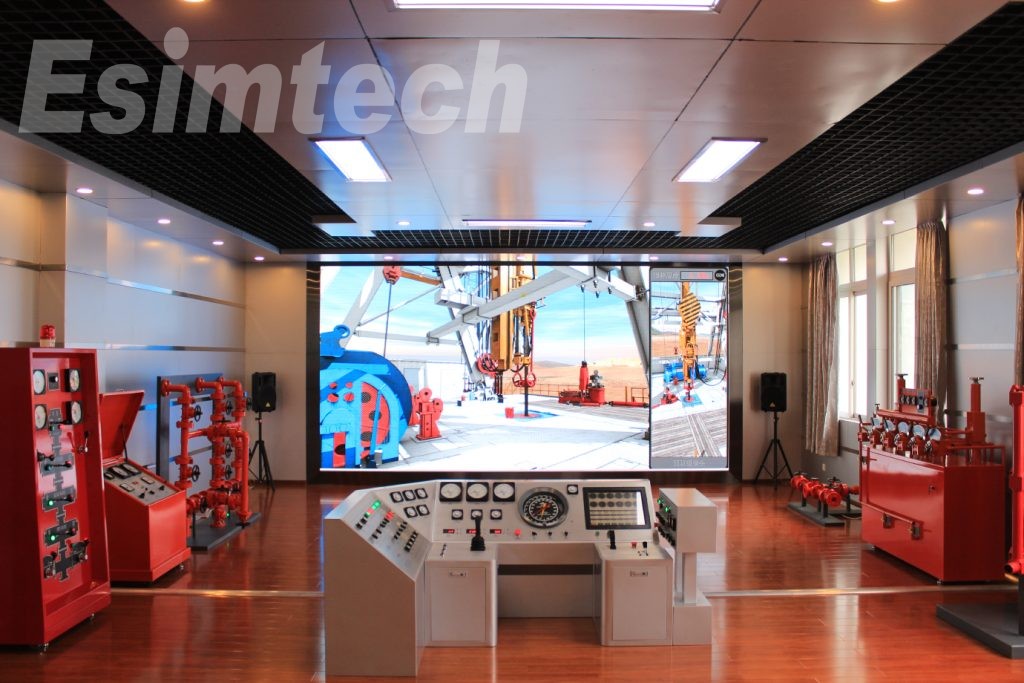
Simulators provide a virtual space for trainees to familiarize themselves with the operation and maintenance of complex machinery found on oil rigs. This includes everything from crane operations to the intricate details of drilling tools. Virtual equipment models accurately replicate the features and functionalities of real-world counterparts, enabling trainees to interact with and understand the nuances of each piece of equipment.
Efficient Troubleshooting Practices
Simulation training includes scenarios where trainees encounter simulated equipment malfunctions or failures. This challenges them to troubleshoot issues efficiently, identify root causes, and apply corrective measures. The iterative nature of simulation allows for repeated practice, ensuring that workers are not only proficient in equipment operation but also adept at addressing unexpected challenges.
Preventive Maintenance Strategies
Beyond operational aspects, simulators emphasize the importance of preventive maintenance. Trainees engage in virtual exercises that simulate routine inspections, maintenance tasks, and calibration procedures. This proactive approach ensures that workers are well-versed in maintaining equipment integrity, contributing to the overall reliability and longevity of critical machinery.
4. Team Coordination and Communication
Collaborative Problem-Solving Exercises
Simulation training fosters team coordination by immersing trainees in collaborative problem-solving exercises. These scenarios mimic the challenges encountered during oil rig operations, requiring effective communication and teamwork. Trainees learn to share information, delegate tasks, and collectively address complex challenges, reinforcing a sense of unity within the workforce.
Adaptive Communication Dynamics
Simulations can introduce varying communication dynamics to mirror the diversity of real-world scenarios. Trainees experience different communication styles, practice adapting to various team structures, and learn to navigate challenges that may arise from communication gaps. This adaptive training approach prepares the workforce for the dynamic nature of oil rig operations.
Leadership Development Opportunities
Through simulated team scenarios, potential leaders can emerge, and leadership skills can be honed. Trainees take on roles that require decision-making, coordination, and delegation, providing valuable insights into their leadership capabilities. Simulation training contributes to the development of a leadership pipeline within the workforce, ensuring a pool of skilled individuals capable of guiding teams effectively.

Select Your Trusted Oil Rig Training Provider: Esimtech
With the numerous benefits of simulation-based drilling training becoming increasingly evident, choosing the right training provider is crucial. Among the leading companies in this field stands Esimtech, a globally recognized provider of advanced drilling simulation and training solutions.
Esimtech boasts extensive experience in developing and delivering cutting-edge drilling simulators and training programs. Their team of industry professionals and technical experts ensures that their simulations are:
Realistic and immersive: Esimtech’s simulators replicate actual drilling rigs in stunning detail, using high-fidelity visuals, sound effects, and even motion platforms to create a truly immersive training experience.
Scenario-based and challenging: The company offers a wide range of pre-designed and customizable scenarios that cater to various skill levels and training objectives. These scenarios cover normal operations, emergency situations, and complex well control challenges, providing trainees with the necessary experience to handle any situation on the rig.
Technology-driven: Esimtech leverages cutting-edge technologies like VR and AI to enhance the realism and effectiveness of their simulations. VR allows trainees to virtually step onto the rig and interact with the environment, while AI can adapt scenarios based on trainee actions and decisions, providing a more personalized and challenging training experience.
Simulation techniques have revolutionized oil rig training, providing a dynamic, experiential learning environment that prepares workers to efficiently and safely navigate the complexities of oil rig operations. With providers like Esimtech leading the way, the future of oil rig training is set to be more immersive, effective, and adaptive than ever before.