
The oil and gas industry, renowned for its complexity and high-risk operations, demands a highly skilled and well-trained workforce. Traditional training methods, while valuable, often fall short in replicating the dynamic and unpredictable nature of oil rig environments. To address this gap, the industry has increasingly turned to cutting-edge simulation techniques. This article explores how simulations are transforming oil rig training, providing a more immersive, effective, and safer learning experience.

The Need for Advanced Training
Oil rig operations require a unique blend of technical expertise, problem-solving skills, and a deep understanding of safety protocols. While traditional classroom-based training can provide foundational knowledge, it struggles to replicate the real-world challenges and scenarios encountered on oil rigs. Simulation technology bridges this gap by offering a highly realistic and interactive learning environment.
Oil and gas simulations allow trainees to actively engage with scenarios such as equipment malfunctions, emergency situations, and adverse weather conditions. This hands-on experience helps develop critical thinking, decision-making, and problem-solving skills in a controlled and safe setting. Moreover, simulations promote teamwork, communication, and a strong safety culture.

Key Components of Oil Rig Training Simulation
Drilling Operations: Drillling simulators can recreate the entire drilling process, from planning and positioning the rig to executing extraction. Trainees can practice various drilling techniques, manage pressure, and monitor parameters in a realistic virtual environment.
Emergency Response: Simulations can simulate a wide range of emergencies, including blowouts, fires, and equipment failures. Trainees can practice crisis management, decision-making, and coordinated responses in a safe and controlled environment.
Equipment Handling and Maintenance: Trainees can familiarize themselves with the operation and maintenance of various oil rig equipment through virtual simulations. They can practice troubleshooting, preventative maintenance, and efficient equipment handling.
Team Coordination and Communication: Simulations can foster teamwork and effective communication by placing trainees in collaborative problem-solving scenarios. They can learn to work together, delegate tasks, and communicate effectively in high-pressure situations.

The Benefits of Simulation-Based Training
Enhanced Safety: Simulations provide a safe environment for trainees to practice handling hazardous situations without risking real-world consequences.
Improved Efficiency: By providing hands-on experience, simulations can help trainees become more efficient and effective in their roles.
Reduced Costs: Simulations can reduce training costs by eliminating the need for costly on-site training or live equipment demonstrations.
Increased Engagement: The immersive nature of simulations can make training more engaging and memorable for trainees.
As the oil and gas industry continues to evolve, simulation technology will play an increasingly important role in training its workforce. By providing a realistic and effective learning experience, simulations can help ensure that oil rig workers are well-prepared to meet the challenges of their demanding profession.
Marine seats play a vital role in providing comfort, safety, and efficiency for boat operators and passengers. As the demands of different vessels, environments, and user preferences evolve, customizing marine seats has become essential for improving the overall boating experience. Whether for recreational boats, commercial vessels, or high-performance watercraft, custom marine seats cater to specific requirements, ensuring a tailored and enhanced experience on the water.

Benefits of Customizing Marine Seats
Ergonomics and Comfort Customization enhances ergonomics and comfort, crucial for long trips or high-speed boating. Features include:
Seat Padding and Cushioning: Marine seats can be customized with varying padding levels, such as memory foam or shock-absorbing materials, ensuring maximum comfort.
Adjustable Features: Custom seats can offer adjustable headrests, lumbar support, and armrests to maintain proper posture and reduce fatigue.
Specialized Seat Shapes: Custom seats can be designed to fit specific body types, improving comfort for individuals of different sizes and heights.
Durability and Material Selection Marine environments expose seats to harsh conditions like saltwater, UV rays, and temperature fluctuations. Custom materials ensure durability:
Water-Resistant and UV-Resistant Materials: Marine-grade vinyl, leather, and synthetic fabrics resist fading, cracking, and mildew.
Anti-Corrosion Components: Frames made from corrosion-resistant materials like aluminum or stainless steel withstand saltwater exposure.
Non-Slip Surfaces: Non-slip seat cushions and bases help prevent sliding in wet conditions.
Performance-Oriented Customization For high-performance boats, seat customization focuses on enhancing control and comfort under demanding conditions:
Suspension Seats: These absorb shocks and vibrations, reducing strain during rough water conditions.
Bolstered Seats: Ideal for high-speed maneuvers, bolstered marine captain's seats provide lateral support, keeping the operator securely in place.
Lightweight Materials: Using lightweight materials such as carbon fiber can enhance speed and fuel efficiency in performance boats.
Aesthetic Customization allows boat owners to align the seat design with the vessel’s overall aesthetics:

Custom Upholstery and Colors: Seats can be upholstered in a variety of colors and patterns to match the boat's interior.
Matching Interior Themes: For luxury vessels, seat designs can complement other interior elements like carpeting and dashboard accents.
Technology Integration Modern technology can be integrated into custom marine seats to improve comfort and convenience:
Heated Seats: Provide additional warmth during cold weather or night-time boating.
Adjustable Electronics: Power-adjustable seats allow easy repositioning to match the operator's preferences.
Built-in Storage and Accessories: Custom seats can feature integrated storage, cup holders, and mounts for electronic devices.
Safety Enhancements Custom marine seats can incorporate features that prioritize safety on the water:
Enhanced Stability: Seats can be designed to minimize tipping or shifting in rough seas.
Seatbelt Integration: Seats with built-in seatbelts or harnesses offer extra security for high-speed or extreme conditions.
Fire-Resistant Materials: Custom seats made from fire-resistant materials meet safety standards for commercial and military vessels.
A Guide to Customizing Marine Seats
Choose the Right Material
Marine-Grade Vinyl: Durable, water-resistant, and UV-protected, ideal for long-term use.
Leather or Synthetic Leather: Provides a luxurious feel but requires more maintenance.
Mesh or Breathable Fabrics: Ideal for warm climates, allowing airflow and preventing heat buildup.
Select Comfortable Cushioning
High-Density Foam: Provides durability and support.
Memory Foam: Adds luxury, conforming to body shape for long-lasting comfort.
Shock-Absorbing Foam: Reduces vibrations, especially in high-speed boats.
Incorporate Adjustable Features
Height Adjustability: Ensures optimal visibility for users of different heights.
Swivel Function: Enhances maneuverability in tight spaces.
Reclining Mechanism: Adds comfort, especially for yachts and leisure boats.
Choose Aesthetic Customizations
Color and Patterns: Match your boat’s interior with customizable upholstery.
Embroidery and Logos: Add personalized touches like a logo or boat name.

Optimize for Specific Marine Conditions
UV-Resistant Materials: Prevent fading in boats exposed to sunlight.
Waterproofing: Extend the seat’s lifespan with waterproof fabrics and corrosion-resistant frames.
Corrosion-Resistant Frames: Use materials like stainless steel or aluminum for saltwater protection.
Tailor Seat Shape and Size
Customized Dimensions: Design seats to fit narrow or odd-shaped spaces.
Multi-Seat Configurations: Optimize space with custom bench seating, lounge chairs, or jump seats.
Work with Professional Marine Seat Makers
Consult Seat Manufacturers: Collaborate with professional professional marine seat manufacturers for expert advice on materials, safety, and design.
Test Prototypes: Evaluate comfort and durability by testing prototypes before finalizing.
Conclusion
Customizing marine seats is a valuable investment for improving comfort, safety, and the overall boating experience. With options ranging from ergonomic designs and advanced materials to aesthetic and technological upgrades, boat owners can create a personalized and functional seating solution. By tailoring features to specific needs and marine conditions, customized marine seats ensure a safer and more enjoyable journey on the water.
Splay, a common defect in the injection molding process, refers to the appearance of silver or white streaks on the surface of a molded part. It occurs when gas or vapor becomes trapped within the molten plastic, leaving visible marks as the material solidifies.

Causes of Splay
Moisture content in the resin: Moisture can vaporize during the molding process, forming bubbles that cause splay.
Resin decomposition: Certain resins can decompose at high temperatures, releasing gases that lead to splay.
Contaminated resin: Foreign particles can act as nucleation sites for gas bubbles.
Inadequate resin drying: Moisture in the resin can cause splay.
Injection parameters and mold design: Improper settings or insufficient venting can trap gases.
Material incompatibility: Incompatible materials can produce gases.
Machine and mold contamination: Contaminants can introduce gases into the plastic.
Effects of Splay
Aesthetic defects: Splay can significantly affect the appearance of injection molded parts.
Weakened mechanical properties: Splay can reduce the strength and integrity of parts.
Dimensional inaccuracies: Splay can lead to dimensional variations and assembly issues.
Reduced productivity: Splay can increase scrap rates and downtime.
Increased production costs: Splay can raise costs due to scrap, rework, and quality control efforts.
Impact on brand reputation: Splay can damage a brand's reputation.
Quality control challenges: Detecting and correcting splay can be difficult.

Preventing Splay
Proper resin selection: Choose resins with low moisture absorption and suitable viscosity.
Resin drying: Thoroughly dry the resin to remove moisture.
Mold design and venting: Ensure adequate venting to allow gases to escape.
Injection parameters: Optimize injection speed, pressure, and temperature.
Cooling system: Use an efficient cooling system to prevent uneven solidification.
Mold maintenance: Regularly clean and maintain the mold.
Gas-assisted injection molding (GAIM): Consider using GAIM to reduce gas pockets.
Quality control and inspection: Implement rigorous quality control procedures.
By understanding the causes and effects of splay and implementing effective prevention strategies in injection molding, manufacturers can significantly reduce the occurrence of this defect and improve the overall quality of their injection molded products.
Accurate web guiding is essential in various industries, but vibrations can significantly disrupt this process, leading to misalignment, quality defects, and material waste. This article explores the sources of vibration in web guide systems and outlines effective strategies to mitigate their impact.

Sources of Vibration
Mechanical imbalances: Unbalanced rollers or rotating components.
Environmental factors: Vibrations from adjacent machinery or structural vibrations.
Operational speed: High-speed operations can amplify vibrations.
Material properties: Variations in tension and stiffness of the web material.
Strategies for Mitigating Vibration
Mechanical Solutions:
Precision engineering: Balanced components, high-quality bearings, proper lubrication.
Damping mechanisms: Vibration isolators, shock absorbers.
Structural reinforcement: Stiffening frameworks, foundation modifications.
Operational Adjustments:
Speed regulation: Optimal speed settings, gradual acceleration/deceleration.
Tension control: Consistent web tension, automated tension adjusters.
Advanced Control Systems:
Feedback loops: Real-time monitoring, closed-loop control.
Active vibration control: Dynamic countermeasures, smart actuators.
Technological Innovations:
Machine learning and AI: Predictive maintenance, adaptive control systems.
High-precision sensors: Enhanced detection, integrated sensor networks.
Digital twin technology: Simulation and optimization, predictive analysis.
Implementation Plan:
Assessment: Identify vibration sources.
Design optimization: Incorporate precision engineering and damping mechanisms.
Control system integration: Implement advanced control systems.
Testing and calibration: Ensure effectiveness and fine-tuning.
Continuous monitoring: Track performance and make adjustments.

The Arise Web Guide System: A Solution
The Arise all-in-one web guide system offers a high-performance solution for accurate web guiding. Its key features include:

Superior accuracy: Precise web positioning.
Robust vibration mitigation: Effective vibration reduction.
Advanced technology integration: Machine learning, AI, and high-precision sensors.
Durability and reliability: Long-lasting and low-maintenance.
User-friendly interface: Easy operation and quick adjustments.
By implementing these strategies and considering the Arise web guide system, industries can effectively mitigate vibration and ensure precise web guiding.
Printing quality inspection is essential for maintaining the highest standards in print production, ensuring that printed materials meet the expectations for color accuracy, image quality, text clarity, and overall appearance. With technological advancements, the printing industry has access to sophisticated tools used for printing quality inspection with remarkable precision and efficiency.

What is Printing Quality Inspection?
Printing quality inspection involves evaluating and ensuring the consistency and quality of printed materials. It is vital in industries such as packaging, publishing, and manufacturing, where print quality directly affects brand reputation, customer satisfaction, and regulatory compliance. This process ensures that printed items such as labels, books, packaging, and promotional materials meet required specifications.
Key Technologies in Printing Quality Inspection
Optical Inspection Systems
Camera-Based Systems: These high-speed systems capture detailed images of printed products. Software analyzes the images to detect defects like misalignment, smudges, or color deviations. The system’s real-time integration allows for immediate detection and correction.
Line Scan Cameras: These cameras inspect continuous or large-format prints, like packaging or wallpaper, capturing images line by line for precise analysis.
Machine Vision Systems
Deep Learning Models: AI-driven deep learning models can identify a wide range of defects and improve accuracy over time. They can detect subtle issues that traditional systems may overlook.
Pattern Recognition: Machine vision systems are programmed to recognize specific patterns and detect anomalies, particularly useful in industries that demand precise image reproduction and color matching.
Spectral Imaging Systems
Hyperspectral Imaging: Captures a wide range of wavelengths, from ultraviolet to near-infrared, identifying subtle color and material inconsistencies.
Multispectral Imaging: Focuses on multiple wavelengths to analyze color and material data, useful in detecting material defects though less comprehensive than hyperspectral imaging.
3D Inspection Systems
Laser Profiling: These systems use lasers to scan surfaces and create 3D maps, detecting embossing errors and surface irregularities.
Structured Light Scanning: Projects light patterns onto the surface, analyzing deformations to build a 3D image for surface texture analysis.
Magnetic and Conductive Inspection
Magnetic Ink Character Recognition (MICR): Used in security printing, such as checks and banknotes, to verify the magnetic properties of printed inks for authenticity.
Conductive Ink Inspection: Ensures that printed circuits and electronic components have correct electrical properties, critical for printed electronics like RFID tags.
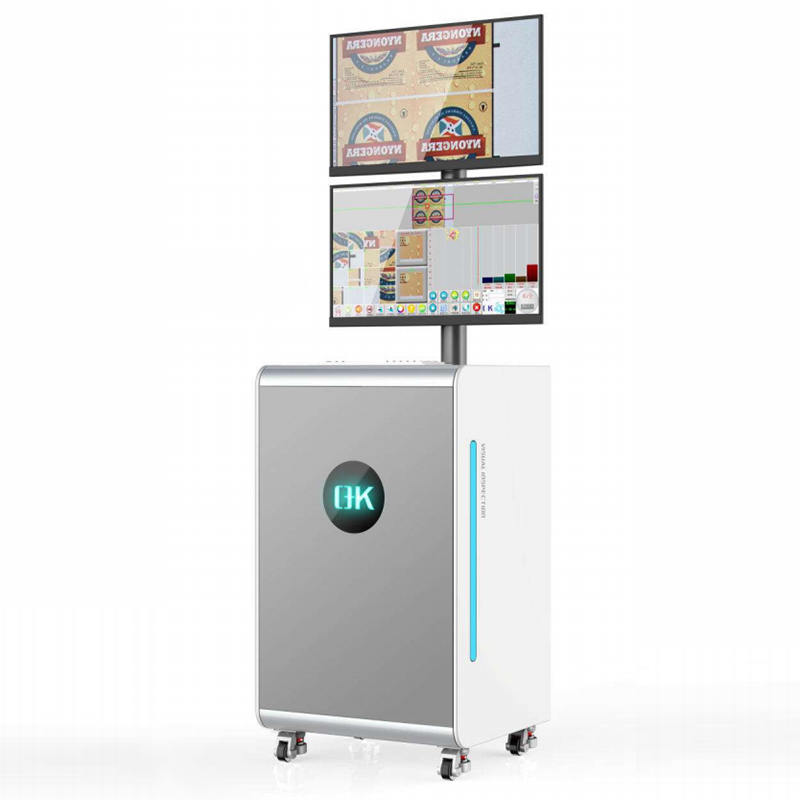
Why Choose Arise Web Video Inspection System for Printing Quality Inspection?
Arise is a high-tech company specializing in optical, electromechanical, electronic, and internet technologies, particularly in the development of web guide systems, tension control systems, and web inspection systems.
The Arise Web Video Inspection System uses innovative technology to transform rapidly moving images into still frames, which are magnified for detecting print defects. The system allows real-time observation and provides comprehensive quality assessments for immediate defect detection.
Key Benefits of Arise Web Video Inspection System
High-Resolution Imaging: Captures minute details to identify even the smallest defects in real-time.
Real-Time Monitoring: Enables continuous monitoring of the printing process, allowing immediate issue detection and correction, which minimizes waste and increases efficiency.
Automated Defect Detection: Advanced algorithms automatically identify defects like color variations, misregistration, and print artifacts, reducing the need for manual inspection.
Consistent Quality Control: Ensures uniform quality by applying objective and automated inspection criteria, minimizing the variability caused by human inspection.
Data Collection and Analysis: The system tracks defect types and frequencies, providing valuable data for improving the printing process and conducting root cause analysis.
Workflow Integration: The system seamlessly integrates into existing printing workflows, enhancing efficiency without disrupting production.
User-Friendly Interface: Simplifies operation, making the system accessible to operators with varying levels of technical expertise.
Cost-Effective: By automating inspection and reducing rework, the system offers significant cost savings.
Compliance and Standards: Helps meet industry standards and customer specifications, essential for maintaining reputation and customer trust.
Scalability: Adaptable to different production scales, from small print runs to large-volume operations.

Conclusion
The adoption of advanced technologies in printing quality inspection, such as the Arise Web Video Inspection System, enables businesses to achieve higher quality outputs while optimizing efficiency and reducing costs. With features like real-time monitoring, automated defect detection, and seamless integration, this system is an ideal solution for industries seeking superior printing quality and operational excellence.