
Maintaining precise web tension is critical in industries that involve continuous processing of materials like paper, film, textiles, or metals. Web tension control directly influences product quality, material waste, and operational efficiency. Web guide systems play an integral role in achieving optimal web tension control, offering precise adjustments that ensure smooth and error-free material handling. This article delves into the principles, benefits, and innovations associated with optimizing web tension control using web guide systems.

The Importance of Web Tension Control
Web tension refers to the longitudinal force applied to a material as it moves through a production process. Fluctuations in tension can lead to defects such as wrinkles, breaks, misalignment, or slack. Proper tension control ensures:
Uniform material quality: Eliminating variations in the process.
Minimized waste: Reducing the likelihood of damage or rework.
Increased productivity: Ensuring consistent machine speeds and minimizing downtime.
Longer equipment lifespan: Preventing undue stress on machinery components.
How Web Guide Systems Enhance Tension Control
Web guide systems are designed to correct misalignment and maintain consistent lateral positioning of materials. These systems typically include sensors, actuators, and controllers that work in harmony to optimize tension control. Here's how they contribute:
Real-time adjustments: Advanced sensors detect deviations from the ideal position, enabling immediate corrective actions.
Improved alignment: Automatic tracking and steering mechanisms keep the web on its intended path, reducing strain.
Customizable control: Operators can set parameters tailored to specific materials and production requirements.
Key Components of Web Guide Systems
The effectiveness of web guide systems lies in their sophisticated design, which includes:
Sensors: Detect edge, line, or contrast changes in the material. Common web guide senso rtypes include ultrasonic, infrared, and optical sensors.
Actuators: Mechanical devices that adjust the web's position based on sensor feedback.
Control units: Process data from the sensors and issue commands to the actuators for precise alignment.
Guiding mechanisms: Rollers or guiding elements that physically redirect the material.

Innovations in Web Guide Systems
Modern web guide systems incorporate advanced technologies to achieve unparalleled precision and efficiency. Some of the notable innovations include:
Closed-loop feedback systems: Continuously monitor and adjust tension to maintain optimal performance.
Integration with IoT: Enabling remote monitoring and predictive maintenance to minimize downtime.
AI-powered adjustments: Algorithms that adapt to changing material properties or production speeds.
High-speed response mechanisms: Ensuring seamless adjustments in fast-paced production environments.
Best Practices for Optimizing Web Tension Control
To fully leverage the benefits of web guide systems, consider the following practices:
Routine calibration: Regularly inspect and calibrate sensors and actuators for accurate operation.
Material-specific settings: Adjust parameters to match the physical properties of the material being processed.
Preventive maintenance: Keep components clean and free of debris to avoid malfunctions.
Operator training: Equip staff with the knowledge to effectively manage and troubleshoot the system.
Data analysis: Use system-generated data to identify and resolve recurring tension issues.
Applications of Web Guide Systems
Web guide systems are indispensable in various industries, including:
Printing: Ensuring precise registration and alignment for high-quality output.
Packaging: Maintaining uniform tension for consistent sealing and cutting.
Textiles: Preventing fabric deformation during processing.
Metal and foil production: Ensuring smooth handling of thin, delicate materials.
Conclusion
Optimizing web tension control is a critical factor in enhancing operational efficiency and product quality. By integrating advanced web guide systems, manufacturers can achieve greater accuracy, reduce waste, and minimize downtime. As technology continues to evolve, innovations in web guide systems will further streamline industrial processes, providing unmatched reliability and performance. Investing in these systems not only resolves current tension control challenges but also future-proofs operations for years to come.
Mechanical nuts are vital components in fastening systems, working alongside bolts to secure parts and assemblies in a wide range of applications. While there are many specialized types of nuts, several common varieties are widely used across industries due to their versatility, reliability, and ease of use. Below is an overview of the most commonly used types of mechanical nuts and their typical applications.
1. Hex Nuts
Description: Hexagonal lock nuts, or hex nuts, are the most widely used type of nut due to their simplicity and compatibility with standard tools like wrenches.

Key Features:
Six-sided design for easy gripping and tightening.
Available in various sizes and materials, such as stainless steel, brass, or nylon.
Common Applications:
Construction, automotive, and machinery.
2. Lock Nuts
Description: Lock nuts are designed to resist loosening caused by vibration or torque.
Types of Lock Nuts:
Nylon Insert Lock Nuts: Contain a nylon ring that grips the bolt thread to prevent movement.
All-Metal Lock Nuts: Use deformed threads to create resistance.
Common Applications:
Automotive engines, machinery, and heavy equipment prone to vibrations.

3. Flange Nuts
Description: Flange nuts have an integrated washer-like flange at the base to evenly distribute pressure over a larger area.
Key Features:
Reduces the need for separate washers.
Prevents damage to the attached surface.
Common Applications:
Automotive and manufacturing industries, especially in load-bearing connections.
4. Wing Nuts
Description: These nuts have two protruding "wings," allowing for manual tightening and loosening without tools.
Key Features:
Tool-free adjustments.
Ideal for applications requiring frequent assembly or disassembly.
Common Applications:
Furniture, fixtures, and light-duty equipment.
5. Cap Nuts (Acorn Nuts)
Description: Cap nuts feature a domed top, covering the exposed end of the bolt for protection and aesthetic purposes.
Key Features:
Prevents injury or damage caused by exposed bolt threads.
Protects threads from corrosion.
Common Applications:
Decorative applications, automotive wheels, and outdoor structures.
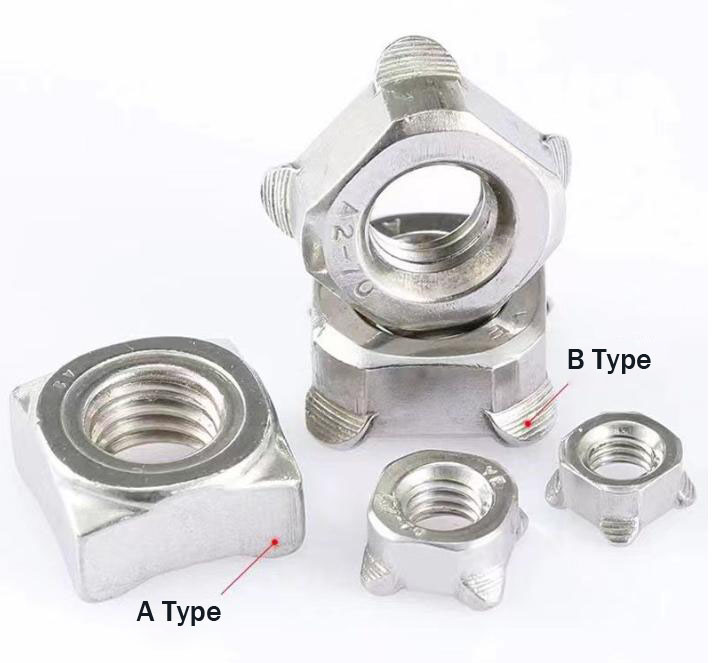
6. Square Nuts
Description: Square nuts have a four-sided shape that provides a larger surface area for better grip.
Key Features:
Easier to tighten in confined spaces.
Often paired with flat washers for a secure fit.
Common Applications:
Traditional woodworking and vintage machinery.
7. T-Nuts (Tee Nuts)
Description: T-nuts are shaped like the letter "T" and are embedded into wood or metal surfaces to provide a threaded hole for bolts.
Key Features:
Flush installation for a smooth surface.
Prevents pull-through under load.
Common Applications:
Furniture assembly, metal fabrication, and woodworking projects.
8. Coupling Nuts
Description: These cylindrical nuts connect two threaded rods or bolts, extending their length.
Key Features:
Provide a stable and secure extension for long assemblies.
Common Applications:
Plumbing, construction, and structural frameworks.
9. Slotted Nuts (Castle Nuts)
Description: Slotted nuts, also known as castle nuts, have slots that allow a cotter pin to secure them in place.
Key Features:
Prevent loosening in high-stress or vibrating environments.
Common Applications:
Automotive axles, machinery, and aerospace applications.
10. Insert Nuts
Description: Insert nuts are threaded sleeves designed to be embedded into softer materials like wood or plastic.
Key Features:
Provide a durable and reusable threaded connection.
Common Applications:
Furniture and lightweight structural components.
Conclusion
Mechanical nuts play an indispensable role in fastening systems, ensuring secure and durable connections. Among the many varieties available, commonly used nuts like hex nuts, lock nuts, flange nuts, and cap nuts find widespread applications across industries. By understanding the features and purposes of these commonly used types, users can make informed decisions to enhance the safety and reliability of their assemblies.
Graduation marks a significant milestone in a person’s life, and finding the perfect gift to commemorate this special occasion can be challenging. Custom graduation bears have emerged as a popular and meaningful way to celebrate academic achievements. These adorable, personalized keepsakes combine sentimentality with creativity, making them an ideal gift for graduates of all ages.

Why Choose Custom Graduation Bears?
Custom graduation bears stand out as gifts due to their personal touch and versatility. Here are some reasons why they have gained popularity:
Memorability: A custom bear serves as a lasting memento of a significant accomplishment, often cherished for years.
Personalization: The ability to add names, graduation years, and special messages makes the gift unique and heartfelt.
Universality: Whether for a kindergartner or a college graduate, these bears appeal to recipients of all ages.
Design Features of Custom Graduation Bears
Modern custom graduation bears come in a variety of styles and features, allowing you to tailor the gift to the graduate’s personality and achievements:
Graduation Attire: Bears are often dressed in miniature caps and gowns, complete with tassels and sometimes diplomas.
Personalized Embroidery: Names, school logos, and dates can be embroidered on the bear or its clothing.
Thematic Add-ons: Accessories like miniature books, glasses, or stoles can highlight specific academic fields or honors.
Occasions for Custom Graduation Bears
While traditionally associated with graduation ceremonies, these bears can suit a variety of contexts:
Graduation Day Gifts: Presenting the bear after the ceremony adds a special touch to the celebration.
Classroom Keepsakes: Schools often use them as parting gifts for students completing a significant academic level, such as kindergarten or high school.
Corporate and Academic Awards: Companies and institutions can order custom teddy bears to honor interns or participants in training programs.

Customization Options
The true appeal of graduation bears lies in their customization potential. Popular personalization options include:
Color Choices: Match the bear’s attire to the school colors for added significance.
Material Selection: From plush fur to eco-friendly materials, buyers can select options that align with their preferences.
Message Tags: Including a card or tag with a motivational message or heartfelt note adds a personal touch.
Finding the Perfect Custom Graduation Bear
When shopping for custom graduation bears, it’s important to choose a reliable suppliers of custom plushies that offers high-quality craftsmanship. Key factors to consider include:
Quality of Materials: Ensure the bear is made from durable, soft materials for long-lasting appeal.
Level of Customization: Check if the provider can accommodate detailed personalization requests.
Turnaround Time: Graduation season can be hectic, so opt for companies with efficient production and shipping.

Conclusion
Custom graduation bears are more than just gifts and they are cherished symbols of pride and accomplishment. Their blend of charm, personalization, and sentiment makes them an enduring favorite for marking a graduate’s hard-earned success. Whether you’re celebrating a family member, a friend, or an entire graduating class, a custom bear is a thoughtful way to say, “Well done!”
Reverse osmosis (RO) water purification systems have revolutionized water treatment by providing an effective method for removing contaminants, ensuring safe and clean drinking water. This article explores working principles, advantages, applications, and innovations in reverse osmosis water purification systems.

1. What is Reverse Osmosis?
Reverse osmosis is a process used in a water purification system that uses a semipermeable membrane to remove ions, molecules, and larger particles from water. By applying pressure, water is forced through the membrane, leaving contaminants behind. This process can effectively eliminate up to 99% of impurities, including:
Dissolved salts and minerals
Bacteria and viruses
Organic compounds
Heavy metals like lead and arsenic
2. Key Components of an RO System
A typical reverse osmosis system includes the following components:
Pre-Filtration: Removes larger particles such as sand, silt, and chlorine to protect the RO membrane.
RO Membrane: The heart of the system, where contaminants are separated from water.
Post-Filtration: Polishes the water for improved taste and quality.
Storage Tank: Holds purified water for immediate use.
Dispensing System: Includes a faucet for delivering clean water.
3. Advantages of Reverse Osmosis Systems
RO systems are widely regarded as one of the most effective water purification methods due to several advantages:
High-Quality Water: Provides superior water purity by removing harmful contaminants.
Versatile Applications: Suitable for residential, commercial, and industrial use.
Eco-Friendly: Reduces reliance on bottled water, minimizing plastic waste.
Cost-Effective: Offers long-term savings compared to purchasing purified water.

4. Applications of RO Systems
RO systems are used in various sectors, including:
Households: Ensures safe drinking water and enhances taste by removing impurities.
Industries: Used in food and beverage production, pharmaceuticals, and chemical manufacturing.
Desalination: Converts seawater into potable water, addressing water scarcity in arid regions.
Healthcare: Provides high-purity water for medical applications such as dialysis.
5. Recent Innovations in RO Technology
The growing demand for efficient water purification has led to advancements in RO technology:
Energy-Efficient Pumps: Reduce the energy required for the RO process, lowering operational costs.
Advanced Membrane Materials: Enhance filtration efficiency and durability.
Smart RO Water Purification Systems: Incorporate IoT technology for real-time monitoring and control.
Zero-Waste Systems: Minimize water wastage by recirculating reject water.

6. Challenges and Maintenance
While RO systems are highly effective, they require proper maintenance to ensure optimal performance:
Filter Replacement: Regularly replace pre- and post-filters to prevent clogging.
Membrane Care: Periodically clean or replace the membrane to maintain efficiency.
Water Wastage: Addressing the issue of reject water remains a priority in improving sustainability.
7. Conclusion
Reverse osmosis water purification systems play a critical role in providing access to clean and safe water. With advancements in technology, these systems continue to evolve, offering more efficient, eco-friendly, and versatile solutions. Whether for residential use or industrial applications, RO systems remain a cornerstone of modern water treatment.
For anyone seeking a reliable method to ensure water purity, reverse osmosis is an excellent choice that combines efficiency, versatility, and sustainability.
In marine environments, pilot chairs serve a critical role in ensuring the comfort and safety of maritime professionals, particularly those responsible for navigating vessels through challenging conditions. Marine pilot chairs are specifically designed to absorb the constant movement and shocks experienced on the water, reducing strain on the pilot’s body. Shock-absorbing mechanisms are central to this design, providing a more comfortable and safer working experience for the user. This article explores the various shock-absorbing technologies integrated into marine pilot chairs and how they contribute to the overall safety and efficiency of marine operations.

1. The Importance of Shock Absorption in Marine Pilot Chairs
Marine pilots and captains are frequently exposed to jolts, vibrations, and shocks while navigating vessels, especially in turbulent seas. These constant motions can lead to discomfort, fatigue, and even injury over prolonged periods of exposure. In response to these challenges, marine pilot chairs incorporate advanced shock-absorbing systems to minimize the impact of these forces.
The primary function of shock absorption in marine pilot chairs is to protect the user from sudden impacts, reduce muscle strain, and improve posture during long shifts. Furthermore, by reducing the effect of vibrations, these mechanisms help to improve focus, which is critical for effective decision-making in high-pressure environments.
2. Key Shock-Absorbing Technologies Used in Marine Pilot Chairs
a. Hydraulic Dampers
Hydraulic shock absorbers are one of the most common methods used in marine pilot chairs. These dampers use pressurized hydraulic fluid to cushion and control the movement of the seat. When the chair experiences a shock, the fluid within the damper absorbs the energy, dissipating it to reduce the intensity of the shock felt by the pilot.
Hydraulic dampers offer smooth, adjustable performance, allowing the chair to adapt to various weights and user preferences. Their ability to quickly respond to rapid changes in force makes them ideal for environments with unpredictable motions.
b. Air Suspension Systems
Air suspension systems are another advanced shock-absorbing mechanism often used in marine pilot chairs. These systems utilize air-filled chambers or bladders to absorb and cushion the impact of shocks. The air pressure within the system can be adjusted to suit the individual user’s weight, providing a personalized and effective solution for shock absorption.
The flexibility of air suspension systems allows them to handle a wide range of shock frequencies and intensities, ensuring a stable and comfortable seating experience regardless of the vessel’s motion.
c. Spring-Based Suspension
Spring-based suspension systems, which use coil or leaf springs, are commonly incorporated into marine pilot chairs. These springs provide a more traditional shock-absorbing function, compressing under pressure and expanding when the pressure is released. The springs offer both vertical and horizontal shock absorption, allowing for effective relief from impacts caused by sudden shifts in the vessel’s motion.
While not as customizable as hydraulic or air suspension systems, spring-based mechanisms are durable and relatively low-maintenance, making them a cost-effective option for many marine applications.
d. Foam Cushions
While not a shock-absorbing mechanism on their own, high-density foam cushions are often integrated with more advanced suspension systems to enhance comfort. Foam padding helps absorb minor shocks and vibrations while providing additional support to the user. The combination of foam with other shock-absorbing mechanisms can result in a more ergonomic and comfortable chair, reducing the risk of long-term strain or injury.

3. Benefits of Shock Absorption in Marine Pilot Chairs
a. Enhanced Comfort and Reduced Fatigue
Shock-absorbing systems help to mitigate the impact of the vessel’s movements, reducing the physical strain on the pilot. The reduction in discomfort and fatigue allows the pilot to maintain focus and operate the vessel more effectively for longer periods. This is especially important during long voyages or in rough sea conditions.
b. Improved Posture and Health
With constant exposure to shock and vibration, pilots may experience issues related to posture, such as back pain or muscle strain. Shock-absorbing mechanisms play a significant role in maintaining proper posture by supporting the user’s spine and reducing the force transferred to the body. Over time, this can lead to a decrease in the risk of musculoskeletal disorders, ensuring the long-term health of maritime professionals.
c. Increased Safety
The smooth and stable seating provided by shock-absorbing pilot chairs improves the pilot's control over the vessel. With reduced movement, pilots are less likely to be distracted by discomfort or jolts, leading to better focus on navigation and decision-making. This enhanced control and focus directly contribute to safety in marine operations.
d. Adaptability to Various Sea Conditions
Marine pilot chairs equipped with advanced shock-absorbing systems are adaptable to a range of environmental conditions. Whether navigating calm seas or rough waters, the mechanisms can adjust to the intensity of the motion, ensuring a consistent level of comfort and protection for the pilot.

4. Technological Advancements in Shock-Absorbing Systems
Recent innovations have led to the development of more sophisticated shock-absorbing technologies in marine pilot chairs. For example, smart suspension systems are being designed to automatically adjust based on real-time sensor data from the vessel’s movements. These systems can dynamically modify the chair’s suspension to optimize comfort and performance, providing a personalized experience for each user.
Additionally, some marine seat manufacturers are exploring the integration of materials like memory foam and gel-based cushions in combination with advanced suspension systems to further enhance comfort and reduce fatigue. These innovations highlight the ongoing evolution of marine pilot chairs to meet the demanding needs of maritime professionals.
Conclusion
Shock-absorbing mechanisms in marine pilot chairs play a vital role in improving comfort, safety, and productivity for maritime professionals. Whether through hydraulic dampers, air suspension systems, spring-based solutions, or foam cushions, these technologies work together to provide a stable, supportive, and comfortable seating experience, even in the most challenging sea conditions. As technology continues to advance, the future of marine pilot chairs looks even more promising, with the potential for more dynamic, customizable, and effective shock absorption systems.